The 5 Easiest Fish to Catch for New Anglers
You want to go fishing, and you want to actually catch something. The easiest fish to catch are the ones that bite often, live in water you can reach from shore, and don't need expensive gear to fool. That's exactly what this guide covers.
We picked these five beginner target species because they're the best fish for beginners: they're abundant in most of the United States, they feed aggressively on simple baits, and they fight just enough to be fun without ever feeling hopeless.
Whether your first trip is to a farm pond, a city park lake, or a stocked stream, one of these fish will almost certainly be your first catch. Outside North America you'll meet easy stand-ins — roach and perch in Europe, for example — but these five are the species most beginners in the US and Canada start on.
To pick the right water, start with our guide to how to fish ponds and reservoirs.
Why Some Fish Are Easier to Catch Than Others
Every species can be caught, but some cooperate far more than others. The friendliest species share a few habits that work in your favor:
- They're everywhere. Panfish, catfish, and stocked trout live in huge numbers in the kinds of water beginners actually fish — ponds, small lakes, and public streams.
- They eat constantly. Easy species are aggressive feeders that hit bait meant for them, not finicky specialists that inspect a fly for ten minutes.
- They hang out near shore. Docks, weed edges, brush piles, and shallow banks hold these fish within easy casting range.
- They respond to simple presentations. A worm under a bobber works on more beginner trips than every lure in the tackle shop combined.
Keep that list in mind as you read. If a fish checks all four boxes, you can catch it on your first afternoon out — no experience required.
Bluegill: The Classic First Catch
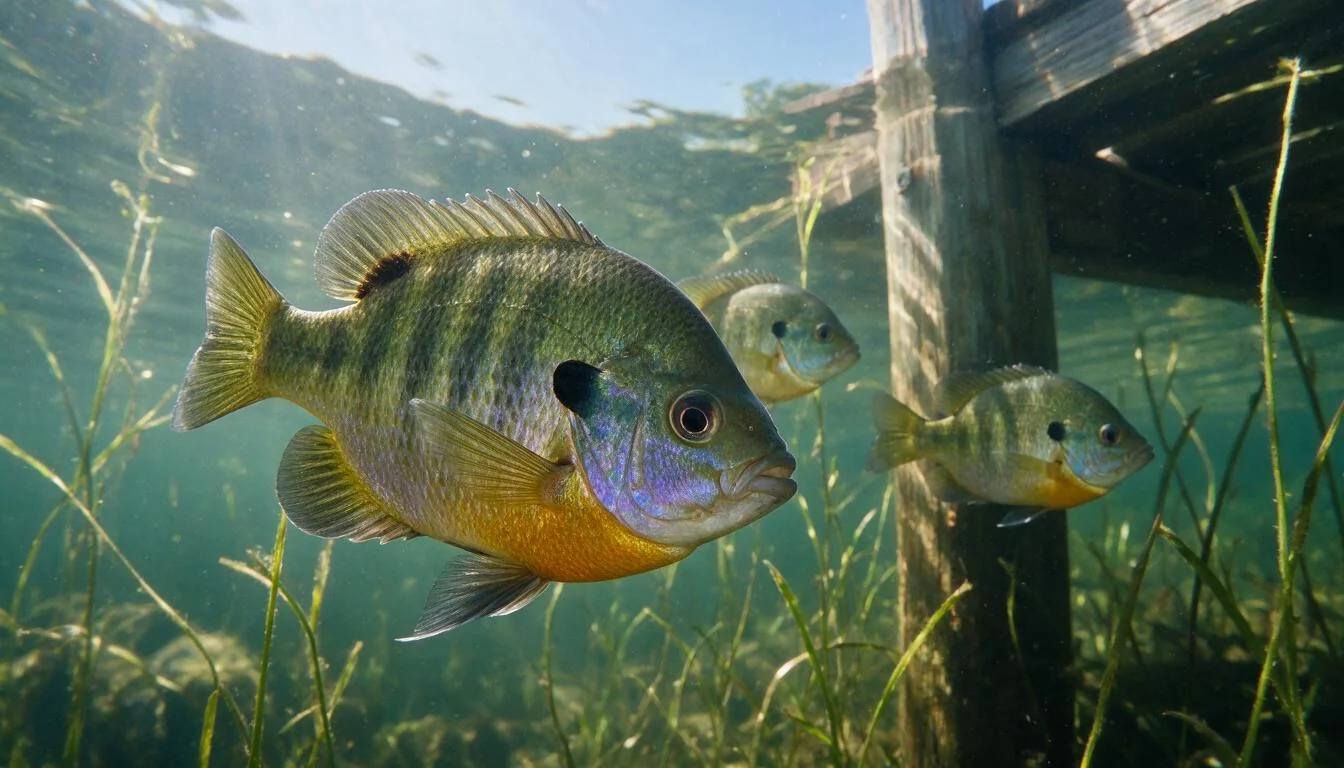
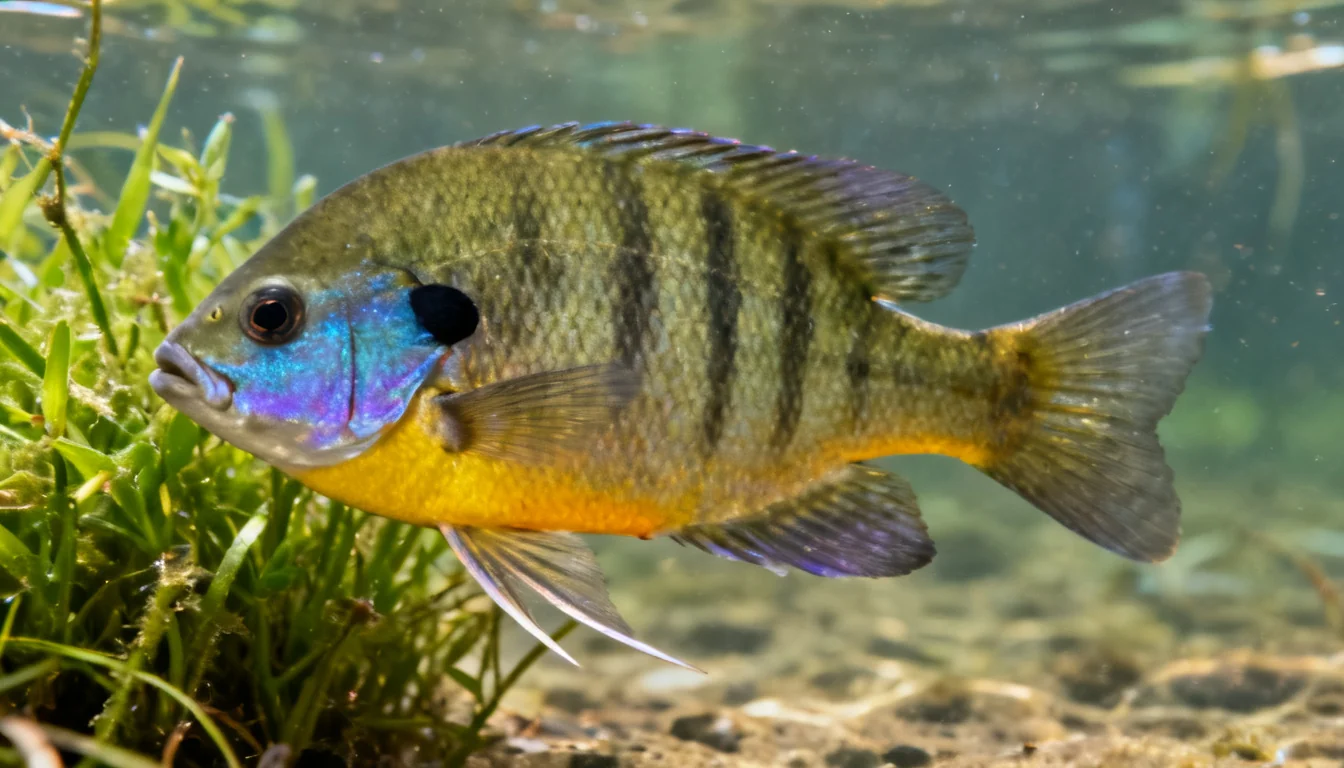
Ask a hundred American anglers which fish they caught first, and most will say the same thing: a bluegill. This little panfish is the perfect first target species for a simple reason — it's almost always hungry.
Bluegills are everywhere. They thrive in ponds, lakes, and slow rivers across the country, and they're most common around docks, weed beds, and fallen trees in 2 to 10 feet of water. In summer they're active all day, with the best bites in the morning and evening.
The setup is as simple as fishing gets: a small bobber, a size 6 or 8 hook, a split shot (a small pinch-on weight), and a worm or cricket. Cast near a dock or weed edge and wait. When the bobber dips, count one second, then lift gently.
A typical bluegill runs 6 to 9 inches, and that's a perfect size for a beginner — big enough to see and feel, small enough that you'll never feel overpowered. They also taste great.
You'll find full details on identification and behavior in our bluegill species guide. For the step-by-step bobber rig, our guide on how to catch bluegill walks you through it.
Crappie: Easy Once You Find the School
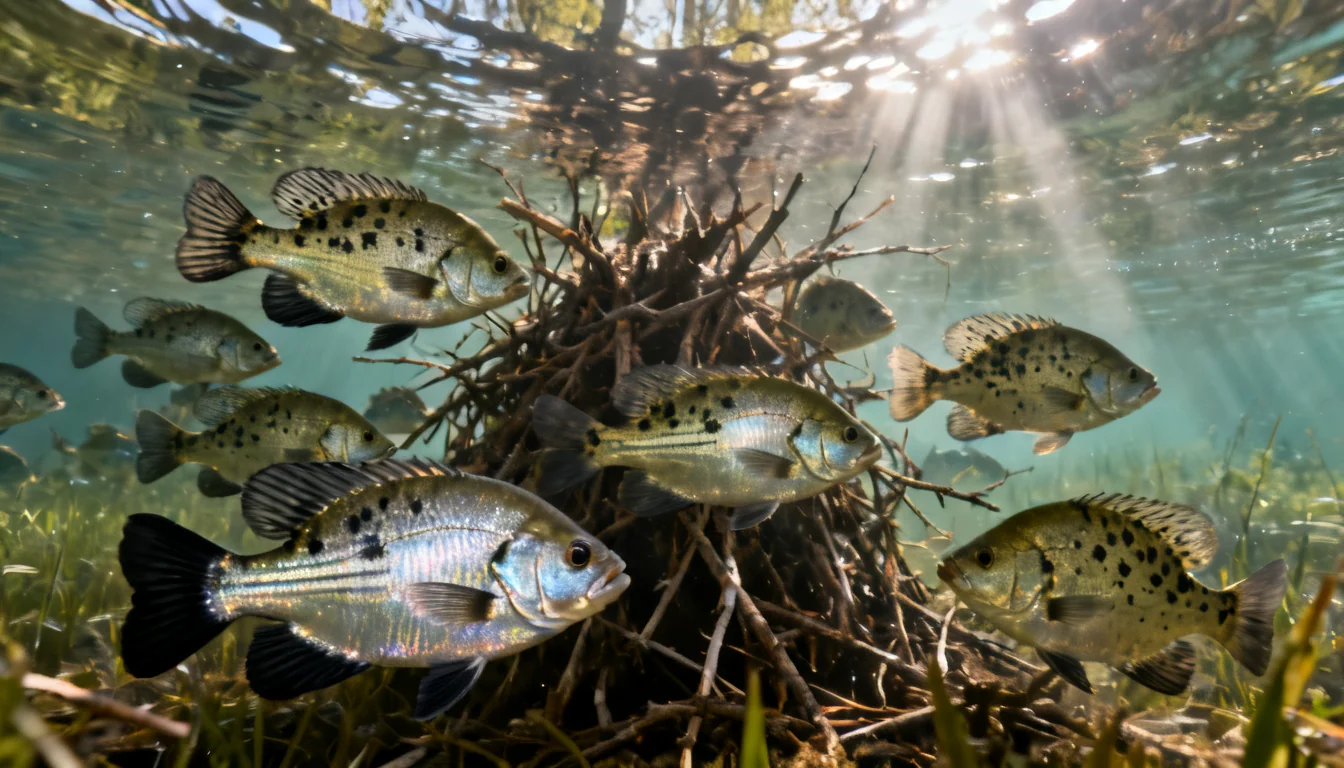
Crappie are the second-best first fish in America, and they're even more predictable than bluegill once you understand one thing: they travel in schools. Find one, and there are usually a dozen more in the same spot.
Look for crappie around brush piles, flooded timber, and dock posts — anywhere baitfish can hide. A small pond that has any of those structures almost certainly holds a crappie school or two.
Spring is the easiest season, because crappie move shallow (1 to 6 feet) to spawn when water temperatures hit the mid-50s and 60s, and they nest in colonies.
Two baits catch nearly all of them: a live minnow or a small jig (1/16 or 1/8 ounce) fished slowly. Under a bobber, a minnow suspended a foot or two above the brush is the classic beginner rig.
The fish average 8 to 12 inches and about half a pound to just over a pound — with slab-size fish pushing 1.5 pounds. That's still light tackle territory, but with a better bend in the rod than a bluegill gives you.
Crappie fillets are mild and flaky, which makes them a favorite in fish fries across the South and Midwest. If you want the full breakdown of spots, seasons, and rigs, our how to catch crappie guide walks through it.
Channel Catfish: Big Bites on a Simple Rig
Sometimes a beginner wants more than a panfish — they want a real pull. The channel catfish is one of the easiest big fish to catch in North America, and 5-pound fish are a realistic goal for a beginner using the right setup.
Catfish don't need fancy presentations because they find food mostly by smell and taste, not sight. Their whole body is covered in taste buds, and their whiskers (barbels) are packed with chemical sensors. That's why the classic catfish bait is strong-smelling: chicken liver, cut shad, shrimp, or stink bait. A nightcrawler works too.
Fish the bait on the bottom, near deep holes, logjams, or creek mouths. Evening and night are the best times, since channel cats feed most actively after dark and when water is between 70 and 85°F.
Use a size 2 or 4 hook with enough weight to hold bottom, and wait — the bite often comes as a slow, deliberate pull rather than a tap.
A typical channel cat is 1 to 5 pounds, and even a 2-pounder fights hard enough to feel like a real achievement. Set up properly, and a first-time angler can absolutely catch one. See our how to catch channel catfish guide for the complete night-rigging setup.
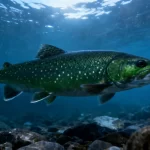
Stocked Rainbow Trout: The Hatchery Advantage
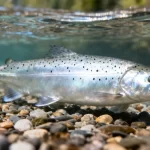
Trout sound like advanced fishing, but stocked rainbow trout are actually one of the easiest targets in the country — if you know where and when. State agencies stock millions of hatchery-raised rainbows into public ponds and streams every year, and these fish are used to being fed.
That's the secret: a freshly stocked rainbow is hungry, pellet-conditioned, and far less wary than a wild trout.
For the first week or two after a stocking, they'll hit worms, dough bait, salmon egg sacs, and small spinners with almost no hesitation. Check your state wildlife agency's website for stocking schedules — they publish them, and fishing right after a stocking is the single biggest advantage a beginner can get.
In a stocked pond, fish from shore with a worm or dough bait under a small bobber, or cast a small spinner and retrieve slowly. In a stocked stream, drift a worm through a deeper pool or run — a stretch of faster, deeper current.
Trout are cold-water fish, so they're most active in spring and fall, and early morning in summer.
A stocked rainbow averages 9 to 14 inches — bigger than a bluegill, eager to bite, and beautiful to look at. Our how to catch rainbow trout guide covers pond and stream tactics in detail. Once you leave the stocked pond behind, how to fish small streams and creeks explains where the fish hold.
Sunfish Cousins: Even Easier Than Bluegill
If your local pond has bluegill, it almost certainly has their cousins too — pumpkinseed, redear, green sunfish, and longear sunfish. These fish get grouped with bluegill as "panfish," and for a beginner they're a bonus: many are even easier to catch because they're less pressured than bluegill and just as hungry.
The differences matter only for identification. A pumpkinseed has orange spots and a bright red edge on its gill flap. A redear sunfish has a red rim on its gill cover and is nicknamed the "shellcracker" because it crunches snails.
A green sunfish has a big mouth for its size and a yellow-orange fin edge. All of them hit the same bobber-and-worm rig you'd use for bluegill, and all of them bite from the same docks, weed edges, and brush piles.
For a beginner, that's the best part: learn one simple rig, and you can catch half a dozen different species. Every one of them pulls, fights a little, and tastes good on the plate.
Ranking the 5 Easiest Fish to Catch
If you want a simple starting order, here's how the five stack up for a first-timer:
| Rank | Fish | Why it's easy | Best beginner setup |
|---|---|---|---|
| 1 | Bluegill | Bites all day, lives near every dock and weed bed | Bobber + worm, size 6 hook |
| 2 | Sunfish cousins | Same as bluegill, even less pressured | Same bobber + worm rig |
| 3 | Crappie | School fish; easy once you find the brush pile | Bobber + minnow or small jig |
| 4 | Stocked rainbow trout | Hungry and pellet-conditioned after stocking | Worm or dough bait, small spinner |
| 5 | Channel catfish | Smells its food; hits simple bottom baits at night | Chicken liver or worms on the bottom |
Start at the top of the list. If you catch a bluegill on your first trip, you've beaten the hardest part of learning to fish — and every other fish for beginners on this list only gets more interesting from there.
Common Beginner Mistakes That Turn Easy Fish Into Empty Hooks
These five fish will bite, but beginners still manage to miss them. The usual suspects:
- Making too much noise. Fish feel vibrations through the water. Walk softly on the bank, and don't slap your bait on the surface.
- Using the wrong hook size. A size 6 or 8 hook for panfish, a size 2 or 4 for catfish. A huge hook can't fit in a bluegill's mouth.
- Checking the bait too often. Reeling in to look at your worm every two minutes spooks the fish you're trying to catch. Cast, sit, and wait.
- Fishing through the heat of the day. Summer midday slows most species. Go at sunrise, sunset, or at night for catfish.
- Setting the hook too early. When a bobber dips, it's often the fish testing the bait. Wait for it to go under or move sideways, then lift.
- Using gear that's too heavy. A heavy rod, thick line, and a big sinker turn a gentle bluegill bite into something you can't feel. Light line (4 to 6 lb test) and small weights keep the bite obvious.
Your First Trip: A Simple Game Plan
Here's a plan that works for a complete first outing, using nothing you don't already have or can buy cheaply:
1. Pick a small pond or park lake. Small water means fish are concentrated and shore access is easy, so your bait is within reach of where the fish actually live.
2. Go early or late. The hour after sunrise and the hour before sunset are the most reliable bite windows.
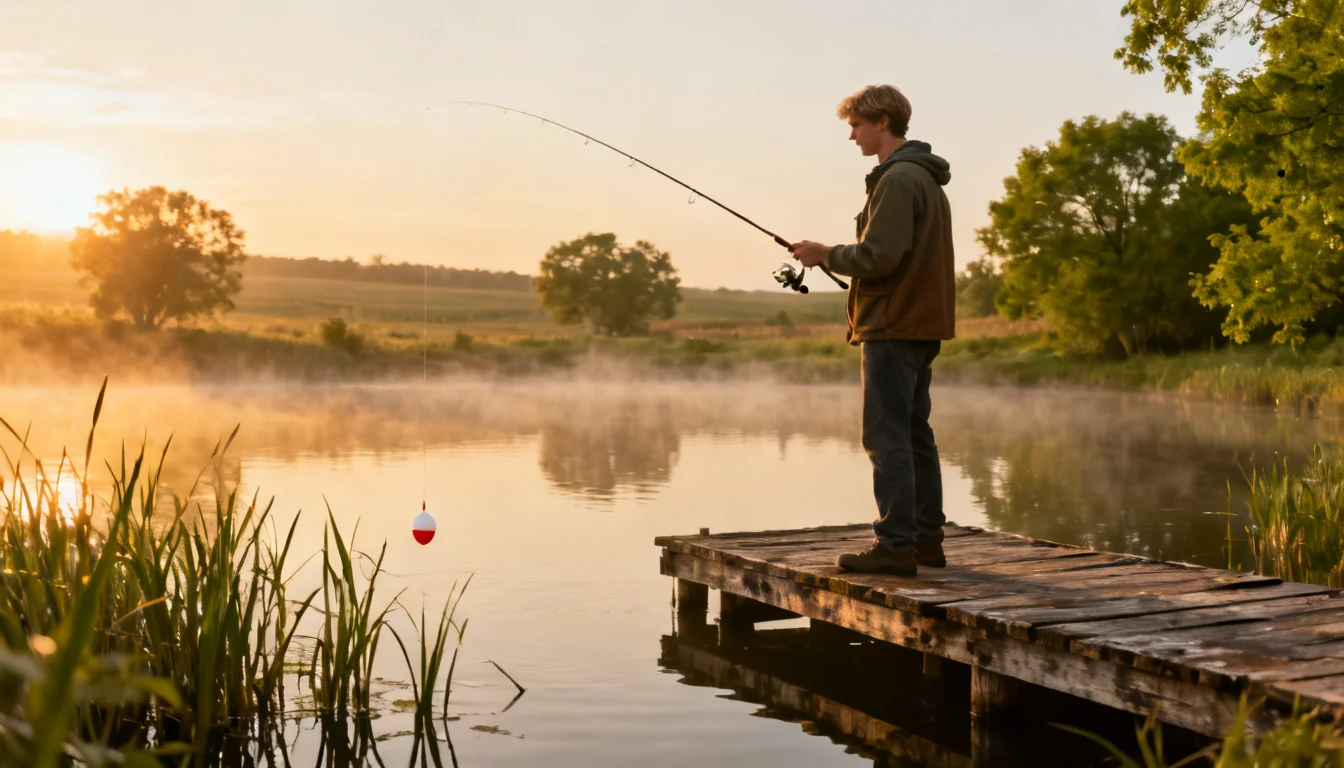
3. Rig one line simply. Bobber, split shot, size 6 hook, worm. Cast within a few feet of a dock, weed bed, or brush pile.
4. Sit still and watch the bobber. This is the whole skill. Wait for it to go under, count one second, lift gently.
5. Stop while you're ahead. Catch your first fish, take the photo, and leave on a high note. You'll be hooked on the hobby, not frustrated by it.
If the pond you choose is bigger than a farm pond, our how to fish a lake guide explains where to find the same panfish and catfish structure on a larger scale.
FAQ
What is the easiest fish to catch for a beginner?
The bluegill is the classic answer: it's abundant across the United States, bites aggressively on a simple worm-and-bobber rig, and lives close to shore near docks and weed beds.
And there's no wrong choice on this list — the moment your bobber goes under and you feel that first pull, you've already learned the only skill that carries over to every species that follows.
Do bluegill bite all day?
Bluegill bite at any hour, but they're most active in the early morning and late evening, especially in summer. On overcast days, they'll feed steadily through the afternoon too. In the heat of a clear summer day, move deeper or wait for the sun to drop.
What is the best bait for beginners?
Worms are the best all-around beginner bait: they catch bluegill, sunfish, crappie, catfish, and stocked trout. Add a small bobber and you have a complete system. Minnows work better for crappie, and strong-smelling baits like chicken liver or stink bait are the catfish specialist option.
Do I need a fishing license to catch panfish?
In nearly every state, yes — even for bluegill and sunfish. License rules vary by state, age, and residency, and some states offer free days or youth exemptions. Check your state fish and wildlife agency website before your first trip; the fine is far more expensive than the license.
How long should a first fishing trip last?
Plan for one to two hours. That's long enough to try a few spots without the frustration of a long, fishless afternoon, and short enough to end on a positive note. Beginners who catch one fish and leave happy come back; beginners who stay six hours and catch nothing often don't.
The Bottom Line
The easiest fish to catch are bluegill, sunfish cousins, crappie, stocked rainbow trout, and channel catfish. Pick any of them, rig a worm under a bobber, and fish where they live — docks, weed beds, brush piles, and stocked ponds — and you will catch fish.
That first catch is the entire point: one fish for beginners is worth a hundred casts at a trophy.
Start with a small pond and the plan above. The more you fish, the more you'll want to know — and every species guide and technique article on this site starts from exactly where you are right now.