How to Fish a Lake: Read the Water and Find the Fish
Lakes look like featureless bowls of water, but beneath the surface every lake is a map of lake structure — points, drop-offs, weed lines, channels, and basins — and fish are almost always attached to one of them.
How to fish a lake is really about learning to read that map. This guide shows you where fish hold in any lake, how to find the best spots, and which tactics work at each structure type. These lake fishing tips apply whether you fish from the bank or a boat.
If your target is a cool-water predator, our how to catch walleye guide digs deeper into low-light lake tactics.
Lake Fishing Basics: Structure Is Everything
The #1 rule of lake fishing: fish hold on structure — not open water. A bass, walleye, or trout sitting in the middle of a featureless basin is exposed, wasting energy, and rarely feeding. Fish position themselves next to structure where they can ambush prey, hide from predators, and rest in comfort.
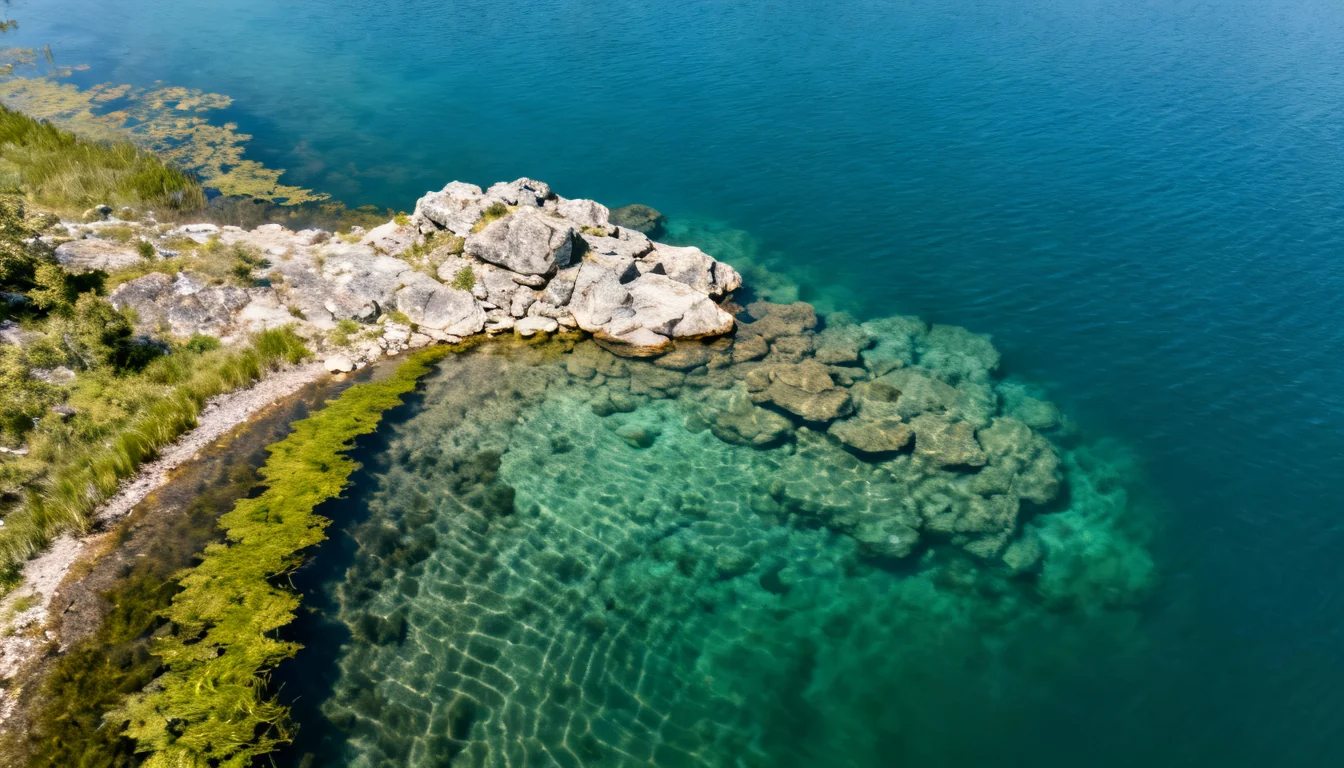
The five structures every angler should know:
| Structure | What It Is | Why Fish Hold There |
|---|---|---|
| Points | Underwater ridges extending into the lake | Fish travel them like highways; ambush spots at the tip |
| Drop-offs | Sharp depth changes | Quick access to deep water + shallow feeding |
| Weed lines | The edge where weeds meet open water | Cover, oxygen, and baitfish nursery |
| Inlets | Where streams feed the lake | Oxygen, food, and cooler water |
| Humps & bars | Underwater rises | Bass and walleye patrol them like structure islands |
The universal pattern: cast to the edge of structure — the weed-line side facing open water, the deep side of a point, the lip of a drop-off. That's where ambush predators wait.
How to Find Structure in a Lake
You can't see underwater structure from shore, but you can find it three ways:
1. Lake maps & depth charts. Search "lake name + fishing map" or check your state wildlife agency's lake survey — most publish depth contours showing points, drop-offs, and channels. This is the fastest way to build a fishing map before you ever launch.
2. A fish finder. If you have a boat, run a figure-8 pattern over open water while watching the bottom profile. The screen instantly shows points, humps, and baitfish schools. No need to mark every contour — you're looking for the handful of breaks fish will use.
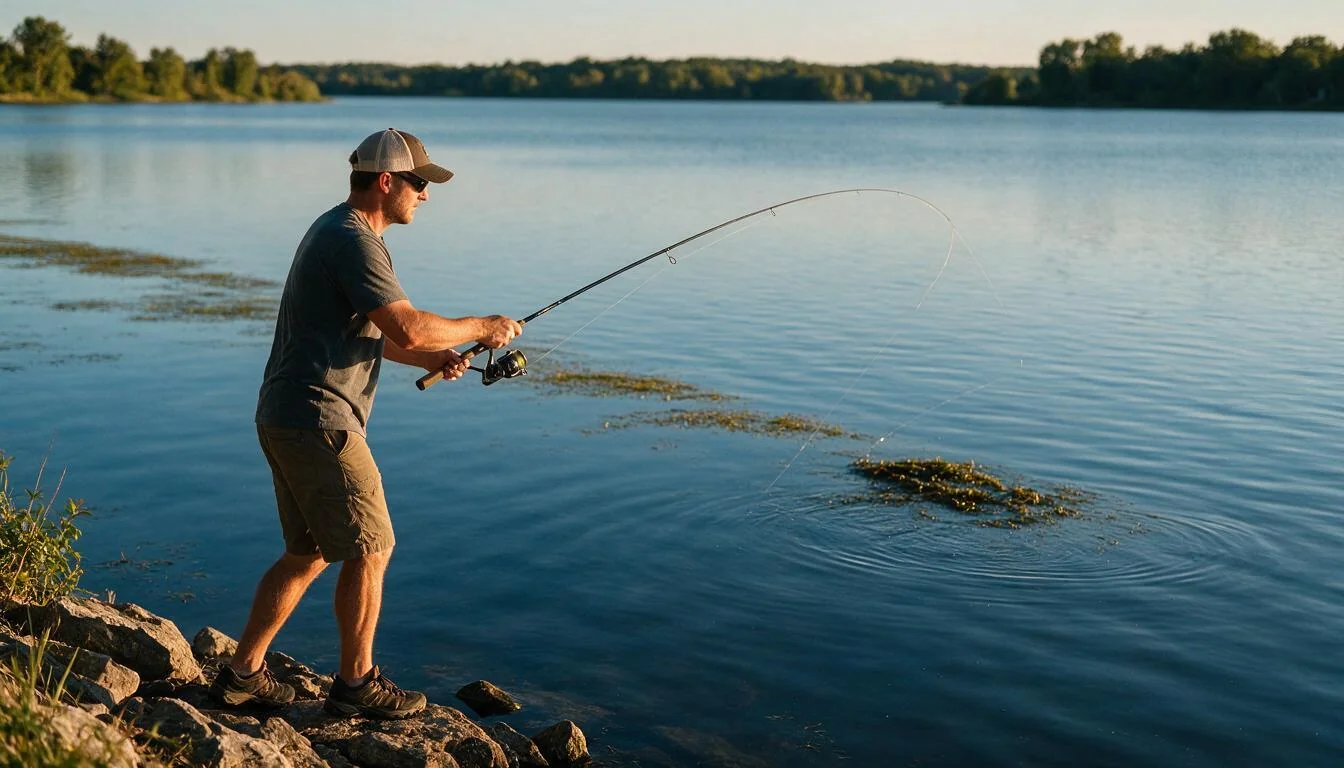
3. Shoreline clues. Structure continues underwater from what you see above: a point sticking out on shore extends into the lake; a creek entering the lake cuts a channel; a weed bed visible near shore likely runs deeper. Fish the water version of what the shoreline shows you.
No boat? No problem. Bank anglers can still reach structure: cast along the drop-off at the end of a point, fish the weed line from shore, or target inlets where fish enter shallow water.
The Bank-to-Deep Route: A Plan for Your First Hour
New lake anglers usually drift toward the middle of the water and wonder why nothing bites. Work the opposite way — fish from the bank outward in steps, and you cover the water most fish actually use:
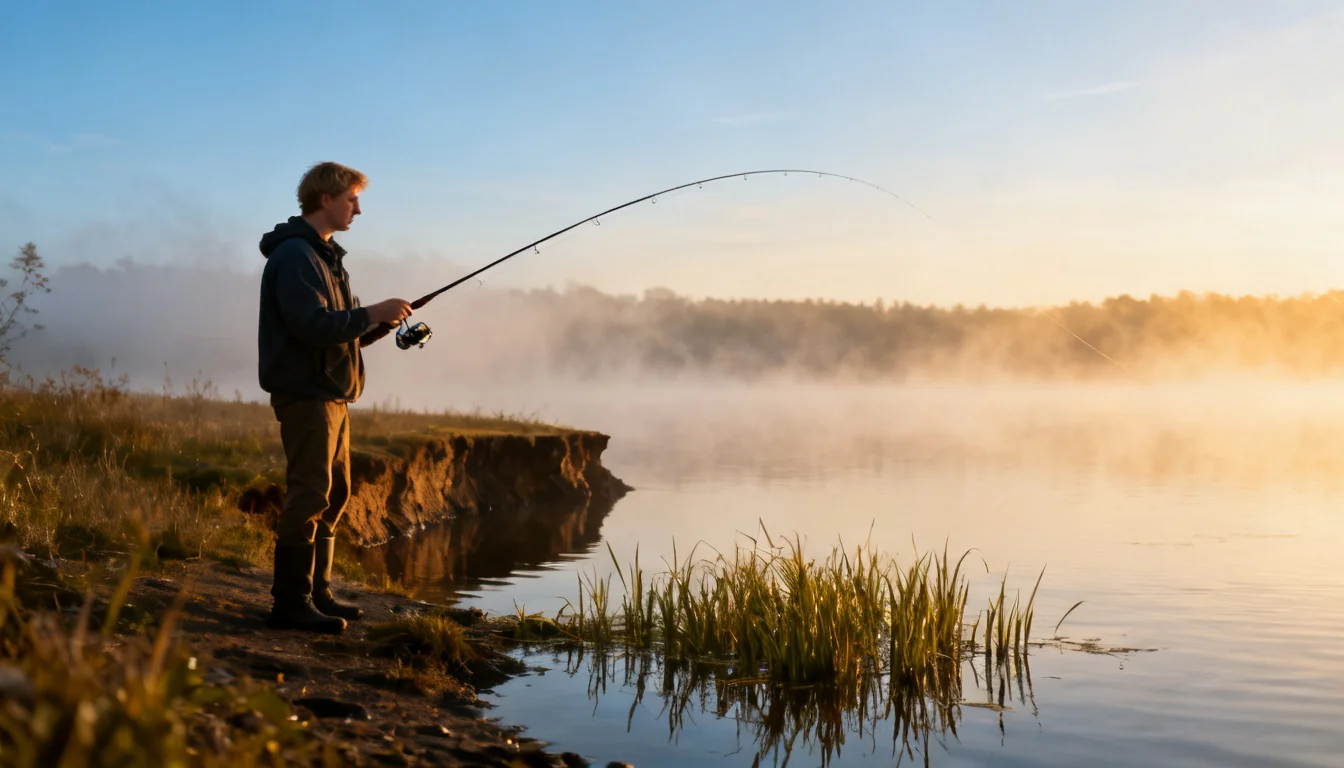
1. Shore break & weed edge (0-6 ft). The first cast of the day goes here. Baitfish, panfish, and bass use the shallow weed edge early and late.
2. Points (6-15 ft). Cast along the contour, starting shallow and working toward the tip. Points carry fish all day.
3. Drop-offs (10-25 ft). Present baits along the break line — the depth change concentrates fish when they're not on the flats.
4. Humps & basin edges (15-40 ft). Save for mid-day or boat anglers. Vertical jigs and drop-shots work the tops and sides.
For lake fishing for beginners, this route gives you a plan even when you can't see a fish. You're systematically presenting baits to the four structures that hold most lake fish — the same spots you'd mark on a depth chart.
Reading the Water: Where Fish Are by Season
Fish move around a lake with the seasons, following temperature and forage:
| Season | Water Temp | Where Fish Are | Best Structure |
|---|---|---|---|
| Spring | 45-65°F | Shallow, moving toward spawn areas | Points, flats, inlets, shallow weed edges |
| Summer | 65-80°F+ | Deep by day, shallow at dawn/dusk | Drop-offs, deep weed lines, humps |
| Fall | 55-65°F | Following baitfish schools everywhere | Points, main-lake basins, shad schools |
| Winter | 32-45°F (region-dependent) | Deep, slow, holding on basins | Deep humps, channels, basin edges |
The thermocline factor: in summer, lakes stratify into warm surface, cold bottom, and a thermocline (temperature break) in between. Oxygen levels drop sharply below it, so fish stack in the band just above the break where temperature and oxygen both work.
Set your baits to run at that depth — usually 15-25 ft in most lakes — and you'll mark fish on the screen in tight bands.
Best Lake Fishing Spots (By Fish)
Different fish prefer different structures — here's the quick reference:
| Fish | Where to Find Them in a Lake |
|---|---|
| Largemouth Bass | Weed lines, laydowns, docks, shallow points — see largemouth bass species guide |
| Smallmouth Bass | Rock points, boulder fields, deep humps |
| Walleye | Points, drop-offs, main-lake humps; low light |
| Trout | Deep basins, inlets with cooler water, thermocline edges |
| Panfish (bluegill, crappie) | Weed edges, docks, brush piles in 4-10 ft |
| Catfish | Deep holes, channels, near inlets at night |
Lake Fishing Gear & Tactics
Rod & reel: a versatile 7' medium-action spinning rod handles most lake fishing. Match line to target: 6-10 lb for panfish and trout, 10-17 lb for bass, 10-20 lb for walleye and catfish. One lake fishing tip that applies to every tactic below: work your bait slowly and pause often — most strikes come on the stop.
Tactics by structure:
- Points: cast crankbaits and spinnerbaits along the point's contour; work from shallow to deep
- Drop-offs: vertical jigging or a Carolina rig dragged along the break line
- Weed lines: Texas-rigged soft plastics (weedless) cast to the edge
- Inlets: current-like conditions — cast upstream and let the bait drift naturally
- Deep humps: jigs and drop-shot rigs presented vertically
Trolling covers water fast when fish are scattered — run crankbaits at the depth of the thermocline or where baitfish show on the finder. A slow, steady boat track over a long point is the classic trolling route.
Common Lake Fishing Mistakes
1. Fishing open water — if there's no structure, there's usually no fish. Move to a point, weed line, or drop-off.
2. Ignoring depth changes — a 6-inch ledge can hold fish; don't fish only the flat.
3. Fishing too fast — slow down, especially with bottom presentations; most strikes come on the pause.
4. Wrong time of day — summer midday is tough; fish dawn, dusk, and night.
5. One bait all day — switch between cranks, soft plastics, and jigs until you find the pattern.
How to Fish a Lake FAQ
What is the best structure to fish in a lake?
Points and weed lines are the two most reliable. Points are underwater highways fish travel constantly; weed lines concentrate baitfish, oxygen, and cover.
Do I need a boat to fish a lake?
No. Bank anglers catch plenty of fish by targeting points, inlets, and weed edges reachable from shore. A boat simply opens up deeper structures.
What depth should I fish in a lake?
Match your bait depth to the season and target. Spring fish move shallow (2-10 ft) on warming flats; summer fish hold in the oxygenated band just above the thermocline, usually 15-25 ft by day, then roam shallow at night; fall fish chase baitfish through the whole water column; winter fish sit deep and slow on basins.
Panfish stay shallower than most — 4-10 ft around docks and brush piles works year-round.
What's the best time of day for lake fishing?
Dawn and dusk are almost always best — fish feed in low light near structure. Summer adds a productive night bite, especially for bass and catfish. Smallmouth anglers find the same windows hold true on rock structure — see our smallmouth bass species guide.
What gear do I need for lake fishing?
Start simple: a 7' medium-action spinning rod with 6-20 lb line covers every common lake target — panfish and trout on the light end, bass, walleye, and catfish on the heavy end. A small tackle box of crankbaits, soft plastics, jigs, and spinnerbaits is enough for a full season, and a printed depth chart of your lake completes the setup.
How do I find fish without a fish finder?
Read the shoreline and the water together. Points on shore run underwater, creek mouths cut channels, and weed beds mark the shallow edge of cover. Then watch the surface: baitfish dimples, gulls or terns working one area, and jumping fish all point to active feeding.
In summer, find the deepest drop-off near a shallow flat — that pairing holds fish in every season.
The Bottom Line
Lake fishing rewards anglers who read the map before they cast. Learn the five core structures, work from the bank outward, and adjust depth with the seasons — and you'll spend less time on empty water and more time hooked up. Structure, seasons, and a plan will catch more lake fish than any single lure.