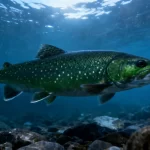
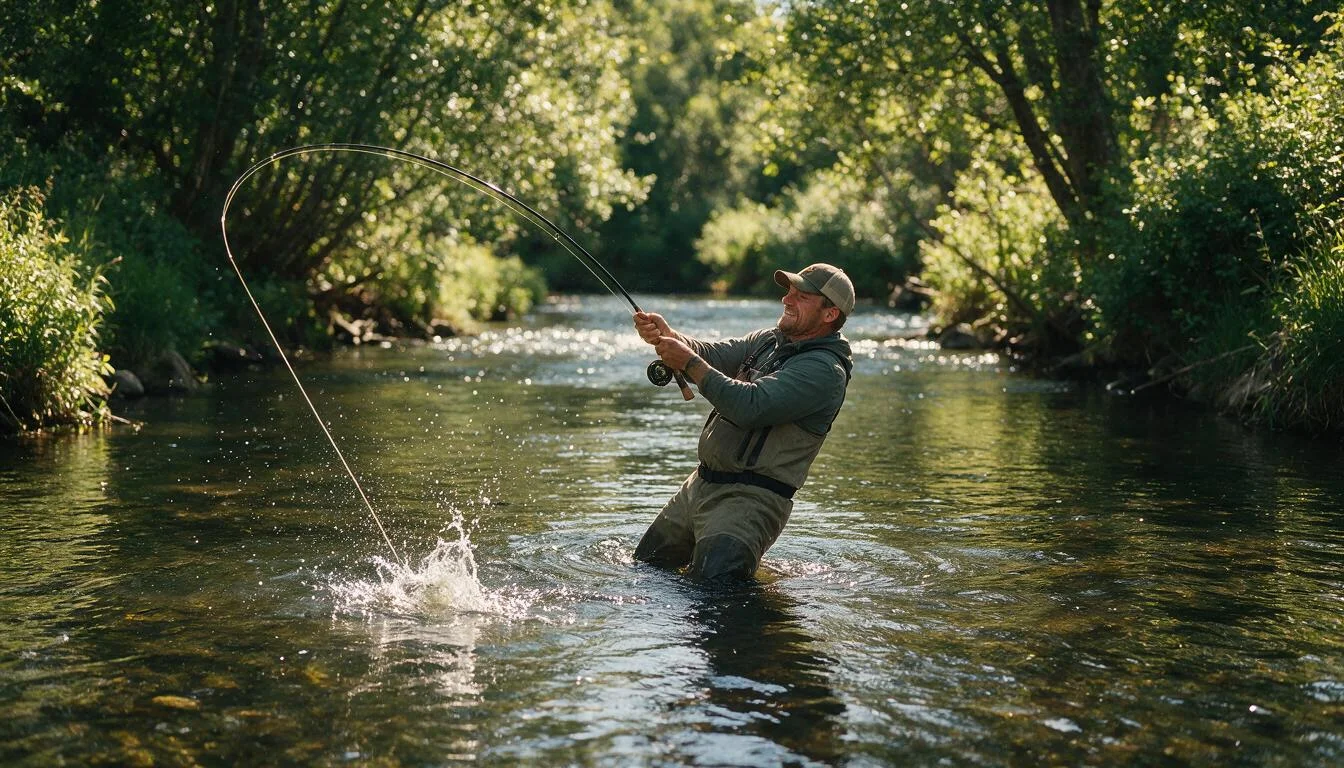
How to Fish Small Streams & Creeks
Small stream fishing is a different game from lake or reservoir fishing. The water runs clear, the fish are skittish, and the banks are usually choked with brush and overhanging branches. That is exactly why it is worth learning.
A creek holds fish almost everywhere, and the skills you build — stealth, accurate casting, and light gear — make you a better angler on any water. This guide covers where creek fish hold, how to approach without spooking them, how to cast in tight quarters, and how to wade safely.
What Makes Small Streams Different
Small streams are built out of pocket water: riffles that dump into small pools, boulders that split the flow, and seams of slack water behind every obstruction. The water volume is tiny compared to a river, so every boulder, log, and bend reshapes the whole channel.
That small scale is the appeal — you can read an entire creek in an afternoon, and the fish are never far away.
Current is the organizing force. Unlike a lake, where fish roam freely, a stream's residents sit where the flow lets them save energy: at the head of a pool, behind a boulder, along the seam between fast and slow water. Old anglers' advice sums it up: in moving water, fish the slow spots.
Clarity changes everything too. Most creeks are shallow enough to see the bottom, which means the fish can see you just as easily. A careless approach sends every trout in the pool under the bank before you make your first cast.
Where Fish Hold in Small Streams
Think of a creek as a string of small lies, each one holding one or two fish. The most productive spots, in rough order:
- Undercut banks. Current carves soft earth out from under grassy banks, creating a roofed tunnel where trout and smallmouth sit in the shade. The current-and-structure reading in how to catch smallmouth bass applies here at a smaller scale.
- Plunge pools. Where a riffle dumps into a deeper hole, the falling water digs a bowl. Bigger fish hold in the soft cushion at the head of the pool and in the tailout.
- Boulders and log jams. Anything that breaks the current creates a pocket of slack water downstream. Cast to the seam on the upstream side first — fish face into the flow and strike forward.
- Seams and edges. The line where slow water meets fast water is a conveyor belt of food. Fish hover just inside the slow side, picking off insects and minnows without fighting the current.
- Riffle tails. The shallow, gravelly stretch where a riffle flattens out is a feeding lane, especially for trout during insect hatches.
The rule of thumb: fish the slow water next to the fast water. A seam a foot wide can hold a trout, and a pool the size of a bathtub can hold the best fish in the creek. Do not skip the small lies — visible fish are usually the ones nobody bothered to cast to.
The Stealthy Approach: Get Close Without Being Seen
Stream fish face upstream, watching for food and danger from that direction. That gives you one big advantage: approach from downstream and you are behind them. Crawl or crouch up the side of the creek, and a spooky trout may never know you were there.
A few approach rules that catch more fish than any lure:
- Stay low. The lower your silhouette, the less you look like a predator. Kneel for the first cast whenever you can.
- Keep your shadow off the water. On a sunny day, cast your shadow across a pool and it empties instantly. Fish from the shade side or wait for clouds.
- Move slowly. Vibration travels through the bank and the water. Heavy footsteps, banging a tackle box, or kicking gravel sends a signal far ahead of you.
- Wear dull clothing. Bright whites and yellows stand out against the woods. Earth tones and dark greens blend in.
- Polarized sunglasses are not optional. You need to see the fish before it sees you. They cut the glare and let you spot trout in a pocket, turning blind casting into aimed casting.
- Stop and watch. Spend a minute watching a pool before you cast. You will often see the fish, and you will always learn something about how they are feeding.
Make the first cast count — the first presentation into a lie is the most likely to produce a strike. By the third cast, even a hungry fish has had time to get nervous.
Accurate Casting in Tight Quarters
Pocket water demands accuracy over distance. On a small stream you rarely need more than 10 to 20 feet of line — the challenge is putting that line into a target the size of a dinner plate while standing under a branch. Precision, not power, catches creek fish.
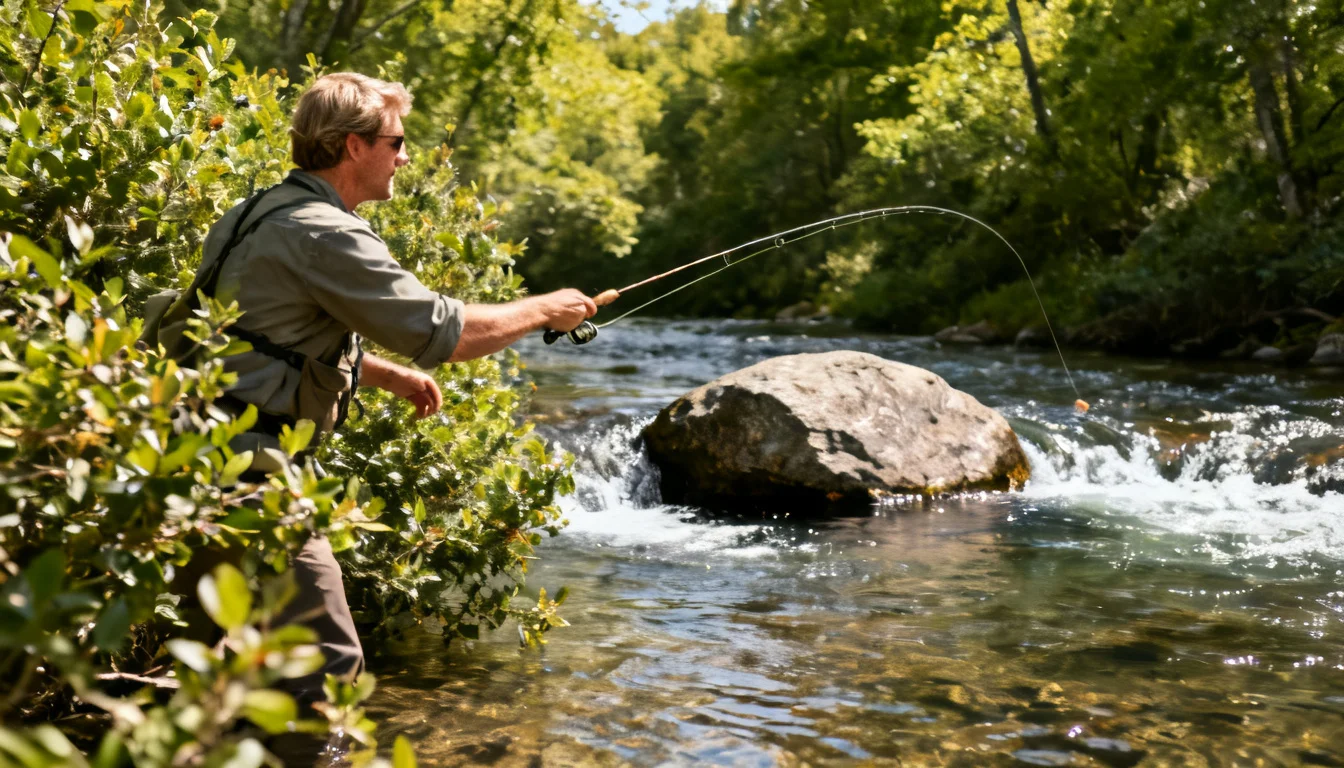
The casts that work best in brushy country:
- Sidearm and underhand casts. A low rod keeps the line parallel to the water, letting you slip a fly or lure under overhanging branches — and keeps your rod tip out of the trees behind you.
- The bow-and-arrow cast. When you are completely boxed in, pinch the fly or lure against the rod, pull the rod tip back to load it, and let go. It drops a fly into a pocket no other cast can reach.
- Roll casts for fly anglers. With no room for a backcast, the roll cast uses the line's friction with the water to load the rod. It is the difference between fishing a brushy creek and just walking along it.
Whatever the cast, lead the pocket. Aim for the head of the lie, where the fish faces, and let the current carry your offering into view. And keep the presentation soft — a fly that slaps the water is a fly that gets refused.
Then fish pocket by pocket: two or three casts per lie, then move on. Think of it as walk-and-fish — work a spot, take the fish or leave it, and keep moving. Pounding one pool rarely adds fish; covering ten pools with three casts each usually does.
Wading Techniques for Small Water
Wading gets you into casting range, and it is also the easiest way to ruin a stretch of water. Waded wrong, you push a bow wave ahead and every fish knows you are coming. Waded right, you move through the creek like part of the scenery.
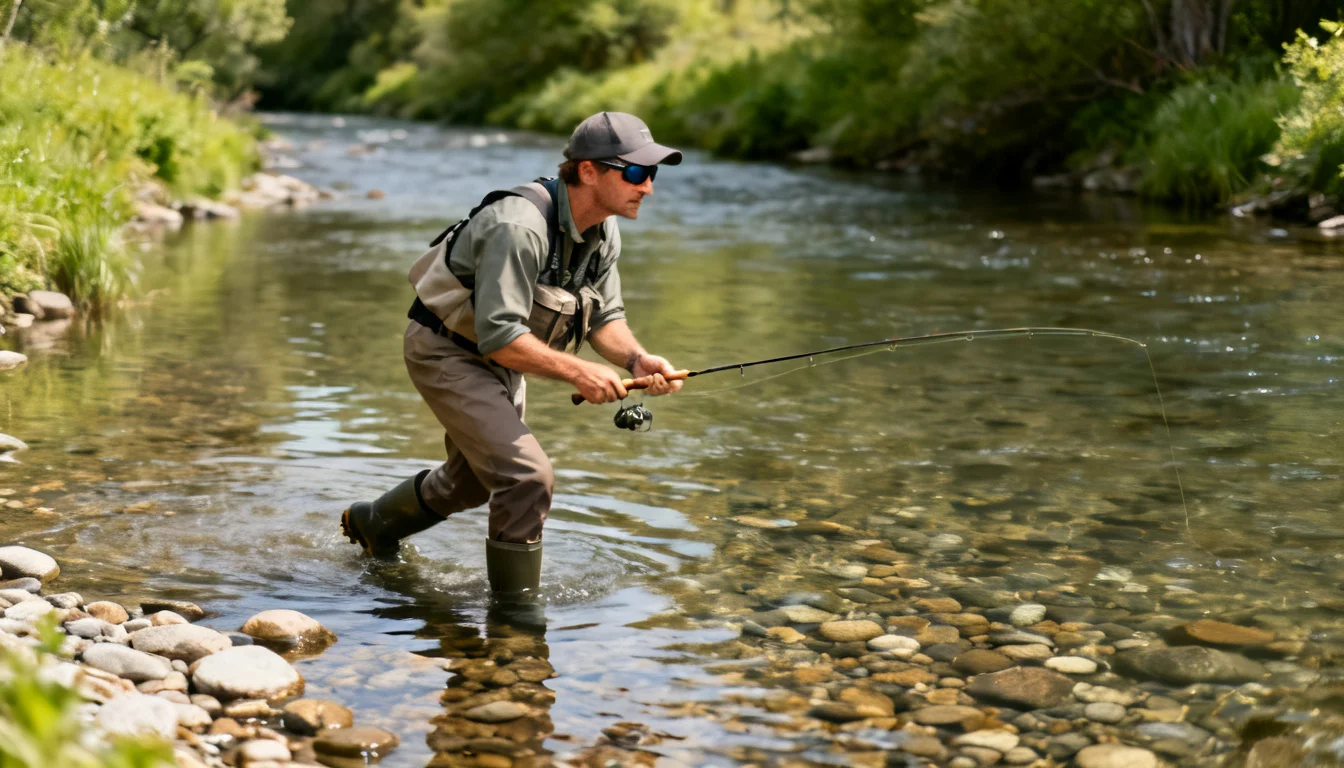
Start at the tail of the pool, not the head, and work up-current. Fish hold at the head facing upstream — approaching from below disturbs the water behind them before the water in front.
Some practical wading rules:
- Take small, slow steps. Slide your feet along the bottom instead of lifting and stomping. This is quieter and far safer on slick, algae-covered rocks.
- Use a wading staff. One good walking stick takes most of the risk out of current and unstable footing. If the water is pushing hard, plant the staff upstream of you, not downstream.
- Let the current push you sideways, not over. Stand with your feet spread and your body angled into the flow. A knee-deep riffle moves more water than it looks like.
- Shuffle in soft bottoms. If you cannot see the bottom, shuffle your feet to avoid stepping into a hole or onto a fish.
- Wade shallow, cast far. The best waders stay in ankle-to-knee water and let the rod do the work. Wading to your waist spooks more fish than it reaches.
- Fish from the bank when you can. On many creeks, kneeling on a bank or sitting on a log gets you closer than any wade.
Footwear matters. Felt-soled boots grip slick rock best (check your state's rules — some ban felt to stop invasive species); studded rubber soles are the modern alternative. In summer, wet wading in quick-dry pants and sturdy boots is all most anglers need; waders earn their keep in cold water and early spring.
The Ultralight Gear Checklist
The heart of small stream fishing is the light gear you carry. Big rods, heavy line, and oversized lures are not just unnecessary on a creek — they are a handicap. A 5-foot-wide pool cannot be fished with a 7-foot musky rod and 30-pound line.
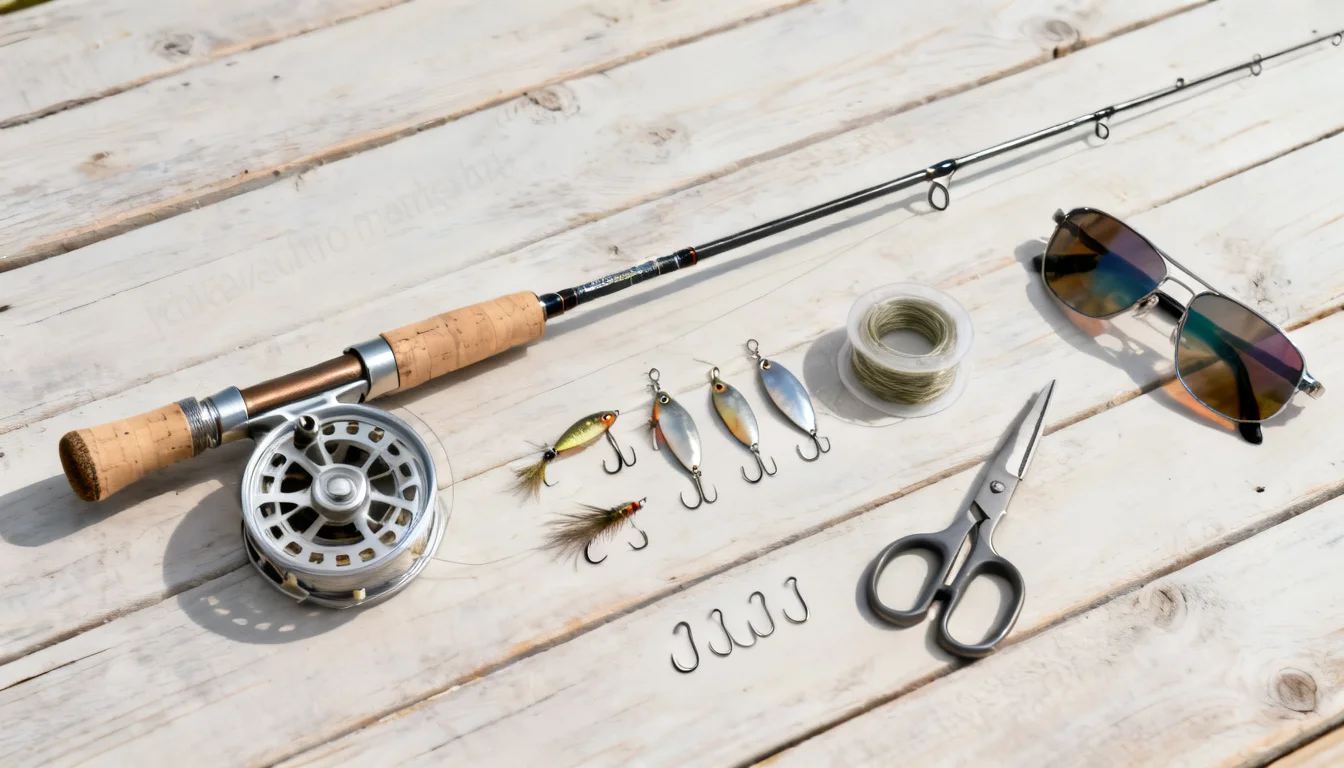
Here is a complete small-stream kit that fits in a daypack:
| Item | What to bring | Why it matters |
|---|---|---|
| Rod | 6–6.5 ft ultralight spinning rod, or 7.5–8.5 ft 3–4 wt fly rod | Short casts, tight brush, and enough backbone for a surprise 3-pounder |
| Line | 2–6 lb test monofilament or fluorocarbon | Thin line drifts naturally and spooks fewer fish |
| Lures | Inline spinners (1/16–1/8 oz), small spoons, tiny minnow crankbaits | Small profile matches creek forage |
| Flies | Dry flies (sizes 12–16), weighted nymphs, small streamers | Trout streams are fly country, but a small box covers it |
| Hooks & rigs | Sizes 6–10 hooks, split shot, small bobbers, a few pre-tied leaders | For bait fishing the deeper pools |
| Accessories | Polarized sunglasses, nippers, hemostats, a small net, a wading staff | See fish, land fish, stay safe |
Ultralight fishing is not about making things harder. On a small stream it is the difference between a natural presentation and a clumsy one — light line drags less in the current, small lures match the forage, and a short rod casts accurately where a long one cannot.
I have landed brown trout pushing two pounds on 4-pound line from creeks most anglers would step over. The light setup is what made it possible.
Keep the tackle box small on purpose — a single small box with a few spinners, spoons, hooks, and split shot covers a full day. The less you carry, the quieter you move, and the more water you cover.
Best Baits and Lures for Creek Fish
Creek fish are opportunists with small appetites. Match the size of your offering to the water — a one-inch spinner in a two-foot pool, not a four-inch crankbait. Natural colors (black, brown, olive, silver) almost always outfish bright ones in clear water.
The species quick reference:
| Species | Where they hold | Best presentation |
|---|---|---|
| Brook trout | Cold headwater pockets, spring seeps, shaded pools | Dry flies, tiny spinners, worms |
| Brown trout | Undercut banks, deep pools, shade | Small spinners, nymphs, streamers |
| Rainbow trout | Riffles, runs, faster pocket water | Spinners, small spoons, nymphs |
| Smallmouth bass | Boulder eddies, plunge pools, current seams | Small crankbaits, tube jigs, soft plastics |
For how to catch brown trout, the stream tactics in that guide — reading shade, fishing the undercuts, going small — transfer almost unchanged to creeks.
If your local creek runs warm and rocky instead of cold, the smallmouth playbook applies: focus on the plunge pools and boulder eddies, and fish them with small crankbaits or tube jigs worked slowly through the current seams.
Common Small Stream Mistakes
Even experienced anglers lose fish on small water by making the same few errors:
- Wading into the water you are about to fish. Walk the bank to get upstream of a pool, then fish down into it — or enter below and fish up. Never cross through the pool itself.
- Standing in the lie. Your shadow, your vibration, and your silhouette all reach the fish before your lure does. Cast from the bank, the tail, or downstream cover.
- Overgunning the gear. Heavy line, big lures, and stiff rods turn a delicate creek bite into a lost fish. If you are not losing an occasional lure to the brush, you are not fishing tight enough.
- Fishing the whole pool from one spot. A pool has a head, a middle, and a tail, and each holds fish differently. Cover each part with a few casts instead of hammering the middle.
- Moving too fast. Small streams reward patience. Pause, watch, and let the water tell you where the fish are before you cast.
- Fishing high, muddy water like it's clear. After a hard rain, creeks blow out and fish hug the bank or hold tight to the bottom. Downsize, slow down, or come back another day.
FAQ
What is the best bait for creek fishing?
For panfish and trout, worms and crickets under a small bobber are the classic creek baits and still outfish everything when the bite is slow. For covering water, a 1/16-ounce inline spinner is the best all-around creek lure — it catches trout, smallmouth, and panfish on the same steady retrieve.
Fly anglers do best matching the local hatch with dry flies and nymphs in sizes 12 to 16.
What time of day is best for small stream fishing?
Early morning and late evening are the most productive windows, especially in summer when fish feed under low light. Overcast days fish well all day — reduced light keeps fish confident and moving. Midday sun pushes creek fish under the banks and into shade, so prospect those pockets then and fish them at dusk.
Do you need waders to fish small streams?
No — most creeks can be fished from the bank, and wet wading in summer with quick-dry pants and sturdy boots works fine. Waders earn their keep in cold water and early spring, when a long session in 50-degree water turns miserable.
If you buy one pair, felt-soled or studded boots matter more than the wader itself; grip is what keeps you safe on slick creek rock.
How do you fish a plunge pool?
Cast to the foamy cushion at the head of the pool first — that is where the current dumps food and where the biggest fish waits. Let the lure swing through the middle, then work the tailout slowly. Two or three casts per section is enough; a fish that has refused twice will not change its mind.
What size line should you use on a small stream?
Two to six pound test covers everything a creek can throw at you. Light line is not about strength — 6-pound test lands most creek fish easily — it is about presentation. Thin line creates less drag in the current, drifts more naturally, and is less visible in clear water.
Fluorocarbon is worth the extra cost when fish are spooky; monofilament casts easier and knots better.
The Bottom Line
Small stream fishing is stealth, accuracy, and light gear applied to water most anglers walk right past. Approach from downstream, keep your shadow off the pool, and cast short and soft into every pocket.
The trout and smallmouth you catch from a two-foot-wide run will teach you more about presentation than a month on a big lake.
If you are ready to put these tactics to work, how to catch rainbow trout covers the fly and spinner side of trout streams. Take a light rod, a small box, and a pair of polarized sunglasses — then go find a creek that looks too small to bother with.