How to Fish Ponds and Reservoirs: Small Water, Big Results
Pond fishing is the easiest way to start fishing in North America, and it stays fun for a lifetime. A neighborhood pond holds more fish per acre than almost any other water you can fish without a boat, and the rigs are simple.
This guide covers small water in both of its forms: the stocked farm ponds and neighborhood ponds where bluegill and bass bite all summer, plus the bigger reservoirs that fish like miniature lakes with their own structure and depth patterns.
What Makes Ponds and Reservoirs Different
Ponds are small, still, and often artificially stocked, which changes everything about how you fish them. Most ponds hold no current at all, warm up faster in spring, and pack fish into a small area, so you rarely need to cast far or cover much water.
Farm ponds are usually built for livestock or irrigation, but pond owners stock them with game fish. Neighborhood ponds are often stormwater basins managed by a city or an HOA — both fish well once you know they hold fish.
Reservoirs are the grown-up version: man-made lakes formed by damming a river. They act like miniature lakes with a flooded river channel running through them, creek arms, points, and timber.
Because they are bigger, wind, water level, and temperature layering matter more. In summer, many reservoirs stratify — a warm surface layer sits on a colder bottom layer with a thermocline between them, and the fish position themselves right around it.
The shared secret of all small water: fish density is high, so finding one fish usually means finding dozens.
Where the Fish Are: Structure and Seasonal Depth
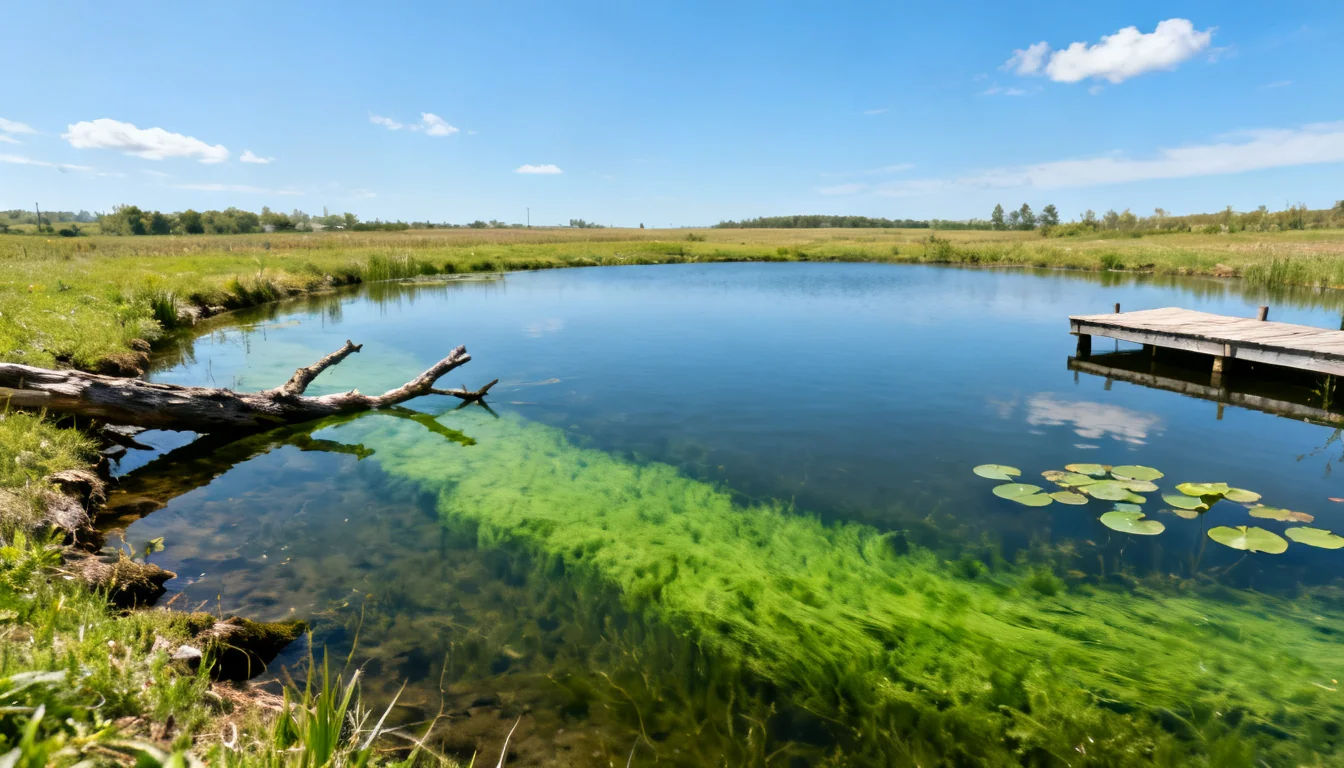
In a pond, structure is small-scale: a weed line, a dock, a fallen tree, a drop-off. Bass and bluegill relate to these spots because they offer shade, ambush cover, and food.
A classic rule for ponds is that long ponds fish best in the middle and square ponds fish best in the corners — fish patrol the shape of their home, so cast to the features that break it up.
Seasonal depth follows a simple pattern that holds for most pond species:
| Season | Where the fish are |
|---|---|
| Spring | Shallow banks and spawning flats, 1–6 ft |
| Summer | Deep weed edges and drop-offs by day; back to the bank at dawn and dusk |
| Fall | Shallow again as water cools and fish feed hard |
| Winter | Deepest water in the pond, moving slow |
The old angler's rhyme — spring in the shallows, summer in the deeps — still works because it follows the fish's temperature comfort zone. In summer, the best bite of the day is the first hour after sunrise and the last hour before dark, when bass and bluegill leave the deep weed edges to feed along the bank.
Best Spots to Cast in Small Waters
Start with the wind. On any pond or reservoir, the wind-blown bank concentrates baitfish and the fish that chase them, because waves push plankton and insects to that shore. When the wind is blowing into a corner, fish that corner.
After wind, fish the edges of cover: the shady side of overhanging trees, the outside edge of lily pads, and the deep side of any dock. In reservoirs, add the classic lake structure: points that slide into deeper water, the inside turns of creek arms, and the old river channel.
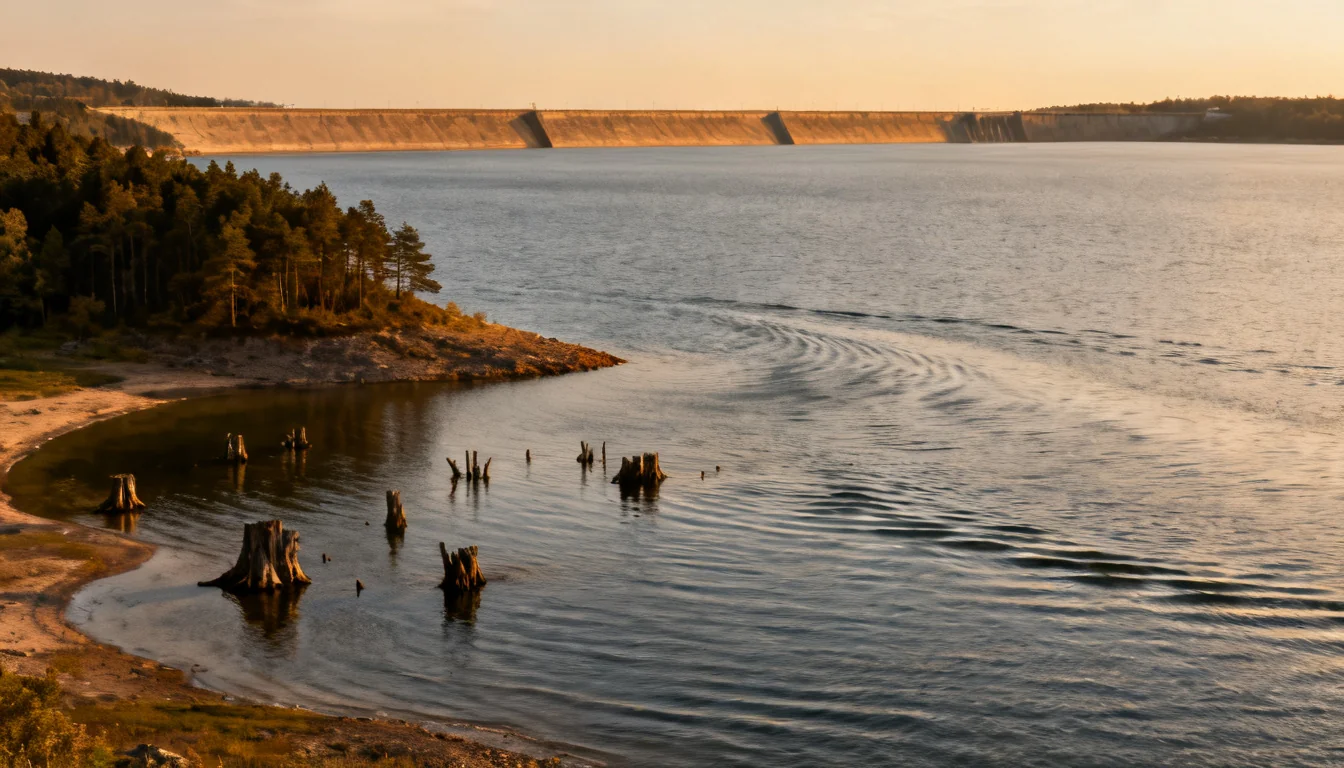
Crappie school around flooded timber and brush piles, bass hold on points and channel edges, and catfish cruise the bottom of the deepest holes. If the water level drops in late summer or winter, fish concentrate in the remaining deep water — a reservoir drawdown is one of the best times to find them.
How Stocked Ponds Work
Most ponds that fish well are stocked ponds — the fish did not get there by accident. The classic North American pond stocking recipe pairs bluegill with largemouth bass at roughly ten bluegill for every bass.
The bluegill reproduce fast and feed the bass, and the bass keep the bluegill population from exploding. Pond owners may also add channel catfish, which are stocked as fingerlings and grow quickly on commercial feed.
That balance explains the two most common experiences on a stocked pond. A healthy pond gives you constant bluegill action with a shot at bass in the 1–3 lb range. A pond that is under-harvested swings the other way: too many bluegill compete for the same food and the pond becomes packed with stunted 4–6 in fish.
Harvesting a few dozen bluegill a year — keeping them for the pan, not throwing them back — is exactly what keeps the survivors growing. Check your state's pond stocking guides and local regulations before you keep fish, but in most places generous daily limits apply.
Fishing Reservoirs: A Miniature Lake
Reservoir fishing rewards the same thinking as lake fishing, scaled to the flooded landscape underneath. When a river valley is dammed, the old creek beds, roads, and timber stay underwater — and those flooded features are exactly where fish hold.
The single most useful thing you can do on a new reservoir is find the old river channel and fish its edges, especially where a point or creek arm meets it.
In summer, the thermocline tells you the depth ceiling. Most reservoir game fish — bass, crappie, and catfish — stay above or right at the thermocline, where oxygen is plentiful.
In the southern US, reservoirs also produce some of the biggest bass and crappie in the country because the long growing season pushes fish to heavy weights. A reservoir that looks featureless on the surface can fish like a completely different water once you map the submerged structure.
Light Tackle and Simple Rigs
Small water does not need heavy gear, and lighter gear catches more fish in clear ponds. A 6–7 ft spinning rod with 4–8 lb line handles almost everything a pond will throw at you. Keep three rigs in mind:
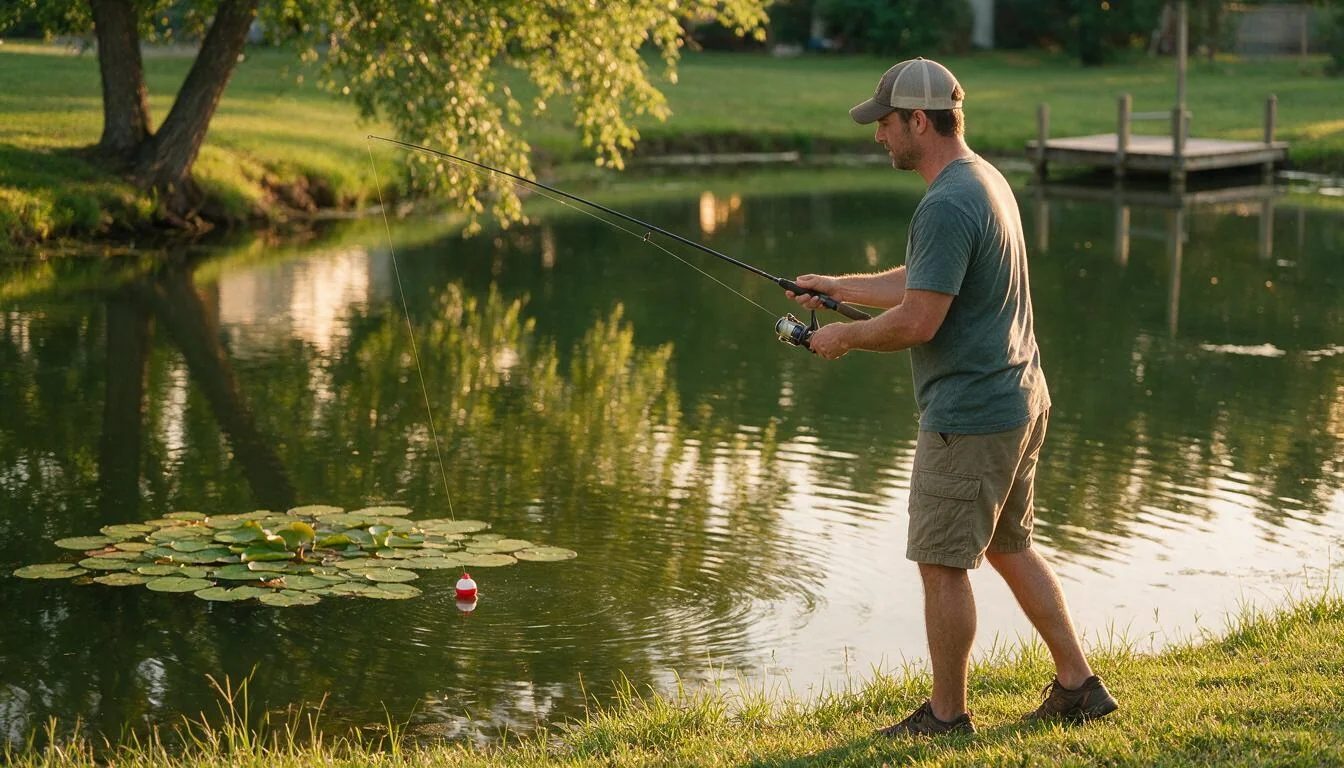
- Bobber and worm — the classic kid-friendly setup for bluegill and sunfish; a small hook, a split shot, and a red worm under a bobber.
- Weightless soft plastic worm — cast past cover and let it sink slowly; this is the simplest reliable way to catch pond bass.
- Bottom rig with a nightcrawler — a hook, a small sinker, and a worm on the bottom for channel catfish, which bite best in the evening.
You do not need a boat for any of this. Most ponds and many reservoirs fish fine from the bank, and bank access is one of the biggest advantages of small water for new anglers.
Why Ponds Are Perfect for Beginners and Kids
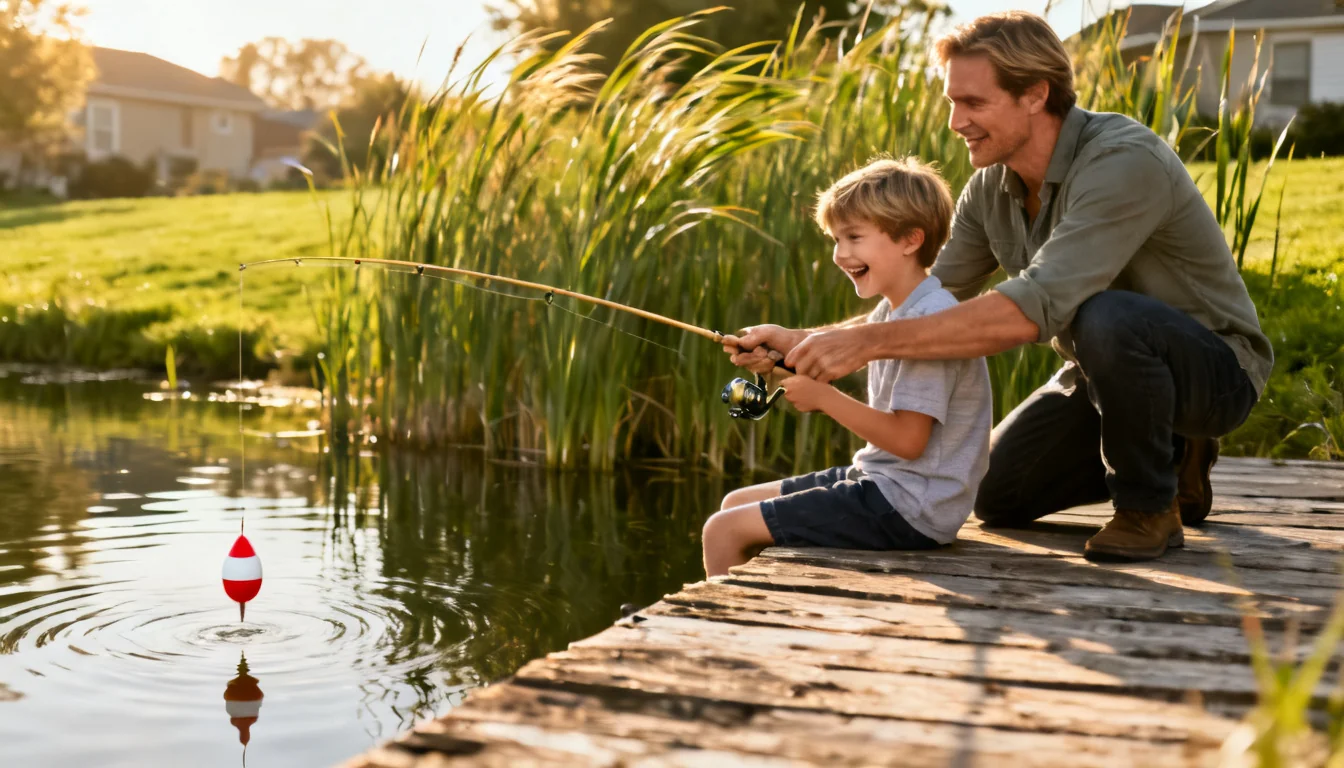
Ponds are the standard answer to "how do I get my kid started?" for good reasons: the fish are numerous, the casts are short, and the action is fast. A child can catch a bluegill within minutes on a bobber and worm, and that first catch is what turns a trip into a hobby.
Neighborhood ponds are usually close to home, free or nearly free to fish, and safe enough for a family session of an hour or two — which matches a young angler's attention span better than a full day on a big lake.
For adults starting out, ponds teach the fundamentals cheaply: how to cast, how to set a hook, how to read cover and depth. Everything learned at a farm pond transfers directly to larger water later. And because the fish density is high, beginners get enough bites to learn from mistakes instead of getting discouraged.
Common Pond Fishing Mistakes
- Fishing one spot all day. If nothing bites in 20–30 minutes, move — ponds are small enough that a 50-yard walk is a whole new fishery.
- Using oversized baits. Pond bluegill and bass eat small prey; a big bass lure scares off more fish than it catches in a neighborhood pond.
- Fishing deep at the wrong time. In summer, the bank bite happens at dawn and dusk; casting deep weed edges at noon beats casting the bank at noon.
- Ignoring the wind. The wind-blown side of a pond out-fishes the sheltered side more often than not.
- Dealing with spooked fish. Ponds are shallow and clear; walk softly, stay low, and cast past your target rather than onto it.
- Keeping nothing. On an overcrowded pond, taking home a few bluegill for dinner is good management, not a loss.
Best Pond Fish by Species
| Species | Where to find it | Best simple bait | Learn more |
|---|---|---|---|
| Bluegill | Spawning beds in spring, weed edges in summer | Bobber and worm | — |
| Largemouth bass | Under docks, along weed lines, on points | Weightless soft plastic worm | bass fishing tips |
| Channel catfish | Deepest holes, evening and night | Nightcrawler on the bottom | — |
| Crappie | Around brush piles and flooded timber | Small jig under a bobber | — |
FAQ
What is the best bait for pond fishing?
For action, a red worm under a bobber is unbeatable — bluegill and sunfish hit it within minutes, and bass will take it too. For targeting bigger fish, a weightless soft plastic worm fished slowly along cover is the most reliable bass bait, and a nightcrawler on the bottom brings catfish after dark.
How deep should you fish in a pond?
Match the depth to the season and the time of day. In spring, work the shallows in 1–6 ft of water. In summer, fish deep weed edges during the day but move back to the bank at dawn and dusk. In winter, the deepest water in the pond holds the most fish.
On reservoirs, the summer thermocline sets the ceiling — most game fish stay above it.
Why are stocked ponds so easy to fish?
Stocked ponds hold far more fish per acre than natural waters, and those fish are used to feeding in the very water you are fishing, so they bite with confidence. With bluegill reproducing constantly and bass keeping the balance, a well-managed pond gives consistent action all season.
Do you need a boat for reservoir fishing?
No. Many reservoirs have excellent bank access, especially near dams, bridges, and parks, and the same structure that holds fish — points, channel edges, timber — can be reached from shore in many spots. A boat simply lets you cover more of the reservoir's structure faster.
The Bottom Line
Pond fishing offers one of the highest catch rates per hour in freshwater fishing, and reservoir fishing scales the same skills to bigger water with bigger fish.
Start at the nearest neighborhood pond with a bobber and worm, learn where the fish hold, and graduate to reservoirs when you want more room to roam. Both are perfect training grounds for every species guide on this site.
Related: Bluegill: The Complete Species Guide · Largemouth Bass: Complete Species Guide