How to Catch Channel Catfish: Baits, Rigs & Night Fishing Tactics
If you want to know how to catch channel catfish, the good news is that it's one of the simplest skills in freshwater fishing. Channel cats are abundant, aggressive eaters, and they'll hit a chunk of chicken liver sitting on the bottom when nothing else in the lake is biting.
The system is straightforward: find deep water near structure, put a strong-smelling bait on the bottom, and wait — preferably after dark. This guide covers the best baits, the rigs that hold bottom in any current, the gear that lands big fish, and the night fishing setup that puts more channel cats on the bank.
New to fishing? Start with our fishing for beginners guide, then come back — catfish are one of the easiest fish for newcomers to actually catch.
Best Time to Catch Channel Catfish
Timing matters more than any single bait or rig choice.
Night is the prime time. Channel catfish are nocturnal feeders. They spend the day resting in deep holes and logjams, then move onto shallow flats, gravel bars, and sandbars to feed after sunset. The peak bite is usually from dusk until midnight, with a secondary window in the hour before dawn.
Season by season:
- Spring (water 60–70°F): cats move shallow and feed heavily before and after spawning — excellent daytime action, especially in rivers
- Summer (70–85°F): the best night fishing of the year; fish shallow after dark, deep during the day
- Fall (60–70°F): a heavy feeding binge before winter — great on both deep and shallow water
- Winter (below 50°F): slow but still catchable; fish the deepest holes and use small baits
A rising river after rain is a classic channel cat trigger — they key in on freshly washed-in food along current seams.
Best Baits for Channel Catfish
Channel cats are scent-driven omnivores: their skin is covered in taste buds, so they find food by smell and taste long before they see it. Strong-smelling baits outfish everything else.
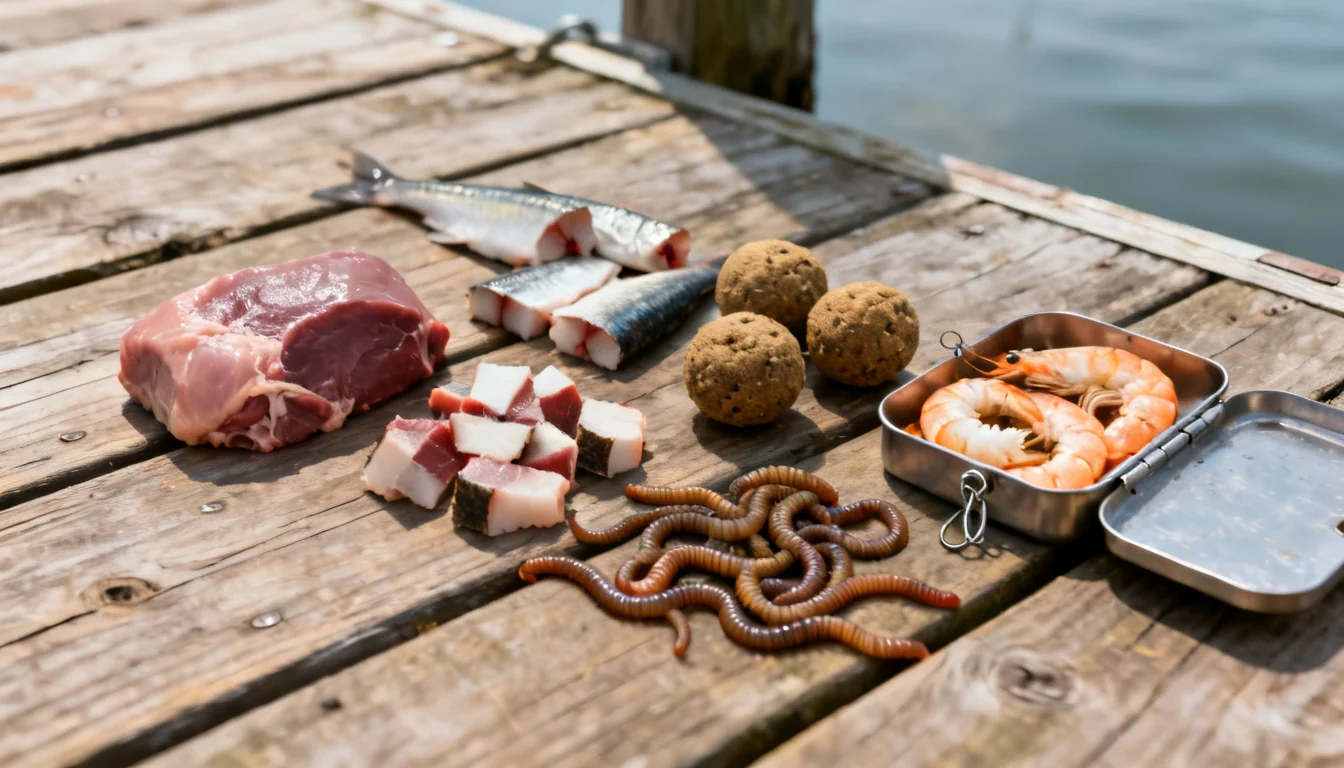
Top baits, ranked by reliability:
1. Cut bait (dead bait) — chunks of shad, herring, skipjack, or bluegill, fresh or frozen. The oilier the better. The #1 producer on big rivers like the Mississippi, Missouri, and Ohio
2. Chicken liver bait — the classic channel catfish bait, especially in ponds and smaller lakes. Blood and smell draw cats in fast. To keep it on the hook, let it partially freeze first, or wrap it in a piece of pantyhose/mesh tied to the hook
3. Stink bait (dough bait) — prepared cheese- or blood-based dough baits molded onto a treble hook, or used to dress a nightcrawler. Designed to sit on the bottom and smell, exactly what channel cats want
4. Nightcrawlers — a great all-purpose bait, particularly for smaller fish and daytime fishing
5. Shrimp — peeled or unpeeled, a sleeper bait that works year-round
6. Live minnows or crawfish — for big fish; a 4–6 inch bait on a big hook catches the giants
Tip: match bait size to target size. A thumbnail-sized chunk catches eater-sized cats; a whole shad fillet or a 3-inch piece of cut bait catches trophies. For the biggest fish, use whole shad or large cut chunks fished on the bottom at night.
Catfish Rigs: Bottom Fishing Setup
Bottom fishing for catfish is the default rig for a reason: channel cats feed on the bottom, and a bait sitting there is exactly what they're looking for.
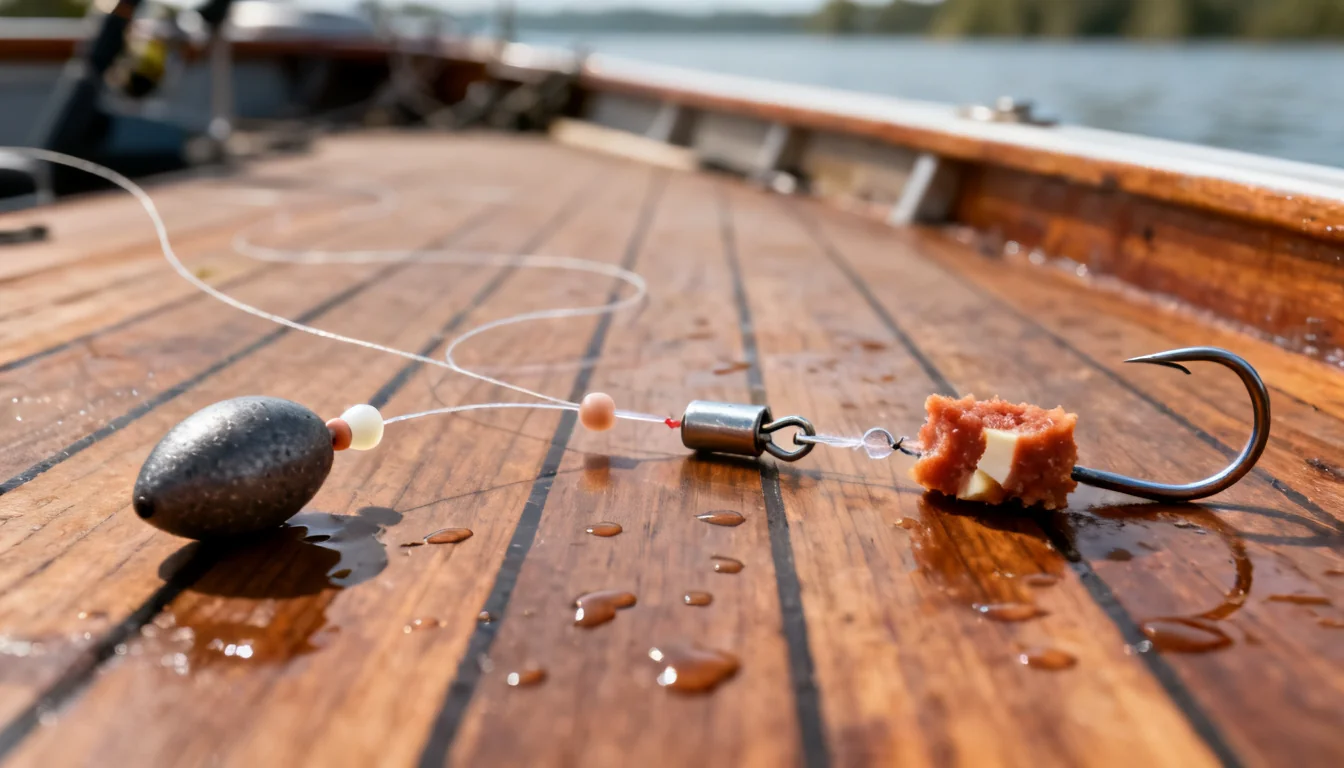
The slip-sinker rig (Carolina-style) — the workhorse:
1. Thread a 1/2 to 2 oz egg or no-roll sinker onto the main line
2. Add a small bead, then tie on a barrel swivel
3. Tie an 18–24 inch leader of 20–30 lb monofilament to the swivel
4. Finish with a 2/0 to 6/0 circle hook (bigger hooks for bigger baits)
The sliding sinker lets a fish pick up the bait and swim without feeling the weight — and a circle hook sets itself in the corner of the jaw. With circle hooks, do not jerk the rod when the line tightens; just reel steadily into the fish.
The fish-finder rig (Santee rig; regional names vary) — the best for current: the sinker slides on a short line above the swivel, so the bait drifts naturally with the current while the weight holds the bottom. This is the go-to rig on rivers and below dams.
Weight selection: still water — 1/2 to 1 oz; light current — 1 to 2 oz; strong current — 3 to 4 oz or a bank sinker. The bait must stay put; a rolling bait gets ignored.
Float Fishing for Channel Catfish
Float fishing isn't just for panfish — it's a deadly catfish rig in two situations: fishing suspended baits in reservoirs, and drifting baits through current.
Slip-bobber rig:
1. Set a slip bobber (peg it with a bobber stop) so the bait hangs 2–10 feet deep
2. Below the bobber, a small split shot 12–18 inches above the hook
3. Use a #2 to 1/0 hook for worms or small cut bait chunks (size up toward 3/0 if the cats are running big)
4. Cast along weed edges, brush piles, and current seams — wherever suspended cats are feeding
The slip bobber lets you fish deep water while keeping the bait off the bottom — a big advantage in reservoirs where channel cats suspend over flooded creek channels, and in rivers where a drifting bait covers water a static rig can't.
Night float fishing: use a lighted bobber or attach a small glow stick to the line above the bobber — you'll spot the bite in the dark: a bobber that shoots sideways means a cat has grabbed the bait.
Night Fishing for Channel Catfish
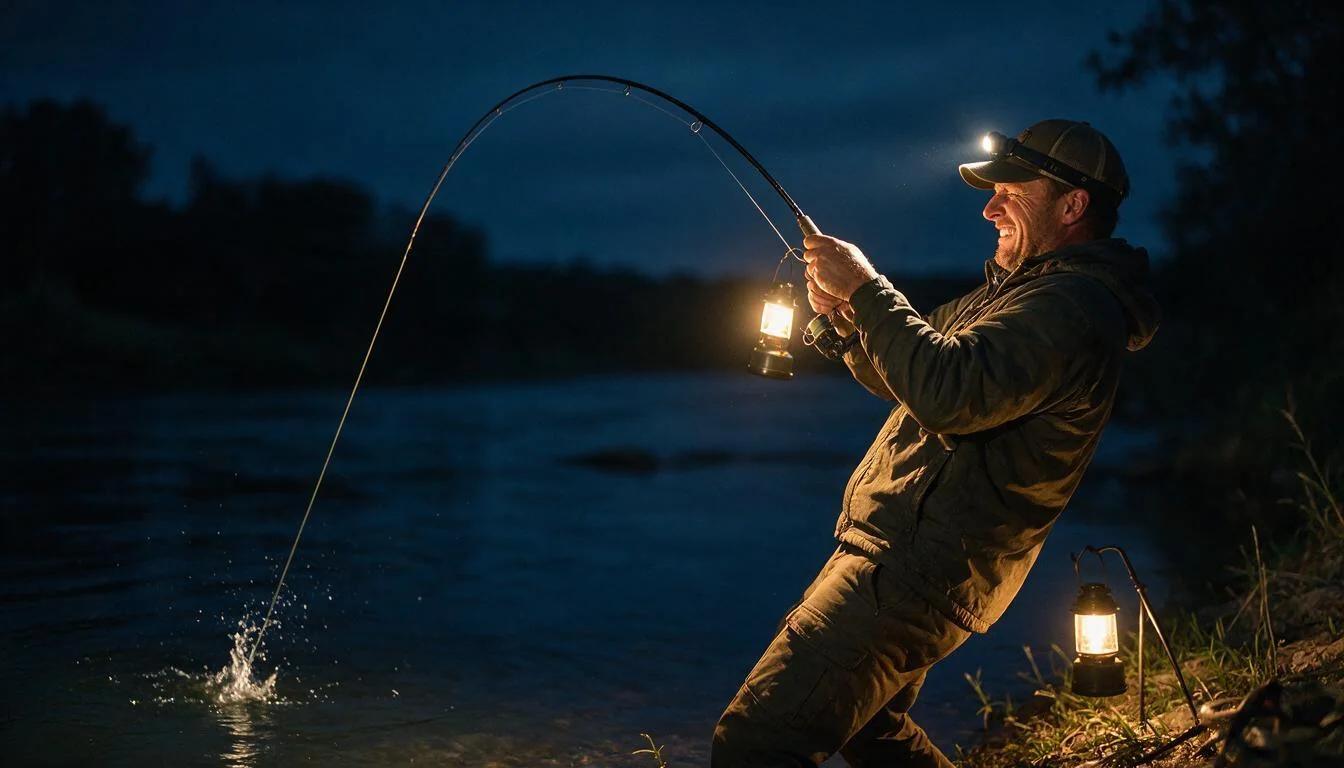
Night fishing for catfish is the most productive way to fish for them, and the setup is simple. (For the biology behind their after-dark feeding — taste buds and low-light eyes — see our channel catfish species guide.)
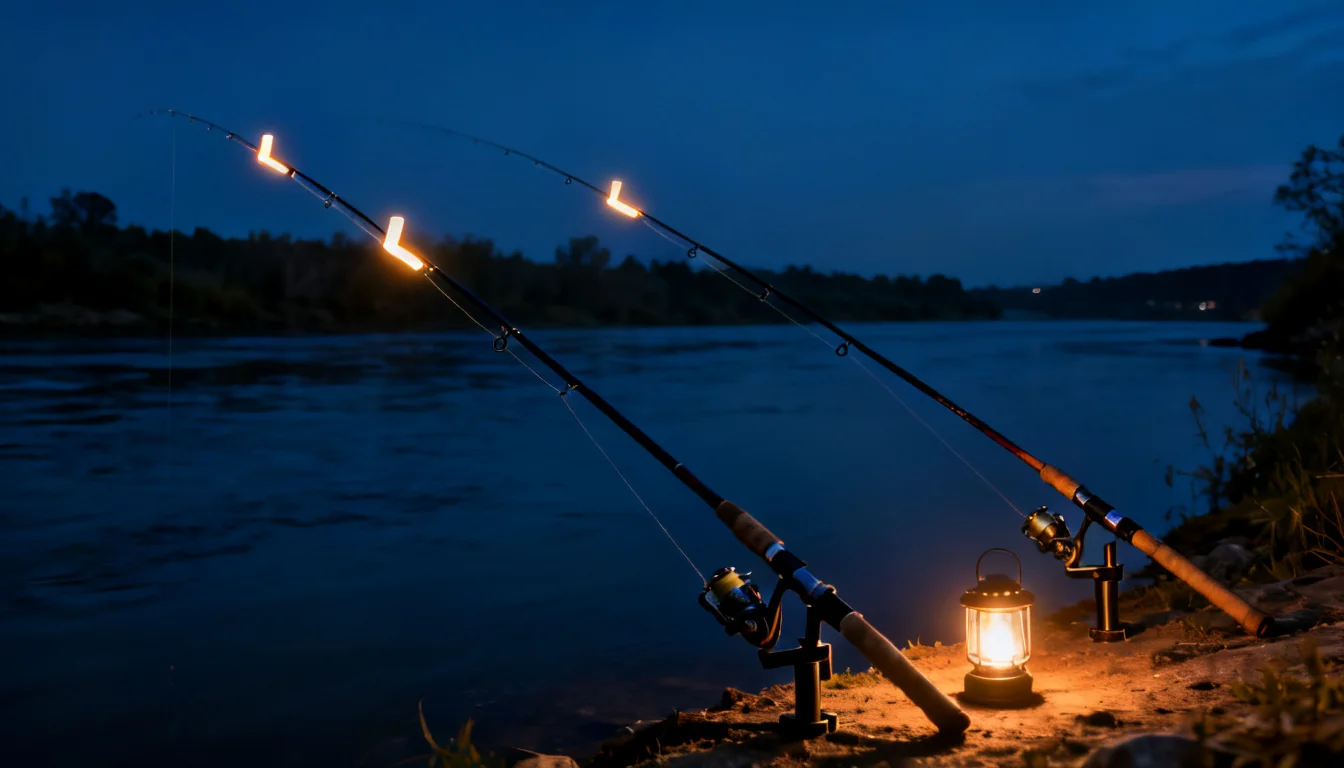
- Rod holders — bank or boat rod holders keep baits on the bottom at the right angle
- Bait clicker or loose drag — set the reel's clicker or a light drag so a take is announced audibly; cats often run with the bait before swallowing
- Glow sticks — clip one to the rod tip or the line to see bites in the dark
- Headlamp and gloves — for re-baiting; keep light off the water as much as possible
- Chumming — tossing a few handfuls of soured corn, bread, or cut bait scraps near your rig draws cats into range (check local regs — chumming is restricted in some waters)
Fish the shallow side of structure after dark: sandbars, gravel points, flats in 2–10 feet of water, and the mouths of creeks. Set multiple rods on different baits — one with cut bait, one with stink bait, one with liver — and let the fish tell you what they want tonight.
Gear: Rods, Reels & Hooks
Channel catfish gear doesn't need to be fancy, but it does need backbone — a big cat in a logjam will break light tackle.
- Rod: a medium-heavy to heavy rod, 7 to 8 feet, with a strong backbone. A 7'6" medium-heavy rod with a moderate tip is the all-around standard — enough power to muscle a 10-pounder out of brush, enough tip to cast a 2 oz rig
- Reel: baitcasting or spinning reel in the 4000–6000 class, spooled with 15–30 lb monofilament or braid. Mono stretches to cushion runs; braid gives abrasion resistance around timber (use a mono or fluoro leader)
- Hooks: 2/0 to 6/0 circle hooks for most fishing, up to 8/0 for trophy baits. Circle hooks are the standard — they hook fish in the jaw, rarely get swallowed, and make release easy
- Line: 20 lb test is a good default; step up to 30–40 lb in snaggy rivers or when targeting 20+ lb fish
- Extras: a good landing net or a gripper, a stringer or cooler for the catch, and pliers for hook removal
Where to Find Channel Catfish
Location is 80% of catfishing success. Look for:
- Deep holes in rivers — especially below riffles and gravel bars; the deepest water in a bend
- Logjams and fallen trees — prime daytime holding cover
- Undercut banks — shaded, root-lined banks hold fish all day
- Below dams and wing dams — turbulent, oxygen-rich water with baitfish washing through
- Current seams — where fast water meets slow water; cats sit on the slow side and ambush food
- Creek mouths in reservoirs — current and food funnel in, cats wait at the drop-off
The pattern: daytime = deep and tight to cover; night = shallow flats and bars near deep water. Find the deep hole, fish the edges after dark, and you're in business.
Common Mistakes to Avoid
- Jerking the hook with a circle hook — circle hooks set themselves; a hard hookset pulls the hook out of the fish's mouth. Reel steadily instead
- Using hooks that are too small — a #6 hook for a 5-pound cat is a recipe for deep-hooking and lost fish. Go big: 3/0 to 6/0
- Not enough weight in current — if the bait is rolling, the fish aren't eating it. Add weight until the line stays tight to the bottom
- Checking baits too often — cats hold a bait for a long time before eating it. Give each bait 20–30 minutes; don't reel in every five minutes
- Fishing the wrong depth — daytime shallow water, or night fishing the deepest holes instead of the shallow flats, both kill your bite
- Fighting a fish too hard — a big cat in a logjam will break 20 lb line on a straight pull; pump and reel, keep side pressure, and steer it into open water
How to Catch Channel Catfish FAQ
Can you catch channel catfish on lures?
Yes — more often than most anglers realize. Jigs, small crankbaits, and spinnerbaits worked slowly along the bottom catch channel cats, especially after dark and in current. It's rarely as productive as bait fishing, but a lure-caught cat is a thrill — and it keeps a rod busy while a bait sits on the bottom.
Do catfish bite in the rain?
Usually, yes — a rainy spell is often one of the best times to go. Runoff washes worms, insects, and other food into the water, and the low light pushes cats out of cover. The exception is heavy flood rain that muddies the water out — then fish the edges of the fresh stain rather than the murky middle.
Do channel catfish bite during the day?
Yes, but less predictably. Fish deep holes, logjams, and shaded banks during the day; the bite is strongest at dusk, after dark, and just before dawn.
How deep do you fish for channel catfish?
At night, 2–10 feet on flats and bars near deep water. During the day, fish the deepest structure available — holes of 10–30 feet in rivers and reservoirs. Use a slip bobber to suspend baits at mid-depth where cats are feeding off the bottom.
How many rods can you fish for catfish?
Most states let catfish anglers run two to three rods, and some allow more — multi-rod catfishing is that popular. A few require a second-rod permit or cap the total lines, so check your state's regulations before you set out a spread of rods.
Is chicken liver a good catfish bait?
One of the best — and one of the easiest to ruin. Liver is delicate: it falls apart after a few casts, so keep it cold on the bank, re-bait often, and hook it with a single pass through the thickest part rather than threading it on repeatedly.
A slip-sinker rig or a bobber both work; the key is letting it sit still long enough for the scent to spread.
The Bottom Line
How to catch channel catfish in one paragraph: fish at night, put a smelly bait on the bottom near deep water and structure, use a slip-sinker rig with a circle hook on medium-heavy gear, and give each bait time to work. Add float fishing and cut bait for reservoirs and rivers, and you're fishing like a veteran.
For another beginner-friendly freshwater target that fights just as hard, see our largemouth bass guide.