Fishing for Beginners: How to Start Fishing, Step by Step
Fishing for beginners looks complicated from the outside — rods, reels, knots, a dozen different baits, and the unspoken rule that everyone else somehow already knows what they're doing. Strip away the jargon, though, and the whole sport comes down to one idea: put bait where a fish is feeding, and wait.
This guide walks you from zero to your first catch. You'll learn what gear to buy, where to go, how to cast, and what to do the moment a fish bites — plus a realistic budget so you don't overspend before you know you love it.
Fishing Basics: The Only Four Things That Matter
Before you spend a dollar, learn what fishing actually is. Fish, like every animal, need three things: food, shelter, and water with enough oxygen at a comfortable temperature. Your job as an angler is to present something edible inside that comfort zone and wait for a fish to decide it's hungry.
The four pieces of every fishing setup. Every rig, from a kid's cane pole to a tournament bass boat, uses the same four parts: a rod to cast and fight, a reel to store line and retrieve it, line to connect you to the fish, and a hook dressed with bait or an artificial lure. That's it. Everything else — bobbers, sinkers, swivels — is fine-tuning.
Bait vs. lure. Bait is real food: worms, minnows, corn, or stink bait. Lures are fake food: plastic worms, spinnerbaits, and crankbaits designed to trigger a strike. Beginners usually start with bait because it works on its own; you cast, sit, and wait. Lures require constant casting and retrieving, which is more work and more skill.
Match the water, not the store. A small pond holds different fish than a big lake, and they want different presentations. That's why the smartest first step isn't buying gear — it's picking your water first, then buying for it.
How to Start Fishing: License, Spot & Timing
Three decisions shape your whole first season. Get these right and the rest gets easy.
Get a license first. Every state requires a fishing license for adults — with only narrow exceptions like free fishing days — and game wardens do check. A resident freshwater license runs roughly $10–50 per year depending on your state, and kids under 16 typically fish free. Buy it online from your state's fish and wildlife agency in about five minutes. Skip this step and a $30 ticket turns your cheap hobby into an expensive one.
Pick water with a fish population. Your first spot should be a public pond, small lake, or community reservoir — water you can walk the bank around in an hour. City park ponds and stocked reservoirs are ideal because they're managed to hold fish. Ask at a local bait shop or look up your state agency's stocking list; both will point you to reliable beginner water. A small pond is the classic classroom: pond fishing and reservoir fishing pack more action per cast than any other water type.
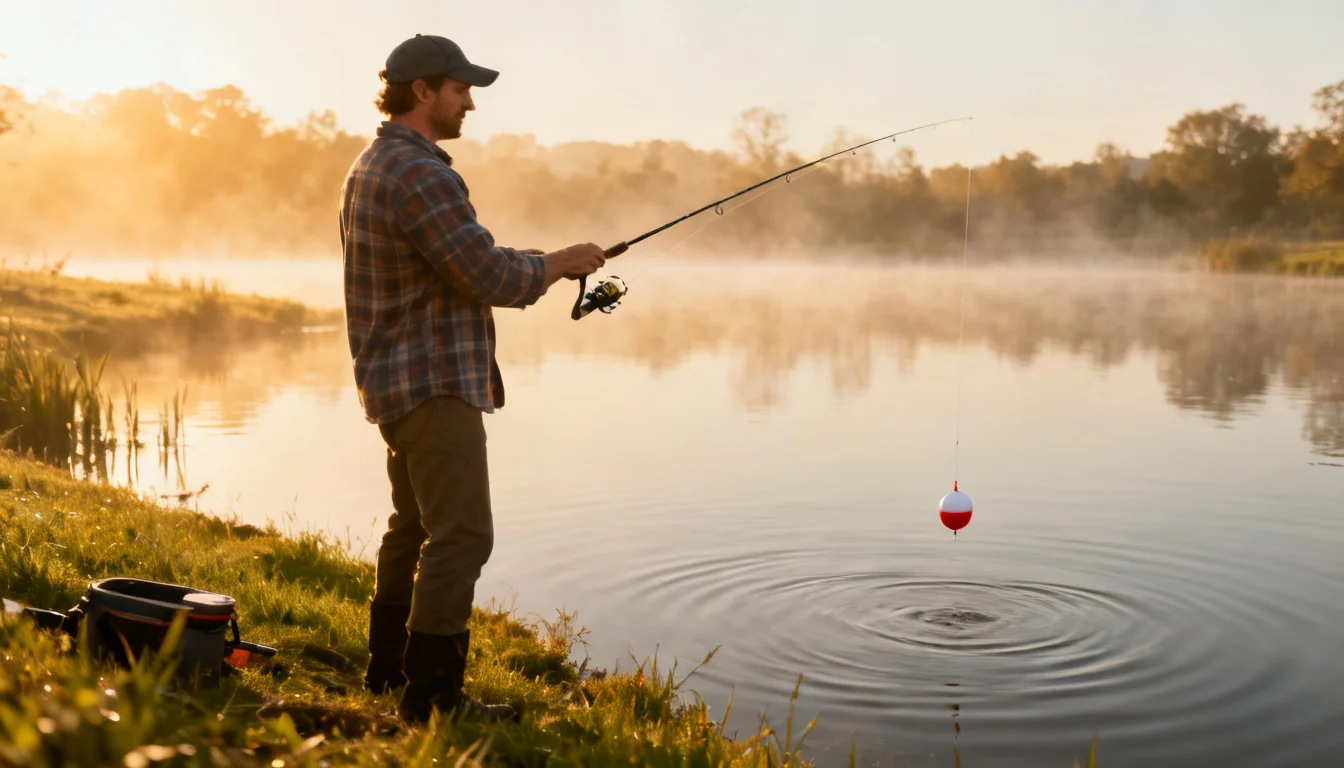
Fish when fish feed. The universal feeding windows are dawn and dusk — roughly sunrise to mid-morning, and the last two hours before dark. Fish are also more active in spring and fall than in the dead of summer or the frozen weeks of winter. A beginner fishing at 7 a.m. on a spring morning will catch far more than the same angler at 2 p.m. in July.
Your First Fishing Trip, Step by Step
This is the part everyone wants: what actually happens on the water. Plan on this sequence and your first fishing trip will feel less like guesswork and more like a checklist.
Step 1: Rig up on land, not on the water. Tie your hook, add a small split shot about 12 inches above it, and clip a bobber onto the line a foot or two above that. Do this at home or the parking lot where you have a flat surface and no wind. A pre-rigged line is the single biggest time-saver a beginner has.
Step 2: Bait the hook. Thread a worm or a piece of nightcrawler onto the hook so the point stays exposed. Hide the point and you'll miss strikes; leave too much dangling and fish will steal the worm without getting hooked.
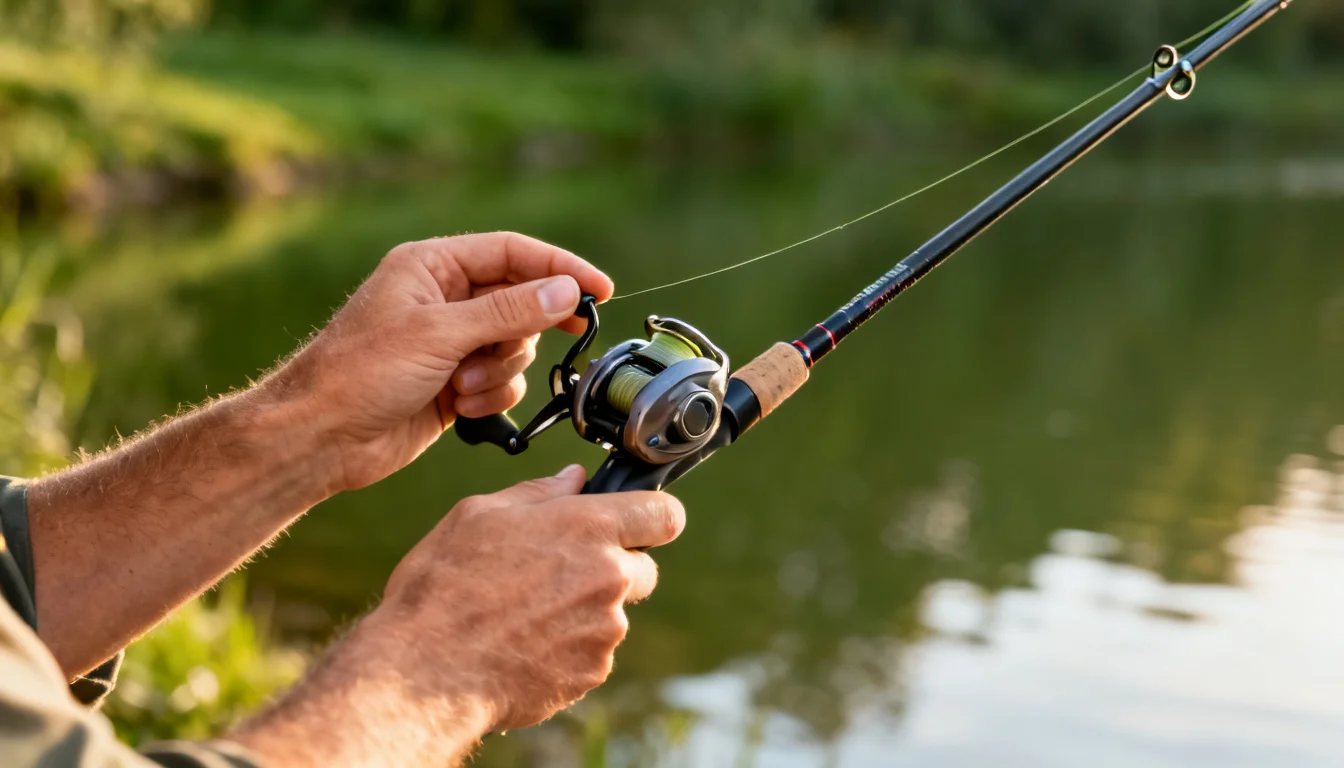
Step 3: Cast with a stop, not a throw. Open the bail, pinch the line against the rod with your index finger, and bring the rod tip back to about 10 o'clock. Swing it forward smoothly and release your finger as the tip passes roughly vertical — the rod should stop around 2 o'clock. The line will carry the bobber out. Most beginners cast too hard; a smooth swing beats a violent heave every time.
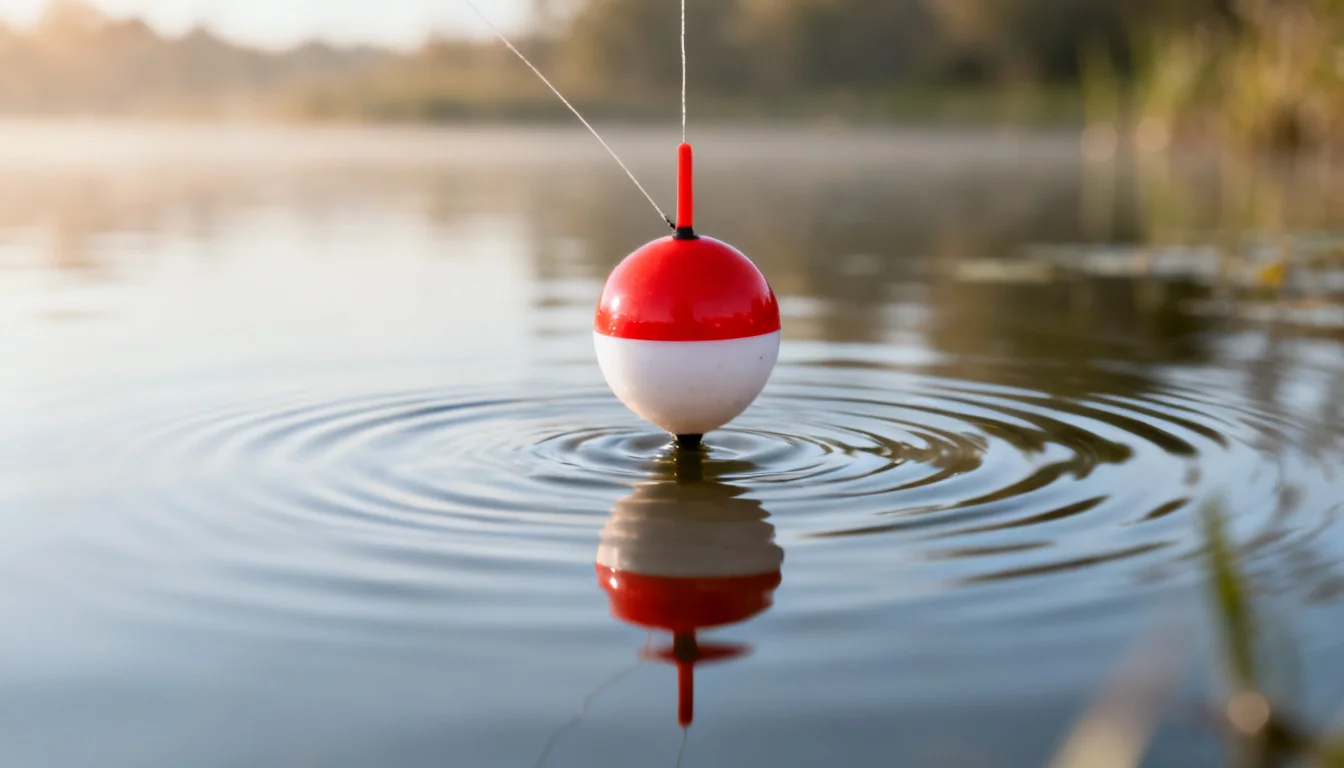
Step 4: Watch the bobber, not the water. The bobber is your underwater eye. When it dips once or twitches, a fish is mouthing the bait — don't move. When it goes under and stays, reel down the slack and lift the rod tip sharply. That lift sets the hook. Give the fish a second after the set before you start reeling.
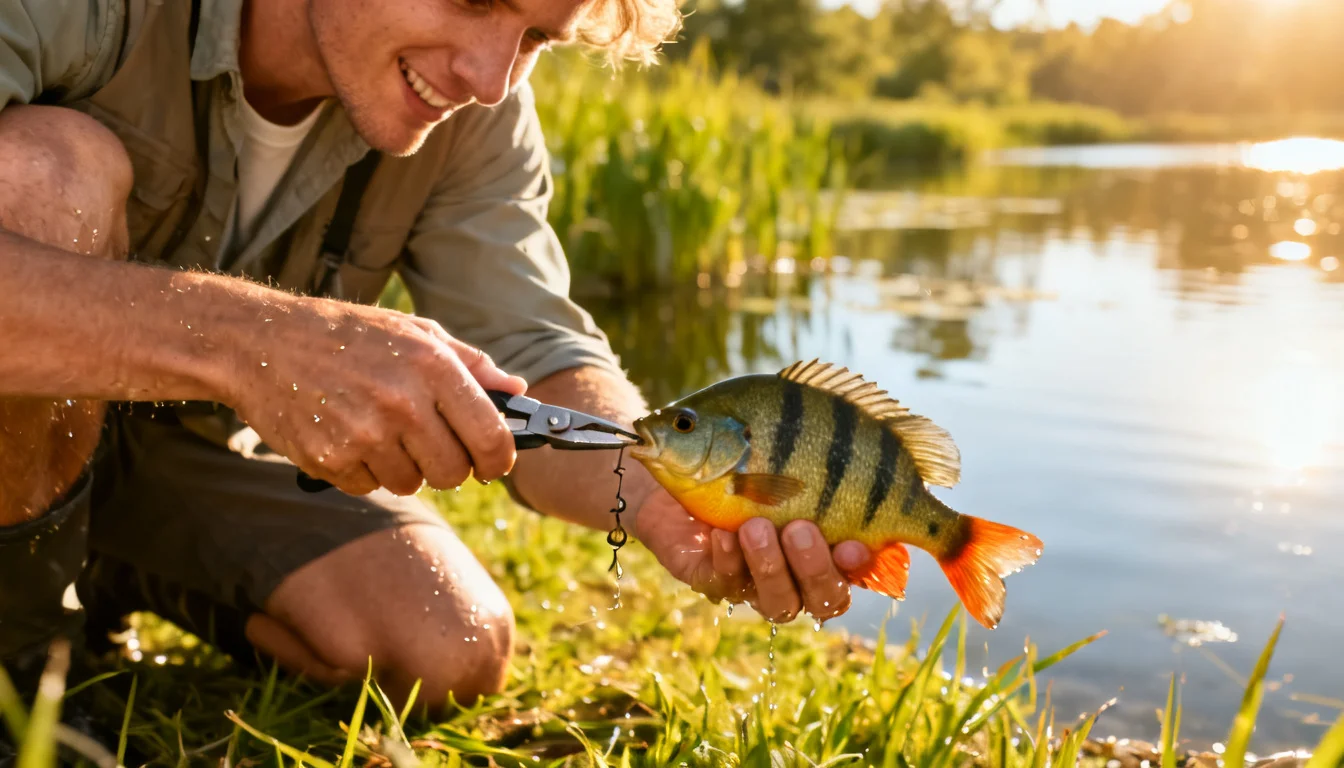
Step 5: Land, look, and decide. Bring the fish to shore or the dock, wet your hands before touching it (dry hands strip off the protective slime), and remove the hook with pliers or hemostats. Then choose: release it gently by supporting it upright in the water until it swims off, or keep it if it meets your state's size and bag limits. A bluegill or sunfish is the classic first catch — small, plentiful, and genuinely fun. When you're ready, how to catch bluegill walks through it in detail, and crappie and channel catfish are the natural next targets once panfish get easy.
The $50 Beginner Starter Budget
You do not need a hundred-dollar rod or a tackle bag full of gear to start. Here's a realistic, no-brand shopping list that gets you fishing for about $50:
| Item | Typical cost |
|---|---|
| Spinning rod-and-reel combo (6 ft, medium-light) | $25–35 |
| Monofilament line (6–10 lb test, pre-spooled or add-on) | $5–8 |
| Hooks (size 6–10), split shot, bobbers | $5–8 |
| Small tackle box or zip pouch | $3–5 |
| Bait (worms or nightcrawlers) | $3–5 |
| Total | ~$45–60 |
A few buying rules save beginners real money. Buy a combo, not separate pieces — a matched rod and reel beats mismatched parts at the same price. Pick a spinning reel over a baitcaster; spinning is far easier to learn and forgiving of mistakes.
And spend the extra few dollars on decent line. Line is the one part that connects you to every fish, so it's the worst place to cheap out.
The $100 tier gets you a slightly longer rod, better line, and a couple of lures to try. The $200+ tier is where people usually upgrade after a season, not before one. Start small, catch fish, then spend.
Beginner Fishing Tips That Actually Help
A handful of habits separate beginners who catch fish from beginners who stare at still water. These are the ones that matter most early on.
Quiet wins. Fish feel vibrations through the water. Walk softly to the bank, don't stomp, and keep voices low. A fish spooked by noise is gone before your bait hits the water.
Go light on the retrieve. When you're reeling in to recast, do it slowly. Many bites come on the retrieve, and a fast, jerky reel-in drags the bait away from fish that were about to strike.
Fish the edges. Cast along weed lines, under overhanging trees, around docks, and into pockets of shade. Structure holds fish because it holds food and cover. Open, featureless water is the emptiest place on any lake.
Move if it's dead. If you haven't had a bite in 20–30 minutes, move 30–50 yards down the bank and cast again. Fish are rarely spread evenly across a shoreline; they stack in specific spots. Patience means staying mobile, not sitting in one dead zone for hours.
Keep the hook sharp. A dull hook is the most common silent killer of beginner fishing trips. If you can drag the point lightly across your thumbnail without it catching, it's dull — replace it or touch it up with a small file.
Common Beginner Mistakes to Avoid
Almost every mistake a new angler makes comes from the same root: moving too fast or too hard. Slow down and most of these disappear.
Setting the hook like you're swinging a bat. A hard, violent hookset tears the hook out of soft-mouthed fish like bluegill. A sharp but controlled lift is all you need.
Reeling against a running fish. When a fish runs, let it pull line against the drag instead of cranking against it. Forcing the reel when a fish is taking line strips gears and pops knots.
Fishing too deep or too far. Beginners often cast to the middle of the lake, where the bottom is empty. Most fish in a small pond sit within 30 feet of the bank, near structure. Short casts to the right places beat long casts to nowhere.
Ignoring the wind. Wind pushes baitfish, and baitfish push game fish. On a breezy day, fish the bank the wind is blowing toward — that's where the food collects.
Giving up at the wrong moment. The bite often turns on right after you decide to leave. Commit to a minimum of an hour per session, and always make your last three casts your best three.
What to Try Next
Once you've caught your first fish, you're past the hardest part. The sport opens up from here in four directions.
Bigger fish. The jump from panfish to largemouth bass is the classic next step — bigger fights, lures instead of worms, and a whole new layer of strategy.
New water. A pond teaches you the basics; a lake teaches you structure, depth, and how to find fish that aren't visible from the bank.
Different seasons. Each season rewrites the rules. Spring fishing is the easiest season to start in — pre-spawn fish are shallow, hungry, and concentrated. Summer, fall, and winter each bring their own patterns.
Saltwater. When freshwater starts feeling small, freshwater vs saltwater fishing lays out what changes — and why most anglers are glad they learned in fresh water first.
FAQ
Do kids need a fishing license?
In most states, children under 16 fish without a license when an adult is present. Rules vary slightly — some states set the age at 15, others let kids fish free under a parent's license — so check your state agency's website. The adult still needs a valid license in every state.
What's the easiest fish to catch for a beginner?
Bluegill and other sunfish are the standard answer: they're everywhere, bite aggressively, and fight just enough to be fun. Crappie, stocked trout, and channel catfish are also beginner-friendly once you learn their basics. None of them require expensive gear or advanced technique.
What time of day should a beginner go fishing?
Early morning and late evening are the two best windows. Fish feed most actively in low light, when they feel safe from predators. Midday fishing works in spring and fall, but in summer it's the slowest time of day on any water.
Do I need a boat to go fishing?
No. Bank fishing from a shore, dock, or pier catches plenty of fish — most beginners should start on foot anyway, because it's free and easy. A boat becomes useful later when you want to reach deeper water or fish bigger lakes.
How do I release a fish I don't want to keep?
Wet your hands before touching it, remove the hook with pliers (or cut the line if the hook is swallowed), and support the fish upright in the water, gently moving it back and forth until it swims away on its own. Never hold a fish by the gills or squeeze it.
The Bottom Line
Fishing for beginners is simpler than the tackle shops make it look: license, a $50 outfit, public water, and the dawn-and-dusk hours. Rig on land, cast smooth, watch the bobber, and set the hook with a controlled lift.
Catch one fish and the sport has you — the rest is a lifetime of learning that starts with a single afternoon on the bank. Go buy your license, pick a pond, and get your line wet this weekend. The fish are waiting.