Fishing Knots 101: The 5 Knots Every Angler Should Master
A fishing trip can end in one second — the moment a knot fails. Whether you're tying a hook to 6 lb line for panfish or a crankbait to 17 lb for bass, fishing knots are the weakest link in your entire setup.
Knowing how to tie fishing knots that hold is the difference between bragging photos and "the one that got away." Most fishing line knots, tied carelessly, cut a line's breaking strength nearly in half.
Learn these five proven knots and you'll dramatically cut your odds of losing a fish to a slipped knot. Each one below comes with step-by-step instructions and the situations where it earns its place.
Why Knots Matter More Than You Think
The knot is where line meets hook — and it's the single most common point of failure in fishing:
- A bad knot can halve your line's strength, even with premium line
- A properly tied knot preserves 85-100% of line strength
- Most "the fish broke my line" stories are actually knot failures
- Wet the line before tightening — friction heat weakens dry line
The golden rule: practice every knot at home until you can tie it in the dark. When a big fish hits, you won't have time to think. If you're new to the sport, our fishing for beginners guide covers the rest of the basics.
How to Tie Fishing Knots: The Top 5
1. Palomar Knot (strongest overall)
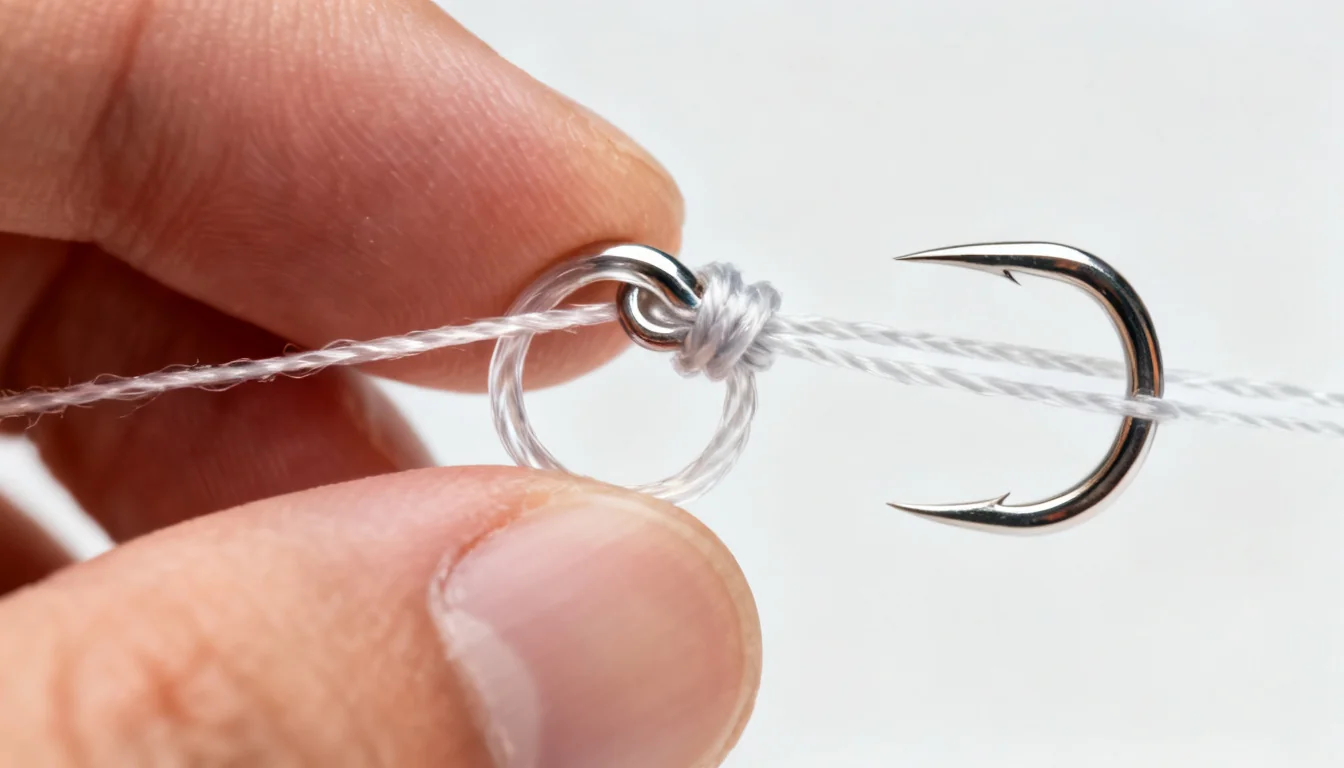
The Palomar is the strongest fishing knot for most situations — it preserves nearly 100% of line strength and is nearly impossible to mess up.
When to use: braided line, hooks, lures, swivels — anything you can pass a loop through.
How to tie it:
1. Double 6 inches of line and pass the loop through the hook eye
2. Tie a simple overhand knot with the doubled line (don't tighten yet)
3. Pass the hook (or lure) through the loop
4. Wet the knot, pull both ends tight
5. Trim the tag end
Why it's the strongest: the doubled line distributes stress evenly — it's the strongest knot in this list and the easiest to learn.
2. Improved Clinch Knot (the classic)
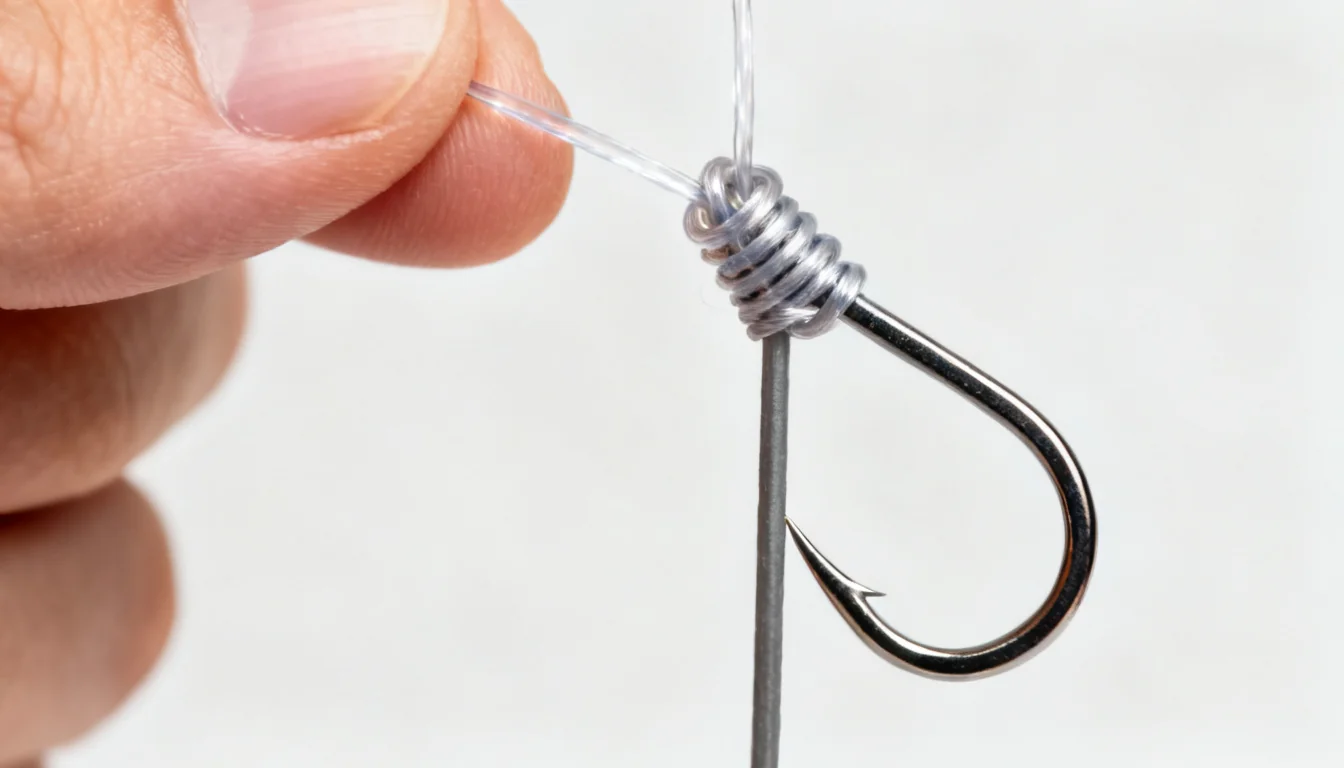
The Improved Clinch is the traditional knot most anglers learn first, and it's excellent for monofilament and fluorocarbon.
When to use: monofilament line, hooks, lures, and swivels — the standard all-around knot.
How to tie it:
1. Pass the line through the hook eye, leaving 6 inches of tag end
2. Wrap the tag end around the standing line 5-7 times
3. Pass the tag end through the loop just above the hook eye
4. Pass it back through the big loop you just created
5. Wet and tighten, pulling the tag and standing line together
The trade-off: reliable on mono and fluoro, and it's the knot most guides use for everyday fishing. On slick braid it can slip — switch to the Palomar.
3. Uni Knot (versatile workhorse)
The Uni Knot is a strong, versatile knot that works on all line types and can be tied quickly.
When to use: all line types, hooks, lures, and swivels — great when you need a strong knot in a hurry.
How to tie it:
1. Pass the line through the eye, leaving 6 inches of tag end
2. Form a loop and wrap the tag end around the doubled line 5-6 times
3. Pass the tag end through the loop
4. Wet and pull the tag end to snug the wraps
5. Pull the standing line tight
Why it's so versatile: nearly as strong as the Palomar, but it ties even when you can't double the line — like on small lures with tiny eyes.
4. Surgeon's Knot (joining two lines)
The Surgeon's Knot is the simplest strong way to join two lines of similar diameter — perfect for tying on leaders.
When to use: joining line to leader, or tying two lines of similar size together.
How to tie it:
1. Lay the two lines parallel, overlapping by 6 inches
2. Tie a simple overhand knot with BOTH lines together (don't tighten)
3. Pass both lines through the loop a second time
4. Wet and tighten
What makes it strong: it's simpler than the blood knot and just as strong for lines of similar diameter — takes seconds to tie.
5. Loop Knot (free-swimming action)
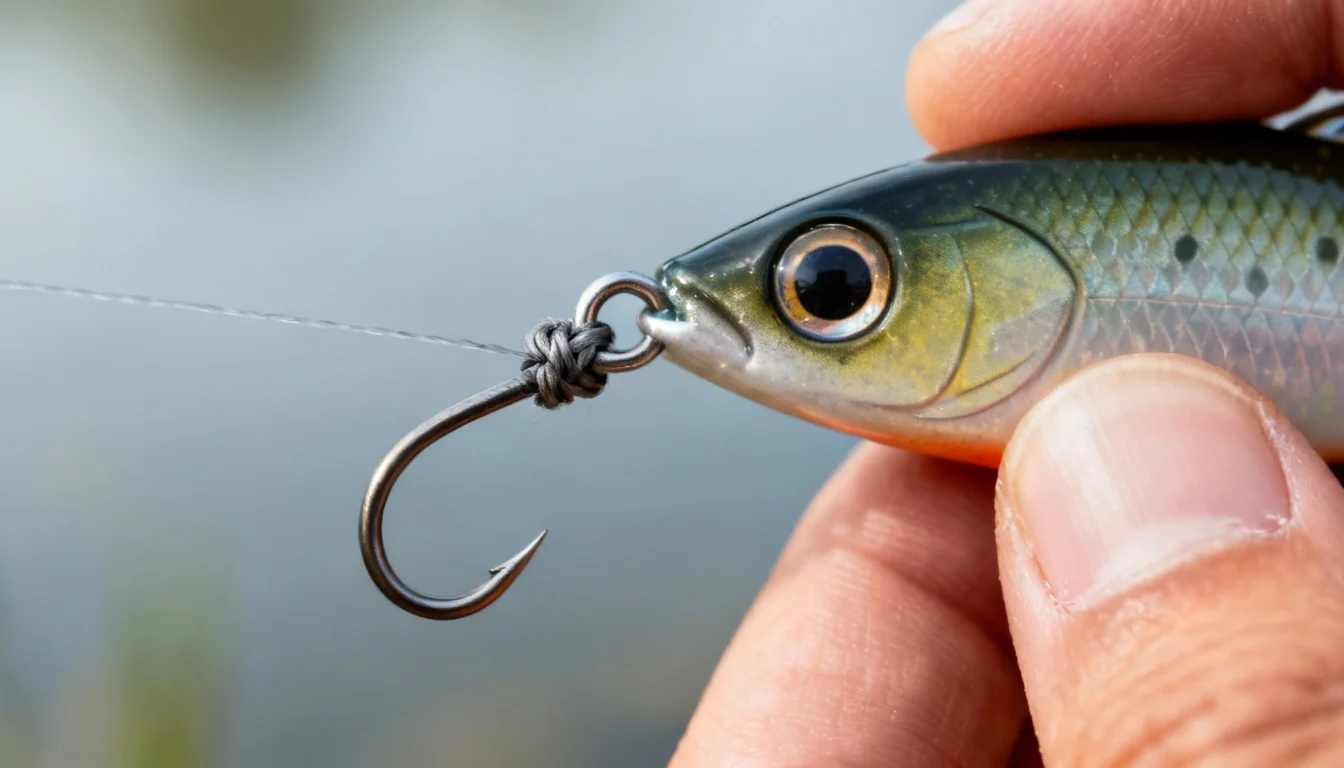
A loop knot (like the Non-Slip Mono Loop) leaves a fixed loop at the lure — giving your lure free-swinging action that many fish prefer.
When to use: topwater lures, crankbaits, and streamers that need natural action.
How to tie it:
1. Tie a loose overhand knot in the line, leaving a big loop
2. Pass the tag end through the hook eye
3. Pass the tag end back through the overhand loop
4. Wrap the tag end around the standing line 4-5 times, then pass it back through the loop at the overhand knot
5. Wet and tighten, then pull the standing line to seat the loop
Why the loop matters: the free loop lets lures move naturally, which triggers more strikes on moving baits. Pair it with the right lure presentation — see our how to catch largemouth bass guide for topwater and crankbait tactics.
The Best Fishing Knots for Every Situation
| Situation | Best Knot |
|---|---|
| Braided line to hook/lure | Palomar |
| Mono/fluoro to hook | Improved Clinch or Uni |
| In a hurry, any line | Uni |
| Joining line to leader | Surgeon's |
| Lures needing free action | Loop knot |
| Beginner learning first knot | Palomar (easiest + strongest) |
Fishing Line Knots: Common Mistakes to Avoid
1. Skipping the wet-down — dry line generates heat friction and weakens the knot. Always wet before tightening.
2. Not trimming the tag end — leave 1/8 inch after trimming; too long catches weeds, too short slips.
3. Tightening too fast — pull slowly and steadily so wraps seat evenly.
4. Reusing a worn knot — if a knot has been stressed by a big fight, retie it. Knots weaken with use.
5. Wrong knot for the line — the Improved Clinch is weak on braid; use the Palomar instead.
If you recognize yourself in any of these, you're not alone — these are among the most common fishing mistakes beginners make, and every one of them is fixable at home.
Frequently Asked Questions
Is the Palomar knot the strongest fishing knot?
Yes — the Palomar knot is widely considered the strongest, retaining close to 100% of line strength, and it's simple to tie. For joining two lines, the Surgeon's knot is the strongest simple option.
What is the easiest fishing knot for beginners?
The Palomar knot is the easiest to learn and the strongest — a rare combination. Double the line, tie an overhand knot, pass the lure through the loop, and tighten.
How many wraps for an Improved Clinch knot?
5-7 wraps is the standard for the Improved Clinch knot. Fewer can slip under heavy pressure; more crowd the knot and weaken it. On fluoro, err toward 6-7 wraps.
When should I use the Uni knot?
Reach for the Uni knot when you're in a hurry, fishing all line types, or tying to a small lure eye you can't double the line through. It's nearly as strong as the Palomar and just as fast to tie.
What knot joins fishing line to leader?
The Surgeon's knot is the simplest strong option for joining two lines of similar diameter. For different diameters, try the Alberto knot.
Why does my fishing line keep breaking at the knot?
Usually one of three causes: tying a knot that's wrong for the line type (e.g. Improved Clinch on braid), not wetting before tightening, or reusing a worn knot after a fight. Old line that has sun damage or abrasion also fails first at the knot — when in doubt, retie.
The Bottom Line
These five knots cover everything you'll tie in a typical season: hooks, lures, leaders, and swivels. Practice each one until it's muscle memory — a knot you can tie in the dark is a knot that won't fail you at dusk with a big fish on.
Once your knots hold, the weakest link in your setup disappears, and you can focus on presentation — whether you're setting up a float for panfish or working topwater for bass.