How to Catch Bluegill: The Complete Fishing Guide
How to catch bluegill might be the easiest question in freshwater fishing to answer: use light gear, small bait, and fish shallow water near cover. Bluegill bite all day, school up in numbers, and live in almost every pond and lake in America — which is why they're the fish most anglers catch first, and the fish many never stop chasing.
These bluegill fishing tips cover when to go, the right gear, the best baits, the simple rigs that catch them, and the spots where the biggest bluegill hide. Whether you're teaching a child or chasing a trophy from the bank, catching bluegill takes the same handful of basics.
New to the sport? Our fishing for beginners guide walks you through the rest in one afternoon.
When to Fish for Bluegill: All Day, Every Season
Bluegill don't follow the dawn-and-dusk rule. They're daytime feeders, so the bite runs from mid-morning through late afternoon — perfect for families, kids, and anyone who doesn't want to be on the water at 5 a.m.
| Season | Water Temp | Where Bluegill Are | Best Strategy |
|---|---|---|---|
| Spring | 60-70°F | Shallow spawning beds (1-4 ft) | Fish the nests with worms or small jigs — the easiest fishing of the year |
| Summer | 70-85°F | Weed edges, docks, 3-10 ft | Fish early morning and evening; midday goes deeper along the weed line |
| Fall | 55-70°F | Shallows again, feeding heavily | Topwater poppers and crickets both produce |
| Winter | 40-50°F open water | Slow, deep, near bottom | Small jigs and worms fished very slowly; ice fishing in the North |
Spring is the bluegill season. When the water hits the mid-60s, males fan out saucer-shaped nests in the shallows and guard them aggressively — any bait dropped in a bed gets hit in seconds. Summer pushes them deeper and slower but never stops the bite.
Bluegill Fishing Gear: Light Is Everything
Bluegill fishing gear follows one rule: the lighter, the better. Bluegill have small mouths and soft bites, and heavy tackle kills both.
- Rod: 5-6.5 ft ultralight or light spinning rod — sensitive enough to feel a nibble
- Reel: 500-2000 size spinning reel, spooled with 2-6 lb monofilament (4 lb is the all-around choice)
- Hooks: small #6-#10 hooks for worms and crickets
- Bobbers: small round or slip bobbers, sized so the bait sinks naturally
- Jigs: 1/32-1/16 oz jigheads with 1-2 inch soft plastic bodies
- Extras: split shot, a small tackle box, needle-nose pliers for deep-hooked fish
You don't need a boat or a heavy rod. A single ultralight combo and a handful of hooks cover 95% of bluegill situations — and the same light-tackle approach powers most panfish fishing, from a farm pond to a big reservoir shoreline.
Best Bluegill Bait: Live Bait Wins
Live bait is king for bluegill. Because bluegill are opportunistic insect-eaters, anything small and wiggly looks like dinner:
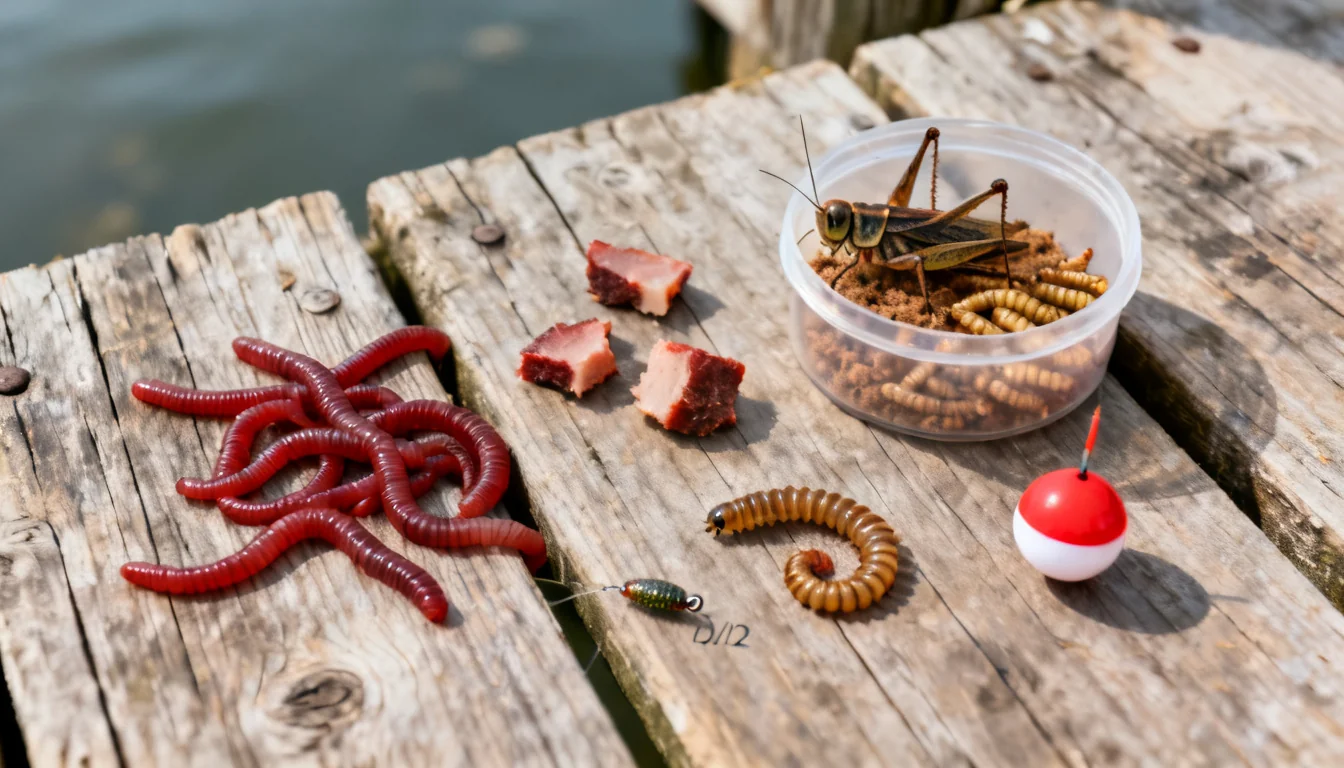
- Redworms and nightcrawler pieces — the #1 bluegill bait nationwide; thread a small piece onto a #8 hook
- Crickets and grasshoppers — deadly in summer and fall; hook through the collar so they stay lively
- Mealworms and waxworms — excellent for picky or winter bluegill
- Small jigs — 1/32-1/16 oz heads with 1-2 inch curly-tail grubs in natural colors (black, brown, olive) catch big bluegill when live bait is scarce
- Poppers and dry flies — surface baits that trigger explosive strikes in summer
Match the size. Bluegill eat small things — a whole nightcrawler is too much for a 6-inch fish. Break worms into 1/2-inch pieces, keep crickets small, and use 1-2 inch plastics. When in doubt, go smaller: the biggest bluegill are often caught on the tiniest baits.
The Bluegill Rig: Bobber & Split Shot
The classic bluegill rig is the simplest in fishing, and it's all you need 90% of the time:
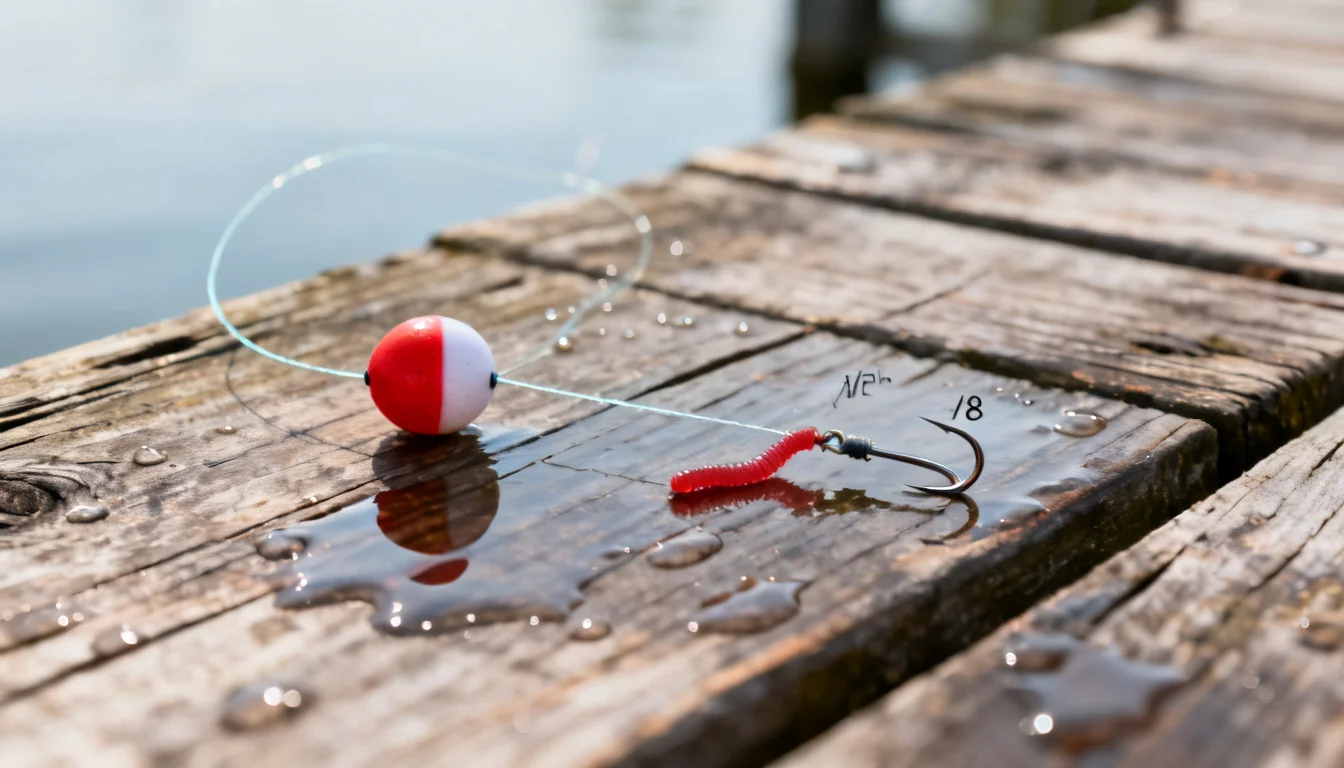
1. Tie a #8 hook to the end of your line (a #6-#10 works too).
2. Add a split shot 6-12 inches above the hook so the bait sinks slowly.
3. Clip on a small round bobber 1-3 feet above the hook — deep enough that the bait hangs just above the bottom or the weed tops.
4. Cast to cover — a dock post, weed edge, lily pad, or overhanging branch.
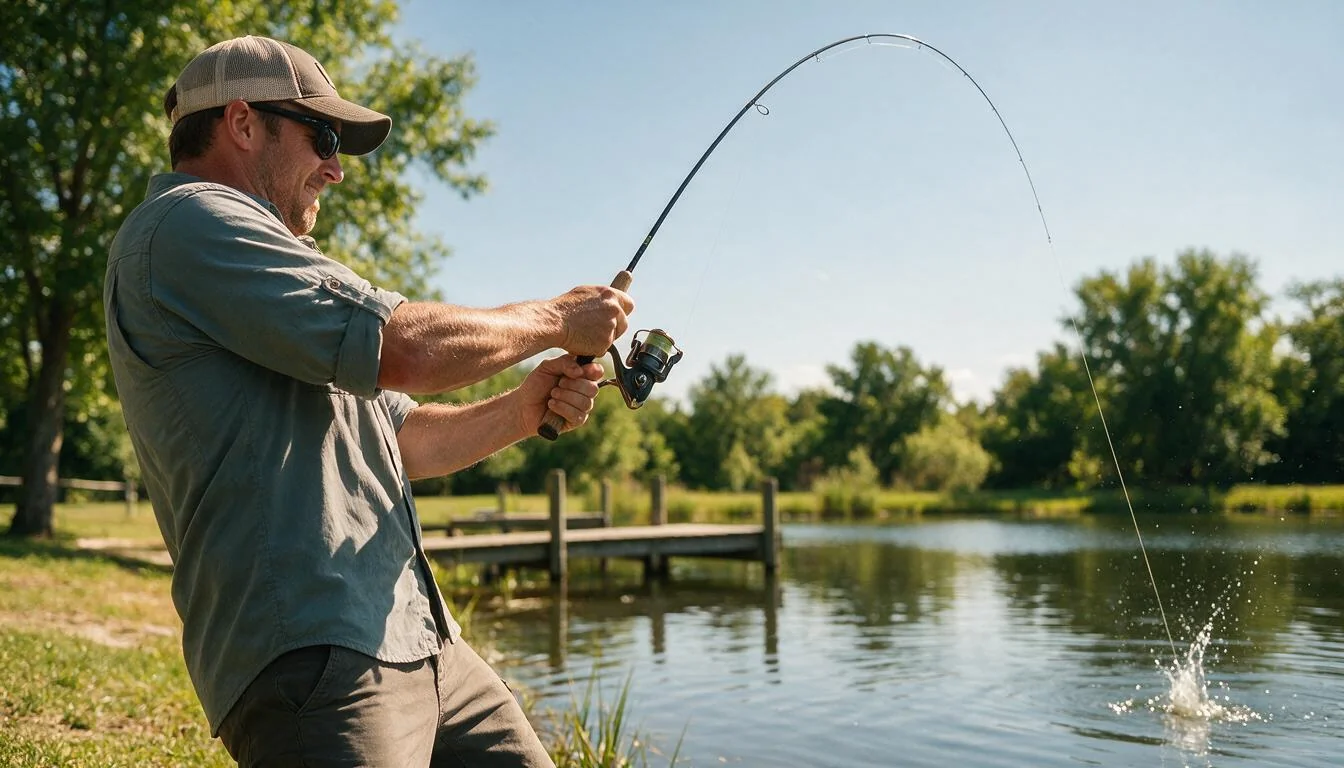
5. Watch the bobber. Bluegill often nibble before committing; wait for it to go under, then give a firm but gentle sweep.
The slip-bobber version (with a bobber stop instead of a fixed clip) lets you fish deeper water in summer without re-rigging. For a full look at where these fish live and how they behave, see our bluegill species guide.
Where to Find Bluegill: Shallow Cover Is the Answer
Bluegill are shallow-water fish, and their spots are easy to read from the bank:
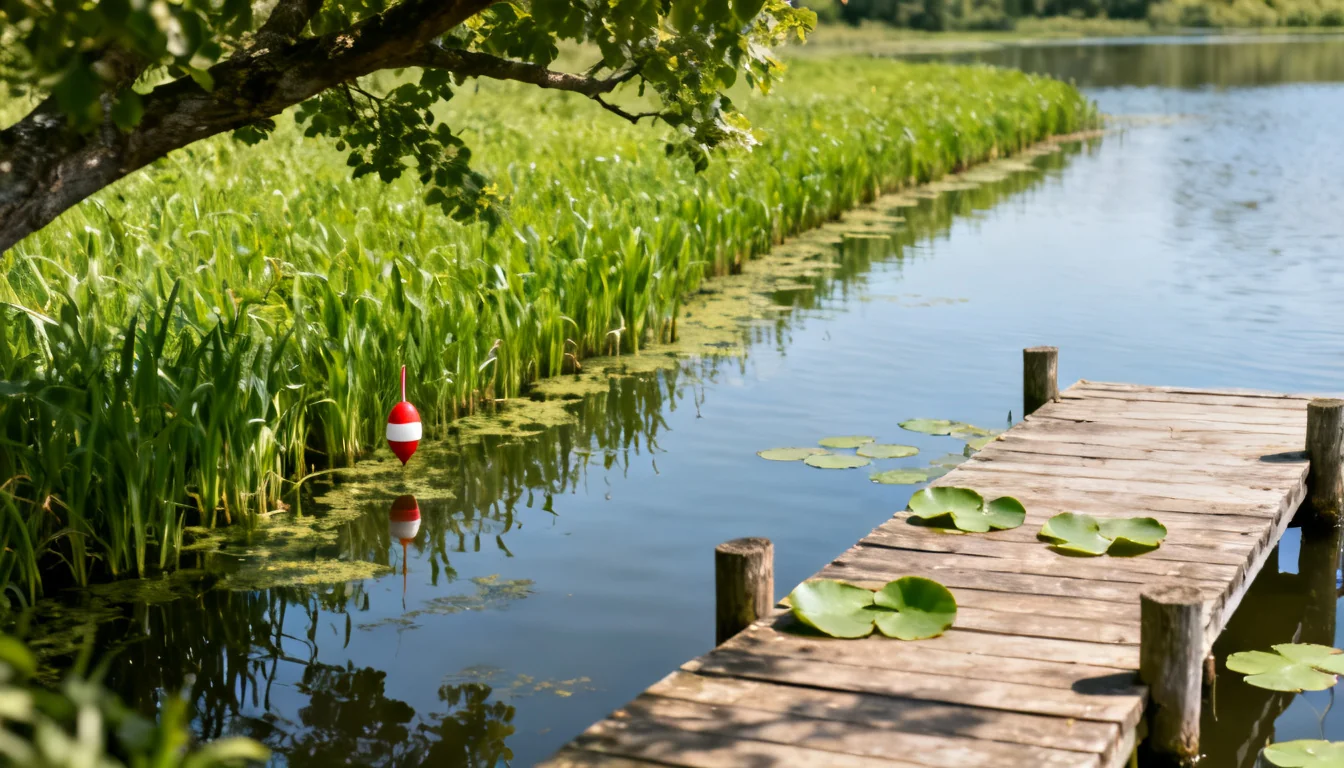
- Weed beds and grass lines — the #1 bluegill cover in any lake or pond
- Docks, piers, and boathouses — shade plus structure equals fish
- Lily pads and floating vegetation — bluegill hide underneath and dart out for bugs
- Fallen trees and brush piles — classic ambush cover
- Spawning beds in spring — saucer-shaped depressions in 1-4 ft of water on sand or gravel bottoms
In summer, the biggest bluegill slide out to the deep edge of the weed line at 8-15 feet; the bank bite is still good early and late, but midday goes a little deeper. Reading cover like this is a skill of its own — our guide to how to fish a lake breaks down every structure type that holds fish.
Common Bluegill Mistakes (And Fixes)
1. Hook too big. A #2 hook won't fit a bluegill's mouth. Downsize to #6-#10.
2. Line too heavy. 10 lb line spooks them and kills the feel. Use 2-6 lb mono.
3. Bait too big. Whole nightcrawlers get picked apart. Use 1/2-inch pieces.
4. Fishing too deep. Bluegill live shallow; if you're fishing 20 feet deep in summer, move shallower.
5. Setting the hook too hard. A hard hookset rips the bait out of a bluegill's soft mouth. Use a gentle, firm sweep.
6. Ignoring the bobber. Bluegill nibble first — a twitching bobber is a bite; wait for it to go under, then set.
How to Catch Bluegill FAQ
What time of day are bluegill most active?
Bluegill feed all day, but the best action is mid-morning through late afternoon — the opposite of most game fish. In summer, early morning and evening are best near the bank, with midday fish holding a little deeper along weed lines.
How deep should I fish for bluegill?
Start at 1-3 feet below the bobber in spring and fall, and go to 3-6 feet in summer when bluegill move to the deep weed edge. If you're not getting bites in 30 minutes, adjust the bobber deeper or shallower.
What size hook is best for bluegill?
A #8 hook is the all-around best; #6 for bigger bait like crickets, #10 for mealworms and small jigs. Bluegill have small mouths, so small hooks land more hookups.
Do bluegill bite in the rain?
Yes — light rain often improves the bite because it washes insects into the water and adds cover. A heavy cold-front downpour that drops water temperature will slow them down until conditions stabilize.
Can you catch bluegill in winter?
Yes, though the pace slows dramatically. Winter bluegill hold deep and feed very slowly; tiny jigs tipped with a waxworm or piece of worm fished right on the bottom produce. Ice fishing for bluegill is a classic northern winter pastime.
Are bluegill easy to catch for kids?
Bluegill are the best first fish for kids in North America: they bite eagerly, live close to shore, and fight enough to be fun without being exhausting. A cane pole, bobber, and worm is a perfect starter setup for a young angler.
The Bottom Line
How to catch bluegill in one line: light gear, small bait, shallow cover, all day long. A 5-foot ultralight rod, 4 lb line, a bobber, and a container of worms will catch bluegill in almost any pond in America — and it's the same setup that works for the whole panfish family.
Find the weed bed, set the bobber a foot or two deep, and watch the float. Catching bluegill is the easiest way to spend an afternoon on the water — and with the same light-tackle panfish fishing setup, the whole sunfish family is on the menu.