Pre-Baiting for Freshwater Fish: Build a Feeding Spot That Keeps Fish Biting
Pre-baiting means feeding a chosen spot before you fish it — or as you fish it — so fish gather and feed with confidence by the time your hook arrives. It is one of the oldest tricks in angling, and it works as well on American waters as it does in Europe or Asia.
If you have ever caught nothing while fish rolled fifty yards away, this guide is for you. You will learn why chumming for freshwater works, which baits build a feeding spot, how to bait up a swim step by step, and the mistakes that empty your bait without emptying the lake.
What Is Pre-Baiting (and Why Most Americans Skip It)
Baiting a spot is simple: you put food into the water where you plan to fish, before or during your session, so the fish learn to expect a meal there. Think of it as setting a dinner table instead of hoping a fish walks past your kitchen window.
Most American anglers never do it. They cast a lure or bait at whatever looks fishy, work it for ten minutes, and move on. It is a different game. This strategy trades instant action for a slower buildup that usually ends in far better fishing, because a fed spot keeps producing long after a random cast stops.
The idea is not new. Chinese anglers have built feeding spots for centuries, and European carp anglers turned baiting up a swim into a science. American freshwater fishing largely ignored it, which is exactly why it is such an edge now.
Why Feeding a Spot Works: The Science of a Feed Cloud
Four things happen when bait hits the water, and each one puts fish closer to your hook.
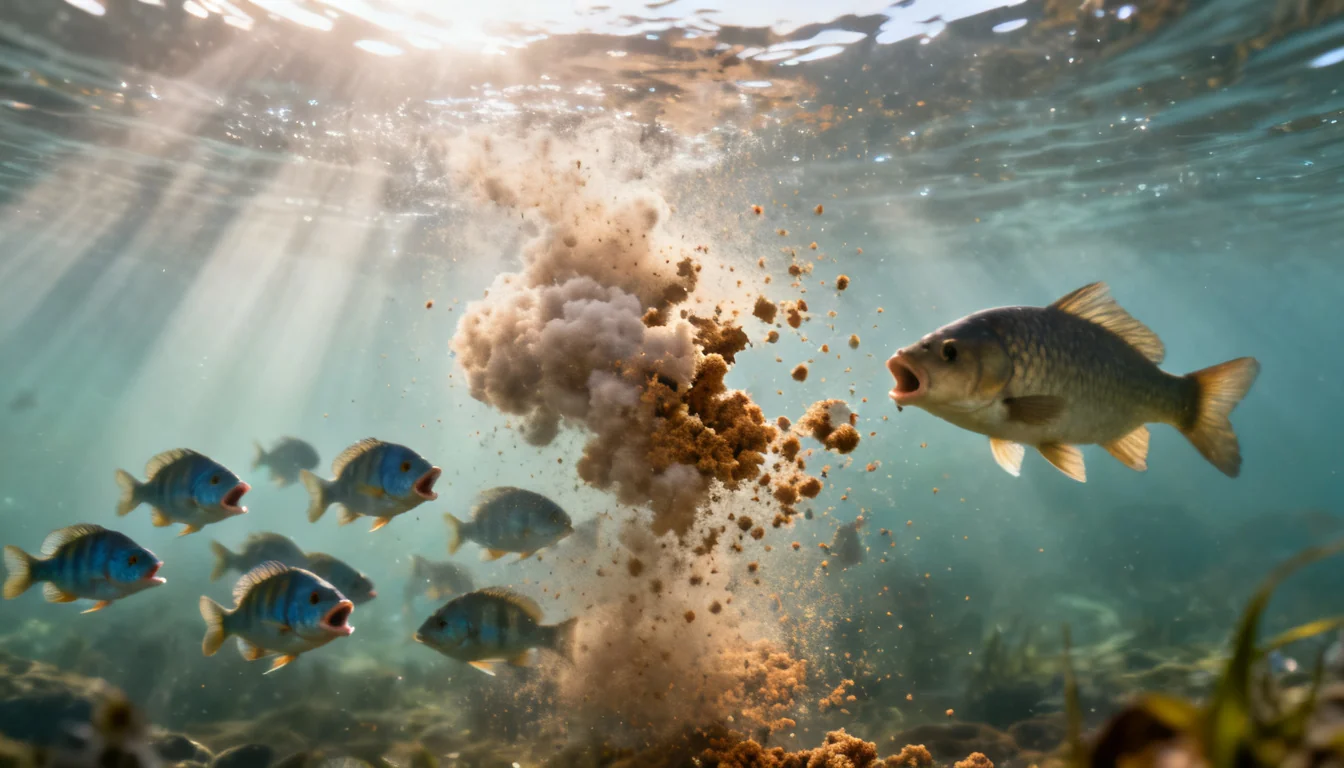
Scent travels. Fish smell through their nostrils, and odor molecules drift with the water. A cloud of groundbait or a handful of pellets sends a scent trail that fish pick up from surprising distances, especially in current or wind-blown lakes.
Bait draws a crowd. Food in one small area pulls fish from the surrounding water. Baitfish arrive first, and predators follow the baitfish. A feeding spot becomes a meeting point for the whole neighborhood.
Competition kills caution. A lone hook is suspicious. A pile of free food is a party. Fish that circle a single worm warily will shoulder into a feeding group, and once they are feeding freely, your hook bait is just one more item on the menu.
The feed cloud covers the hook. Groundbait breaks up in the water and forms a cloud of particles. Fish swim into it, mouths open, and pick up everything that looks edible — including your bait. This is the Chinese principle of atomization in action: feed a cloud, not a meal.
The 3 Groundbait Types That Build a Feeding Spot
You do not need a tackle shop full of exotic mixes — three basic bait categories cover almost every freshwater feeding situation.
| Bait type | Examples | What it does | Best for |
|---|---|---|---|
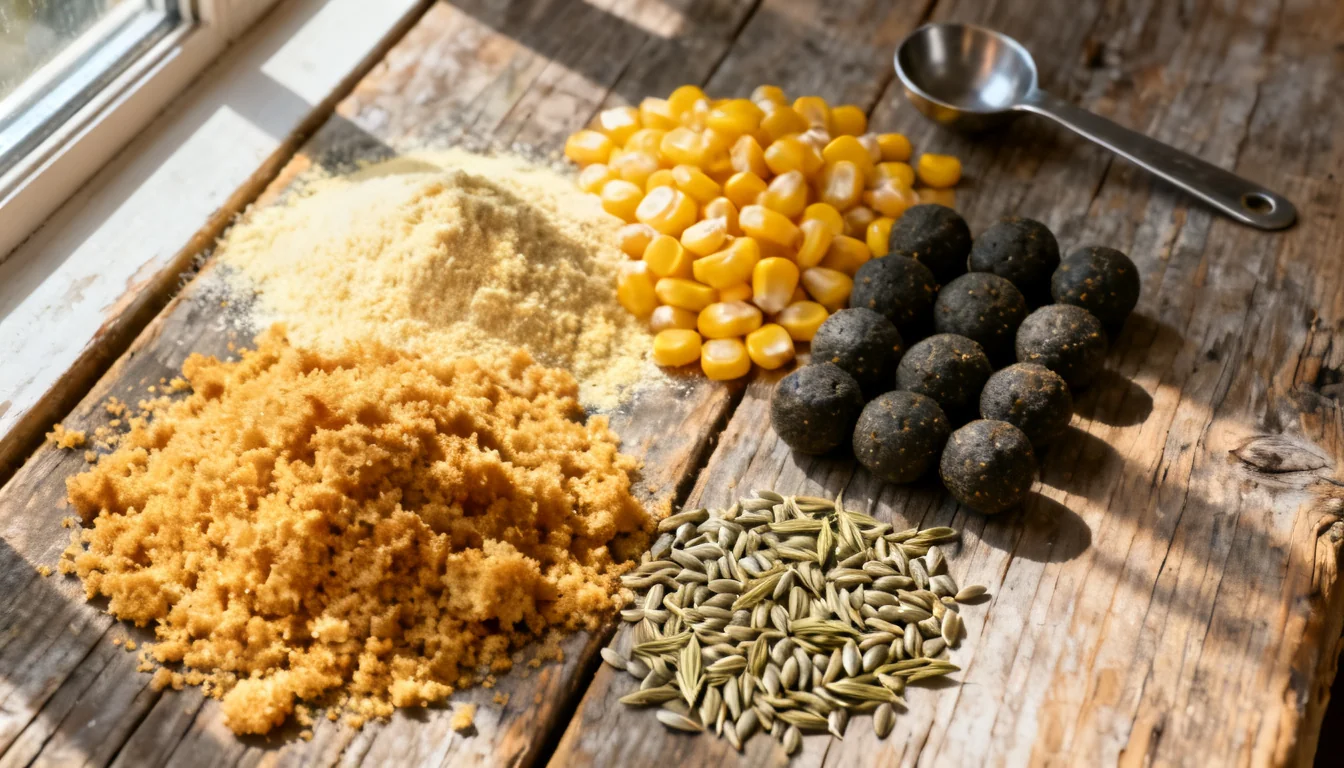
| Powder and meal | Groundbait mix, breadcrumbs, wheat flour, cornmeal | Breaks into a scent cloud that draws fish in | Panfish, carp, catfish |
| Grains | Sweetcorn, hempseed, wheat, rice | Holds fish on the spot once they arrive | Carp, panfish, catfish |
| Pellets | Carp pellets, fishmeal pellets, dry dog food | Breaks down slowly, keeps fish around for hours | Carp, channel catfish |
Powder and meal baits are the workhorse. A simple homemade groundbait is breadcrumbs mixed with cornmeal and a little water until it holds together, then crumbled into the swim. Add crushed sweetcorn or canned fish for extra scent. The goal is a cloud that hangs in the water, not a heavy meal that fills fish up.
Grains are cheap and deadly. Sweetcorn is the classic — a couple of cans cost almost nothing and carp, bluegill, and catfish all eat it. Hempseed is smaller and slower, a favorite for keeping fish grubbing on the spot. Rice and wheat work the same way.
Pellets are the slow-release option. Carp pellets and fishmeal pellets sink, soften, and leak scent for an hour or more. Dry dog food is the budget version that catfish anglers have used for generations. Soak pellets before casting so they sink instead of floating away.
How to Pre-Bait a Swim, Step by Step
Step 1: Pick a spot that deserves the bait.
Feed the fish where they already live, not where you wish they lived. Points, drop-offs, weed edges, sunken timber, and docks all hold fish because they offer cover and food. If you are unsure how to read a lake, the structure guide at how to fish a lake covers the basics of finding these spots.
Small ponds and reservoirs are the best starting places — feeding spots work fastest in small water.
Step 2: Match the feed to the fish.
Feed what you will fish with. If you are fishing sweetcorn, feed sweetcorn. If you are fishing worms, a crumbled groundbait cloud with worm chunks works better than a pile of pellets. Fish eat what they are fed, and they trust the hook bait when it matches the free food.
Step 3: Make the first feed count.
For panfish and catfish, a fist-sized ball of groundbait, or a small handful of corn, is plenty. For carp, think bigger: a bed of grains or pellets the size of a dinner plate, ideally fed over several days before your session. Chinese carp anglers follow the same rule — a big bed for carp, small frequent feeds for everything else.
Step 4: Deliver the bait the right way.
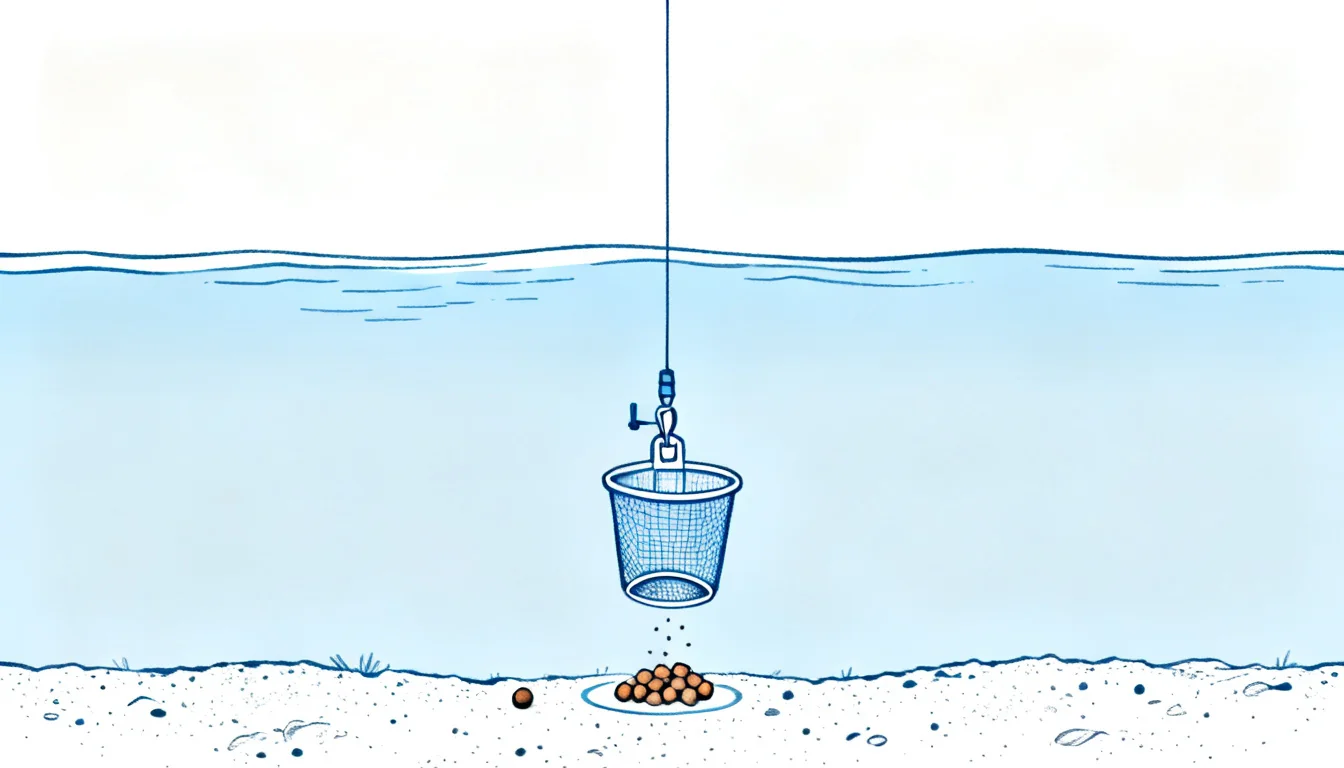
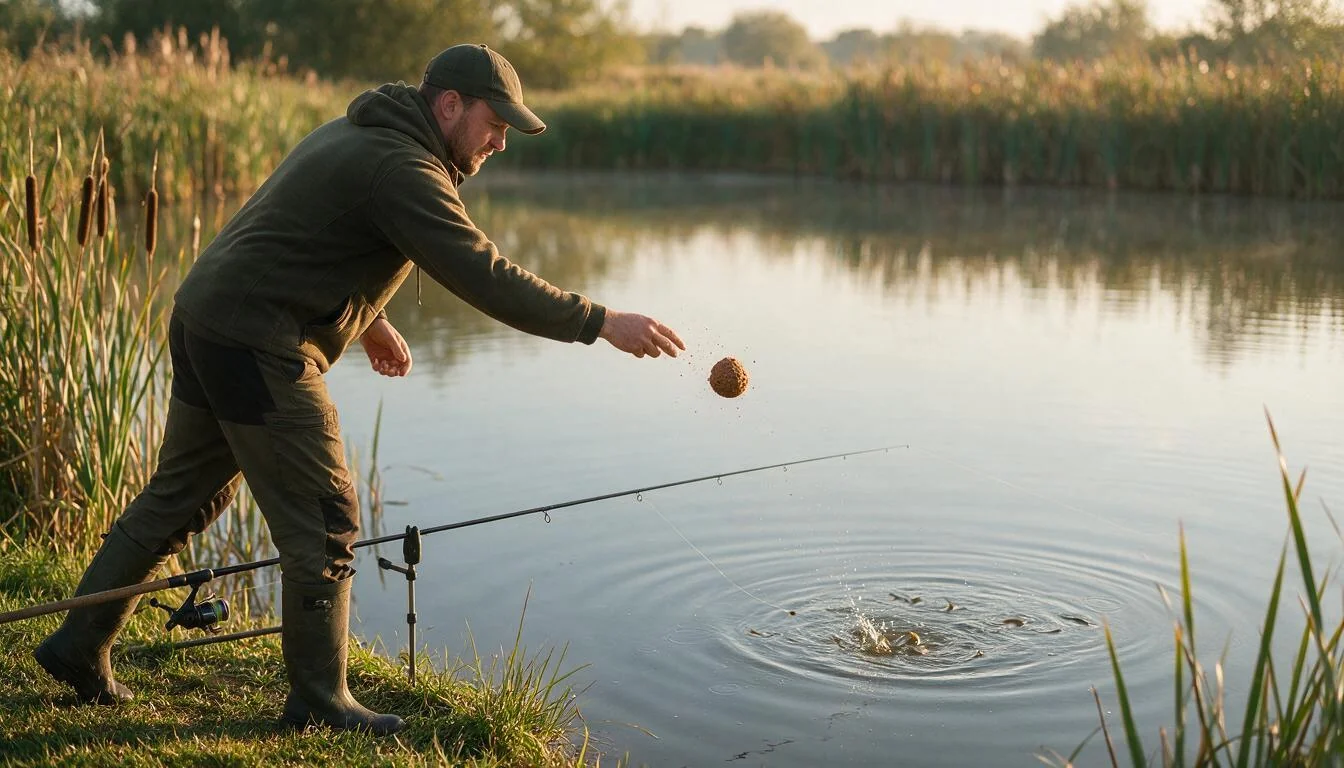
Range decides the method. Up to about thirty feet, a hand toss of a rolled ball works fine. Farther out, use a bait dropper on a line, which opens at the bottom and dumps the feed exactly on target.
For long casts, a spod or a feeder rig delivers bait precisely at fishing range. Whatever the tool, the goal is the same: get the feed into a compact area, not scattered across the lake.
Step 5: Respect the current.
In moving water, the bait does not stay where it lands. The current carries the scent and particles downstream, so feed well upstream of your baits and let the trail drift to them.
On rivers, feeding upstream and fishing downstream of the feed line is the whole game — the river guide at how to fish a river explains how to read the current lanes that carry your bait. In fast current, expect to feed more often because the bait washes out quickly.
Step 6: Start fishing and keep the cadence.
Once the feed is in, give it time. Fish may take minutes or an hour to find it. Cast your hook bait into the feed zone, rest the rod, and wait. The spot you fed yesterday or this morning is worth more than the spot you feed and fish in the same minute.
Feeding Cadence: How Often to Top Up
Feeding the spot does not stop when the fishing starts. A feeding spot is a live thing that needs small, regular top-ups:
- After every fish: throw in a small handful. You just removed one eater, and a little fresh feed keeps the others interested.
- After thirty quiet minutes: a small top-up often restarts the action. Silence usually means the free food is gone.
- In current: double the frequency. The water is stealing your bait, so replace it.
- At dusk and dawn: feed a little more. Fish feed hardest in low light, and the extra bait keeps them on the spot through the peak window.
The Chinese rule of thumb is simple: small amounts, often. A big dump of bait fills fish up and sends them off; small regular feeds keep them hungry and hanging around. Feeding spots collapse when anglers overfeed once and never follow up.
Which Freshwater Fish Respond to a Feeding Spot
Not every species is worth feeding. Target the fish that respond, and you will see results within a session or two.
Catfish. Channel and flathead catfish are scent-driven, and chumming is a classic catfish trick. Soured grain, cottonseed cake, dry dog food, and cut bait chunks all work. Feed upstream of your lines on rivers, or into the deep hole you are fishing, and the fish will find you. For more on baits and rigs, see how to catch channel catfish.
Carp. No freshwater fish rewards a fed spot like carp. They are wary, but they are also greedy, and a spot fed for a few days becomes a reliable killing ground. This is where the European tradition of baiting up a swim shines: pre-bait the same spot daily, then fish it with a matching hook bait.
Panfish. Bluegill, sunfish, and other panfish gather fast around bread, corn, or a crumbled groundbait ball. Feeding spots turn a slow afternoon of one-fish-per-cast into a steady pick.
Crappie behave a little differently — they cruise rather than settle, but they do swing through feed clouds, especially around docks and brush piles, so a small chum effort near cover pays off. The panfish-specific tactics in how to catch crappie pair well with a light feeding program.
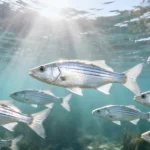
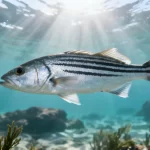
White bass and shad. In reservoirs, chumming with crushed shad or commercial chum draws white bass into a frenzy at mid-depths. This is the closest thing freshwater has to saltwater chumming, and it is spectacular when it works.
Skip it for bass and trout. Largemouth bass are ambush predators that follow baitfish, not scent trails, and most trout waters restrict chumming anyway. It is wasted effort on these fish — target them with lures and presentations instead.
Check Your State Rules Before You Chum
The rules of chumming for freshwater vary more than any other part of this technique. Many states allow baiting and chumming, but others restrict it — especially on trout waters, in certain lakes, or when live baitfish are involved.
Some waters treat feed like any other bait; others ban it outright. Before you feed a spot, check your state's fishing regulations for the specific water you plan to fish. A quick read of the rulebook beats a ticket, and it keeps the sport honest for everyone.
Common Pre-Baiting Mistakes
Overfeeding. The number one killer. A huge pile of bait fills the fish and kills the bite. Feed a cloud, not a meal, and top up in small amounts.
Feeding a dead spot. Bait in open, empty water just feeds the turtles. Put the feed where the fish live — structure, cover, depth changes.
Ignoring current. Feed without thinking about drift and your bait ends up fifty yards from your hook. Feed upstream of your baits and account for the flow.
Bait mismatch. Corn on the hook over a pellet bed looks like a trick to a fish that has been eating pellets all morning. Match the hook bait to the feed.
No patience. This is a delayed payoff. If you feed once and leave after twenty minutes, you are doing the work and giving the fish to the next angler. Give the spot time, or better, feed it a day ahead.
FAQ
How long before fishing should I pre-bait?
For panfish and catfish, feeding an hour or two ahead — or even as you start fishing — is enough. For wary carp, pre-bait the same spot for two to five days before you fish it, and you will see the difference in both size and number of fish.
Does chumming attract fish or scare them away?
Small, frequent feeds attract fish; big dumps can spook them or fill them up. The scent and activity draw fish in, and once they are feeding confidently, your hook bait is just part of the meal. Sudden heavy feeding from a boat right overhead will scatter fish, so deliver bait quietly.
What is the difference between chumming and groundbaiting?
Chumming for freshwater means putting food in the water to attract fish. Groundbaiting is a specific form of it, using a crumbly, often dry mix that breaks apart into a scent and particle cloud. It is the timing strategy — feeding a spot ahead of time — and it can use any of these baits.
Can I pre-bait in a river?
Yes, but current changes everything. Feed upstream of your baits so the scent trail drifts into the fish, and expect to feed more often because the flow washes bait away. Slack water beside the main current — eddies and inside bends — holds feed longer and concentrates fish.
Is chumming legal in freshwater?
It depends on the state and the water. Many states allow it, some restrict it on trout waters or special-regulation lakes, and live-baitfish chumming is commonly banned to protect native species. Always check your state regulations before feeding a spot.
What is the best groundbait for panfish?
A simple mix of breadcrumbs, cornmeal, and crushed sweetcorn, formed into small balls and crumbled into the swim, is cheap and effective. Bluegill and sunfish show up fast, and the corn matches the hook bait you are likely fishing anyway.
The Bottom Line
This technique is the quiet edge that most American freshwater anglers leave on the table. Feed a spot where fish already live, keep the feed small and regular, match the hook bait to the free food, and the fish do the rest.
Start on small ponds and reservoirs where the payoff is fastest — the pond and reservoir fishing guide covers the waters where this technique shines. Respect the current on rivers, and check your state rules first.
It takes patience, but a good feeding spot fishes better every time you visit it — and it is a skill the neighbors on the bank will not have.