Long-Rod Short-Line Pole Fishing: The Complete Guide
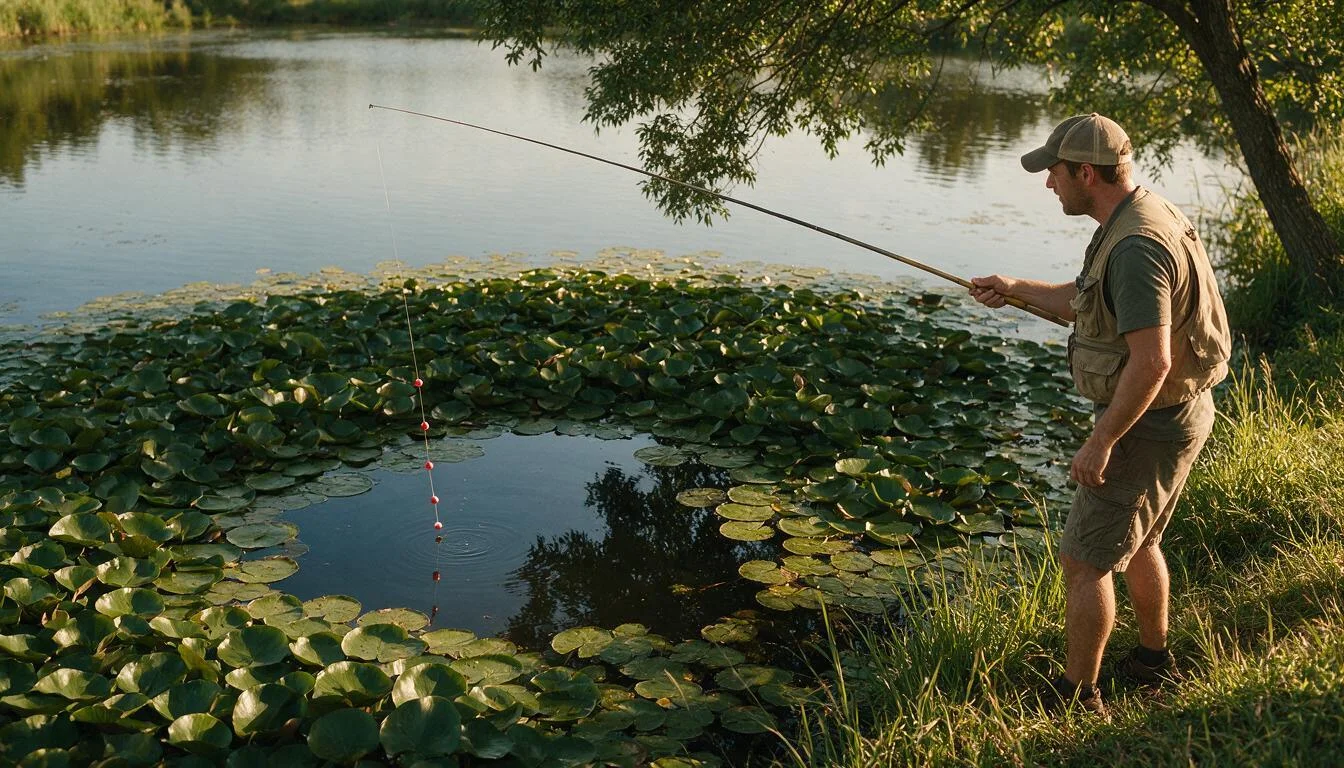
Picture a pocket of open water the size of a dinner plate, tucked inside a thick weed bed, twenty feet from shore. A cast lands two feet short and drags weeds. A second attempt overthrows it. The fish that live in that pocket never see a bait done right — which is exactly why pole fishing exists.
Long-rod short-line fishing is the oldest precision method in angling. You use a long pole, a line barely longer than the water is deep, and a bait lowered vertically into spots a cast can't reach. Chinese anglers refined it into a complete system with multi-float bite detection and a walk-and-rotate strategy.
It maps straight onto American waters — bluegill beds, lily pad gaps, and shadowed margins. This guide covers the rig, the drop, and the spots where it out-fishes everything else.
What Is Pole Fishing?
Pole fishing means fishing a pole with the line tied to the tip — no reel, no cast. The pole does the reaching. A telescopic pole extends 12 to 40 feet — longer models reach past 50 — and the line hangs straight down from the tip, usually no longer than the water depth plus a couple of feet.
The short line is the whole point. Because the bait drops vertically instead of flying through the air, it lands within an inch of where you aim it. Because nothing touches the water except the float and the bait, spooky fish in shallow cover never see a splash or a line shadow.
And because the line runs straight from your hands to the hook, every bite transmits instantly and the hookset is immediate.
American anglers already know the cousin of this method: cane poles with a bamboo pole and a short line. The Chinese version, refined over centuries, simply systematized the idea — telescopic sections for more reach, a seven-float bite indicator for clearer signals, and a walk-and-rotate strategy that fishes several spots instead of one.
Why Precise Placement Beats Casting
A rod-and-reel setup can place a bait within a few feet under good conditions. Long-rod short-line fishing places it within an inch — every single time. That difference decides most cover-fishing battles.
Three things a cast cannot do, and this method can:
- Drop into a hole, not onto the weeds. The bait goes straight down through a gap in lily pads or a pocket in a weed bed, exactly where the fish are holding.
- Reach under things. Overhanging branches, docks, and bridge pilings block casts. A pole tip can hover right over the water beneath them.
- Land silently. A cast announces itself with a splash. A vertical drop of a few feet of line makes almost no sound, which matters enormously in clear, shallow water.
The short line adds two mechanical advantages. First, mono stretches, and a long line is a long elastic band — slack and stretch dull both the bite signal and the hookset. With three feet of line between rod tip and hook, even a subtle sip shows on the float and the strike lands before the fish can spit the bait.
Second, the stiff pole becomes an extension of your arm: you lift, and the hook is already set.
There is a catch. The method is only as good as the drop. Lower the bait too fast and the line drags weeds; lower it carelessly and you spook the very fish you are targeting. Slow, controlled placement is the skill — and it is a skill anyone can learn in an afternoon.
The Gear: What You Need
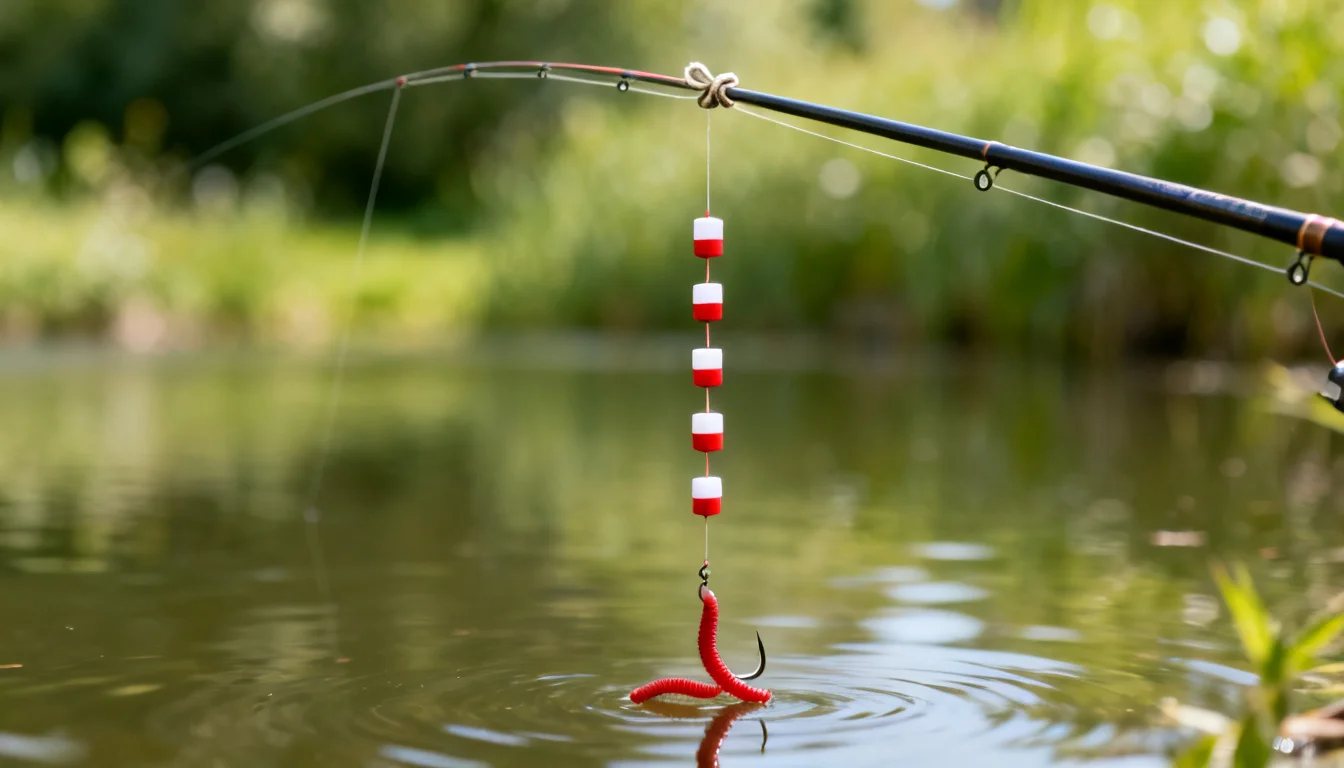
The rig is almost absurdly simple — pole, line, float, hook, bait. You can assemble the whole thing for less than a basic reel outfit.
| Component | What to use | Notes |
|---|---|---|
| Pole | Telescopic pole, 12-40 ft | Fiberglass is cheap and tough; carbon is lighter for long sessions. A 12-20 ft telescopic pole is the perfect entry point |
| Line | 4-8 lb test monofilament | Tied directly to the pole tip — no reel, no knots beyond the hook |
| Float | Seven-star float, or a tiny fixed bobber | Seven small floats read bites in any light; a small round bobber works too |
| Hook | Small Aberdeen hook, or a weighted hook | Size 6-10 for panfish; a weighted hook rides point-up so light bites hook the lip |
| Bait | Red worms, crickets, small minnows, dough balls | Match the bait to the fish — worms for bluegill, minnows for crappie |
The classic Chinese rig adds one detail Americans rarely see: a weighted hook, with a tiny lead bead molded onto the shank. The weight carries the bait down through weed gaps, and the hook rides point-up so a fish inhaling the bait gets hooked in the lip on the lift.
If you cannot find one, a 1/32 or 1/16 oz jig head does the same job.
The line length rule is simple: the bait should just touch bottom with the rod tip a foot or two above the water. Measure the depth, add a couple of feet, and that is your line. Too long, and you lose both precision and bite detection; too short, and the bait never reaches the fish.
Long Rod Fishing: Step by Step
Step 1 — Pick a pocket. Look for a gap in the weeds, a circle of clear water in lily pads, the shaded water under an overhanging branch, or the shelf right along the bank. These are the spots where panfish and bass hide from predators and casting anglers. If you are learning the method, start on a pond where bluegill beds are visible from shore.
Step 2 — Rig the pole. Tie your line to the tip of the pole. Slide the seven-star float onto the line, then tie on your hook. Set the line length so the bait just kisses the bottom with the rod tip held a foot above the water — typically 3-6 ft of line for bank fishing, more for deeper pockets.
Step 3 — Extend and feed. Extend the telescopic pole section by section, letting the line hang loose as you go. The line dangles from the tip the whole time, so there is nothing to tangle. This is where a long pole earns its keep: you are reaching 20-30 ft without ever casting.
Step 4 — Lower, don't cast. Hover the tip over the pocket and lower it slowly until the bait sinks through the gap. The bait should drift down like a falling insect, not plummet. When the float settles, you are fishing.
Step 5 — Read the float and set. Read the seven floats. A dip, a sideways slide, or a float that stops drifting all mean a fish is mouthing the bait. Set the hook with a firm upward snap of the pole — no windmill, just a sharp lift. With a short line, the hook is in before the fish knows what happened.
Step 6 — Swing it out. Small fish come straight in on the pole. For anything with real weight, drop the tip toward the water and lead the fish out of the cover first — fighting a bass straight up through lily pads on a stiff pole is how tips break. Once it clears the weeds, lift and swing.
Step 7 — Walk and rotate. Chinese anglers call this 走钓, "walk-fishing": pre-bait three to five spots, fish each for ten or fifteen minutes, and rotate. When one pocket goes quiet, the next one is waiting. It turns a single stagnant spot into a circuit of productive water.
Where Long-Rod Short-Line Fishing Shines: Under Overhangs and Margins
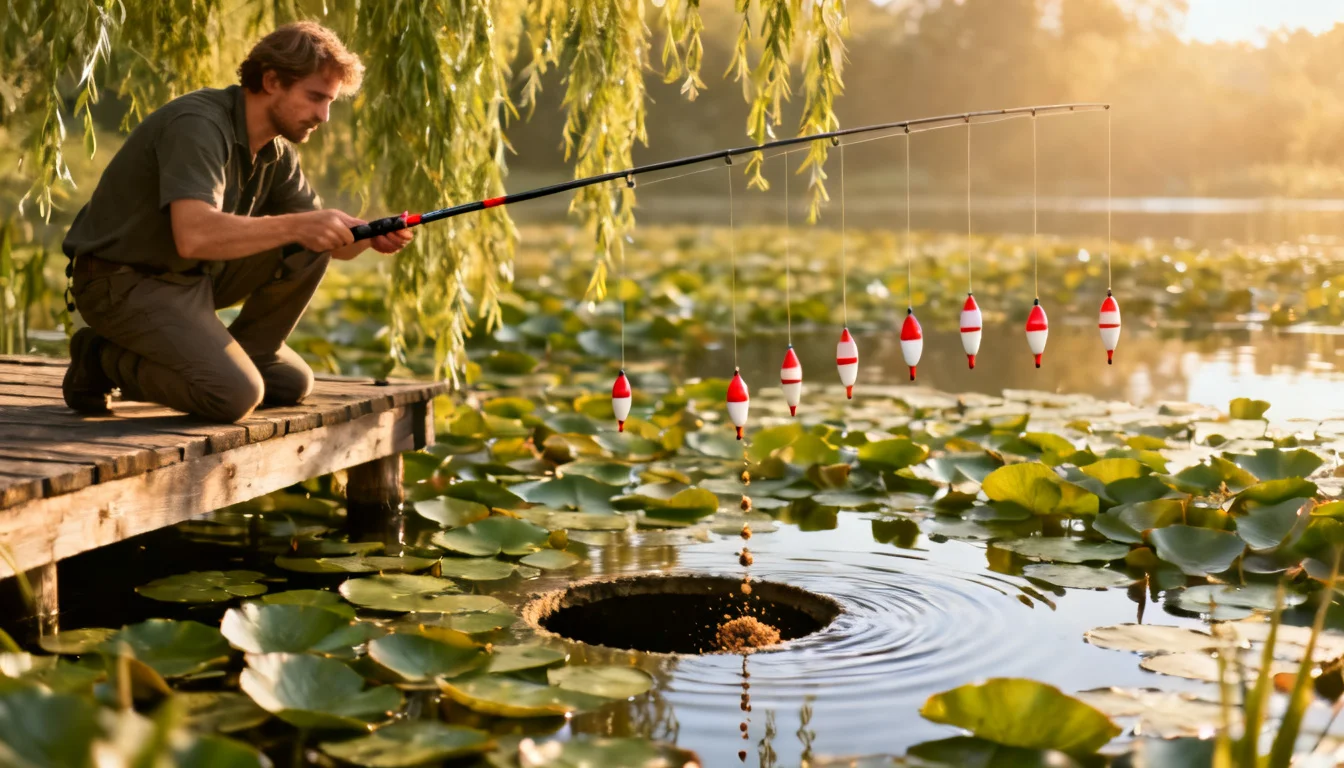
This is not a lake-wide method; it is a cover-and-margin method, and it dominates in four situations:
- Weed beds and lily pads. Bluegill, crappie, and bass all tuck into weed pockets. A vertical drop is the only clean way in. The bluegill guides on this site cover the species that make this method so productive.
- Under overhangs. Trees leaning over the bank, dock shadows, bridge pilings — the shaded water where fish sit in summer. A pole tip reaches under everything a cast cannot.
- Margins. The near-bank shelf is the most ignored water in fishing. Fish cruise it constantly, and the bank itself blocks most anglers' casts. Margin fishing with a pole turns the bank from a casting platform into a fishing spot.
- Clear, shallow ponds. When fish spook at a shadow or a splash, the silent vertical drop is the only presentation that works.
Season-wise, the method shines in spring and summer when fish are in the shallows and cover, and it stays effective in fall as long as pockets hold baitfish. Winter is the one season where a different tool — ice gear or a slow bottom presentation — usually does better.
The species list reads like a panfish menu: bluegill, redear, crappie, yellow perch, and small bass, plus carp and catfish in margin water. Match the bait to the target and the pocket to the season, and the same rig fishes all of them.
Long Rod Fishing vs. Western Methods
American anglers know the cane pole; European match anglers know the pole; Chinese anglers perfected a third version. All three share the core idea — reach with the pole, drop the bait — but the details differ.
| Method | Reach | Bite signal | Big-fish strategy |
|---|---|---|---|
| US cane pole | 12-20 ft | Tip feel, sometimes a bobber | Horse the fish in, or walk it to shore |
| European match pole | Up to 50 ft+ | Pole float | Elastic inside the top sections cushions runs |
| Chinese long-rod short-line | 20-50 ft | Seven-star float | Lead the fish out of cover, then lift |
The Chinese system's signature is the seven-star float. Seven short floats on the line sit like a ladder; a bite shows as one or two of them sliding or dipping, and the signal is readable in glare and ripples where a single bobber disappears.
The walk-and-rotate circuit is the second signature — most Western pole anglers fish one swim, Chinese anglers work several.
Compared to a rod and reel, the trade-off is honest: you give up casting distance, fighting power, and the ability to fish deep water. You gain pinpoint placement, silence, and a rig a child can learn. For cover fishing within fifty feet of the bank, nothing beats it — and that is most of the water most anglers actually fish.
Common Mistakes
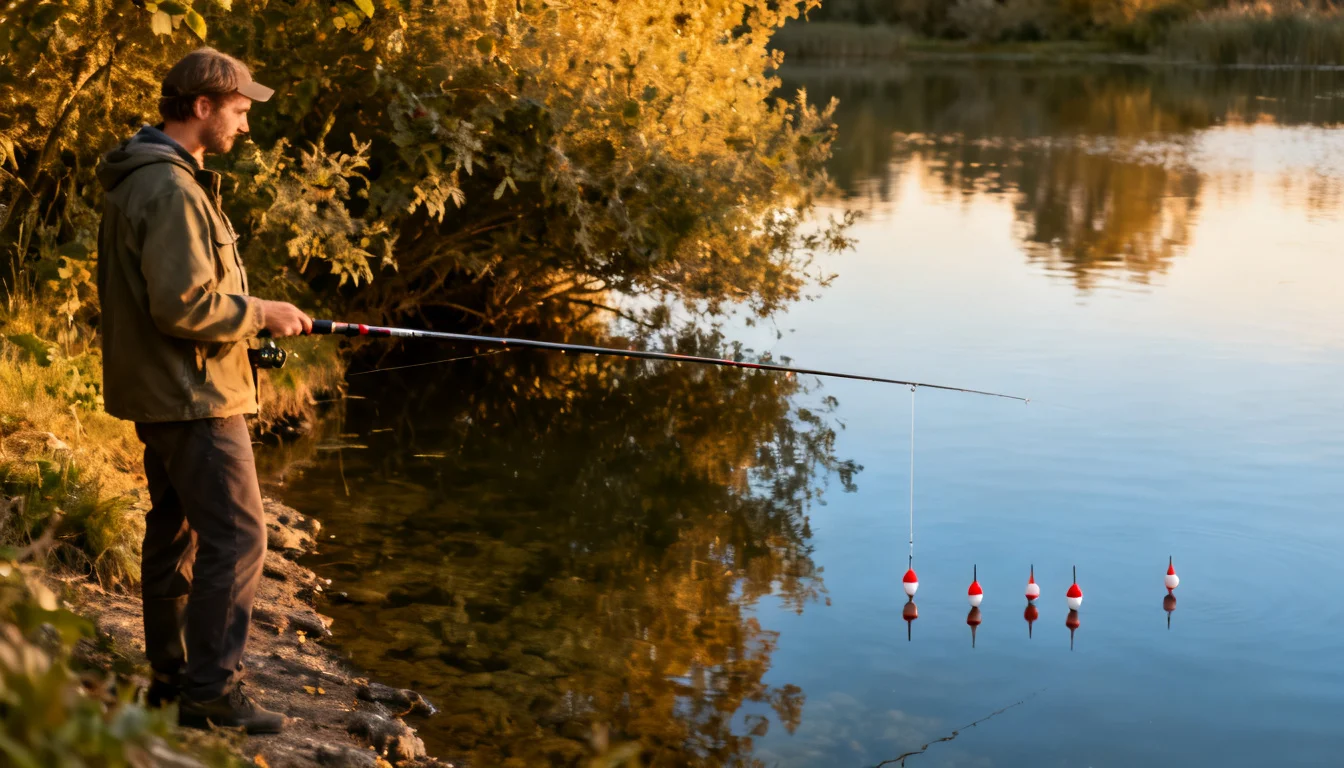
- Line too long. The most common error by far. A long line turns the method into a clumsy cast-less rod, killing both precision and bite detection. Re-measure: the bait should just touch bottom with the tip a foot or two up.
- Striking like you mean it. A stiff pole and three feet of line need almost no force. A hard swing snaps light hooks and pulls bait out of fish mouths. Firm snap, not a baseball swing.
- Heavy line. Eight-pound test is plenty for bass in cover; four to six is better for panfish. Heavy mono is visible, stiff, and dulls the signal.
- Casting anyway. If you are casting, you are not using the method. The whole advantage is the silent vertical drop; a cast brings back the splash and the weeds.
- Fishing one spot. The walk-and-rotate strategy is the method's engine. One pocket dies after a few fish; a circuit of pockets keeps you catching.
- Hoisting big fish straight up. Lifting a two-pound bass vertically through lily pads on a 30-ft pole stresses the tip and the line. Drop the tip, lead the fish to open water, then lift.
FAQ
What makes pole fishing different from rod-and-reel fishing?
With a rod and reel, you cast — the line flies and the bait lands. With a pole, the pole does the reaching: the line ties to the tip and the bait drops vertically into the spot. Long-rod short-line fishing is the Chinese refinement of that idea, built around precise placement into cover and margins.
Do you need a reel for long rod fishing?
No. The line ties directly to the pole tip, which is what makes the method work: a short, direct line transmits bites instantly and sets hooks immediately. The pole itself handles the fight.
How long should the line be on a fishing pole?
Measure the depth first, then add a couple of feet. Set the bait so it just touches bottom with the rod tip a foot or two above the water — for most bank fishing that works out to 3-6 ft. A longer line means less precision, more slack, and weaker bite signals.
What fish can you catch with a long rod and short line?
Bluegill, redear sunfish, crappie, and yellow perch are the classic targets, with small to medium bass, carp, and catfish in margin water. Anything that holds in weed pockets, under overhangs, or along the bank is fair game.
Is long rod fishing good for beginners?
Yes — arguably the best possible start. The rig is a tip tie and a hook knot, no casting to learn, and no backlash or bird's nest possible. A child can lower a worm into a bluegill bed and catch fish in an hour, then spend years learning the precision side of the method.
How long should a fishing pole be?
Entry-level telescopic poles run 12-20 ft; serious cover anglers use 25-40 ft poles, and match anglers in Europe fish poles past 50 ft. Start with a 12-20 ft telescopic pole — it covers most ponds, margins, and weed edges, and costs far less than a reel outfit.
The Bottom Line
Long-rod short-line fishing trades casting distance for something rarer: the ability to put a bait exactly where the fish are, silently, every time. The gear is cheap, the rig is simple, and the skills — the controlled drop, the float read, the walk-and-rotate circuit — transfer to every cover-heavy water you will ever fish.
Start on a pond with visible bluegill beds and a 15-ft telescopic pole. Drop worms into three pockets, rotate through them, and watch how often the float dips in the spots where a cast could never land.
When you want to apply the same cover-reading instincts to bigger water, the structure guide for lakes shows you where those pockets hide on a larger scale.