Spring Fishing: The Complete Seasonal Guide
Spring is the season anglers wait all winter for. As lakes and rivers shake off the ice, fish put on their most predictable feeding binge of the year — which makes spring fishing the easiest time to catch numbers, and often the biggest fish of the season.
Everything comes down to one number: water temperature. Once the water climbs into the 50-65°F window, bass, crappie and bluegill abandon deep winter haunts and move shallow to feed. That is why spring is the best time to learn largemouth bass fishing — the fish are in the shallows, and they are hungry.
What Happens to the Water in Spring
The single most important fact to understand is that fish live by water temperature, not the calendar. Air can swing 30 degrees in a week, but water warms slowly — a few degrees a day at most. That lag is why a warm spell in February does little, while the same sunshine in April pulls bass onto the bank overnight.
The golden window sits between 50°F and 65°F. Below 50°F, fish are still sluggish and deep. Above 65°F, the spawn winds down and patterns shift to summer. In between, three things happen at once: metabolism ramps up, feeding windows widen, and fish start moving toward spawning areas.
Where the water warms first matters as much as the temperature itself:
- Shallow flats warm fastest because a shallow column heats top to bottom.
- Dark-bottomed coves absorb more sunlight than light sand or rock.
- South-facing shorelines get the most direct sun through the day.
- Wind-protected bays and creek arms hold warmth instead of mixing it away.
A stretch of three or four warm days in a row pushes fish surprisingly shallow. A cold front reverses the trend and sends them back to deeper drop-offs, so plan around the weather trend, not a single sunny forecast.
Spring water levels add another layer. Runoff from rain and snowmelt floods new cover — freshly submerged grass, flooded bushes, newly wet banks — and fish move into it within days. Stained water also warms faster than clear water, which is why muddy creeks often produce before clear lakes.
Pre-Spawn, Spawn and Post-Spawn: The Three Phases of Spring
Every spring fish runs the same three-phase cycle, and the phases are what separate good anglers from lucky ones. The whole season is one long prespawn-to-postspawn progression, staggered by species and by latitude.
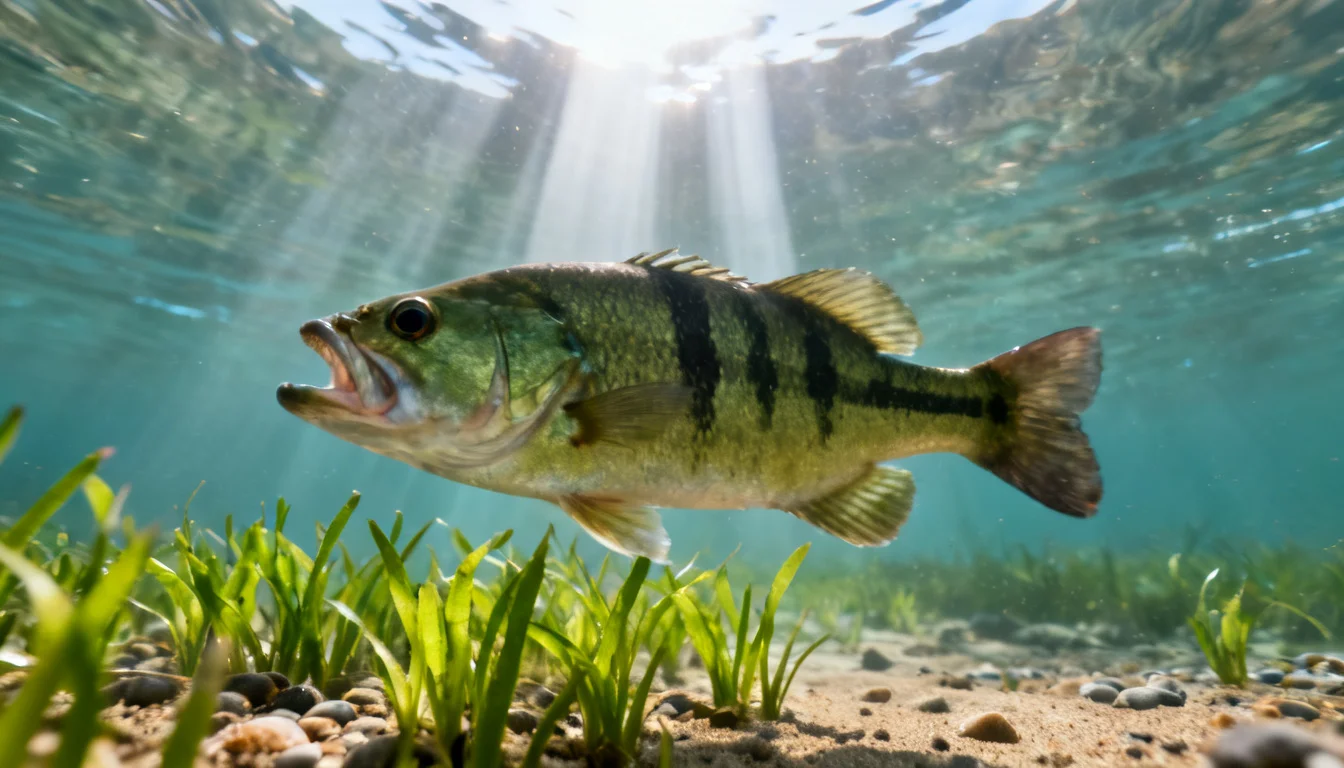
Pre-spawn. As water temperature crosses roughly 50°F, fish leave deep wintering spots and stage near the shallows — holding on the first drop-offs, points and creek-channel bends that lead into spawning bays. This is the most productive phase of spring fishing. Females are full of eggs, feeding hard to build energy, and they are aggressive. Pre-spawn bass in particular will chase a lure across a flat; a big female will often hit out of irritation rather than hunger.
Spawn. When the water reaches spawning range — the low 60s for bass and smallmouth, 55-65°F for the crappie spawn — fish move onto actual spawning grounds: hard-bottomed flats, gravel bars, sand pockets and protected coves in 1-6 feet of water. Males build nests and guard them; females come and go, dropping eggs between nest visits. Spawning fish are visible and easy to locate, but they are also easy to pull off the nest and hard to convert into bites. The classic move is to fish the edges of the spawning flats and the deeper water just off them, where non-nesting fish and waiting females hold.
Post-spawn. Once the spawn wraps up, fish are exhausted and scattered. The aggressive pre-spawn feed is over, and the post-spawn lull sends many anglers home skunked. The fish that recover fastest are the smaller males; big females often sulk for a week or two before feeding normally again. Fish slower, downsize baits, and shift to the nearest deep cover — the fish have not left the area, they have just stopped cooperating. The post-spawn window is also when shad and bluegill fry start showing, and the fish that eat them are never far away.
The three phases overlap all spring long. A northern lake can have pre-spawn bass on points, spawning bass on flats, and post-spawn bass on deep weed edges all in the same week.
The Best Fish to Target in Spring
Spring is the season of the sunfish family — bass, crappie and bluegill all run shallow and all feed hard. These three cover the season from start to finish, and each one is easier to catch in spring than at any other time of year.
| Species | Spawn window | Spawn temperature | Where they set up | Best spring baits |
|---|---|---|---|---|
| Largemouth bass | March-June (South first) | Nesting from ~60°F, peak 62-65°F | 1-6 ft flats, cover, docks | Jigs, spinnerbaits, soft plastics, crankbaits |
| Crappie | February-June (South first) | 55-65°F | Colony nests 1-6 ft near brush and timber | Minnows, small jigs, tube baits |
| Bluegill | May-July | 65-75°F | Colonial beds on gravel and sand | Worms, crickets, tiny poppers |
| Smallmouth bass | May-June (North) | Low 60s°F | Gravel bars, rocky points, shoals | Tubes, craw imitations, jerkbaits |
| Walleye | March-May (North) | 40-55°F | River riffles, gravel reefs | Jigs with minnows, crankbaits |
Largemouth bass are the headline act. The pre-spawn bite produces more big bass per hour than any other season, and the fish are in the shallows where a shore angler can reach them.
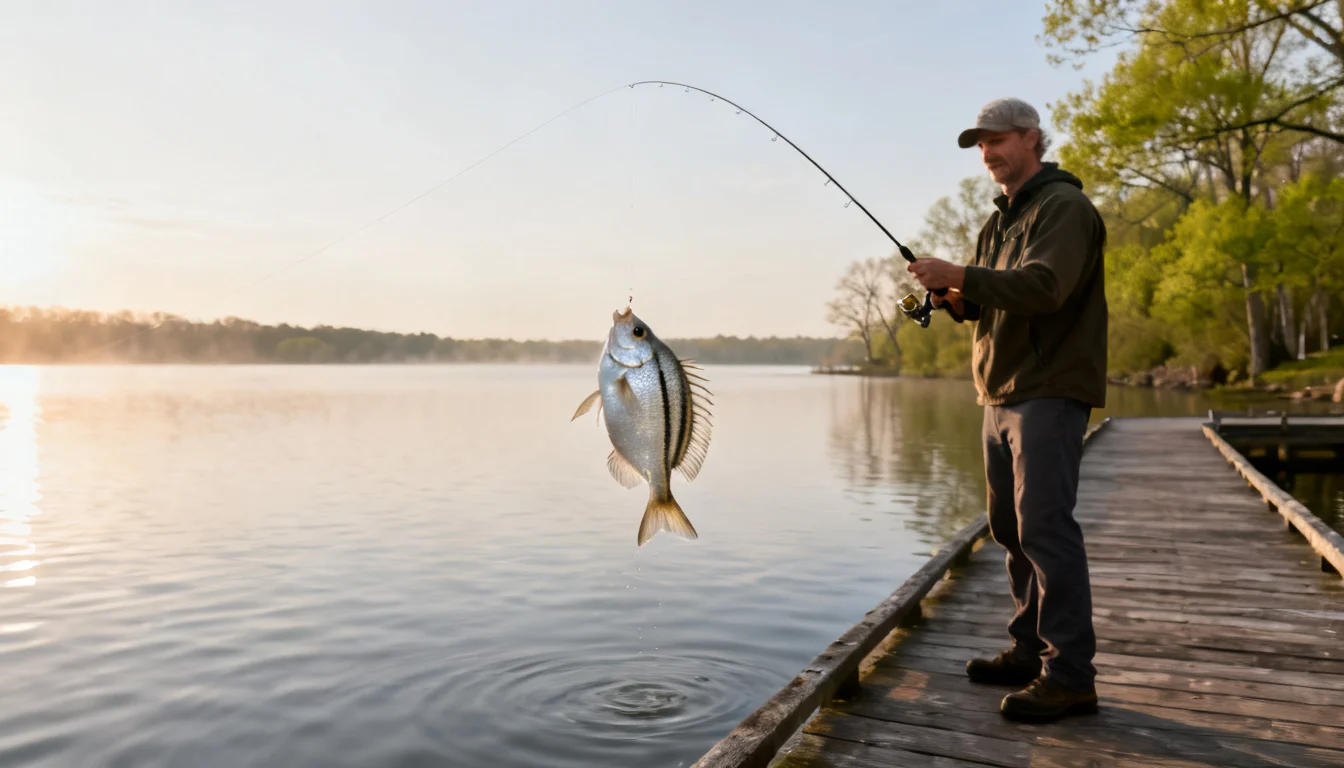
Crappie are the best numbers fishery of the spring. They stack up in huge schools on their spawning flats, and a minnow under a bobber will fill a cooler fast.
Bluegill round out the spring trio. They spawn later than bass and crappie, so when the big-fish bite fades in late spring, bluegill beds take over — great for beginners and kids, and our bluegill fishing guide covers the simple rig that catches them all day.
Walleye are the early-spring specialists: they spawn at 40-55°F, weeks before bass, which makes them the first reliable target of the season on northern rivers and Great Lakes tributaries.
Where to Find Fish in Spring: Depth and Structure
Spring fish location has one rule: follow the warmest water, then follow the food. Shallow first, deep second, and structure in between.
Start with the shallow, sun-warmed zones — the flats, coves and creek arms that reached the 50-65°F window first. Old anglers sum it up in a rhyme: fish the shallows in spring, the depths in summer, shade in fall, and sun-warmed water in winter. Spring's half of that rhyme wins more days than any lure choice.
Inside those warm zones, fish relate to the same structure they use all year:
- Points and humps leading into spawning bays — classic pre-spawn staging.
- Creek-channel bends — the highways fish use to travel from deep winter water to the flats.
- Flooded grass and brush — fresh cover holds baitfish, and baitfish hold bass.
- Docks, laydowns and stumps on the sunny side of a cove — the warmest cover available.
- Rock and riprap banks — they absorb heat all day and radiate it back at dusk.
Depth is a moving target all spring. Early in the season, fish hold 5-12 feet off the first drop-offs. As the water warms, they slide shallower — 3-6 feet, then 1-3 feet on the actual flats.
When the spawn is on, the deepest water worth fishing is the edge right off the beds, because that is where the big females wait between nest visits.
The wind is your friend in spring. A steady breeze pushes baitfish toward the windward shore, and the fish follow — the windward bank of a warming cove often out-fishes the calm side by a wide margin.
Best Times of Day for Spring Fishing
The best hours flip as the season progresses, because the fish are following water temperature, not the clock.
Early spring (water below ~55°F): fish the middle of the day. The afternoon warmth — roughly 11 a.m. to 4 p.m. — is the warmest water of the day, and the bite peaks with it. Mornings are cold and slow, and evenings cool off fast.
Mid-spring (55-65°F): the bite spreads out. Fish are shallower and more active, so the morning window opens, the afternoon window holds, and evening picks back up. Cloudy, drizzly days are often the best of all — low light keeps fish roaming the flats all day.
Late spring (65°F+): the classic summer pattern takes over. Early morning and late evening are prime, and midday fish slide deeper or into shade. Topwater action starts around dusk, and the last hour of light is usually the best hour of the day.
A warming trend matters more than the calendar. The first really warm day after a cold snap is a spring-fishing classic — fish that have been clamped down for a week suddenly feed hard. The first warm evening after several cold days is even better, especially on dark-bottomed coves that have been soaking up sun all day.
Spring Fishing Gear: What Changes
Spring gear is about matching the fish's position and mood, and both change as the water warms.
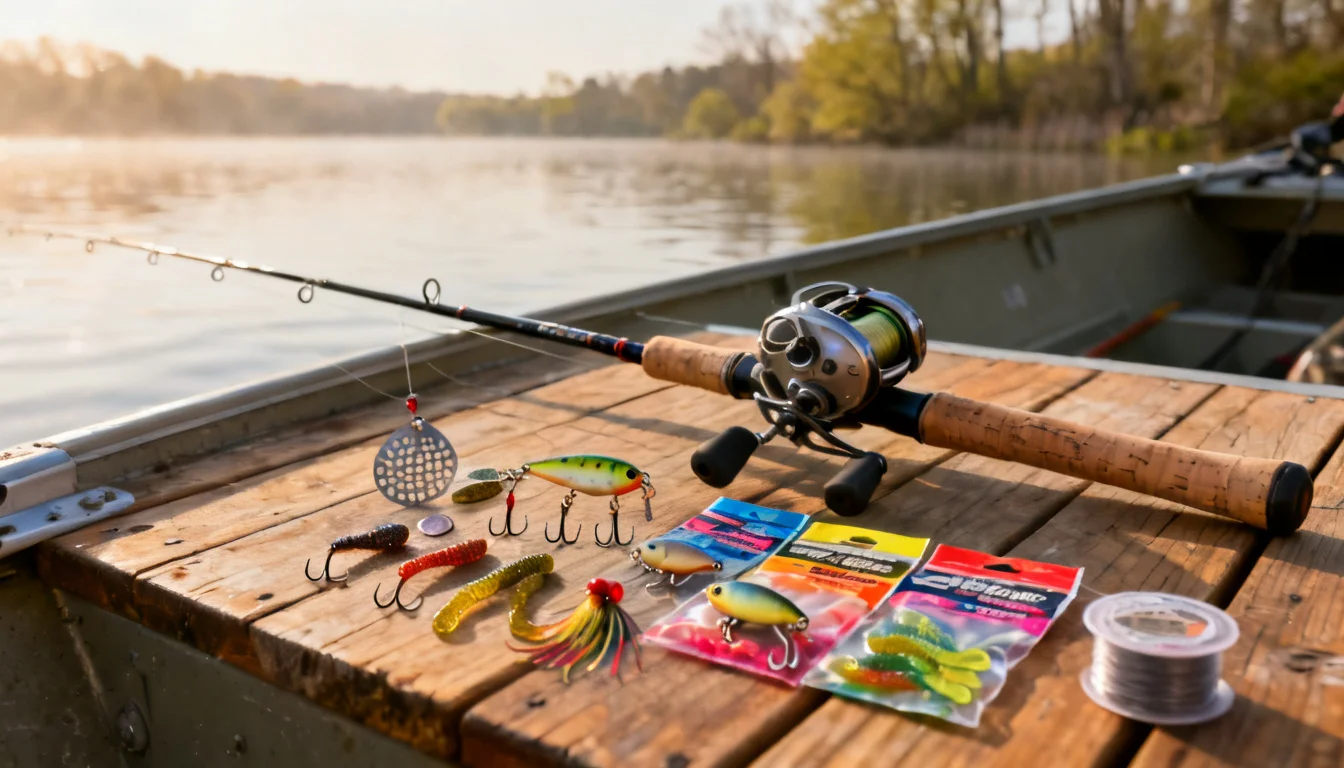
- Rods and reels: a medium-action spinning or baitcasting combo around 6.5-7 feet handles most spring bass work. For crappie and bluegill, an ultralight or light spinning rod 6-7 feet long gives the sensitivity those light bites demand.
- Line: 10-15 lb braid or 8-12 lb mono for bass around heavy cover; 4-8 lb mono or fluorocarbon for crappie and open-water bass. Stained spring water forgives heavier line, so err toward the strong side when fishing flooded brush.
- Baits for bass: jigs with craw trailers, spinnerbaits, soft plastic worms and creature baits, and shallow crankbaits. In pre-spawn, slow bottom-contact baits dominate; as the water warms, faster moving baits start working. Match the retrieve to the temperature — if the water is under 55°F, reel slow; over 60°F, you can speed up.
- Baits for crappie and bluegill: live minnows under a slip bobber, 1/16-1/8 oz jigs, and small tube baits in chartreuse, white and black. Bluegill take worms, crickets and tiny poppers once their beds are active.
- Presentation tempo: spring is a slowing-down season early and a speeding-up season late. Cold water means slow, subtle presentations — let jigs fall on slack line, pause crankbaits, dead-stick the worm. By the post-spawn phase, the fish want action again.
One more spring staple: a good pair of polarized sunglasses. Spring sun sits low in the sky, and low sun is exactly when you can spot fish on the flats, see beds, and read the water before you ever cast.
North vs South: How Spring Timing Shifts
Spring arrives as a wave that rolls from the Gulf Coast to Canada, and the same calendar date can mean three different fishing seasons depending on where you live.
| Region | Water hits 50-65°F | Crappie spawn | Bass spawn |
|---|---|---|---|
| Florida & Gulf states | February | February-March | February-April |
| Southeast & Mid-Atlantic | March | March-April | April-May |
| Midwest & Northeast | April | April-May | May-June |
| Northern states & Canada | May | May-June | June |
The South runs weeks ahead of the North, and the difference matters in both directions. Southern anglers get the first pre-spawn bite of the year, but they also hit the post-spawn lull by mid-spring — and by May, southern bass are already acting like summer fish.
Northern anglers wait longer but get a more compressed, intense spring: the ice goes out, the water rips through the whole 50-65°F window in a few weeks, and the pre-spawn bite can be spectacular while it lasts.
High elevations and big, deep lakes run cold for their latitude — a mountain reservoir in Tennessee can fish a month behind a shallow lowland lake in the same state. When in doubt, trust the thermometer over the map: the fish do not know what month it is.
FAQ
What water temperature do bass start biting in spring?
Bass start feeding consistently once the water reaches the mid-40s, but the spring bite really turns on in the 50-65°F range. Nesting begins around 60°F, with peak spawning at 62-65°F. The best spring bass fishing usually comes in the pre-spawn stretch, when the water sits between 50°F and the low 60s.
What is the best bait for spring bass fishing?
There is no single best bait, but jigs, spinnerbaits, soft plastics and shallow crankbaits cover the season. In cold pre-spawn water, slow bottom-contact baits like a jig with a craw trailer work best. As the water warms past 60°F, spinnerbaits and crankbaits get more productive.
When do crappie spawn?
Crappie spawn when the water hits 55-65°F — February to March in the South, April in the Mid-Atlantic and Midwest, May to June in the North. They nest in colonies, sometimes dozens of beds within a few yards of each other, in 1-6 feet of water near brush and timber.
Because they school so tight during the spawn, one good flat can hold the whole day's limit, and the bite runs best on cloudy days and around dawn and dusk, when their light-sensitive eyes work at their peak.
Is spring the best time to catch big bass?
For most of the country, yes. The pre-spawn period is the most reliable shot at trophy bass all year, because big females feed aggressively in the shallows before nesting. Once the spawn is over, those same fish disappear into a post-spawn lull that can last two weeks.
How deep should I fish in spring?
There is no single number, but there is a reliable rule: follow the warmest shallow water the fish can reach comfortably. Early spring that means 5-12 feet off the first drop-off; by mid-spring, 3-6 feet; and once the spawn starts, 1-3 feet on the flats, with the action on the deep edge right off the beds.
If one depth is not producing, move shallower — spring fish are almost always closer to the bank than you think.
The Bottom Line
The season rewards the angler who thinks in water temperature. Find the 50-65°F golden window, read which phase the fish are in — pre-spawn, spawn or post-spawn — and follow the warmest shallow water to the fish.
Bass, crappie and bluegill all put on their easiest bite of the year in spring, and the North-South timing differences just mean someone is always in season. If the big bass bite is your target, the pre-spawn window is where trophy dreams come true.
Related: smallmouth bass fishing guide · walleye fishing guide