Keep Fish Alive on the Water: Live Wells, Stringers & Coolers
Every angler who plans to bring dinner home asks the same question: how do you keep fish alive on the water? A few hours in the sun can turn a lively catch into a smelly problem, and the fix is usually simple once you understand what kills fish in the first place.
This guide covers the four ways anglers keep catches alive — live wells, stringers, fish baskets, and coolers — and when each one makes sense. If your plan is to let the fish go, skip the equipment: our catch and release guide covers safe handling instead.
Why Fish Die on the Water
Fish die in a bucket for three reasons: oxygen, temperature, and waste. Warm water holds less dissolved oxygen than cold water — the difference between a 50°F spring morning and an 80°F July afternoon is roughly 25 percent.
A fish's metabolism also speeds up as the water warms, so it needs more oxygen exactly when the water has less to give.
That is the same reason bites fade in summer heat: sluggish, low-oxygen water slows everything down. Ammonia from gills and waste builds up fast in any closed container, and in a crowded live well that buildup can poison fish before oxygen even runs out.
Stress makes the whole process faster. Panicked fish thrash, burn oxygen, and shed slime, which opens them up to infection. The recipe for a live fish is simple: cool water, plenty of oxygen, room to move, and as little stress as possible.
Live Well Tips: How to Keep Fish Alive in a Boat
A live well is the best tool anglers have to keep fish alive for hours — often a full tournament day. Built-in models sit under hatches on bass boats and run on two systems: a recirculating pump that pulls fresh lake water through the tank, and an aerator that bubbles air into the water. The best setups use both.
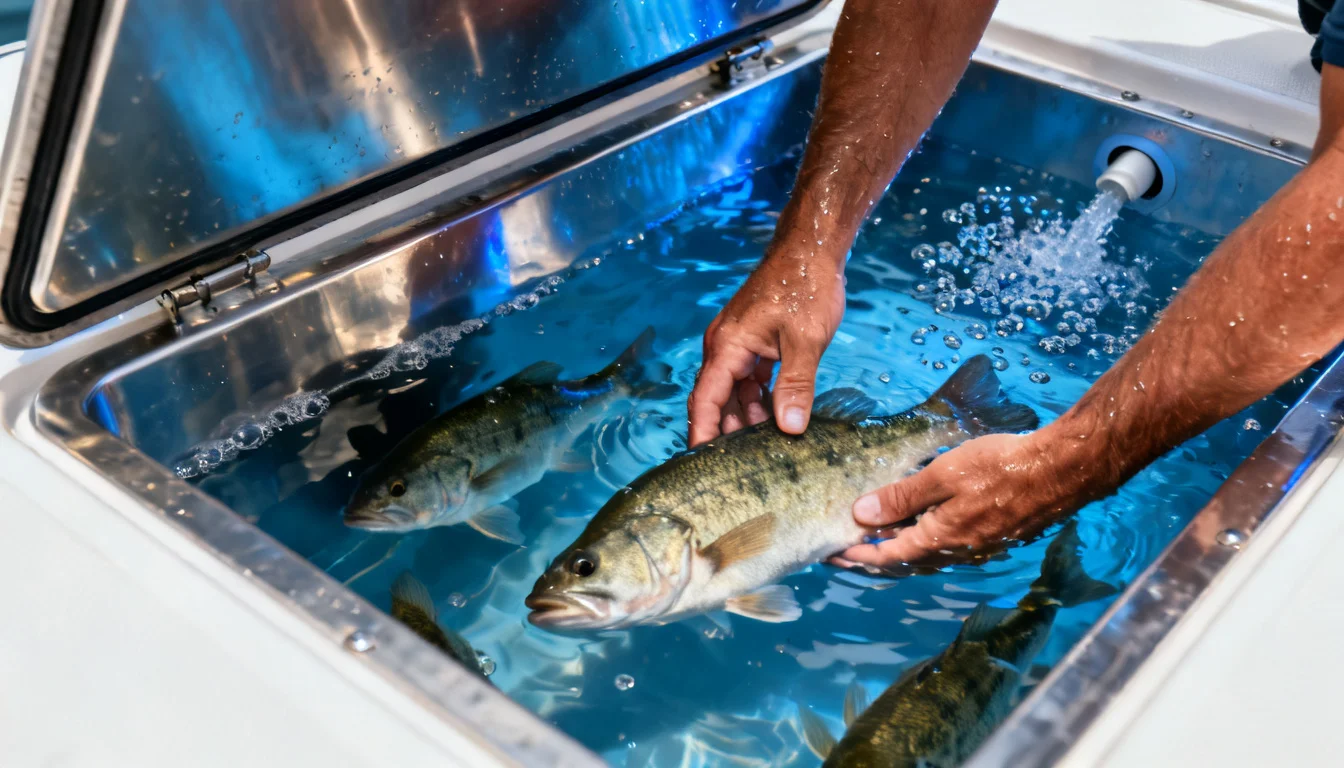
On kayaks and small boats, a portable aerated bucket works the same way. An inexpensive battery-powered live well aerator keeps the water moving for a day of fishing. Six live well tips cover most of what goes wrong:
1. Fill it with lake water. Tap water is a shock — different temperature and chemistry. Use surface water from the lake you are fishing.
2. Keep the water moving. Run the recirculating pump and aerator, or at least the aerator, whenever fish are in the tank.
3. Cool it gradually in summer. Add a little ice at a time until the water is cool but not cold — within roughly 10°F of the lake's surface temperature. A sudden ice dump can shock fish that are already stressed.
4. Do not crowd the tank. A couple of keeper bass in a 20-gallon live well is comfortable; a dozen is a recipe for an oxygen crash.
5. Exchange water regularly. Drain about a third and refill it every hour or so to flush out waste. Fresh water is the cheapest ammonia treatment there is.
6. Shade and close the hatch. Sunlight heats the tank fast. Keep the lid shut between fish, and add live-well salt for stressed fish if you tournament fish hard.
If your boat has no live well — or you are fishing from the bank, dock, or a kayak — the stringer is the classic answer. If you are new to fishing from a boat, start with the basics in our how to fish a lake guide.
How to Use a Fish Stringer the Right Way
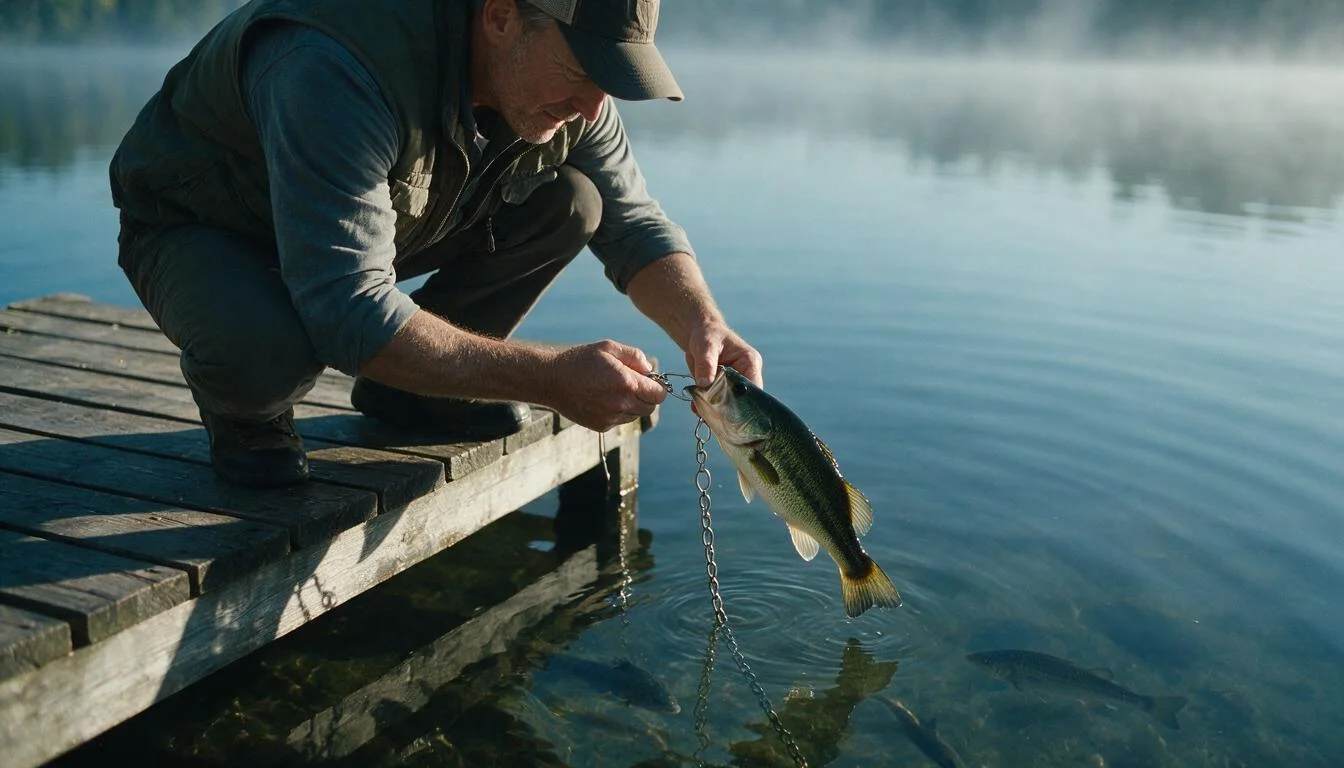
A fish stringer is a rope, chain, or wire line that holds caught fish in the water alongside you while you keep fishing. It is cheap, takes no electricity, and works from shore, dock, or boat. There are three common types:
- Rope stringers with metal prongs that push through the fish's lip and slide down the rope, spacing fish apart.
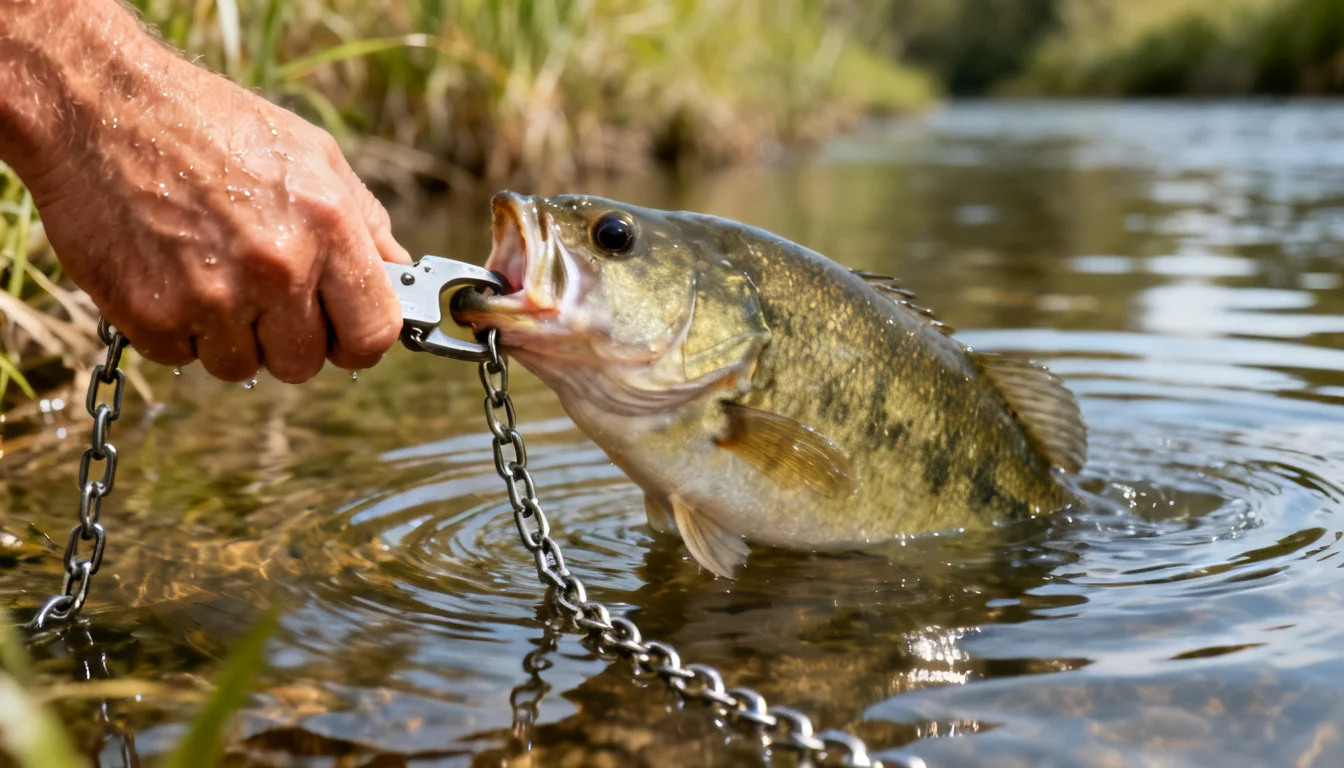
- Chain stringers with snap clips at the end — one clip per fish.
- Basket stringers, a wire mesh basket that holds several fish in the water at once — these double as the fish baskets covered below.
The single most important stringer rule: put the clip or prong through the fish's lower lip, never through the gills. Gill damage kills the fish almost immediately. A fish threaded through the gills is bleeding into the very water that is supposed to keep it alive.
Through the bottom lip, the fish can still work its gills and swim, and it will stay alive for hours in the right conditions. Those conditions are cool water. Stringers only work where there is enough oxygen — spring and fall mornings, high mountain lakes, or deep shaded spots near the bank.
In summer, when surface water climbs past the mid-70s, most fish die on a stringer within a couple of hours. That is also the season when turtles, otters, muskrats, and in southern waters alligators learn to work a stringer line like a buffet. Check your stringer often, tie it off securely, and never leave it unattended for long.
Fish Baskets and Keep Nets: The Shore Angler's Option
A fish basket is a collapsible wire or mesh cage that hangs in the water from a dock, bank, or boat. Fish go in through a one-way flap, and the basket keeps them together while still letting water flow over them.
Wire baskets suit panfish and bluegill best — the same hardy species that top our list of the easiest fish to catch. Hang them in the deepest shaded water you can reach, and check them every hour.
The long mesh keep net deserves a mention here. European carp anglers and many Asian anglers use a sock-shaped mesh net that lets fish swim free in deep water while you fish on.
It is the gentlest option for a fish you plan to weigh, photograph, and release, and a low-stress alternative to both stringers and baskets where the rules allow keep nets.
Coolers and Ice: The Keep-Fresh Fallback
Sometimes keeping fish alive is not the right goal. When the water is warm, when you have a long drive home, or when you plan to clean fish at the dock, a cooler with crushed ice is the practical answer.
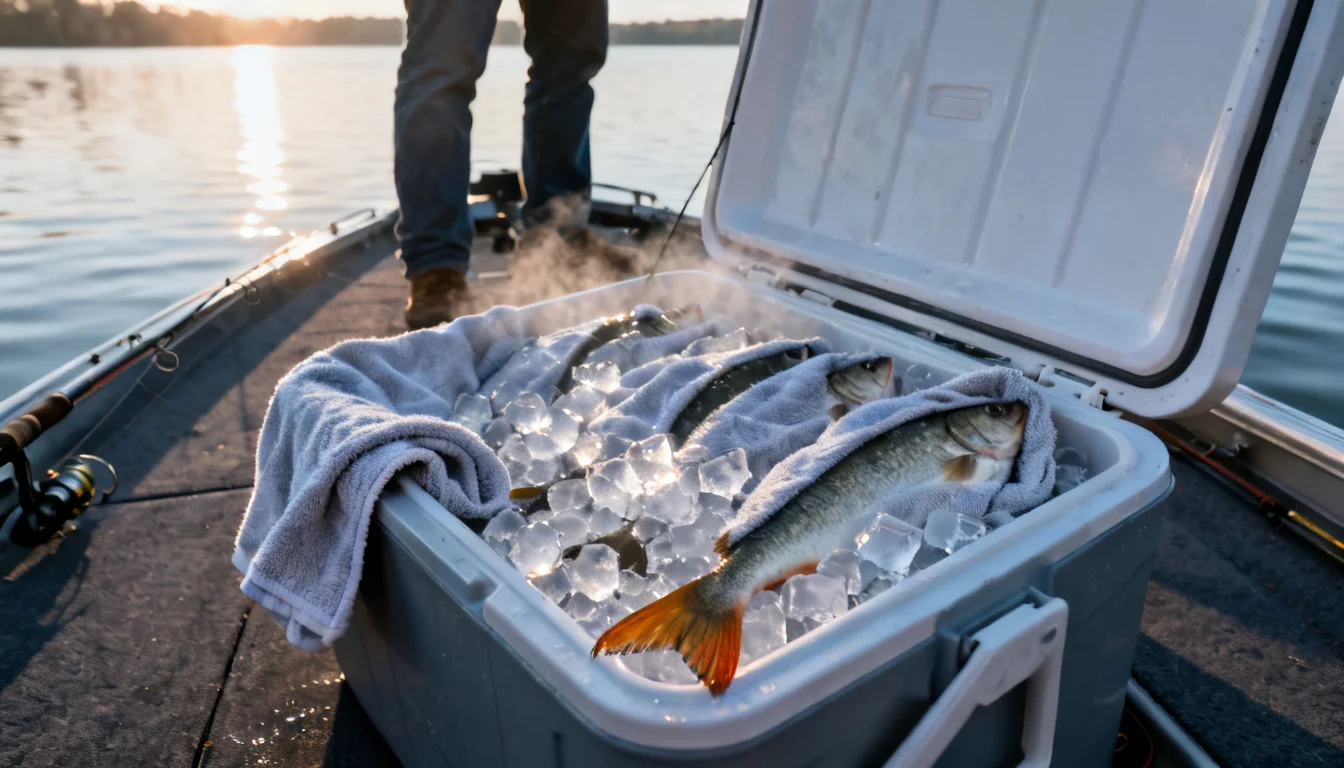
A fish that dies in a hot live well degrades faster than one that goes straight onto ice, which stops bacterial growth and preserves texture.
Wrap each fish in a wet towel or newspaper before packing it into the cooler. The wet layer keeps the skin from drying out and spreads the cold evenly, while the meltwater around the ice does the heavy cooling. Pack fish belly-down in a single layer if you can, and drain the meltwater regularly.
The cooler is also your backup plan for any fish that dies in the live well or on the stringer — ice it immediately instead of leaving it in the sun.
Live Well vs Stringer: Which Should You Use?
| Option | Best for | Keeps fish alive | Water temp | Boat needed? | Effort |
|---|---|---|---|---|---|
| Live well | Keeping catches for hours, tournaments | Best — hours to a full day | Any, with ice management | Usually built-in | Low to moderate |
| Stringer | Quick keeps while bank or dock fishing | Hours in cool water only | Cool (below mid-70s) | No | Very low |
| Fish basket | Panfish and multiple small fish from shore | Hours in cool, shaded water | Cool to moderate | No | Low |
| Cooler with ice | Fish you will clean soon, long drives | No — preserves, not alive | Any | No | Low |
Choose based on how long you need the fish alive. For a summer tournament day, nothing beats a live well. For a spring morning on a riverbank, a stringer or basket is simpler than any machine. If your fish will be filleted within a few hours, skip the survival game entirely and go straight to the cooler.
Common Mistakes That Kill Fish on the Water
- Overcrowding the live well. Every extra fish raises oxygen demand and ammonia output. Keep the tank comfortable, not full.
- Dumping in a bag of ice at once. Thermal shock kills stressed fish faster than warm water does. Add ice slowly.
- Stringering through the gills. Through the lower lip or not at all.
- Using a stringer in warm, shallow water. Oxygen runs out in an hour or two. Check your fish and your thermometer.
- Leaving fish unattended on a stringer. Predators, boats, and changing weather all take their toll. Check often.
- Never exchanging live well water. Ammonia builds up even with perfect aeration. Drain and refill on a schedule.
- Keeping fish you cannot keep. Bag and size limits still apply to every fish in your live well, bucket, or cooler. Our fishing license and regulations guide explains how limits work.
FAQ
How long can fish stay alive in a live well?
With good aeration, cool water, and light crowding, a live well will hold your fish in good shape for a full day — that is what tournament anglers rely on.
Skip the ice and the recirculating pump, and you are measuring in hours, not days. Cold-water species like trout and walleye need cooler water and more oxygen, so they do not last as long in a warm tank.
Do fish survive on a stringer?
Yes, but only in cool, oxygen-rich water. Fish threaded through the lower lip can breathe and swim, and they will stay alive for hours on a spring morning or in deep shaded water.
In summer heat, oxygen levels drop and most stringer fish die within a couple of hours — hardy species like channel catfish hold up longer than bass or panfish, but none survive a long hot day. Move them to a live well, a basket in deep water, or a cooler.
Should I put ice in my live well?
In warm weather, yes — but gradually. Cooling the water slows a fish's metabolism, which cuts its oxygen demand and waste output at the same time.
Add crushed ice a handful at a time until the water sits within about 10°F of the lake's surface — a floating thermometer takes the guesswork out of it. A sudden ice dump is worse than no ice at all, because thermal shock stresses fish that are already fighting the heat.
How do you keep fish alive without a live well?
Use a fish stringer in cool water, a fish basket hanging in the deepest shade you can reach, or a portable aerated bucket. All three keep water moving over the fish's gills without a built-in live well. When none of those options work — hot water, long trip home — ice the fish immediately in a cooler instead.
Is it illegal to transport fish in a live well?
Transporting legal fish is fine in most states, but the rules matter. Many states require you to drain live wells, bait buckets, and bilges before leaving a waterbody to stop invasive species like zebra mussels, and some lakes ban live bait entirely. Always check the local regulations before you fill a live well.
Can fish survive overnight in a live well?
Rarely worth it. A hardy fish in a cool, aerated live well can survive overnight, but the meat quality drops and most fish die of stress by morning. If you cannot clean fish the same day, ice them and clean them the next morning — the texture will be better than a stressed fish that died in the tank.
The Bottom Line
Keeping fish alive on the water comes down to three numbers: oxygen, temperature, and time. A live well handles all three for hours; a stringer or basket works in cool water with almost no equipment; a cooler with ice is the honest choice when survival is no longer realistic.
Match the method to your day, check your catch often, and follow the local rules — a healthy, fresh catch is the whole point of going fishing. For cold-water species like walleye, which die fastest in warm tanks, learn their temperature preferences before you target them.