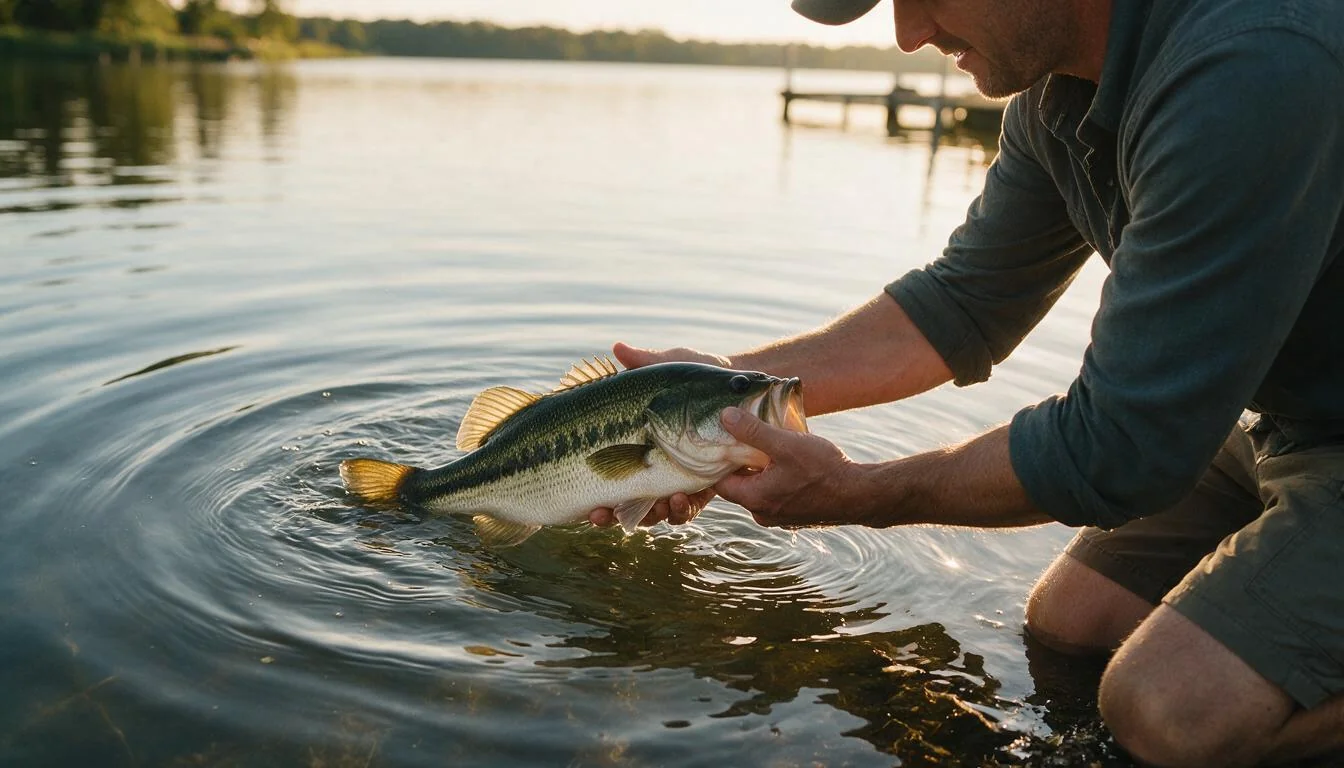
Catch and Release Fishing: How to Put Fish Back Alive
You caught a fish. Now what? If you are not planning to eat it, the goal is to send it back to the water in good enough shape to swim away and get caught another day.
That is the whole idea behind catch and release, and it takes a little more than just unhooking and tossing the fish over the side. Most beginners mean well but accidentally kill the fish they release: dry hands, long photo sessions, and rough hook removal all take a toll.
This guide covers why releasing fish properly matters, what actually hurts a fish, the step-by-step method for releasing one alive, and the gear you need to do it right. New to the sport? Start with our fishing for beginners hub, then come back here for the release basics.
Why Releasing Fish Matters
Releasing your catch is how a fishery stays good for everyone. Every big bass, old trout, or trophy pike you put back is a fish that keeps breeding and keeps the lake producing. Fisheries biologists set size and bag limits around this idea: protect the breeders, and the population takes care of itself.
There is a personal payoff too. A 5-pound bass you release this year can be a 7-pound bass next year: same fish, better fight. Anglers who release their catch consistently see bigger fish in their local waters over time.
And on many waters, releasing fish is not optional. Catch-and-release-only regulations, slot limits (rules that let you keep only fish within a certain size range), and protected species rules all require it. If you plan to fish at all, learning to do it properly is a basic skill, right up there with tying a knot.
Need a refresher on the rules side? Our fishing license and regulations guide covers what you can and cannot keep.
What Kills a Released Fish
Understanding the three killers is the fastest way to fix your technique. Almost every released fish that dies dies from one of these:
1. Stripped slime coat. Every fish is covered in a thin layer of mucus that protects it from bacteria, parasites, and infection. Dry hands, dry nets, and towels wipe this layer off. Once it is gone, the fish is an open wound swimming in its own pathogens.
2. Air exposure. Fish breathe through gills designed for water. Out of water, the gill filaments collapse and the fish suffocates, slowly. Even a minute of air exposure raises stress hormones and cuts survival odds, and it gets worse in summer heat.
3. Exhaustion. A long, hard fight builds up lactic acid in the fish's muscles, the same way a sprint exhausts a runner. An exhausted fish cannot swim away from predators or recover from handling. This is why fishing with tackle matched to the fish — not ultralight gear on a monster — is part of releasing fish properly.
A fourth killer, barotrauma, hits fish caught from deep water and gets its own section below.
How to Release a Fish: Step by Step
The whole method takes less than a minute when you do it right. Here is the sequence that keeps fish alive:
Step 1 — Land it quickly. Fight the fish efficiently and land it as fast as you safely can. The shorter the fight, the less lactic acid, the better the survival odds. Use a landing net with rubber mesh if you have one — rubber is far gentler on the slime coat than nylon.
Step 2 — Wet your hands. This is the single most important habit in the whole process. Wet hands slide over the slime coat instead of stripping it. Never grab a fish with dry hands, and never lay it on a dry boat deck or bank.
Step 3 — Leave it in the water. Keep the fish submerged while you work the hook out. Only lift it out for a quick photo, and if you do, support its weight horizontally with two hands. Never dangle it vertically by the jaw or tail.
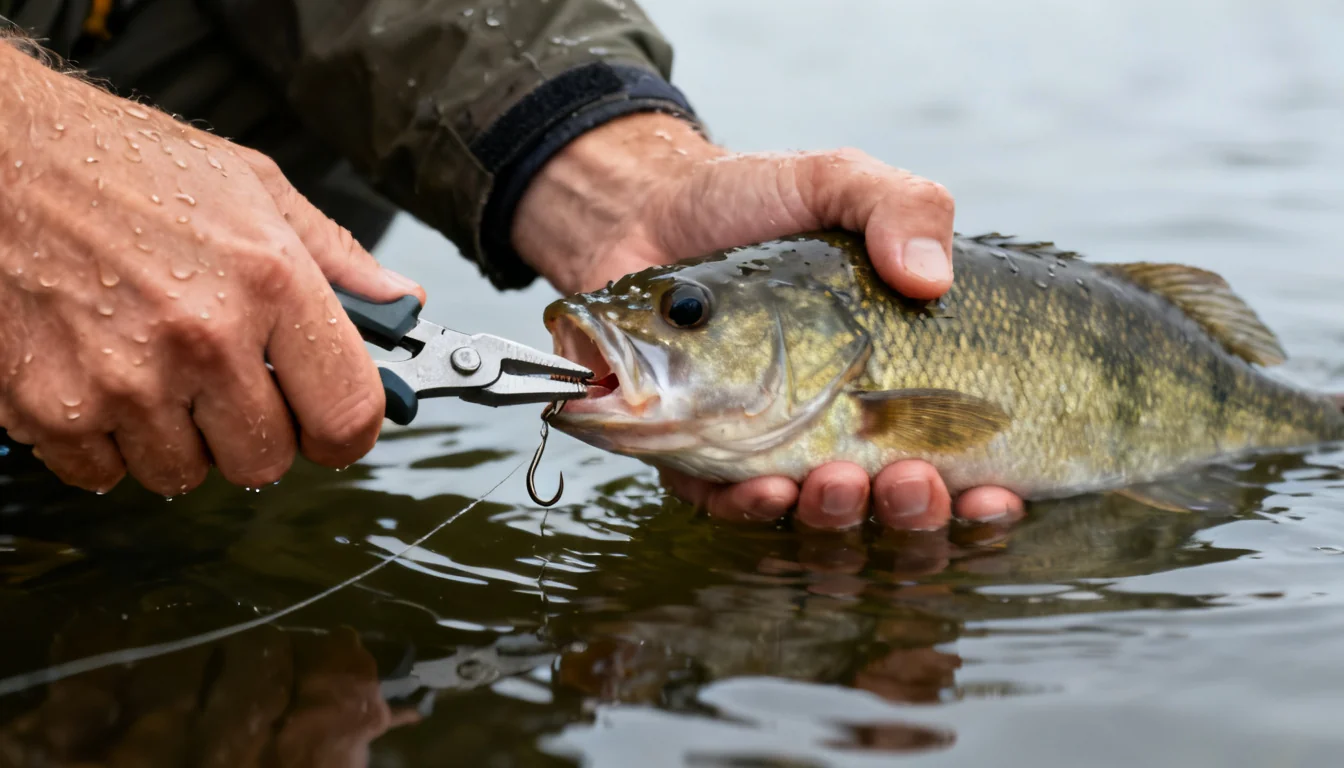
Step 4 — Unhook gently. If the hook is in the lip, back it out with needle-nose pliers or a hook remover. If the hook is swallowed, do not dig for it: cut the line as close to the hook as you can and leave the hook in. Most fish survive with the hook left in; the metal corrodes or works its way out over time. Ripping a deep hook out is usually fatal.
Step 5 — Revive before releasing. Hold the fish upright in the water, facing into the current (or gently move it back and forth in still water) so water flows over the gills. Moving it up and down does little to push water over the gills and can stress it further, so keep the motion forward and steady. When the fish starts pulling against your grip, open your hand and let it swim off on its own.
That five-step method is the core of how to release a fish alive, and it works for everything from panfish to muskies.
Catch and Release Techniques That Keep Fish Alive
Beyond the basics, a few safe fish handling techniques make a measurable difference — especially if you fish regularly.
Barbless hooks. Pinching down the barb with pliers takes two seconds and makes hook removal far less damaging. If you fish with lures, swapping factory treble hooks (the three-pointed hooks that come on most lures) for single barbless hooks is the single biggest survival upgrade you can make. Many catch-and-release-only waters require them anyway.
Match your gear to the fish. Light tackle makes a fun fight, but a fish fought to total exhaustion on undersized gear often dies after release. Use line and rod appropriate for the species — a bluegill on light line is a clean fight; a trophy bass on 4-pound-test line (very light line) is a death sentence.
Skip the dry-land photo session. If you want a picture, keep the fish in the water, lift it out for one quick shot, and put it back. Wet the surface you set it on if you must lay it down. Every extra second out of water cuts the fish's chances.
Handle by the mouth or body, never the gills. Gills are delicate breathing organs — grabbing a fish by the gills is like grabbing a person by the throat. For fish with strong jaws like bass, a gentle grip on the lower lip is ideal. For toothy fish like pike, use a jaw spreader or hold them behind the head.
Be careful in deep water. Fish hooked from more than about 30 feet down can suffer barotrauma — the swim bladder expands as pressure drops, pushing the stomach out of the mouth and the eyes out of the sockets. If you fish deep structure (drop-offs, ledges, submerged trees), carry a descending device (a weighted release tool that carries the fish back down) and use it instead of tossing the fish back at the surface.
Release Gear: What You Actually Need
Good news: you do not need anything expensive. The budget list for releasing fish properly:
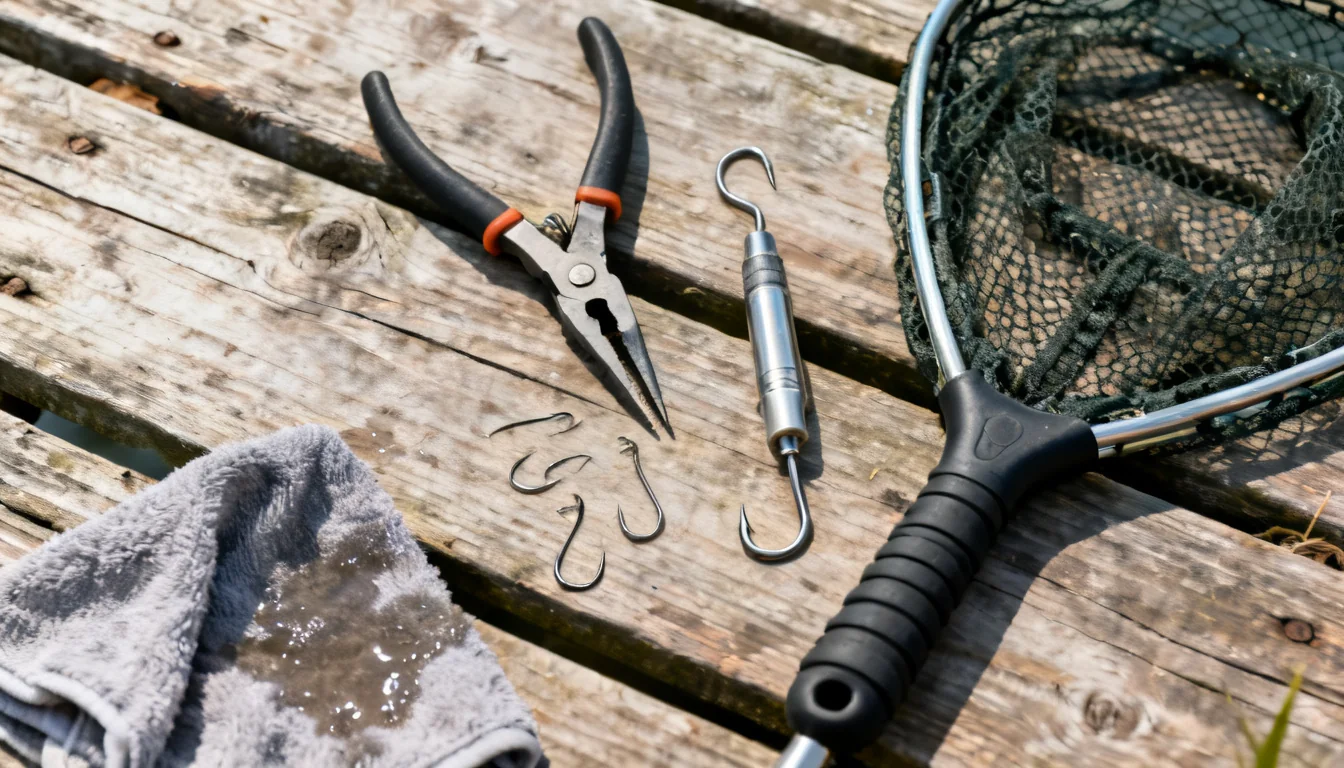
- Needle-nose pliers ($5–15) — for hook removal. Any pair works.
- Hook remover tool ($5–10) — optional but faster than pliers for lip-hooked fish.
- Rubber landing net ($15–40) — the single best investment; rubber mesh protects the slime coat. A standard nylon net still works, just wet it first.
- Barbless hooks (a few dollars) — or pinch the barbs down on the hooks you already own.
- Wet rag or bucket of water — for wetting hands and surfaces. Free.
That is the whole kit. Everything on the list costs less than a tank of gas, and it all fits in a small tackle box.
Common Release Mistakes
Even well-meaning beginners make these errors. Each one quietly kills fish:
- Dry hands on the fish. The #1 killer of released fish. Wet your hands every single time.
- Holding the fish out of the water for the "perfect" photo. Thirty seconds of air is a lot. One quick shot, then back in the water.
- Dangling big fish by the jaw. A heavy fish held vertically by the lower jaw puts stress on its internal organs. Support the body horizontally.
- Digging out a swallowed hook. This rips the throat and gut. Cut the line and leave the hook.
- Tossing the fish back like a basketball. The fish hits the water stunned and often belly-up. Lower it gently and let it swim away.
- "Catch-and-release" with a stringer. If you plan to keep fish, keep them — but do not drag a released fish around on a stringer and call it release.
- Fishing deep water without a release plan. If you cannot revive a fish that floats up, carry a descending device or fish shallower.
Many of these overlap with general beginner problems. Our guide to the 10 most common fishing mistakes covers the broader list of things that cost you fish and trips.
How to Practice Your First Releases
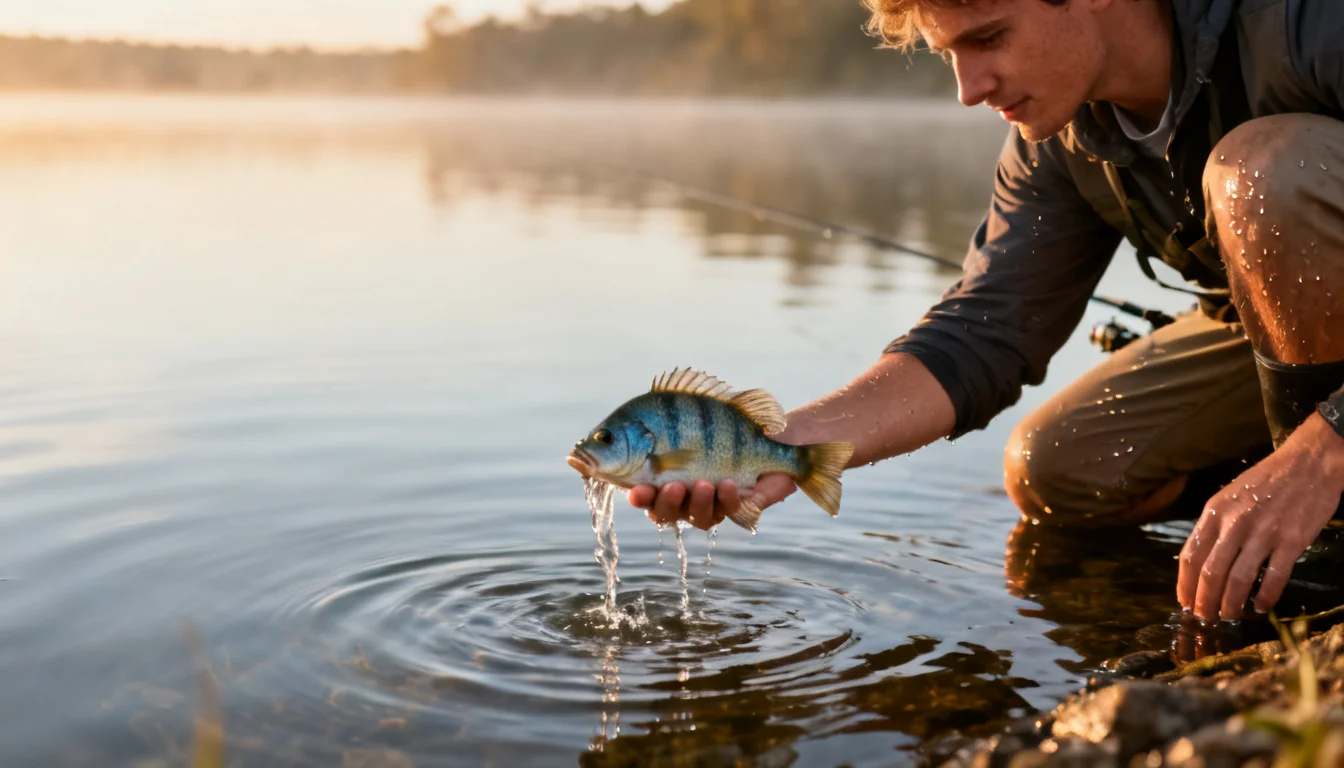
The best fish to practice on are hardy panfish — bluegill, sunfish, and crappie handle handling well and are perfect for building the habit. Catch one, wet your hands, unhook it in the water, and watch it swim off.
Ten gentle releases on bluegills build the muscle memory you will need for a trophy fish someday. See our how to catch bluegill guide for where to find them.
When you are ready to move from the bank to bigger water, our how to fish a lake guide covers structure, rigging, and picking spots — and remember the same release rules apply everywhere, from a farm pond to a Great Lakes tributary.
FAQ
Does catch and release hurt fish?
The capture itself is stressful: hooking, fighting, and handling all raise stress hormones. But a fish released quickly and gently, with wet hands and minimal air exposure, usually recovers. The damage comes from poor handling, not from the release itself.
What percentage of released fish survive?
For hardy species handled well — lip-hooked bass, panfish, and trout — studies consistently show the large majority survive to be caught again. Survival drops sharply with long fights, dry handling, deep hooking, or warm water, which is why technique matters more than the species.
Should I use barbless hooks for catch and release?
Yes, if you plan to release most of what you catch. Barbless hooks come out cleanly with far less tissue damage, and they are required on many catch-and-release-only waters. You lose a few fish you might have kept, but the ones you release survive far better.
How do you remove a hook from a fish's stomach?
You do not. If the hook is swallowed past the throat, cut the line as close to the hook as possible and leave it in. The hook corrodes over time, and most fish survive. Digging for a deep hook tears the internal organs and is usually fatal.
What is barotrauma in fish?
Barotrauma is the expansion of the swim bladder when a fish is brought up quickly from deep water. The pressure drop makes the bladder swell, pushing the stomach out of the mouth and the eyes bulging. Affected fish cannot swim back down on their own. A descending device carries them back to depth so the bladder recompresses.
How long can a fish stay out of water?
As a rule of thumb, keep it under 30 seconds — less in summer heat. Every second of air exposure collapses the gills and burns the fish's oxygen reserves. The fastest photos are the kindest: one shot, then back in the water.
The Bottom Line
Releasing fish is a simple skill that keeps fisheries healthy and makes your own fishing better over time. Wet your hands, keep the fish in the water, unhook gently, revive it, and let it go — that is the entire method, and it costs almost nothing to do right.
Start practicing on panfish and make gentle release as automatic as tying your hook — the rest of the basics live in the beginner hub. The fish you release today is the trophy you catch next year.