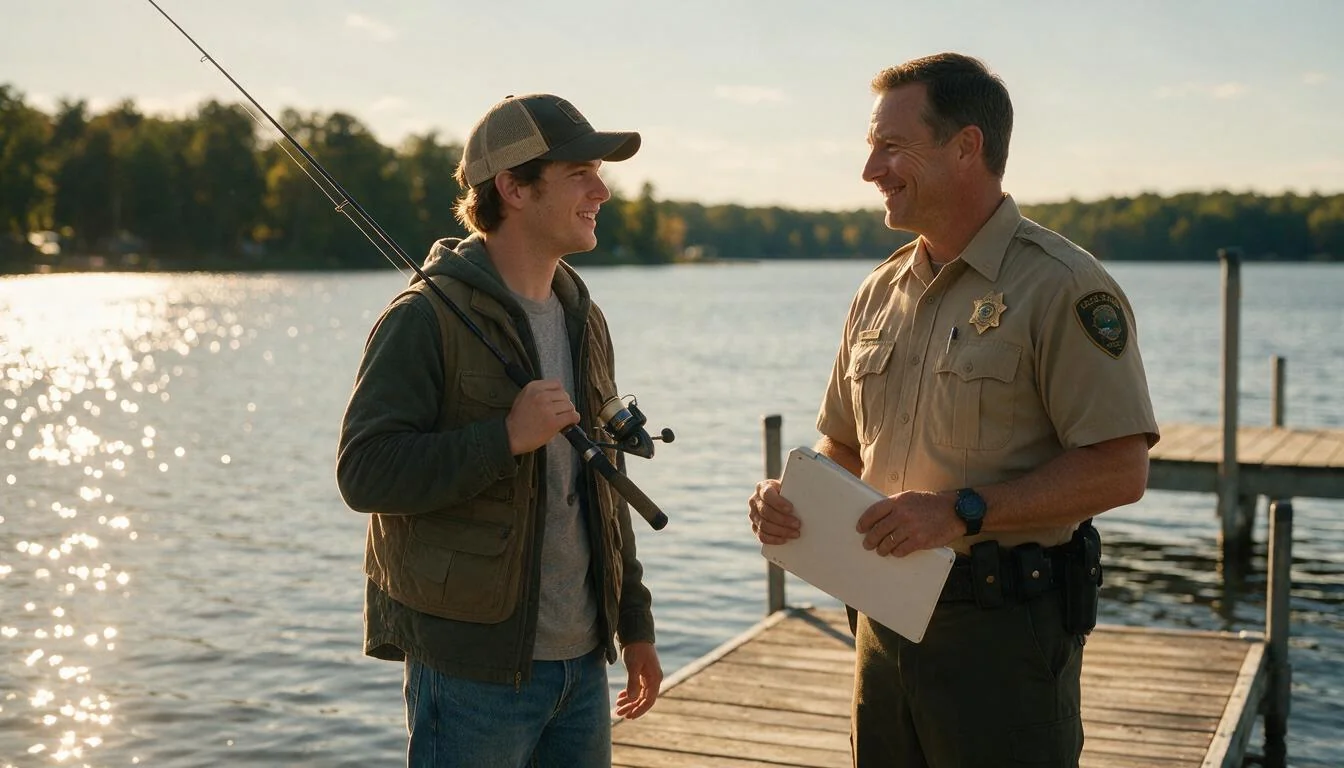
Fishing License Basics: Regulations Every Beginner Needs to Know
Do you need a fishing license? Yes — in all 50 states, and the answer is the same whether you plan to keep fish or release every one. It is the legal pass that lets you fish at all.
The rules around it (seasons, size limits, catch limits) are simpler than they look once someone explains them in plain English. This guide covers what a license costs, how the rules work, what to check before you head out, and the mistakes that get beginners into trouble.
Why a Fishing License Matters
A license is not a tax on fun — it is how the whole sport pays for itself. The money from every license sale goes to your state's fish and wildlife agency, and that agency spends it on the things that actually put fish in the water: hatchery stocking, habitat restoration, water access, and the biologists who track fish populations.
On top of that, a federal excise tax on fishing tackle is funneled back to the states for the same purpose. When you buy a license, you are literally funding the next fish you catch.
There is a fairness angle too. A $30 license means every angler chips in for the same shared resource, instead of a few people taking fish that everyone else pays to maintain. That is why game wardens treat licenses seriously — and why the rules apply to you even if you only fish once a year.
License Types and How They Work
The exact system varies by state, but the shape is the same everywhere. Almost every state requires a license for anyone 16 or older (a few set the line at 15 or 17, and most exempt kids under 16). You buy one for the person, not for the rod — sharing a license between two anglers is not allowed.
The most common license types:
- Annual license — the standard option, valid for 12 months from the purchase date in many states (a few, including California, Texas, and Wisconsin, run on a fixed calendar year instead).
- Short-term licenses — 1-day, 3-day, and 7-day options. Perfect for trying the sport or a single trip.
- Combo licenses — freshwater plus saltwater, or fishing plus hunting, usually at a discount.
- Resident vs. non-resident — residents pay far less, and "resident" means living in the state for a set period, not owning a vacation home there. Non-resident prices run 2–4× higher.
- Stamps and endorsements — some states add a small extra permit for specific fisheries, like a trout stamp in Wisconsin or a trout/salmon permit in Pennsylvania.
Where do you buy one? The fastest way is your state's DNR or Fish & Wildlife website — most sell instantly, and you can keep the digital copy on your phone. License agents (many big-box sporting goods stores, tackle shops, and marinas) sell them in person, and the national portal at takemefishing.org links to every state's system.
Two things to know: many states separate freshwater and saltwater licenses (Florida charges $17 for each, or $32.50 for both), and most states offer one or two free fishing days per year — usually in June — when anyone can fish without a license.
How Much Does a State Fishing License Cost?
Prices differ a lot, so here is a snapshot of what resident and non-resident anglers pay for an annual license in a few states (approximate, and they change — always confirm on the state's own website):
| State | Resident annual | Non-resident annual | Short-term |
|---|---|---|---|
| Florida (freshwater) | $17 | $47 | $17 (3-day) |
| Texas (freshwater) | ~$30 | ~$58 | ~$11 (1-day) |
| New York | $25 | $50 | ~$12 (1-day) |
| California | ~$55–65 | ~$140+ | ~$20 (1-day) |
| Michigan | ~$26 | ~$68 | ~$10 (1-day) |
Two patterns stand out. First, a resident annual license almost always lands between $15 and $65 — cheap enough that "I forgot" is never a good excuse.
Second, if you are just testing the sport, a 1-day license ($10–$20) or a free fishing day is the smart way to start. You can upgrade to an annual license later without losing anything.
Size Limits and Catch Limits Explained
Two numbers control what you can take home: the bag limit and the size limit. They are easy to mix up, so here is the plain version:
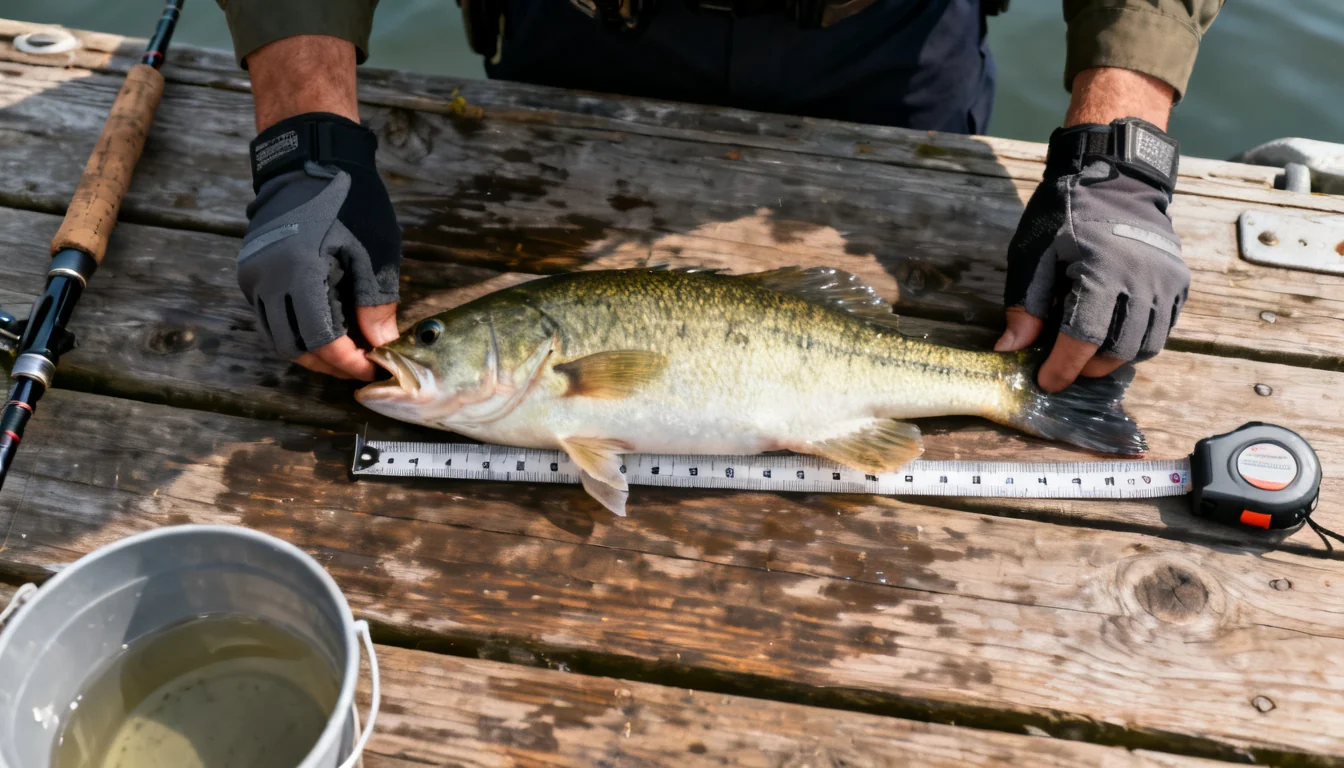
- Catch limits (bag limits) = how many fish you may keep per day. "Largemouth bass, 5 per day" means five fish, period, no matter how many you catch and release.
- Size limits = how long a fish must be to legally keep it. A "14-inch minimum" means anything shorter goes back immediately.
- Possession limits = how many you may have in your cooler or freezer, often double the daily bag.
- Slot limits = a protected size window. Some trophy lakes allow keeping bass under 15 inches or over 22 inches, but require releasing everything in between — protecting exactly the fish that would breed best.
Why do these rules exist? Because every water has a limited number of fish, and limits spread the harvest fairly so the population doesn't collapse.
Bass in most states run 5 per day with a 12–16 inch minimum; trout usually allow 5–10 per day; panfish like bluegill are far more generous, with many states allowing 25–50 per day. Those are examples, not guarantees — every state sets its own numbers for every water.
Measure fish correctly or the rule means nothing: lay the fish flat and measure total length, from the tip of the closed mouth to the pinched tail. A fish that measures short goes in the water, not the cooler — wardens measure, and so will your conscience.
Catch and Release: Know the Rules Before You Keep a Fish
Some waters are catch-and-release only — no keeping, no exceptions, sometimes restricted to artificial lures. And on slot-limit lakes, releasing a mid-size fish is not optional. Releasing fish well matters almost as much as the rules:
- Wet your hands before touching a fish — dry hands strip off their protective slime.
- Keep the fish in the water as much as possible; lift it out only briefly for a photo.
- Support its weight horizontally — never dangle a big fish by the jaw or gills.
- If the hook is deep, cut the line close instead of ripping it out.
- Give the fish time to swim off on its own before you celebrate.
Catch and release is not a loophole. You still need a license, and you still follow the same seasons and gear rules — you just put the fish back.
What to Check Before Your First Trip
Fishing regulations are published per state, per water. Before you drive to the lake, spend five minutes on your state agency's website — it goes by different names (DNR, Fish & Wildlife, Game & Fish, TPWD in Texas, FWC in Florida) — and check:
- Your license is current and the right type for the water (freshwater vs. saltwater).
- The season is open for the species you are after — bass and trout seasons don't always run year-round.
- Water-specific rules. Many lakes, rivers, and special-regulation waters have their own size limits, slot limits, or bait bans that override the general state rules — reading how to fish a lake covers the structure, but the rulebook for that specific water comes first.
- Bait restrictions — some waters ban live bait entirely.
- Gear rules — how many rods you can fish at once, and that snagging is illegal for sport fish in every state.
- Possession and transport rules for fish on the drive home.
Print the regulations digest or bookmark the page on your phone. Local bait shops are a great backup source of "what's biting and what's legal here" — asking a question costs nothing.
What Happens If You Fish Without a License?
Game wardens and conservation officers patrol lakes, rivers, and even small ponds — they check licenses, measure fish, and count stringers. Fishing without a license is a citation offense in every state, and the fine is never cheaper than the license: expect $50 to $500 or more depending on the state, plus court costs, and repeat offenses climb fast.
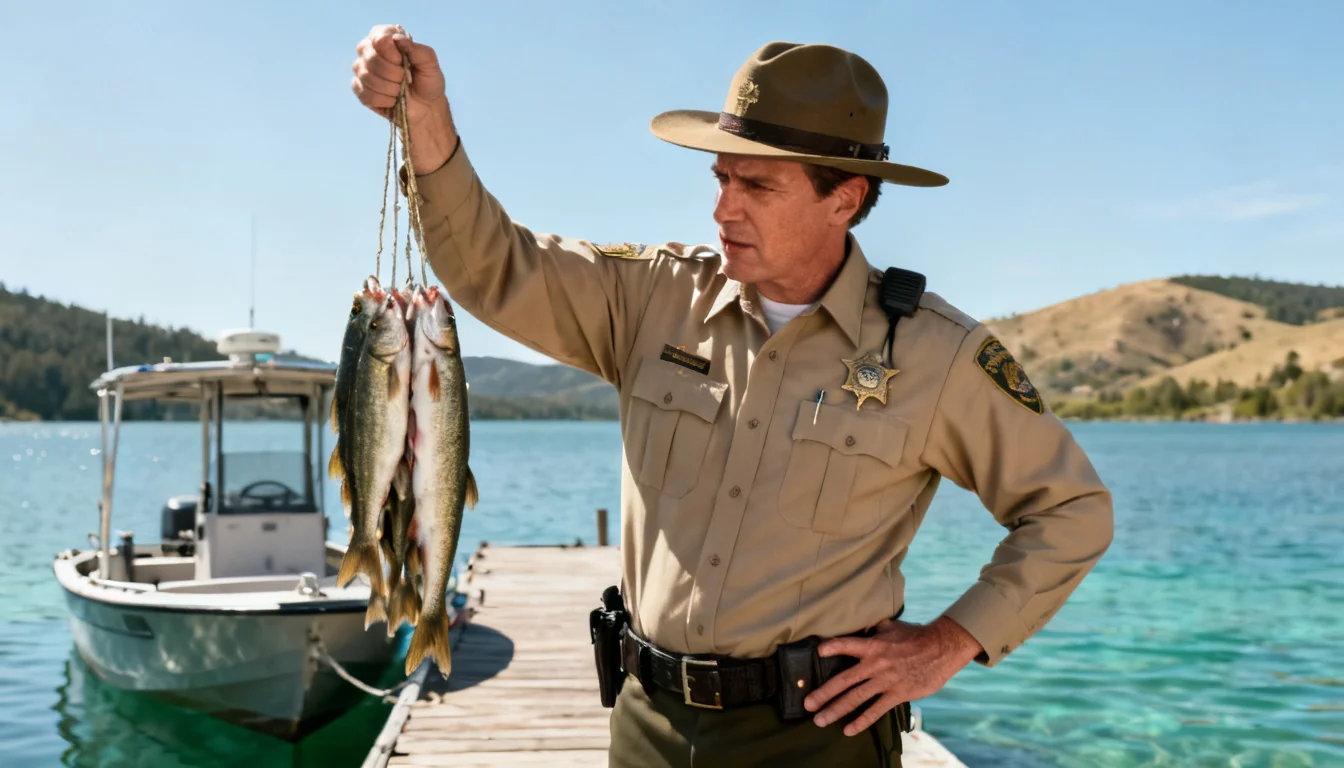
Serious violations — keeping far over the limit, poaching during a closed season, using someone else's license — can mean hundreds in fines, loss of fishing privileges, even confiscated gear.
Here is the thing most beginners get wrong: wardens do not care if you did not know. "I didn't realize" does not dismiss a ticket. When in doubt, ask a warden or a bait shop before you fish — one question is free; one citation is not.
How Much Does a First Season Cost?
A license is the cheapest gear you will own. Budget for it like this:
- Trying it out: a 1-day license ($10–$20) or a free fishing day — $0.
- First season: a resident annual license ($15–$65, depending on your state) plus a basic rod-and-reel combo ($50) and a small tackle box of hooks, sinkers, and a few lures ($10–$15). Total: roughly $75–$130 for a full season of weekends.
- Getting serious: upgrade the combo later and add a second rod for different techniques — but the license price stays the same.
Skip the license to save $30 and you risk a $200 ticket. It is the easiest cost-benefit decision in fishing.
Common Beginner License Mistakes
The same mistakes show up again and again — usually from not knowing, never from malice:
- Assuming private ponds need no license. Many states require a license even on private water unless you own the pond (and even that varies) — check your state's fishing regulations before you assume.
- Letting the license expire mid-season. Put a reminder in your phone.
- Buying the wrong type — a freshwater license doesn't cover saltwater in states that split them.
- Fishing a special-regulation water with general-rule knowledge. Trophy lakes and wild-trout streams are the usual suspects.
- Keeping fish without measuring, or counting "close enough" as legal.
- Forgetting that catch limits apply per person — five bass for you and five for a friend is fine; ten in your cooler alone is not.
The golden rule: if you are unsure about a rule, look it up. Five minutes of checking beats a ticket, a dead fish, and a bad day.
What to Do Next
Once your license is sorted, the real fun starts. Pick an easy first spot — a small pond or reservoir is perfect for learning the basics before you go.
Target a forgiving species for your first few trips; panfish are the classic beginner catch for good reason. Every expert on the water started exactly where you are: with a license, a rod, and more questions than answers.
FAQ
Do I need a fishing license for catch and release?
Yes. The law treats the attempt as the activity: the moment your line is in the water, you are fishing — whether you keep anything or not. That is why catch-and-release anglers need the same license, and why fly-only trout stretches still require one. The license buys the right to fish; releasing your catch is how you use it.
Do kids need a license?
Most states exempt children under 16, and the cutoff varies — some set it at 15, others at 17.
For teenagers past the exempt age, junior licenses are usually a few dollars (sometimes free), and some states let young anglers fish without their own license while supervised by a licensed adult. If you regularly take kids out, look for a family or household license — it often covers everyone for less than two adult licenses.
Do I need a license to fish in a private pond?
It depends on who owns the water. Most states exempt the landowner fishing their own pond, but guests, renters, and even relatives fishing water they do not own usually need a license.
A few states (Texas is the best-known) let pond owners buy a stocking permit that covers everyone fishing that water. Never assume private water is license-free — check your state's rules first.
Can I buy a license online?
Yes — buying online is now the default in every state. You create an account, pay by card, and get a digital license you can show from your phone within minutes; some states also mail a paper copy.
Screenshot or print it before you leave for the water, though — wardens need to see a license, and a dead phone battery is not an excuse.
How much is the fine for fishing without a license?
Expect a citation of roughly $50 to $500 or more, depending on the state, plus court costs. A first offense is usually a civil citation you can pay by mail or online — unpleasant, but not a criminal record.
Repeat violations and serious offenses (keeping far over the limit, fishing a closed season) escalate to steeper fines, loss of fishing privileges, and even criminal charges.
What are free fishing days?
Most states set aside one or two days a year — usually in June around National Fishing and Boating Week — when anyone can fish without a license. Only the license requirement is waived: size limits, bag limits, seasons, and gear rules still apply.
Free days are the cheapest way to test the sport: take a beginner, borrow gear, and find out whether a full license is worth it.
The Bottom Line
The license itself is a small cost — often under $30 for a resident annual — and a five-minute purchase, yet it is the single most important thing you will bring.
Learn your state's size and catch limits, check the water you plan to fish, and treat every rule as something that protects the sport you are just getting into. Do that, and your first season will be all fun and no tickets.