Ice Fishing Basics: What You Need Before You Walk On the Ice
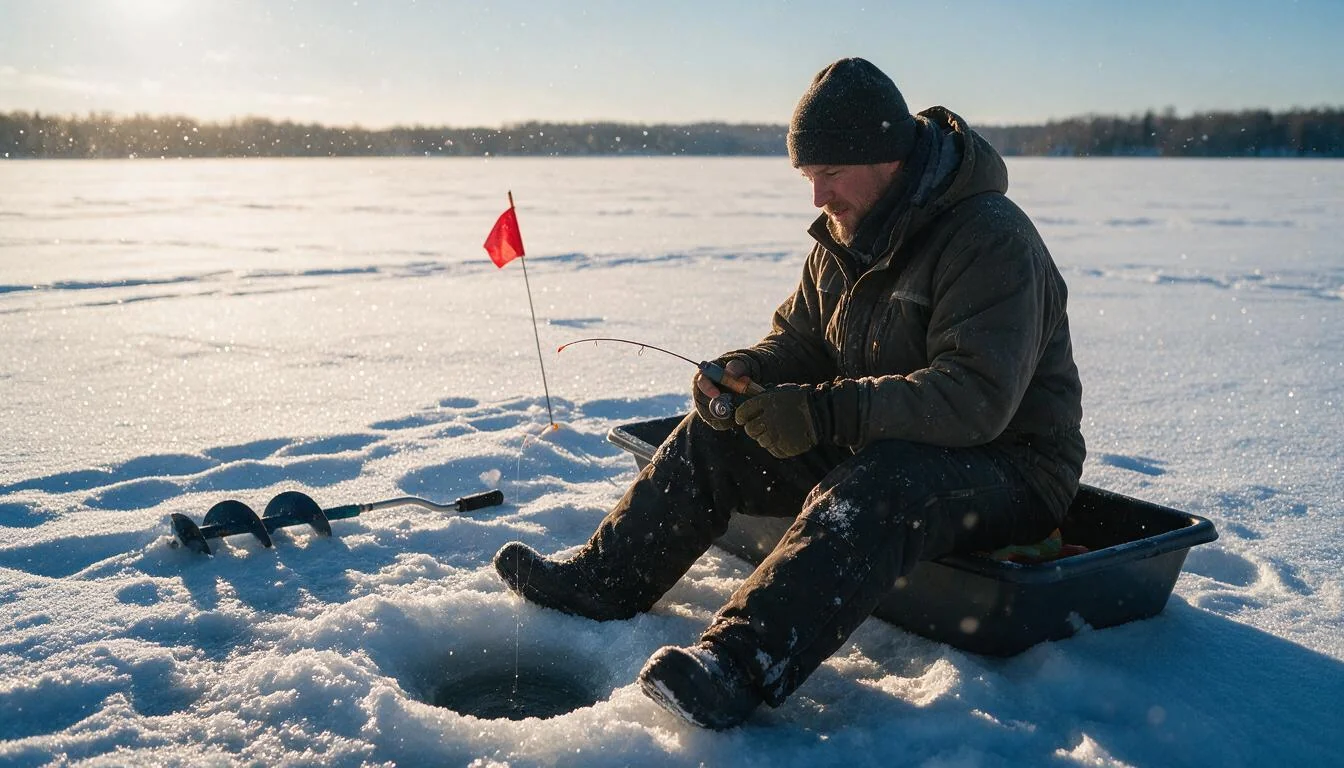
You've seen the photos: a frozen lake, a circle of holes, and a stringer of perch laid out on the snow. Ice fishing basics are not complicated — the sport comes down to three things: confirming the ice is safe, carrying a small kit of gear, and knowing a few simple tactics.
This guide covers all three the way a first-timer actually needs them, so your first trip is cold, productive, and above all safe. If you want the full winter picture — open-water patterns, tailwaters, regional timing — start with our winter fishing tips guide instead.
Ice Fishing Safety: The Rules Before the First Hole
The only question that matters before you drill: is this ice safe to stand on? Everything else is tactics. Work through these four checks every single time, on every lake, and no matter how many anglers you can see already parked out there.
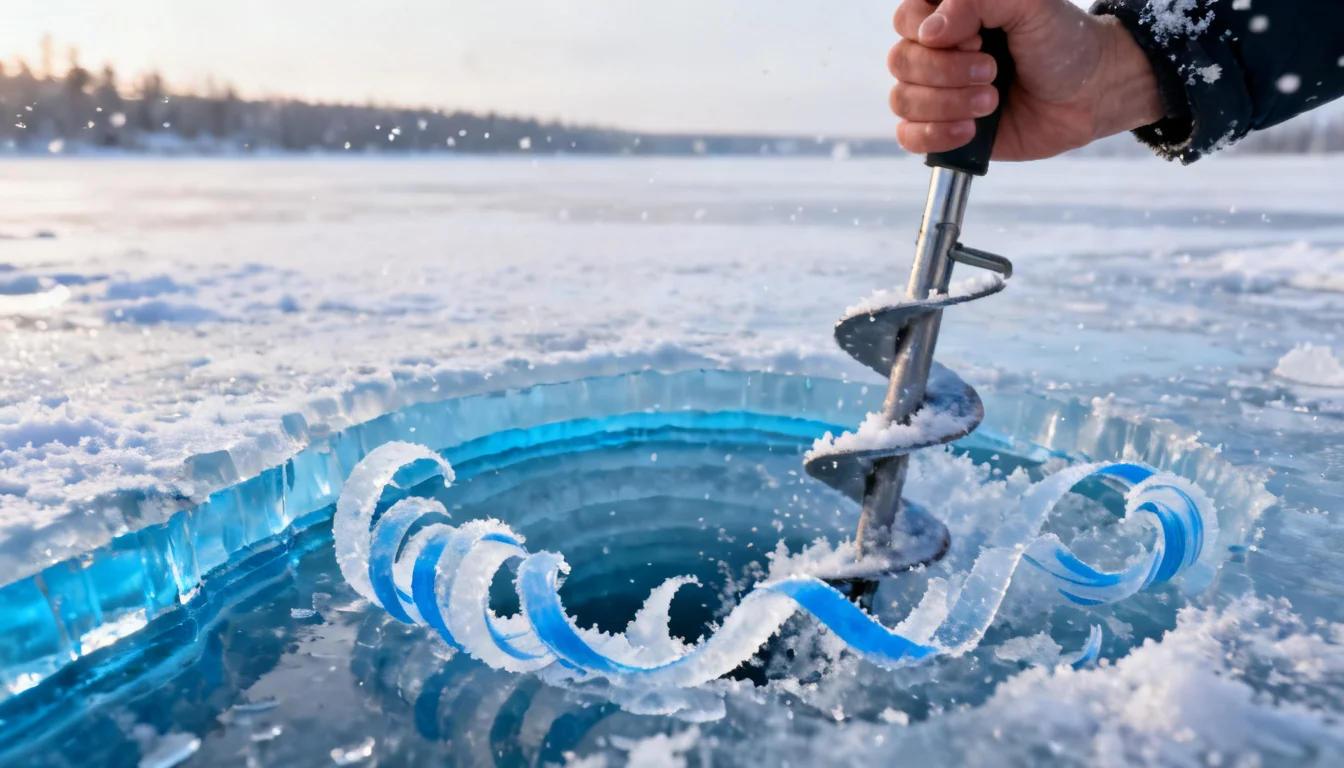
1. Thickness. Clear, sound ice needs at least 4 inches for walking and ice fishing on foot. That's the floor — under 2 inches is stay-off territory, 5-7 inches carries a snowmobile or ATV, and 8-12 inches is the range where cars and light trucks have been driven out. A full-size truck wants 12-15 inches or more. State agencies publish local tables that vary slightly, so check the DNR guidance for the water you fish.
2. Color. Blue or clear ice is strongest. White, cloudy, or honeycombed ice — snow ice, air bubbles, refrozen slush — supports only about half the load of clear blue ice, so treat it as needing twice the thickness before you trust it. Old ice-fishing countries have the same rule in a rhyme: blue ice strong, white ice wrong.
3. Weak spots. Ice forms thinner over inlets, outlets, springs, and any stretch with current, and pressure ridges and shoreline cracks stay dangerous all season. Snow hides everything, so clear the snow and look at the actual ice before you walk a stretch. Check as you go: tap the ice with a spud bar every 100-150 feet and listen for the solid ring of sound ice versus the dull thud of weak ice.
4. A rescue plan. Never fish alone, and leave a trip plan with someone — which lake, where you'll park, when to expect you back. Carry ice picks on a cord around your neck — they are the tool that gets you back on top if you go through — plus a rope in the sled for pulling a partner out. A float suit or life jacket worn over your winter clothes is the difference between a scare and a tragedy; winter water kills in minutes.
If you do break through: don't thrash. Kick your legs to get horizontal, drive the picks into the ice, and pull yourself forward until you can roll your chest onto the surface.
Then crawl or roll away from the hole — never stand up until you're well clear — and get to warmth immediately. That sequence, practiced once in your head, is the best insurance you can carry.
Ice Fishing Gear: The Starter Setup
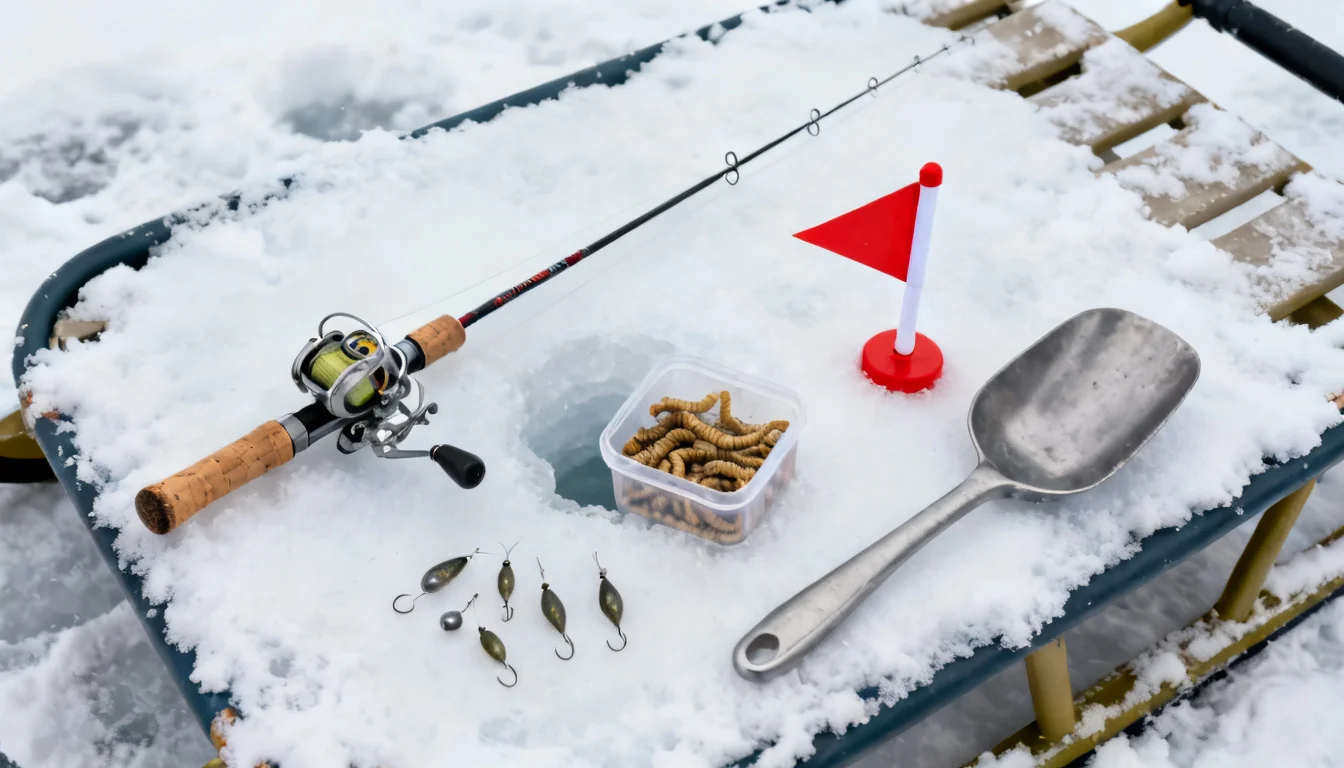
Here's the good news about ice fishing gear: it's cheaper and simpler than open-water tackle. You don't need a shelter, a heater, or an electronics unit on your first trip. This is the kit that gets you fishing:
| Item | What to look for | Why it matters |
|---|---|---|
| Auger | Hand auger with a 6-8 inch bit; power augers save your back once you drill a dozen holes | Holes are your fishing spots — you need to cut them wherever the fish are |
| Spud bar | A heavy steel bar with a chisel tip | Checks ice thickness as you walk and clears the hole of slush |
| Ice rod | 24-36 inch rod with a spring-bobber tip | Short enough to jig sitting down; the spring tip turns taps you'd never register through mittens into visible twitches |
| Reel & line | Small spinning reel, 2-6 lb monofilament | Light line is the difference between feeling a perch and missing it entirely |
| Jigs | Tungsten, teardrop, and glow jigs from 1/32 to 1/16 oz | Tungsten drops fast to the strike zone; teardrops and glow baits are the panfish standards |
| Live bait | Waxworms, spikes (maggots), small minnows, nightcrawler pieces | The tipping that turns an empty jig into a meal |
| Tip-ups | Flag-and-spool devices for live minnows | Cover walleye and pike in other holes while you jig for panfish |
| Sled | A plastic sled big enough for your gear | Hauls everything, doubles as a seat and a windbreak |
A hand auger, a 24-36 inch rod, light line, a dozen jigs, and a container of waxworms gets you out the door for very little money. Add a flasher (a sonar unit that shows fish and your jig live) later if the sport sticks — plenty of anglers catch fish for years without one.
The same goes for a pop-up shelter: it's comfort, not necessity, and comfort matters more on a long cold day than on a short first trip.
Ice Fishing Tactics: Find the Fish, Then Make Them Bite
Ice fishing tactics are simple once you accept the core fact: in winter, fish don't chase. Cold water cuts their metabolism roughly in half for every 18°F drop, so they hold tight to the best spot they can find and only eat what drifts within reach.
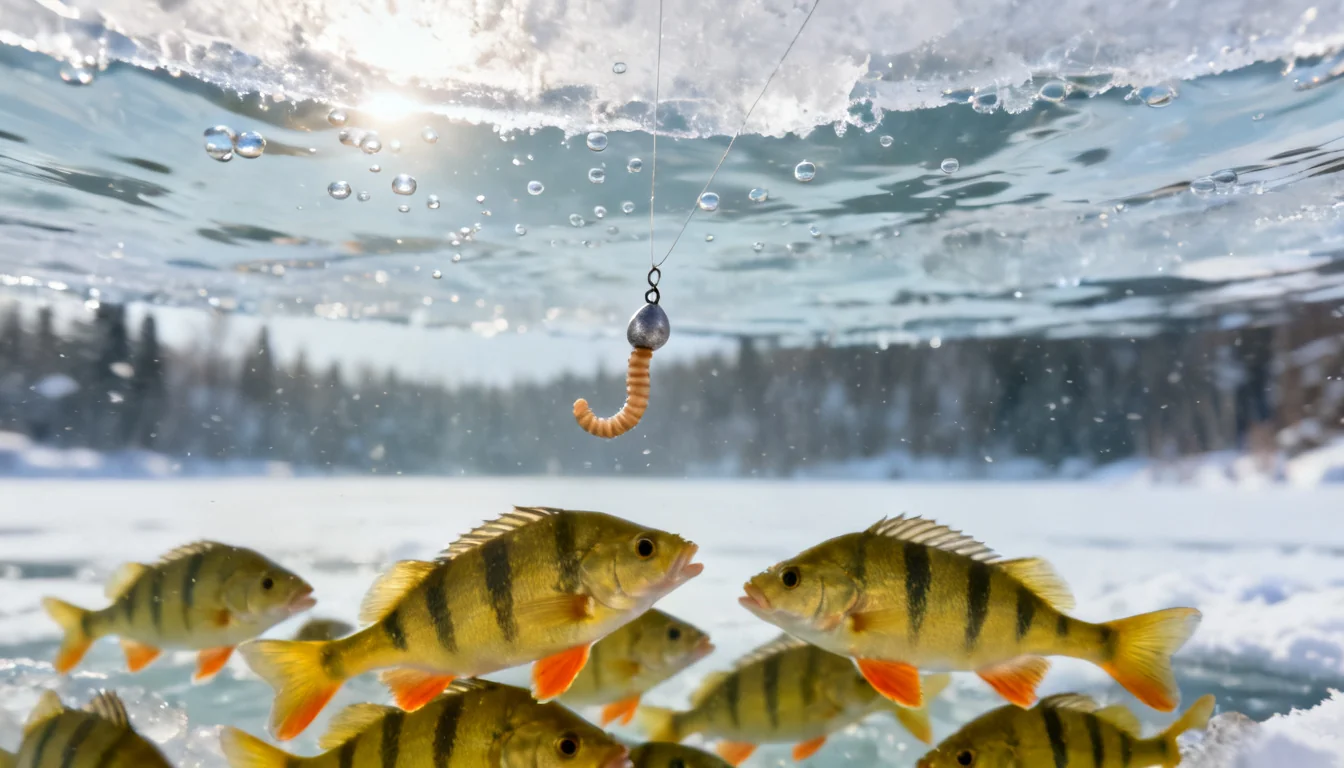
Your whole job is to drill over those spots and put something small and slow right in front of them.
Where to drill. Early ice, target weed edges and flats in 5-15 feet, where the oxygen and cover hold panfish. By midwinter, move to deep basins, drop-offs, and creek channels in 15-30 feet — the deep water holds the most stable temperature and oxygen. Set up a series of holes working from shallow to deep, spaced 10-20 feet apart, and fish your way through them until you mark or catch fish. Winter fish group tight; the hole that produces is usually a few feet from one that's dead.
Setting your depth. If you can't see bottom, count your jig down: lower it until it hits bottom, then crank up 6-12 inches for perch and bluegill, which feed just off the bottom. Crappie often suspend 5-15 feet above deep structure — if bottom fishing is dead, reel up in 5-foot steps until you find the school. A flasher makes this instant; counting down works fine without one.
The jigging stroke. The standard presentation is a short lift of 6-12 inches, a slow drop on slack line, and a pause of five to ten seconds. Most panfish strikes come on the fall, when the jig is sinking — watch the spring bobber and the line for the faintest twitch, then set gently with a wrist roll. Winter bites are soft; if you set like it's August, you pull the jig right out of their mouth. The same lift-and-pause motion is the core of all cold-water lure action, and that guide goes deeper into why pauses trigger strikes.
Species shortcuts. Perch are the ice-fishing king: they school over deep basins, bite all winter, and a waxworm on a tungsten jig six inches off bottom puts them on the ice — our how to catch yellow perch guide has the full playbook. Crappie want minnows or tiny jigs worked slowly over deep timber, often suspended well above the bottom; see how to catch crappie for the deep-timber details.
Tip-ups for the big fish. While you jig for panfish, set a tip-up or two with a live minnow hooked through the back, suspended 6-24 inches off the bottom — over a weedy flat for pike, over a deep basin edge for walleye. The flag pops when a fish runs — that's your signal. Walleye in winter hold in deep basins and river channels and take minnows fished painfully slow, and the depth-and-rigging details are covered in the walleye guide.
One more trick from the ice anglers of northern China: drill your holes at different depths on purpose — one right on bottom, one a foot up, one three feet up — and fish them all. The fish tell you which layer they're in, and you adjust the rest of your holes to match. It's a cheap, effective version of a fish finder.
Beginner Ice Fishing Tips: Your First Trip
These ice fishing tips are the ones experienced anglers forget to tell you, because they've done it all long enough to be automatic:
- Go with someone who's been out before. Your first trip should be on a lake that's already dotted with shacks and anglers, not a backcountry bowl you found on a map.
- Dress like you're standing still. Layers, insulated boots, mittens with flip-open fingertips, a neck gaiter, and hand warmers. Cold hands end trips; a thermos and a spare dry hat extend them.
- Fish the windows. The first fortnight of fishable ice and the final weeks before break-up deliver the two best bites of the season. On any given day, plan for the midday window from about 10 a.m. to 2 p.m.
- Stay mobile. If a hole gives you nothing in 15-20 minutes, move. The angler who drills thirty holes catches more fish than the one who sulks over a dead one.
- Pre-bait a couple of holes. Drop a small pinch of groundbait or a few brine shrimp down a hole an hour before you fish it, and fish nearby holes while it settles — the classic pre-baiting trick works under ice too.
- Keep your line frost-free. Ice and water on the line freeze fast, and frozen line snaps on the hookset. Skim the hole with your scoop after every drill, and check the first few feet of line for frost before you drop the jig.
One more: set your drag light. A two-ounce perch hits like a feather, and a tight drag with 3 lb line is a recipe for break-offs. You'll lose a few fish to slack line and soft sets before the feel comes — that's normal, and it's how everyone learns.
Ice Fishing Basics FAQ
What is the best bait for ice fishing?
Waxworms and spikes (maggots) are the panfish standard — perch, crappie, and bluegill all take them on a tiny jig. Small minnows fished on tip-ups or jigs are the top bait for walleye and northern pike, and pieces of nightcrawler work as a backup on slow days. Carry all three and you're covered for whatever bites.
How deep should I set my jig when ice fishing?
Start with the jig 6-12 inches off the bottom, where perch and bluegill feed in winter. If nothing bites, work upward in 5-foot steps — crappie hang 5-15 feet above the brush or timber, so the school may be well off the bottom.
Counting down from the bottom is the no-electronics method; a flasher shows you the fish and your jig at the same time.
Do I need a fish finder for ice fishing?
No. Count-down depth setting, drilling holes from shallow to deep, and moving when a hole is dead will catch fish all winter without electronics. A flasher is a genuine upgrade — it shows suspended fish and your jig in real time — but it belongs on the "if this sticks" list, not the "must have first trip" list.
Can you ice fish without a shelter?
Yes. A pop-up shelter is comfort, not a requirement: it blocks wind, holds heat, and makes long days bearable, but plenty of anglers fish open holes all winter in good clothing. On your first trips, position your sled as a windbreak, dress in layers, and add a shelter only when you know the sport is for you.
What should you do if you fall through the ice?
Stay calm, kick your legs to get your body horizontal, and drive your ice picks into the ice to pull yourself forward. Roll your chest onto the surface, then crawl or roll away from the hole — don't stand until you're well clear. Get out of wet clothes and warm up immediately; hypothermia sets in fast in winter water.
How long should you stay on one ice fishing hole?
Give a hole 15-20 minutes of active fishing before you move. Winter fish hold tight to specific spots, so the next hole ten feet away can be the difference between nothing and a limit. Keep drilling and keep moving — that mobility is the single biggest advantage a beginner can copy from the veterans.
The Bottom Line
The ice fishing basics above fit in one paragraph: check the ice like your life depends on it, keep the gear light and simple, find the fish before you worry about finesse, and move when they're not there.
The fish are active under the ice — they're just slow, close-mouthed, and grouped in places you have to find. Respect the ice, drill where the structure is, and the shortest day of the year can be the best fishing day of it.
If tip-ups and minnows are on your list this winter, our how to catch walleye guide is the natural next read.