Where Do Bass Hide? The Cover & Structure Spots Bass Ambush From
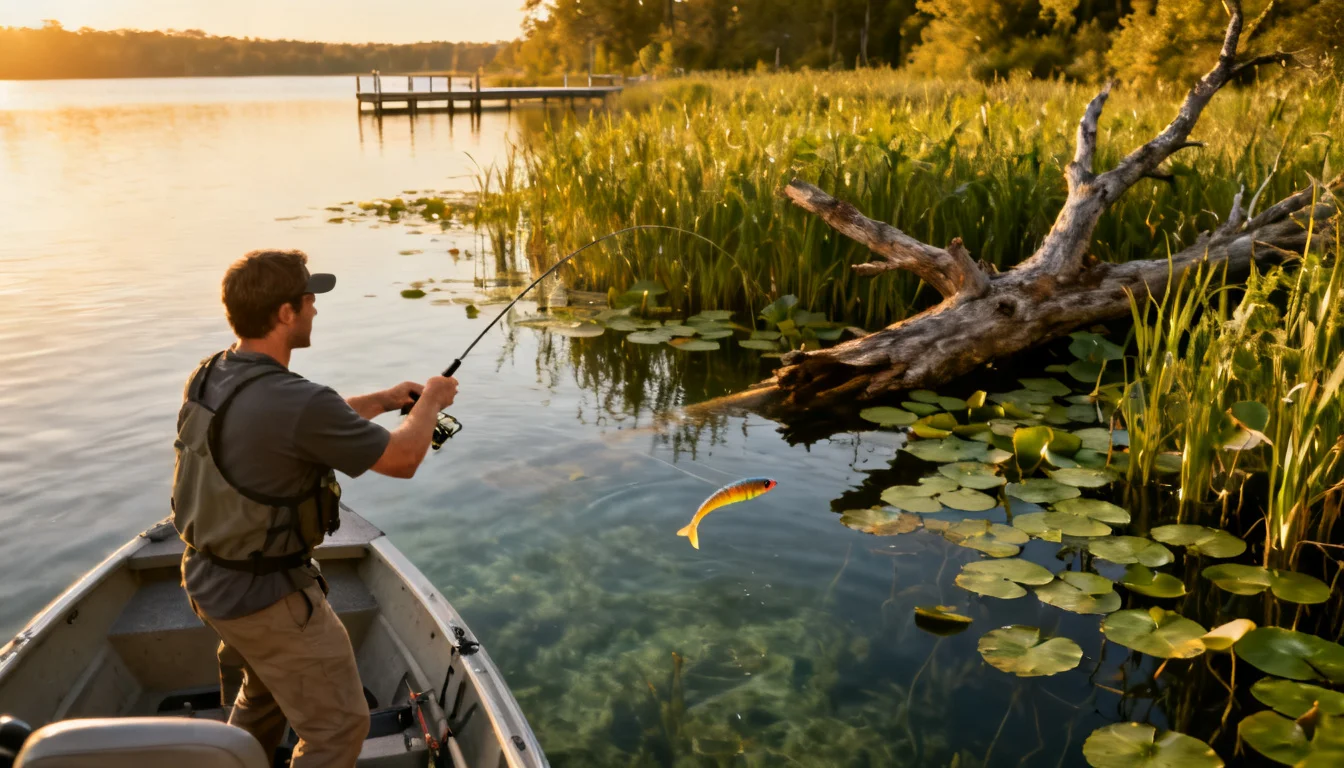
Every bass angler has stood on a bank staring at open water, wondering where the fish are. The answer: bass hide in cover — they're ambush predators that sit in or beside structure, waiting to explode out at passing prey (see our largemouth bass species guide for the full predator profile). Where do bass hide — and where do bass live more broadly — is the single most important question in bass fishing, because if you cast to the cover, you're casting to the fish. This guide breaks down every major bass-holding spot and how to fish it.
Why Bass Hide at All
Bass are ambush predators, not chasers. They rarely swim across open water hunting food — instead they tuck into cover where they can:
- Hide from prey — strike from ambush before the baitfish knows what's happening
- Hide from predators — big bass eat small bass; cover is safety
- Conserve energy — sit in current breaks and shade instead of swimming
The universal bass rule: cover equals bass. Find thick, fishable cover and you've found bass.
The 7 Best Bass Hiding Spots
1. Weed Lines & Lily Pads
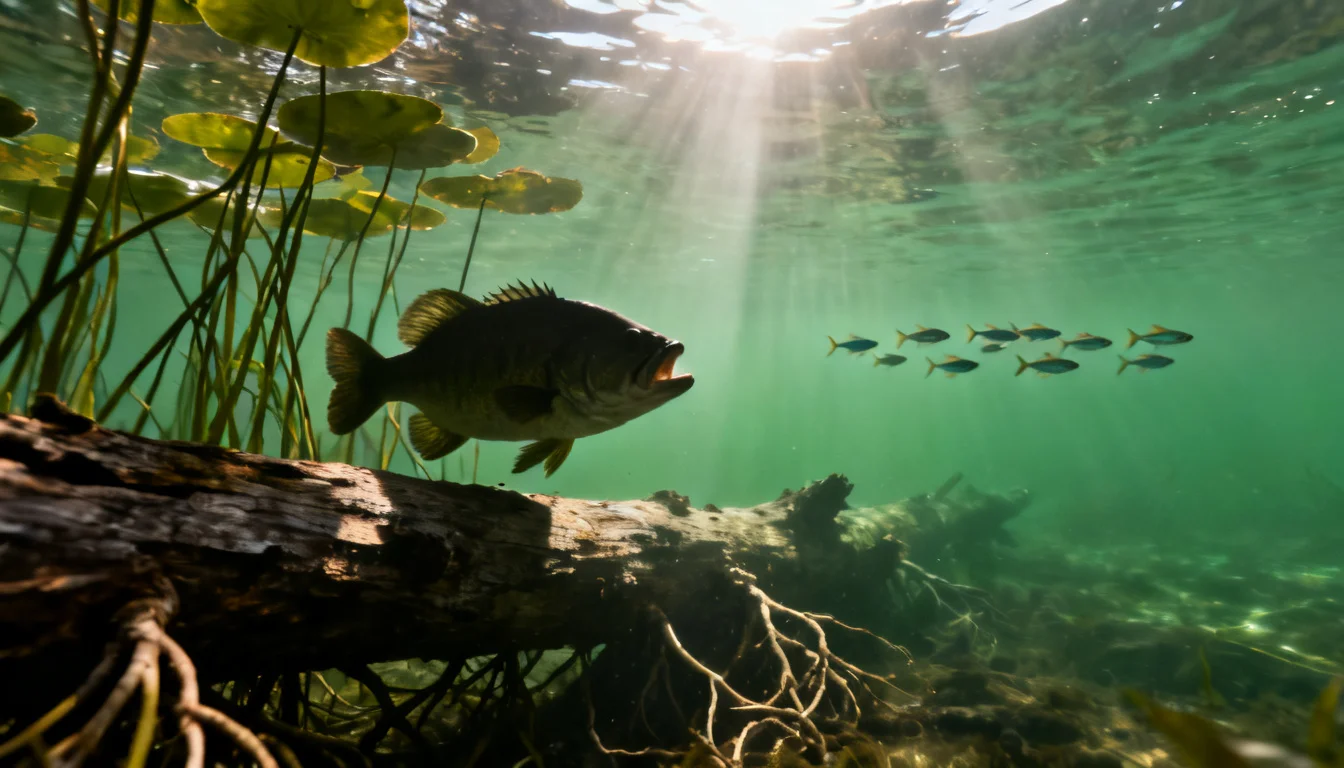
The edge where weeds meet open water is the #1 bass hideout. Bass patrol the outside (deep) edge of a weed line — the side facing open water — ambushing baitfish that swim past; the shallow inside edge holds fish too, but the deep edge is the primary strike zone. Lily pads add overhead shade and insect life.
How to fish it: Texas-rigged soft plastics (weedless) cast to the edge; topwater frogs over pads at dawn.
2. Submerged Timber & Laydowns
Fallen trees, stumps, and logjams are bass apartments. Each branch is a hiding spot; the biggest bass claim the thickest cover. Timber also holds baitfish, which hold bass.
How to fish it: flip and pitch soft plastics or jigs into the thickest branches; let them sink and pause.
3. Docks & Boat Lifts
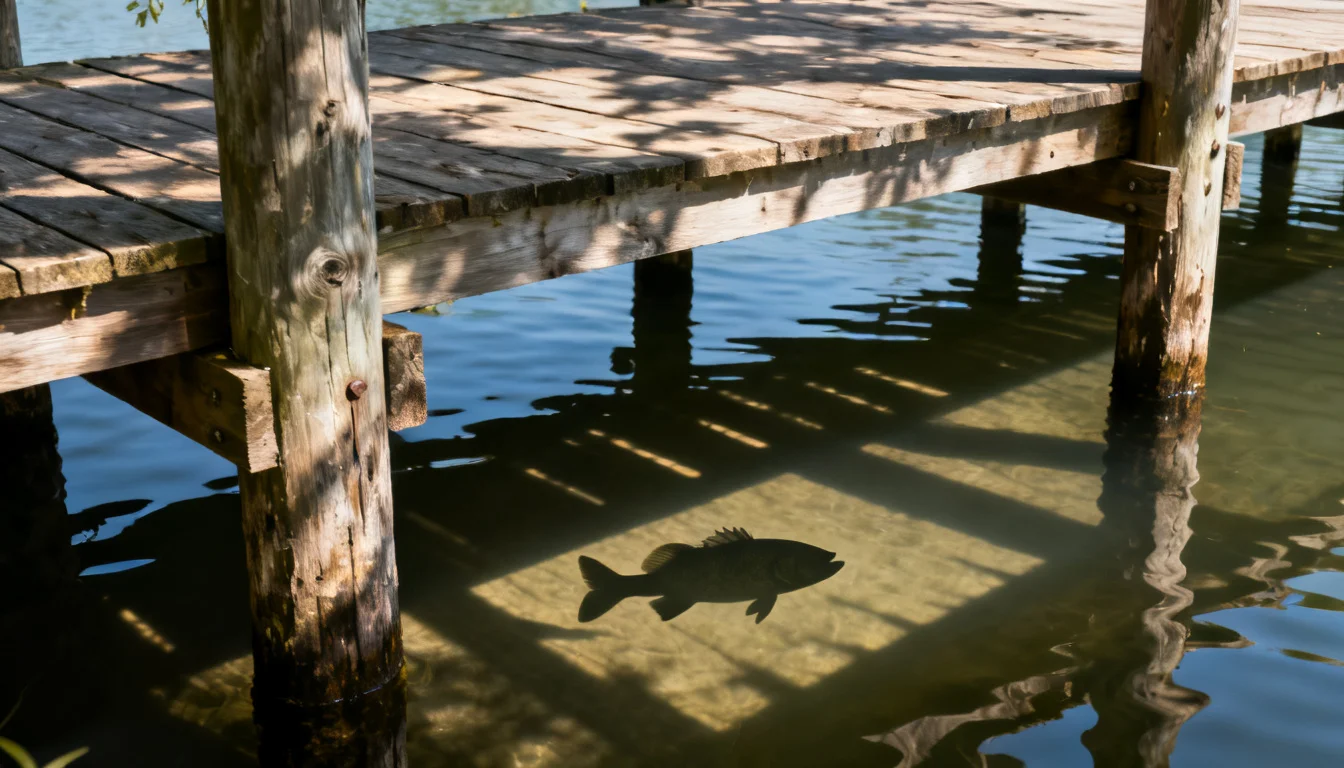
Docks provide shade, structure, and ambush points all in one. Bass sit under the dock, around the posts, and behind the boat lift, waiting for baitfish that seek shade.
How to fish it: skip soft plastics or jigs under the dock; fish the shady side of each post.
4. Rock Piles & Riprap
Rocks attract crayfish, a top bass food — so bass hold around any rock structure. Points, riprap banks, and boulder fields are classic smallmouth and largemouth spots.
How to fish it: jigs and craw imitations hopped along the rocks; crankbaits bumped off the structure.
5. Points & Drop-offs
Points extend underwater like highways, and bass patrol the tip and sides where it drops into deep water. Drop-offs nearby give bass quick access to both shallow feeding and deep comfort.
How to fish it: cast crankbaits and spinnerbaits along the point; Carolina rigs on the drop-off.
6. Brush Piles & Man-Made Fish Attractors
Anglers and agencies sink brush piles (trees, pallets, PVC structures) specifically to attract fish. Bass love them — they're instant cover in otherwise open water.
How to fish it: vertical jigging or casting soft plastics directly over the brush; bass sit inside it.
7. Creek Channels & River Bends
In lakes, underwater creek channels are bass highways connecting deep and shallow water. In rivers, bends create current breaks where bass rest. See our how to fish a river guide for current-specific structure.
How to fish it: fish the channel edges and bend points with crankbaits and jigs.
Where Bass Hide by Season
The same bass structure holds fish all year — only the depth changes with the seasons:
| Season | Where Bass Hide |
|---|---|
| Spring | Shallow: spawning flats, points, shallow weed edges, docks (1-6 ft) |
| Summer | Deep cover by day (drop-offs, deep weed lines, brush piles); shallow at dawn/dusk |
| Fall | Baitfish schools; points, main-lake basins, shad schools at any depth |
| Winter | Deep structure: humps, channels, deep timber — slow and tight to cover |
How to Find Bass Cover Without a Boat
Bank anglers can reach plenty of bass cover:
1. Walk the shoreline and look for laydowns, docks, and weed lines within casting range
2. Fish points from the bank — the point extends underwater, so cast to the tip
3. Target inlets and wind-blown banks — food concentrates there, and bass follow
4. Cast parallel to weed lines instead of over them — you work more edge water
Our how to fish a lake guide maps structure from the bank.
Common Mistakes Fishing Bass Cover
1. Casting over cover instead of to it — put the bait on the cover's edge, not on top of it.
2. Using snagging lures in thick cover — go weedless (Texas rig) or use a jig.
3. Retrieving too fast — bass in cover strike on the pause; slow down.
4. Fishing the same spot once — bass return to cover; revisit productive spots later in the day.
5. Ignoring shade — on sunny days, bass tuck into the shady side of docks, timber, and pads.
Where Do Bass Hide FAQ
What is the best cover for bass?
Weed lines and submerged timber are the two most reliable. Both provide cover, food, and ambush points — and both hold bass all season long.
Where do bass hide in a lake?
They hold in and around structure: weed lines, laydowns, docks, brush piles, rock piles, points, and drop-offs. The universal rule is cover in 3-15 ft of water equals bass.
Where do bass hide in a river?
In rivers, bass hold in current breaks: behind boulders, in eddies, along undercut banks, and in deep holes — anywhere the current is slower.
How deep do bass hide in summer?
By day, bass tuck into deep cover (10-25 ft) — drop-offs, deep weed lines, brush piles, and humps. They move shallow (2-8 ft) to feed at dawn, dusk, and night.
Do bass hide in lily pads?
Yes — lily pads provide shade, cover, and insect life. Bass ambush baitfish through the pads, and topwater frogs are the classic way to target them.
How do you fish thick cover without snagging?
Use weedless presentations: Texas-rigged soft plastics (hook point buried in the bait) or jigs with weed guards. Flip and pitch into the cover rather than casting over it.
Do bass return to the same hiding spots?
Yes — bass are creatures of habit. Once you catch a bass from a specific piece of cover, that spot will often hold another one. Revisit productive cover throughout the day.
What's the best time to fish bass cover?
Low light — dawn, dusk, and night — is when bass leave deep cover to feed shallow. Overcast days extend the window; see our how to catch largemouth bass guide for timing tactics.