Keeping Wild Fish in an Aquarium: Which Natives Work and Which Don't
Keeping wild fish in an aquarium looks simple from the bank. A four-inch bluegill is beautiful, free, and swimming ten feet away. Then it comes home, sulks on the bottom for three days, and turns the water cloudy.
Some North American species handle tank life well. Others fade within weeks, and a few are illegal to hold alive at all. What follows is what actually decides the outcome: the species, the tank, the temperature, and the law. If your tank isn't running yet, start with our guide to setting up a first tank before you collect anything.
Which Native Fish Adapt to a Native Fish Tank
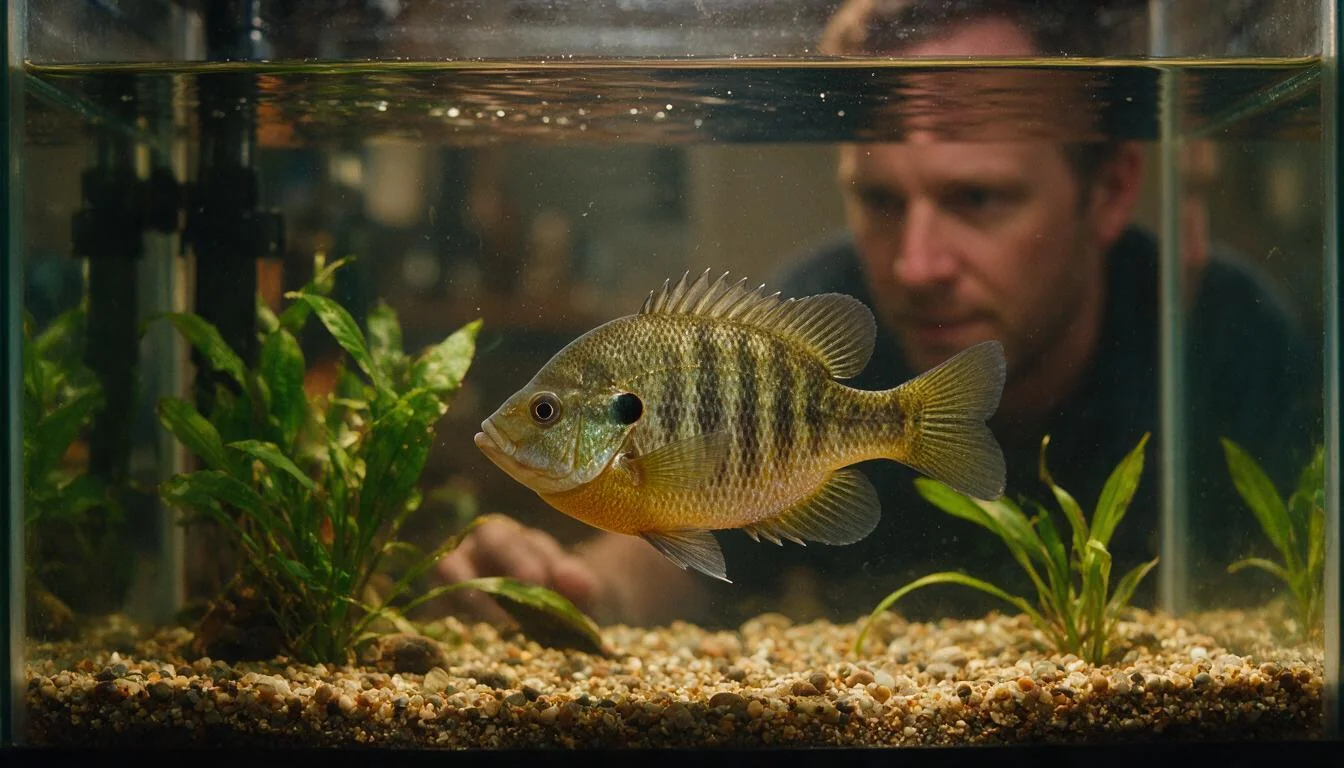
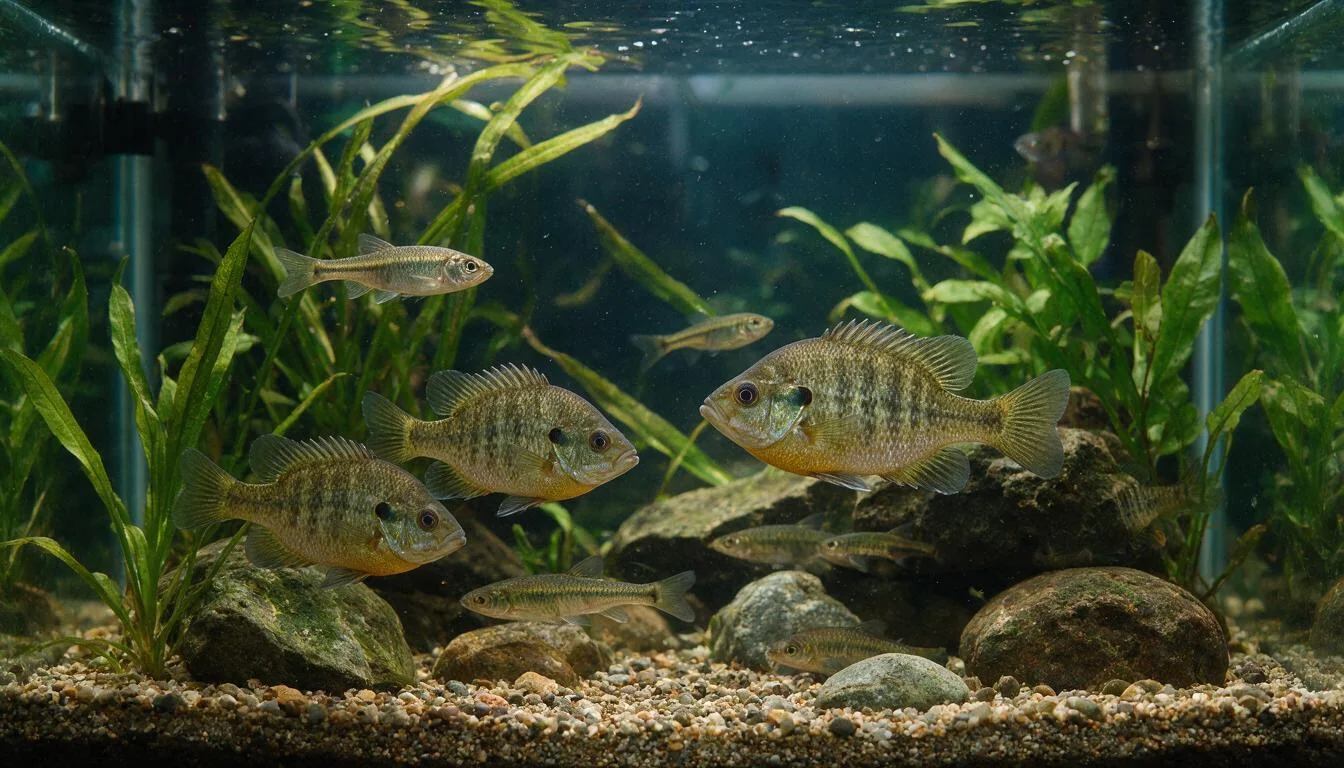
Sunfish lead the list. Bluegill, pumpkinseed, redear, and green sunfish eat prepared food, shrug off temperature swings, and show real personality. They also reach eight to ten inches, so a native fish tank built around one adult needs genuine volume.
Minnows are the easy win. Fathead minnows, golden shiners, and bluntnose minnows school tightly, take flakes and pellets, and tolerate water from the low 60s into the upper 70s°F. A group of six puts movement at every level of the tank.
Darters are the showpieces. Rainbow, orangethroat, and banded darters rival reef fish for color. They also want live or frozen food, cool water, and a tight lid — darters jump. If you'd rather start with something forgiving, our list of easy aquarium fish covers the species that tolerate beginner mistakes.
Bullhead catfish adapt almost too well. Yellow and brown bullheads are nocturnal, hardy, and long-lived. They also swallow anything that fits in their mouths and foul a tank quickly.
The Species That Don't Belong in a Tank
Largemouth and smallmouth bass are the worst common choice. A bass passes twenty inches, hunts constantly, and needs volume measured in hundreds of gallons. Most home filters can't keep pace with the waste one fish produces.
Walleye are harder still. They want cool, dim, heavily oxygenated water, and they grow long and skittish under bright light. Musky pass forty inches. Trout need the 50s and low 60s°F with strong oxygenation — a chiller bill few keepers will pay.
Crappie school, reach a foot or more, and chase moving prey. Carp and suckers outgrow every standard tank within a season or two.
These are also the species states guard most closely, which turns collecting fish for a tank from a hobby decision into a regulatory one.
Tank Size and Temperature: Match the Room to the Adult Fish
Adult size drives tank size, not the length of the fish in your bucket. A bluegill caught at three inches will reach eight to ten. One adult belongs in 55 gallons at minimum, and a 48-inch-long tank beats a tall 55-gallon every time. Step up to 75 gallons if you want tankmates.
Darters do well in a 20-gallon long with three or four fish and only one male per species. A minnow school needs 20 to 29 gallons for six fish. A young bullhead can start in 55 gallons and will need 75 or more as it approaches a foot.
Temperature is the quiet killer. Most temperate natives are happiest between 60 and 75°F, a range many US homes hold without a heater for much of the year.
Summer is the problem. A warm room pushes a tank toward 80°F, and darters in particular stop feeding above the low 70s. A fan blowing across the surface helps, and a chiller settles it. Keep a heater anyway for winter stability.
Is It Legal to Keep Wild Fish? The Game Fish Rule
Is it legal to keep wild fish from public water? Sometimes, and the answer usually hinges on one term: game fish. States manage bass, walleye, musky, trout, and often panfish through seasons, minimum sizes, and possession limits. An undersized or out-of-season game fish in your aquarium is still an illegal fish.
Michigan requires a permit to possess live game fish in ponds, pools, or aquariums.
Minnesota lets anglers 16 and younger transport live fish for an aquarium, with conditions: legally caught, ten inches or less, no more than four of each species, carried in water brought from home. Adults there need a transport permit.
Wisconsin allows sub-legal game fish only with a receipt proving purchase from a farm or shop, and school groups holding collected fish for education usually need a scientific collector's permit.
Rules vary by state, and they change. Before keeping wild fish in an aquarium, confirm the current version with your state wildlife agency. Get the answer in writing if you plan to keep something unusual.
Baitfish in a Tank: Laws, Invasive Species and Why You Never Dump It
Baitfish in a tank bring a separate rulebook, and it's stricter than most keepers assume. States worry about moving fish, water, and disease between drainages.
Kansas allows baitfish to be used only within the drainage where they were caught, and no live fish may leave waters designated for invasive species. Maine requires anglers to kill the fish they keep, with limited baitfish exceptions, and makes dumping live baitfish into inland waters a civil violation.
North Carolina requires a permit to move live nongame fish. Virginia requires written approval from its wildlife agency before any fish or live bait goes into inland waters, and violating that is a criminal offense.
So never release a tank fish into a lake, pond, or creek. Not even one you caught there. A fish that has lived in your aquarium can carry pathogens back to a wild population, and an unwanted pet turned loose can become the next invasive problem.
Give unwanted fish away legally, or euthanize them humanely. Our guide to keeping minnows alive covers the same discipline for a bait bucket, where the rules are just as unforgiving.
Acclimation and Quarantine: The First Six Weeks
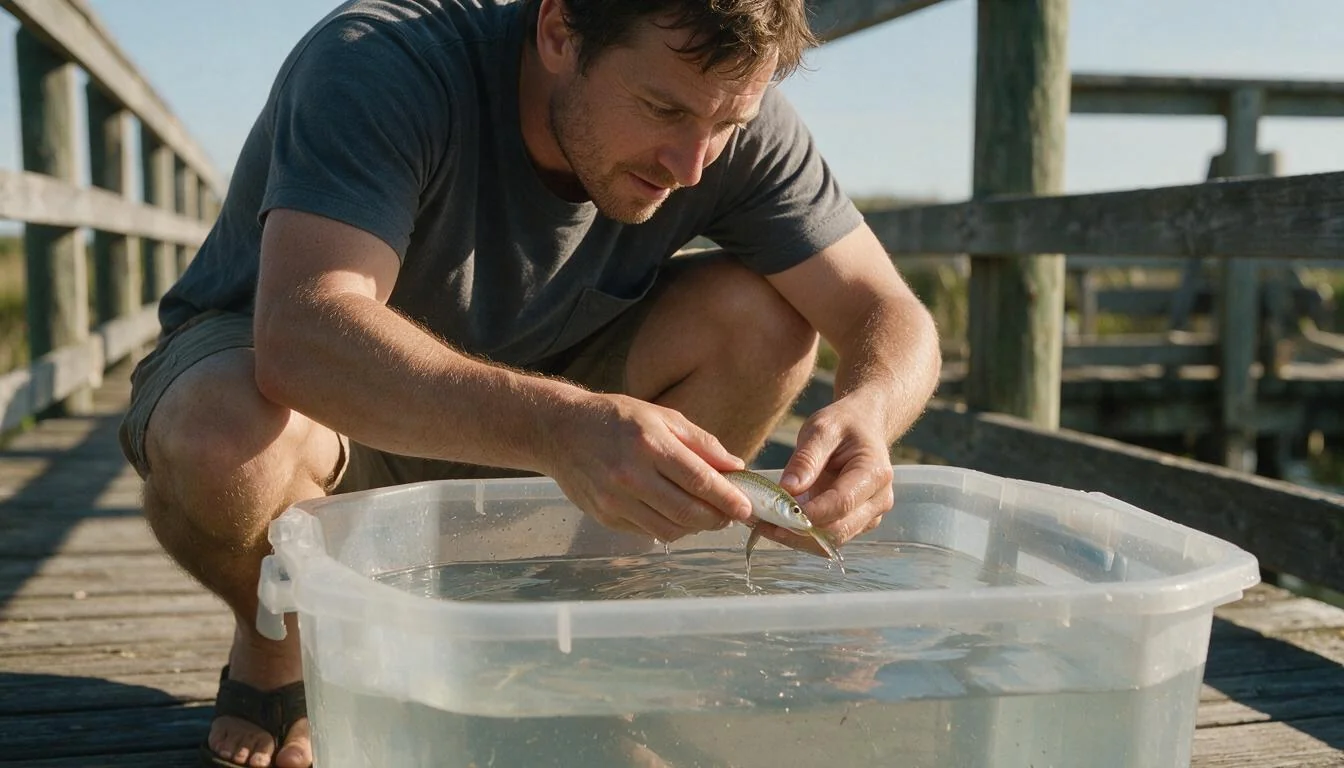
Wild fish arrive stressed and often carrying parasites. Skip quarantine and you gamble with everything already in the tank. Set up a separate cycled aquarium with its own net and siphon, hold new arrivals for four to six weeks, and watch for white spots, clamped fins, gasping, and appetite loss.
Temperature matching matters more than drip acclimation for most hardy natives. Float the transport container to equalize, net the fish across, and pour the transport water down the drain rather than into the tank.
Feeding is where wild fish separate from store-bought ones. Sunfish and minnows usually take pellets within days. Darters, madtoms, and sculpins may hold out for live food — blackworms, brine shrimp, small earthworms. Plan a steady supply before you collect those species. Most people who fail at keeping wild fish in an aquarium fail here, not on water chemistry.
Realistic Expectations Before You Dip a Net
A captive-bred fish is legal everywhere, eats flakes, and arrives without a parasite load. Aquarium fish from the wild carry none of those guarantees, plus a skittish streak that may never fade. Many natives hide when a shadow crosses the glass and slam into it when startled.
Plan for weekly water changes, heavy waste from catfish and sunfish, and higher electric bills in August. Sunfish commonly live six to ten years in good care, and bullheads typically live six to nine years in the wild, with a well-kept captive fish reaching ten or more.
If that's a commitment you want, learning how to catch bluegill without hurting the fish is the easy part.
FAQ
Can you keep a wild-caught bluegill in a 10-gallon tank?
No. A bluegill reaches eight to ten inches and produces a heavy waste load. Ten gallons works as a short-term holding container, not a home. A single adult needs 55 gallons or more, in a tank at least four feet long.
Do wild-caught fish need a heater?
No heater for a basement or air-conditioned room in the 60s-70s°F — a 20-gallon long at 68°F suits darters and minnows. Sunfish over 78°F develop bacterial infections fast, so a warm upstairs room needs a fan or a chiller rather than a heater.
Is it legal to keep wild fish from a local pond?
It depends on your state and the species. Panfish and nongame species are often allowed within possession limits, while game fish are typically covered by seasons, size limits, and permit requirements. Check your state wildlife agency's rules before collecting, and never assume a pond is unregulated because it's private.
Can I put a fish back in the lake after keeping it in a tank?
Most states say no, and the rules have teeth: Maine treats releasing live baitfish as a civil violation, and other states fine you. The biological reason is separate from the legal one — a tank fish can carry fish lice, whirling disease spores, or a virus into a population that has never met it. Keep it, transfer it legally, or euthanize it humanely.
How long do wild-caught sunfish live in an aquarium?
Bluegill and pumpkinseed often reach six to ten years with clean water and steady feeding, and bullhead catfish usually live six to nine years in the wild, reaching ten or more in a well-kept tank. That's a decade of weekly maintenance, so weigh the commitment before you collect.
Do wild fish eat flake food?
Some do. Minnows, shiners, and sunfish usually switch to pellets and flakes without much fuss. Darters, sculpins, and madtoms often refuse anything that isn't moving, so budget for live or frozen food if those are your targets.
The Bottom Line
Wild-caught natives can thrive in a home tank, but the honest answer to whether you should try it is simpler than it sounds: pick the right species first.
Sunfish, minnows, and bullheads forgive beginners. Bass, walleye, musky, and trout don't. Size the tank to the adult fish, keep the water cool, quarantine every new arrival for a month, and confirm your state's rules before you collect a single fin.