Easy Aquarium Fish: The Best Low-Maintenance Species for New Keepers
Starting a home aquarium should not feel like a chemistry exam. If you are shopping for easy aquarium fish — species that tolerate a beginner's mistakes and stay healthy in a simple setup — this guide covers the ten best options and what makes each one hardy.
Whether you are outfitting your first tank or helping a child start one, the fish below are the ones experienced keepers recommend again and again. And if the aquarium hobby points you toward the water, our fishing for beginners guide is a friendly place to start there too.
Low Maintenance Aquarium Fish: What "Easy" Really Means
"Easy" does not mean indestructible. A low maintenance aquarium fish is one that forgives small mistakes: it tolerates a modest temperature swing, survives a missed water change now and then, and eats ordinary flake or pellet food.
Peaceful community fish also fit the definition, because a fish that fights its tank mates creates constant problems for its owner.
Three traits separate genuinely easy species from the rest. First, they are small, so they fit comfortably in a 10- or 20-gallon tank that is affordable and easy to maintain. Second, they are adaptable — many tolerate a wide temperature range, which buys you time if your heater fluctuates.
Third, they are hardy by nature, not because of any special equipment. The best easy freshwater fish were bred in captivity for generations, which makes them far more forgiving than wild-caught imports.
One honest warning: no fish thrives in an uncycled tank, a bowl, or water straight from the tap. Easy fish simply give you more room to learn.
Best Aquarium Fish for Beginners: 10 Hardy Species
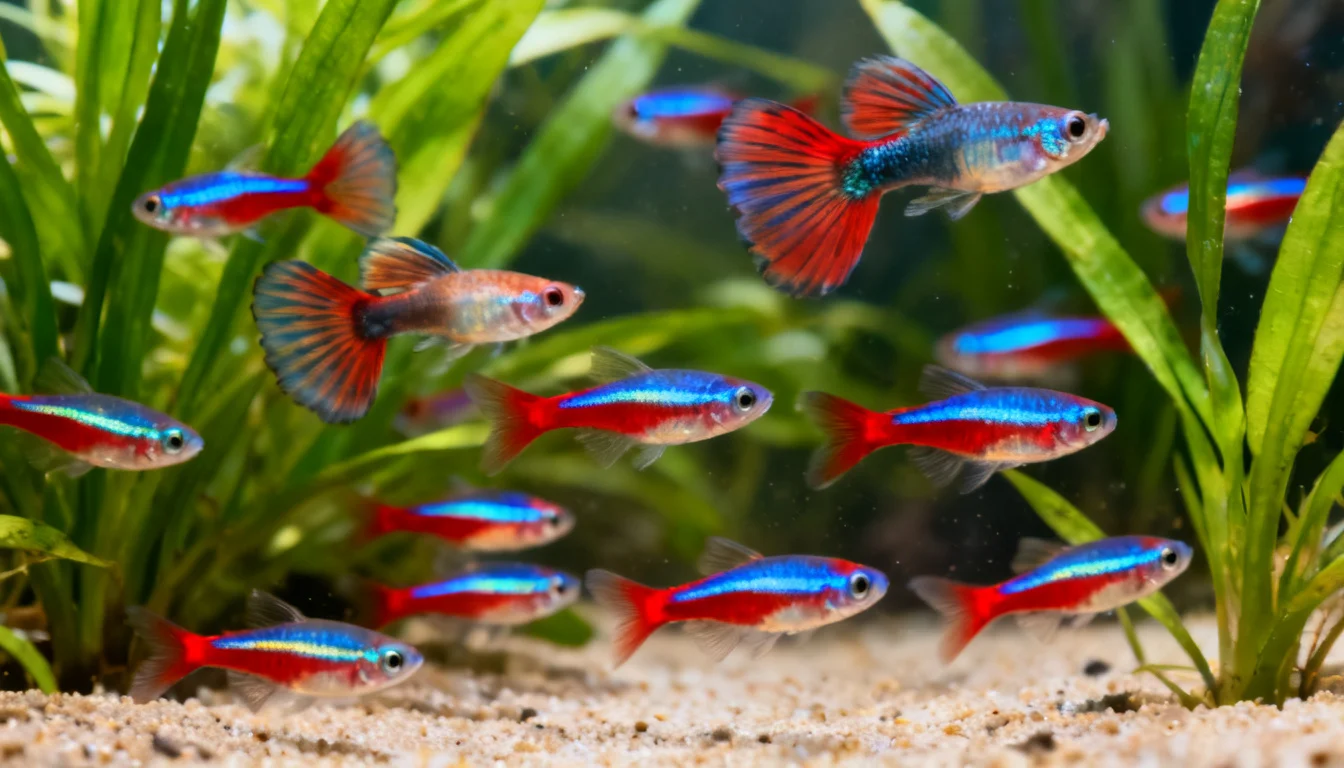
Any of these ten species makes a sensible first fish. They are widely available at pet stores, inexpensive, and proven in thousands of beginner tanks. Mix and match peaceful community species, or keep just one kind in a species-only tank.
| Species | Adult Size | Minimum Tank | Water Temp | Why It's Easy |
|---|---|---|---|---|
| Guppy | 1.5–2 in | 10 gallons | 72–82°F | Hardy, peaceful, breeds readily |
| Platy | 2–2.5 in | 10 gallons | 70–80°F | Forgiving of water changes |
| Molly | 3–4 in | 20 gallons | 72–82°F | Tolerates hard tap water |
| Swordtail | 4–5 in | 20 gallons | 70–82°F | Tough livebearer, very active |
| Betta | 2.5–3 in | 5 gallons | 76–82°F | Beautiful solo fish, easy feeding |
| Zebra Danio | 2 in | 10 gallons | 64–75°F | Cool-tolerant, constant motion |
| White Cloud Mountain Minnow | 1.5 in | 10 gallons | 60–72°F | Thrives without a heater |
| Neon Tetra | 1.2 in | 10 gallons | 70–81°F | Classic schooling fish |
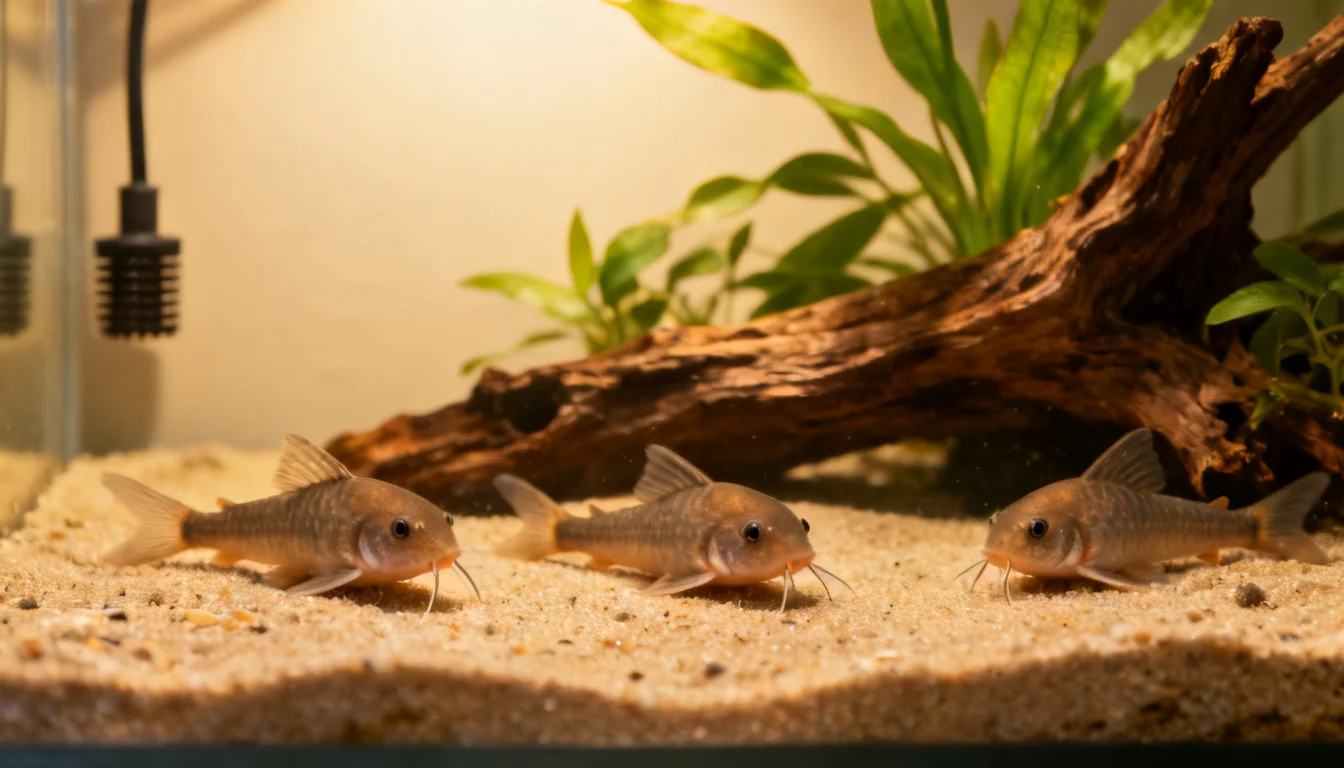
| Corydoras Catfish | 2–2.5 in | 20 gallons | 72–78°F | Peaceful bottom-dweller, group fish |
| Bristlenose Pleco | 4–6 in | 20–30 gallons | 73–81°F | Natural algae control |
The guppy, platy, molly, and swordtail are livebearers — they give birth to free-swimming fry instead of laying eggs. Many beginners start with one of these four because they are nearly bulletproof, and watching a livebearer raise a small family is one of the most satisfying parts of the hobby.
Easy Freshwater Fish: Caring for Your Top Picks
The fish above share simple care needs, but a few species deserve extra notes so your first tank goes smoothly.
Livebearers (guppy, platy, molly, swordtail). These are the default answer for most beginners. Feed them once a day and keep the tank stable, and they take care of themselves. If you buy a male and female together, expect fry — and plan what you will do with them, because livebearers breed constantly. A single-sex group is the easiest way to avoid an explosion of babies.
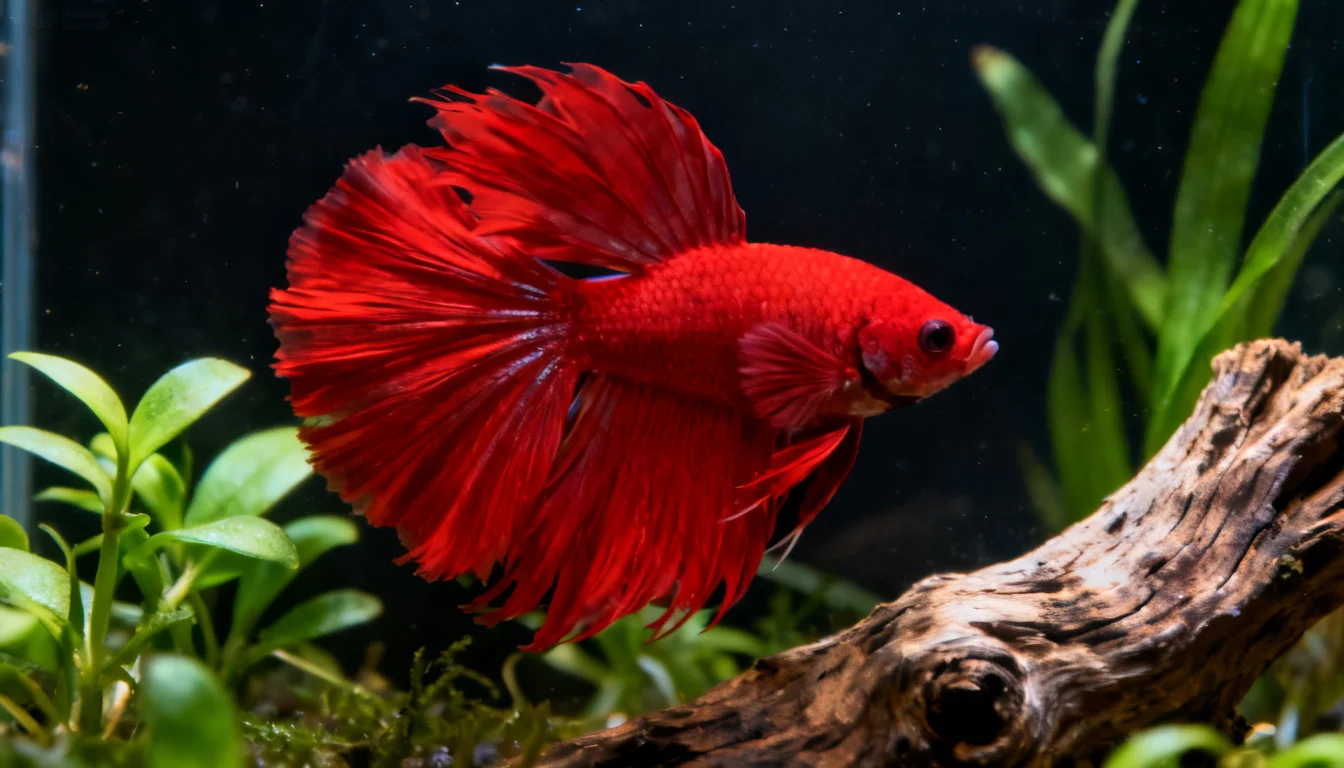
Betta. A male betta is the easiest single fish you can keep: one fish, a 5-gallon tank, a small filter, and a heater. Bettas breathe air through a labyrinth organ, so they can survive in poor water longer than most fish — but that is a survival trick, not a reason to skip maintenance. Despite the old myth, they do not belong in a vase or a bowl.
Neon tetra. Neons are schooling fish: buy at least six, and they will display their best colors and behavior. They are slightly more sensitive to water quality than livebearers, so they are a better choice once your tank has finished cycling.
Corydoras catfish. These peaceful bottom-dwellers are the cleanup crew of the beginner tank. They need a group of four to six and a smooth substrate — sand or fine gravel — because they sift the bottom with their delicate barbels. Corydoras are perfectly safe with every other fish on this list.
Bristlenose pleco. This small pleco grazes on algae but needs more than that: give it a piece of driftwood to rasp on and a little vegetable food — a slice of zucchini or an algae wafer — a few times a week.
If you would rather keep North American natives than pet-store staples, sunfish such as bluegill can make fascinating pets — but they grow fast and need a very large tank, so they are a project for later, not for a first aquarium. Our bluegill species guide explains what these tough panfish need in the wild and in captivity.
Setting Up a Tank That Keeps Easy Fish Healthy
The fish are only half the story. A tank that is set up correctly keeps even fragile species healthy, while a rushed setup can kill hardy ones. Follow this order and you will avoid the classic beginner failures.
Cycle the tank before adding fish. The nitrogen cycle is the single most important concept in fishkeeping. Fish waste becomes ammonia, bacteria convert ammonia to nitrite, and other bacteria convert nitrite to nitrate. Ammonia and nitrite are deadly; nitrate is harmless at normal levels. A new tank needs four to eight weeks for these bacteria to establish. Cycle fishlessly — add a pinch of pure ammonia or a bottled bacteria starter, and test the water with a liquid test kit until ammonia and nitrite read zero. Adding fish to an uncycled tank is the number one cause of "new tank syndrome."
Choose the right size. A 10-gallon tank is the smallest size most experts recommend for beginners. Larger tanks are actually easier to keep than smaller ones, because water chemistry swings more slowly in a bigger volume. If you have room and budget for a 20-gallon, take it — it gives your fish more swimming space and you more margin for error.
Filter and heater. Every tank needs a filter running 24 hours a day — the bacteria that run the nitrogen cycle live inside it. When the filter looks dirty, rinse the media in a bucket of tank water, never under the tap: chlorinated tap water kills the bacteria. Tropical fish need a heater set to 74–82°F. Coldwater species — goldfish, white clouds, and zebra danios at the cool end of their range — do fine without one.
Do weekly partial water changes. Replace about 25% of the water every week with dechlorinated water at the same temperature. This removes nitrate and restores minerals. Add a water conditioner to tap water before it goes in the tank. You do not need to tear the tank down and scrub it — that destroys the cycle and stresses the fish.
Light on a schedule. Leave the light on 8–10 hours a day. Longer hours grow algae, and no light at all stresses fish and plants.
Common Beginner Mistakes
Even with easy aquarium fish, the same handful of mistakes kills more first tanks than anything else. Avoid these and your odds of success jump dramatically.
- Overfeeding. This is the number one killer of aquarium fish. Uneaten food rots and spikes ammonia. Feed once a day, only what the fish can eat in about two minutes — for most small fish that is a pinch of flakes or two or three pellets.
- Adding fish too fast. Stock gradually, a few fish at a time, and test the water between additions. The bacteria colony needs time to catch up.
- Trusting the old "one inch per gallon" rule. It is a rough starting point, not a law. A 4-inch fish produces far more waste than four 1-inch fish, and active swimmers need length, not just volume. Use the minimum tank sizes in the table above instead.
- Keeping bettas and goldfish in bowls. No fish belongs in a bowl. Both species produce more waste than a bowl's tiny water volume can handle, and neither has room to swim.
- Skipping water changes. Filters remove particles, not nitrate. Only regular water changes keep the water safe.
- Buying fish on impulse. Research a species before you buy it, quarantine new arrivals in a separate tank for two weeks if you can, and never trust a store display tank to tell you how big a fish will get.
New aquarists are not alone in making preventable mistakes — beginner anglers repeat the same pattern, which is why we put together a guide to the 10 most common fishing mistakes. The lesson is identical in both hobbies: learn the basics first, and the fun follows.
FAQ
What is the easiest fish to keep alive?
For most beginners, the guppy is the easiest fish to keep alive. It is small, peaceful, eats standard flake food, tolerates a wide temperature range, and breeds easily. Platies are nearly as forgiving and come in even more colors. The key is still a cycled, filtered tank — no fish survives poor water for long.
Are goldfish easy to keep?
Goldfish are not as easy as most people think. A single fancy goldfish needs at least 20 gallons, and common goldfish grow past 12 inches and belong in ponds or very large tanks.
They also produce enormous amounts of waste, so they need strong filtration and frequent water changes. If you want a true coldwater beginner fish, white cloud mountain minnows are a much better first choice.
How many easy aquarium fish can I put in a 10-gallon tank?
A good starting load for a 10-gallon tank is a small group of one or two compatible species — for example, six neon tetras on their own, or a single betta with a peaceful snail.
Guppy fans can keep three guppies with six pygmy corydoras, the small cory species that suits a 10-gallon. Stay under about eight small fish total, add them a few at a time, and test the water before each new addition.
Do easy freshwater fish need a heater?
Most do. Tropical species such as guppies, platies, bettas, and neon tetras need water around 74–82°F, so a heater is required in any room cooler than that. True coldwater species — white cloud mountain minnows and goldfish — prefer 60–72°F and do not need a heater. Zebra danios sit in between and tolerate either approach.
How often should I change the water in a beginner aquarium?
Plan on a 25% water change every week for most beginner tanks. Lightly stocked tanks can stretch to every other week, but weekly is the habit that keeps water tests predictable.
Use a siphon to vacuum the gravel, replace the water with dechlorinated water at the same temperature, and test ammonia and nitrite every few days while the tank is cycling, then monthly once it is established.
Can I keep easy fish without a filter?
You can, but you should not. A filter does three jobs: it moves water, removes debris, and — most importantly — houses the bacteria that break down fish waste.
Without a filter, ammonia builds up quickly and even hardy fish die. The only acceptable "filterless" setups are heavily planted tanks with very few fish, which are harder to manage, not easier.
The Bottom Line
Easy aquarium fish are not a myth — they are simply fish matched with the right setup and a patient owner. Pick hardy, peaceful species like guppies, platies, bettas, and corydoras.
Cycle the tank before adding fish, feed lightly, and change a quarter of the water every week. Do those four things and your first aquarium has every chance of thriving.