How to Read Water: A Beginner's Guide to Finding Fish
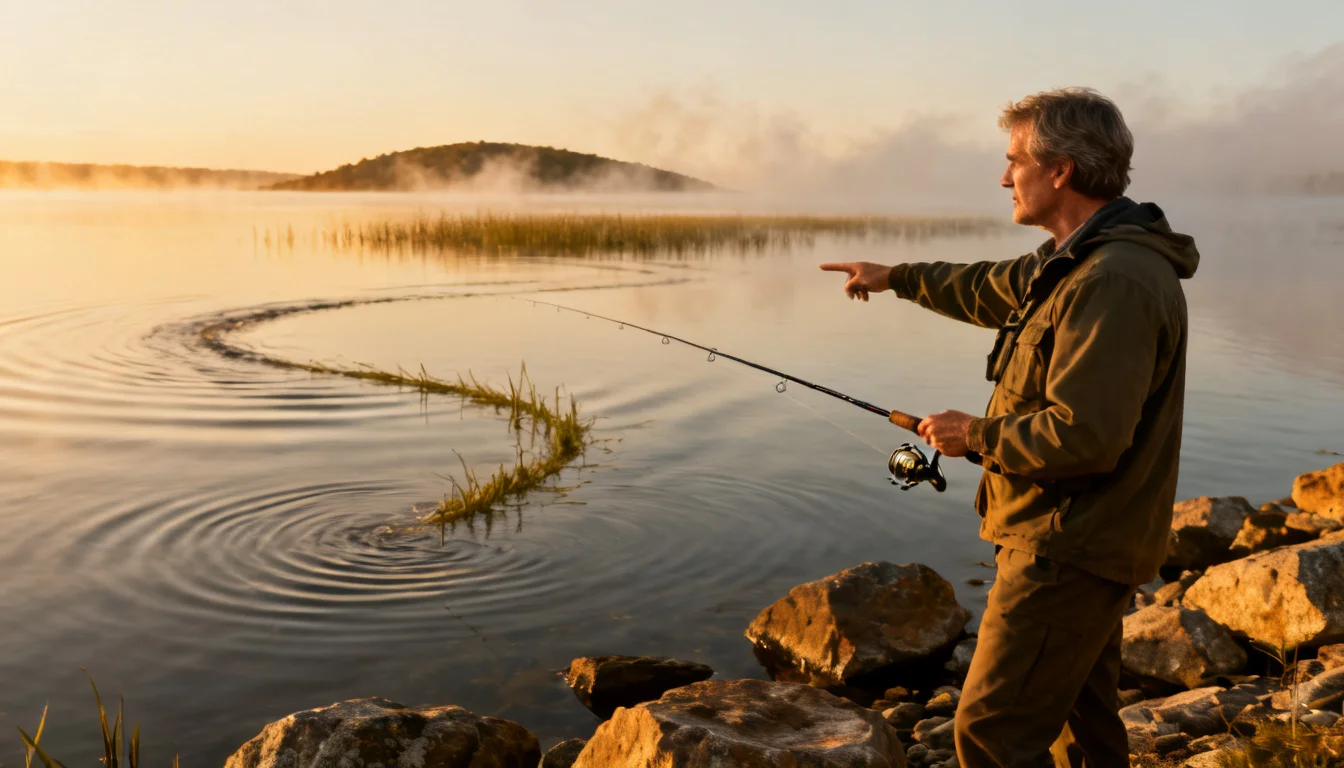
The difference between an empty day and a great day on the water is rarely luck — it's how to read water. Fish aren't scattered randomly; they hold in predictable places tied to structure, current, depth, and cover. Learn to spot those places and you'll cast where the fish are instead of where they aren't. This guide teaches the visual cues that reveal fish-holding water, in any lake or river — from big reservoirs to small streams and creeks.
The Core Principle: Fish Hold Where Three Things Meet
Every fish is looking for three things: food, shelter, and comfort. The best fishing spots are where all three overlap. Instead of casting randomly, ask: is there food nearby? Is there cover to hide in or ambush from? Is the temperature, oxygen, and current comfortable? If the answer is yes to all three, fish are probably there.
How to Read a Lake
Lakes look flat and featureless, but the water itself tells you where the structure is — you just have to know the cues.
1. Follow the edges
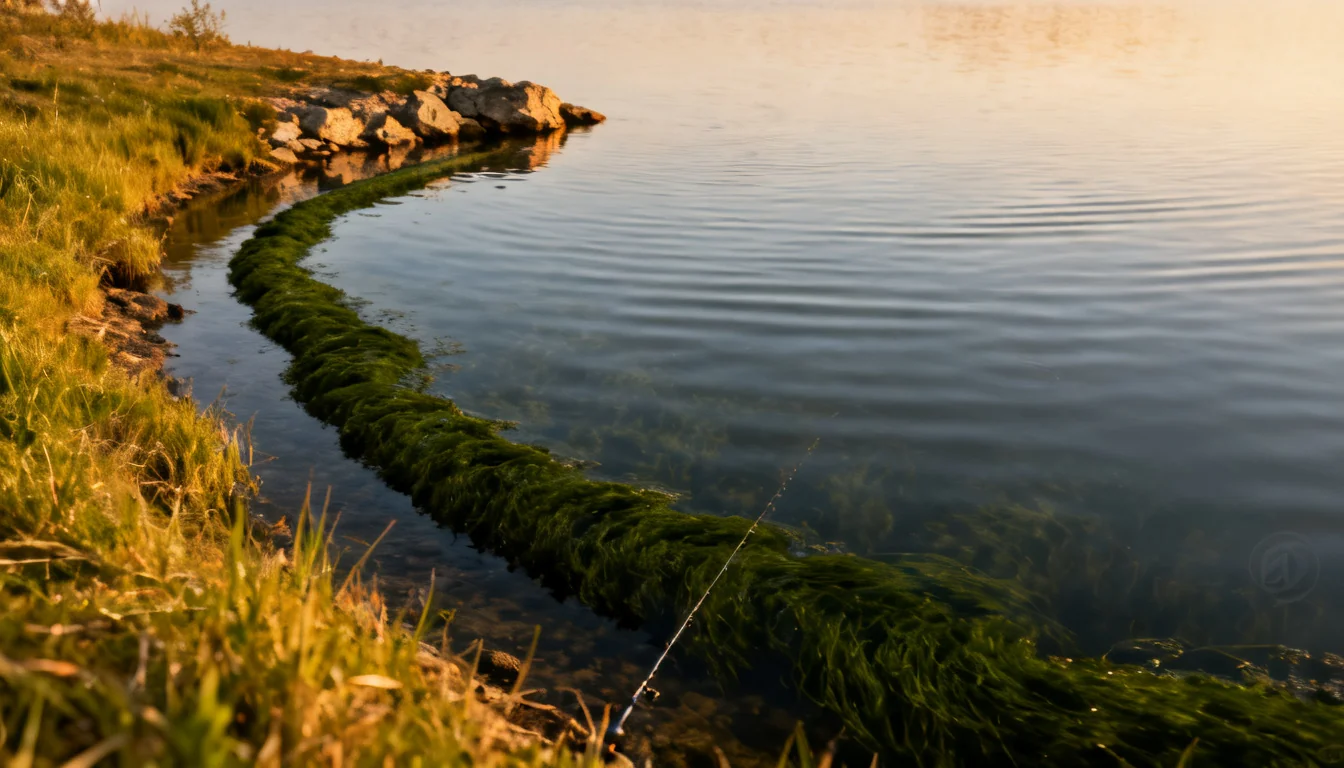
The most productive water in any lake is the edge where two things meet:
- Weed line meets open water
- Shallow water drops to deep
- Warm surface meets cooler depths (the thermocline)
- Dark bottom meets light bottom
Fish patrol edges because they get the best of both worlds — cover and access to open water.
2. Look for points
A point is land extending into the lake; the same ridge continues underwater. Points are underwater highways fish travel constantly. Cast to the tip and the sides — the ambush zone is where the point drops off.
3. Watch for visible breaks
From the bank you can spot:
- Wind lines — the ripple edge where wind pushes surface scum; baitfish gather there, and predators follow
- Inlets — where a creek enters, bringing oxygen and food
- Fallen trees and docks — instant structure with shade and cover
For the full lake structure breakdown, see our how to fish a lake guide.
How to Read a River
Rivers are read with your eyes on the surface. The current draws the map for you — here's how to read the visual clues without wading in:
1. The seam is the surface's handwriting
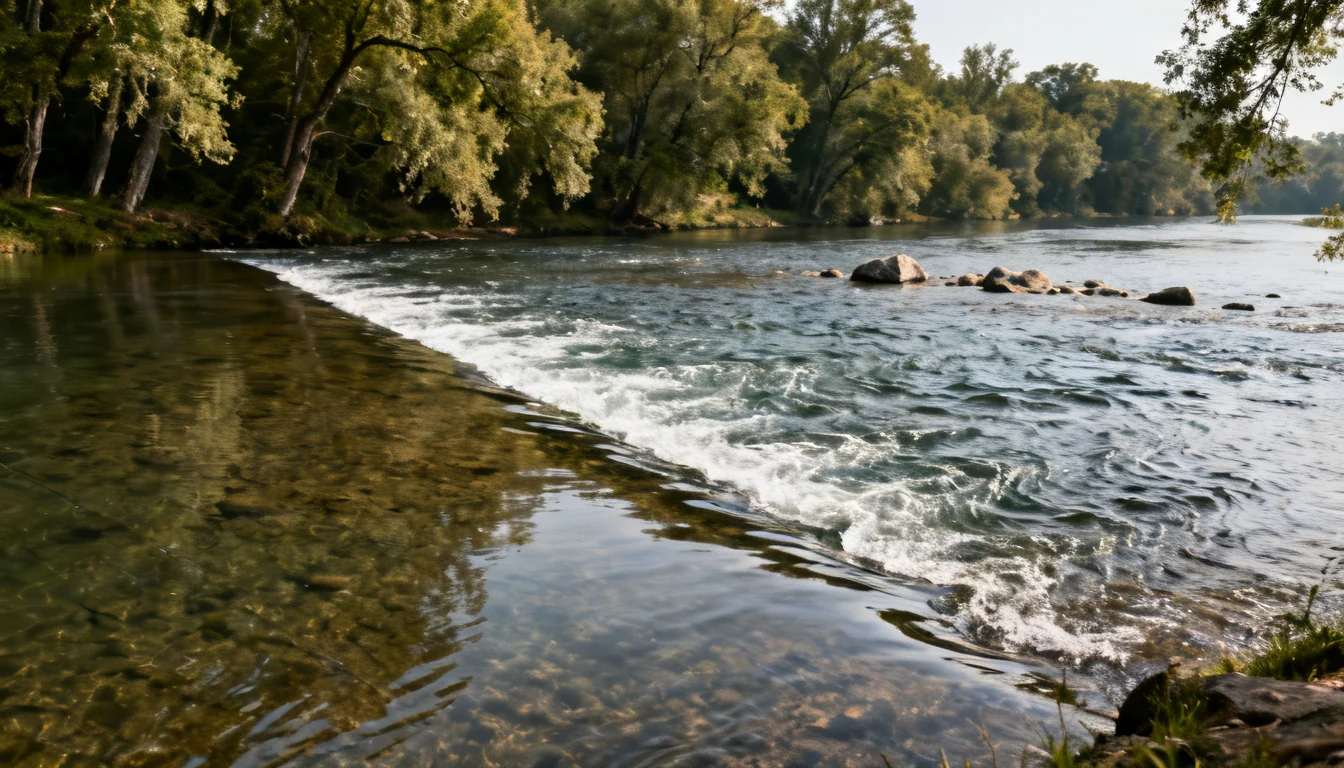
Look where smooth water meets rippled water — that drawn-out line is a current seam. Fish sit just on the smooth side, and the seam itself is a food conveyor belt. If you can see a seam, you can see where fish are lying.
2. A swirl means a rock — and a fish
A boil or swirl on the surface, especially below a visible rock or bend, marks an eddy: calm water spinning behind an obstruction. Eddies are the river's rest stops — fish hold there with food coming to them.
3. Dark water is deep water
Color is depth in a river. Dark, green-brown water on a bend or below a riffle marks a hole — the summer and winter home of the river's biggest fish.
4. Reading the riffle tail
Where a riffle (shallow fast water) dumps into a pool, the current slows and food settles. The riffle tail is a classic feeding lie — look for it on any stretch.
For the full structure breakdown, see our how to fish a river guide.
How to Read Water Depth & Color
Water tells you about depth and what's below:
| Water Appearance | What It Tells You |
|---|---|
| Dark or deep green | Deep water, or heavy vegetation below |
| Clear with visible bottom | Usually shallow in lakes; in rivers, check footing — sight depth can exceed wading depth |
| Stained (tea or coffee color) | 1-4 ft visibility — good feeding conditions |
| Muddy (highly turbid) | Recent rain or runoff — fish move shallower to feed |
| Surface film or scum line | Wind-concentrated food — a hotspot |
The stained-water rule: most fish feel safest in water with some stain. Crystal-clear water means fish are wary and spook easily; heavily stained water means they move shallow to find food. Moderate stain is the sweet spot.
Seasonal Water Reading
Fish position changes with the season — the same water reads differently in April than in August:
| Season | Where to Look |
|---|---|
| Spring | Shallow edges, points, inlets, warming flats — fish move shallow early |
| Summer | Deep structure by day, shallow edges at dawn/dusk, thermocline bands |
| Fall | Baitfish schools (look for surface activity); fish at all depths |
| Winter | Deep holes and basins; slow, subtle water |
Common Water-Reading Mistakes
1. Fishing open water — if there's no structure, edge, or current break, there's usually no fish.
2. Ignoring the wind — wind concentrates food on the downwind bank; fish that way.
3. Fishing the fast water in rivers — the fish are in the slack beside it.
4. Not moving — if a spot produces nothing in 20-30 minutes, read the next structure and move.
5. Fishing only one depth — fish move vertically through the day; cover both shallow and deep on the same structure.
How to Read Water FAQ
What does "reading the water" mean in fishing?
It means using visual cues — structure, current, depth, color, and surface activity — to predict where fish are holding, instead of casting randomly.
How do you find fish in a lake without electronics?
Look for edges: weed lines, points, inlets, drop-offs, wind lines, and docks. Fish hold where two habitats meet, especially in 3-15 ft of water near cover. A practical pattern: on any given day, pick the wind-blown bank and the largest point visible — cast the point's tip and sides first, then work the nearest weed line. Structure you can see from shore almost always continues underwater.
What is a current seam in a river?
The visible line where fast water meets slow water. Food concentrates along it and fish sit just on the slow side — one of the most reliable places to catch river fish.
Do fish prefer shallow or deep water?
It depends on season and time of day. Fish use shallow water for feeding and spawning (dawn, dusk, spring) and deep water for comfort (midday, summer, winter). Fish the edges between them.
Why is stained water better for fishing?
Moderate stain (roughly 1-4 ft visibility) makes fish feel secure and encourages feeding. Crystal-clear water makes them spooky; heavy mud makes them move shallow to find food.
How long should I fish one spot?
If a spot doesn't produce in 20-30 minutes, move to the next structure. Productive anglers read water, fish the best spot, then keep moving until they find the pattern.
What's the best water to fish on a windy day?
Fish the wind-blown (downwind) bank — wind pushes baitfish and food there, and predators follow. See our how to catch largemouth bass guide for wind-bank tactics.