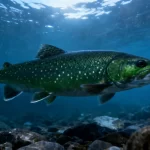
Where Do Trout Hold in a River? A Map of the Best Trout Lies
Every trout river looks like one continuous ribbon of water, but the fish are not spread evenly through it. Where do trout hold in a river? They stack up in a handful of repeating spots — riffle tails, pool heads, seams, and undercut banks — because those spots deliver food, oxygen, and cover all at once.
Learn to recognize those spots and you can walk onto a river you have never seen and predict, within a few feet, where the trout are. If you are new to moving water, our how to fish a river guide covers the fundamentals first; this article is the trout-specific map.
Why Trout Hold Where They Hold
Trout are ambush feeders. They park in one spot, let the current bring the food to them, and dart out only when something edible drifts past. Three needs decide every lie:
- Food. Aquatic insects — mayflies, caddisflies, stoneflies, midges — hatch on the streambed and drift with the current. Trout position themselves where that drift funnels past, usually at the head of a food lane.
- Oxygen. Trout are cold-water fish with high oxygen demands. Moving water is oxygen-rich water, which is why a riffle that would hold few fish in a lake is prime holding water in a river.
- Cover. A trout's two biggest threats are predators from above (birds, herons) and anglers. Shade, depth, overhead banks, and broken current all serve as cover.
There is an old Chinese angling saying — 流水钓缓, "in running water, fish the gentle water" — and it describes trout perfectly. The fish rarely sit in the fastest water. They hold in the slack water beside it: a few feet off the main current, where they burn almost no energy but still see every bite of food sweep by.
Water temperature is the other filter. Trout feed best below about 65°F and turn sluggish past 70°F, so in summer the same river's lies shift toward the deep, shaded, oxygenated spots.
The Classic Trout Lies
Knowing why trout hold tells you where. Seven river features produce the food-oxygen-cover combination trout need, and they repeat on every trout stream in the country.
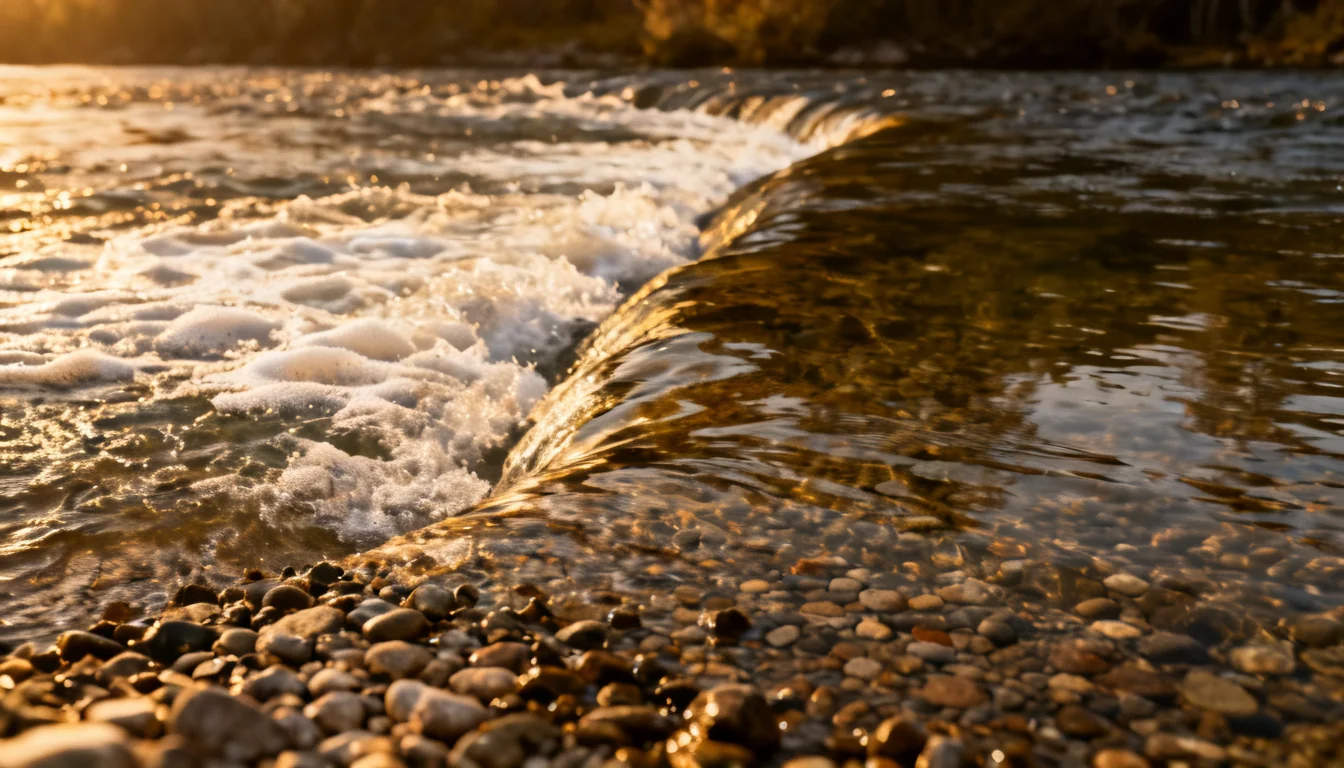
Riffles are the shallow, broken, fast stretches — walking-speed water over gravel. They are oxygen factories, and insects live in the gravel itself.
The real hotspot is the riffle tail (the tailout), where the fast shallow water slows and deepens into the next pool. Drifting insects pile up along that transition line, and trout stack behind it waiting. On most rivers, the tailout is the most dependable lie of the day.
A pool's head — where the water first deepens — is oxygenated, deep enough to feel safe, and sits at the top of the food funnel, so it holds feeding trout all day.
The deep hole itself, carved below a riffle or on the outside of a bend, is the summer and big-fish refuge: cooler water, deeper cover, and a slow current that lets a large trout sit with almost no effort. When the sun is high and the water is warm, the fish are here.
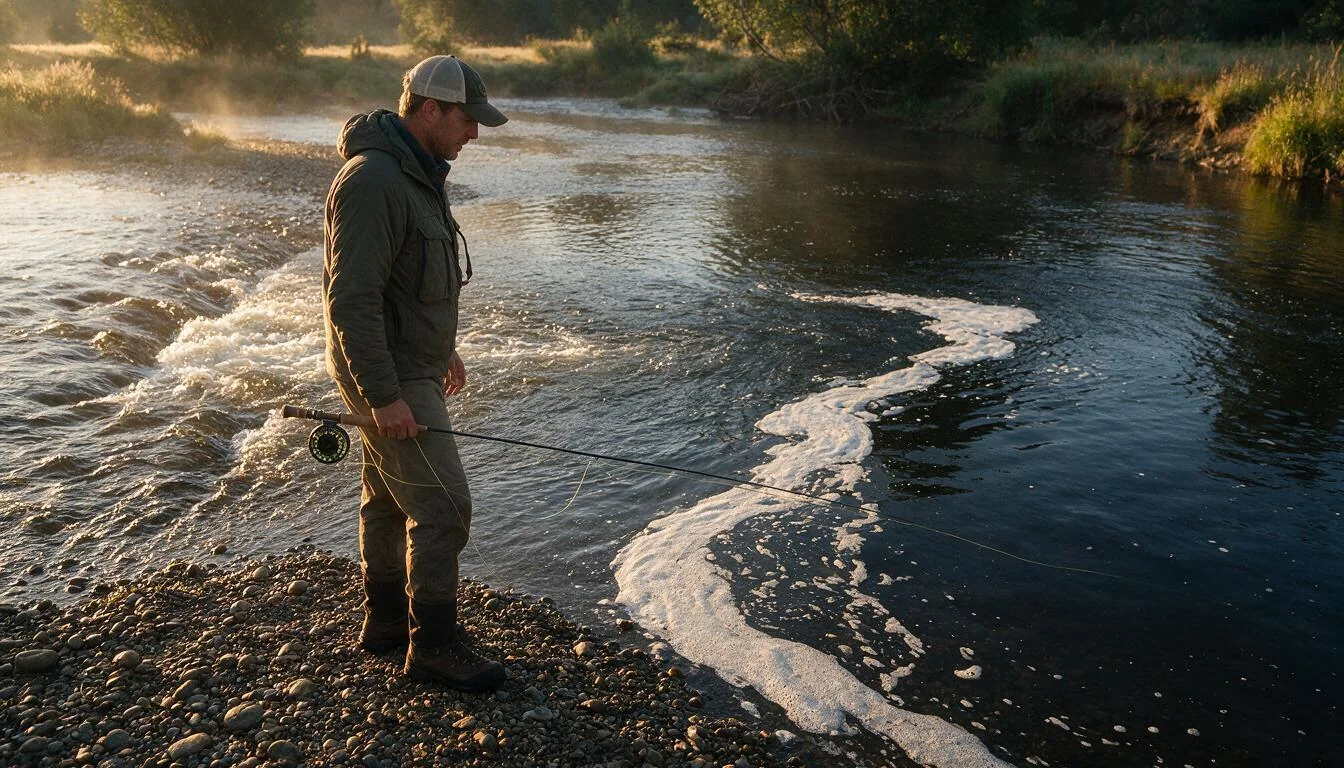
A seam is the line where fast water meets slow water — you can see it as a surface change, or as a foam line drifting downstream. Food concentrates along the seam, and trout hold on its slow side, finning gently while the buffet goes by.
An eddy is the calm pocket behind a boulder, point, or bend, where the current circles back upstream. Eddies receive constant food delivery and give trout a spot to rest without leaving the feeding zone. Seams and eddies are both top lies, and both are easy to overfish — give each pocket a few minutes before moving on.
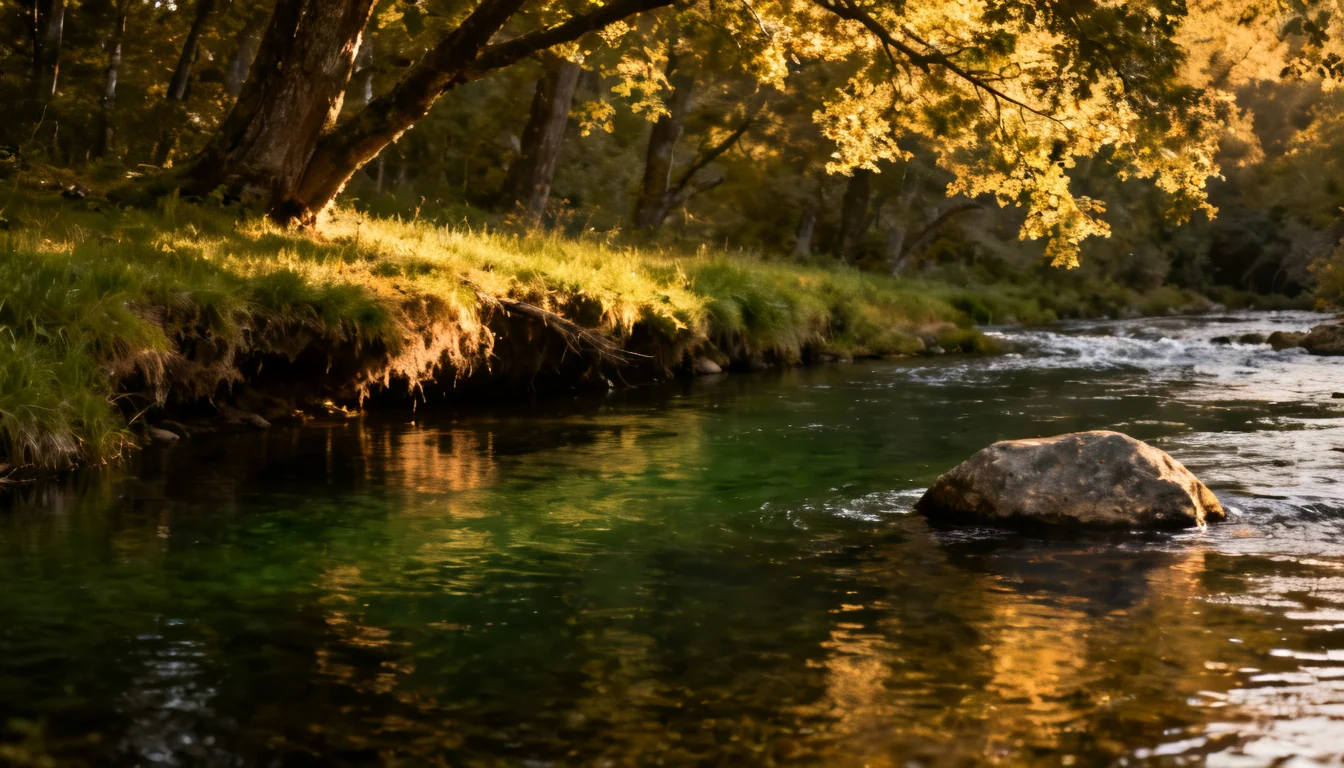
Undercut banks are shaded, roofed-over, and almost invisible from above — exactly the cover a wary trout wants.
Boulders break the current and create a small cushion of slack water in front of them; trout sit in that cushion or right behind the rock. Logjams and sweepers do the same thing with a bonus of overhead protection. These structure lies hold the biggest fish in the river, because size is what made those spots worth claiming.
Trout Holding Spots at a Glance
| Lie | Where to find it | Why trout hold there | Prime time |
|---|---|---|---|
| Riffle tail | Where fast shallow water deepens into a pool | Oxygen + concentrated insect drift | Morning, spring |
| Pool head | First deep water at a pool's top | Oxygen, depth, top of the food funnel | Midday, summer |
| Deep hole | Below riffles, outside of bends | Cool water, cover, big-fish refuge | Hot afternoons |
| Current seam | Line between fast and slow water | Food lane, low energy cost | All day, overcast |
| Eddy | Behind boulders, points, bends | Resting water with food delivery | Dawn and dusk |
| Undercut bank | Shaded, cut-away banks | Overhead cover + shade | Bright days |
| Boulder / logjam | Any large object breaking the current | Slack water + protection | Evening, low light |
Rainbow, Brown, and Brook Trout: Different Lies
All trout follow the same rules, but the three main species weigh food, oxygen, and cover differently — and so hold in different parts of the same river.
Rainbow trout are the oxygen lovers. They hold in riffles, oxygenated runs, and pool heads — active water where the current is doing work — and they rarely sit in dead water.
On a freestone river, look for rainbows in the broken water mid-stream rather than tight to the bank. See our rainbow trout species guide for the full picture of their habits.
Brown trout are the cover ghosts. They are the wariest of the three, so they favor shade, depth, and overhead structure: undercut banks, logjams, bridge pilings, and the deepest holes.
Big browns, especially fish over 18 inches, often leave their daytime lies and feed aggressively at night. If the water is warm and bright, the browns are invisible — come back at dusk. And when you do hook one, hold on — browns fight dirty and use every piece of cover they know.
Brook trout are the cold-water specialists. They need the coldest, most oxygenated water of any eastern trout, so they push up into spring-fed headwaters and small creeks where rainbows and browns are less common.
In those streams, brookies hold in the same classic lies — riffle tails and pool heads — just at a smaller scale. Our guide to fishing small streams and creeks is built for exactly that water.
How to Find Trout Lies
You do not need to wade into the river to find the fish. Read it from the bank first.
- Broken surface means a boulder or log just below — check the slack cushion in front of it.
- Dark water is deep water. The darkest patches in a pool are where the biggest trout sit.
- Foam lines and drifting debris trace the seams — the food lanes — and trout hold right along them.
- Grass overhanging a bank means shade, insects falling in, and almost certainly a fish underneath.
Then approach the water the way a trout expects you not to: come from downstream, stay low, and keep your shadow off the water.
Trout see movement and silhouettes far better than they see color, and in clear water their caution goes up — a river that looks "fishless" because it is gin-clear is usually full of trout that simply saw you first.
Low light is your friend: dawn, dusk, and overcast days bring trout out of deep cover and onto the feeding lies.
Where Trout Hold by Season
The lies stay the same; the fish move between them as the water warms and cools.
- Spring: as water climbs into the 50s, trout spread out and feed hard. Riffle tails and shallow gravel runs are the top spots — rainbows stage there before and after their spring spawn, while browns work the same lies on their post-winter feeding binge.
- Summer: by day the fish drop into deep holes and undercut banks where the water stays cool; at dawn and dusk they slide up to riffles and seams to feed. Big browns do their real feeding at night — the after-dark tactics in our how to catch brown trout guide are built for those fish.
- Fall: cooling water triggers a heavy feeding binge before winter. Browns are on the move toward gravel to spawn, and seams and mid-depth runs produce the best action of the year.
- Winter: trout slow down and hold in the deepest, slowest water — the bottom of deep holes and below logjams — where they can sit with minimal effort. Fish slow and deep, and the strikes are subtle.
FAQ
Where do trout hold in a river?
Trout hold in current breaks: riffle tails, pool heads, seams, eddies, undercut banks, and behind boulders and logjams. Every one of those spots offers food drifting past, oxygenated water, and cover — the three things a trout will not live without.
Do trout hold in fast water or slow water?
Both, but not the same water: trout hold in the slow water beside the fast water. The seam where a fast current meets a slow one is the classic example. Trout rarely fight the main current; they park in the slack lane and let the food come to them.
Where do big trout hold?
Big trout claim the heaviest cover and deepest water: undercut banks, logjams, bridge pilings, and the bottom of deep holes. Large browns in particular hide in shade by day and move out to feed at night, which is why trophy trout are almost always caught in low light.
Where do rainbow trout hold in a river?
Look for rainbows where the current is doing the most work: riffles, pocket water, and the heads of pools. They sit in active, broken water more than browns do, and they will hold shallower than a brown when the water is cool — dropping into the deeper runs only as summer heat builds.
How deep do trout hold in a river?
In a typical wadeable stream, trout hold in lies from knee-deep riffle tails to six-foot holes, depending on season and fish size. In summer they go deepest to escape warm water; in spring and fall they use the shallower feeding lies.
What time of day are trout most likely to be on their lies?
Dawn and dusk are the reliable feeding windows, and overcast days extend them. On bright days trout hug deep cover and shaded banks; on summer nights, big browns leave their daytime lies entirely and feed in the open.
The Bottom Line
Where do trout hold in a river? Look for the food, the oxygen, and the cover, and the river will show you: riffle tails and pool heads in the cool months, deep holes and undercut banks when the sun is high, seams and eddies all year.
The same seven lies repeat on every stream — learn to spot them from the bank, approach quietly from downstream, and you will be fishing over trout instead of over empty water.