Rainbow Trout: Complete Species Guide
Few fish say "freshwater fishing" like the rainbow trout (Oncorhynchus mykiss). With its pink side stripe, hard fighting runs, and willingness to take everything from dry flies to spinners, the rainbow is the most popular trout in North America — and one of the most stocked fish on the continent.
This complete rainbow trout guide covers identification, behavior, where they live, what they eat, how big they get, and the best ways to catch them.
Why Rainbow Trout Are North America's Favorite Cold-Water Fish
Rainbows earned their popularity for four simple reasons:
- They're everywhere. Native to the Pacific Coast but stocked for over a century, rainbows now swim in lakes, rivers, and ponds across nearly every state — from Alaska to Georgia.
- They're eager biters. Unlike wary brown trout, rainbows smash lures and flies aggressively, which makes them the perfect species for beginners and experts alike.
- They're spectacular fighters. Rainbows rocket out of the water on the hook, tail-walk across the surface, and make long screaming runs. A 20-inch rainbow on light line is one of the best fights in freshwater.
- They're delicious. Firm, pinkish-white fillets with a mild flavor make them a favorite on the table as well as in the boat.
Whether you're a first-time angler or a seasoned fly fisher, the rainbow is a fish worth knowing. New to the sport? Start with our fishing for beginners guide.
Rainbow Trout Identification: How to Tell Them Apart
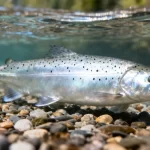
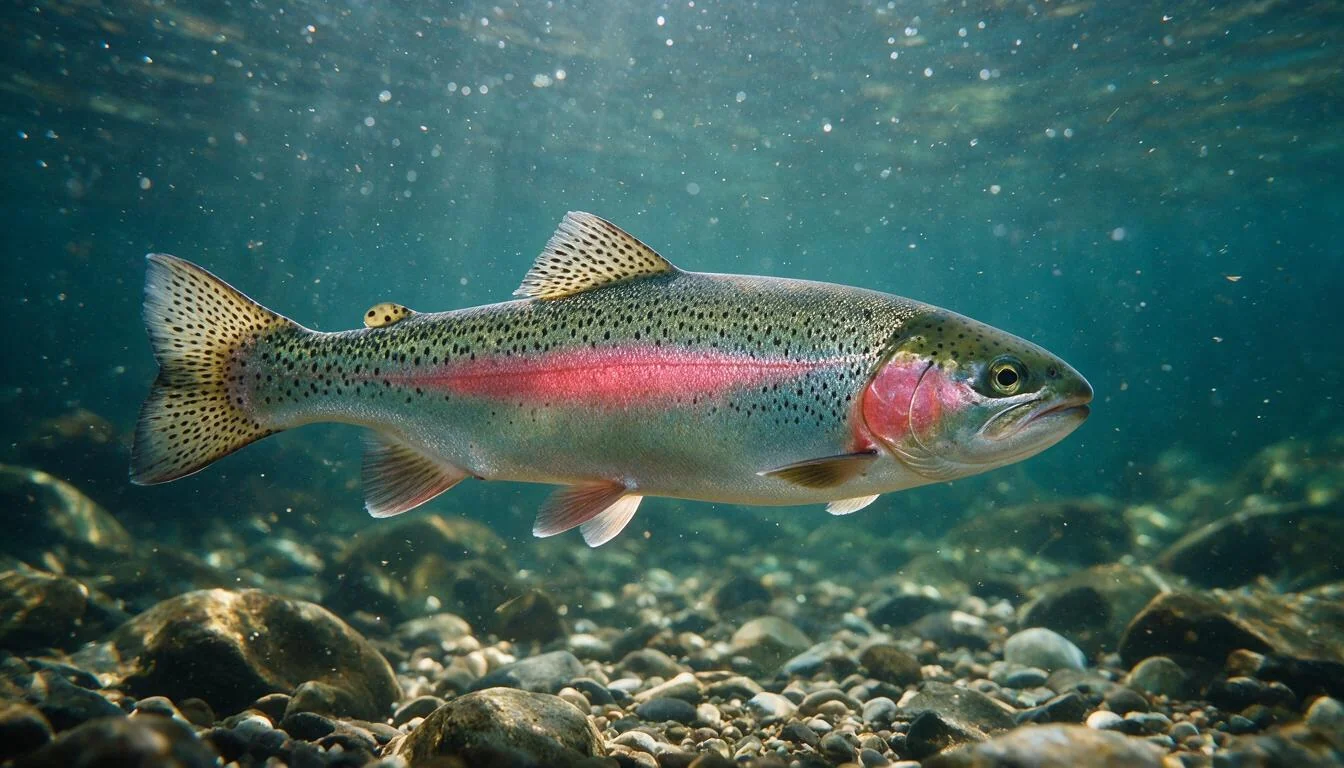
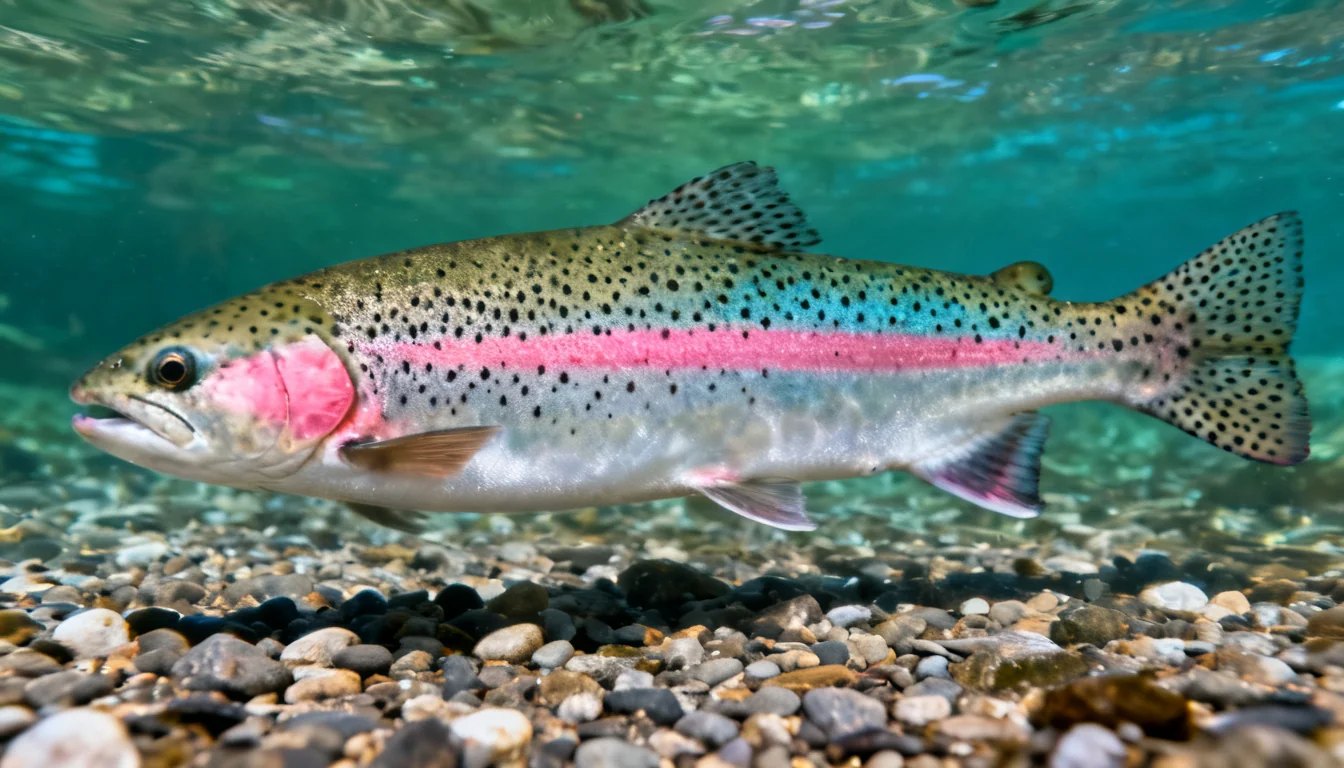
Rainbow trout identification is easy once you know what to look for. The giveaway is the name itself: a pink-to-red stripe running along the lateral line, brightest on breeding males and on fish from the Great Lakes and Pacific Northwest.
Key features:
- Pink to red lateral band running from the gill cover to the tail (the "rainbow")
- Black spots densely covering the back, the dorsal fin, and the entire tail fin
- Olive to blue-green back fading to a silvery-white belly
- Small mouth with tiny teeth on the tongue (cutthroat trout have the large, obvious tongue teeth)
- Slightly forked tail (trout tails are square-ish, unlike the deep fork of salmon)
Look-alikes — the two most common mix-ups:
| Feature | Rainbow Trout | Brown Trout | Brook Trout |
|---|---|---|---|
| Body color | Silver-olive, pink band | Golden-brown, no pink band | Dark olive, worm-like markings |
| Spots | Black, on back + tail + dorsal | Black spots in pale halos, plus red-orange spots | Red spots with blue halos |
| Fins | Plain, spotted | Plain, spotted | White leading edges on lower fins |
| Tail | Slightly forked, fully spotted | Square, few or no spots | Slightly forked, faint spots |
Juvenile rainbows (parr) have 8-13 dark vertical bars called parr marks, which fade as the fish grows. Young steelhead keep a silvery color and lose most spots — which is why many anglers mistake them for salmon.
Rainbow Trout Behavior & Habits
Understanding the rainbow's behavior explains most of what it takes to catch one.
A cold-water fish. Rainbows are built for cool, highly oxygenated water. They're most active in the 50-65°F (10-18°C) range and peak in the 55-65°F zone, and their feeding behavior tracks temperature closely:
| Water Temp | Rainbow Trout Behavior |
|---|---|
| < 40°F (4°C) | Very slow, deep water; winter steelhead and lake fish still bite |
| 45-55°F (7-13°C) | Spring awakening — feeding turns on, pre-spawn staging |
| 55-65°F (13-18°C) | Peak feeding zone — most aggressive, best fishing |
| 65-70°F (18-21°C) | Slowing down; fish hold in deep pools, shade, or fast water |
| > 70°F (21°C) | Stressed, barely feeding; many rivers close or restrict trout fishing (75-77°F is lethal) |
Current-oriented. In streams, rainbows sit in or near moving water — riffles, runs, and the heads of pools — where oxygen is high and food washes past. They rarely hold in dead water.
Spawning. Most populations spawn in spring (roughly March through June), once water warms past the mid-40s (°F). Females dig nests (redds) in gravel, and males compete aggressively for position. Some tailwater populations below dams spawn in fall or winter instead; Great Lakes steelhead run up tributaries in fall but, like ocean steelhead, spawn the following spring.
The steelhead connection. Steelhead are the same species — anadromous rainbows that grow large in the ocean before returning to their home stream to spawn. A steelhead is a rainbow that went to sea.
Rainbow Trout Habitat & US Distribution
Native range. Rainbows are native to Pacific Coast drainages from Kodiak Island, Alaska, south to Baja California, Mexico — and inland through the Columbia and Snake River systems to the Rocky Mountains of Idaho and Montana.
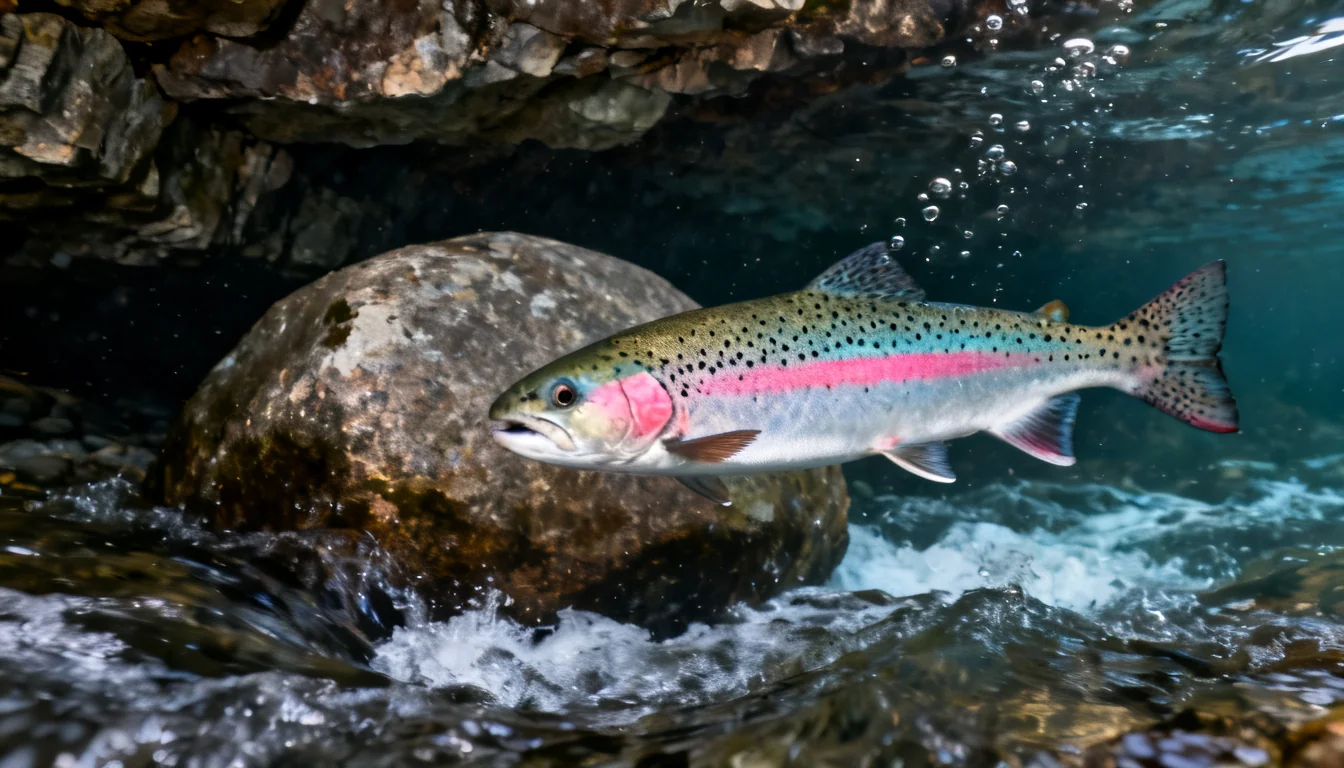
Stocked everywhere. Because they thrive in hatcheries and grow fast, rainbows have been stocked in nearly every state since the late 1800s. Today they're found in 49 states, with wild, self-sustaining populations in the West and put-and-take fisheries across the Midwest, South, and East.
Famous rainbow trout waters:
- Madison River & Yellowstone River, Montana — legendary wild trout fisheries
- Henry's Fork, Idaho — big, selective rainbows on dry flies
- Deschutes River, Oregon — classic West Coast rainbow water
- San Juan River, New Mexico — one of the world's most famous tailwaters
- White River tailwaters, Arkansas & Missouri — including Lake Taneycomo, one of America's biggest stocked-rainbow fisheries
- Great Lakes tributaries, Michigan & New York — fall steelhead runs
Where they hold within a water body. In rivers, look for riffles, pocket water behind boulders, undercut banks, and the heads of pools — anywhere current meets cover. In lakes and reservoirs — see our full guide on how to fish a lake — rainbows roam open water following the thermocline, or hold near stream inlets, springs, and points where oxygen-rich water arrives.
What Do Rainbow Trout Eat?
Wondering what rainbow trout eat? Rainbows are opportunistic feeders, but aquatic insects are the backbone of their diet in most waters:
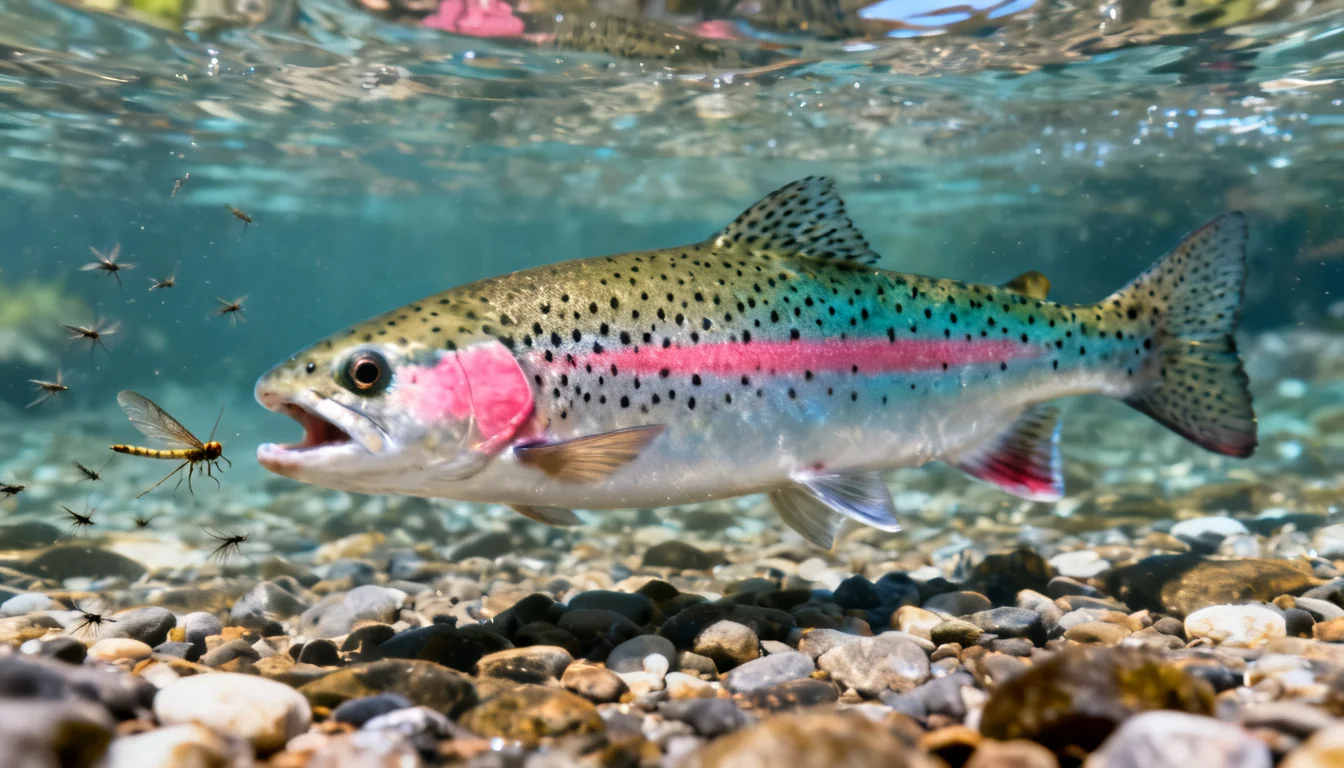
- Mayflies, caddisflies, stoneflies, and midges — in all life stages: nymphs crawling the bottom, emerging pupae, and adults on the surface
- Terrestrial insects — grasshoppers, ants, beetles, and crickets that blow or fall into the water, especially on windy summer days
- Small fish — minnows, sculpins, and juvenile trout, more important for big fish
- Fish eggs — rainbows eagerly eat the eggs of other salmonids (salmon, other trout), which is why egg patterns and skein baits work so well
- Crustaceans — scuds, crayfish, and freshwater shrimp, especially in lakes
- Zooplankton — for lake fish and juveniles
How size changes the menu: a 6-inch stocked trout eats midges and zooplankton; a 14-inch river trout eats nymphs, mayflies, and the occasional minnow; a 20-inch trophy hunts baitfish, sculpins, and even mice. Match your fly or lure size to the forage — during a heavy mayfly hatch, a size 16 dry fly will outfish anything else on the water.
Best Ways to Catch Rainbow Trout
The complete tactics are in our dedicated guide — How to Catch Rainbow Trout — but here's the short version:
Fly fishing is the classic way to target them:
- Dry flies during insect hatches — a size 14-18 mayfly pattern in the evening is deadly
- Nymphs under an indicator — the most consistent method year-round, especially with a split-shot to get down
- Streamers for big fish — a Woolly Bugger swung across the current takes aggressive rainbows
Spin fishing catches rainbows everywhere, including stocked ponds:
- Inline spinners and small spoons — gold and silver in 1/8 to 1/4 oz sizes are the universal rainbow lures
- Small crankbaits and minnow imitations — good for lake rainbows
- Dough baits and worms — the standard for stocked fish; fish them on a small hook under a bobber
When to go: spring and fall are prime, when water sits in the 50-65°F sweet spot. In summer, fish early morning and late evening — and during hatches, when the surface erupts. Winter means slow, deep presentations on lakes and tailwaters.
Rainbow Trout Size: How Big Do They Get?
Typical size: Most stocked rainbows caught by anglers run 8-12 inches and 0.5-2 lb. Wild river fish average 12-18 inches, with 20-inchers considered a great catch in most streams.
Growth depends on food and water:
- Stocked ponds and put-and-take lakes: grow fast on pellets, reach 10-14 inches in 1-2 years
- Freestone streams: slow growth, but 16-20 inch wild fish are common in rich waters like the Madison
- Great Lakes and big tailwaters: the giants — steelhead and lake fish routinely reach 8-12 lb, and fish past 15 lb are landed every year
Records:
- World record (IGFA all-tackle): 48 lb — caught by Sean Konrad in Lake Diefenbaker, Saskatchewan, Canada, in 2009
- US trophy benchmarks: 5 lb is a trophy in most states; 10 lb is a once-in-a-lifetime fish anywhere in the country
- Heaviest US fish come from the Great Lakes (steelhead), Alaska, and big western lakes
A 5-pound rainbow fights like a fish twice its size — which is exactly why trout anglers spend their lives chasing them.
Are Rainbow Trout Good to Eat?
Rainbow trout are one of the best-eating freshwater fish, period. The flesh is firm, flaky, and mild, ranging from white to deep pink depending on diet — hatchery fish are white-meated, while wild and steelhead fish eat crustaceans and turn pink like salmon.
Best cooking methods: pan-fried whole or filleted, grilled, baked, or smoked. A 10-14 inch fish is perfect for the pan; bigger fish are better filleted or smoked. Rainbow trout is also one of the easiest fish to cook for people who "don't like fish" — the mild flavor and lack of fishiness win over almost everyone.
One caution: always check local consumption advisories, especially for large fish from big lakes and tailwaters, which can accumulate contaminants. Many anglers practice catch-and-release on trophy fish to protect the fishery.
Rainbow Trout FAQ
How long do rainbow trout live?
Most rainbow trout live 4-6 years. Stocked fish in put-and-take waters rarely survive past 2-3 years, while wild fish commonly reach 5-7 years. The oldest recorded rainbow trout lived 11 years.
Do rainbow trout bite at night?
Yes, especially big rainbows and steelhead. Summer nights are a proven time to catch large lake fish and river trophies, usually on dark streamers or big lures fished slowly. During the day, hatches and low-light periods (dawn and dusk) are the most productive windows.
Why do rainbow trout jump?
Rainbows jump for two main reasons: to feed on flying insects during hatches, and to escape when hooked — the classic "tail-walking" fight that makes them so exciting. A hooked rainbow often jumps 3-5 times before being landed, which is why light tackle and sharp hooks matter.
Are rainbow trout and steelhead the same fish?
Yes. Steelhead are the same species as rainbow trout — the anadromous form: they hatch in freshwater, migrate to the ocean to feed, and return to their home streams to spawn.
They grow larger than resident fish because of their ocean feeding — steelhead often reach 8-12 lb where resident rainbows stay at 1-3 lb. When Great Lakes steelhead runs peak in fall, tributary mouths fill with anglers chasing these lake-grown rainbows.
Can you eat stocked rainbow trout?
Absolutely. Stocked rainbows are the backbone of American trout dinners — millions of anglers catch and eat them every year. Hatchery fish typically have milder, whiter flesh than wild fish because they eat pellets instead of shrimp and insects, but they cook beautifully. As with any fish, check local consumption advisories and keep only what you'll eat.
The Bottom Line
The rainbow trout is the gateway fish of American cold-water fishing: stocked in nearly every state, eager to bite, spectacular on the hook, and excellent on the table.
Learn to identify one, understand its cold-water habits and insect diet, and you can catch them from a backyard pond to the Madison River. When you're ready to turn this knowledge into fish on the line, our rainbow trout fishing guide covers the gear, baits, and techniques in full detail.