How to Catch Brown Trout: Stream Tactics That Work
Brown trout are the hardest trout in North America to catch — and that's exactly why so many anglers spend a lifetime learning how to catch brown trout. They spook at shadows, refuse suspicious flies, and feed mostly after dark. But the fish that ignore everyone else are catchable, if you know the stream tactics.
This guide covers when to go, the light tackle that works, the flies and lures brown trout actually eat, where they hide in a stream, and the night techniques that produce the biggest fish of the year.
When to Fish for Brown Trout
Timing matters more with browns than with any other trout, because they're most active in low light — and their best season is the opposite of a rainbow's.
| Season | Water Temp | What the Browns Are Doing | Best Strategy |
|---|---|---|---|
| Spring | 50-60°F | Feeding after winter; hatches begin | Nymphs and early dry flies; fish the evenings |
| Summer | 55-70°F | Daytime hiding, night feeding | Fish dawn, dusk, and after dark; big streamers and mice at night |
| Fall | 45-55°F | Pre-spawn feeding binge, then spawning | Best time of year — streamers, big dry flies, egg patterns |
| Winter | 35-45°F | Slow and deep, but catchable | Tiny nymphs and small bait fished on the bottom |
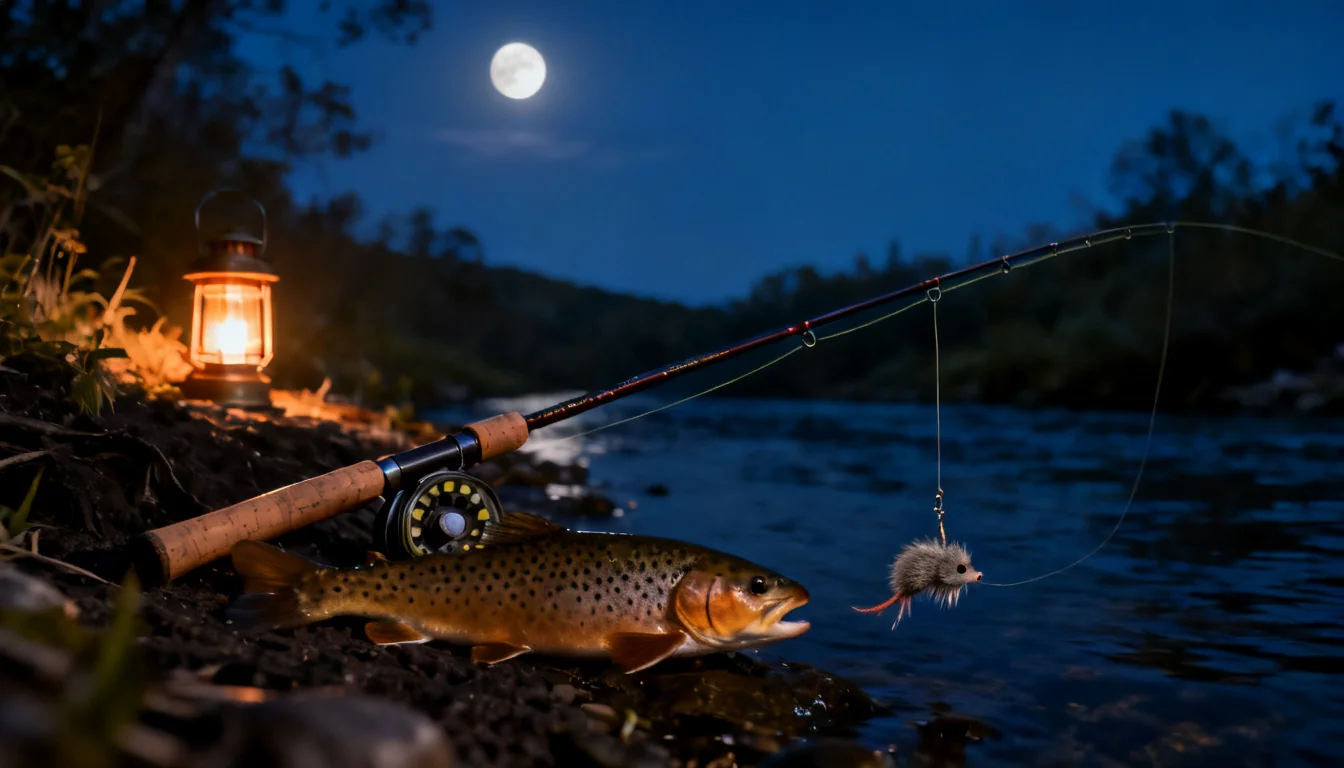
Best times of day: the first two hours after sunrise and the last two before dark are good — but the true brown trout window is night. Fish over 18 inches do most of their feeding after dark, especially in summer when they slide into shallow water to hunt. Serious trophy hunters fish from dusk to midnight with mouse patterns and streamers.
Weather edge: overcast days make browns bold and push them into shallow water. A light rain does the same. Bright, high-pressure days are the toughest — expect browns to be glued to cover and deep shade, and only active at the edges of the day.
Brown Trout Fishing Gear: Rod, Reel & Line
Browns are strong, long-lived fish with a reputation for bulldog fights — but they're also the most line-shy trout in the river. For trout fishing gear, light and sensitive beats heavy and powerful; light tackle isn't a choice, it's a requirement.
Fly fishing outfit (the classic stream setup):
- 9-foot, 5-weight fly rod — the do-everything trout rod; a 6-weight if you fish big streamers and mice for trophies
- Fly reel with a smooth drag — a 20-inch brown makes powerful runs into current
- Floating line with a 9-foot tapered leader, 5X-6X tippet in clear water (browns are leader-shy; go lighter than you would for rainbows)
Spin fishing outfit (streams and small rivers):
- 6'6" to 7-foot light or medium-light spinning rod — enough backbone for 1/8 oz lures, enough flex for light line
- 1000-2500 size spinning reel spooled with 4-6 lb monofilament or fluorocarbon — drop to 2-4 lb in gin-clear spring creeks
- Small hooks (size 8-12), split shot, and small floats for bait fishing
If you're building your first trout outfit, a light spinning combo is the easiest start — see our fishing for beginners guide for how to put one together.
Brown Trout Lures & Baits That Work
Brown trout eat the widest menu of any trout — insects, crayfish, minnows, eggs, even mice — and matching that menu is the whole game.
Fly patterns (what works in streams):
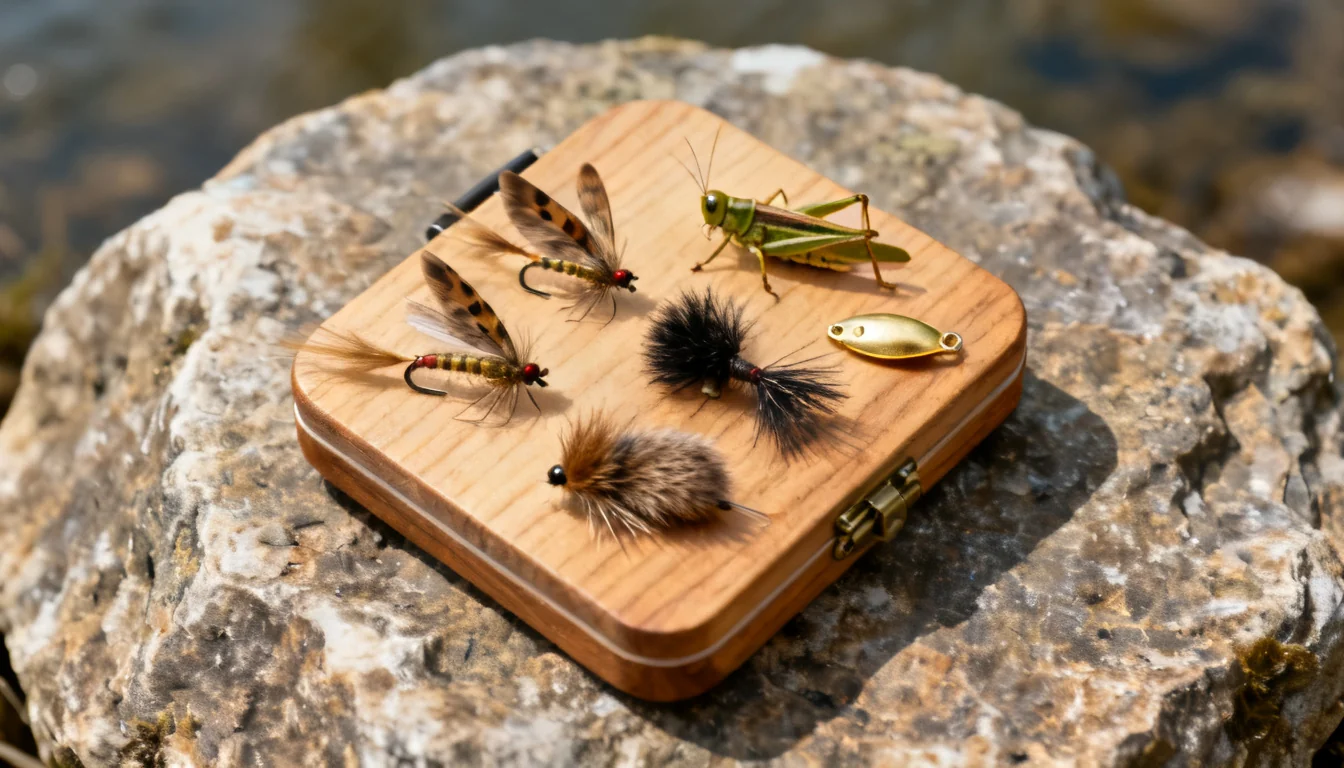
- Nymphs — Pheasant Tail, Hare's Ear, and midge patterns fished under an indicator; the most consistent brown trout catchers year-round
- Big dry flies — grasshopper patterns, Stimulators, and Elk Hair Caddis in summer; browns take big, meaty dry flies readily, and hoppers in particular are a summer staple
- Streamers — Woolly Buggers, Muddler Minnows, and sculpin patterns; the go-to for trophy browns
- Mouse patterns — deer-hair mice fished after dark; the signature big-brown fly
Lures (spin fishing):
- Inline spinners in gold or silver, 1/8 to 1/4 oz — the universal brown trout lures; gold outproduces silver in stained water
- Small spoons (1/8-1/4 oz) — good for covering water and deep pools
- Jerkbaits and minnow imitations (Rapala-style, 2-3 inches) — deadly for big browns chasing baitfish
- Tiny jigs (1/32-1/16 oz) in olive, brown, or black — winter and deep-pool specialists
Live and natural bait:
- Nightcrawlers and red worms — the #1 bait for stocked and pressured browns; hook once and let it drift naturally
- Minnows — the top trophy bait; lip-hooked and fished under a float or drifted through deep pools
- Salmon eggs — irresistible in fall, when browns are egg-hunting on spawning runs
Match size to the fish: small flies and bait catch the numbers, but the biggest browns want the biggest meal — a 4-inch streamer, a mouse, or a live minnow.
Fly Fishing for Brown Trout: The Stream Method
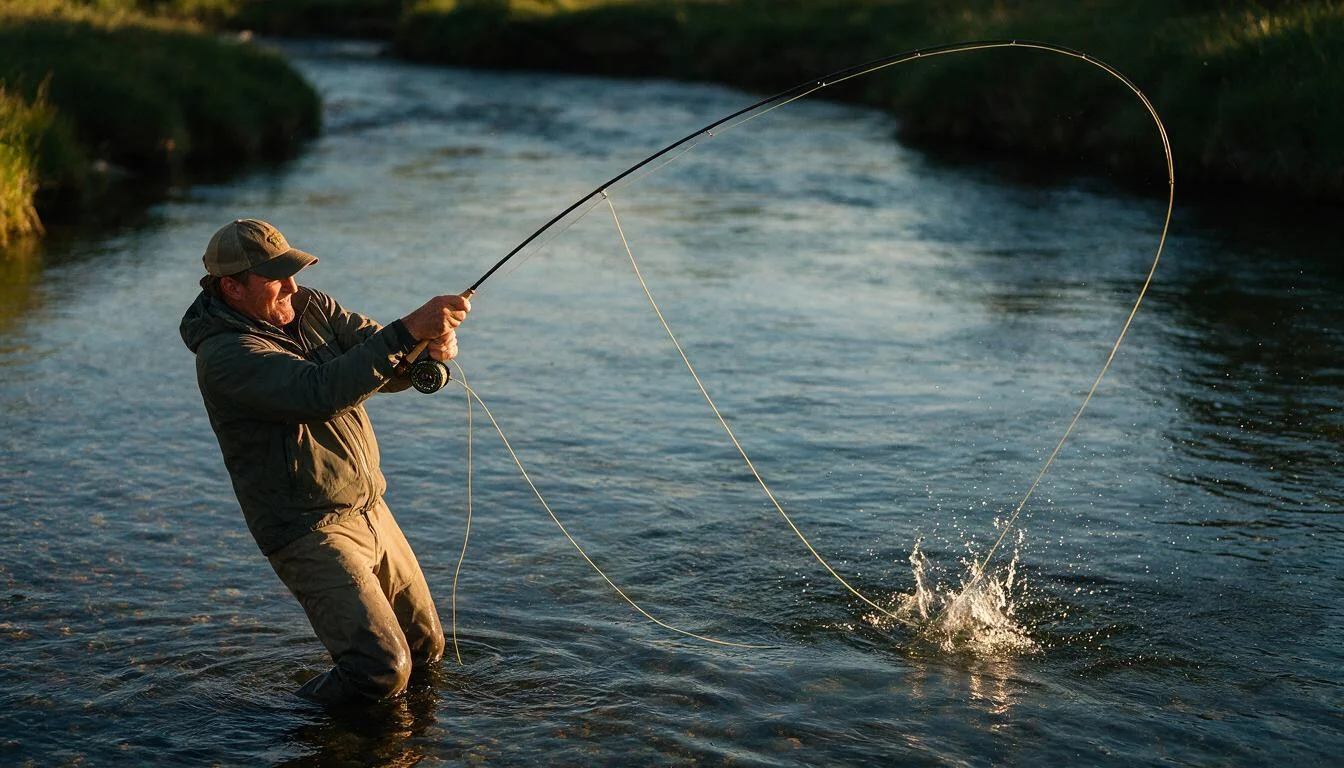
Fly fishing for brown trout is about two things: a natural drift and absolute stealth.
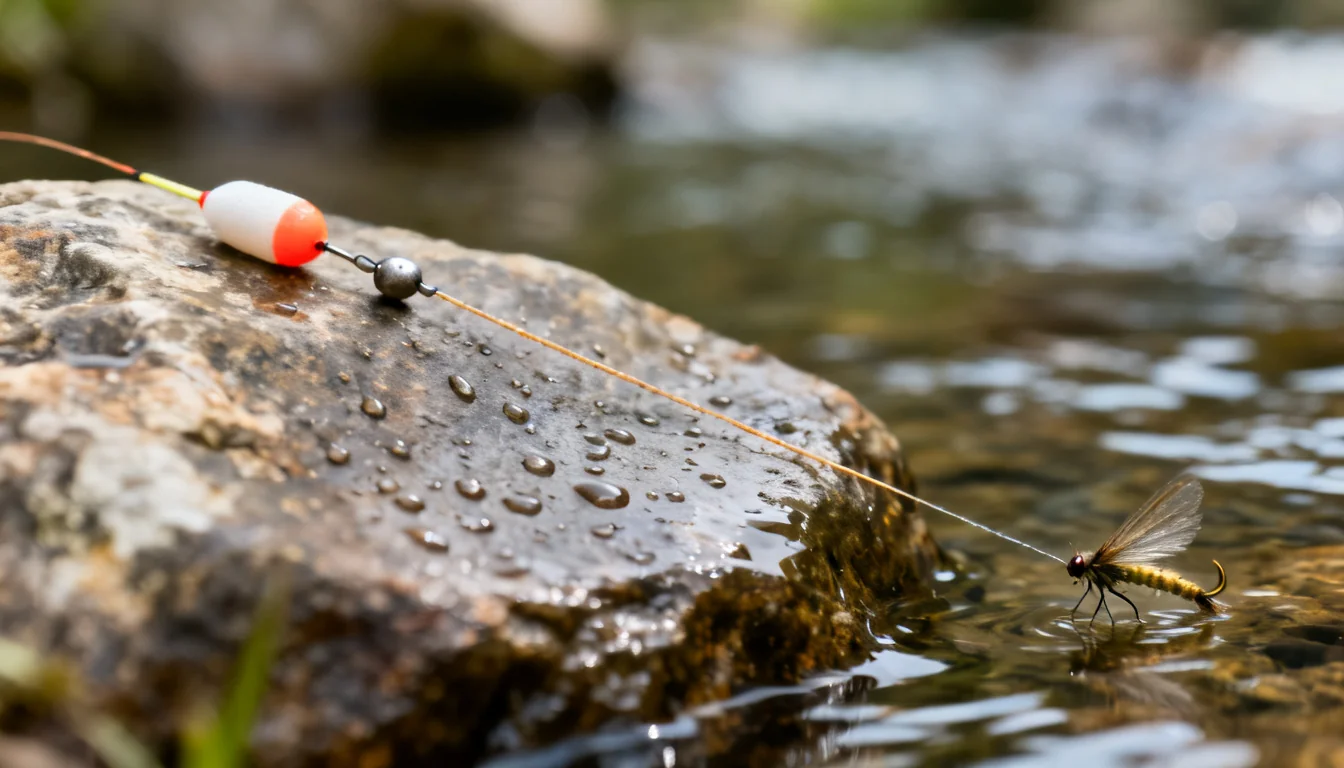
Nymphing (the year-round workhorse): Browns eat underwater insects most of the time, so nymphs catch fish when dries won't. Rig a nymph 12-18 inches below an indicator (longer in deeper pools), add split shot to tick the bottom, and cast upstream so the rig drifts through the feeding lane at the speed of the current.
Watch the indicator — a brown's take is often a subtle stop, not a jerk. Strike softly; hard hooksets pull small flies out of a soft mouth.
Dry fly fishing: Browns rise to hatches like other trout, but they inspect longer and refuse more. Present the fly first — a drag-free drift beats a perfect cast. When grasshoppers are active (July-September), a hopper pattern dropped along grassy banks with a little twitch produces explosive strikes. Big dry flies get big fish: a Stimulator or hopper can outfish small mayfly patterns when the trout are looking up.
Streamer fishing for big browns: The most reliable way to catch a 20-inch brown is to show it meat. Fish a Woolly Bugger, Muddler Minnow, or sculpin pattern with a strip-pause-strip retrieve through deep pools, undercut banks, and logjams. Big browns are cannibals — a big streamer triggers a reaction strike even from a cautious fish.
Mouse patterns at night (the trophy method): On warm summer nights, fish a deer-hair mouse pattern along banks and through pool tails. Cast it close to cover, let it sit, then skate it across the surface with short strips.
A big brown taking a mouse is one of the loudest, most exciting strikes in freshwater. Fish these only after full dark — the same fish that refuse everything by day will travel yards for a mouse at midnight.
Spin Fishing & Bait Tactics for Brown Trout
You can catch browns on spinning gear in any stream they swim — often more effectively than a fly rod in tight, brushy water.
Lure fishing: Cast upstream and across at a 45-degree angle, then retrieve just fast enough to feel the spinner blade thump. In current, let the lure swing naturally across the pool before starting the retrieve — browns hit a spinner that looks like a helpless minnow.
Fish the pockets: behind boulders, along undercut banks, and at the heads of pools.
Jerkbait technique for trophies: Cast a small minnow imitation across deep pools and twitch it in short, erratic strips with long pauses. Big browns follow for yards before committing — keep the pause long and the retrieve slow.
Bait fishing: Rig a small hook with a nightcrawler or minnow, add a split shot 12-18 inches up the line, and drift it naturally through deep water under a small float. Browns hold in the coolest, deepest water in warm months and roam shallower in spring and fall.
On the strike, wait a beat for the fish to turn the bait, then lift gently — light line and small hooks can't take a hard hookset.
The fight: Brown trout fight deep and dirty — heavy head shakes, powerful runs, and a bulldog refusal to jump. Keep your rod tip up, let the drag work, and steer the fish away from snags and logjams.
Wet your hands before handling one, and practice catch-and-release on anything over 18 inches — those are the old, smart fish that make a river great.
Where to Find Brown Trout in Streams
Finding browns is 80% of catching them. Unlike rainbows, which hold in open riffles, browns are cover fish — they hide by day and hunt by night.
The five best lies in a stream:
- Undercut banks — the #1 brown trout lie; deep, shaded, and full of food washing past
- Logjams and fallen trees — big browns live under the wood; fish tight to it, even when it costs you flies
- Deep pools — the daytime home of trophy fish, especially the tail-out where current concentrates food
- Bridge pilings and boulders — current breaks that deliver food and shade
- Pocket water — the soft spots behind rocks where fish rest out of the main current
How to approach: Browns see you long before you see them. Wade slowly, stay low, and fish from downstream so your wake and shadow stay behind the fish.
Cast to the lie first — the first presentation is the one that counts. For the full system on reading moving water, see our guide on how to fish a river.
In lakes and tailwaters: browns suspend along the cool, oxygen-rich band or hold near current breaks, stream inlets, and deep structure. Fall brings lake-run browns into tributaries — the same streams they spawn in — and that's when the biggest fish of the year show up.
Brown Trout Fishing Tips: Common Mistakes to Avoid
Brown trout punish sloppy fishing more than any other trout. Check yourself against these on every outing:
1. Fishing too heavy — thick line, big leaders, and heavy split shot spook browns instantly. Go lighter than you think: 4-6 lb line, 5X-6X tippet, small presentations.
2. Wading in and spooking the pool — the #1 mistake. Browns flee at the first sign of movement. Approach from downstream, stay low, and don't wade into the water you're about to fish.
3. Fishing the wrong hours — a midday brown trip on a bright day is a lesson in futility. Fish dawn, dusk, and night, or overcast days.
4. Fishing the wrong water — casting to open riffles while the browns sit under the undercut bank. Fish the cover: banks, wood, deep pools.
5. Dragging flies — a fly or lure that drags unnaturally gets refused by selective browns. Mend line, slow the retrieve, and let the current do the work.
6. Forgetting the night bite — the biggest browns in the river feed after dark. If you only fish daylight, you're only catching the small ones.
How to Catch Brown Trout FAQ
What is the best time of day to catch brown trout?
The best time is after dark — fish over 18 inches do most of their feeding at night, especially in summer. During daylight, the first two hours after sunrise and the last two before dark are the productive windows, and overcast days can extend the bite all day. Bright, sunny midday is the toughest time to catch browns.
What is the best bait for brown trout?
Nightcrawlers, minnows, and salmon eggs are the top live baits. Nightcrawlers work everywhere, minnows produce the biggest fish, and salmon eggs are deadly in fall when browns are egg-hunting. Among lures and flies, gold inline spinners, Woolly Bugger streamers, and nymphs catch more browns than anything else.
Do brown trout bite during the day?
Yes, but cautiously — and mostly small ones. Daytime browns feed during low light (dawn, dusk) and on overcast or rainy days. Big browns are largely nocturnal and typically won't move for a daytime offering unless it's a big streamer or hopper presented right on their nose.
How do you catch big brown trout?
Fish when they feed (night, fall, overcast days), fish where they hide (undercut banks, logjams, deep pools), and show them a big meal — streamers, mouse patterns, jerkbaits, or live minnows. Big browns are cannibals, so match the size of the bait to the size of the fish: a 4-inch streamer catches fish a size 16 nymph never will.
What size line should I use for brown trout?
Use 4-6 lb monofilament or fluorocarbon for most brown trout fishing, dropping to 2-4 lb in clear spring creeks and going to 6 lb around heavy cover. Fly anglers should start with 5X tippet and step down to 6X in clear, pressured water — browns are notoriously leader-shy.
Do brown trout bite in winter?
Yes, but slowly. Cold water drops a brown's metabolism, so fish tiny nymphs, small jigs, or a bit of worm right on the bottom, with long pauses between moves. The best winter spots are tailwaters and spring-fed sections that stay above freezing — fish the warmest water you can find.
The Bottom Line
How to catch brown trout is no secret — it's fishing light, fishing the cover, and fishing the hours other anglers skip. Go light with 4-6 lb line or 5X tippet, target undercut banks, logjams, and deep pools, and save the biggest flies for the night bite.
Fall is the best season, night is the best time, and a mouse pattern or streamer is the best ticket to a trophy.
For the full picture on the species itself — identification, behavior, size records — read our brown trout species guide. And for the fish that fights like its cousin, our rainbow trout guide covers the spring-spawning side of the trout family.