Yellow Perch: Complete Species Guide
Few freshwater fish pack as much flavor into such a small package as the yellow perch. Schooling, cooperative, and delicious, Perca flavescens is the panfish that northern anglers measure the season by — the first fish of spring, the star of every ice shanty, and the backbone of a Great Lakes dinner table.
This complete yellow perch guide covers identification, behavior, US distribution, habitat, diet, size records, and the best ways to catch them. New to the sport? Start with our fishing for beginners guide — perch are one of the best first targets in freshwater.
What Is a Yellow Perch?
The yellow perch is a small, cool-water game fish in the perch family (Percidae) — the same family as the walleye and the sauger. It is the only North American member of the genus Perca, and it is closely related to the European perch of the Old World.
Perch share a handful of traits that make them so popular:
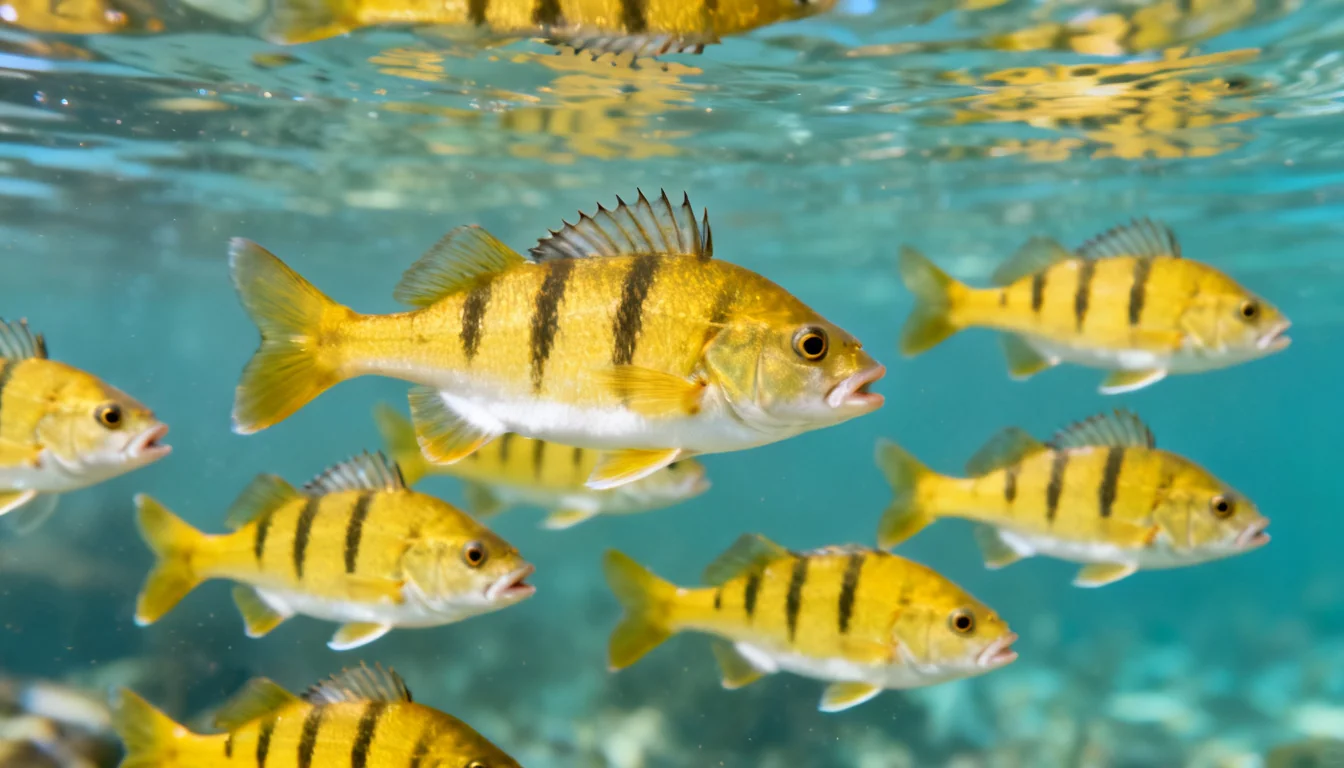
- They school. Yellow perch travel in large, size-matched groups. Find one and you usually find fifty.
- They bite eagerly. Small baits, light line, and patience — that's the whole trick.
- They taste superb. Firm, white, flaky fillets make perch one of the best-eating fish in freshwater.
Because they're small and grow slowly, perch are sometimes written off as nothing but bait-bucket fodder. That's a mistake — a stringer of jumbo perch is one of the great meals in American fishing.
Yellow Perch Identification: The 6-9 Bars Tell You Everything
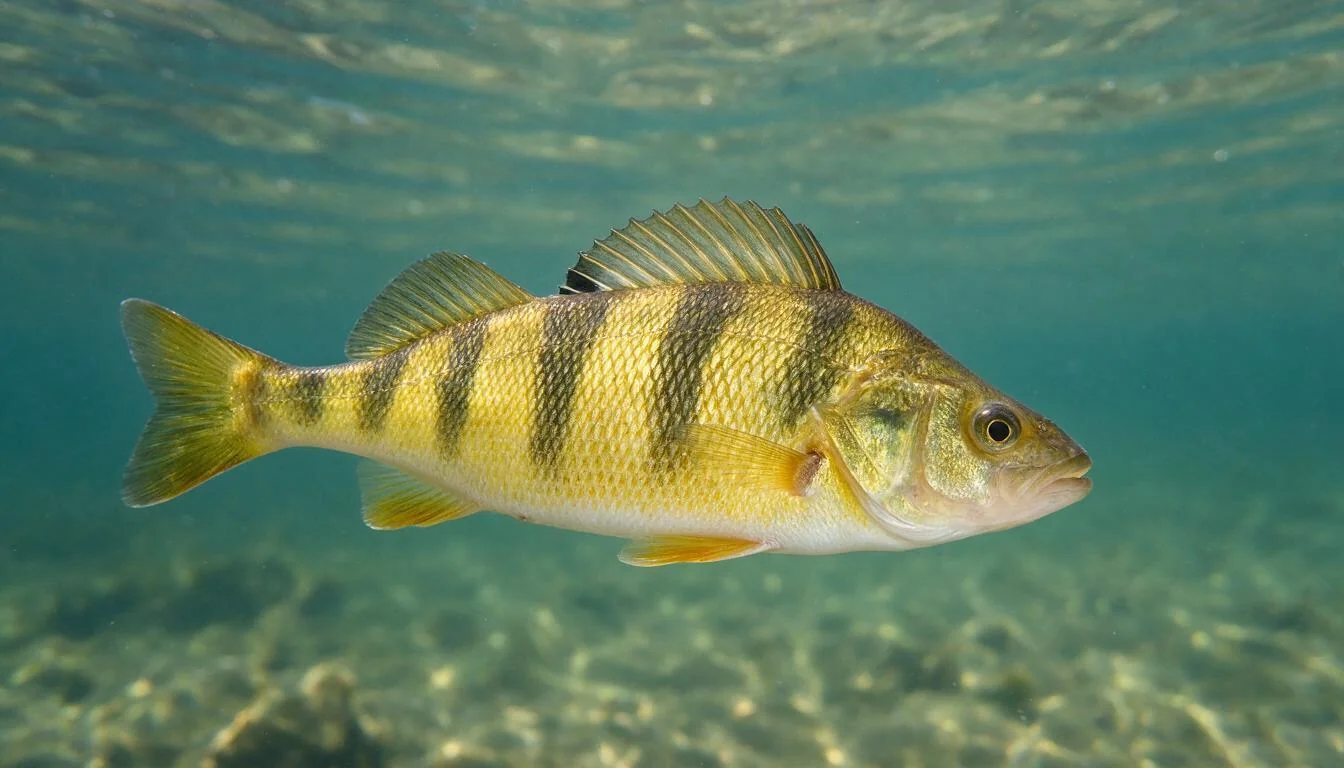
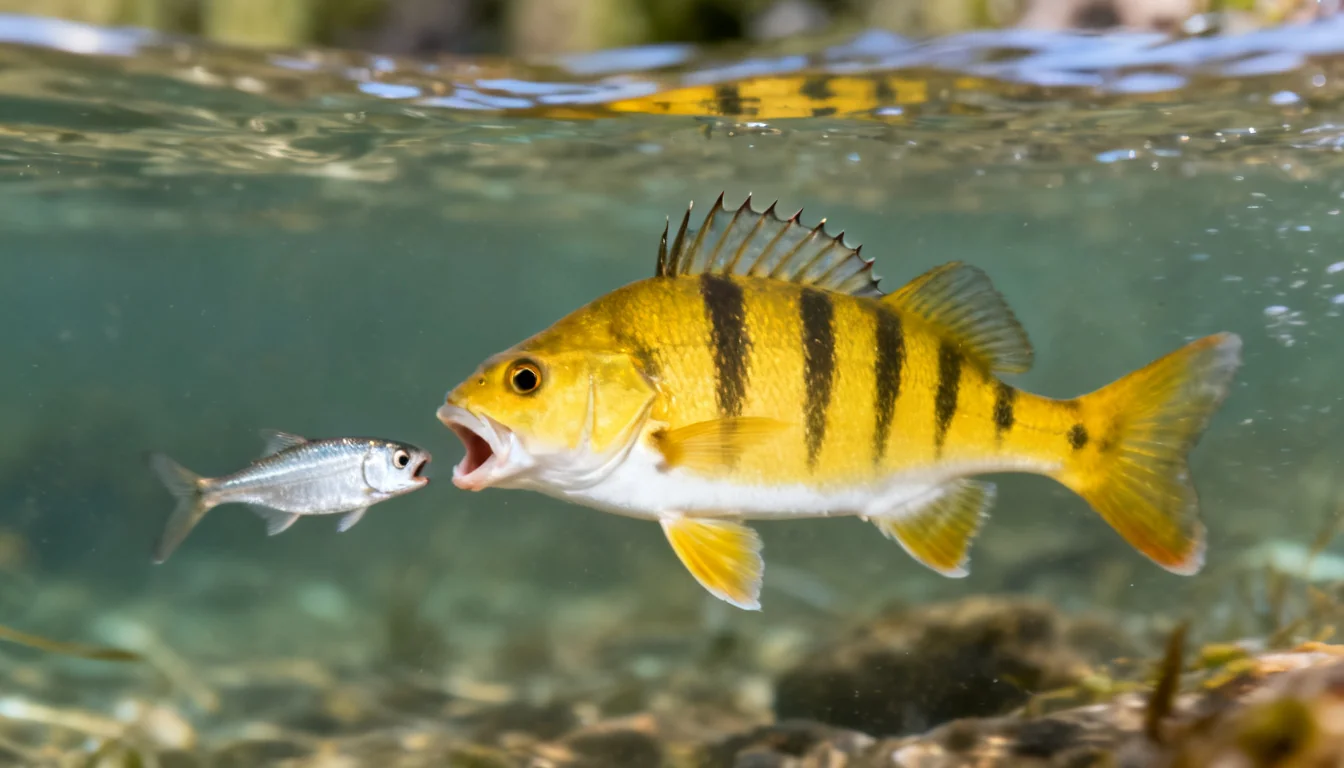
Yellow perch identification is easy once you know what to look for. The body is golden-yellow to brassy green, paling to a white belly, with 6-9 dark vertical bars running down each side. The bars are the signature — no other common panfish wears them.
| Feature | Yellow Perch | White Perch | Walleye |
|---|---|---|---|
| Body color | Golden-yellow, brassy | Silvery, dark back | Olive-gold, brassy |
| Body pattern | 6-9 dark vertical bars | No bars, faint lines | No bars; dark blotches blend |
| Mouth | Small, no fangs | Small | Large, canine teeth |
| Dorsal fins | Two, front spiny fin taller | Two, nearly separate | Two, spiny rear fin with dark blotch |
| Tail | Slightly forked | Forked | Slightly forked, white lower tip |
The quickest field test: vertical bars mean yellow perch. A silvery fish with no bars is a white perch — a temperate bass, not a true perch, and not even in the same family. A large-mouthed fish with canine teeth is a walleye.
Also mind the spines: yellow perch carry sharp points on the gill covers and dorsal fin, and a grab in the wrong place draws blood.
One naming trap: in Florida, crappie are called "speckled perch." They are not perch at all — see our crappie species guide for that fish.
Yellow Perch Behavior & Habits
Understanding how perch live explains most of how to catch them.
Schooling fish. Perch group by size. A school of 10-inch jumbos rarely mixes with 5-inch dinks, so one spot can produce a bucket of keepers and the next only throwbacks. Schools roam constantly, following bait and comfortable water.
Daylight feeders. Unlike many panfish, yellow perch feed during the day. They have good vision and pick off small prey from dawn to dusk, with the strongest feeding windows early and late in the day — and they keep eating right through the winter under the ice.
Seasonal movers. Perch follow a predictable annual cycle driven by water temperature:
| Season | Where They Are | What They're Doing |
|---|---|---|
| Spring | Shoreline shallows, 3-10 ft | Spawning — egg ribbons on weeds once water hits the mid-40s to low 50s (°F); feeding heavily before and after |
| Summer | 15-35 ft over sand, mud, and weed edges | Holding deep and cool; active at dawn, dusk, and night |
| Fall | Shallower, following baitfish | Heavy feeding before winter — the best open-water bite of the year |
| Winter | Deep basins, tight to the bottom | Slow but catchable — the classic ice fishing target |
Egg-ribbon spawners. Perch spawn in early spring — anywhere from February to July depending on latitude, typically April-May in the northern states. Females extrude a long, accordion-folded ribbon of eggs that drapes over weeds, brush, and submerged branches in shallow water. Unlike sunfish, perch build no nests and guard nothing; the young are on their own from the moment they hatch.
Yellow Perch Habitat: Where They Live in the US
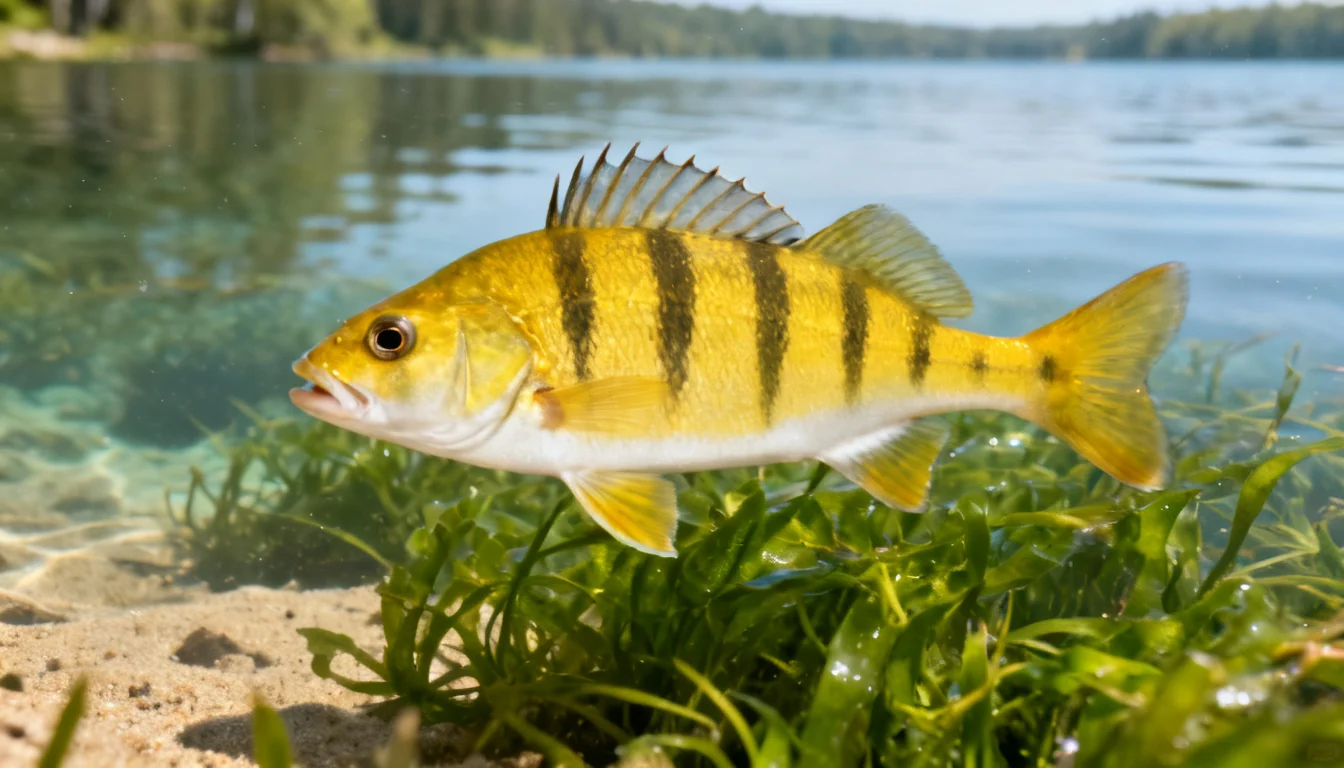
Yellow perch habitat is cool, clear freshwater. They are native to the northern United States and southern Canada — from Nova Scotia west across the Great Lakes and upper Midwest to the Dakotas, and south through the Ohio and Mississippi valleys to Georgia's Atlantic drainages. Decades of stocking have put them in lakes and reservoirs across most of the country, including the South and West.
The most famous yellow perch waters in America:
- Lake Erie — the yellow perch capital of the world, and the largest perch fishery on earth
- Lake Michigan, Lake Ontario, and Saginaw Bay — huge open-water perch populations
- Lake Champlain (VT/NY) and Oneida Lake (NY) — legendary eastern perch lakes
- Lake Winnebago (WI) and Devils Lake (ND) — prairie perch giants
- Hundreds of smaller natural lakes, ponds, and slow rivers across the North
Inside any water body, perch hold near:
- Weed beds and weed edges
- Sandy and gravel flats
- Drop-offs and deep basin edges
- Docks, piers, and marinas
- Creek mouths and river channel edges
Perch range from shoreline shallows down to more than 150 feet, but most live in the top 30 feet of the water column. They tolerate brackish water and slightly saline prairie lakes — a trait almost no other true perch shares.
What Do Yellow Perch Eat?
What do yellow perch eat? Almost anything small that moves. Perch are opportunistic feeders, and their menu changes as they grow:
- Zooplankton — the main food of young perch under 3 inches
- Aquatic insects and larvae — mayfly nymphs, midges, and other bugs, important all year and dominant in spring
- Small crustaceans — freshwater shrimp, scuds, and tiny crayfish
- Small fish — minnows, shiners, and young-of-the-year baitfish make up much of an adult's diet
- Fish eggs — perch happily eat the spawn of other fish
Perch are also cannibals: big perch eat little perch, which is one reason size-matched schools stay separate. In fall, perch key hard on baitfish schools, which is why the classic perch fishing rule applies — find the bait, find the perch.
How to Catch Yellow Perch
The full tactics guide lives in our companion article — How to Catch Yellow Perch — but the short version is beautifully simple:
- Go light. An ultralight rod, 2-6 lb line, and small hooks are standard. Perch have small mouths and soft bites.
- Fish small. Tiny jigs (1-2 inch plastics on 1/32-1/8 oz heads) and live minnows account for most perch caught.
- Target structure. Weed edges, sandy flats, and drop-offs hold the schools.
- Move until you find fish. Perch roam; if one spot goes quiet for 15 minutes, the school has moved.
- Fish the ice. Winter is prime time — perch stay active and feed all day under the ice.
Yellow Perch Size: How Big Do They Get?
Yellow perch size is modest, but the averages hide some surprises:
- Typical catch: 6-10 inches, 1/4 to 1/2 lb
- A solid fish: 10-12 inches, about 1 lb — a jumbo by most standards
- A trophy: 13+ inches; a 14-inch perch is a fish of a lifetime almost anywhere
Perch grow slowly: a 10-inch northern perch is usually 4-6 years old, and the largest on record approach 20 inches. Most perch live 5-8 years; the oldest documented reached 11.
The all-tackle world record yellow perch weighed 4 lb 3 oz, caught in New Jersey in 1865 — a mark that has stood for more than a century and a half.
Because they grow slowly, big perch are easy to overharvest. Some waters — especially Lake Erie — enforce daily limits and occasional size restrictions. A 12-inch keeper is a bragging fish in any state.
Are Yellow Perch Good to Eat?
Yes — yellow perch are among the best-eating fish in freshwater, and many anglers rank them above walleye. The fillets are white, firm, mild, and slightly sweet, with small, manageable bones.
The classic preparation is beer-battered and fried golden; perch also pan-fry, bake, and smoke beautifully. Small fillets crisp up fast — dinner can be on the table 20 minutes after the fillet knife comes out.
Perch support a historic commercial and recreational fishery on the Great Lakes, where Friday-night fish fries are a regional tradition. Most states allow generous daily limits — often 25-50 perch per angler — because the fish school so thickly. Always check your state's regulations before you keep a limit.
Yellow Perch FAQ
How long do yellow perch live?
Most yellow perch live 5-8 years. The oldest on record reached 11 years. Growth is slow, which is why a 12-inch perch is such a prize — it took most of a decade to get there.
How deep are yellow perch in summer?
In summer, perch typically hold at 15-35 feet near the bottom, over sand, mud, and weed edges. They move shallower to feed at dawn, dusk, and night, and they drop deeper when the water warms.
What is the best bait for yellow perch?
Live minnows are the top bait nationwide, with spikes, waxworms, and pieces of nightcrawler close behind. For lures, small jigs — 1 to 2 inches on 1/32 to 1/8 oz heads — catch perch in every season, and tiny spoons and spinners work when perch are chasing baitfish.
Are yellow perch good eating?
They are widely considered one of the best-eating freshwater fish: white, flaky, mild fillets with a slightly sweet flavor. Beer-battered fried perch is the classic Great Lakes preparation.
Do yellow perch bite in winter?
They bite better in winter than most fish, period. Perch stay active under the ice and feed all day, which makes them the single most popular ice fishing target across the northern states.
The Bottom Line
Yellow perch are small, schooling panfish with a huge following: they're found across the northern US and beyond, easy to identify by their golden sides and vertical bars, simple to catch on light tackle, and superb on the plate.
Spring brings them shallow to spawn, summer pushes them deep, fall loads them up for winter — and winter turns them into the most reliable bite on the ice. Grab an ultralight rod and find a weed edge; the next school you hit could be dinner for the whole week.