How to Fish a Reservoir: Find the Flooded Landscape Below
A reservoir is a river valley that someone flooded on purpose. When a dam goes in, the old creek beds, ridgelines, roads, and timber all stay underwater — and that drowned landscape is the single best map you will ever have for how to fish a reservoir.
How to fish a reservoir is really a lesson in reading that underwater terrain: finding the old river channel, working flooded timber, and matching your depth to the season. This guide covers the structure that holds impoundment fish, the deep water tactics that catch them, and the mistakes that keep most anglers on empty water.
Reservoir Fishing Basics: It's a Man-Made Lake
Reservoirs are the lakes built by damming a river — think of the big impoundments across the South, Midwest, and West: long winding bodies of water with a flooded valley underneath. Unlike natural lakes, which form in basins, a reservoir is a river at heart, and the river's old path still organizes everything.
Three things set reservoir fishing apart from natural-lake fishing:
| Reservoir Feature | What It Does | Why It Matters |
|---|---|---|
| Old river channel | The deepest continuous line through the impoundment | Big fish travel it; the channel edge is the reservoir's main street |
| Water level swings | Dams raise and lower the pool | Drawdowns and rises move fish dramatically — and predictably |
| Drowned features | Timber, roads, fences, and buildings left in place | Instant structure that holds baitfish and game fish year-round |
The fishing is different because the water itself changes. A natural lake stays roughly the same shape; a reservoir can drop 10–20 ft between spring and fall, exposing flats and pushing fish into the old channel. Learn to think in terms of the flooded landscape and you will rarely be lost on a new reservoir.
If you are brand new to still water, start with our how to fish a lake guide for the core structures — then come back here for what impoundments do differently.
The Old River Channel: The Reservoir's Main Street
The single most useful fact about any reservoir is this: the old river channel still runs through it. When the valley was flooded, the deepest water stayed where the river and its biggest creeks used to flow. That channel is the reservoir's spine — most of the biggest fish relate to it at some point in the year.
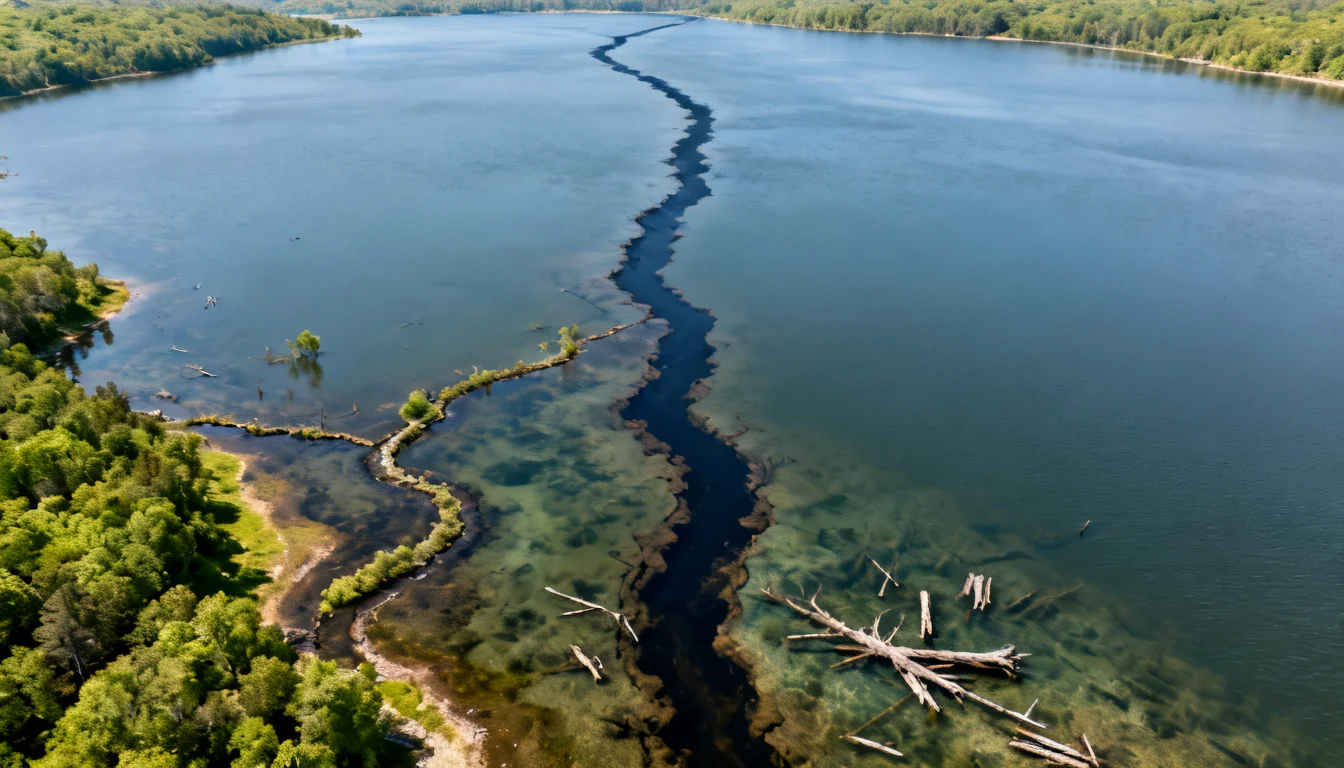
Find it on a lake map first. Most state wildlife agencies publish depth charts for their reservoirs, and the channel shows up as the obvious deep contour winding through the main body and up each creek arm. No map? Look for the widest, deepest part of the main body and the coves that feed into it.
Fish the channel edges, not the middle:
- Points and ridges that touch the channel — they act like bridges between shallow feeding water and deep sanctuary. Bass and walleye patrol them at dawn and dusk.
- Channel bends — like river bends, the outside of a turn is deeper and scoured; fish stack where the channel swings near a flat.
- Where a creek arm meets the channel — an underwater junction where baitfish and predators funnel together.
In summer, the channel edge is where you find fish suspended over deep water. In winter, it is where they stack up tight when the shallows get cold. Whatever the season, if you mark the channel on your map before you launch, you have already found the highest-percentage water on the reservoir.
Where Fish Hold: Points, Creek Arms & Flooded Timber
Once the channel is mapped, the rest of reservoir fishing is learning the structures that hang off it. This is the same structure playbook as lake fishing — with one big difference: the structures are often underwater and invisible from the surface.
| Structure | Where to Find It | What Holds There |
|---|---|---|
| Creek arms | Flooded side valleys feeding the main body | Spring spawners, summer bass, fall shad schools |
| Points | Ridges running toward the channel | Bass, walleye, and stripers at the tips |
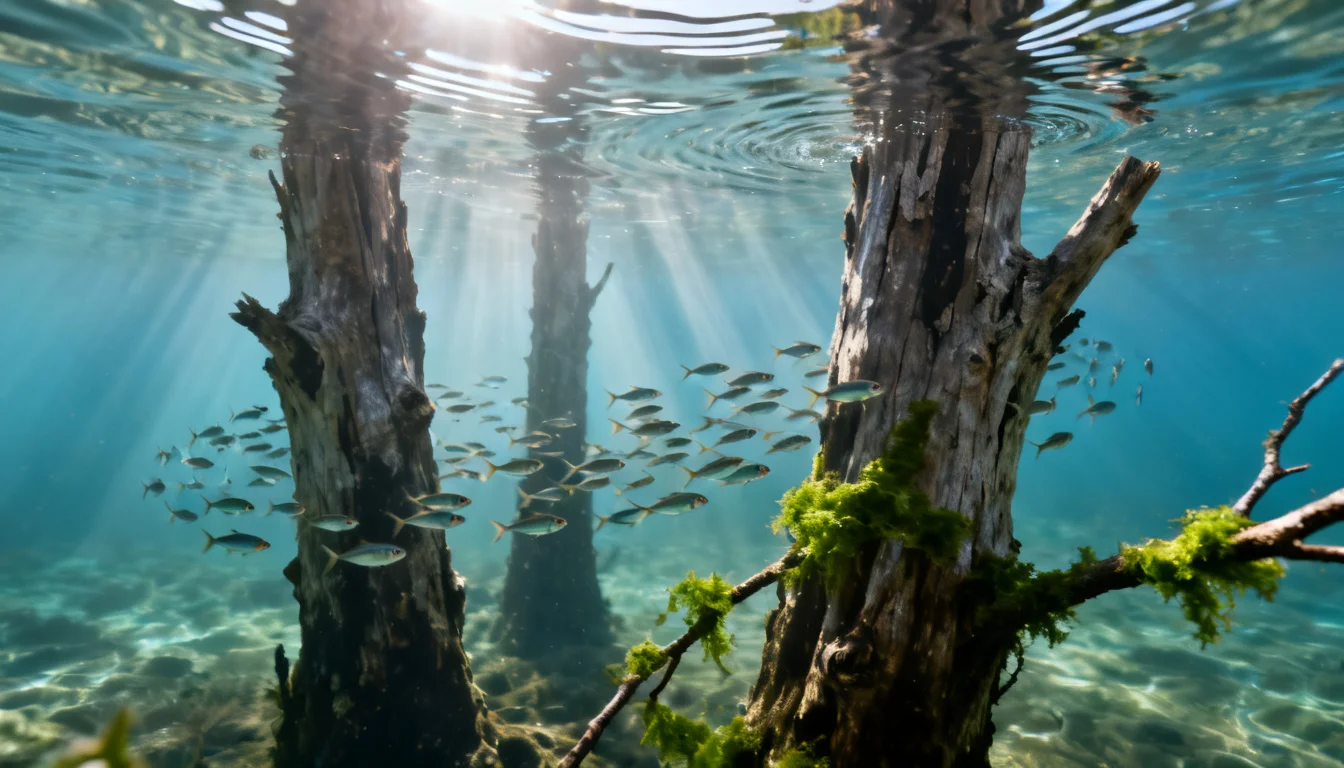
| Flooded timber | Standing trees in old bottoms | Crappie, bass, and bluegill around every trunk |
| Dam & riprap | The dam face and rock banks beside it | Big bass, walleye, and catfish, especially at night |
| Roadbeds & old foundations | Drowned man-made structure | Linear ambush cover that holds fish like a reef |
Flooded timber deserves special attention. It is the signature reservoir cover — old forests standing in water — and it holds fish all year. Crappie school around the trunks in spring and suspend around them in summer; bass tuck into the branches to ambush baitfish; bluegill use it as nursery cover. A brush pile you sink yourself is the same idea if the reservoir allows it.
Creek arms are the other secret. In spring, bass and crappie run up the arms to spawn in the shallow ends. In fall, shad push up the arms and the predators follow. The arms are the reservoir's nursery and its dining room — fish them at the right season and the rewards are consistent.
For a full species-by-species breakdown of where these fish live, our how to catch crappie guide covers the timber specialists in detail.
Deep Water Fishing: Thermocline Tactics for Summer
The question every reservoir angler asks in July is: where did the fish go? The answer is the thermocline. In summer, reservoirs stratify — a warm, oxygen-rich layer sits on top, a cold layer sits on the bottom, and a sharp temperature break (the thermocline) separates them.
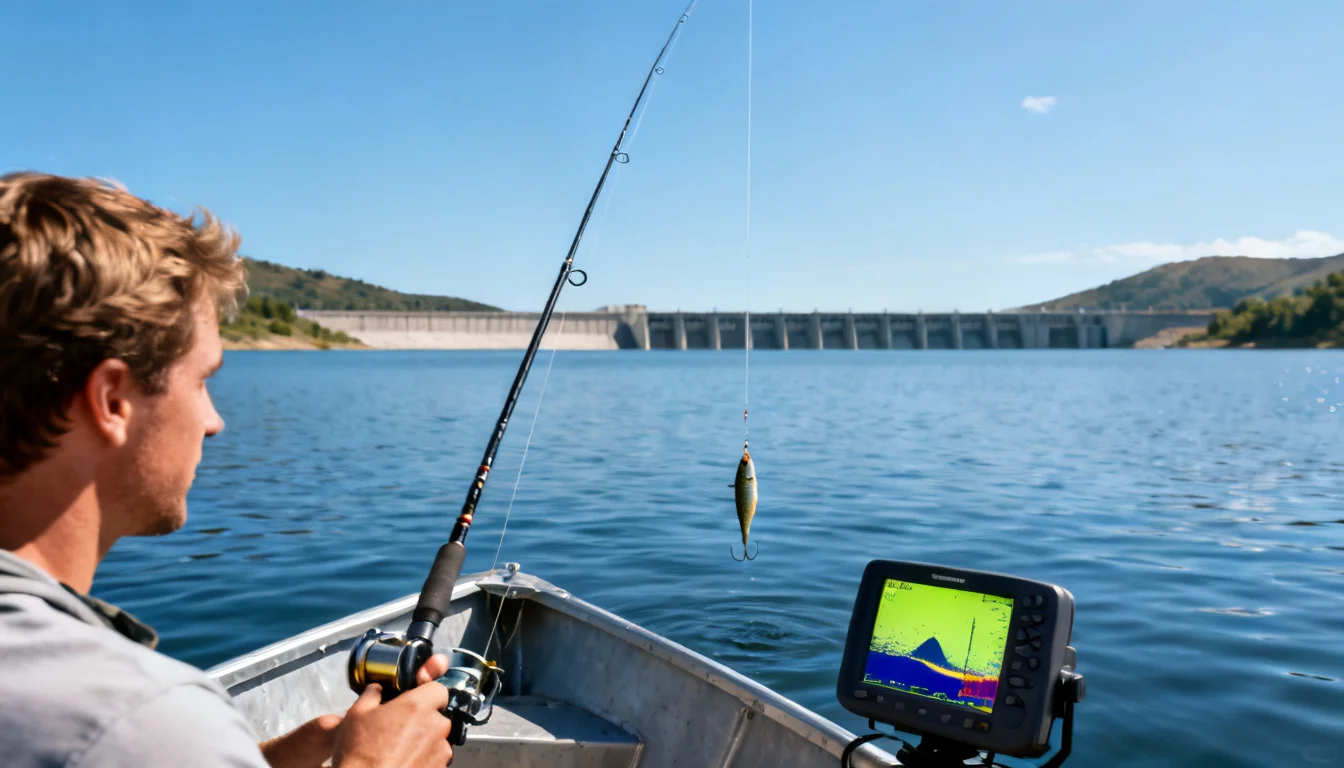
Below that break, oxygen drops fast, so most game fish stack just above it.
That band is the summer deep water fishing zone. On many reservoirs it sits between 15 and 30 ft, and a fish finder shows it instantly as a solid line of marks. Set your baits to run at that depth and you will be fishing where the fish actually are.
Deep water tactics that work on reservoirs:
- Vertical jigging. Drop a jig or blade bait straight down to the thermocline band and work it in short hops. Deadly on bass and walleye holding tight to structure.
- Drop-shot rigs. The most reliable way to keep a bait suspended at a precise depth. Match your hook size to the baitfish in the reservoir.
- Crankbait trolling. Troll deep-diving crankbaits along the channel edge to cover water fast. When fish are scattered, this finds them.
- Live bait suspended. A shiner or shad on a slip bobber set to the thermocline depth catches bass and stripers that ignore lures.
The pattern repeats every summer: mornings and evenings, fish leave the deep band to feed on points and flats; midday, they drop back to the thermocline. Plan your day around those two moves and you will fish the reservoir at its best.
For low-light reservoir predators, our how to catch walleye guide digs into the same deep-water patterns from a species angle.
Seasonal Reservoir Fishing Tips
| Season | Where the Fish Are | Best Approach |
|---|---|---|
| Spring | Creek arms and shallow flats; spawning runs | Spinnerbaits, crankbaits, and swimbaits up the arms |
| Summer | Thermocline band by day; points and flats at dawn/dusk | Deep jigs and drop-shots by day; topwater at first and last light |
| Fall | Shad schools wandering the main body and arms | Crankbaits and trolling to match the baitfish |
| Winter | Deep channel edges and old river bends | Slow bottom presentations: jigs, spoons, live bait |
Watch the drawdown. Many reservoirs drop the pool in fall and winter — for flood control, maintenance, or just by schedule. A falling reservoir is one of the most reliable patterns in reservoir fishing: as the water recedes, baitfish and game fish pour out of the flooded cover and concentrate in the shrinking deep water.
The old angler's rule 落水钓潭 — "falling water, fish the deep pools" — says it perfectly. When the reservoir drops, fish the channel bends, the deepest holes, and the last remaining deep water.
Drawdowns are also the best time to learn the reservoir's layout: the exposed banks show you the points, creek mouths, and timber lines you cannot see when the pool is full.
Gear & Rigs for Reservoir Fishing
You do not need a boat to fish a reservoir, but you do need the right depth control. A 7 ft medium-heavy rod with 10–20 lb line handles the structure and the fish. Big reservoir bass and catfish pull hard, so you need backbone to steer them out of timber.
Spinning or baitcasting is a matter of preference; both work.
Three rigs cover most reservoir situations:
- Carolina rig — a weight, a leader, and a soft plastic dragged along the bottom. The classic rig for fishing points and channel edges.
- Drop-shot rig — the deep-water workhorse described above; your best tool for the thermocline band.
- Jig and trailer — the single most productive bass bait on reservoirs with crawfish populations. Fish it around timber, rocks, and riprap.
Check the reservoir's regs before you go — many impoundments have specific rules about bait, live fish, and tackle. If you are new to this type of water, our pond and reservoir fishing primer covers the small-water fundamentals that transfer directly.
Common Reservoir Fishing Mistakes
- Fishing the middle of nowhere. Open, flat, featureless water rarely holds fish. Get back to the channel edge, a point, or timber.
- Ignoring the map. The channel, points, and creek arms are all on the depth chart. Skipping the map means fishing blind on water where the structure is invisible.
- Fishing one depth all day. The thermocline moves, the fish move, and the drawdown moves everything. Check your depth every 30 minutes and adapt.
- Passing up the drawdown window. A falling reservoir concentrates fish — the exact opposite of a reason to stay home.
- Too heavy or too light. 10–20 lb line balances power against presentation; going lighter costs you big fish, going heavier costs you bites.
FAQ
How deep should you fish in a reservoir?
Match the season. In summer, most game fish hold just above the thermocline, typically 15–30 ft in the main body. In spring, fish the shallows and creek arms in 3–10 ft. In winter, drop to the deepest channel edges and bends. A fish finder makes the adjustment obvious — mark the fish and fish their depth.
What is the best bait for reservoir fishing?
It depends on the target. For bass, a jig and trailer around timber and points is the most consistent. For crappie, small jigs or minnows around flooded timber. For catfish and stripers, live bait — shad, shiners, or cut bait — fished at the right depth. Match the local baitfish and you cannot go far wrong.
Where is the best place to fish on a reservoir?
The old river channel edge, hands down. Points that touch the channel, creek-arm mouths, and channel bends hold fish year-round because they sit on the reservoir's main travel route. Add flooded timber or a roadbed to the same area and you have the best spot on the impoundment.
Do I need a boat to fish a reservoir?
No, but it helps. Bank access is best near dams, bridges, parks, and the upper ends of creek arms, where the structure comes within casting range. A boat lets you reach the channel edges and timber that dominate the main body — but plenty of reservoir fish are caught from shore every year.
Why does fishing get better when a reservoir draws down?
As the water level falls, the flooded timber, brush, and shallows empty out, and baitfish and predators concentrate in the remaining deep water. Fish that were scattered across a full pool stack up in the old channel and the deepest holes — which makes them far easier to find and catch.
What fish live in reservoirs?
Largemouth bass and crappie are the two most popular targets, and most reservoirs also hold bluegill, channel catfish, and walleye or stripers depending on the region. Southern impoundments are famous for big bass and big crappie because the long growing season pushes fish to heavy weights. Our largemouth bass fishing guide covers the #1 reservoir species in depth.
The Bottom Line
How to fish a reservoir comes down to one idea: fish the flooded landscape, not the open water. Map the old river channel, learn the points, creek arms, and timber that hang off it, and match your depth to the season.
The thermocline in summer, the deep bends in winter, the arms in spring and fall — matching the season is what separates the anglers who catch fish on reservoirs from the ones who do not. The angler with a map and a depth plan catches fish that others never find.
Related: How to Fish a River · How to Catch Channel Catfish