Types of Crayfish in the United States: A Crayfish Species Guide for Anglers
Roughly 500 crayfish species live worldwide, about 400 of them in North America, and about 353 in US waters — close to 70 percent of the world total. The Southeast is the hotspot, and Alabama reports 83 to 99 species, more than any other state.
That variety is easy to miss from a boat seat. In a bait bucket, most crayfish look like the same small brown lobster. Their legal status is anything but uniform: some are invasive, some are protected, and several may not legally leave the water alive.
Here are the six you will actually meet, plus the marks that separate them. If you mainly want to catch and cook them, start with the crawfish guide.
How to Tell a Crayfish From Another Crayfish
Five features do almost all the work. Learn them and you can name most crayfish in your hand without a key.
- Claw shape and the hinge patch. Claws run from narrow and flattened to long and cylindrical. On signal crayfish, look for a white or pale blue-green patch at the claw hinge.
- Rusty patches on the carapace sides. One dark rust-red spot on each side of the shell, just ahead of the tail, points to rusty crayfish. The spots fade on young animals.
- Black bands on the claw tips. Rusty and several other Faxonius crayfish show dark bands near the tips of the large claws, plus an oval gap that stays open even when the claws are shut.
- Areola width. The areola is the narrow strip where the two halves of the carapace meet. Red swamp crayfish have a narrow one; white river crayfish have a wide one.
- Form I males. Mature males molt into a breeding form with enlarged claws and hard hooks at the base of the walking legs.
One naming trap: in 2017 most non-cave members of the genus Orconectes were moved into the genus Faxonius, so older field guides and state pages list the same animal under two names — rusty crayfish as both Orconectes rusticus and Faxonius rusticus.
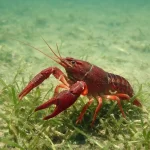
Red swamp crayfish (Procambarus clarkii)
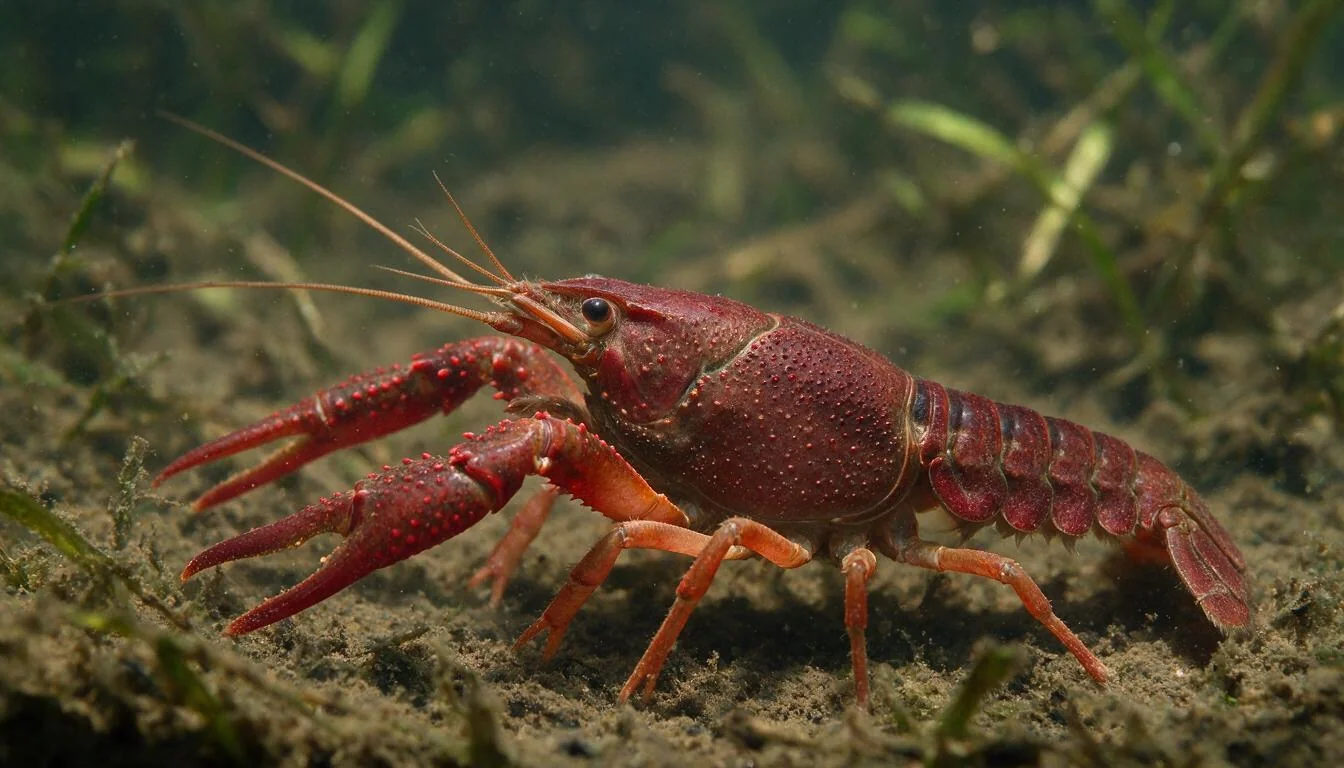
The South's commercial crayfish, and the most widely introduced crayfish on earth.
- Identification: Dark red body with raised bright-red bumps on the claws and shell, a blue-gray line on the underside of the tail, a narrow areola, and claws narrower and flatter than a white river crayfish's.
- Native range: The south-central United States and northeastern Mexico, across the Gulf coastal plain.
- Introduced range: Now present in most US states outside the South and on every continent except Antarctica. In the West — California, Oregon, Nevada, the Rocky Mountain states — it is managed as an invasive.
- Habits: Digs deep burrows at the water's edge and survives dry spells sealed inside them. It tolerates low oxygen and muddy water better than most crayfish and spawns year-round in the South.
- Edible? Yes. It is the workhorse of the Louisiana industry — LSU AgCenter puts red swamp crayfish at 70 to 80 percent of the state's annual catch.
- How locals see it: In Louisiana it is money and dinner. West of the Rockies it is a problem, restricted in several states.
White river crayfish (Procambarus zonangulus)
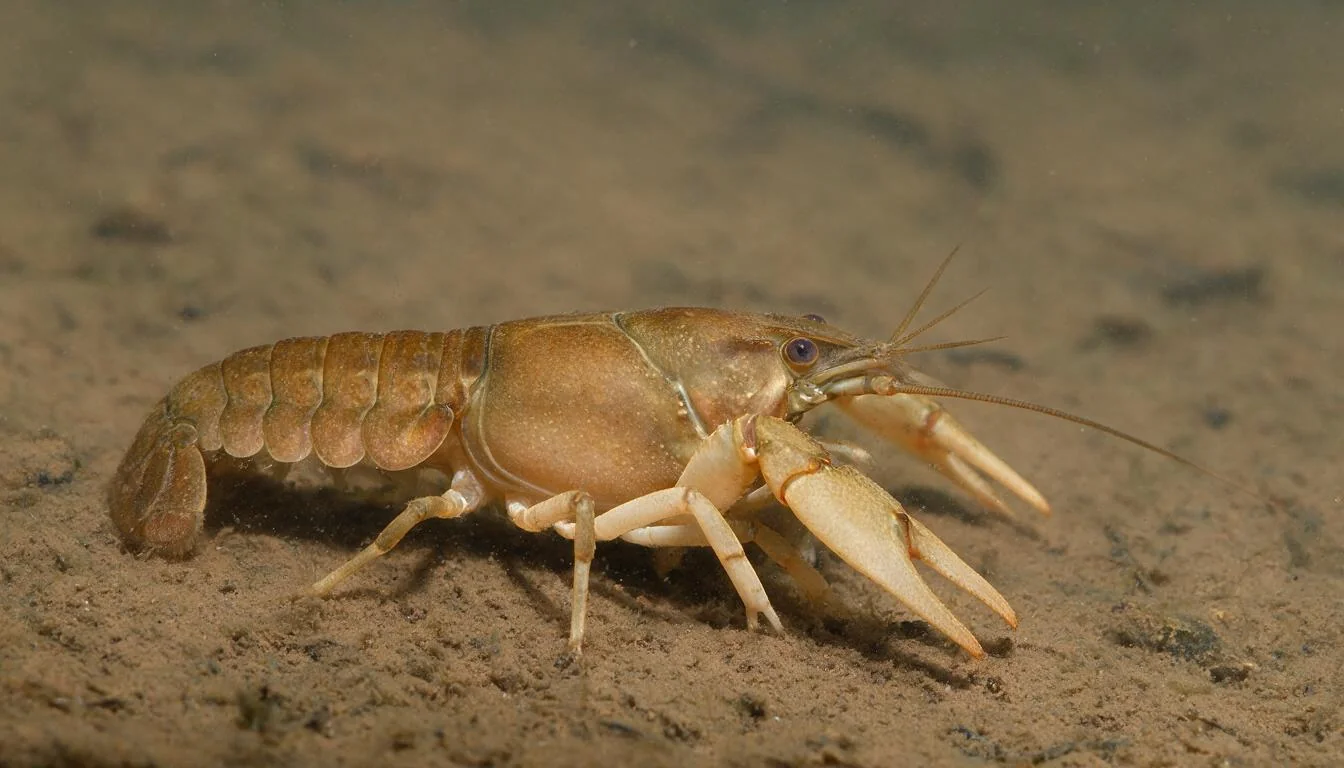
The second species in a Louisiana sack, and often the bigger of the two.
- Identification: Wide areola, no blue-gray line under the tail, longer and more cylindrical claws, lighter walking legs, and no red pigment on the body — large adults can look pink.
- Native range: Eastern Texas, Louisiana and Mississippi, and possibly Alabama — a Gulf coastal plain species found naturally nowhere else in the world. Watch the name: its Atlantic-coast relative Procambarus acutus is also called white river crayfish, and older sources often lump the two together.
- Introduced range: Rarely stocked on purpose, but it travels with farmed crayfish into ponds outside its native drainages. Older references call it P. acutus acutus.
- Habits: A fall spawner in the South, producing fewer but larger eggs than the red swamp crayfish. It grows slightly larger and does better in cooler, flowing, well-oxygenated water.
- Edible? Yes, and it is a commercially valuable species — roughly 20 to 30 percent of Louisiana's annual catch.
- How locals see it: A close second, never a nuisance. Buyers prefer red swamp; trappers rarely throw a white river back.
Signal crayfish (Pacifastacus leniusculus)
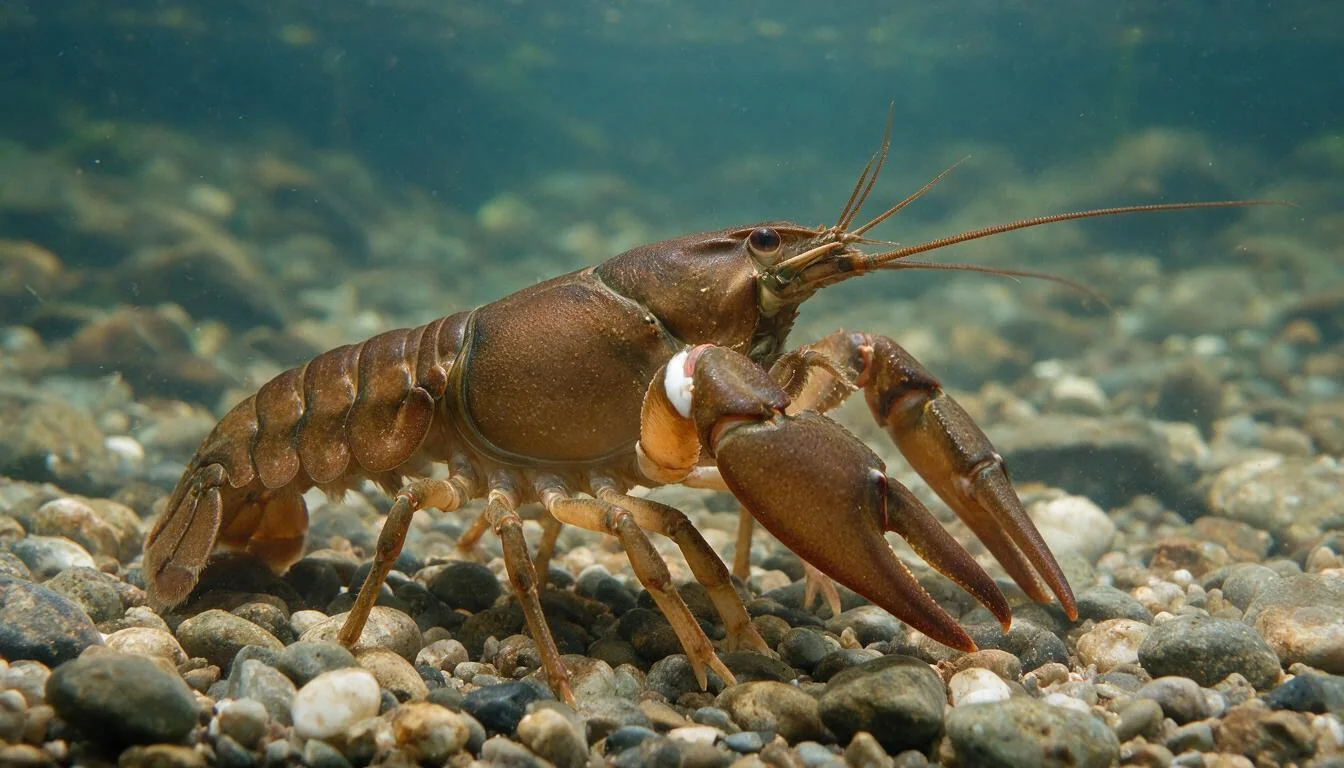
The Pacific Northwest's own crayfish, and a serious invader overseas.
- Identification: The white or pale blue-green patch at the claw hinge is the giveaway, backed by a smooth carapace and fairly uniform brownish color. Adults grow large.
- Native range: The Columbia River basin and the Pacific Northwest. It is the only crayfish species native to Washington.
- Introduced range: Widely moved for food and bait, and established in parts of California and Nevada. In Europe and Japan it is a major invasive that carries crayfish plague.
- Habits: Prefers cool, clean, well-oxygenated streams and lakes with rock and woody cover. It burrows less than red swamp crayfish and needs better water quality.
- Edible? Yes. It is the West Coast food crayfish and has long been shipped east to fill the gap when Southern ponds are dry.
- How locals see it: Washington treats it as its own and restricts other crayfish. In Europe and Japan it is the villain.
Rusty crayfish (Faxonius rusticus)
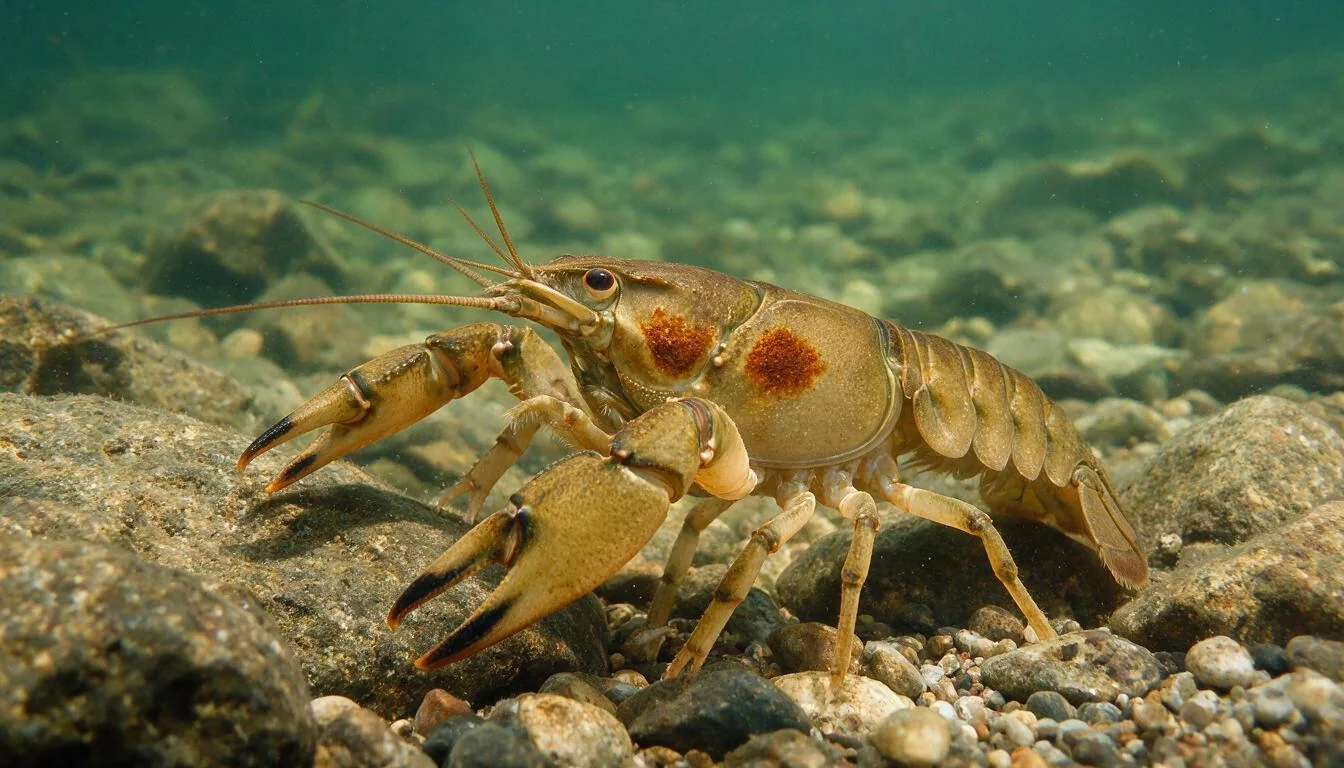
The Midwest's most wanted crayfish, and the reason bait buckets get checked.
- Identification: One dark rust-red spot on each side of the carapace, big grayish-green claws with black bands near the tips, an oval gap that stays open when the claws close, and a dark patch on the abdomen. Adults reach about four inches.
- Native range: The Ohio River basin — parts of Ohio, Kentucky, Indiana and Tennessee.
- Introduced range: Detected in roughly 20 to 28 states, including the Great Lakes states, New England and scattered western waters. Bait-bucket dumping is the main cause of the spread.
- Habits: Aggressive and fast-spreading, and it eats two to three times as much per day as native crayfish. Unlike many crayfish it cannot burrow away from bad conditions, so it needs clear, oxygenated water year round. It hides by day and feeds in the shallows at night.
- Edible? Edible, but most states would rather see it dead than kept. Some require anglers to kill it immediately and never return it to the water.
- How locals see it: It carries a high-risk invasive rating across the Midwest and Great Lakes. Moving one alive between waters is the worst thing you can do with it.
Virile crayfish (Faxonius virilis)
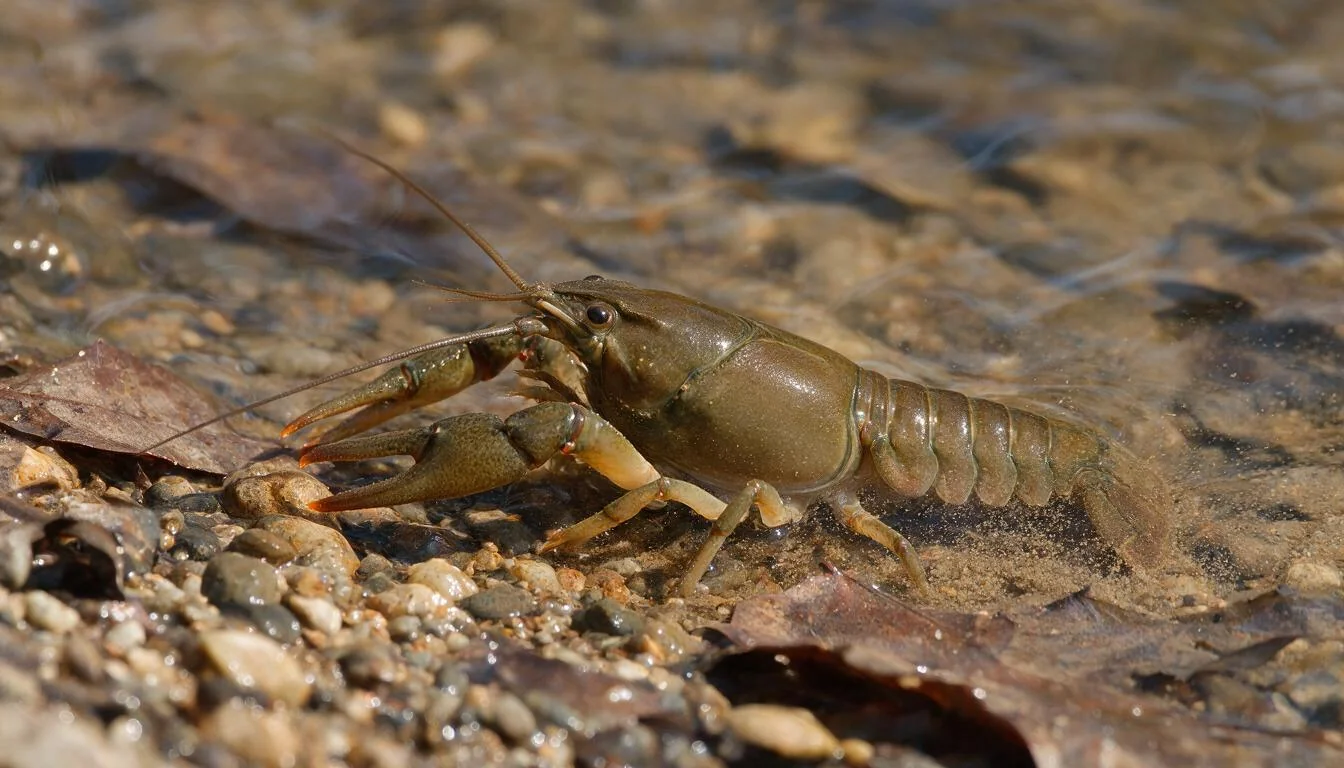
The big, plain northern crayfish that turns up in a lot of bait buckets.
- Identification: Olive-brown to reddish-brown and large, up to about five inches. The greenish claws are studded with pale knobs and usually tipped in orange rather than ringed with black, and it lacks the bold rusty side spots.
- Native range: The Great Lakes, Missouri River, upper Mississippi and lower Ohio drainages, plus waters east of the Continental Divide in Montana.
- Introduced range: It spread steadily eastward through bait-bucket releases and is now widespread in the Chesapeake watershed and other Atlantic drainages, where several states treat it as invasive.
- Habits: Adaptable in lakes, rivers and reservoirs. It hides under rock and wood by day, feeds at night, and tolerates a wider range of water quality than rusty crayfish.
- Edible? Yes, and it is one of the larger common species. In the North its main commercial role is bait.
- How locals see it: A familiar native in the Midwest and an unwanted arrival further east, which is why it gets confused with rusty crayfish so often.
Spinycheek crayfish (Faxonius limosus)
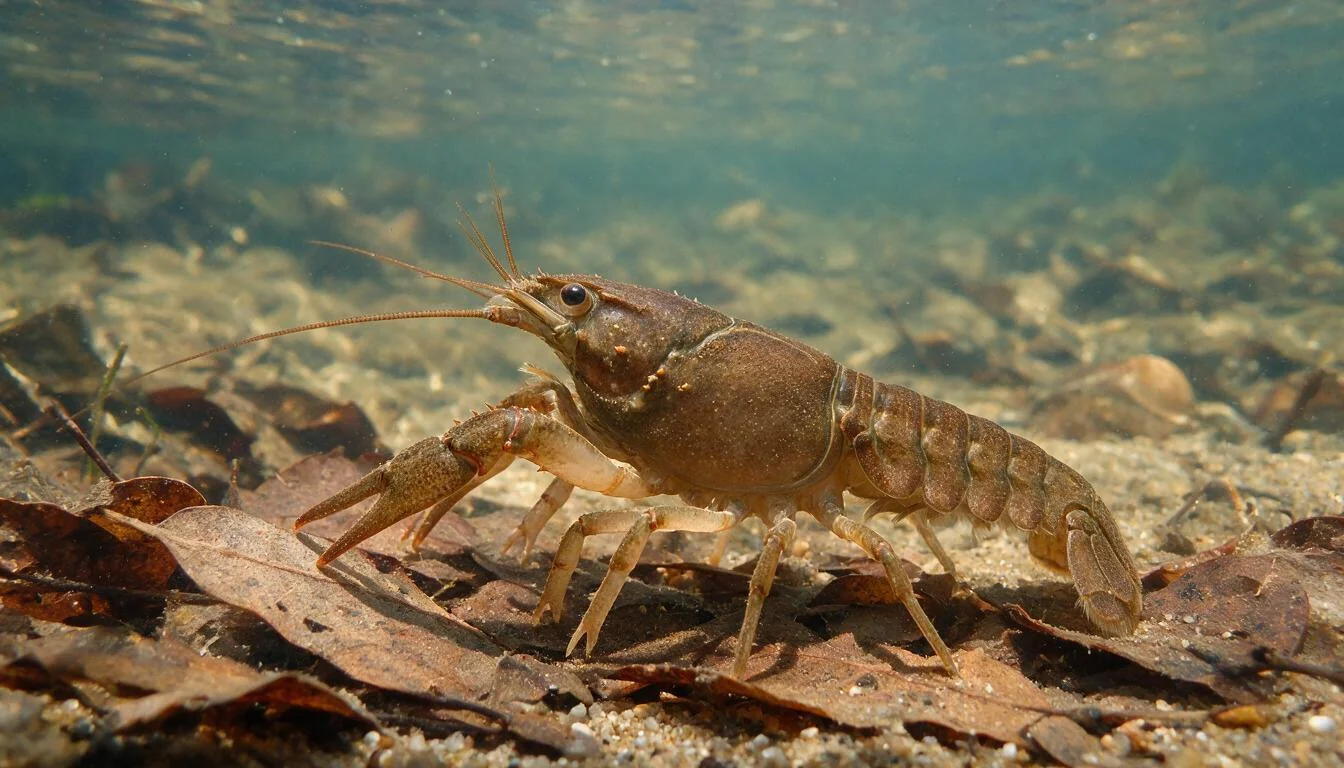
The everyday crawdad of Northeast and Chesapeake streams.
- Identification: Small spines on the side of the head just behind the claw, a brownish-tan body, and a wide areola. The spines are the reliable mark.
- Native range: Atlantic-slope watersheds from Quebec down to the lower James River in Virginia, including New England, New York, New Jersey, Pennsylvania, Delaware and Maryland.
- Introduced range: It has not spread outside its native range in North America, but it was introduced to Europe, where it is now widespread and carries crayfish plague.
- Habits: Streams, rivers and reservoirs, including turbid and silty stretches many crayfish avoid. It burrows along the banks and is most active after dark.
- Edible? Edible but modest in size. It is better known as a bait species and an aquarium favorite.
- How locals see it: Simply the local crayfish, common enough that most Northeast anglers have handled one without knowing its name.
Which Crayfish Live Where You Fish
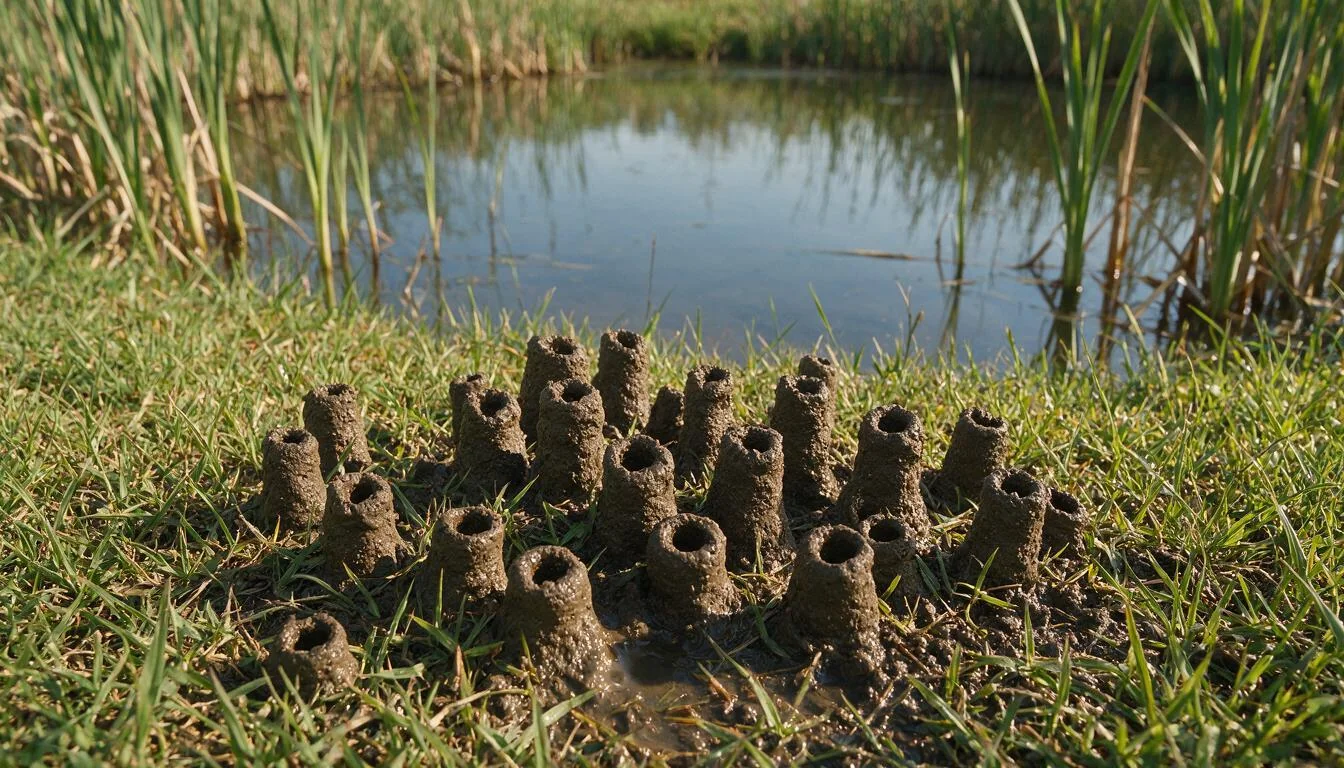
Crayfish distribution by state is uneven, and so are the rules. Use this as a starting map, not a legal document.
| Region | Species you will actually meet | What the rules usually mean |
|---|---|---|
| South | Red swamp, white river, virile | Trapping and eating are normal; commercial harvest is licensed; check seasons and limits |
| Midwest & Great Lakes | Rusty, virile, calico, northern clearwater | Live transport and live bait use are restricted or banned in several states; some require killing rusty crayfish on capture |
| Pacific Northwest | Signal, plus introduced red swamp and rusty | Tight controls on live imports; some states ban non-native crayfish outright |
| Northeast & Mid-Atlantic | Spinycheek, virile, rusty | Bait use is regulated, and a few states ban live crayfish possession entirely |
| West | Red swamp and rusty as invaders; most natives protected | Invasive-status rules; permits or import licenses may apply even to crayfish for food |
Two habits keep you legal: never move water or live animals between waters, and read the rules for the water you are actually fishing rather than relying on the state next door. Our crawfish trapping guide covers gear and technique once you know the limits.
Can You Eat Them, and Can You Take Them Home?
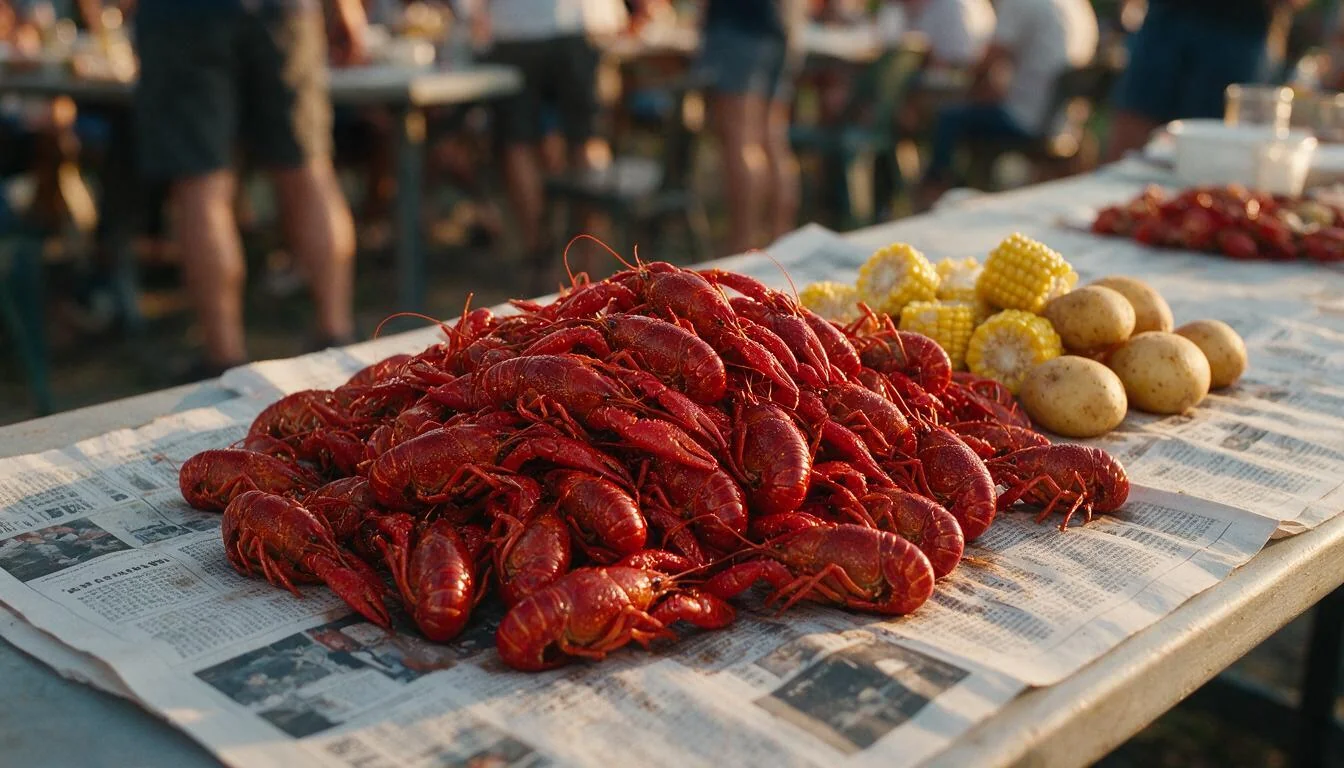
Those are two separate questions, and the second one trips up more people.
Is eating crayfish safe?
- Red swamp and white river crayfish are the two main commercial edible crayfish species in the US, with signal crayfish filling that role on the West Coast.
- Purging in clean, oxygenated water for a few hours is common practice. A salt bath does not meaningfully empty the digestive tract and can kill animals before you cook them.
- Remove the digestive tract — the dark vein down the tail — as you peel. Skip the head fat if you are unsure about water quality; that organ concentrates metals far more than the tail meat.
- Cook thoroughly. Widely used guidance is a full rolling boil for at least 10 minutes; undercooked freshwater crayfish can carry the lung fluke Paragonimus kellicotti, which has caused human illness in the Midwest.
- Avoid heavily polluted or industrial water. Crayfish live on the bottom, eat decaying material, and take up what sits in the sediment.
Can you take them home alive?
- Many states prohibit possessing or transporting live crayfish, and the Midwest is the strictest region.
- Some states require a license or permit for personal-use trapping, restrict keeping crayfish in aquariums, or ban live crayfish as bait specifically to stop invasive spread.
- A few allow live crayfish for food only, for a limited time, with a receipt or import license.
Rules vary by state, so check your own wildlife agency's current regulation before you keep a single one. The agency page is the authority; nobody at the boat ramp is.
What Crayfish Mean to Anglers
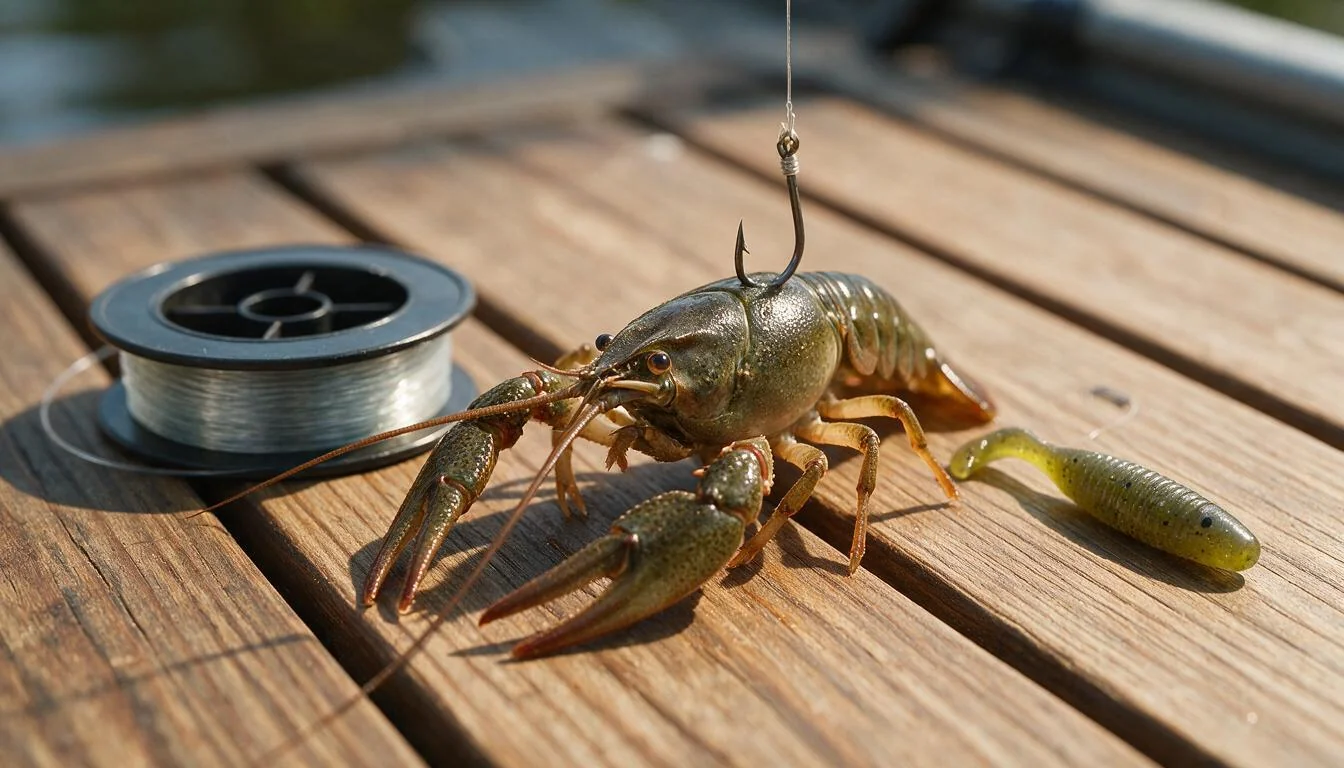
Crayfish are one of the best natural forages in fresh water. Bass, channel catfish, smallmouth, walleye and panfish all eat them, and a crayfish-heavy diet is a big reason big bass hold on rock.
- Best bait species: Virile and signal crayfish are the classic large bait crayfish. Rusty and red swamp work too where legal, but never move them between waters.
- Where they matter most: Rocky banks, riprap, gravel runs and grass-bed edges — anywhere a crayfish can hide. Fish those spots harder than open water.
- Soft plastics: A soft-plastic crayfish imitation matches the profile, color and defensive posture of the real thing. Drag or hop it along rock, and pause when it hits cover the way a live crayfish freezes.
- The legal red line: Moving live animals between waters is how rusty, virile and red swamp crayfish took over new drainages. Using crayfish on the water you caught them from is the safe pattern; hauling them home in a bucket is often illegal.
Keep bait legally and a live bait care guide covers water, temperature and aeration; where crayfish are the main forage, our channel catfish tactics lean on bottom baits and after-dark bites.
FAQ
Which crayfish species are edible?
All of them are technically edible, but the commercial US fishery runs on two: red swamp and white river crayfish, with signal crayfish filling that role on the West Coast. Large signal and virile crayfish carry worthwhile claw meat as well.
Can I keep wild crayfish as a tank pet?
Sometimes, with conditions. Several states prohibit live crayfish possession, and a few allow it only for food. Where it is legal, wild crayfish still arrive carrying parasites and need cool, well-oxygenated water, and many grow too big for a normal tank.
Is it legal to use live crayfish as bait?
It depends on the state. Some allow crayfish taken from the same water as bait; others ban live crayfish bait outright because released leftovers start new invasive populations. The rule that travels everywhere: never carry them to another water.
How do I tell a rusty crayfish from a native one?
Check the shell first. Rusty crayfish has a dark rust-red spot on each side of the carapace just ahead of the tail, and black bands near the tips of its large claws. Native look-alikes such as virile and northern clearwater crayfish have neither.
Why is live crayfish transport banned?
Live crayfish walk, burrow and breed in new water, and a single mated female can seed a population. Rusty crayfish now occupy far more states than their native Ohio River basin range, mostly through bait-bucket dumping of leftover bait.
Are crayfish from a pond safe to eat?
Usually, if the pond is clean and you cook them properly. Ponds near industrial sites, heavy road runoff or septic discharge can concentrate metals and chemicals in crayfish tissue, so purge them, remove the digestive tract and boil them thoroughly.
The Bottom Line
Six crayfish cover nearly everything a US angler is likely to pull from a trap. Learn the claw hinge, the rusty side spots and the black claw bands, and you will sort the common ones on sight.
What matters more than the name is where you caught it. Do not move live crayfish between waters, and read your state's rules before you keep one. The rest is dinner.