Fall Trout Fishing Guide: Why Autumn Is Trout Season
Fall trout fishing is the window trophy hunters circle on the calendar. While bass anglers watch the shad migration and pike anglers work weed edges, the trout crowd gets something better: water cooling into the 50s and 60s, a feeding binge before winter, and for brown trout, the spawn that makes the biggest fish of the year reachable.
If you want the complete picture of the season across every species, our fall fishing guide covers the big patterns — this article is the trout-specific playbook.
What Fall Does to Trout Water
Trout are cold-water fish with a narrow comfort band, and fall is when most waters finally enter it. Through summer, streams and lakes run in the 65-75°F range where trout are alive but cautious — holding in deep pools, shaded lies, and fast riffles to find oxygen. As surface temperatures drop into the 50s, that caution disappears.
The peak feeding zone for rainbow trout and brown trout sits between about 50 and 65°F. Fall delivers that band for weeks at a time, and every day inside it is a day the fish are comfortable enough to roam and hungry enough to chase.
Below 45°F they slow down again, but by then the season has already delivered its best fishing.
Lakes add one more piece: fall turnover. When surface water cools toward 39°F, it becomes denser than the water below and sinks, mixing the whole column. The fishing often shuts down for a week or two while the lake churns.
Once it re-stabilizes, trout spread through every depth and feed hard. Rivers skip the drama; they just cool steadily, which is why streams often fish better than lakes through late fall.
One weather note: a few warm days in September do not make it fall. Trout respond to water temperature trends, not calendar dates, so the transition lags a week or two behind the first cool nights. A steady stretch of cooling is the signal to go.
The Fall Feeding Binge and the Brown Trout Spawn
Two things happen to trout in fall, and both work in your favor.
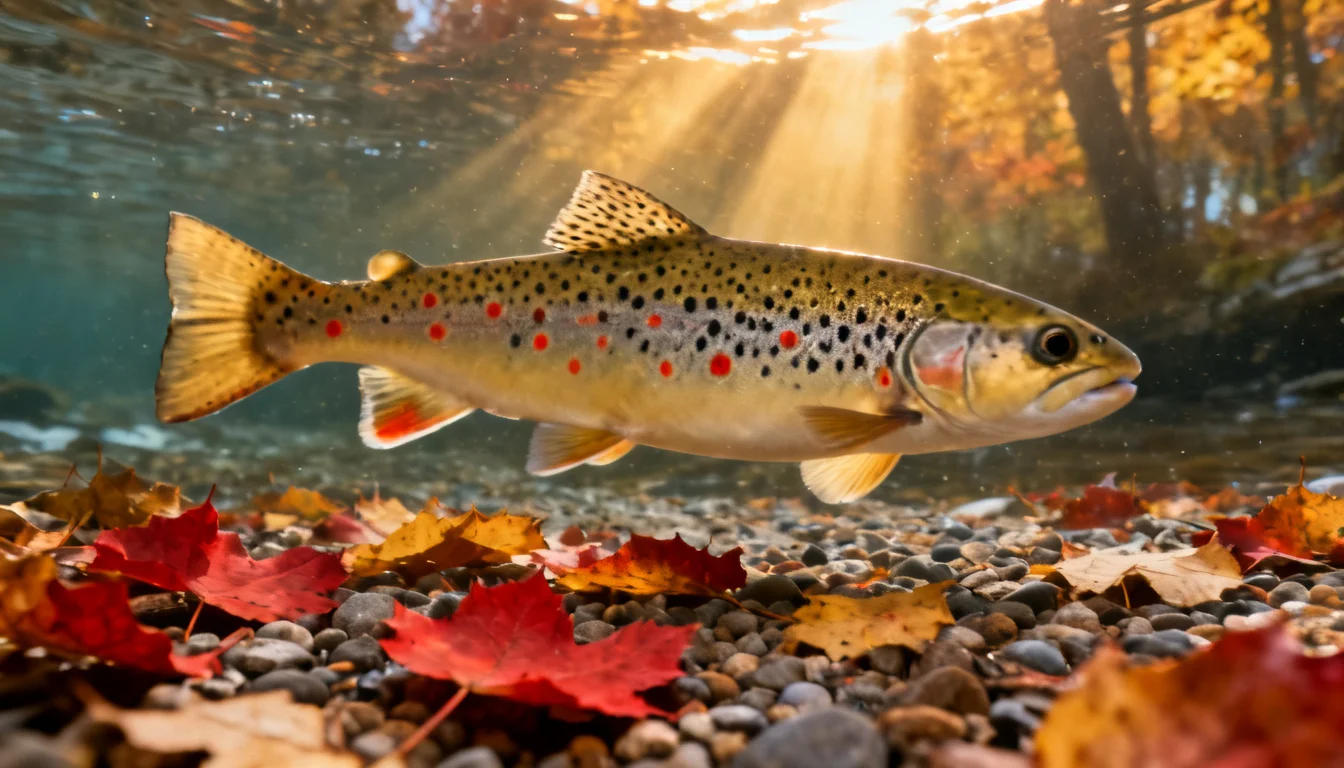
The first is the pre-winter feeding binge. Shorter days and cooling water trigger a biological signal: store fat now or starve later. Trout shift from picky to aggressive, chase baitfish instead of waiting for a drift, and strike lures that imitate a meal.
That is why fall is famous for reaction strikes on streamers and big dry flies — the fish are hunting, not snacking.
The second is spawning, and it is where the species split matters:
- Brown trout spawn in the fall. From October into December, browns leave their summer lies and move onto gravel riffles and tributary runs to dig redds. Before and during the spawn they feed hard — this is the best window of the year for big browns, and our brown trout stream tactics go through it in detail.
- Rainbow trout spawn in the spring. Most rainbows don't spawn in fall at all. The exception is the Great Lakes steelhead run: lake-dwelling rainbows surge up tributaries from October through November. They are not spawning yet — the spawn happens the following spring — but they stage, feed, and fight like fish twice their size.
- Brook trout and lake trout also spawn in fall. Brookies dig redds in headwater streams from late September into November, and lake trout move onto rocky shoals to spawn under cover of darkness. Their pre-spawn feeding adds to the general fall action in cold northern waters.
There is an old Chinese angling line — 秋钓阴, "in autumn, fish the shade" — and it fits trout perfectly. In early fall the sun still warms the shallows, so the fish hold on the shaded side of the current and under overhanging cover. Find the shade, find the trout.
Where Trout Hold in Fall: Rivers and Lakes
Fall trout locations depend on whether you fish moving water or still water.
In rivers and streams, trout follow the same food lanes they always use, but they move more and hold slightly deeper as the water cools. The classic lies — riffle tails, pool heads, seams, and undercut banks — all produce, with one adjustment: as leaves fall and light levels drop, trout feel safer and slide into shallower water more often. The deeper pools still hold the biggest fish. If you are new to reading a stream, our trout lies map shows exactly where the fish stack up.
In lakes, fall changes the whole depth game. Through summer trout hug the thermocline and the deep, oxygenated band; in fall, after turnover, that band disappears and the fish roam. Focus on:
- Stream inlets, where cooler, oxygenated water pulls trout in and baitfish follow.
- Wind-blown points and shoals, where waves push baitfish — and trout move up to feed on them.
- Shallow flats in low light, where trout slide up to chase minnows at dawn and dusk.
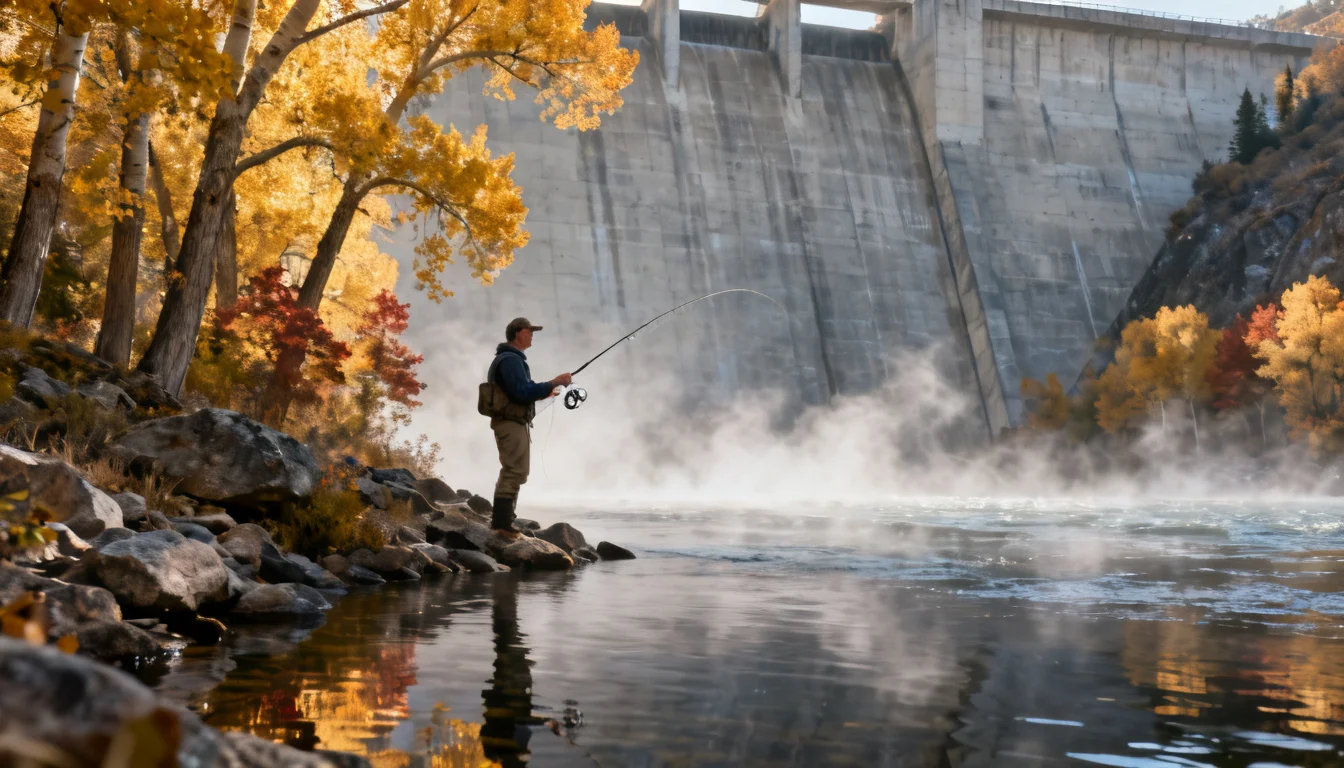
- Tailwaters below dams — the fall secret weapon. Rivers like the White River in Arkansas and the San Juan in New Mexico hold mid-40s to 50s water year-round, so they fish well even when mountain streams have turned cold.
Fall Trout Gear: Light Line, Streamers and Egg Patterns
Fall calls for the same light tackle trout demand all year, with one upgrade: bigger offerings. If you remember one fall trout fishing tips list, make it this — light line, dark streamers, and eggs in your box.
Line and leader. Trout are line-shy, so 4-6 lb test monofilament (or 5X-6X tippet on a fly rod) remains the standard. Fall fish are bigger on average, but they are no less cautious — don't trade stealth for strength. A 9-foot, 5-weight fly rod handles everything from dry flies to streamers; a spinning rod with a light line spooled on covers the same water with lures and bait.
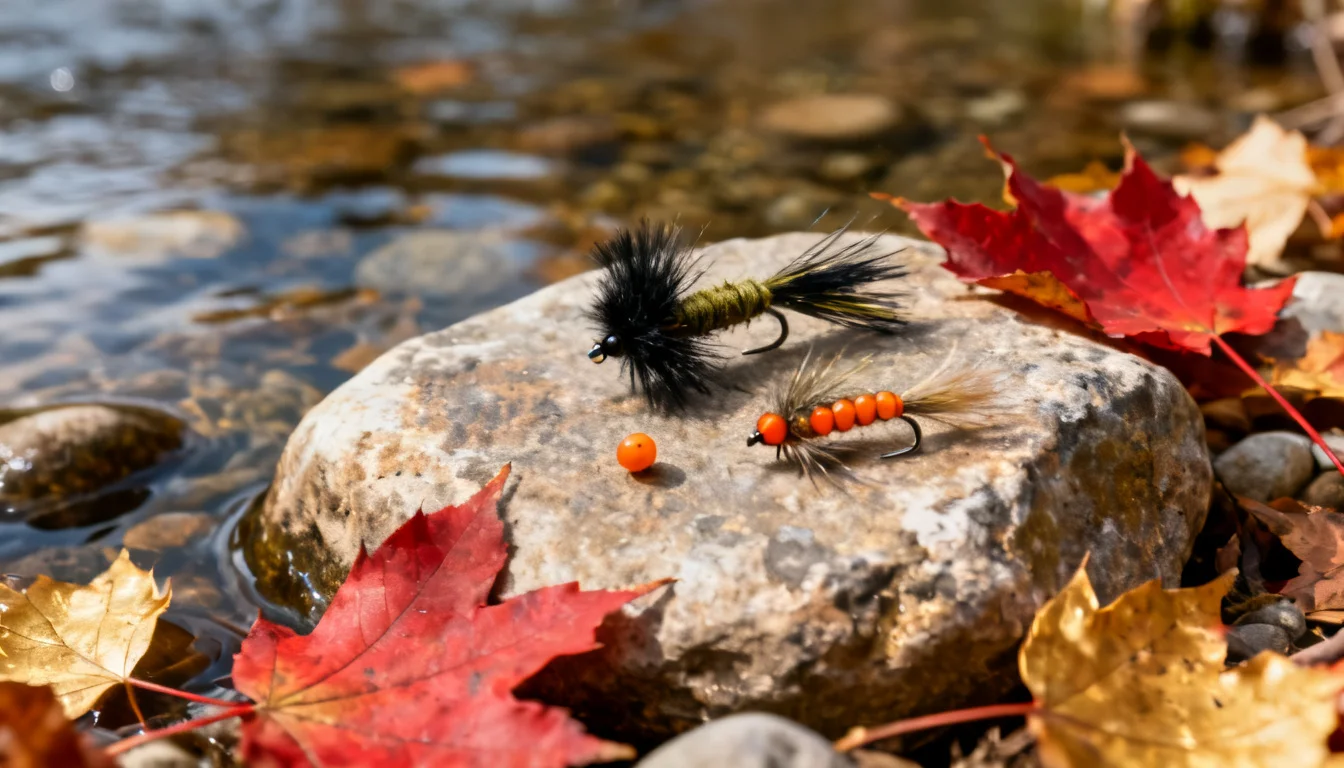
Streamers. The fall workhorse. Fall trout streamers come in a few proven sizes, and every trout angler has a favorite — but the pattern matters less than the presentation. Fish a streamer slowly through deep pools and along current edges, and it produces strikes that nothing else will. Woolly Buggers, Muddler Minnows, and sculpin imitations in olive, black, and brown cover most days. Fish them on a sinking line or with split shot, dead-drift or with slow strips — fall trout want the meal, not the chase.
Egg patterns. During the brown trout spawn — and on Great Lakes tributaries during the steelhead run — trout key on fish eggs. A small cluster of orange or pink egg yarn drifted through a redd or a run filled with spawners outfish most other flies. It is the one time of year an egg pattern is worth having in every box.
Spinners and spoons. For spin anglers, inline spinners in gold and silver (1/8 to 1/4 oz) and small spoons remain the universal trout lures; in fall, work them slower and deeper than you would in spring, letting them flutter past likely lies.
Big dry flies. Early fall is hopper season. Grasshoppers and other terrestrials tumble into streams on windy days, and trout smash them. A size 8-12 foam hopper drifted along grassy banks is the most exciting fall fishing there is — the takes are visible, violent, and frequent.
Fall Trout Fishing by Region
Fall arrives at different times across the country, and each region has its own headline act.
North — Great Lakes and Upper Midwest. The steelhead run is the story. From October through November, lake-run rainbows stack in Michigan, Wisconsin, New York, and Ontario tributaries, fresh from the lake and full of fight — the rainbow trout fishing guide covers the run in detail. Big lake browns run the same rivers, and brook trout spawn in headwater streams. This is the region's most reliable big-trout window of the year.
Northeast and Appalachians. Classic brown trout water. October through December brings the brown spawn on streams like the Battenkill, the Letort, and the tailwaters of Pennsylvania and the Virginias. Cool, steady weather makes for long fishing days, and the pre-spawn browns are as aggressive as they ever get.
West — Rockies to the coast. Mountain streams cool early, so fall fishing can be brief but spectacular. September and October deliver hopper action and big browns moving up to spawn; tailwaters like the Missouri in Montana and the Green in Utah fish well into late fall on nymphs and streamers.
South — tailwater country. The White River system in Arkansas and the San Juan in New Mexico are year-round trout fisheries, and fall is one of their best seasons — stable mid-40s to 50s water, big browns staging to spawn, and far fewer anglers than summer weekends. A 20-inch brown from a southern tailwater is a realistic fall goal.
FAQ
How should you fish during fall turnover?
Fish slow and stay flexible. While the lake mixes, trout suspend and scatter, and the bite can shut down for a week or two — so slow down, fish tight to structure, and cover several depths instead of committing to one.
Or move to a river or tailwater that skips the turnover entirely. Once the lake re-stabilizes, the post-turnover period is often the best fishing of the fall.
What do trout eat in the fall?
Their diet shifts from insects toward protein. Aquatic insects — mayflies, caddisflies, and midges — still matter, especially during late hatches. But as the water cools, trout key on baitfish like minnows and sculpins, and during spawning runs they eat fish eggs of other salmonids.
Terrestrial insects — grasshoppers above all — matter early in the season on windy days. Match that progression: streamers and egg patterns early, nymphs and small streamers as the season deepens.
Is fall the best time to catch big trout?
For most waters, yes. The pre-winter feeding binge makes big fish more willing to chase than at any other time of year, and the brown trout spawn pulls the largest fish into predictable, reachable lies. A 20-inch brown, a 5-pound rainbow, or a fresh Great Lakes steelhead is more likely in fall than in any other season.
The one caveat: big fish are still cautious, so approach every lie with the same stealth you use in summer.
Why do steelhead run in fall if they spawn in spring?
Steelhead are lake-dwelling rainbows that run up tributaries from October through November — but the run is a staging migration, not a spawn. They move into the rivers early to position themselves for the spring spawn, which happens from roughly March through June.
During the fall run they are aggressive and hungry, which makes them one of fall's best big-fish targets. Tailwater populations below dams can deviate from the spring pattern, but on most waters a fall steelhead you catch is staging, not spawning.
How deep do trout go in the fall?
It depends on the water. In rivers, trout hold in the same depth range as always but favor the deeper pools — typically 3 to 8 feet in small streams, deeper in big rivers.
In lakes, fall is the great equalizer: after turnover, trout use the whole column, from shallow flats at dawn and dusk to 15-25 feet in the middle of the day. Work from the surface down until you mark fish, then fish that band.
The Bottom Line
Fall trout fishing delivers the best combination of aggressive fish, big fish, and comfortable weather of the whole year. The feeding binge puts trophies in reach, the brown trout spawn pulls the biggest fish into predictable lies, and the Great Lakes steelhead run adds a shot of pure power.
Fish the shade in early fall, work streamers and egg patterns through the deeper lies, and don't ignore tailwaters when the mountains turn cold. Whether you chase a spawning brown on a gravel riffle or a fresh steelhead in a Great Lakes tributary, the water is cooling — and the trout are finally ready.