
How to Cast a Spinning Reel: A Step-by-Step Guide for New Anglers
If you have ever stood on a bank with a rod in your hands and no idea how to send the bait out, you are in the right place. Learning how to cast a spinning reel is the single most useful skill a new angler can pick up, and it is easier than it looks.
Once the basic motion clicks, you will spend less time untangling line and more time actually fishing.
This guide walks you through every step, from how to hold the rod to the exact moment you let go of the line. No jargon, no gear snobbery — just the mechanics, the common mistakes, and the practice drills that turn a clumsy first cast into a clean one.
New to the whole sport? Start with our fishing for beginners guide, then come back here for the casting lesson.
Baitcaster vs Spinning Reel: Why Spinning Is Easier for Beginners
The spinning reel has one huge advantage over every other reel type: the spool does not spin during the cast. On a baitcaster, the spool rotates as the line flies out, and if it spins faster than the line leaves, the line tangles into a "bird's nest" — the famous backlash.
Stopping that tangle is what thumb control is for, and it takes hours of practice.
A spinning reel works the opposite way. The spool stays fixed while the line peels off in coils, so there is nothing to overrun and no thumb needed. That makes it the default choice for beginners, and it is also why the pros use spinning gear when they need to cast light lures that a baitcaster simply cannot throw.
The trade-off is line twist, which we will get to in the mistakes section.
How to Use a Spinning Reel: The Parts You Need to Know
Before the cast, find these four parts on your reel. Each one does a specific job.
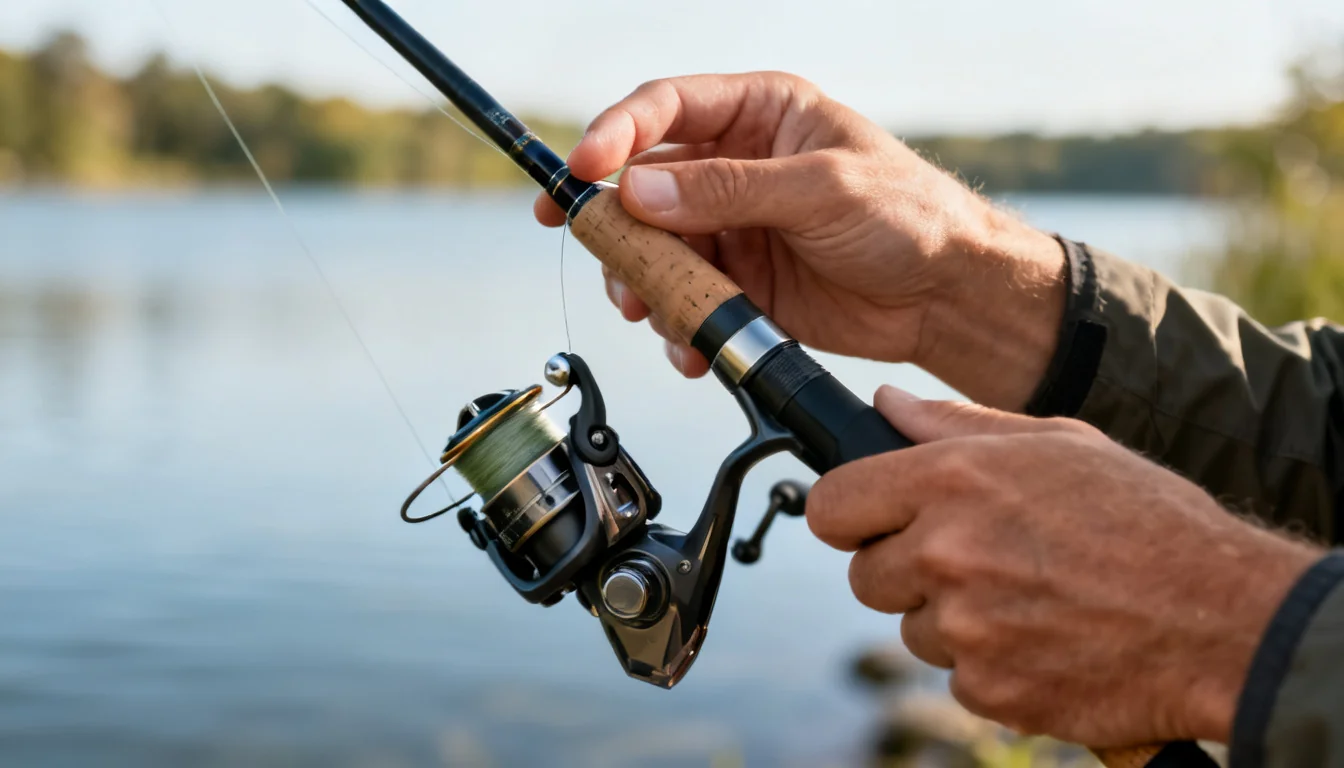
- The bail — the wire arm that flips over the spool. When it is up, line runs free. When it is down, line is caught and the reel retrieves.
- The spool — the fixed, non-rotating drum that holds the line.
- The line roller — the small wheel on the bail that the line passes over, which keeps friction low and prevents wear as you reel. The spool itself moves up and down as you crank, and that oscillation is what lays the line on evenly.
- The drag — the knob on top of the spool (or on the back of some reels) that lets line slip out under pressure, so a strong fish cannot snap your line.
You do not need to understand the internal gears to cast well. What matters is the relationship between the bail and the line: line runs free when the bail is up, and it stops when the bail snaps down.
If you have not bought your first setup yet, our how to choose your first fishing rod and reel guide covers the sizes and combos that make learning easiest.
How to Cast a Fishing Rod: The Overhead Cast, Step by Step
This is the cast you will use 90% of the time — the overhead cast. Do it slowly at first. Speed comes later; clean mechanics come first.
Step 1 — Hold the rod correctly. Grip the rod with your dominant hand, reel underneath the rod. Slide your hand so the reel stem sits between your middle and ring fingers, with your index finger extended along the rod. This grip keeps the rod balanced and frees your index finger for the next step.
Step 2 — Pinch the line. Press the line against the rod blank with the pad of your index finger, just above the reel. This is the "line finger" position. The line must be held firmly enough that it cannot slip out, but not so tight that you fight it later.
Step 3 — Open the bail. With your free hand, flip the bail over so it stands open. Your pinched line is the only thing keeping the line on the reel now. If you open the bail first and then try to pinch, the line can slip off the spool and tangle before you even cast.
Step 4 — Check the drop. Let the lure or bait hang about 12 to 18 inches below the rod tip. Too little line and you cannot build any rod bend; too much and the lure swings wildly.
Step 5 — The back cast. Raise the rod tip smoothly until it points back at roughly one o'clock, letting the rod load up. Do not rip it back. A smooth sweep loads the rod's flex, and that flex is what throws the lure.
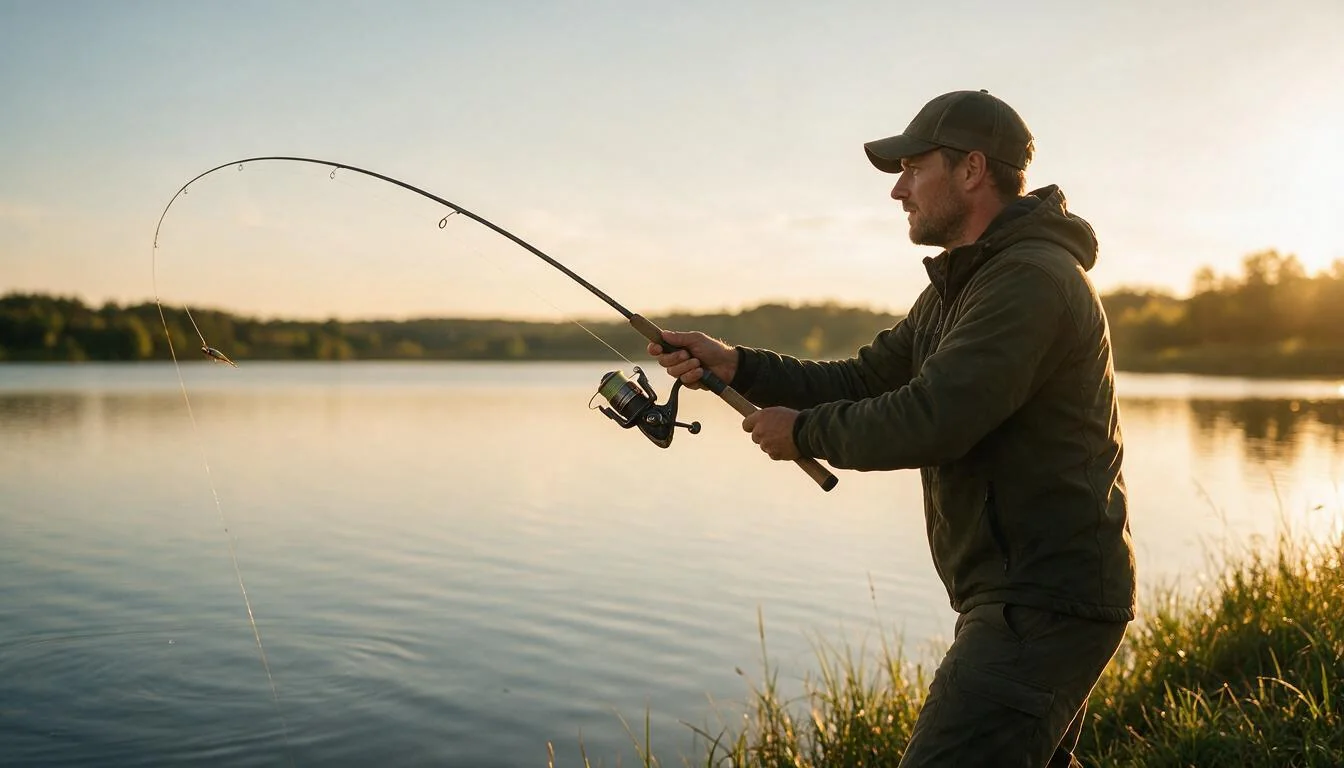
Step 6 — The forward cast and release. Sweep the rod forward with a smooth, accelerating motion. Release your index finger when the rod tip is at about ten o'clock, pointing at your target. This timing — not arm strength — is what makes the cast go far and straight. Release too late and the lure slams into the water at your feet; too early and it lobs straight up.
Step 7 — Let it fly. The lure pulls line off the spool until it lands. Watch it, and do not reel yet.
Step 8 — Close the bail by hand. The moment the lure hits the water, flip the bail closed with your hand. Do not crank the handle to close it — reeling the bail shut twists the line, and twisted line is wind-knot fuel. Then point the rod at the lure and reel in the slack.
That is the whole cast. Open bail, pinch, sweep back, sweep forward, release, close the bail by hand. The entire motion takes about two seconds once you have the feel.
Casting Farther and More Accurately
Once the basic cast works, two things matter: distance and accuracy. Both come from the same place — using the rod, not your muscles.
- Match the weight to the rod. Every rod has a lure-weight range printed on the blank, something like "1/4–3/4 oz." Casting a lure inside that range loads the rod properly and gives you maximum distance. Too heavy and the cast is dead; too light and the rod cannot load.
- Accelerate smoothly, then stop. The rod does the throwing. A smooth acceleration into a firm stop at ten o'clock whips the tip forward. Jerking the rod just shakes the lure and kills distance.
- Let the rod tip lead. Point the rod at the target during the forward sweep, not up at the sky. The release point and the rod's direction decide where the lure goes.
- Control short casts with the stop. For a soft, short presentation — say, dropping a worm along a bank — stop the rod higher and release later, easing the lure out instead of launching it.
- Keep the spool filled. Line capacity affects casting distance more than beginners expect. A spool filled to about an eighth of an inch below the rim casts noticeably farther than a half-empty one, because the line leaves the spool with less friction.
Common Casting Mistakes Beginners Make
Every new angler makes these. Recognize them early and they stop costing you fishing time.
Cranking the handle to close the bail. The number one line-twist factory. Every time the bail snaps shut from a handle turn, the line twists. Close it by hand, always.
Releasing the line at the wrong moment. This is the difference between a soaring cast and a tangled pile at your feet. If your casts are inconsistent, fix the release timing before you change anything else.
Overfilling the spool. Line that sits flush with or above the spool rim comes off in giant loops and tangles the moment it hits the guides. Fill to an eighth of an inch below the rim, no more.
Reeling against the drag. When a fish runs and takes line, and you keep cranking, the line twists around itself. Let the drag do its job, then reel.
Casting with a limp wrist. A floppy wrist turns the rod into a noodle and robs the cast of power. Keep the wrist firm and let the forearm and rod do the work.
Forgetting to check your surroundings. Power lines, overhanging branches, and other anglers are all part of the pre-cast check. One second of looking saves a lot of trouble.
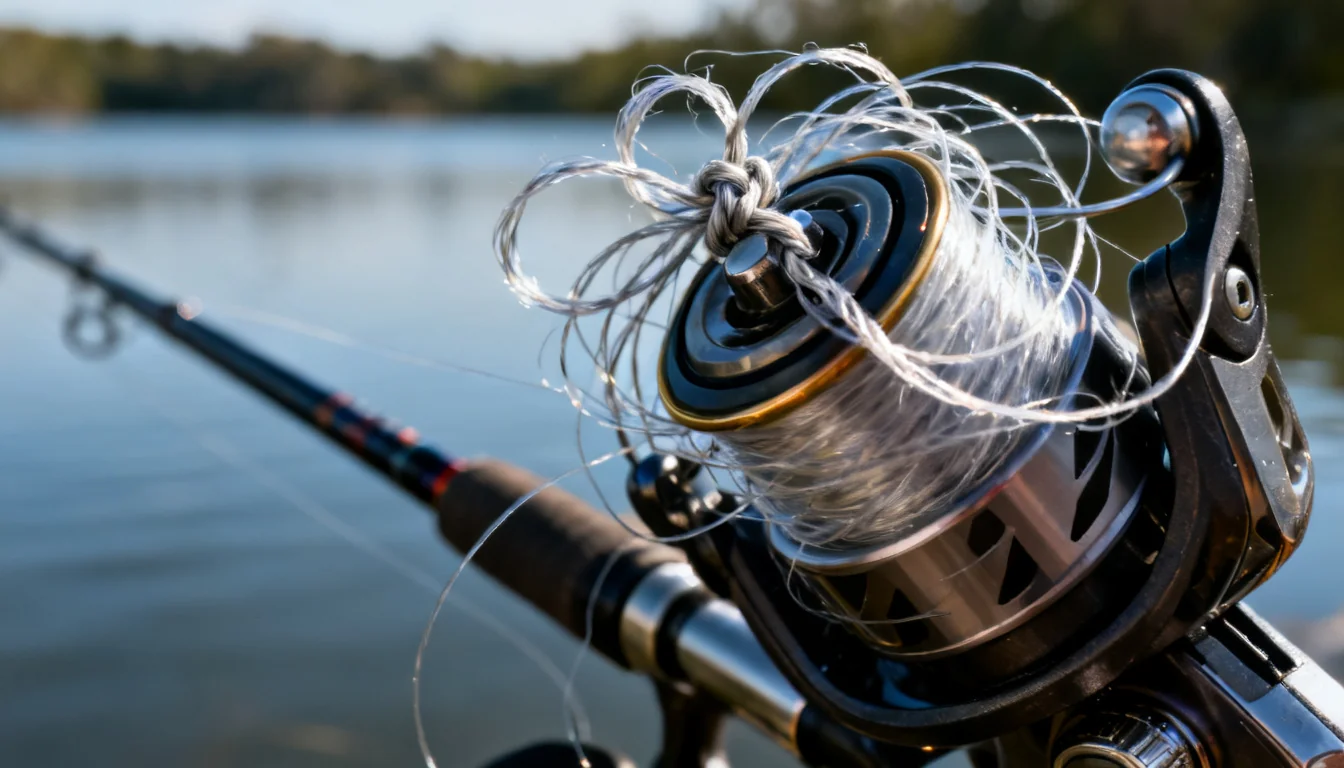
Wind knots deserve a special mention because they plague spinning reels specifically. They are the tangled loops that appear mid-line after a cast, and they come from line twist — the result of the mistakes above. When a wind knot happens, cut it out rather than picking at it; a knotted line is a weak line.
If you want the full rundown on line types and when to use what, our fishing line basics guide explains mono, fluorocarbon, and braid. And for the broader list of rookie errors, see 10 common fishing mistakes — a few of them will look familiar.
Practice Drills: Learning to Cast Without Water
You do not need a lake to learn how to cast a spinning reel. A yard, a practice plug, and a target are enough.
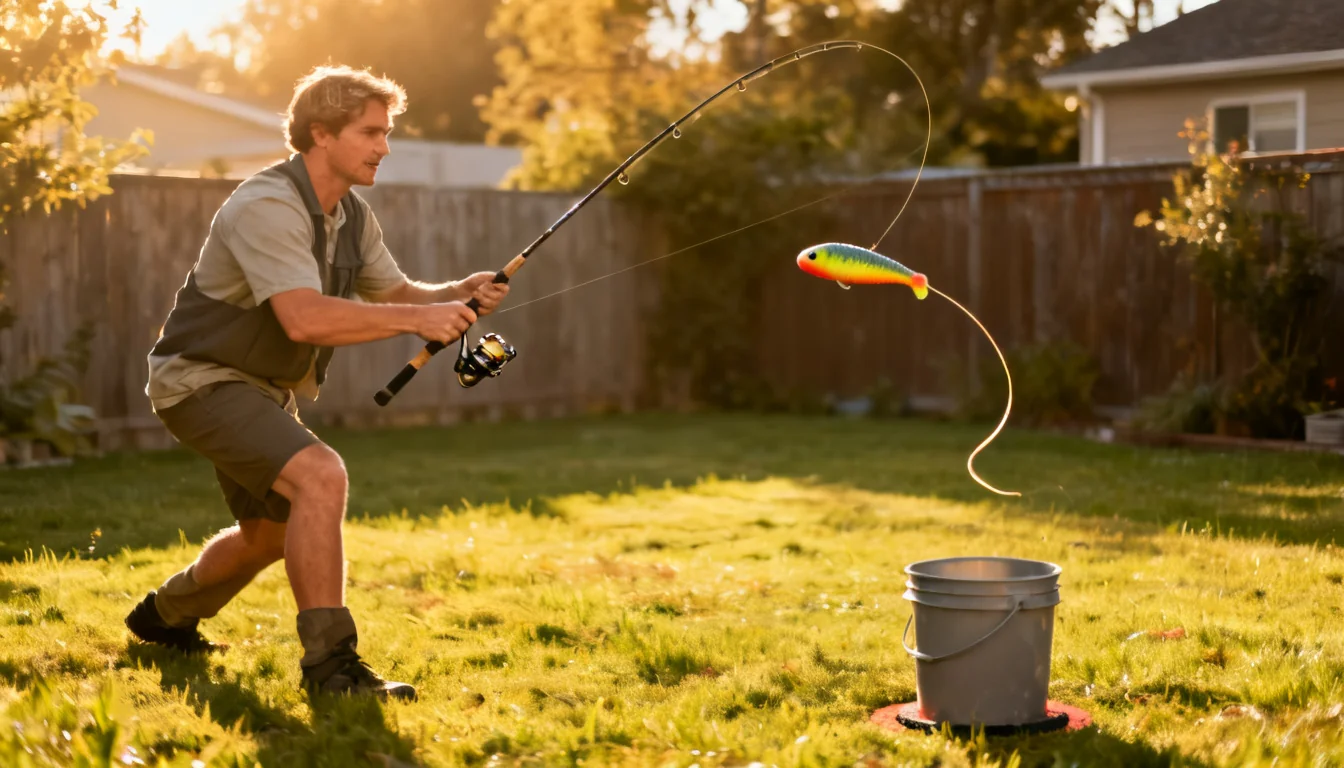
A practice plug is a weighted rubber lure with no hooks — cheap, safe, and designed for exactly this. Tie it on, and use a bucket or a hula hoop as your target.
- Drill 1 — The empty cast. Ten minutes of overhead casts, no target, just working on the smooth sweep and the release timing. Watch where the plug lands and adjust.
- Drill 2 — Distance ladder. Mark your longest cast, then try to beat it by five feet. This teaches you to load the rod harder without muscling it.
- Drill 3 — Bucket practice. Aim at the bucket from ten feet, then twenty, then thirty. Short, soft casts are the hardest to control, and this drill builds the touch you will need for real fishing.
Ten minutes a day for a week, and you will outcast most people on the bank. When you are ready to try it on real water, how to fish a lake walks you through picking a spot and rigging up for your first trip.
FAQ
Why does my spinning reel line keep twisting and tangling?
Line twist is almost always caused by reeling against the drag, cranking the handle to close the bail, or fishing with an overfilled spool. The fix is prevention: close the bail by hand, let the drag slip instead of fighting it, and keep the spool filled an eighth of an inch below the rim.
If the line is already twisted, strip it off and trail it behind the boat or across the current with no lure attached — the water will untwist it.
Can a spinning reel backlash like a baitcaster?
No, not in the same way. A baitcaster backlashes because the spool spins faster than the line leaves it, and there is no thumb to slow it down. A spinning reel's spool does not rotate during the cast, so a classic bird's nest cannot happen.
What spinning reels do instead is wind knots, caused by line twist. Prevent them the same way you prevent twist: close the bail by hand, keep the spool filled below the rim, and never reel against the drag.
How far should a beginner be able to cast a spinning reel?
With a 6'6" to 7' rod and a 1/4-ounce lure, most beginners reach 50 to 80 feet within the first week of practice. Distance comes from smooth acceleration and matching the lure weight to the rod, not from throwing harder. Expect slow improvement — five more feet a week is a realistic, healthy pace.
How long does it take to learn to cast a spinning reel?
Most people get the basic motion working in their first session — ten or fifteen minutes of practice. Consistency takes longer. Plan on a week of short daily practice sessions before casts feel reliable, and keep practicing accuracy long after that, because soft, short presentations are the hardest part of casting.
Do I need a special rod for a spinning reel?
Yes — a spinning rod. The guides (the rings the line passes through) face down, toward the reel, because the line comes off the spool underneath.
A casting rod's guides face up and would rub the line the wrong way. Any combo sold as a spinning rod and reel is matched correctly, which is another reason beginners should start with a rod-and-reel combo.
The Bottom Line
Casting a spinning reel comes down to four moves: open the bail, pinch the line, sweep and release, close the bail by hand. How to cast a spinning reel well is mostly a matter of practice — ten minutes a day with a plug, fix your release timing, and the distance and accuracy will follow.
The reel does most of the work — your job is just to stay out of its way. When the cast is dialed in, the fun part starts. Check out our easiest fish to catch guide to pick a target for your first trip.