Spring Bass Fishing: Pre-Spawn, Spawn & Post-Spawn Patterns
Spring is the best time of year to catch a big bass, and it is not close. For a few weeks each year, the biggest females in the lake abandon deep winter havens and move into water a shore angler can reach — hungry, aggressive, and full of eggs.
These spring bass fishing tips follow the fish through all three phases of the season, from the first staging grounds to the beds and back out again. The whole game is driven by one number: water temperature.
The calendar says March, but the fish only care what the thermometer says — and that is exactly what makes spring bass predictable. Learn the temperature triggers below, and you can find the fish on any lake in the country. For the full multi-species picture of the season, our complete spring fishing guide covers crappie, bluegill and walleye too.
Water Temperature: The Trigger for Spring Bass
Bass are cold-blooded, so their entire spring schedule runs off water temperature, not the date. Watch the surface temp on your fish finder or a simple floating thermometer, because the difference of a few degrees changes where the fish hold and what they will hit.
The spring progression for bass looks like this:
| Water temp | What the bass are doing | Where to find them |
|---|---|---|
| 45-50°F | Leaving winter spots, first movement toward shallows | Main-lake points, creek-channel bends, 8-15 ft |
| 50-58°F | Pre-spawn feeding binge begins; females pack on weight | First drop-offs off spawning flats, 4-10 ft |
| 58-62°F | Staging on the flats; males scout nesting spots | Flats and coves in 2-6 ft |
| 60-65°F | Nest building and peak spawning | Hard-bottom flats, gravel and sand pockets, 1-6 ft |
| 65°F+ | Spawn winds down; post-spawn recovery starts | Deep edges off the beds, nearest cover, 8-15 ft |
One rule of thumb: a stretch of three or four warm days in a row pushes bass surprisingly shallow, while a cold front shoves them back out. Fish the trend, not the forecast.
Pre-Spawn Bass: Where They Stage
Pre-spawn bass are the easiest big bass of the year to catch, and the most aggressive. The females are loaded with eggs and feeding hard to build energy, so they will chase a lure across a flat — often striking out of irritation rather than hunger. This is the window that produces the biggest bass most anglers ever land.
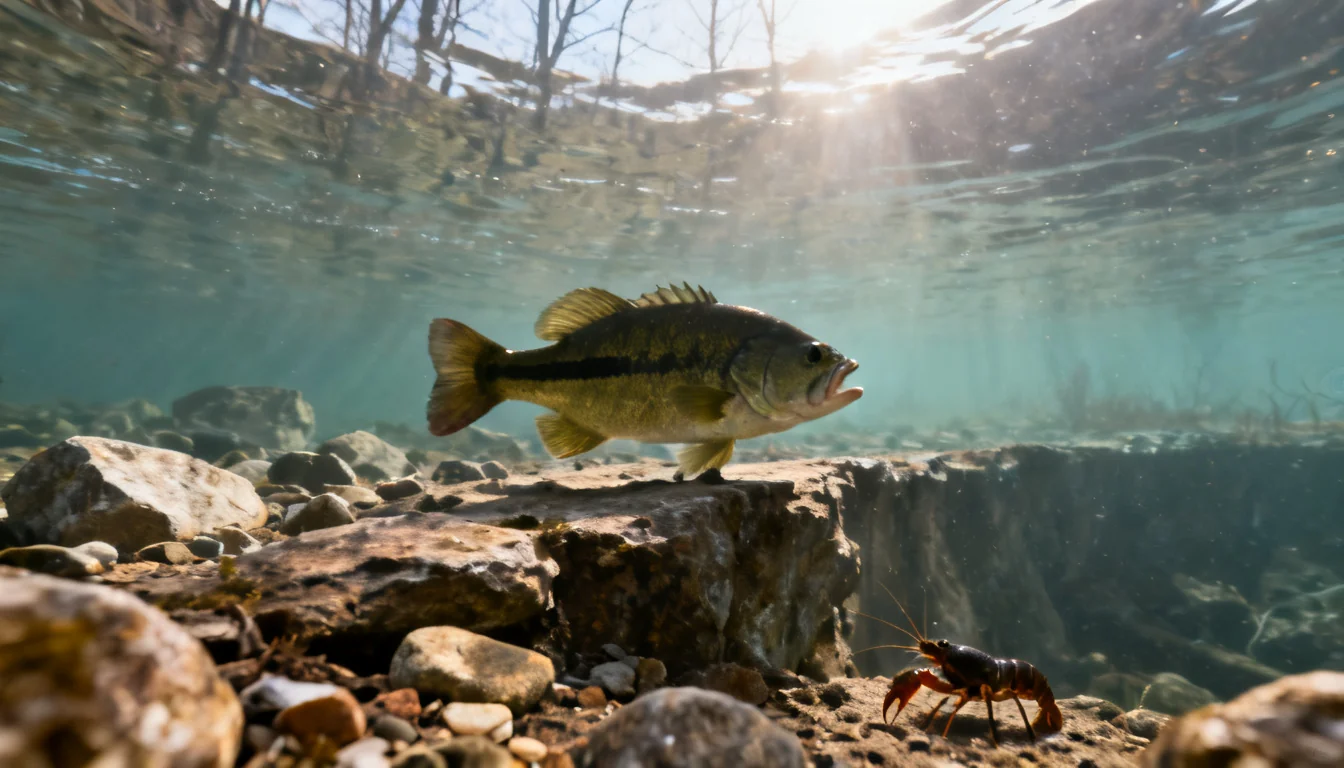
The key is finding the staging areas. Bass don't swim straight from deep winter water to the spawning flats; they stop at natural ambush points along the way. The classic pre-spawn spots are:
- Points and humps that jut toward the spawning bay — the first structure a bass meets coming out of deep water
- Creek-channel bends — the underwater highways that connect wintering holes to the flats
- Rock and riprap banks that absorb sunlight and warm first
- The first drop-off off any flat — bass hold on the deep side of the drop and slide up as the water warms
Water temperature decides the depth. Early pre-spawn (45-52°F) holds bass 8-15 feet down on those points and bends. Once the water crosses the low 50s, they move up to 4-10 feet, and by the time it hits 58-60°F they are on the flats themselves.
Presentation matters more than lure choice in cold water. Slow bottom-contact baits dominate: a jig with a craw trailer, a soft plastic creature bait, or a suspending jerkbait twitched with long pauses.
If you are not ticking bottom or pausing long enough to be bored, you are fishing pre-spawn bass too fast. For more on why bass hold where they do, our guide to where bass hide covers the structure logic in detail.
Spawning Bass: Reading the Beds
Once the water reaches about 60°F, males move onto hard-bottomed flats and start fanning out nests — clean, light-colored circles on gravel, sand, or firm mud in 1-6 feet of water. Peak spawning comes at 62-65°F. The females move in, drop eggs, and leave; the males stay and guard the nest.
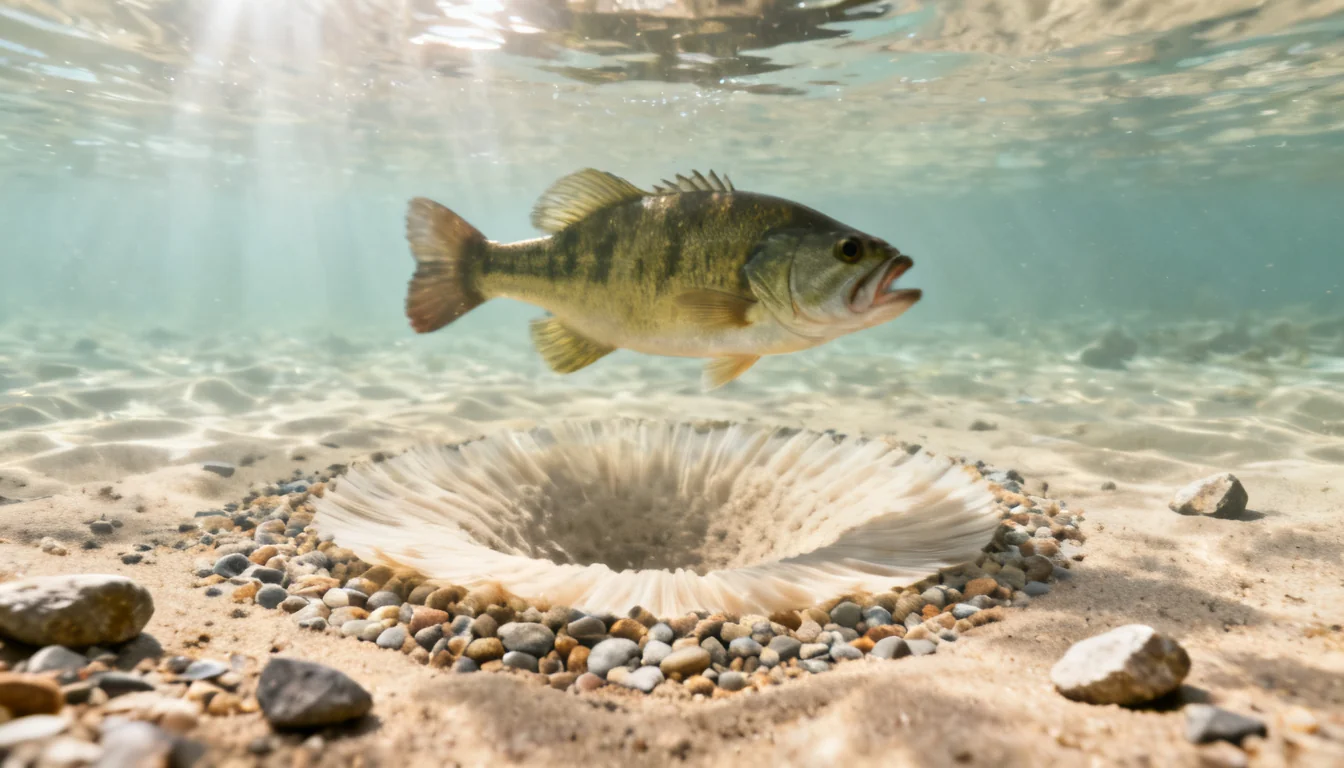
Spawning bass are the easiest to locate and the hardest to catch — and the easiest to hurt. A bass sitting on a bed is not feeding; it is guarding. That changes everything about how you fish them:
- Sight-fish them. Clear water and low spring sun make beds visible from 20-30 feet away. Polarized sunglasses are the single most important tool of the spawn — they cut the glare and let you see the nest before the bass sees you.
- Work the perimeter, not the bed. The classic play is casting past the bed and dragging a soft plastic (tube, creature bait, or craw imitation) through the nest. Fish the edges of the flats too — non-nesting males and waiting females hold just off the beds.
- Expect short, violent takes. A guarding bass hits to move the intruder, not to eat. When it grabs the bait, it often spits it fast, so set the hook the moment you feel the weight.
- Release the big ones. A female pulled off her nest during the spawn is a fish that may not lay this year. Land her quickly, wet your hands, and let her go right at the bed — she will usually return to finish.
Bed fishing is a skill that takes patience, but it is also the most visual fishing in freshwater. You see the whole strike happen. For the full rig-by-rig breakdown of putting these fish in the boat, our largemouth bass fishing guide has you covered.
Post-Spawn Bass: The Recovery Lull
The spawn ends, and for a week or two the fishing goes dead. Post-spawn bass are exhausted — the females have burned enormous energy producing and laying eggs, and they are scattered, sulking, and largely uninterested in chasing food. Anglers who don't adapt go home skunked.
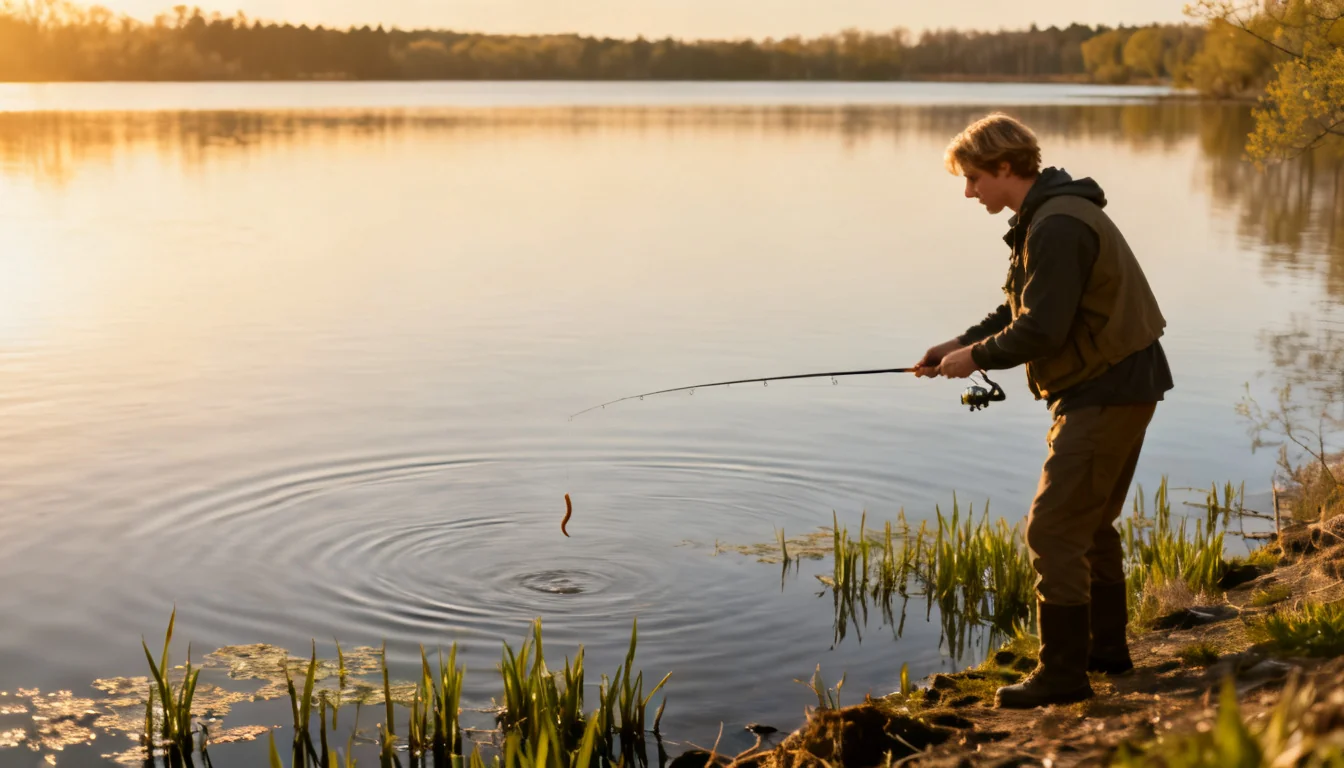
The post-spawn pattern is simple: the fish have not left the area, they have just stopped cooperating. Here is how to keep catching them:
- Downsize everything. Smaller soft plastics, smaller jigs, lighter line. A 3-inch finesse worm or a small drop-shot presentation that a tired bass barely has to move for beats a big spinnerbait every time.
- Slow the retrieve again. Post-spawn bass want easy meals. Dead-stick the worm, drag the jig, fish the drop-shot with long pauses.
- Fish the deep edge off the beds. The recovering fish slide to the first drop-off or the nearest deep cover — 8-15 feet is the typical zone, but follow the structure.
- Fish late afternoon. Post-spawn bass feed best in the last couple hours of light, when they finally work up an appetite.
The good news: the post-spawn lull is short, and it overlaps the arrival of shad and bluegill fry. The bass that were ignoring your lures start feeding again as soon as the fry show up, which sets up the transition into summer fishing patterns.
Largemouth vs Smallmouth in Spring
Spring tactics work for both bass species, but the two fish follow slightly different schedules and hold on different structure. Knowing which one you are fishing changes where you cast.
| Largemouth | Smallmouth | |
|---|---|---|
| Spring water | Prefer warmer coves and stained water | Prefer cooler, clearer water; active even below 55°F |
| Nesting | 60-65°F on soft-to-moderate bottoms, often near cover | Low 60s on gravel flats and current edges |
| Where they hold | Flats, docks, flooded brush, lily pad edges | Gravel bars, rocky points, shoals, current seams |
| Best spring baits | Jigs, spinnerbaits, soft plastics, shallow crankbaits | Tubes, craw imitations, jerkbaits, hair jigs |
The biggest difference is simple: largemouth are a warm-water fish that spawn in the protected coves, while smallmouth are a cool-water fish that spawn on hard, rocky, often wind-swept structure.
On a river, smallmouth nest along current edges where gravel collects; in a lake, they use rocky points and shoals instead of muddy coves. Our smallmouth bass fishing guide breaks down the river and lake patterns in depth.
Best Spring Bass Fishing Baits by Phase
One bait does not cover the whole season. These spring bass fishing tips apply phase by phase — match the lure to the stage, and the retrieve to the water temperature:
| Phase | Best baits | Retrieve |
|---|---|---|
| Pre-spawn (45-58°F) | Jig with craw trailer, suspending jerkbait, lipless crankbait, slow spinnerbait | Slow and bottom-hugging; long pauses between jerks |
| Spawn (60-65°F) | Tube baits, creature baits, craw soft plastics, small jigs | Short casts to beds; dead-stick through the nest |
| Post-spawn (65°F+) | Finesse worms, drop-shot, small crankbaits, topwater at dusk | Downsized and slow; speed up only in low light |
Color follows water clarity: green pumpkin, brown, and watermelon in clear water; brighter chartreuse and white when it is stained.
And remember that spring bass are feeding hard on crayfish and shad — the lures above are all imitating one or the other. For the full picture of what bass eat through the year, see our complete bass diet guide.
North vs South: Spring Bass Timing
A bass in Alabama can be on the beds while a bass in Ontario is still stacked on winter points — the same calendar date means three different fishing seasons depending on your latitude. The bass spawn windows shift accordingly:
| Region | Water hits 50-65°F | Bass spawn window |
|---|---|---|
| Florida & Gulf states | February | February-April |
| Southeast & Mid-Atlantic | March | April-May |
| Midwest & Northeast | April | May-June |
| Northern states & Canada | May | June |
The South runs weeks ahead of the North, and that cuts both ways. By May, southern bass are already acting like summer fish, while northern lakes are just hitting their pre-spawn stride. High-elevation reservoirs and big deep lakes run cold for their latitude too — so let the thermometer, not the calendar, tell you where the bass are.
Common Spring Bass Mistakes
- Fishing too fast in cold water. The #1 spring mistake. If the water is under 58°F and you are burning a crankbait, you are fishing the wrong retrieve.
- Leaving when the spawn ends. The post-spawn lull makes anglers abandon the area — but the fish are still there, just smaller and slower. Downsize instead of leaving.
- Ignoring the weather trend. One warm day does not make a pre-spawn bite; three warm days in a row do. A cold front resets the fish to deeper water.
- Fishing beds too aggressively. Hooking and fighting a spawning female for minutes, or keeping her, damages the year's reproduction. Land her fast and release her on the bed.
- Not wearing polarized sunglasses. Spring's low sun is your best sight-fishing ally. Without them you are fishing blind on the clearest water of the year.
FAQ
How do you catch bass on their beds?
Position yourself so the sun is behind you, then ease in quietly — a boat shadow or heavy footstep sends a bedding bass off the nest before you ever cast. Once you spot the light-colored bed with polarized sunglasses, cast well past it so the line and bait settle beyond the nest.
Drag a tube or creature bait on a 1/8-1/4 oz jighead into the bed and let it sit. A guarding bass picks it up to move the intruder, often with just a faint line tick — sweep the rod when you feel the weight.
Land the fish quickly, wet your hands, and release her right at the bed so she can return to finish.
How long does the bass spawn last?
On a single lake, the spawn typically runs two to four weeks, with males setting up first and big females coming and going between nest visits.
Across the country it stretches much longer — southern lakes spawn in February while northern lakes are still waiting in June, and a big lake can have waves of spawners for over a month.
Why do bass stop biting in spring?
Usually a cold front. A sharp drop in water temperature sends bass sliding back to the deeper staging points they left days earlier, and they stop feeding for a few days while they adjust. The fix is simple: fish slower, downsize your baits, and target the afternoon warm-up, when the water has had the most sun.
What do bass eat in spring?
Crayfish are the top spring food for both largemouth and smallmouth — they are active early and easy to catch. Shad fill the menu in reservoirs as they school up for the spring shad spawn.
By late spring, the first bluegill fry draw bass back into the shallows. That is why craw imitations, shad-style crankbaits, and small soft plastics cover the season.
Where do bass go after the spawn?
Post-spawn bass slide to the deep edge of the spawning area — the first drop-off, creek channel, or heaviest cover within a short swim of the beds, usually 8-15 feet down. They stay in that neighborhood for a week or two while they recover, then start following baitfish as the lake transitions into its summer pattern.
The Bottom Line
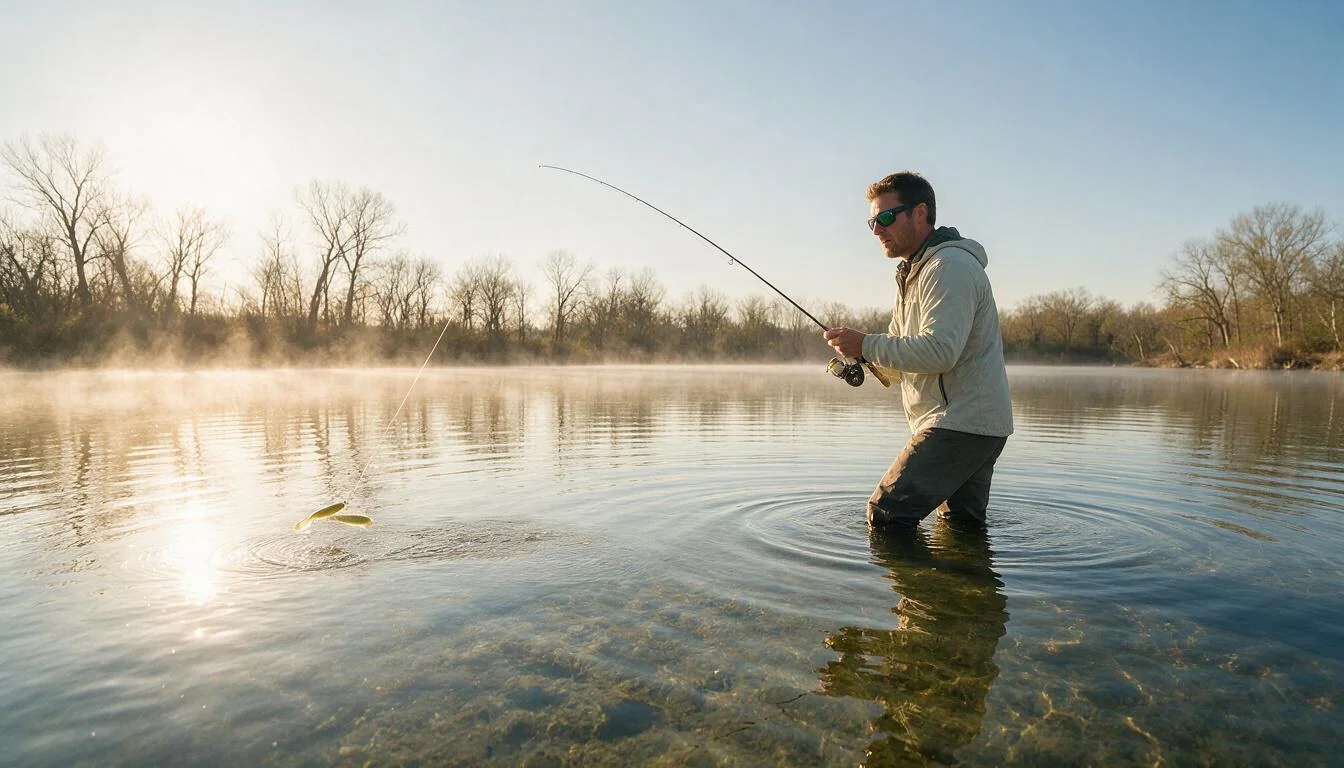
Spring bass fishing is a three-act play: pre-spawn aggression, spawn-time bed fishing, and the post-spawn recovery. Find the phase by reading water temperature, match your bait and retrieve to it, and the biggest bass of the year are within reach — often in water shallow enough to wade.
The pre-spawn window is the prize: more trophy bass per hour than any other time of year. Watch the thermometer, follow the warmest shallow water, and let the fish tell you when spring has truly arrived.