The Best Fishing Months by Region: A Month-by-Month Guide
Ask ten anglers which month is best for fishing, and you will get ten answers — because the right month depends entirely on where you live. A February day that produces trophy bass in Florida is still ice-locked in Minnesota.
The good news is that the pattern is predictable: fish follow water temperature, and water temperature follows latitude. Once you know the calendar for your region, you can plan trips that hit the bite instead of missing it.
This guide breaks down the best fishing months for every major US region, explains why the calendar shifts from south to north, and ends with a month-by-month fishing calendar you can bookmark. For a deeper look at where fish actually go each season, start with our seasonal fish movement guide.
How to Read This Fishing Calendar
The US fishing calendar runs on a simple rule: the same water temperature arrives weeks earlier in the South than in the North. Largemouth bass spawn at roughly the same temperature from Florida to Maine — around 62-65°F — but Florida water hits that mark in February while Maine water reaches it in June.
Every regional difference in this article is just that one rule, applied across the map.
Two windows matter more than any other. The first is spring, when warming water sends fish shallow to feed and spawn — the most aggressive, most predictable bite of the year.
The second is fall, when cooling water triggers a feeding frenzy as fish fatten up for winter, and trophy bass, walleye and pike make their best showing of the season.
Summer and winter fish too, but the hours shrink and the fish move deeper. Our spring fishing guide covers the first window in detail.
One more rule before the regions: check your state regulations. Most states close certain waters during spawning runs, and some fish — like walleye on spawning reefs — are protected with seasonal closures. The best month on the calendar is only legal if the season is open.
Best Fishing Months in the South
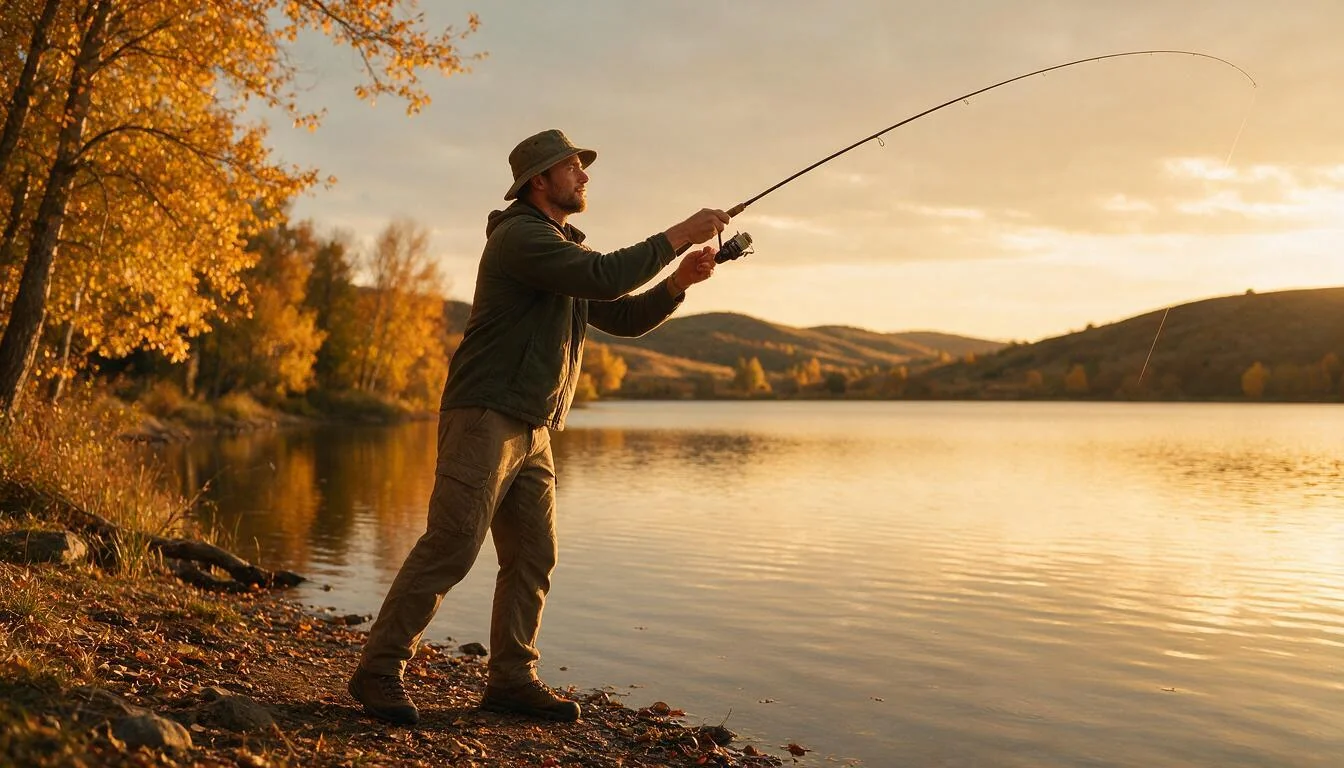
The South — Florida, Georgia, the Gulf states and the Carolinas — is the closest thing the US has to year-round fishing. January and February are mild, and the first big bass bite of the year starts there.
- January-February: the pre-spawn begins. Florida bass start staging on warming flats, and crappie fishing turns on across the region. This is the best window in the country for bass that most of the US cannot touch yet.
- March-April: the peak. Bass spawn in February-April (Florida earliest), crappie colony-nest in 1-6 feet of water, and bluegill beds start showing in April. This is the window to plan around if you want numbers.
- May-September: the summer grind. Fish early morning and late evening, or fish at night — channel catfish and big bass both prowl the shallows after dark. This is the one region where night fishing is a summer staple.
- October-December: the fall feed. The heat breaks, shad push shallow, and bass feed hard again. Coastal anglers also get redfish and speckled trout in their best fall runs.
If you want the largest bass of your life, the largemouth bass fishing guide explains why February through April in the South is the classic window for trophy females.
Best Months for Fishing in the Southeast & Mid-Atlantic
Virginia, Tennessee, Kentucky, Arkansas and Missouri form a transition zone: they run two to four weeks behind the Deep South, and they add mountain trout water to the mix.
- March-April: crappie lead the spring. The spawning run at 55-65°F pulls huge schools into shallow brush — early March in Arkansas and Tennessee, late March into April farther north. Reservoir walleye in Tennessee, Virginia and the Ozarks run on the same riffle-and-reef pattern in April.
- April-June: bass and smallmouth peak, and mountain trout streams in the Smokies and Ozarks hit their stride. Trout feed actively through the high-water runoff, then settle into classic summer lies.
- September-November: the peak of the year for many locals. Fall turnover and the shad migration trigger a shallow feeding binge, and striped bass runs on Tennessee and Kentucky reservoirs add a bonus.
- December-February: slow but not dead. Crappie hold on deep brush, and tailwaters below dams stay fishable in cold weather.
Midwest & Great Lakes: Spring Rush, Fall Frenzy
The Midwest runs the classic northern calendar: a compressed spring, a hot summer, and one of the best fall fisheries in the country.
- April-May: the ice-out rush. Walleye run up tributary riffles and gravel reefs at 40-55°F, northern pike spawn in weedy shallows at ice-out, and yellow perch stage along shore. The walleye fishing guide is the perfect playbook for this window.
- May-June: bass and bluegill spawn, with crappie wrapping up its April-May spawn — the most consistent action of the year. Smallmouth on Great Lakes reefs are in peak condition.
- July-August: the midday lull sets in; fish early, late and dark. Summer is also the peak of the Great Lakes salmon season, with chinook and coho feeding offshore and staging near river mouths by late summer.
- September-October: the trophy window. Cooling water and shad schools push walleye, pike and bass shallow again, and this is widely considered the best season for big fish in the Midwest.
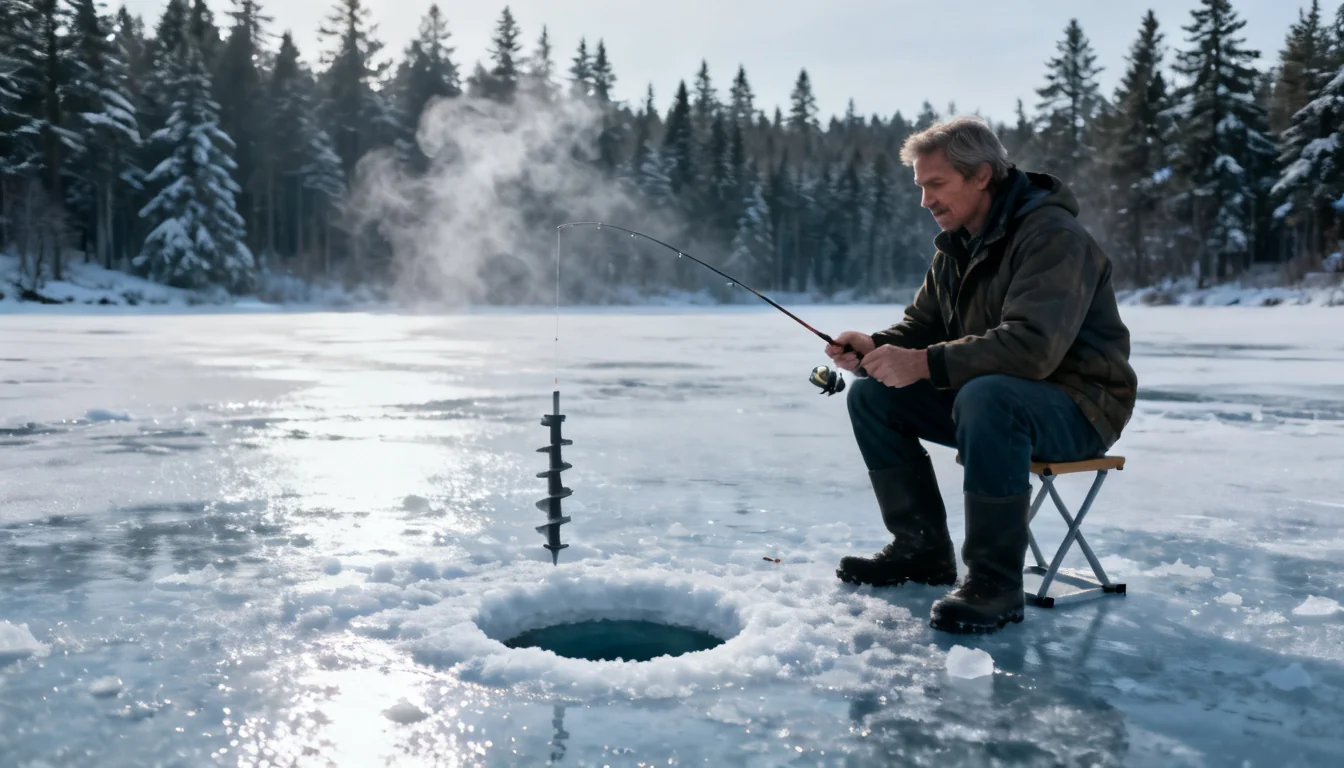
- December-March: ice fishing takes over, with peak action in January and February on perch, crappie and walleye.
Best Fishing Months in the Northeast & New England
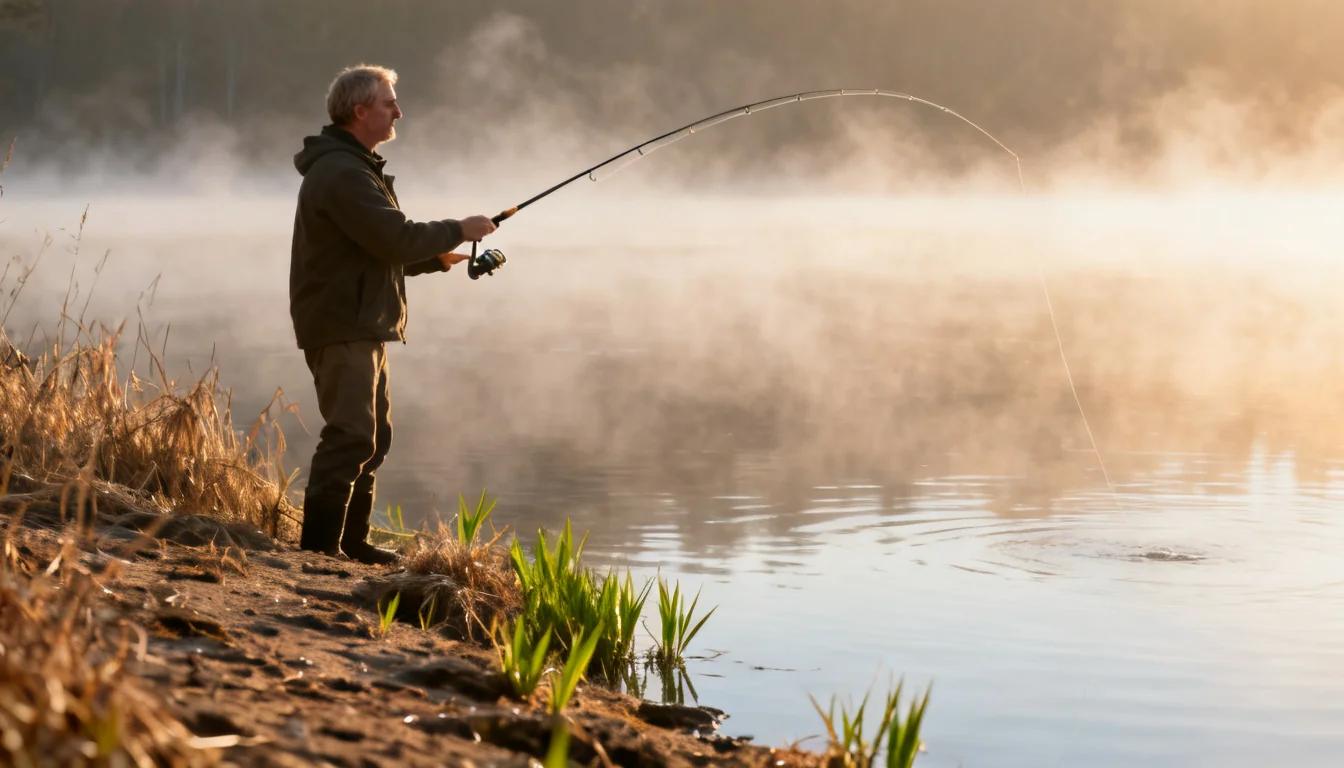
The Northeast runs two to three weeks behind the Midwest, with cold springs, vibrant falls and a serious ice season.
- April-May: the trout opener. April 1 or mid-April in most states brings the famous opening day, and stocked and wild trout both feed hard in cold water. This is also when walleye and pike wake up on New York and Pennsylvania waters.
- May-June: bass and panfish peak. Smallmouth on lakes and rivers are at their most aggressive, and this is the most reliable window for numbers.
- September-October: the peak of the fall run — cool water, aggressive bass, and big brown trout moving in rivers before their October-December spawn.
- November-March: ice fishing carries the season. Maine, Vermont, New Hampshire and upstate New York get a long, reliable ice season, with perch and crappie the top targets.
Trout Season in the West & Mountain States
The West flips the usual rule: summer is often the best time to fish, because high-elevation waters stay cold into July.
- April-June: low-elevation lakes and rivers warm first. Bass bite at lower reservoirs, and steelhead runs continue on coastal rivers into spring.
- June-August: the alpine window. Mountain lakes and streams above 8,000 feet thaw late, and the rainbow trout fishing guide covers the dry-fly and spinner tactics that dominate this short, spectacular season.
- September-October: fall browns. Brown trout spawn October-December, and big fish feed aggressively in the weeks before. This is the West's answer to the Midwest fall frenzy.
- November-February: winter steelhead and tailwater trout keep dedicated anglers busy; most high lakes close or freeze.
A Month-by-Month Fishing Calendar
Here is the whole year at a glance. Peaks are approximate — cold springs delay everything, warm ones speed it up.
| Month | South & Gulf | Southeast & Mid-Atlantic | Midwest & Great Lakes | Northeast | West & Mountains |
|---|---|---|---|---|---|
| Jan | Bass pre-spawn, crappie | Crappie deep brush | Ice fishing peak | Ice fishing peak | Winter steelhead |
| Feb | Bass spawn begins, crappie peak | Crappie pre-spawn | Ice fishing | Ice fishing | Steelhead |
| Mar | Bass spawn, crappie | Crappie spawn, bass staging | Ice-out begins, walleye run | Trout opener approaches | Low-elevation bass |
| Apr | Bass post-spawn | Crappie peak, bass spawn | Walleye run, pike spawn | Trout opener, walleye | Bass, steelhead |
| May | Summer pattern starts | Bass, smallmouth peak | Bass, crappie, bluegill | Bass, panfish peak | Trout runoff season |
| Jun | Night fishing season | Smallmouth, trout streams | Bass spawn done, salmon stage | Smallmouth peak | Alpine trout opener |
| Jul | Night fishing, early AM | Summer lull; early/late | Summer lull; salmon | Summer lull | Alpine trout peak |
| Aug | Hurricane season, early/late | Summer lull | Summer lull; salmon | Summer lull | Alpine trout peak |
| Sep | Fall feed begins | Fall frenzy begins | Trophy walleye, pike | Fall bass, browns staging | Fall browns |
| Oct | Fall feed peak | Fall frenzy peak | Best big-fish month | Fall peak | Brown trout spawn |
| Nov | Bass still feeding | Striped bass, bass | Late fall feeding | Ice forming late month | Steelhead return |
| Dec | Holiday bass bite | Tailwaters | Ice begins | Ice season begins | Winter steelhead |
The common thread: spring and fall are the reliable peaks nearly everywhere, and the South simply gets them earlier and gets a second shot in winter. Summer and winter are for specialists — night anglers in July, ice anglers in January. The fall fishing guide breaks down the fall feeding window in detail.
Peak Months by Species
If you fish for one species above all, plan around its personal calendar.
| Species | Best months (South) | Best months (North) | Notes |
|---|---|---|---|
| Largemouth bass | Feb-Apr | May-Jun, Sep-Oct | Pre-spawn and fall feed are the big-fish windows |
| Smallmouth bass | Apr-May | May-Jun, Sep-Oct | Best in rivers and Great Lakes reefs |
| Crappie | Feb-Apr | Apr-May | Spawn schools at 55-65°F; the crappie fishing guide covers the rigs |
| Bluegill | Mar-May | May-Jun | Easiest fish to catch; great for beginners |
| Channel catfish | May-Sep (nights) | Jun-Aug (nights) | Night fishing beats daytime all summer |
| Walleye | Apr (Southeast reservoirs) | Apr-May, Sep-Oct | Spawn run and fall frenzy are the peaks |
| Northern pike | — | Apr-Jun, Sep-Oct | Ice-out and fall are both trophy windows |
| Rainbow trout | Jan-Mar (tailwaters) | Apr-Jun, Sep-Oct | Cold-water species; alpine lakes peak in summer |
| Yellow perch | — | Apr-May, Jan-Feb (ice) | The classic ice-fishing target |
What Is the Best Time to Fish?
The month matters, but so does the hour. The best time to fish in summer is dawn and dusk, when the water cools and fish leave deep cover. In spring, the warmest afternoon hours often trigger the best bite, because fish are still chasing temperature.
In fall, the whole day can produce, with morning and evening the strongest windows. In winter, midday is the sweet spot — the warmest hours of the day bring the most active fish.
Two weather rules hold year-round. First, a stable stretch of mild weather beats a single sunny day; fish feed consistently when conditions hold steady. Second, the first warm day after a cold front is a classic bite window, while the day the front hits is usually dead.
For the full breakdown of the summer window, see our summer fishing guide. For cold-water tactics, the winter fishing guide covers ice and open-water patterns.
FAQ
What is the best month to fish?
There is no single month that is best everywhere — the calendar follows latitude. In the South, February through April is the peak. In the Midwest and Northeast, May-June and September-October are the twin high seasons.
If you can only pick one trip, late September through mid-October delivers the best combination of aggressive fish, comfortable weather and trophy potential across most of the country.
When is the best time to catch bass?
Largemouth bass bite best during the pre-spawn and the fall feed. In the South, that means February through April. In the North, plan for May-June and again in September-October. Within those months, early morning and late evening consistently out-fish midday, except in spring when the warmest afternoon hours often trigger the best bite.
What months are best for ice fishing?
The most reliable ice fishing months are January and February, when ice is thick and fish are concentrated in deep basins. Many northern states see fishable ice from mid-December through early March, but early-season ice in December is often unsafe, and March ice gets soft. Check local ice reports before any trip — ice thickness varies by lake and week.
Is fishing better in spring or fall?
For numbers, spring wins: fish move shallow to feed and spawn, and the bite is aggressive and predictable. For trophy fish, fall wins: the pre-winter feeding frenzy produces the biggest bass, walleye and pike of the year. Anglers who want both simply fish both windows.
Where can I fish year-round in the US?
The coastal South — Florida, Texas, Louisiana, Georgia and the Carolinas — offers fishable water every month. Winter brings bass and crappie in the South, summer brings night fishing, and fall brings the best coastal action. In colder states, tailwaters below dams and deep reservoirs stay fishable through winter even when lakes freeze.
The Bottom Line
The best months are not a secret — they are a map. The South peaks in late winter and early spring, the North peaks in late spring and fall, and every region gets two reliable windows built around warming and cooling water.
Plan your trips around the pre-spawn and the fall feed, match the hours to the season, and check your local regulations before you go. The fish are predictable; the calendar is the cheat sheet that puts you on the water at the right time.