The Fixed-Float Rig: The Float Fishing Setup That Reads Every Bite
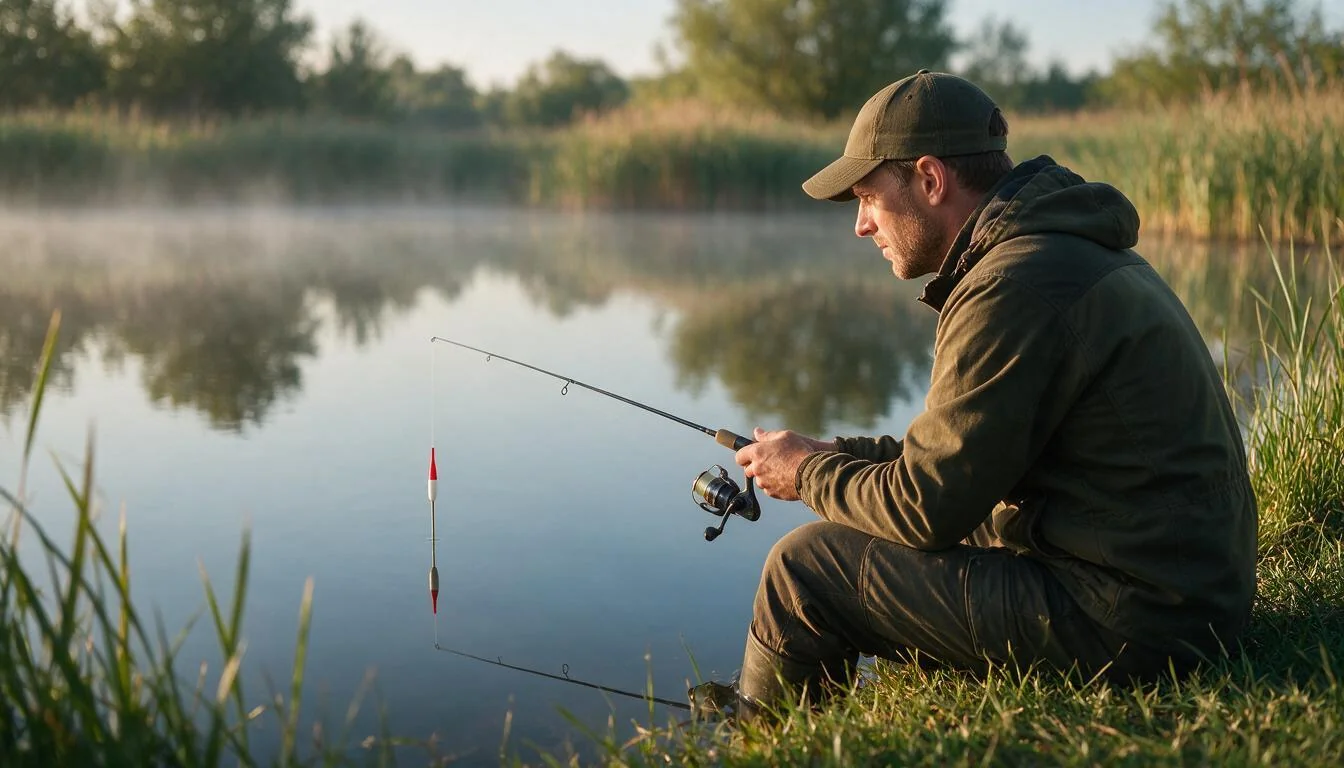
If you've ever watched a bobber twitch, guessed wrong, and missed the fish, the fixed float rig is worth your time. It's a Chinese float fishing setup that locks the float in place between two rubber stops, holds the bait almost weightless, and turns the float into an extension of the line.
The lightest panfish bite shows up instantly, which is why Chinese stillwater anglers have trusted this method for decades — and it's a natural fit for any calm pond or reservoir fishing session. This guide explains what makes it different, how to rig and tune it, and where it beats everything else in your tackle box.
What Is a Fixed Float Rig?
The rig is a stillwater float fishing setup built around one idea: the float cannot move on the line. Two small rubber stops — one above the float seat, one below — lock it in place.
Below the float, the line runs through a tiny shot pattern to a small swivel, then splits into two hook leaders of different lengths. The whole rig is balanced so the float carries nearly all of its weight, and the hooks hang weightless in the water.
That last point is the heart of the method. Chinese anglers call the style 台钓 (tai diao, "Taiwan-style fishing"), and its signature is the suspended lead: nothing rests on the bottom except the bait itself. A bluegill that mouths the bait feels no resistance, so it holds the hook instead of dropping it.
Why a Fixed Float Reads Bites a Slip Float Misses
Sensitivity is the whole point of this rig, and it comes from four things working together:
A direct mechanical link. The float is locked to the line, so any pull on the hook moves the float the same instant. With a slip float, the line runs through the float's eye and slides; the fish has to take up that slack and overcome friction before the float reacts.
On light bites — a bluegill barely inhaling a worm tip — that delay is the difference between a hookup and a missed twitch.
A tiny buoyancy reserve. The rig is tuned so only a couple of colored bands on the float tip show above the water. The float is barely floating; the lightest downward pull sinks a band. A big round bobber, by contrast, needs real force to move.
A suspended lead. The shot hangs mid-water instead of resting on the bottom. There's no weight for the fish to feel, so finicky fish hold the bait longer — and longer holds mean more hookups.
Fine line and small hooks. Two to four pound test with a size 10-14 fine-wire hook makes the offering behave naturally. Heavy line and fat hooks telegraph resistance and spook shy fish.
Waggler vs Fixed Float: What's the Difference?
Western float fishing already has a sensitive cousin of this rig: the waggler, the castable float that UK anglers use on still and running water. The two approaches differ in a few practical ways:
| Waggler | Fixed float rig | |
|---|---|---|
| Float attachment | Bottom only; line passes through the float's eye | Locked top and bottom between rubber stops |
| Hooks | Usually one | Two, on leaders of different lengths |
| Bite signal | Good — the float pivots on its bottom eye | Direct — the float is locked into the line |
| Best water | Still and slow-moving | Still water, calm conditions |
| Tuning | Shot patterns below the float | Band-by-band buoyancy, matched to the bait |
Both catch fish. The fixed rig's edge is precision: the depth is locked exactly, the buoyancy is tuned in small steps, and the second hook covers a different depth than the first.
What You Need: The Float Fishing Setup
Nothing here is exotic. An American tackle shop covers it:
- Rod. An ultralight or light spinning rod, 6-7 feet, with a sensitive tip. The classic Chinese version is a long pole, but a standard ultralight combo works exactly the same way.
- Main line. 2-4 lb test monofilament; step up to 4-6 lb if you're after bigger fish.
- Float. A slim, fine-stemmed float rated around 1-3 grams. Waggler floats or small fixed floats work; the finer the stem, the more sensitive the setup.
- Rubber float stops. Two or three small ones.
- Split shot. Tiny sizes, around #8-#10, or a small pinch-on weight.
- Swivel. A tiny barrel swivel, size 10-14.
- Hooks. Fine-wire sizes 10-14 — the kind you'd use for bluegill or crappie.
- Bait. Small offerings: a pea-sized piece of worm, a maggot or waxworm, a dough ball, or a single corn kernel.
How to Rig It, Step by Step
1. Slide the stops and float on. Slide a rubber stop onto the main line, then the float seat (or the float's own silicone sleeve), then a second stop below it. The stops should hold the float snugly but still let you slide it when you need to. This lock is what makes the rig "fixed" — it locks in both depth and bite transmission.
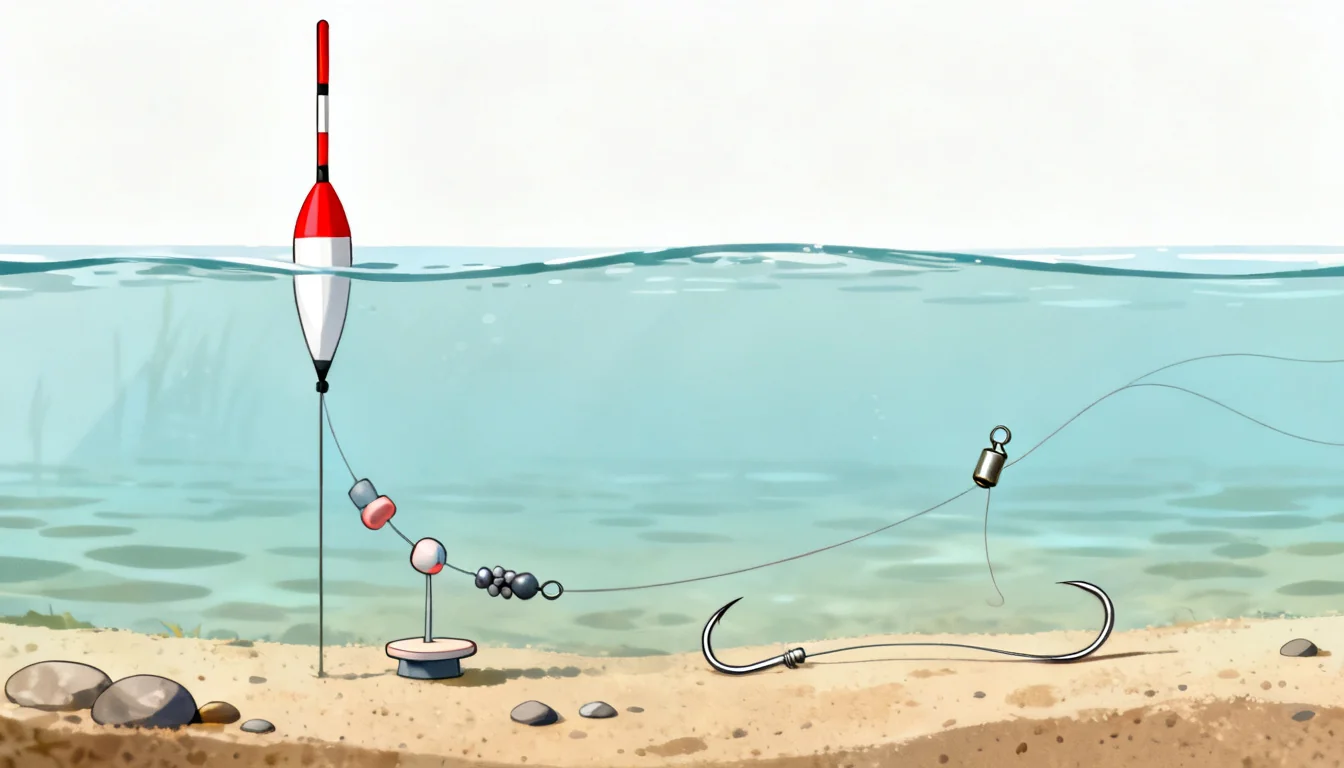
2. Pinch the bulk shot near the float. Put most of your weight 1-2 inches below the float seat. Weight up high rights the float quickly after the cast and keeps the top of the line anchored.
3. Tie on the swivel. A tiny barrel swivel at the end of the main line keeps the two leaders from twisting.
4. Tie two leaders. One leader about 4 inches long (the top hook), one about 8-10 inches long (the bottom hook). Both tie to the swivel. Different lengths are the point: they fish two depths at once.
5. Add a tiny shot near the swivel. One or two small split shot a few inches above the swivel keep the line between float and hooks tight, so a bite telegraphs instantly. They also slow the bait's fall, which looks natural.
6. Bait both hooks. Keep it small — the size of a pea. The bottom hook can carry a slightly bigger offering if you want to target bigger fish.
How to Tune It: One Hook Down, One Hook Up
The tuning ritual is where this Chinese fishing style earns its reputation. Chinese anglers call the classic setting "four and two" (调四钓二, tiao si diao er) — set the bare float to show four bands, then fish it showing two. The numbers don't matter; the relationship does. Here's the procedure:
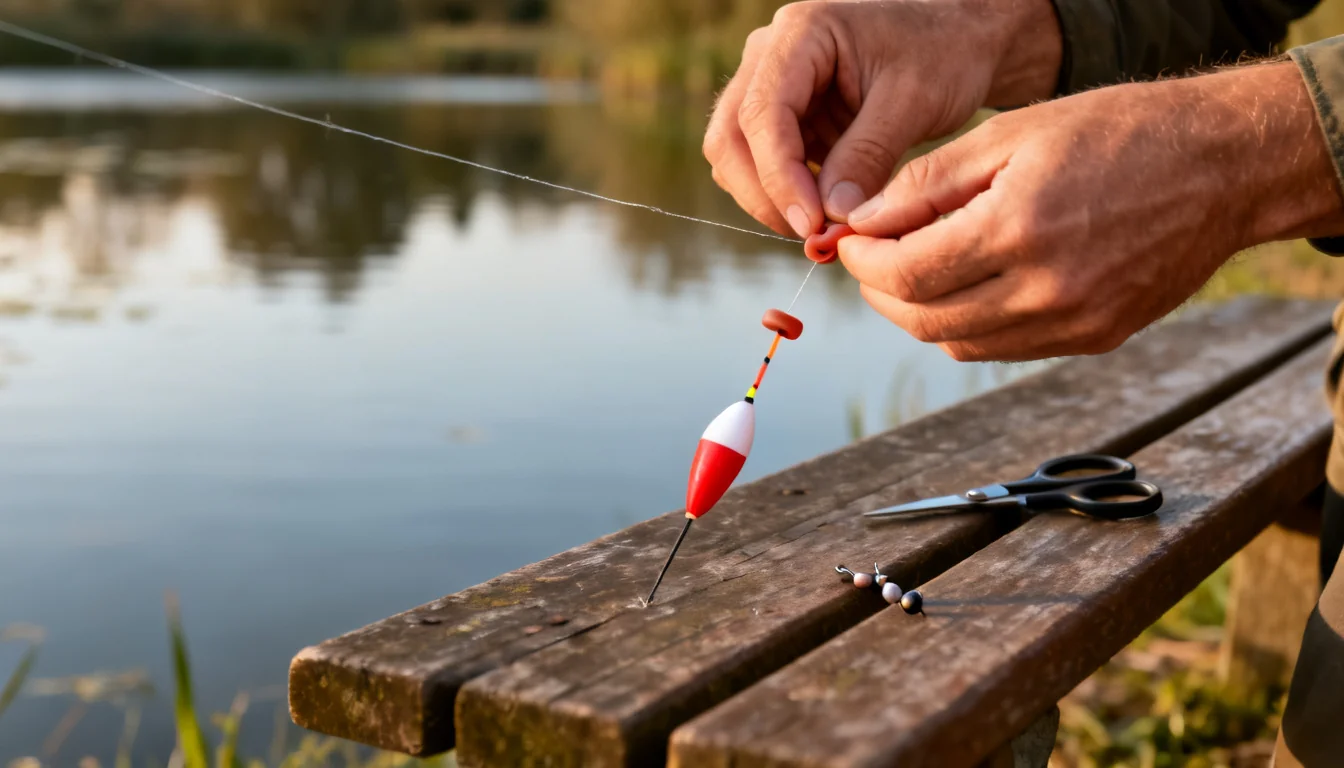
1. Find the bottom. Add a heavier temporary shot, cast out, and slide the float up until about one band shows above the water. The bottom hook is now touching bottom.
2. Slide the float down. Move it down by the length of the bottom leader plus about 4 inches. Both hooks now hang off the bottom.
3. Trim the shot. With no bait on the hooks, trim lead until the float stands with four bands showing. You've set the bare rig's buoyancy.
4. Bait up and adjust. Cast with bait on both hooks, then slide the float up until two bands show.
If the float rides higher or lower than you expect, use the contact check: watch the float as the rig settles after the cast. The instant the bottom hook touches down, the float gives a tiny jump. Adjust until that jump happens with two bands showing — that confirms the bottom hook is down and the top hook is off.
That's the state anglers call "one hook down, one hook up": the bottom hook rests on the bottom, the top hook hangs just off it. Two baits, two depths, one float.
Change the numbers and you change the presentation. Show more bands and both hooks sit heavier on the bottom — better for cautious fish in cold water. Show fewer and the whole rig hangs lighter — better for finicky feeders. Think of the bands as a dial, not a rule.
Where This Rig Shines Best
This is a specialist's tool for calm water, and it's deadly in the right spot:
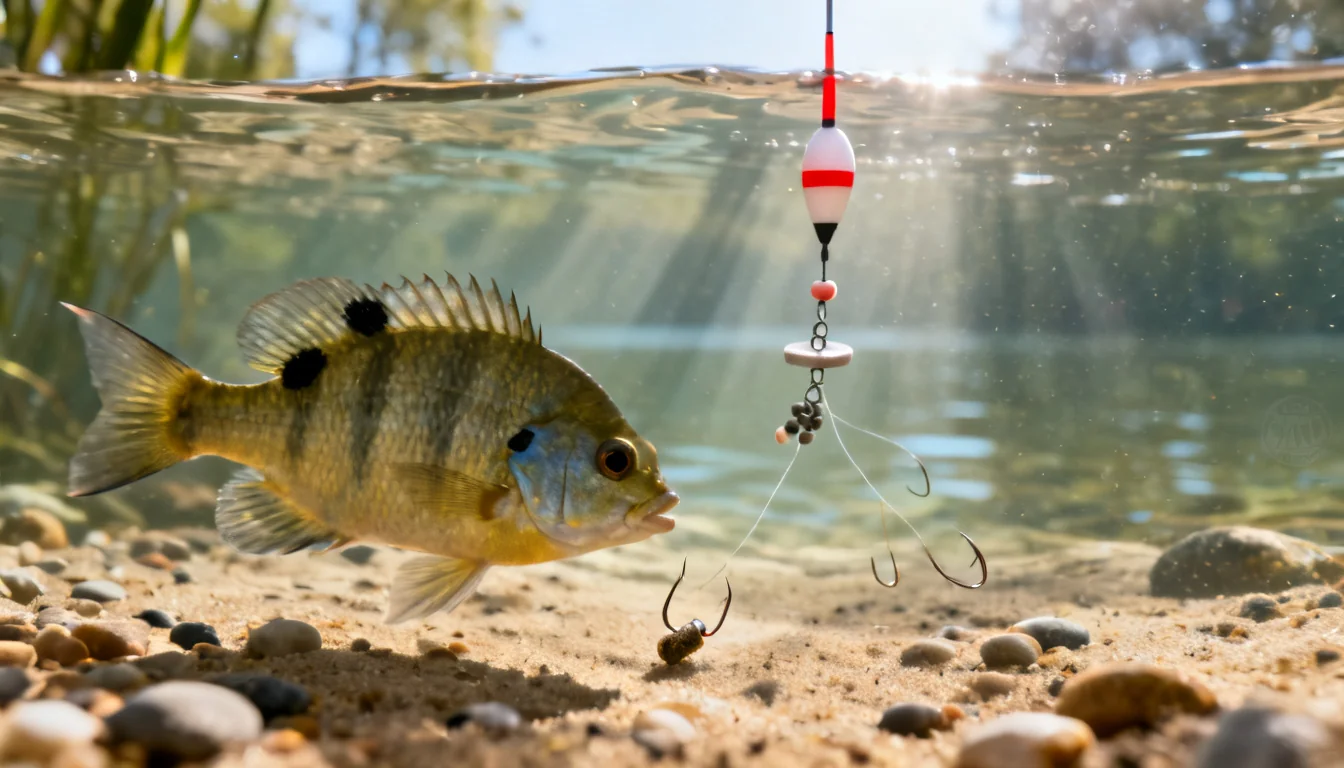
- Ponds and small lakes. The classic home of this rig; fish the edges, weed lines, and any shade.
- Light-biting panfish. Bluegill fishing and crappie fishing mouth their food instead of smashing it; the fixed float catches the bites a bobber never shows.
- Yellow perch. Schooling perch peck at bait in short, delicate takes — perch fishing with a fixed float is a match made in heaven.
- Finicky feeding days. When fish are active but cautious — post-front, bright midday — the weightless presentation draws bites nothing else will.
- Structure edges in still water. The rig drops baits precisely along weed lines, docks, and drop-offs.
Where It Struggles
Be honest about the limits, or the rig will frustrate you:
- Current. The suspended lead can't hold position, and the float drifts. On moving water, switch to a slip float or a bottom rig.
- Wind chop. Waves wash over a tiny float and hide the bites it's built to show. Wait for calm, or fish a sheltered bank.
- Water deeper than your rod. A fixed float can only fish depths within rod length — the float stop has to stay above the rod tip. On big lakes, most productive water is deeper than that; our lake fishing guide covers the deep-water alternatives. Beyond that depth, switch to a slip float or a bottom rig.
- Thick weeds. Two hooks tangle more than one. In heavy cover, drop the top hook or fish a single-hook rig.
Common Mistakes
1. A float that's too big. Big float, big buoyancy, dead sensitivity. Match the float to the shot, not to your eyesight.
2. Skipping the bottom find. If you tune without knowing the depth, your "one hook down" is actually both hooks dangling mid-water or dragging.
3. Letting the lead touch bottom. The moment the shot rests on the bottom, the rig loses its signature sensitivity — it becomes an ordinary weighted bottom rig.
4. Bait too large. A hookful of worm reads as a meal a fish can pull on without committing. Keep baits pea-sized.
5. Line too heavy. Thick line holds the float stiff, damps bites, and spooks shy panfish.
6. Striking at the first twitch. A tick is often a fish testing the bait. Wait for the float to move decisively — a clean dip or a slide — then lift gently.
7. Fishing it where it can't work. Wind, current, or deep water is the wrong arena. Save the rig for still, calm conditions.
FAQ
Can you cast a fixed float rig?
Yes. The stops hold the float in place through the cast, so it flies like any other float rig on a standard spinning outfit. Use a gentle lob rather than a hard whip — the light line and tiny shot tangle easily with an aggressive cast. Practice on the bank for a few minutes if you're new to light rigs.
Fixed float vs slip float: which is more sensitive?
The fixed float is more sensitive on light bites. With a slip float the line slides through the float's eye, so a subtle take must first take up slack and overcome friction before the float moves.
A fixed float is locked to the line and reacts instantly. The tradeoff: a slip float can fish deep water and casts easier in wind.
What fish can you catch with this rig?
The rig shines for light-biting freshwater species: bluegill, crappie, and yellow perch are the classics, and it works well for stocked trout and small carp in ponds. It's not built for big, hard-fighting fish on heavy cover — that's a job for a bottom rig.
How deep can you fish a fixed float?
Only as deep as your rod is long, because the upper float stop must stay above the rod tip during the cast. For anything beyond that, a slip float with a stop knot is the right tool.
Do I need special gear for this Chinese fishing style?
No. An ultralight spinning combo, 2-4 lb test line, a slim float, tiny split shot, and fine-wire hooks cover it — all standard tackle shop gear. The technique matters more than the equipment.
Why does the rig use two hooks?
Two leaders of different lengths fish two depths at once: the bottom hook rests on the bottom while the top hook hangs just above it. It doubles your presentation and gives fish a choice — and it's the reason this rig catches fish that ignore single-hook presentations.
The Bottom Line
The fixed float rig is precision float fishing at its purest: a locked float, a suspended lead, and a dial for hook depth. It costs little, sets up in minutes, and it catches the panfish bites that bobber anglers miss all summer. Rig one before your next calm-water trip — then let the float tell you the rest.