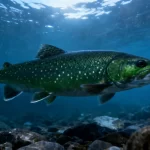
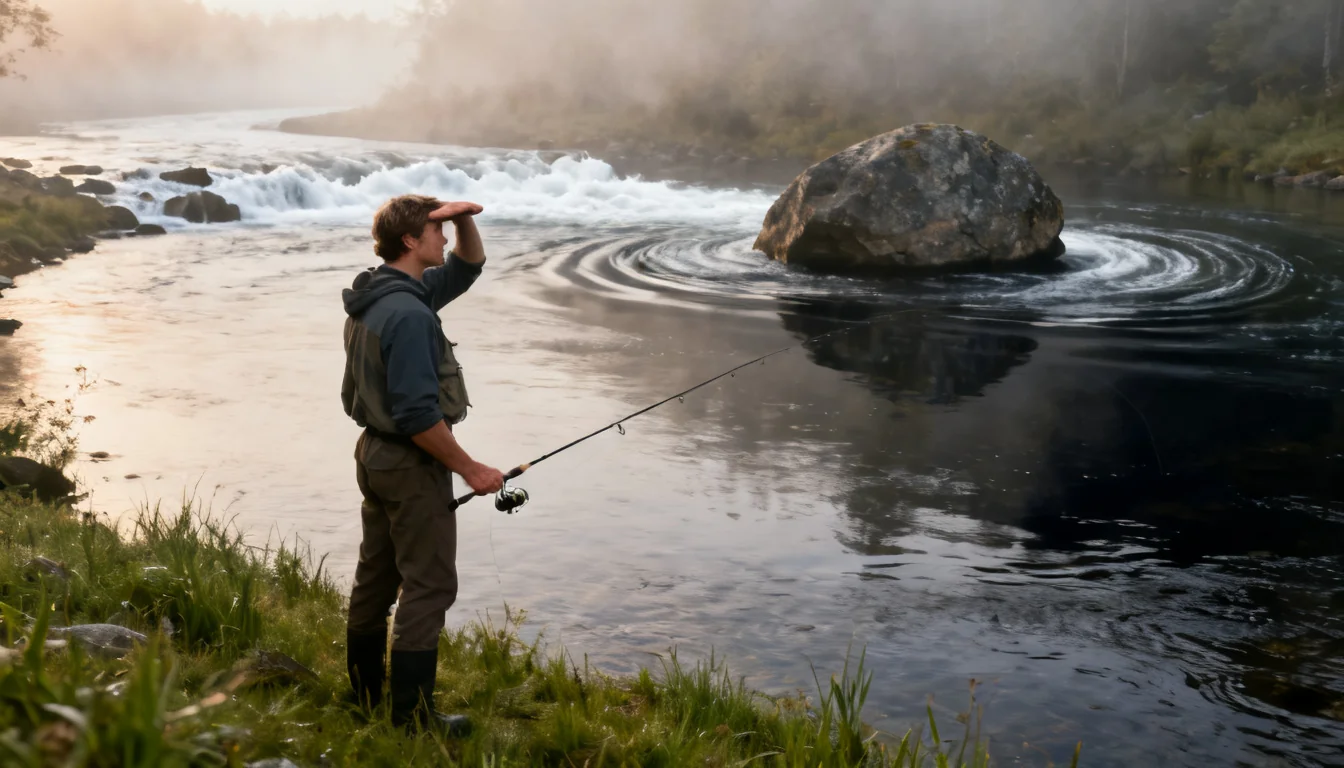
Reading Current: Where Fish Hold in Pools, Riffles & Eddies
Every river looks like a ribbon of moving water — until you learn that the current is a map. Reading current tells you where the fish are before you cast a single bait.
Fast water carries food, oxygen, and energy costs; fish position themselves where those three balance best. The result is a repeating pattern of riffles, pools, and eddies that holds fish in predictable places, on a mountain brook or a wide Midwest river.
This guide shows you how to spot those structures and fish them with confidence. The trick to reading river current is that it comes down to a handful of repeating structures — learn them once and every river you fish opens up. (For the full moving-water game plan, start with our how to fish a river guide.)
Why Reading Current Matters
Fish are lazy in the most productive way possible: they want food delivered to them without burning energy to chase it. In a river, the current does the delivering — insects, minnows, and crawfish get swept downstream in a constant food line. A fish that parks itself beside the flow intercepts that food while barely moving a fin.
That is the single idea behind finding fish in moving water: find where the flow slows, and you find where the fish wait. Fast water is expensive to live in. A trout holding in a chute burns calories fighting the stream; the same trout holding in the slack seam beside it eats for free.
The exceptions are short — a few current-loving species like trout will sit right in oxygenated runs when food is drifting — but the rule holds across the river: most fish most of the time choose the easy water.
The Three River Structures: Riffles, Pools & Eddies
Rivers sort themselves into repeating units of fast shallow water and slow deep water. Learn the three main structures and everything else is a variation on them.
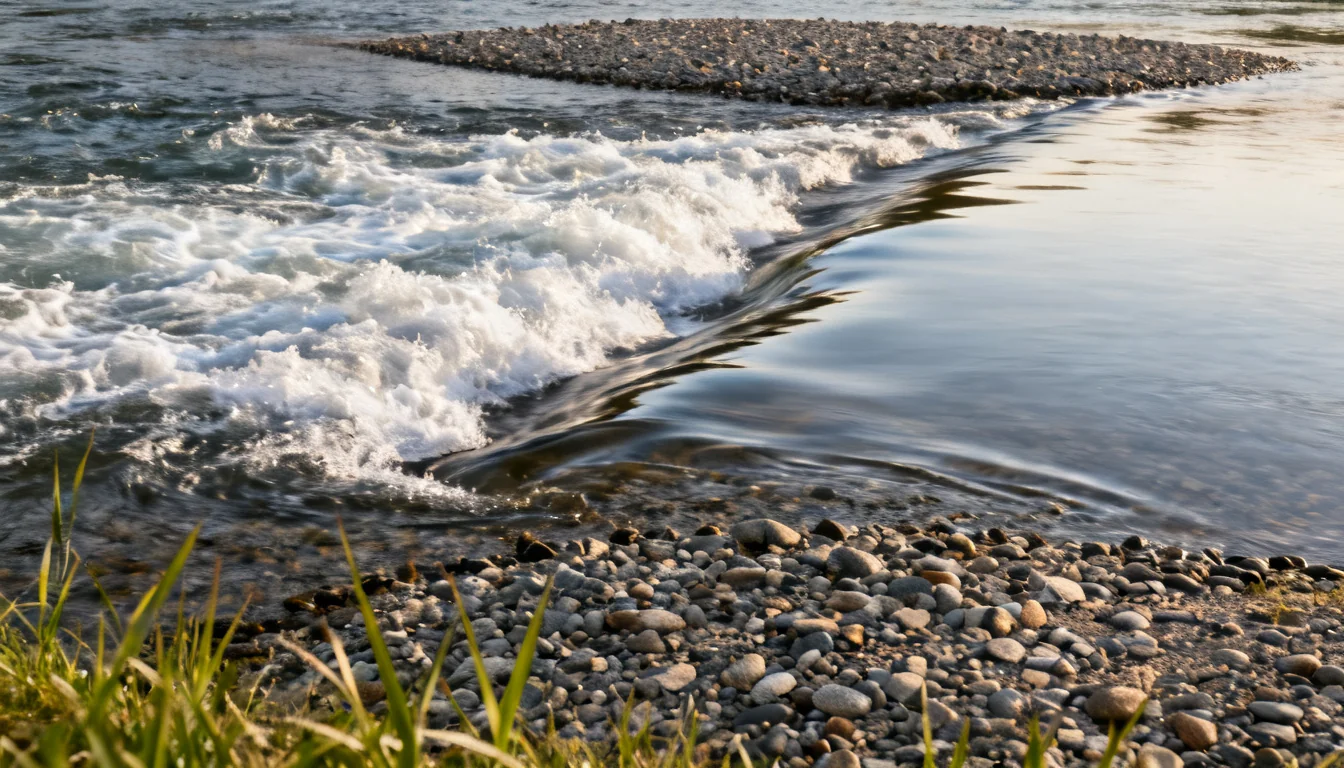
Riffles are the shallow, fast, oxygenated stretches where the water breaks white over gravel and cobble. They are the river's feeding rooms. The magic spot is the riffle tail — the smooth water right below where the riffle ends, where the current slows and drifting food settles out. Fish stack there to grab the buffet.
Small-stream anglers fish riffle tails all day; see how to fish small streams and creeks for the tighter version of the same game.
Pools are the deep, slow water that follows. Current carves them below riffles, at the outside of bends, and against undercut banks. Pools are the river's living rooms and strongboxes: summer refuge, winter shelter, and the territory of the biggest fish in the stretch.
In low light, big trout, bass, and catfish patrol the pool's head — the shallow lip where water enters; by day they drop into the deep pools and wait. Catfish especially, see channel catfish species guide for how they work a pool at night.
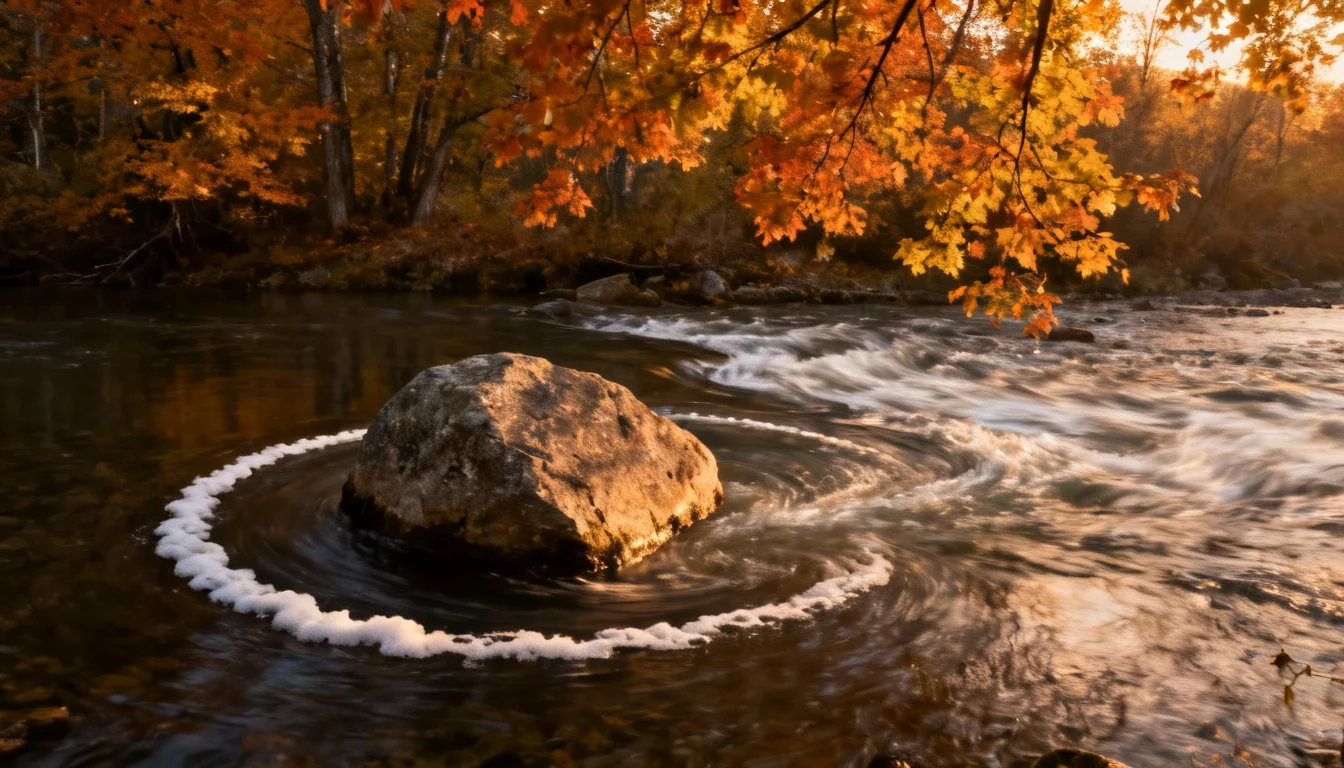
Eddies are pockets of water spinning backward behind rocks, logs, and inside bends. The main current sweeps past while the eddy curls on itself, calm on the surface and full of disoriented food. An eddy is a resting spot with room service — fish hold there in almost every season.
Learn to spot the smooth, slightly rotating patch of water downstream of any big boulder and you have found a lie that produces all day.
Between and around the big three sit the connectors:
| Structure | What It Looks Like | Where It Forms | What Holds There |
|---|---|---|---|
| Riffle | Shallow, broken, fast water | Gravel beds, narrows, drop-offs | Feeding trout and smallmouth; fish the tail |
| Riffle tail | Smooth water below the broken stretch | Where the riffle ends | Fish stack to intercept settling food |
| Run | Deeper, faster, smooth channel | Between riffle and pool | Active fish moving or feeding mid-column |
| Pool | Deep, slow, dark water | Below riffles, outside bends | Big fish; summer and winter refuge |
| Eddy | Backward-spinning calm pocket | Behind rocks, logs, inside bends | Resting fish with constant food delivery |
| Seam | Visible line between fast and slow water | At every current break | Fish sit just on the slow side |
| Undercut bank | Overhang eroded by current | Outside bends, soft banks | Shade, cover, ambush points for bass and trout |
How to Read River Structure from the Bank
You do not need waders or electronics to read river structure — each structure paints its own signature on the surface. Work a stretch from downstream to upstream and look for these five signatures:
1. The riffle reads as white water. Where the current runs shallow and fast over gravel, the surface breaks and flashes white. The magic spot is just downstream: the riffle tail, the smooth apron of slower water where the broken stretch ends and drifting food settles out.
Spot where the white water turns glassy and you have found the river's most reliable feeding lie.
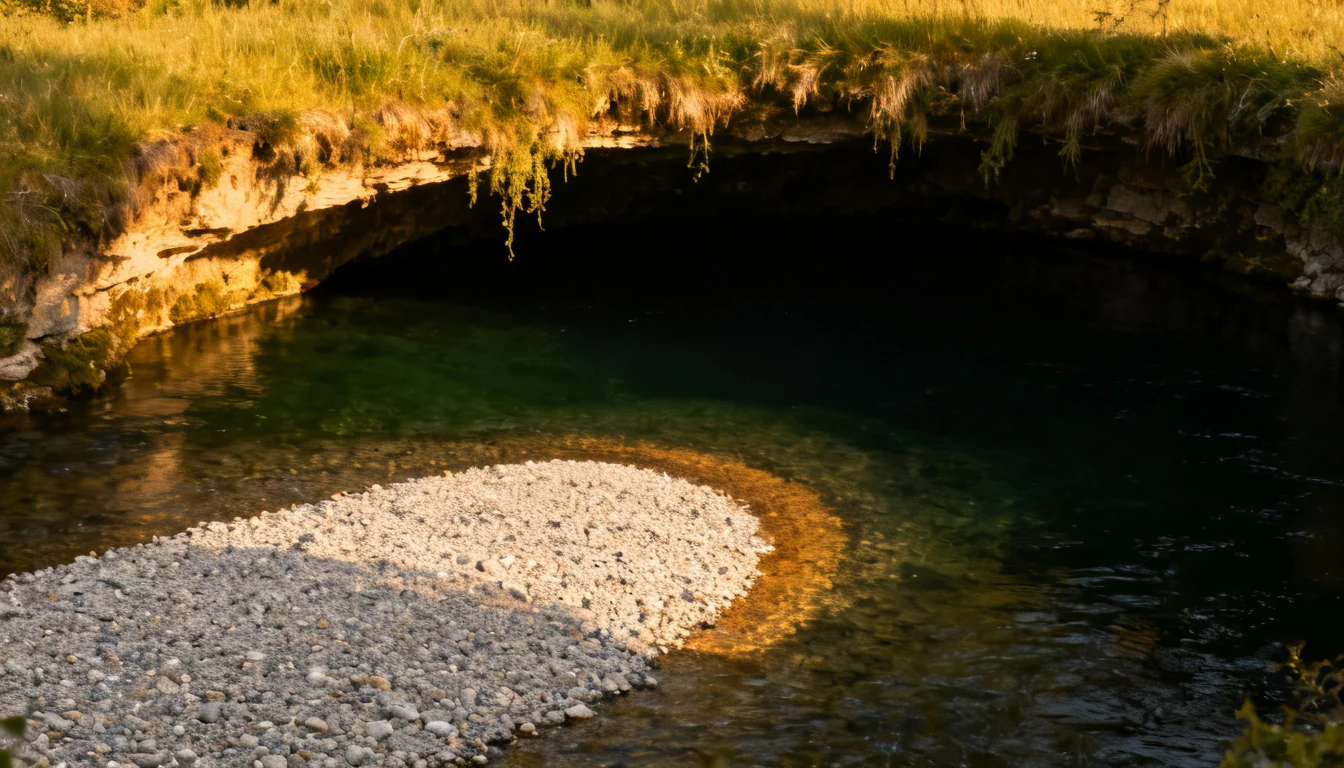
2. The pool reads as dark water. Depth shows up as color. The dark green or black water at the outside of a bend is the deepest water in the stretch, and the biggest fish sit in it.
Cast where the pale riffle water meets the dark pool water — that color boundary is the pool head, the shallow lip where fish stack at first and last light.
3. The eddy reads as a backward swirl. Downstream of any big rock, log, or point, watch for a patch of surface rotating slowly upstream while the main current sweeps past. That reverse spin is an eddy, and foam lines often trace its circle. It looks calm because it is: an eddy collects food and fish all day.
4. The seam reads as a surface line. Where fast water meets slow water, the surface draws a line — a foam trail, a ripple change, sometimes just a texture shift. Fish hold on the slow side of that line, where food drifts past at their pace instead of blowing by.
5. The undercut reads as a dark lip. The outside of a bend scours the bank, and where the bank hangs over the water the shadow underneath is an undercut — shade, cover, and an ambush point for bass and trout.
The undercut bank, the deep water against it, and the eddy at the downstream end of the bend form one productive complex.
The structures are constant; only the fish move. Spring pushes them into riffle tails and gravel bars, summer parks them in deep pools by day and riffles at dawn and dusk, fall spreads them along seams, and winter stacks them in the deepest pools.
A note on safety while you learn: clear water is not shallow water. You can see the bottom through 4 to 6 feet of crystal-clear river, and current speed decides whether that water is safe to wade, not visibility.
Test depth with your feet or a wading staff and respect the flow; a waist-deep riffle can sweep you off your feet.
Which Fish Hold in Each Structure
Species repeat the same pattern with different preferences. The table below is the short version; each species guide goes deeper into its own river habits.
| Structure | Fish You'll Find | Notes |
|---|---|---|
| Riffles & tails | Rainbow and brown trout, smallmouth bass | Oxygen + food; best in spring and low light |
| Runs | Trout, walleye, smallmouth | Active feeding; drift baits through the channel |
| Pools | Big trout, bass, channel catfish, walleye | The river's strongbox; fish deep and slow |
| Eddies | Smallmouth, panfish, trout | Resting lies with constant food delivery |
| Seams | Trout, smallmouth | Cast just upstream and let the bait swing through |
Trout are the current's aristocrats: browns and rainbows hold in riffles and oxygenated runs when the hatch is on, then slide into pools and undercut banks. See the brown trout species guide for how their feeding windows work.
Smallmouth bass are the seam-and-eddy specialists — see the smallmouth bass species guide for how they ambush from behind boulders. Walleye use deep pools and the slack beside fast chutes, especially below dams; catfish own the deepest holes, most active at night.
How Water Level Changes the Reading
Reading a river is not a fixed skill — the same stretch reads differently at high water and low.
High water (after rain or a dam release) pushes fish out of the main channel and into the banks. The current is too strong to hold in; fish tuck against the shore, into flooded brush, and into eddies behind anything solid. Fish the edges and the mouths of side channels.
This is the classic "fish the mouths" moment from the Chinese angling tradition — 涨水钓口, "when the water rises, fish the mouths" — and it translates directly to a US river: when water rises, work the inflows and edges.
Low water (late summer, drought) concentrates everything. Pools shrink and deepen, fish stack in them, and the riffles that held spring trout become empty gravel. This is the 落水钓潭 pattern — "falling water, fish the deep pools." The clear, skinny water also makes fish spooky, so longer, lighter presentations win.
Muddy water changes the reading entirely. After a hard rain, surface reading fails — the color cues are gone. Fish move shallow and feed by smell and vibration; work tight to the banks and let the bait sit. The structures still hold fish, but the fish hold shallower in them than the surface would suggest.
Common River-Reading Mistakes
1. Casting into the white water. The current is the delivery system; the fish wait on its slow side — the seam's edge, the riffle tail, the eddy's calm. Fish the slack beside the fast, not the fast itself.
2. Stopping at the first pool. A river is a sequence of structures; the honey hole is often the third or fourth pool, not the first one you can see from the access point.
3. Trusting surface reading in high or muddy water. The cues change when the level changes; re-read the stretch instead of fishing yesterday's map.
4. Wading in on the lie you are fishing. Walk the bank upstream, or enter the water downstream and work up — walking through a pool or across a riffle tail spooks everything in it before you cast.
5. Ignoring the food line. Bugs and baitfish concentrate where the current slows. If you can find the scum line, the bubble line, or the hatch, you have found the fish's dinner table — fish it first.
Reading Current FAQ
What is the difference between a pool, a riffle, and an eddy?
A riffle is shallow, fast, broken water where fish feed; a pool is the deep, slow water below it where fish rest and big fish live; an eddy is a pocket of water spinning backward behind a rock or bend, a calm resting spot with food delivered by the current.
Why do big fish hold in deep pools?
Deep pools offer the three things big fish need most: stable temperature, refuge from current and predators, and the deepest water in the stretch, where the largest fish can sit with the least effort. In summer and winter, pools are the river's living quarters.
How can I tell how deep a river is without a depth finder?
Read the color and the surface. Dark green or black water is deep; pale, gravelly water is shallow. Smooth, glassy surface means slow and deep; rippled surface means faster and shallower. The outside of a bend is deeper than the inside, and the dark water under an undercut bank is the deepest spot around.
What is a riffle tail and why is it a good spot?
The riffle tail is the smooth water just below where a riffle ends, where the current slows and drifting food settles to the bottom. Fish stack there to intercept that food with minimal effort — one of the most reliable lies in any river, in every season.
How does high water change where fish hold?
Rising water floods new cover and pushes fish tight to the banks, into flooded brush and eddies, because the main flow becomes too strong to hold in. That is the moment to work the edges and side channels; once the river drops back, the fish return to the familiar pool-riffle pattern.
The Bottom Line
Reading current is the difference between fishing water and fishing a map. Spot the riffles and their tails, the pools and their heads, the eddies and their seams, and you will cast where the fish are — not where the water is.
The structures repeat on every river, the fish repeat their positions within them, and the current does the rest of the work for you.
Take it one stretch at a time: read the surface, mark the color changes, work the pools and eddies, and give each lie a fair shot before moving on. That habit, repeated across a season, is how river anglers catch fish while everyone else just casts.