Winter Fishing: Ice Fishing Tips & Open-Water Tactics
Most anglers store their rods when the calendar hits December. That's a mistake — winter fishing is some of the most reliable fishing of the year, if you know where the fish went and how to talk them into biting.
On frozen northern lakes a whole second fishery opens up through the ice, while in the South and below dams the open water keeps producing all season. This guide covers both worlds: ice safety rules, the winter patterns that put fish in front of you, and the small-bait, slow-presentation tactics that trigger strikes when everything has slowed down.
What Winter Does to the Water
Winter reshapes a lake from the surface down. As air temperatures drop, surface water cools until it hits 39°F — the temperature at which water is densest — and sinks.
That sinking mixes the lake, and by the time ice forms, the column settles into layers: water right under the ice hovers near freezing, while the deepest basins hold a steady 39-40°F all winter. That stable deep layer is exactly why fish can survive and keep feeding at all.
Ice changes everything else. It blocks wind, locks out the cold, and kills most light penetration — and light is what drives oxygen production in plants.
A clear, shallow bay can slowly lose oxygen over the winter, and in extreme cases fish die off (winterkill) in late winter or early spring when snow piles up on the ice. It's one reason winter fish concentrate in deeper basins, where the water volume is bigger and conditions are more stable.
Winter Fish Behavior: Cold Blood, Slow Metabolism
Fish are cold-blooded, so their body temperature follows the water. For every drop of about 18°F, a fish's metabolism roughly halves — a fish that ate four or five times a day in July may feed once or twice a week in January.
It's the single most important fact in winter fishing: the fish are still hungry, but their energy budget is tiny, so they chase nothing.
Two things follow. First, fish hold tight to the best available spot — a deep basin edge, a submerged brush pile, a creek channel — and refuse to travel for food. Second, when they do eat, they want the easiest meal possible: small bait, drifting slowly, right in front of their nose.
Understanding these winter patterns is the difference between a slow day and a whiteout. The angler who covers water in summer must sit still in winter, and the fast retrieve becomes a dead retrieve.
The Best Winter Fish to Target
Not every species shuts down. Some fish stay genuinely active through the cold, and they're the ones worth building a winter trip around:
| Fish | Where They Hold in Winter | Best Presentation |
|---|---|---|
| Yellow perch | Deep basins, tight to the bottom, feeding all winter under ice | Small jig tipped with a waxworm, 6-12 inches off bottom |
| Crappie | Deep timber and brush piles, often suspended above the structure | Tiny jig or minnow, very slow lift with long pauses |
| Walleye | Deep basins and river channels, 20-40 ft | Minnow-tipped jig, slow jigging or tip-ups |
| Rainbow trout | Tailwaters below dams, deep lake basins | Small baits and slow presentations fished near bottom |
| Bluegill | Slow, deep, near bottom in open water; under the ice up North | Small jigs and waxworms fished very slowly |
| Channel catfish | Deep holes in southern waters, still feeding | Stinkbaits and cut bait on bottom |
Yellow perch are the undisputed ice-fishing king — they school up, hit small baits even on the coldest days, and our how to catch yellow perch guide covers the full ice and open-water playbook.
Crappie are the second pillar of the winter panfish bite; see our how to catch crappie guide for the deep-timber tactics that put them on the ice.
Ice Fishing Safety: The Rules That Matter
Before any ice fishing talk, the safety rules. Every year, anglers who skipped the basics end up in the water — and winter water kills fast. The numbers below are the standard state-agency guidelines, and they apply to clear, sound ice only:
| Ice Thickness | Safe For |
|---|---|
| Under 2 inches | Stay off |
| 4 inches | Walking and ice fishing on foot |
| 5-7 inches | Snowmobile or ATV |
| 8-12 inches | Car or light truck |
| 12-15 inches | Car or light truck (check local DNR guidance) |
The color tells you a lot: clear blue ice is the strongest. White or cloudy ice (snow ice, air bubbles, refrozen slush) is roughly half as strong — double the thickness requirement.
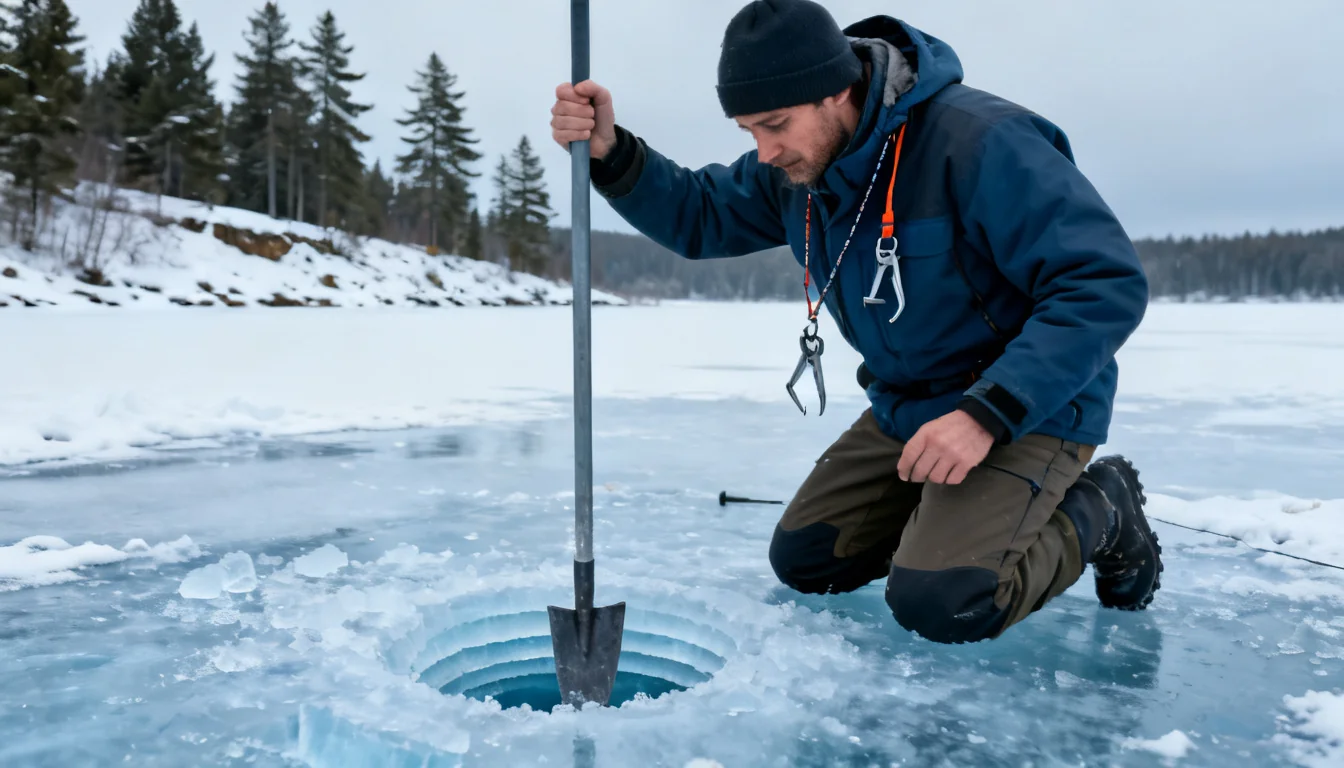
And no ice is ever uniformly safe. Check it as you go with a spud bar or auger every 100-150 feet, and be extra careful near inlets, outlets, springs, and anything with current, where ice forms thinner and weaker. Pressure ridges and shoreline cracks deserve a wide berth.
The rest is common sense that saves lives: never fish alone, tell someone exactly where you're going and when you'll be back, wear a float suit or life jacket over your winter clothes, and carry ice picks on a lanyard around your neck — if you go through, they're what get you back onto the ice.
A rope in your sled costs nothing and can pull a partner out. When in doubt about the ice, fish open water or find a spot where others are already out.
Ice Fishing Tips: Small Baits, Slow Action
The ice fishing setup is simpler than open-water gear, and the tactics come down to one idea: put something small and slow in front of a fish that won't chase.
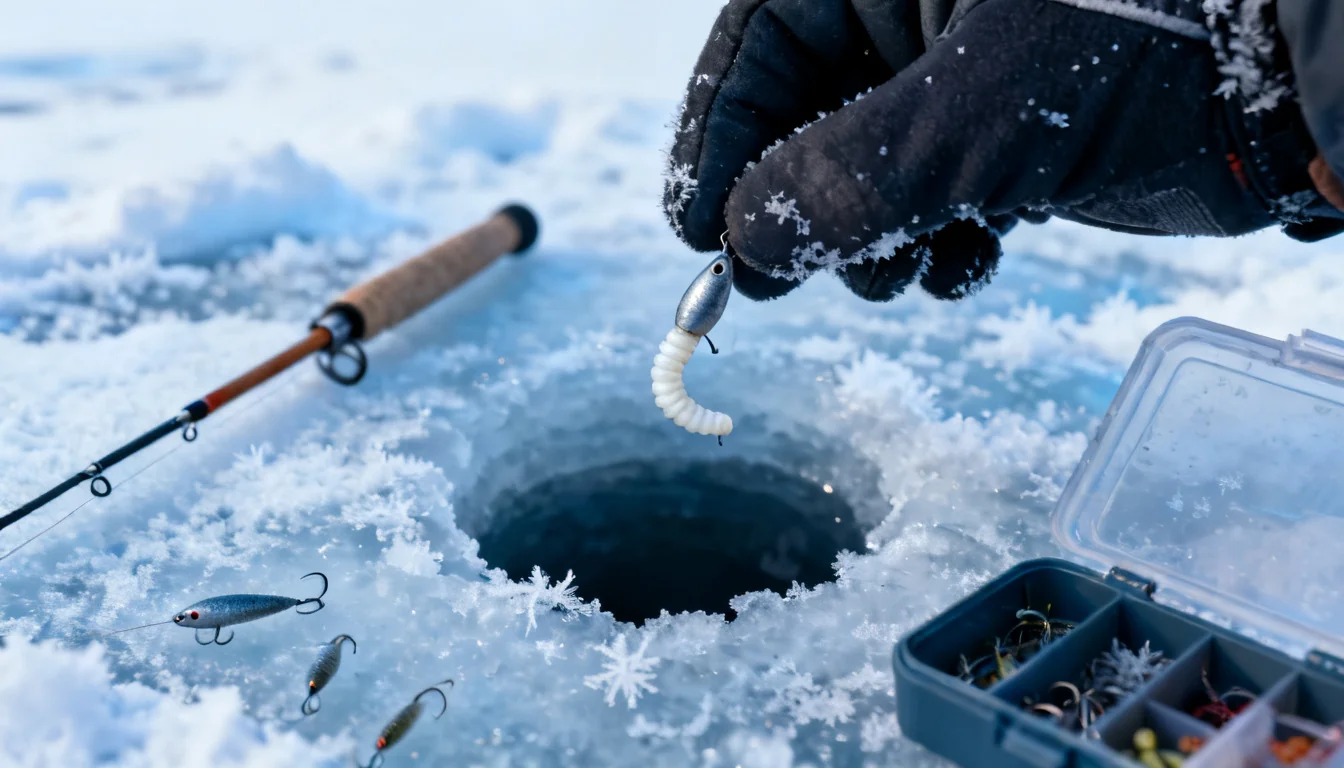
The classic presentation is a 24-36 inch ice rod, 2-4 lb line, and a tiny jig — tungsten jigs drop fast and telegraph bites, and teardrop and glow jigs are the standards. Tip the hook with a waxworm, a spike (maggot), or a piece of nightcrawler, or drop a small minnow for perch, crappie, and walleye.
The retrieve is where beginners fail: they fish it like summer. Instead, lift the rod tip slowly 6-12 inches, then let the jig fall on slack line and wait — five seconds, sometimes ten.
Crappie and perch strikes usually come on the fall, when the jig is dropping. If the fish are suspended (crappie often sit 5-15 feet above deep structure), use a fish finder or count your jig down to their depth instead of fishing the bottom.
Tip-ups extend your reach. A tip-up is a simple flag-and-spool device that sits over the hole with a live minnow suspended below — when a fish takes, the flag pops.
They're the standard way to cover walleye and northern pike while you jig for panfish in another hole. Drill several holes in a line from shallow to deep and move until you mark fish; that slow presentation works everywhere, but only where the fish actually are.
Open-Water Fishing in Winter: Deep and Slow
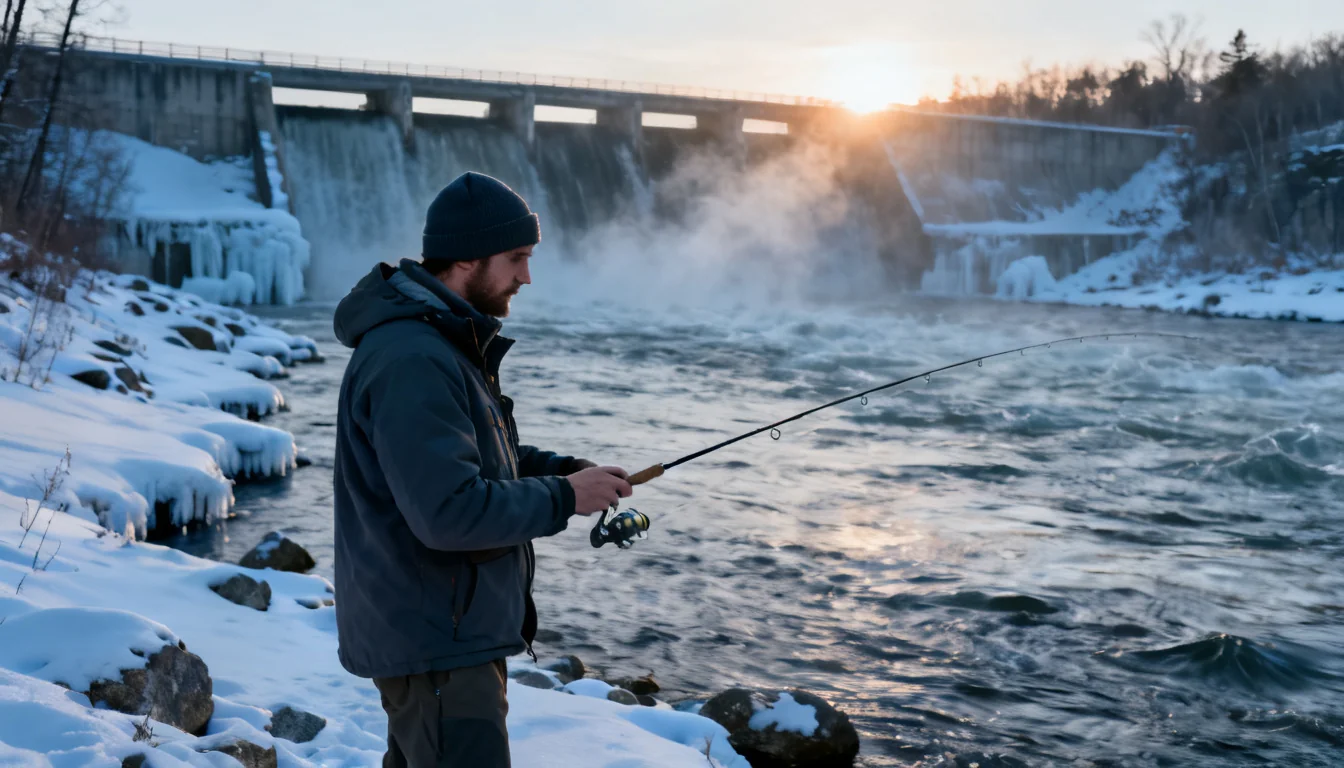
Half the country never sees fishable ice, and even in the North there's open water all winter below dams and on big rivers. The open-water winter pattern is the same story: deep water fishing means the fish are deep, tight to structure, and moving slow — so you fish deep and slow.
On southern reservoirs, target deep creek channels, main-lake drop-offs, and brush piles in 15-30 ft. Minnow-tipped jigs and slow, small crankbaits worked along the bottom are the go-to. Walleye in winter hold in deep basins and river channels, 20-40 ft, and take a minnow-tipped jig fished slowly — see our how to catch walleye guide for the full rig rundown.
Tailwaters are the winter trout capital. Water released from dam bottoms stays in the mid-40s to 50s year-round, so rainbow trout below dams like the White River in Arkansas and the San Juan in New Mexico feed all winter.
Slow-drift a small bait or nymph near the bottom and the bite can be spectacular — our how to catch rainbow trout guide covers the tailwater tactics.
Stocked ponds in the South also keep producing: bluegill, crappie, and catfish in deep holes will still eat small, slow offerings through January.
Gear for Winter: Keep It Light
Winter gear doesn't need to be expensive or complicated — the theme is light and sensitive.
Because fish bite softly and feed on tiny baits, you want the lightest line you can get away with: 2-6 lb monofilament for panfish and trout, 6-10 lb for walleye. A sensitive rod matters more than a powerful one; you're feeling a two-ounce perch mouth a waxworm, not horsing a bass out of weeds.
For ice fishing, a short 24-36 inch ice rod with a spring-bobber tip is the standard — the spring shows bites you'd never feel in a gloved hand. For open water, any light spinning combo works.
Beyond the rod, carry an assortment of tiny jigs (1/32 to 1/16 oz), a box of waxworms and spikes, a few small minnows, and tip-ups if you're targeting walleye or pike. Dress in layers, keep your hands warm, and bring a thermos — the angler who stays comfortable fishes longer, and in winter that's most of the battle.
Best Times and Weather in Winter
Winter inverts the summer schedule. Instead of dawn and dusk, the prime window is midday, roughly 10 a.m. to 2 p.m.
It's the warmest, brightest part of the day, when fish under the ice and in open water are most active. On hard ice, the bite can actually run all day, but midday is the most reliable bet for a short winter trip.
Weather edges matter too. The first two weeks after a lake locks up are famously good: fish are still feeding in their fall haunts and anglers are just learning the new ice. Late ice — the last few weeks before break-up — is the other peak, as warming water wakes fish up.
In between, stable weather beats everything: a string of calm, consistent days produces more than a warm front that swings the barometer wildly. On open water, pick sunny, wind-protected banks, where the water warms a degree or two and fish notice.
Regional Winter Patterns
The best fishing in winter depends entirely on where you live:
- North (Minnesota, Wisconsin, Michigan, the Dakotas, New England): the ice fishing heartland. Lakes lock up reliably and the perch, crappie, walleye, and pike fisheries through the ice are world-class.
- Great Lakes tributaries: fall-run steelhead and trout hold in the rivers through winter; some of the best fishing of the season happens in the dead of winter below the dams and in the deep pools.
- Midwest and Plains: solid ice most winters for panfish and walleye; reservoirs below dams stay open and fishable.
- South (Texas, the Southeast, Gulf states): rarely any ice — it's open-water fishing all winter. Crappie move to deep timber, bass slow down but still bite, and catfish keep feeding in deep holes. For the winter panfish pattern, see our how to catch bluegill guide.
- West: tailwaters below dams are the consistent winter bet, along with high-desert lakes that freeze for panfish and trout.
Wherever you fish, the same two questions answer everything: how deep are the fish, and how slow can I go? Answer those, and winter stops being the off-season.
Winter FAQ
Do fish bite in winter?
Yes — they just bite less often and softer. Cold-water fish slow their metabolism but keep feeding, especially on small, easy meals. Yellow perch and crappie feed actively all winter, and the midday bite under the ice is often steady for hours.
Can you catch bass in the winter?
You can, though it's a different game. Largemouth and smallmouth bass hold deep near structure in winter and strike very slow presentations — jigs, blade baits, and soft plastics dragged along the bottom. Southern lakes give the most reliable winter bass bite; in the North, hard-core anglers catch them through the ice on tip-ups and jigging spoons.
How do you catch fish through the ice?
Drill your first hole on at least 4 inches of clear ice and drop a small jig tipped with a waxworm or spike — often just off the bottom — and watch the line for the softest tap.
Don't sit on one hole: space several holes from shallow to deep and hop between them until you mark fish, since winter fish hold tight to one specific spot.
Do you need special gear for ice fishing?
Not much — your lightest open-water combo will do. Ice rods are short so you can jig sitting beside the hole, and a spring-bobber tip makes faint bites visible through gloves. The real additions are an auger, a spud bar to test the ice, and a sled to haul it all.
What is winterkill and how does it affect fishing?
Winterkill is a fish die-off in shallow lakes when heavy snow blocks sunlight, plants stop producing oxygen, and the water slowly depletes. It mostly hits shallow, fertile lakes in late winter. It's rarely an issue on deep lakes, which is why the biggest, most stable winter fish hold offshore.
The Bottom Line
Winter fishing rewards the patient: fish deep, downsize your bait, slow everything down, and fish the midday hours on stable days. On ice, respect the thickness rules before you ever drill a hole; in open water, target deep structure and tailwaters. The fish are there, and they're still eating — they just want you to meet them where they live.