White Bass: Complete Guide to America's Most Underrated Spring Fish
Every spring, something remarkable happens in rivers and reservoirs across the middle of America: white bass push upstream by the thousands, and anglers who know the run catch fish until their arms ache. Fast, aggressive, and willing to hit nearly anything, the white bass is one of the best "fun per cast" fish in freshwater.
This guide covers white bass identification, the spring run, habitat, and how to catch them — plus how they differ from their bigger cousins, the striped bass and hybrid.
What Is a White Bass?
White bass (Morone chrysops) is a freshwater bass in the family Moronidae, closely related to striped bass and yellow bass. It's smaller than a striper but shares the same feeding aggression and schooling behavior.
Key facts:
- Scientific name: Morone chrysops
- Common names: white bass, silver bass, sand bass, barfish
- Size: commonly 8–14 inches; 15–17 inch fish are excellent; anything over 2 pounds is a trophy
- Lifespan: about 5–7 years
- Habitat: large rivers, reservoirs, and lakes across the central and eastern US
- Diet: small fish (shad, minnows), plus aquatic insects and crustaceans
White Bass vs. Striped Bass vs. Hybrid
| Feature | White Bass | Striped Bass | Hybrid (Wiper) |
|---|---|---|---|
| Size | 8–14 in, 1–2 lb | 5–30+ lb | 5–15 lb |
| Stripes | Faint, often only one clear line | 7–8 continuous dark stripes | Broken, irregular stripes |
| Body | Deeper, more compressed | Elongated | Intermediate |
| Tooth patch | One on tongue | Two | One |
| Habitat | Mostly freshwater | Coastal + freshwater | Stocked reservoirs |
White Bass Identification
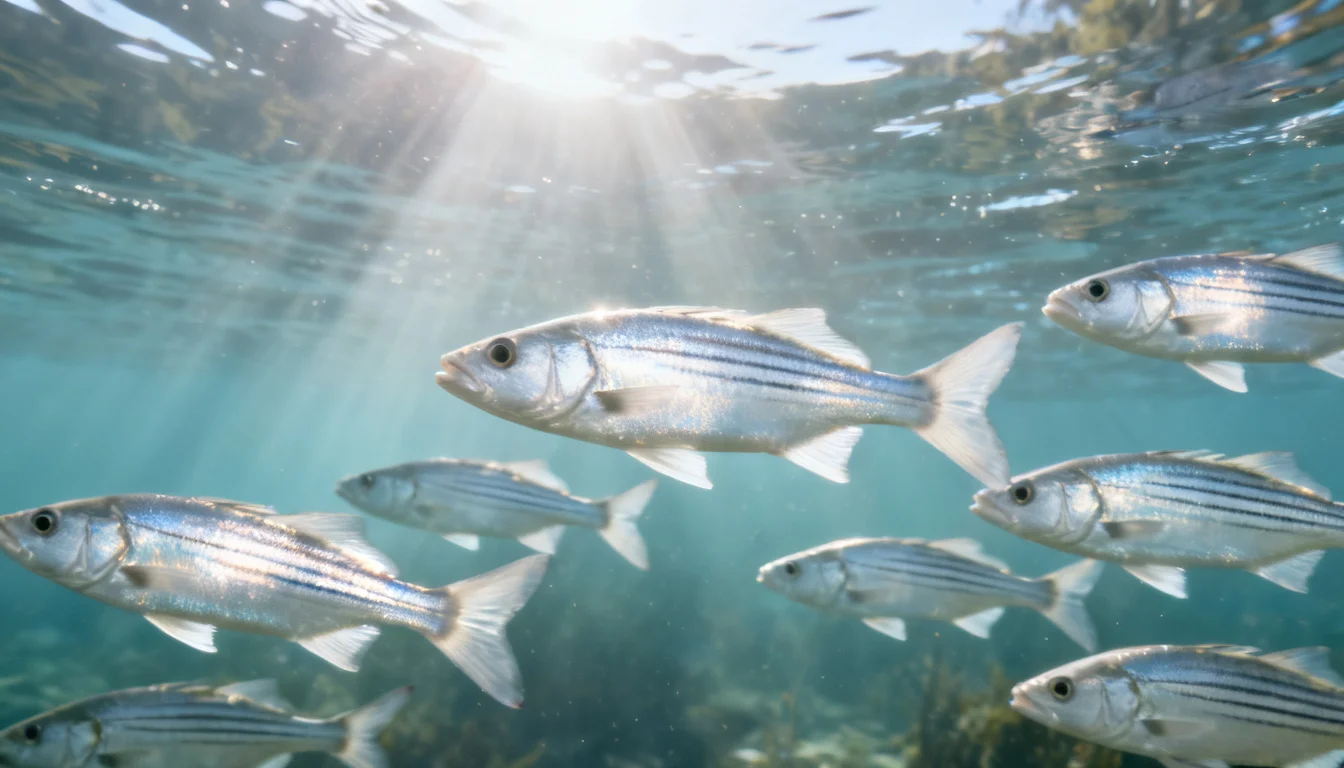
- Body: deep, laterally compressed (taller-bodied than a striper), silver with a slight brass tint
- Stripes: faint horizontal lines, often with one distinct stripe running along the lateral line
- Eyes: relatively large
- Tail: forked
- Tongue: one tooth patch (a key difference from striped bass)
Where White Bass Live
White bass are widespread across the central and eastern United States — especially:
- The Mississippi River system and its major tributaries
- Midwestern reservoirs (the Dakotas, Kansas, Oklahoma, Texas, Missouri, Arkansas)
- Great Lakes tributaries (spring spawning runs on rivers feeding Lake Erie)
- Southern reservoirs with shad populations
Habitat
- Rivers: current breaks, deeper pools, and channels; move upstream in spring
- Reservoirs: open water following shad schools; shoreline structure in spring
- Lakes: schooling in open water; feed on top when chasing shad
The White Bass Run (Spring)
The spring spawning run is the highlight of white bass fishing and the easiest time to catch big numbers:
- When: typically March–May, when water temperatures reach 55–65°F
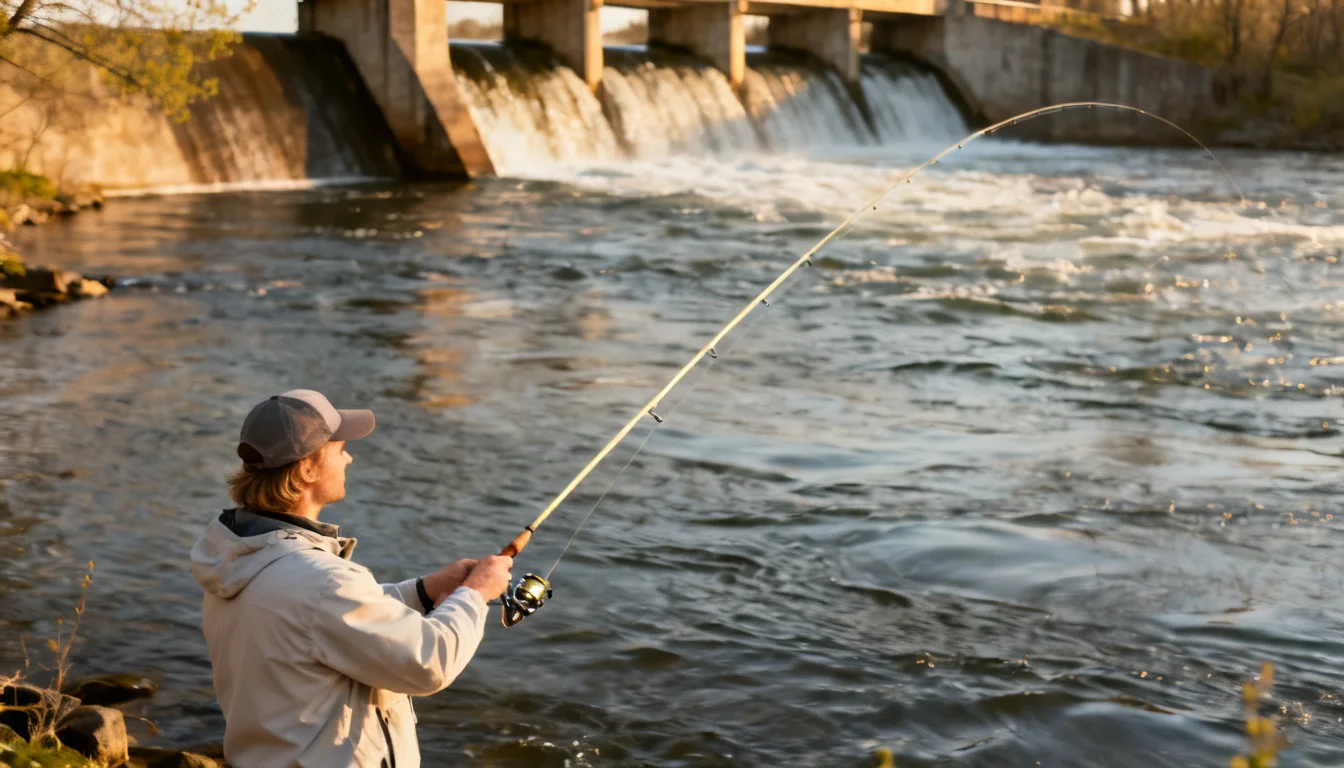
- Where: upriver — white bass push into rivers and creeks, often stopping at the first barrier (dam, waterfall)
- Behavior: they school tightly in current seams, eddies, and below dams
- Bonus: the run often coincides with the crappie spawn, so you may catch both
Reservoir and Summer Fishing
After spawning, white bass move back to open water and follow shad schools:
- Summer: look for surface feeding activity (busting schools) at dawn and dusk
- Fall: schooling and feeding heavily; good action on jigs and spoons
- Winter: deep water, often schooled tight — jigging spoons and blade baits work
- Lake Erie tributaries: spring runs are famous (Maumee, Sandusky rivers)

How to Catch White Bass
Gear (Light and Simple)
- Rod: 6–7 foot light or medium-light spinning
- Reel: 1000–2500 size spinning reel
- Line: 6–10 lb mono or braid
- Lures: small — white bass have small mouths
Top Techniques
1. Jigs and Curly Tails
The workhorse method: a 1/16–1/4 oz jig head with a white or chartreuse curly-tail grub. Cast into current seams and retrieve with a steady swim or short hops.
2. Small Crankbaits and Spoons
Shad-colored crankbaits, small spoons, and blade baits imitate their forage. Cast and retrieve, or jig vertically over schools.
3. Live Bait
Minnows under a bobber or on a jig head are deadly during the spring run. A simple minnow-and-jig combo catches fish all day.
4. Surface Feeding (Busting Schools)
When white bass push shad to the surface, cast small topwater lures, spoons, or jigs into the commotion. Keep a rod ready — the action is often fast and short.
5. Vertical Jigging (Winter/Deep)
Find the school on sonar and jig a spoon or blade bait straight down. White bass respond well to this in cold water.
Where to Fish: Reading the Water
- Below dams — the classic spring run spot; fish the current seams
- River mouths and creek confluences — mixing water concentrates bait
- Points and humps in reservoirs
- Current breaks — eddies, bridge pilings, and rock walls
- Open water with shad — find the bait, find the bass
Regulations
- License: required — see our fishing license guide
- Bag limits: generous in most states (often 10–25 fish per day) because white bass are fast-growing and abundant
- Size limits: usually none or minimal
- Spring run closures: some states restrict fishing below dams during spawning to protect the run
Check your state's rules — white bass rules vary widely, and some waters have special regulations.
Common White Bass Mistakes
1. Using tackle that's too heavy — small lures and light line get far more bites
2. Missing the spring run timing — the run is short (weeks); watch water temperature
3. Not moving — white bass school and move; if you stop catching, move until you find them
4. Ignoring surface action — when they're busting shad on top, switch to small topwaters or spoons
5. Fishing the wrong depth — follow the shad on sonar; white bass are rarely far from their food
FAQ
When is the white bass run?
The run typically happens March through May, when water temperatures hit 55–65°F. Timing varies by latitude — southern runs start earlier (February–March), northern runs later (April–May).
How big do white bass get?
Most white bass are 8–14 inches and under 1.5 pounds. A 15–17 inch fish is a good one, and anything over 2 pounds is exceptional.
How do I tell a white bass from a striped bass?
White bass are smaller and deeper-bodied with faint, often broken stripes (usually one clear stripe along the lateral line). Striped bass are longer, have 7–8 continuous bold stripes, and grow much larger.
What's the best bait for white bass?
Small jigs with curly-tail grubs (white or chartreuse) are the classic. Live minnows are excellent, especially during the spring run. Small spoons and crankbaits work when fish are chasing shad.
Can you catch white bass from shore?
Yes — during the spring run, shore anglers catch white bass by the hundreds below dams and along river banks. Cast jigs or minnows into the current seams.
Are white bass good to eat?
Yes — white bass have firm, mild white flesh and are excellent fried or baked. They're popular eating fish in the Midwest. Just bleed and ice them quickly for the best flavor.
Final Checklist
1. Time the run — watch for 55–65°F water in spring
2. Go light — small jigs, light line, small lures
3. Fish the current — below dams, river mouths, and eddies
4. Follow the shad — white bass are rarely far from their food
5. Move until you find them — they school tightly
6. Check the rules — bag limits and spring-run closures vary
For their bigger saltwater cousins, see our striped bass guide. Learning to fish rivers pays off here — our how to fish a river guide covers the current-reading skills you'll need.