Fly Fishing for Beginners: The Line Carries the Fly
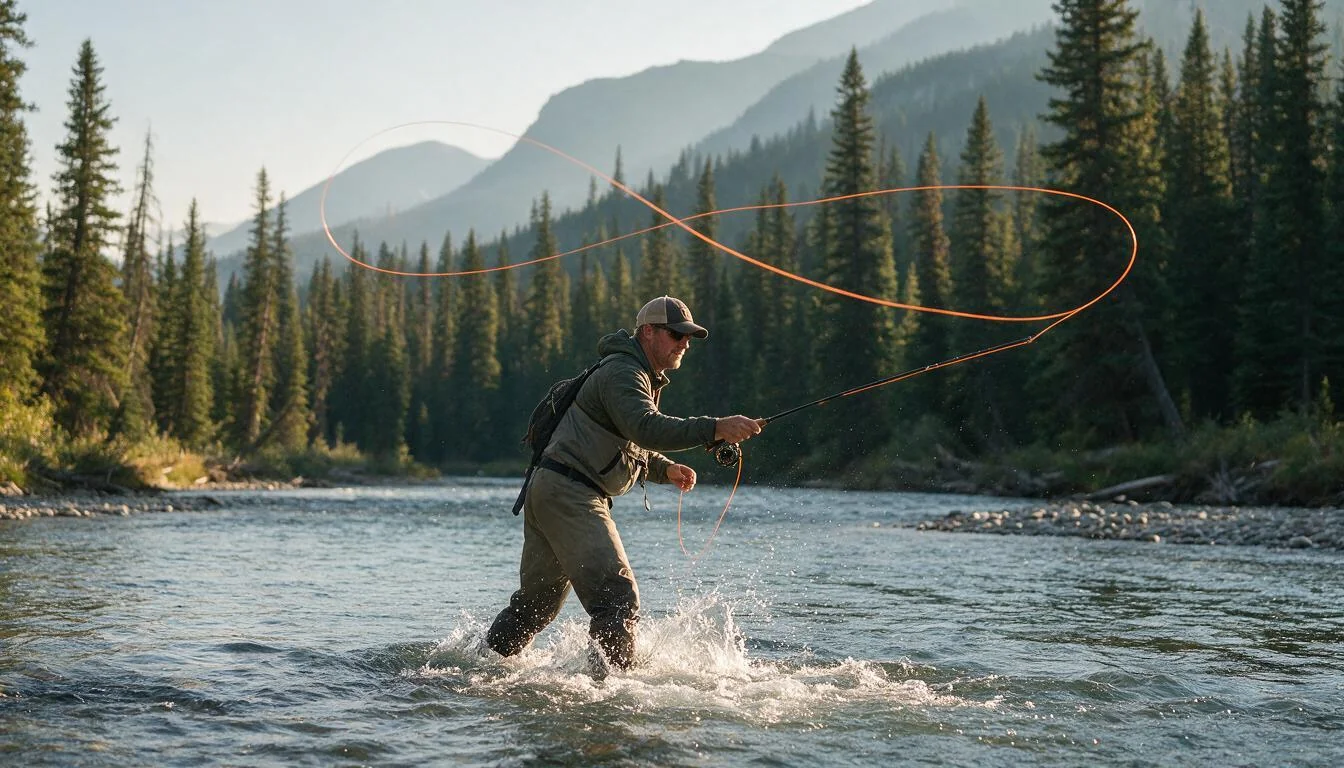
A spinning rod throws a lure that drags the line behind it. A fly rod flips that arrangement. The line is the weight, and a fly no bigger than a fingernail rides along for the trip.
That one reversal explains the thick line, the whippy rod, and the odd feeling in your casting arm. It also explains why fly fishing for beginners is mostly a line-control lesson instead of a distance contest.
Most new anglers catch their first trout on a cast of about 20 feet. A size 16 dry fly weighs almost nothing, so none of your casting power comes from the fly itself. You build a loop with the line and let it straighten out.
Where a spinning lure swims on its own, a fly only looks alive if the current or your hand gives it motion.
On US trout water — stocked put-and-take creeks, tailwaters below dams, mountain brooks — the fish you meet first are usually rainbow trout in the 9- to 13-inch class, with wild browns mixed in. They are forgiving, and they will teach you that presentation beats distance.
Choose a Rod Weight Before Anything Else
Start with a 4-, 5-, or 6-weight fly rod, 8 to 9 feet long. That range covers nearly all trout water in the lower 48.
The 9-foot 5-weight is the standard do-everything choice, and for good reason. It throws dry flies, light nymph rigs, and modest streamers, and it gives you the reach to hold line off the water and mend.
Fly rod weight is not the rod's physical weight. It is the line size the rod is built to load. Most advice you hear about fly fishing for beginners starts here, and it starts with that single number.
A 3-weight bends under a light line and suits small brook-trout creeks. An 8-weight is overkill for a 12-inch rainbow and tends to slap a fly onto the water instead of setting it down.
Match the numbers. Under AFFTA standards, a 5-weight line weighs about 140 grains in its first 30 feet. A 4-weight runs about 120 grains and a 6-weight about 160. A 5-weight rod takes a 5-weight line unless the maker says otherwise.
Length follows the water. An 8-foot 4-weight shines in brushy creeks where a 9-footer snags on every backcast. A 9-foot 6-weight handles wind, bigger rivers, and heavier streamers. At this scale the reel mostly holds line and provides a little drag, so put your money into the line.
Fly Line, Leader, Tippet: How the Stack Works
A fly line is thick, colored, and heavy enough to feel in your hand. A weight-forward floating line in 5-weight is the beginner default. The extra weight sits toward the front, which helps you load the rod on shorter casts. Sink tips and full sinking lines come later, once you're fishing deep water on purpose.
A fly line alone would spook every fish in the pool, so you tie a tapered leader to its tip. Nine feet is the standard length, and a 9-foot leader tapered to 5X pairs with a 5-weight line. Shorter rods fish better with a 7 1/2-foot leader.
The taper runs roughly 60 percent butt, 20 percent midsection, 20 percent tippet, with the butt turning the light end over.
Tippet is the expendable end of the leader, and the X number describes diameter rather than strength. A 6X tippet is thinner and less visible than a 3X, which matters with clear water and pressured fish. When a trout refuses your fly, or your drift starts dragging, add 12 to 18 inches of 5X or 6X and try again.
Two knots do most of the connecting work: one joins the leader to the line, one ties the fly. Learn them at the kitchen table, not in the wind.
The Three Casts You Actually Need
The roll cast earns its keep on every trip, especially with brush at your back. Start with the fly and a few feet of line on the water in front of you.
Lift the rod tip slowly and let the line drag across the surface, because that tension loads the rod the way a backcast normally would.
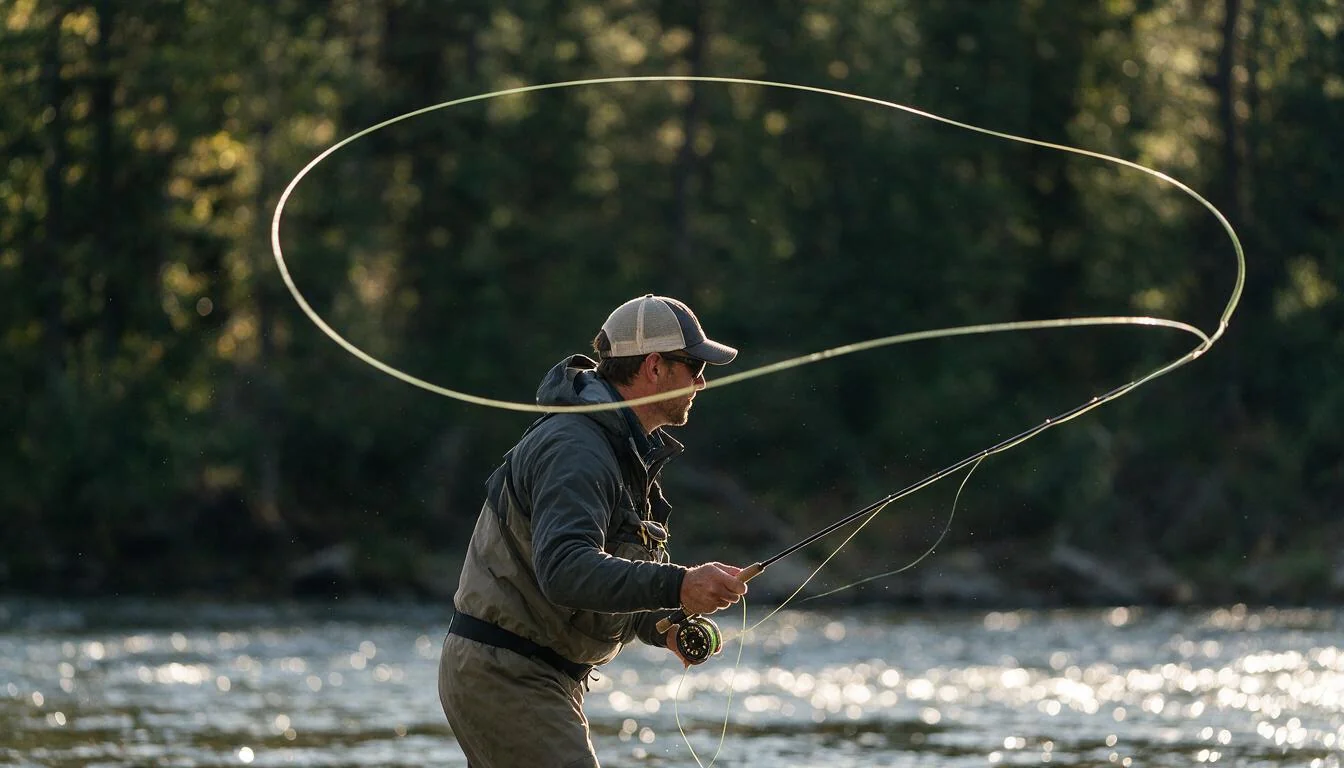
Draw the line back behind your shoulder into a D-shape, drive forward, and stop the tip crisply just above horizontal. The line rolls out in a C and the fly lands.
The false cast is the back-and-forth motion you picture when you think about fly fishing. Pick the line up, raise the tip to about 10:30, then accelerate smoothly and stop at 1:30. A hard stop with a quiet wrist is what makes the loop.
Pause until the line straightens behind you, then cast forward and stop near 10:00. Add about a foot of line per cycle, no more.
The reach cast and the mend buy you a drag-free drift. On the forward delivery, reach the rod tip a couple of feet upstream of your target so the line lands above the fly, and the extra slack gives the fly a longer natural ride. When the line starts pulling, lift and flip a short upstream mend.
Every cast ends the same way: the tip stops, and the line goes where the tip pointed.
Where Trout Sit in the Current
Trout face upstream and hold against the flow while burning very little energy. The trick is that they rarely sit in the fast water. They hold in the slower pocket beside it, watching food slide past a few inches away.
Look for the seam, the visible line where fast water meets slow. Riffle tails, the head of a pool, the cushion just in front of a boulder, and the foam line on a big river all mark likely lies. A rise that happens in the same spot twice usually means a feeding fish, and you can approach it from below.
For a fuller map of where fish hold, work through reading current.
Water temperature narrows the search fast. Trout feed hardest between 50 and 65°F, with the best action in the mid to upper 50s. Below 40°F they barely move, so fish deep and slow. Above 68°F, leave them alone — warm water holds little oxygen, and a released fish may not survive the day.
A Starter Fly Selection
Trout eat underwater most of the time, so a beginner fly selection is deliberately small and a little dull.
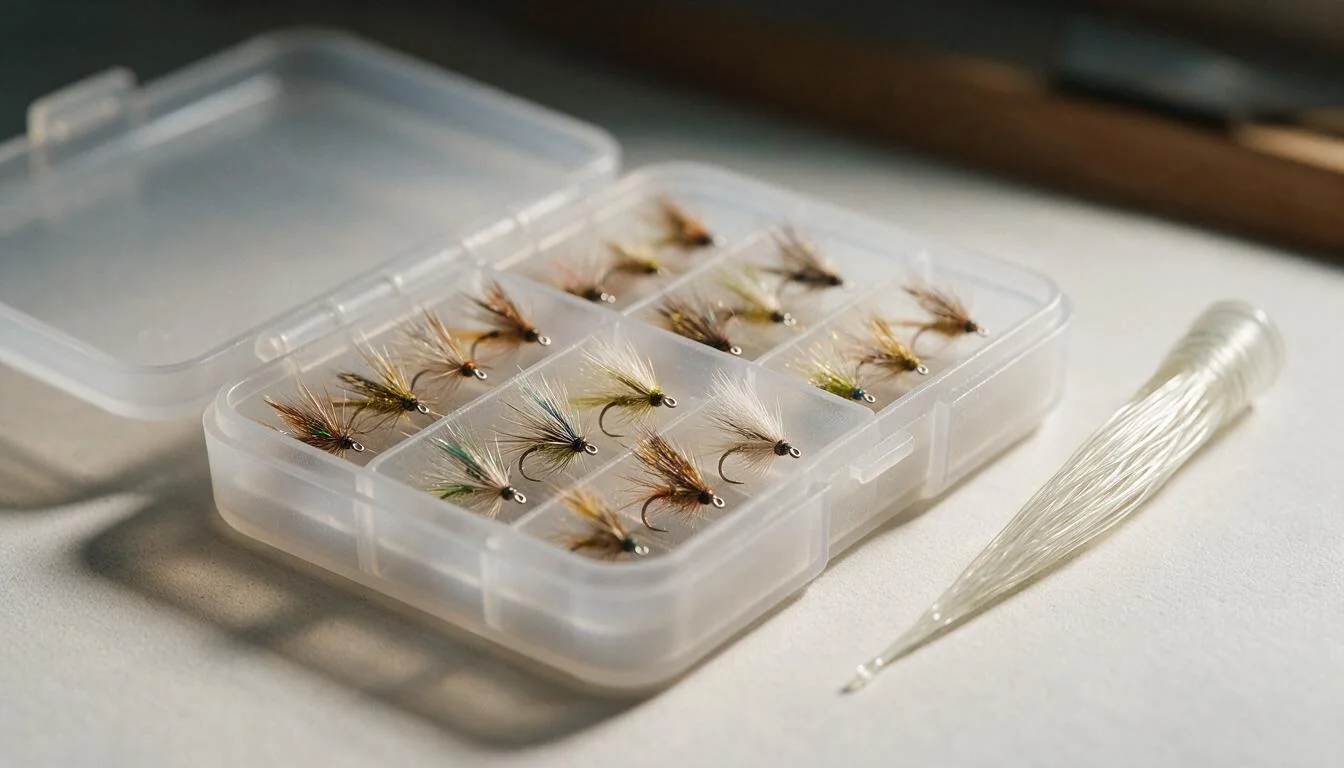
- Dry flies float and imitate adult insects on the surface. A Parachute Adams in sizes 12 to 16 covers mayflies and passes for several other bugs. An Elk Hair Caddis in the same sizes imitates caddis.
- Nymphs sink and imitate underwater life stages — a mayfly nymph crawling on a rock, a midge drifting in the film. A Hare's Ear in 12 to 16 and a Pheasant Tail in 14 to 18 handle most days. A Zebra Midge in 18 to 22 earns its place on tailwaters.
- Streamers imitate baitfish and leeches, and you strip them through the water. A bead-head Woolly Bugger in sizes 6 to 10 covers baitfish, crayfish, and big nymphs. It has saved more blank days than any dry fly.
Buy sizes before colors. Six patterns in two sizes each will outfish a hundred random flies pulled from a bargain bin.
Where to Go First, and Why to Cast in the Yard
Start where fish are stocked and easy to find. State wildlife agencies publish stocking lists, and a put-and-take creek near a town will hold rainbows for a week or two after the truck leaves. Tailwaters below dams stay cold and steady all year, which is why they grow bigger brown trout than freestones nearby.
Then talk to people. A local fly shop will tell you which stretch is fishing, which pattern is working, and how to fish it. Buy a couple of flies, ask for a map, and treat that advice as the shortcut it is. Dated, handwritten conditions beat anything you piece together from a forum.
Before any of that, put in 20 minutes on a lawn. Cast at a paper plate at 25 feet until you can drop the fly inside a hula hoop most of the time. No fish are disturbed, no tippet is lost to a tree, and your stop becomes automatic.
FAQ
Can I fish a fly with a spinning rod?
You can drift a small fly under a float with spin gear, and it does catch fish. What you won't learn is line control, and the fly won't move the way a trout expects. If fly fishing is the goal, start with a fly rod.
Do I need waders to start?
No. Plenty of stocked water and tailwater banks can be fished from shore in warm months, and wet wading in shorts works fine in summer. Add breathable waders when the water drops below about 60°F.
How do I know a trout ate my nymph?
You usually see the indicator pause, dip, or slide sideways rather than a hard strike. Sweep the rod downstream and slightly up, more like a firm pull than a jerk. If the line stops drifting the way it should, lift.
Can a 5-weight handle bass and bluegill?
Yes. A 5-weight throws the small poppers and streamers that bluegill and river smallmouth hit well. If you plan on big bass bugs, heavy wind, or thick cover, step up to a 6- or 7-weight.
What do I do when it's windy?
Keep the wind on your casting side instead of in your face, tighten your loop, and roll cast when the wind kills your backcast. A slightly heavier line helps more than muscling the rod.
The Bottom Line
Fly fishing for beginners rewards patience more than distance. Get a 9-foot 5-weight, a matching floating line, a 9-foot 5X leader, and six flies. Learn the roll cast and the hard stop.
Fish water you can wade, watch the current, and keep your fly in the slow lane beside the fast one. Two fly fishing knots tied at the kitchen table will carry you through most of your first season.
Related: Fishing Knots 101: The 5 Knots Every Angler Should Master