Striped Bass: Complete Guide to America's Favorite Coastal Fighter
Ask an East Coast angler to name the fish that defines their fall, and most will say it: striped bass. Known simply as "striper" to its devotees, this silver-and-black migration machine moves by the millions along the Atlantic coast every year, driving one of the most passionate recreational fisheries in America.
This guide covers everything about striped bass — identification, distribution, migration, feeding habits, seasons, and how to catch them — whether you're fishing the surf, a tidal river, or a landlocked reservoir population.
What Is a Striped Bass?
Striped bass (Morone saxatilis) is a temperate bass in the family Moronidae — not the same family as largemouth or smallmouth bass. It's an anadromous fish, meaning most populations spawn in fresh water and spend their adult lives in salt water, swimming back upriver each spring.
Key facts:
- Scientific name: Morone saxatilis
- Common names: striper, rockfish (in the Chesapeake and Carolinas), linesider
- Size: commonly 5–30 pounds; 40–50+ pound fish are the trophy class
- Lifespan: females can live 30+ years; males about 15
- Habitat: coastal Atlantic waters, estuaries, and tidal rivers; landlocked populations in reservoirs
- Diet: fish (menhaden, herring, shad, eels), squid, and crustaceans
Striped Bass vs. Hybrid Bass
The hybrid striped bass ("wiper" or "sunshine bass") is a cross between striped bass and white bass. Hybrids have broken, less distinct stripes and are stocked in many freshwater reservoirs. If you're fishing inland, your catch may well be a hybrid — check the stripes and body shape.
Striped Bass Identification
Striped bass are easy to identify once you know what to look for:
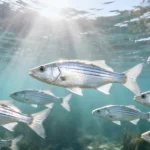
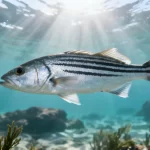
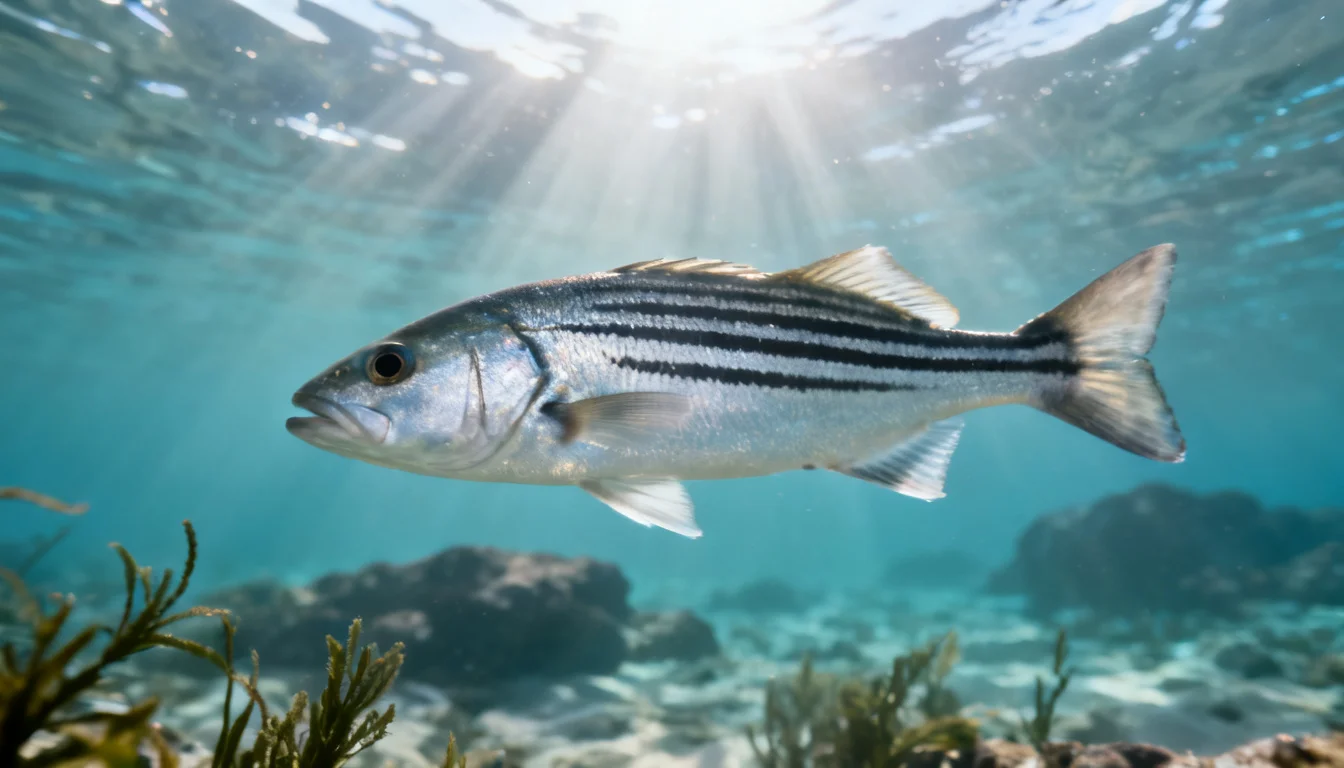
- Stripes: 7–8 continuous dark lateral lines running the length of the body (the key ID feature)
- Body: elongated, silver-sided, streamlined
- Mouth: large, extending past the eye
- Tail: forked
- Two dorsal fins: the front one with sharp spines
- Tongue: two tooth patches on the tongue (vital for telling stripers from hybrids — hybrids have one)
Tip: broken or interrupted stripes point to a hybrid; continuous, clean stripes mean pure striped bass.
Where Striped Bass Live
Striped bass range along the Atlantic coast from the St. Lawrence River in Canada to northern Florida, with the greatest concentrations in the mid-Atlantic:
- Chesapeake Bay — the single most important spawning and nursery area
- Hudson River — a major spawning population
- Delaware Bay, Long Island Sound, Massachusetts, Maine — the coastal migration corridor
- North Carolina (including the Roanoke River) — southern stronghold
- West Coast: introduced populations in San Francisco Bay and inland reservoirs
- Inland: many stocked reservoir populations across the South and Midwest
They use:
- Surf and beaches during the coastal migration
- Estuaries and tidal rivers in spring and fall
- Deep channels and structure in summer and winter
- Reservoirs and big rivers for landlocked populations
Striped Bass Migration & Season
The striped bass calendar is built on migration, and it's the most important thing to understand:
| Season | What's Happening |
|---|---|
| Spring (Mar–May) | Spawning runs up coastal rivers (Chesapeake, Hudson, Roanoke). Big fish move shallow. |
| Summer (Jun–Aug) | Fish spread out; northern coastal waters heat up and stripers move deeper or north. Night fishing shines. |
| Fall (Sep–Nov) | The best season. Massive southbound migration along the beaches. Blitzes, birds, and big fish. |
| Winter (Dec–Feb) | Fish hold in deeper coastal water and overwintering areas; some fisheries continue in the Chesapeake and the Carolinas. |
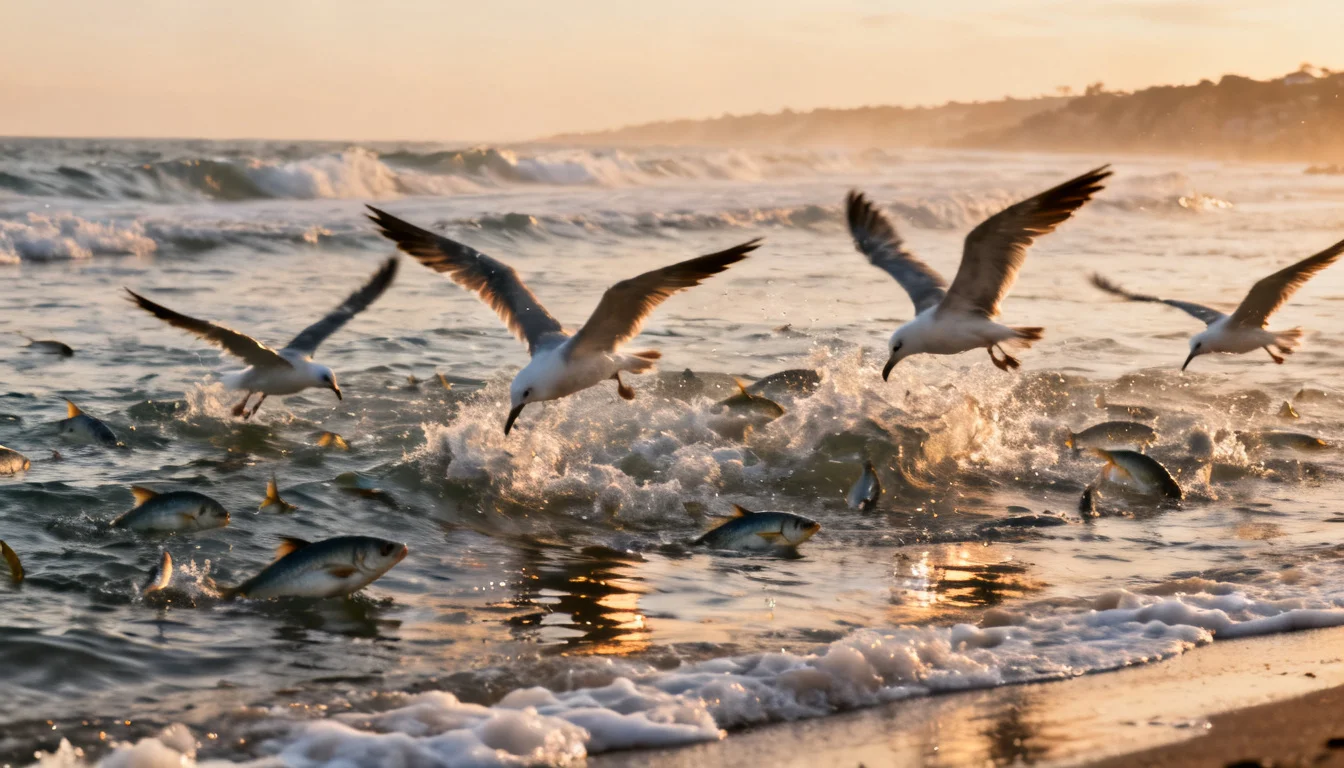
The fall run is what makes striped bass famous. Entire schools push bait against the beach, and surf anglers get shots at fish measured in dozens of pounds.
What Striped Bass Eat
Stripers are opportunistic predators with a preference for oily baitfish:
- Menhaden (bunker) — the #1 forage fish for stripers
- Atlantic herring — critical in New England
- Shad and river herring — key during spring spawning runs
- Eels — a top bait, especially for big fish
- Squid, sand eels, silversides — coastal staples
- Crabs and shrimp — opportunistic feeding
Key behavior: stripers feed most aggressively in low light — dawn, dusk, and especially night. Many of the largest fish are caught after dark.
How to Catch Striped Bass
Surf and Beach Fishing
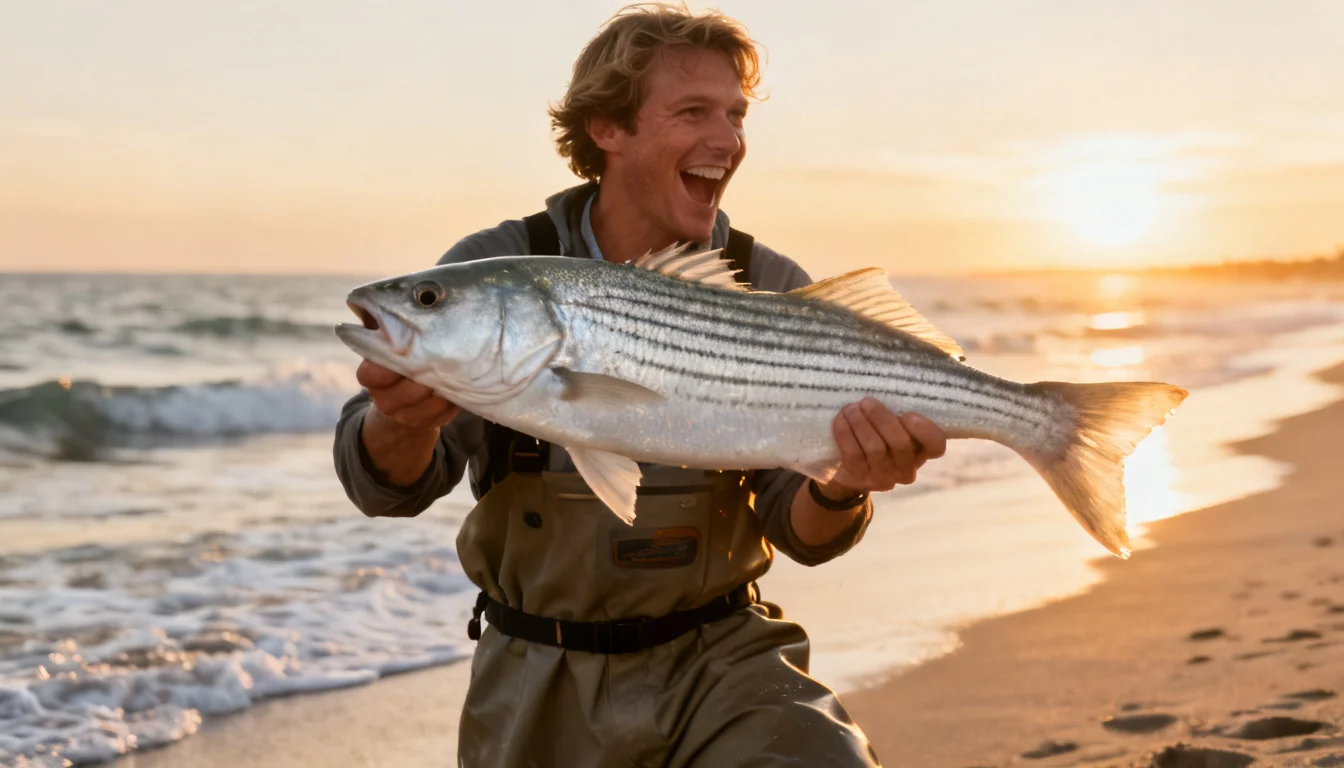
Cast from the sand into the wash, targeting the troughs where fish feed:
- Bait: bunker chunks with a fish-finder rig, or live eels
- Lures: bucktail jigs, pencil poppers, swimmers, metal spoons
- Timing: the fall run, moving water, low light
Boat and Bay Fishing
- Trolling with bunker spoons and deep-diving plugs along channel edges
- Live-lining bunker or eels around structure
- Jigging with bucktails over deep structure
- Chunking on anchor in a chum slick
Tidal River and Spring Run
- Fish the spawning run upriver with shad darts, swimbaits, and bait
- Target eddies, current seams, and the heads of pools
- Our how to fish a river guide covers reading current
Night Fishing
Night is striped bass prime time — fish the lights, bridges, and beaches with eels, swimmers, and poppers. Lights concentrate bait, and big stripers hunt in the dark.
Landlocked Reservoirs
Inland stripers and hybrids chase shad in open water:
- Follow the shad schools with sonar
- Vertical jig with spoons and slab baits
- Troll deep-diving crankbaits along points and channels
Striped Bass Regulations
Striped bass are managed tightly because of their history — the population crashed in the 1980s and recovered under strict regulation:
- License: required for both saltwater and inland fishing — see our fishing license guide
- Size limits and slot limits: vary by state; many states use a slot limit (keep only fish within a certain range) to protect large breeding females
- Bag limits: often 1–2 fish per person per day
- Circle hooks: required in many states when fishing with bait, to reduce release mortality
- Seasons: closures protect spawning runs in some states
Check your state's rules before every trip — striped bass regulations change frequently and are strictly enforced.
Common Striped Bass Mistakes
1. Ignoring the migration — stripers are where the bait is; follow the bait, not your favorite spot
2. Fishing midday in summer — switch to night or dawn/dusk for far better results
3. Skipping circle hooks with bait — many states require them, and they save fish
4. Fishing the wrong end of the tide — stripers feed on moving water; fish the current
5. Not matching the hatch — match the size and color of local forage
6. Handling big fish poorly — support the belly, keep them wet, release quickly
FAQ
How big do striped bass get?
Striped bass commonly reach 5–30 pounds, with 40–50+ pound fish in the trophy class. The largest recorded exceeded 80 pounds. Females grow much larger than males.
When is the best time to catch striped bass?
Fall (September–November) is the best season for most coastal anglers, thanks to the southbound migration. Spring spawning runs are excellent in tidal rivers. Night and low-light periods are the top daily windows.
What's the difference between striped bass and hybrid bass?
Hybrids are a cross between striped bass and white bass. They have broken, irregular stripes and only one tooth patch on the tongue; pure stripers have continuous stripes and two tooth patches.
What do striped bass eat?
Menhaden (bunker) is the top forage fish, followed by herring, shad, eels, squid, and sand eels. Stripers are opportunistic and will also eat crabs and shrimp.
Do I need a license to fish for striped bass?
Yes — both saltwater and inland striped bass fishing require a license, and regulations (size, slot, bag limits, circle hook requirements) vary by state. Always check current rules before you fish.
Can you catch striped bass from shore?
Absolutely — surf fishing for stripers is one of the great American fishing traditions. Cast bunker chunks, eels, or lures into the wash, focusing on the fall run and low light.
Final Checklist
1. Follow the migration — the fall run is prime time on the coast
2. Fish low light — dawn, dusk, and night produce the biggest fish
3. Match the forage — menhaden, herring, shad, eels
4. Regulations first — slot limits, bag limits, circle hook rules
5. Handle with care — these fish are managed for recovery; release them right
6. Watch the birds — feeding blitzes give away the school
New to fishing altogether? Start with our fishing for beginners guide, and tie your rigs with confidence using our fishing knots guide.