Steelhead: Complete Guide to the Ocean-Run Rainbow Trout
Take a rainbow trout, send it to sea for a few years, and you get a steelhead — a chrome-plated, ocean-hardened athlete that returns to coastal rivers with the power of a small salmon and the attitude to match. Catching one is a rite of passage for Pacific Northwest and Great Lakes anglers alike.
This guide covers steelhead identification, the differences from rainbow trout, run timing by region, tackle, and the techniques that put fish on the bank.
What Is a Steelhead?
A steelhead is the anadromous (ocean-migrating) form of the rainbow trout (Oncorhynchus mykiss). Unlike Pacific salmon, steelhead can survive spawning and return to the ocean — repeat spawners are called "multi-sea-winter" fish.
Key facts:
- Scientific name: Oncorhynchus mykiss (anadromous form)
- Size: commonly 5–15 pounds; 20+ pound fish are trophies; the record exceeds 40 pounds
- Lifespan: up to 8–9 years, with multiple spawning trips possible
- Habitat: coastal rivers and streams (Pacific coast), plus Great Lakes tributaries
- Diet: in the ocean — squid, fish, and crustaceans; in rivers — they mostly stop feeding and strike out of aggression
Steelhead vs. Rainbow Trout
| Feature | Steelhead | Rainbow Trout |
|---|---|---|
| Life history | Migrates to the ocean and returns | Stays in freshwater |
| Coloration | Silvery, chrome-bright when fresh from the sea | Olive/green with a pink lateral stripe |
| Size | 5–15+ lb | 1–5 lb (resident) |
| Body | Powerful, deep, muscular | Sleeker, smaller |
| Spots | Small, sparse spots | Heavy spotting on tail and body |
Note: after time in the river, steelhead "color up" and start looking like big rainbow trout — so a dark, colored-up fish isn't a rainbow, it's just a steelhead that's been in fresh water a while.
Steelhead Identification
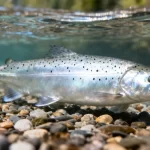
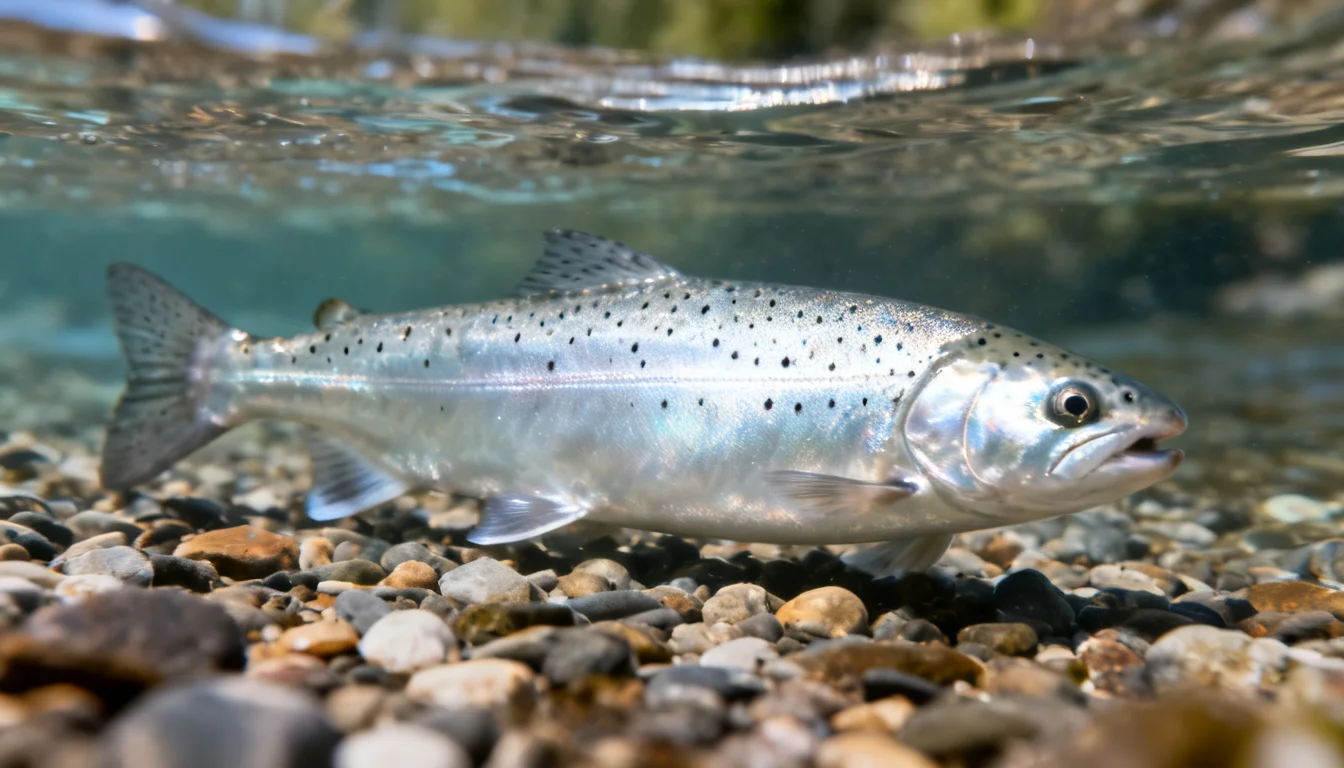
- Fresh-run fish: bright silver, chrome-sided, with a blue-green back and small black spots
- Colored-up fish: darker olive/brown with a reddish lateral band — closer to rainbow appearance
- Tail: square to slightly forked
- Mouth: smaller than a salmon's; the mouth line does not extend past the eye (a key salmon/steelhead ID difference)
- Anal fin: 10–12 rays
Where Steelhead Live
Steelhead are native to Pacific coast watersheds from California to Alaska, and they've been introduced into the Great Lakes:
Pacific Coast
- Pacific Northwest: Washington, Oregon, Idaho (Snake River system)
- California: coastal rivers and the Sacramento system
- British Columbia and Alaska: northern strongholds
- Rivers: Columbia, Snake, Rogue, Umpqua, Chehalis, Skagit, Vedder (BC)
Great Lakes
- Lake Erie tributaries (Ohio, Pennsylvania, New York) — the most accessible steelhead fishery in the East
- Lake Ontario tributaries (New York) — famous fall and winter runs
- Lake Michigan tributaries (Michigan, Wisconsin, Indiana)
Habitat Needs
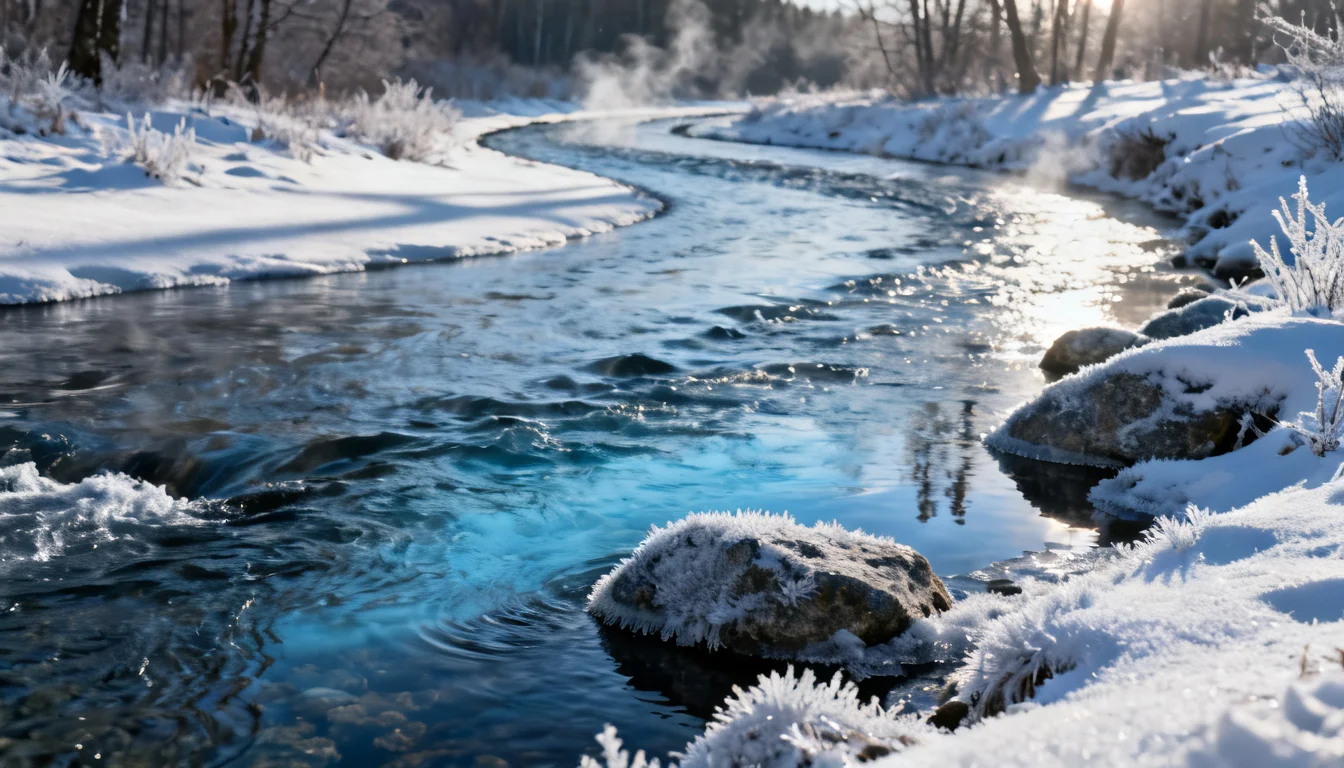
- Cold, clean, gravel-bottomed rivers for spawning
- Deep pools and riffles holding migrating fish
- Access to the ocean (or Great Lakes) for the anadromous life cycle
Steelhead Run Timing
Steelhead runs vary dramatically by region and by strain — the two main types are summer-run and winter-run:
| Type | Timing | Notes |
|---|---|---|
| Summer-run (A-run) | June–October | Enter rivers in summer, hold through fall, spawn in spring; bright fish in low water |
| Winter-run (B-run) | November–April | Enter in wet, cold months; the classic Pacific Northwest fishery |
Regional Timing
- Pacific Northwest: winter-run peak December–March; summer-run June–September
- Great Lakes (Erie/Ontario): best runs October–December, plus a spring run March–April
- California: winter-run December–March
Tip: fish after rain. Winter steelhead move upstream on rising water — a storm that colors the river often triggers the best fishing.
How to Catch Steelhead
Steelhead in rivers are notoriously picky — they've stopped feeding and respond to presentation and aggression triggers. The main methods:
1. Float Fishing (Bobber Dogging)
The most popular and effective method in the Northwest:
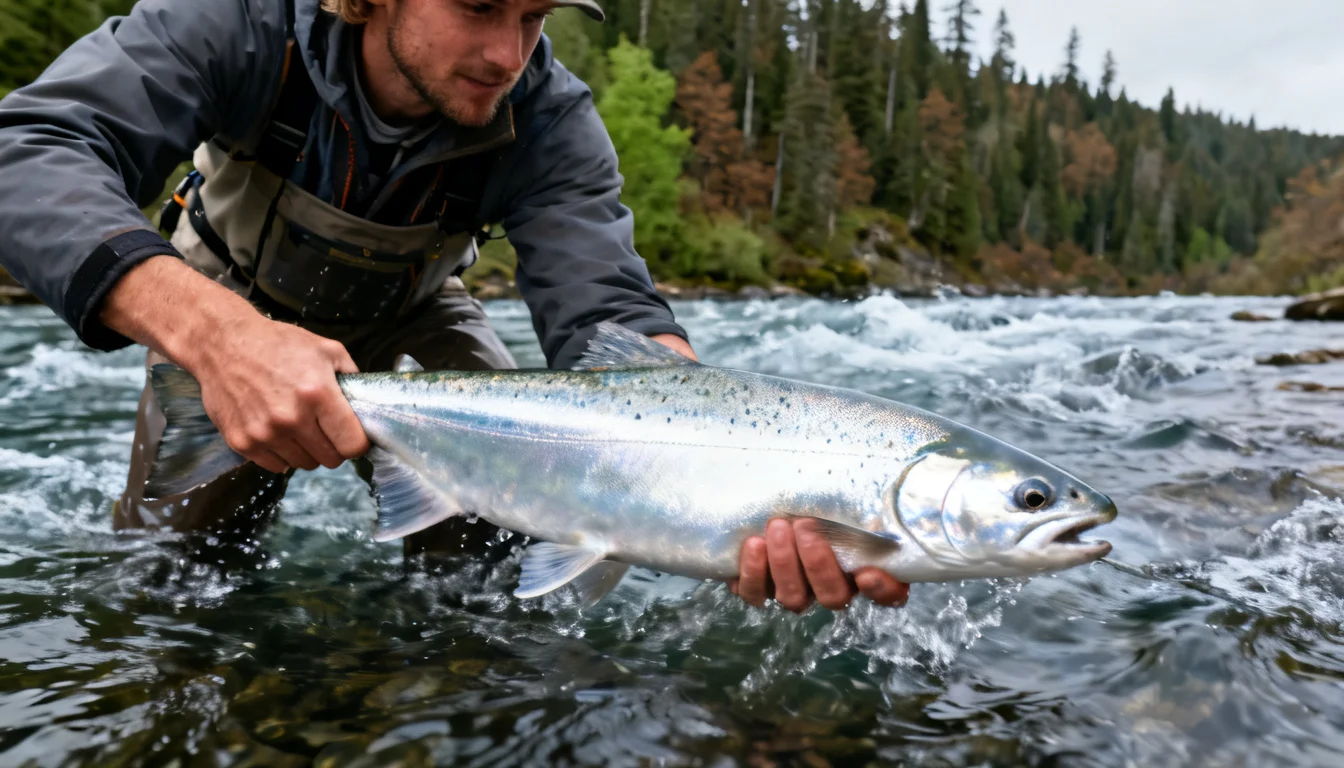
- A float (bobber) suspends your bait or jig at a set depth
- Bait: cured roe (eggs), sand shrimp, beads, or jigs
- Technique: drift the float through the run at the fish's depth, mending line to keep a natural drift
- Why it works: you present at eye level and can read the drift
2. Drift Fishing
- Setup: a sinker dropper with a baited hook or yarn/bead above
- Technique: cast slightly upstream, let it bounce along the bottom, and feel for the take
- Gear: medium-heavy rod, 10–15 lb mainline, sensitive tip
3. Spoons and Spinners
Casting hardware triggers reaction strikes:
- Spoons: Little Cleo, Stee-Lee style — slow, wobbling retrieve
- Spinners: Blue Fox, Mepps — steady retrieve in current
- Best for: colored-up fish and aggressive runs
4. Jigs and Beads
- Jigs: marabou or rubber-leg jigs under a float, or tipped with roe
- Beads: fished above a hook (pegged or on a toothpick) to imitate drifting eggs
5. Fly Fishing
Steelhead are a fly-rod classic:
- Swing flies with a two-handed rod (Spey) — the traditional approach
- Nymphs and egg patterns under an indicator for dead-drift presentations
Gear Summary
- Rod: 8.5–10.5 foot medium-heavy spinning or casting; 9–13 foot fly rods for swinging
- Line: 10–20 lb mainline; 8–12 lb leader
- Hooks: sharp, strong, and often barbless (many rivers require it)
Steelhead Regulations
- License: required — see our fishing license guide
- Barbless hooks: required on many steelhead rivers
- Wild vs. hatchery: most fisheries are hatchery-only — wild fish must be released. Learn to identify a clipped adipose fin (hatchery fish)
- Bait restrictions: some rivers ban bait — check before you rig up
- Bag limits: often 1–2 fish per day
Learn the clipped-fin rule: hatchery steelhead have their adipose fin (the small fin on the back near the tail) clipped off. No clip = wild fish = release it.
Common Steelhead Mistakes
1. Not checking the adipose fin — releasing a legal hatchery fish or keeping a wild one is a serious mistake
2. Fishing the wrong water — steelhead hold in specific lies (deep slots, current seams); learn to read water
3. Ignoring river levels — rising, slightly colored water is prime; gin-clear low water is tough
4. Sloppy drifts — steelhead refuse a dragging bait; mend your line and get a natural drift
5. Giving up after one pass — run your float through the same lie multiple times; steelhead often take on the third or fourth pass
6. Weak tackle — these fish are powerful; light trout gear won't land them
FAQ
What's the difference between a steelhead and a rainbow trout?
Steelhead are rainbow trout that migrate to the ocean (or Great Lakes) and return to spawn. They grow much larger and turn bright silver in the ocean. Rainbow trout spend their whole lives in freshwater.
When is steelhead season?
Winter-run steelhead peak December through March on the Pacific coast; summer-run fish arrive June–September. Great Lakes tributaries fish best October–December with a spring run in March–April.
How do you tell a hatchery steelhead from a wild one?
Check the adipose fin — the small fin on the back between the dorsal fin and tail. Hatchery fish have it clipped off (a "clipped" fish); wild fish have it intact. Many fisheries require releasing wild fish.
What's the best bait for steelhead?
Cured roe (salmon or steelhead eggs) is the top bait, fished under a float or drifted. Sand shrimp, beads, and jigs also produce. On bait-restricted rivers, use beads, jigs, spoons, or flies.
Can you catch steelhead without a boat?
Yes — bank fishing is the most popular way to catch steelhead. Focus on accessible river runs and fish them thoroughly. Wading lets you reach more water.
Do steelhead bite in the river?
Steelhead mostly stop feeding in rivers but still strike out of aggression and habit. That's why presentation (natural drift, correct depth) matters more than matching their diet.
Final Checklist
1. Timing: winter-run Dec–Mar, summer-run Jun–Sep (varies by region)
2. Water: fish rising or slightly colored water after rain
3. Rig: float and roe, drift gear, spoons, or flies — match the river's rules
4. Check the fin: clipped adipose = hatchery (keep); intact = wild (release)
5. Work the lie: multiple drifts through the same spot
6. Rules: barbless hooks, bait bans, and bag limits vary by river
For their freshwater cousins, see our how to catch rainbow trout guide, and brush up on current reading with how to fish a river.