How to Catch Blue Crabs: Every Method Explained
A bushel of blue crabs is one of the great rewards of coastal summer — and catching your own is half the fun. How to catch blue crabs doesn't require a boat, expensive gear, or years of experience. With a string, a chicken neck, and a dip net, you can be pulling crabs on your first afternoon.
This guide breaks down every way to answer the question of how to catch blue crabs — from the kid-friendly hand line — from the kid-friendly hand line to commercial-style trotlines — with the bait, timing, and technique that separate full baskets from empty ones. For everything about the crabs themselves, see our blue crab species guide.
When to Go Crabbing
Season
Blue crabs are most active when the water is warm — roughly June through September in most of their range. The exact season varies by state:
- Mid-Atlantic (Chesapeake region): April through November, peak June–August
- Gulf Coast (Louisiana, Texas): longer season, often year-round in warmer years
- North Carolina: April through October
Time of Day and Tide
Two factors matter more than anything else:
- Tide: crabs feed hardest on the incoming (flood) tide. Plan to fish the first two hours of incoming water.
- Time: dawn and dusk are the most active feeding windows. Midday crabbing works but is slower.
The takeaway for how to catch blue crabs: the best crabbing window is the first two hours of an incoming tide, at dawn or dusk. That combination is hard to beat.
What You Need
The beauty of crabbing is how little gear it takes:
| Method | Gear | Cost |
|---|---|---|
| Hand line | String/cord, bait (chicken neck), dip net, bucket | ~$20 |
| Crab trap | Wire trap, bait, rope, buoy | ~$30–50 per trap |
| Trotline | Line, bait, hooks, boat | $100+ |
| Dip net | Long-handle net | ~$30 |
Plus: a cooler or bucket with a damp towel, gloves, and (highly recommended) a measuring gauge to check legal size.
Method 1: Hand Line Crabbing (Best for Beginners)
This is the classic method that has introduced generations of kids to crabbing.
Setup
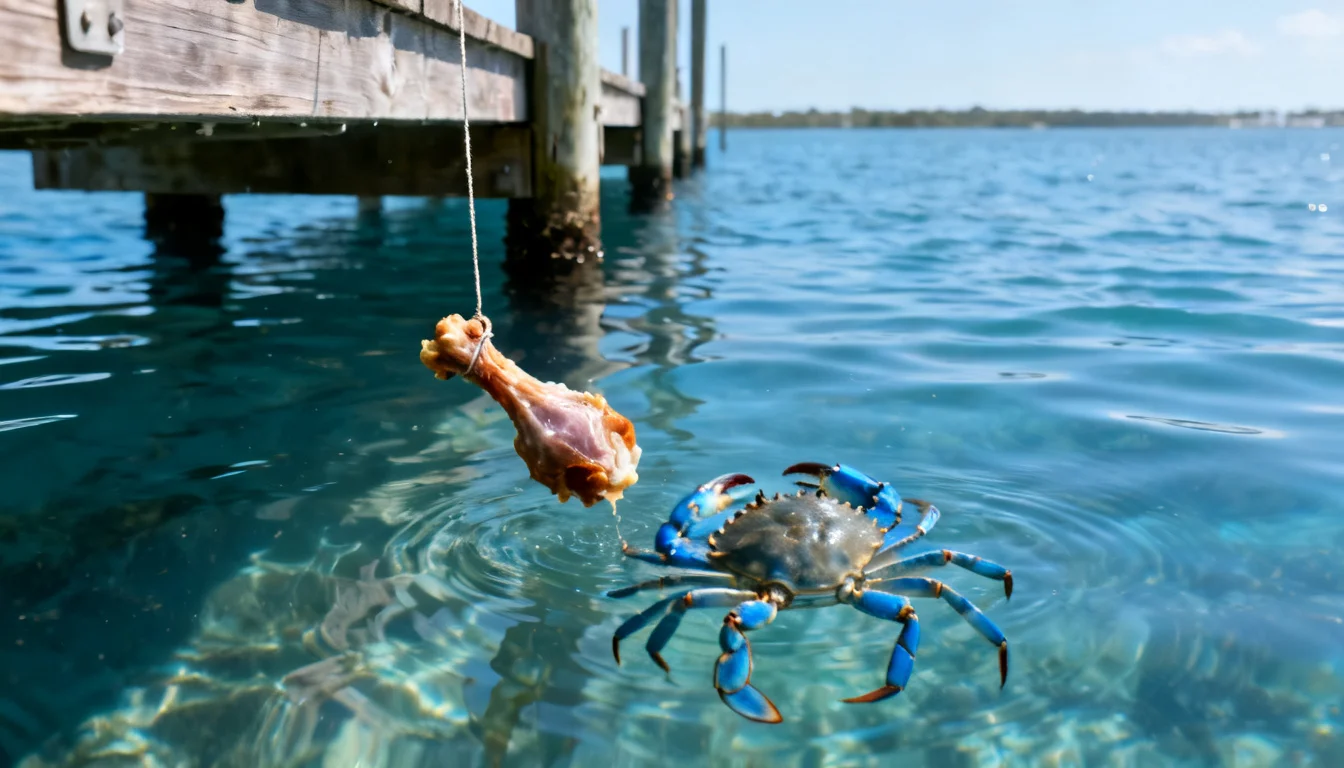
1. Tie a chicken neck or chicken back to the end of a sturdy cord (10–20 feet)
2. You can add a small weight to help the bait sink
3. Tie the other end to a dock piling, a stake, or hold it in hand
Technique
1. Toss the baited line into the water near grass beds, docks, or channel edges
2. Watch the line — when a crab grabs the bait, the line will twitch or go taut
3. Wait a moment for the crab to really grip, then pull in slowly and steadily — no jerking
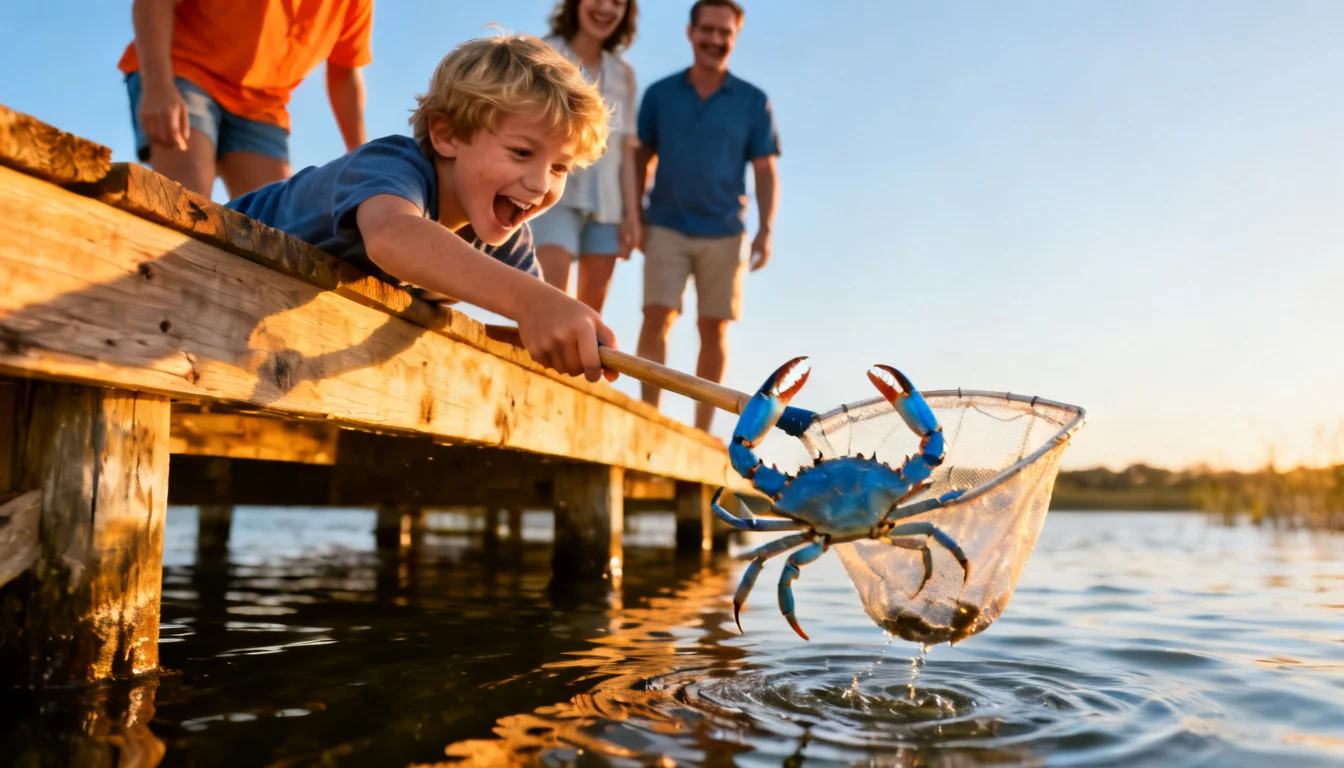
4. As the crab nears the surface, have your dip net ready and scoop under it before it sees you
5. Crabs release the bait the instant they break the surface — the net is what saves the catch
Why It Works
Chicken necks are irresistible to crabs, and the slow pull keeps them holding on. The net at the surface is the whole trick — pull fast and they're gone; scoop slow and steady and they're yours.
Method 2: Crab Traps (Set and Check)
Traps let you cover more water with less active fishing.
Choosing a Trap
Look for a wire crab pot with:
- Funnel-shaped entrances (crabs crawl in, can't easily find their way out)
- Escape rings (small openings that let undersized crabs out)
- A bait box or bait holder in the center
How to Fish a Trap
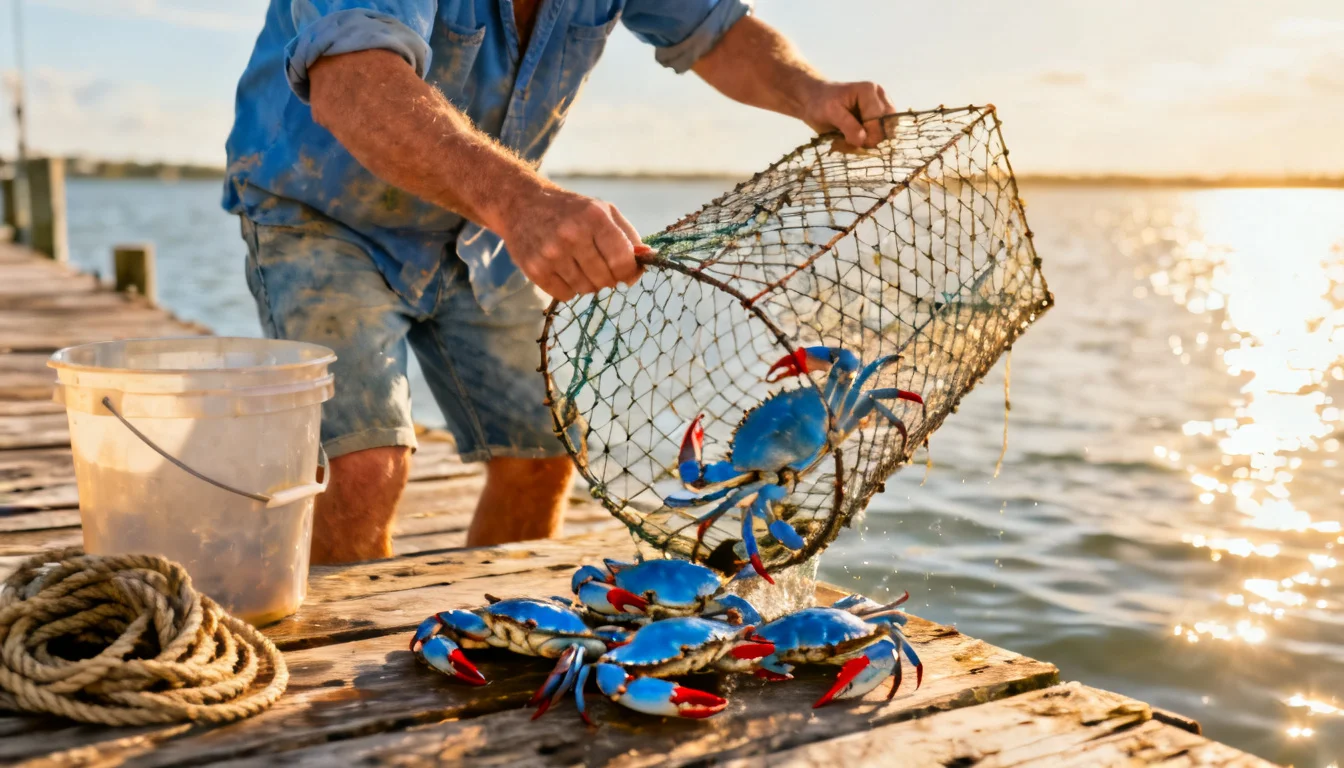
1. Bait the center compartment with fish heads, chicken necks, or eel
2. Attach a rope and buoy (float) marked with your name/registration if required
3. Drop the trap in 3–10 feet of water near grass beds or structure
4. Check every 15–30 minutes — crabs eat the bait fast, and hungry crabs will cannibalize
5. Pull the trap up hand-over-hand, quickly but steadily
Trap Tips
- Don't over-soak: 20–30 minutes is ideal. Long soaks mean empty bait and crab-on-crab crime
- Rebait often: fresh bait outcatches old bait every time
- Move if empty: if a spot produces nothing in two checks, move 50 yards and try again
Method 3: Trotlines (Serious Crabbing)
A trotline is a long line (typically 500–1,800 feet) anchored at both ends, with bait tied along its length every few feet. Crabbers run the line slowly from a boat, dip-netting crabs as they pass.
Trotline Basics
1. Set the line across a channel or along a grass edge in crabbing depth
2. Bait each drop with chicken neck pieces or eel
3. Let the line soak 20–30 minutes
4. Run the line slowly, pulling the line over a roller, and net each crab as it comes up
Trotlining is more gear and effort, but it's how the pros do it — and it can fill a cooler fast. Many states require a trotline license or permit, so check regulations first.
Method 4: Dip Netting (Sight Fishing for Crabs)
In clear, shallow water — especially low tide over grass flats — you can often see crabs on the bottom and simply scoop them.
1. Walk slowly through shallow water, watching the bottom
2. When you spot a crab, approach from behind (crabs see forward and sideways best)
3. Lower the net behind the crab and scoop — fast, one motion
4. This works best in very shallow water where crabs are feeding at the surface of the grass
Best Bait for Blue Crabs
Ranked by effectiveness and convenience:
1. Chicken necks and chicken backs — the classic; cheap, tough, and irresistible
2. Fish heads (menhaden, spot, croaker, mackerel) — extremely effective, oilier scent trail
3. Eel — top-tier commercial bait
4. Clams and mussels — good but get stripped fast
Rule of thumb: oily, smelly bait works best. Whatever you use, fresh beats old — change bait every 30–45 minutes if the action slows.
Handling Crabs Safely
Blue crabs are fast and have serious claws. The safe grab:
1. Never grab from the front — those claws reach sideways and forward
2. Approach from behind and pinch the two rear swimming legs firmly
3. Drop into a bucket or cooler — crabs climb, so keep a lid or damp towel over the top
4. Keep them cool and damp (a wet burlap sack over the bucket) — never submerged in fresh water, which kills them
Pro tip: a crab that grabs you isn't letting go — put it back in the water and it will release instantly to escape.
Regulations You Can't Skip
- Size limit: typically 5 inches minimum (varies by state, 4.5–5.5)
- Sponge crabs: females with egg masses must be released — everywhere, always
- Possession limits: per-person daily limits exist in most states
- Gear rules: trap counts, trotline permits, and buoy marking requirements vary
- License: most states require a recreational crabbing or saltwater license
Check your state's wildlife agency website before you go — and if you're new to the license system, our fishing license guide explains how it works.
Common Crabbing Mistakes
1. Jerking the line — crabs let go instantly with any fast motion; pull slow and steady
2. Skipping the net — hand-line crabs release at the surface every time; always net them
3. Over-soaking traps — empty bait and dead crabs in 2 hours; check every 20–30 minutes
4. Grabbing from the front — the #1 way to get pinched
5. Keeping everything — undersized and sponge crabs must go back; they're the future catch
6. Crabbing on the wrong tide — outgoing or slack water means far fewer crabs
FAQ
Learning how to catch blue crabs is easier than most people expect — these questions cover the essentials.
What's the easiest way to catch blue crabs?
The hand line method — chicken neck on a string, pulled slow, scooped with a net at the surface. It's cheap, works from any dock, and is how most people learn to crab.
What is the best bait for blue crabs?
Chicken necks and chicken backs are the classic and most effective easy bait. Fish heads and eel work even better but are less convenient. Oily, smelly, fresh bait is the rule.
How long should I leave a crab trap in the water?
Check traps every 20–30 minutes. Crabs eat bait quickly and will start eating each other, so short soaks with fresh bait consistently outproduce long soaks.
Do I need a license to go crabbing?
Most states require a recreational crabbing license or include crabbing in the saltwater fishing license. Some also require trotline permits. Check your state's regulations before you go.
When is the best time to catch blue crabs?
Summer (June–August) is peak season. The single best window is the first two hours of an incoming tide at dawn or dusk.
Can you catch blue crabs from shore?
Yes — hand lining from docks, piers, and shorelines works great. Traps can also be set from shore in many areas. You don't need a boat for any of these methods except trotlines.
Final Checklist
1. Check regulations — size limit, season, license, gear rules for your state
2. Time it right — incoming tide, dawn or dusk, summer months
3. Gear ready — bait (chicken necks), line or trap, dip net, bucket with lid
4. Fish the structure — grass beds, docks, channel edges, 3–10 feet of water
5. Pull slow, net at the surface
6. Handle from behind — and release anything undersized or egg-bearing
Start with the full picture in our blue crab species guide, and if this is your first outdoor adventure, the fishing for beginners guide covers the basics that apply everywhere.