Crawfish Trapping 101: Traps, Bait & Technique
A sack of live crawfish on the way to a boil is one of spring's great pleasures — and trapping your own is surprisingly simple. Crawfish trapping with a wire trap is the most efficient way for a home cook or weekend harvester to bring in pounds of crawfish without standing over a drop line for hours.
This guide covers everything: choosing a trap, baiting it right, finding the best spots, and running a trap line that produces. For crawfish biology and identification, see our crawfish guide.
How Crawfish Traps Work
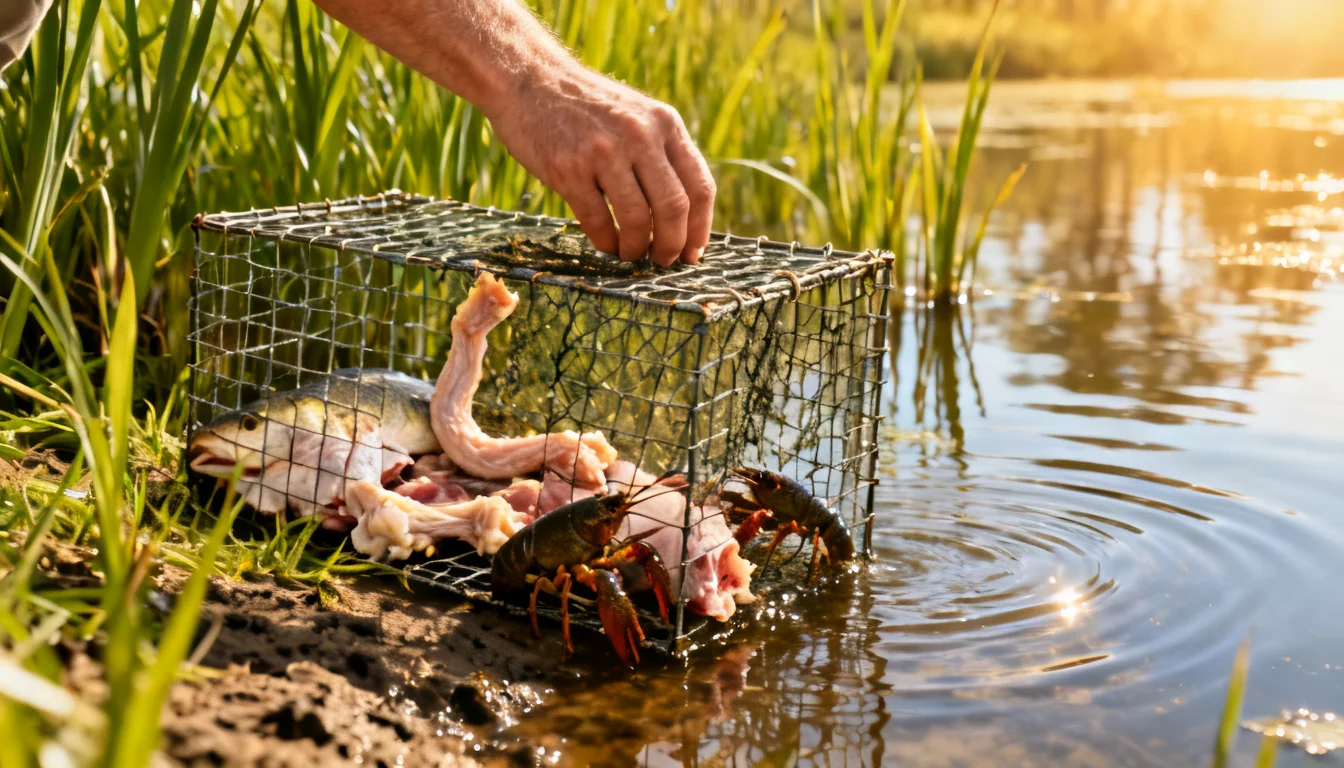
A crawfish trap is a wire mesh box with funnel-shaped entrances. Crawfish smell the bait inside, crawl in through the funnel, and then can't find their way back out — the funnel opening confuses them. Simple, effective, and passive: set it, check it, repeat.
Trap Types
| Type | Best For | Notes |
|---|---|---|
| Round/cylinder trap | General use | Classic design, easy to store |
| Rectangular trap | High-volume | Holds more, slightly bulkier |
| Pyramid trap | Shallow water | Low profile, good for ponds |
| Collapsible trap | Portability | Folds flat for storage/transport |
Size: 20–30 inch traps are standard for recreational use. Look for 1/4–1/2 inch mesh — small enough to keep crawfish, open enough to drain.
Choosing the Right Bait
Bait is the difference between a full sack and an empty trap. Crawfish are scavengers with a strong sense of smell:
Best Baits (Ranked)
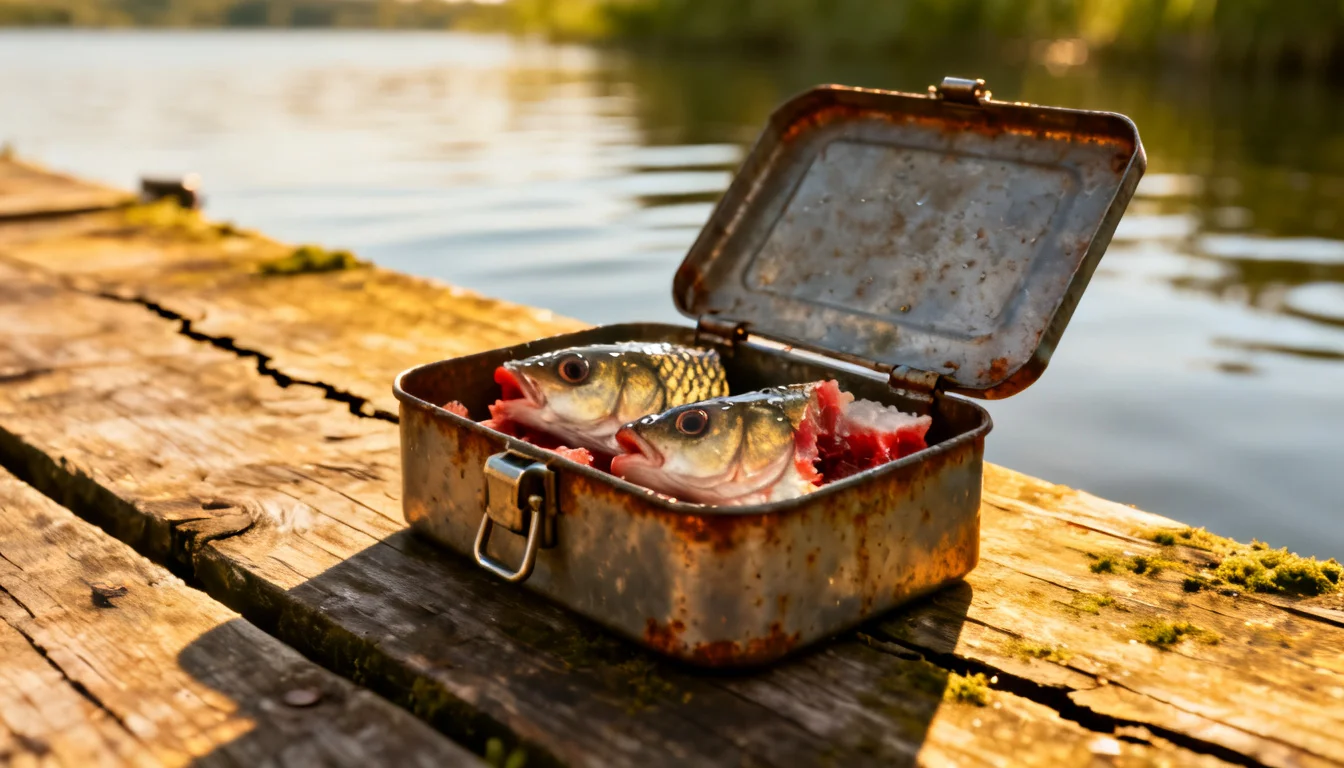
1. Fish heads (especially oily fish like shad, carp, or catfish heads) — the top choice; the oilier the better
2. Chicken (necks, backs, or gizzards) — cheap and effective
3. Commercial crawfish bait — formulated fish-based pellets, convenient and effective
4. Bacon or pork — works but gets stripped faster
5. Dog food / cat food — surprisingly effective in a pinch
Bait Tips
- Fresh is best — crawfish prefer fresh bait with a strong scent trail
- Use a bait box or bag — keep bait contained so crawfish can't strip it and leave
- Rebait every 2–4 hours — bait loses scent fast in moving water
- Cut bait increases scent — cutting fish heads in half releases more oils
Where to Set Traps
Location matters as much as bait:
Prime Spots
- Pond edges and coves — especially where vegetation meets open water
- Slow-moving bayous and creeks — crawfish love current breaks
- Around rocks, logs, and bank undercuts — natural crawfish cover
- Rice field ditches and canals (Louisiana-style habitat)
- Shallow water (1–4 feet) — crawfish feed in the shallows at night
Setting Depth
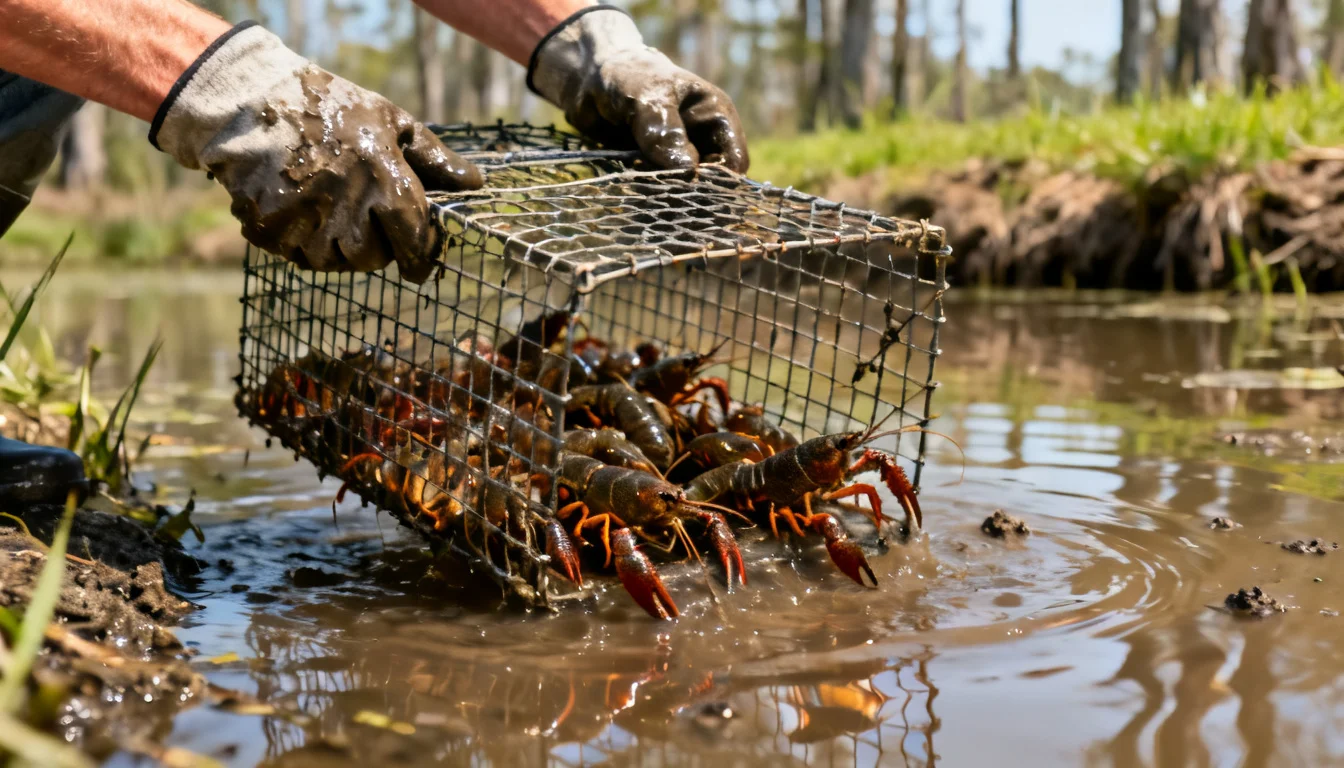
Set traps in 1–4 feet of water for best results. Crawfish are bottom dwellers — the trap should sit flat on the bottom, not dangle.
How Many Traps?
- Recreational: 3–6 traps is plenty for a boil
- Check your state's limits — some states cap recreational traps
How to Run a Trap Line
1. Bait each trap — secure bait in the bait box/compartment
2. Set the traps — spread them along the bank or pond edge, 20–50 feet apart, covering different habitat types
3. Mark them — attach a float or bank marker so you can find them
4. Check every 1–2 hours — crawfish eat bait fast; longer soaks mean empty bait and fewer crawfish
5. Pull and rebait — empty the catch, refresh the bait, reset
Best Times
- Evening to early morning — crawfish feed most actively at night
- Warm weather — active above ~60°F water temperature
- Spring (Feb–June) — peak season in the South
Handling Your Catch
- Keep crawfish cool and damp — a sack or cooler with a damp burlap cover; they need moisture but not standing water (they'll suffocate in water)
- Store live — crawfish should be alive until you boil them; discard any that die before cooking
- Rinse and purge — rinse the sack and let crawfish purge (some cooks soak in salt water briefly) before boiling
Regulations & License
- License: most states require a fishing license for trapping crawfish — see our fishing license guide
- Gear limits: recreational trap limits vary by state
- Invasive species: in some northern states, trapping certain invasive crawfish is encouraged or has different rules
- Private vs. public water: always confirm you have permission on private ponds
Common Trapping Mistakes
1. Bait that's too old — stale bait has no scent trail; use fresh bait
2. Setting in deep, open water — crawfish hug the banks and shallows
3. Over-soaking — 1–2 hour checks beat 4-hour soaks every time
4. Unsecured bait — crawfish strip loose bait and leave; use the bait box
5. Traps not flat on the bottom — a dangling trap gets fewer crawfish
6. Ignoring regulations — license and trap limits exist for a reason
FAQ
What is the best bait for crawfish traps?
Fish heads — especially oily fish like shad or carp — are the best bait. Chicken necks, commercial crawfish bait, and even dog food work well. Fresh bait with a strong scent is the key.
How long should I leave crawfish traps in the water?
Check every 1–2 hours. Crawfish eat the bait quickly, so short soaks with fresh bait consistently outproduce long soaks.
How many crawfish traps do I need?
For a home boil, 3–6 traps set in different spots is usually plenty. Check your state's recreational trap limits first.
Can I trap crawfish in any pond?
You need crawfish present and, on private water, permission from the owner. On public water, check your state's regulations and licensing. Crawfish thrive in ponds with vegetation and muddy bottoms.
What time of day is best for crawfish trapping?
Night and early morning are best — crawfish feed most actively after dark. Traps set in the evening and checked at dawn often produce the most.
Do I need a license to trap crawfish?
Most states require a fishing license for crawfish trapping. Rules vary by state, so check your wildlife agency before setting traps.
Final Checklist
1. License & rules — confirm for your state
2. Trap — 20–30 inch wire trap, 1/4–1/2 inch mesh, with bait box
3. Bait — fresh fish heads or chicken
4. Location — pond edges, slow water, 1–4 feet deep, near cover
5. Check — every 1–2 hours, rebait each time
6. Handle — keep cool and damp until the boil
Know your catch with the crawfish guide, and remember — the best crawfish are the ones you trapped yourself.