Blue Crab: Complete Guide to America's Favorite Crab
Few things say summer on the East Coast like a bushel of steamed blue crabs on a newspaper-covered table. The blue crab (Callinectes sapidus) is the backbone of Chesapeake Bay's seafood culture and one of the most popular shellfish in America — caught for food, fished for sport, and enjoyed from Maryland to Louisiana and beyond.
This guide covers everything you need to know about blue crabs: how to identify them, where they live, when to catch them, the rules you have to follow, and how to cook what you bring home.
What Is a Blue Crab?
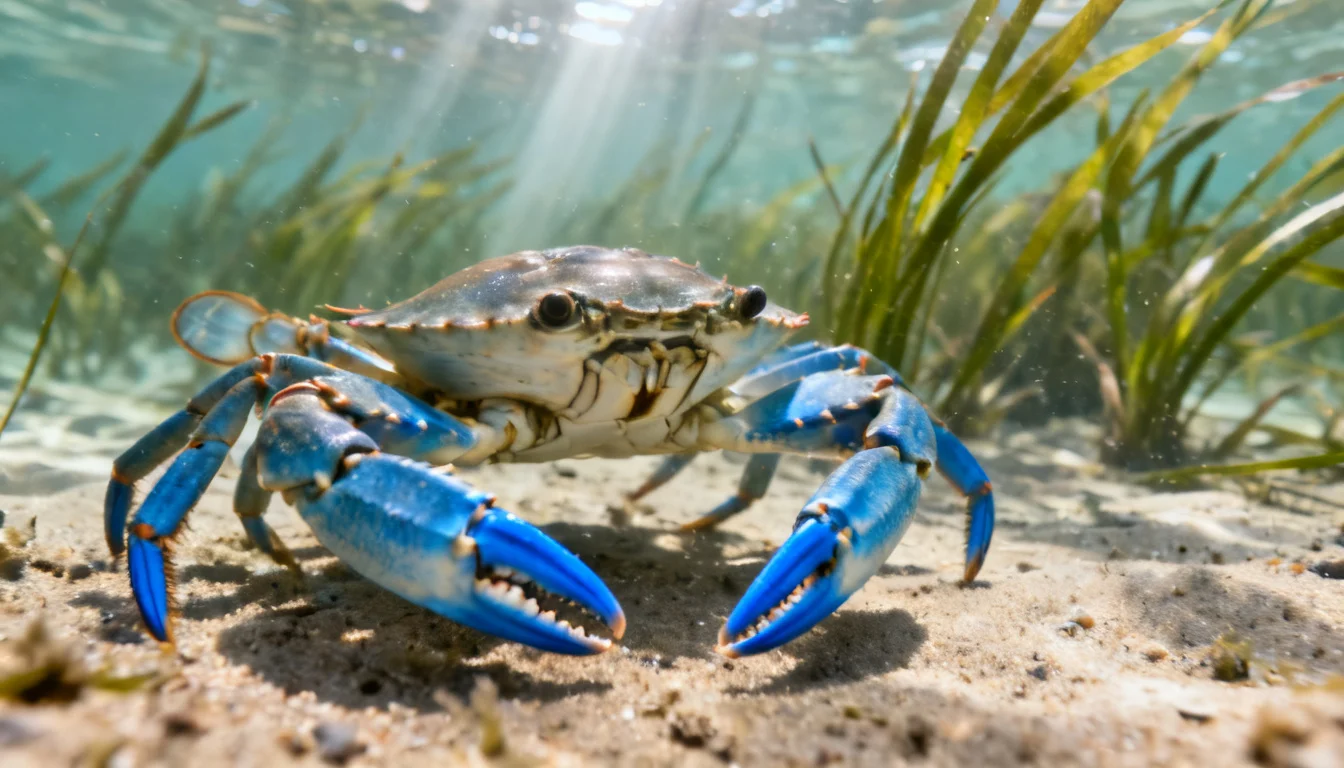
The blue crab is a swimming crab — its rear pair of legs are flattened into paddles, making it a fast, agile swimmer that can dart sideways and backward through grass beds. The scientific name Callinectes sapidus translates roughly to "savory beautiful swimmer," which says it all about how Americans feel about eating them.
Key facts at a glance:
- Scientific name: Callinectes sapidus
- Family: Portunidae (swimming crabs)
- Size: mature shell width typically 5–7 inches (up to 9 inches)
- Lifespan: about 3 years
- Habitat: estuaries, bays, and coastal waters from the intertidal zone to about 120 feet deep
- Diet: clams, mussels, small fish, and anything else they can catch — plus scavenging
Blue crabs are also famous for molting — shedding their hard shell to grow. A crab caught right after molting, before its new shell hardens, is a soft-shell crab, a delicacy sold at a premium.
Blue Crab Identification
Males vs. Females: The Apron Test
The easiest way to tell a male from a female blue crab is to flip it over and look at the apron (the folded flap on the belly):
- Male (Jimmy): narrow, T-shaped apron (like the Washington Monument)
- Mature female (Sook): broad, rounded apron (like the Capitol dome)
- Immature female: triangular apron (pointing up)
Coloration
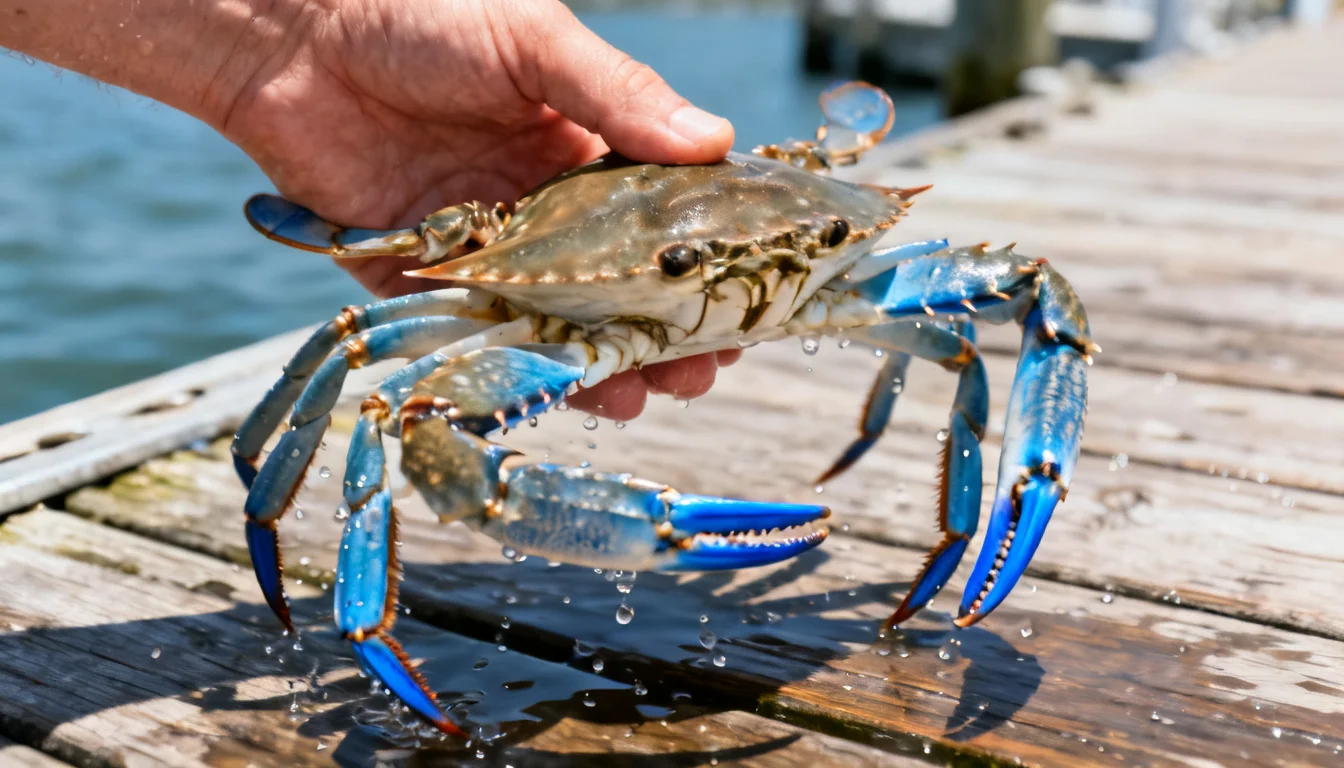
- Top shell: olive to bluish-green with lighter speckles — the "blue" in their name comes from the claws, which are bright blue in males
- Female claws: tipped with red/orange
- Claw tips: white
Size
Legal harvest size varies by state, but a typical keeper is 5–5.5 inches across the shell (point to point). Commercial crabbers target the larger end; recreational crabbers should learn their state's minimum size.
Where Blue Crabs Live
Blue crabs are found along the Atlantic coast from Nova Scotia down to Argentina, but they are most abundant and most heavily harvested in the mid-Atlantic — especially the Chesapeake Bay (Maryland and Virginia), which produces more blue crabs than any other body of water on Earth.
Other major blue crab regions include:
- North Carolina (second-largest harvest)
- Louisiana (the Gulf's blue crab capital)
- South Carolina, Delaware, New Jersey, Florida — all have healthy recreational crabbing
Blue crabs live in estuaries — the brackish mixing zones where rivers meet the sea. They prefer:
- Shallow, grassy bottoms (eelgrass and widgeon grass beds)
- Mud or sand bottoms
- Waters from near-fresh to full salt (though females migrate to higher-salinity water to spawn)
- Depths from wading depth down to about 120 feet in winter
The crab's life cycle drives huge migrations: females move down-bay toward the ocean to spawn, while males stay in the fresher upper reaches.
Blue Crab Season
When to Go Crabbing
Blue crab season runs from spring through fall in most states, with the peak in summer (June–August). Crabs are most active when water temperatures climb above about 65°F:
| Season | What's Happening |
|---|---|
| Spring (Apr–May) | Crabs emerge from winter mud and move shallow; first peelers and hard crabs |
| Summer (Jun–Aug) | Peak crabbing — crabs are most active, feeding and molting heavily |
| Fall (Sep–Nov) | Crabs fatten up for winter; females migrate toward the bay mouth to spawn |
| Winter (Dec–Mar) | Crabs bury in the mud and are largely inactive; crabbing is closed or slow in most states |
Best Time of Day
Blue crabs feed most actively at dawn and dusk, and they also move more on incoming tides (flood tide). Many crabbers work the first two hours of incoming water for the best results.
How to Catch Blue Crabs
There are several proven methods, from simple to serious. Full step-by-step coverage is in our how to catch blue crabs guide — here's the overview:
1. Hand Line (Chicken Neck Crabbing) — Best for Beginners
The classic kid-friendly method: tie a chicken neck or fish head to a string, toss it in, and wait for the line to go tight. Pull up slowly and steadily, and scoop the crab with a net just before it breaks the surface — they let go the second they see you.
2. Crab Trap / Pot
A baited wire trap with funnel openings. Crabs crawl in to eat the bait (fish heads, chicken necks) and can't find their way out. Check traps every 15–30 minutes. Check your state's regulations — many states limit the number of traps per person and require escape rings for undersized crabs.
3. Trotline (Commercial-Style)
A long line with baited drops, used from a boat. Set it in a crabbing channel, run it slowly, and dip-net crabs as you pass. This is how commercial watermen work — and a fun challenge for serious recreational crabbers.
4. Dip Net
In shallow grass beds, you can spot crabs and scoop them with a long-handled dip net. Works best in clear, shallow water at low tide.
Bait That Works
- Chicken necks and chicken backs (the classic)
- Fish heads (menhaden, spot, croaker)
- Eel
- Clams or mussels
Blue Crab Regulations (Know Before You Go)
Every state manages its blue crab fishery with specific rules. The common threads:
- Minimum size: typically 5 inches (varies 4.5–5.5 by state)
- No egg-bearing females: females carrying an orange sponge of eggs must be released — this is universal and strictly enforced
- Season dates: vary by state (many states are year-round for hard crabs, with closures for specific groups)
- Gear limits: trap and trotline limits vary
- License: most states require a recreational crabbing license, which is often included in a saltwater fishing license — check your state's wildlife agency, and see our fishing license guide for how licenses work
Golden rule: when in doubt, release it. Undersized crabs and sponge crabs are the future of the fishery.
Common Blue Crab Mistakes
1. Pulling too fast on a hand line — crabs let go mid-water; pull slow, scoop with a net at the surface
2. Grabbing them wrong — pinch from behind (the rear swimming legs), never from the front where the claws can reach you
3. Leaving traps too long — bait runs out, crabs cannibalize each other, and dead crabs ruin the trap
4. Keeping sponge crabs or undersized crabs — illegal in every state and shortsighted
5. Crabbing at the wrong tide — slack or outgoing water means fewer crabs
Cooking & Eating Blue Crabs
Blue crab meat is sweet and rich, and there are as many ways to enjoy it as there are coastal states:
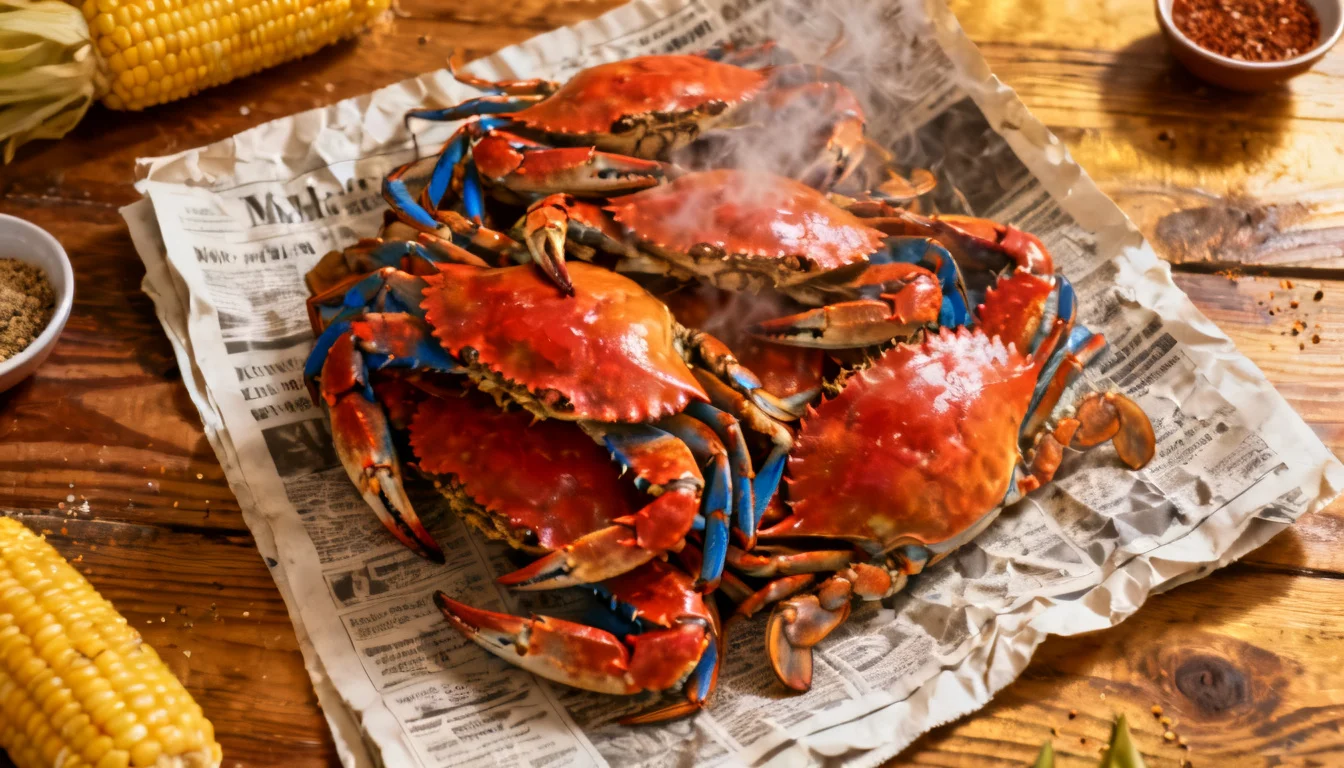
- Steamed hard crabs — the Maryland classic, seasoned with Old Bay and steamed over beer and vinegar
- Soft-shell crabs — whole crab, lightly fried, eaten shell and all
- Crab cakes — lump meat, minimal filler
- She-crab soup — a Charleston specialty made with female crabs and their roe
- Crab dip — the party staple
For handling and cooking details, pair this guide with our cleaning and cooking resources — the meat-to-shell payoff makes the work worth it.
FAQ
How big do blue crabs get?
Mature blue crabs typically measure 5–7 inches across the shell. The largest recorded blue crab was over 9 inches across and weighed more than a pound. Commercial keepers usually start at 5–5.5 inches.
How can you tell a male from a female blue crab?
Flip the crab over and look at the apron (belly flap): males have a narrow T-shape, mature females have a broad rounded shape, and immature females have a triangle. Females also have red-tipped claws; males' claws are bright blue.
What is a soft-shell crab?
A soft-shell crab is a blue crab caught right after molting, before its new shell hardens. The entire crab is edible, and it's a premium product because the molting window is short and the crabs are delicate.
When is the best time to catch blue crabs?
Summer (June–August) is peak season in most states. Crabs are most active when water warms above 65°F, and the best crabbing usually happens at dawn, dusk, and on incoming tides.
Do I need a license to catch blue crabs?
In most states, yes — recreational crabbing typically requires a saltwater or shellfish license. Many states include crabbing with the standard saltwater fishing license. Always check your state's current regulations before you go.
Where is the best place to catch blue crabs?
The Chesapeake Bay is the blue crab capital of the world, but North Carolina, Louisiana, South Carolina, and other coastal states all offer excellent crabbing. Look for shallow grass beds and muddy bottoms in brackish estuaries.
Final Checklist
1. Identify: check the apron — male (narrow T) or female (wide dome)
2. Regulations: confirm your state's size limit, season, gear limits, and license
3. Bait: chicken necks or fish heads
4. Method: hand lines for beginners, traps or trotlines for serious crabbers
5. Handle: grab from behind the swimming legs
6. Release: throw back undersized crabs and any sponge (egg-bearing) females
Ready to put this into practice? Our step-by-step how to catch blue crabs guide covers every method in detail. If you're new to outdoor skills entirely, start with our fishing for beginners guide first.