Pond Management 101: Water Quality, Habitat & Healthy Fish
If you own a pond, you already know the difference between a good one and a bad one. A good pond stays green in summer, holds fat bass and bluegill, and rarely surprises you with dead fish. A bad one turns muddy, chokes with weeds, and kills fish overnight.
Pond management is the set of practices that moves you from the second pond to the first — and it is far less complicated than most owners think. Whether you fish your water hard or just enjoy watching it, this guide covers the basics that matter: water quality, aquatic vegetation, habitat, and the seasonal cycles that drive them all.
If you are new to small water, our guide to pond fishing is a good place to start before you dive into management.
Pond Water Quality: Start Here
Everything in your pond — the fish, the bait, the insects, even the weeds — depends on the water itself. When pond water quality is poor, nothing else you do matters. The good news: most ponds fall into trouble slowly, and the problems show up in a handful of measurable numbers long before fish start dying.
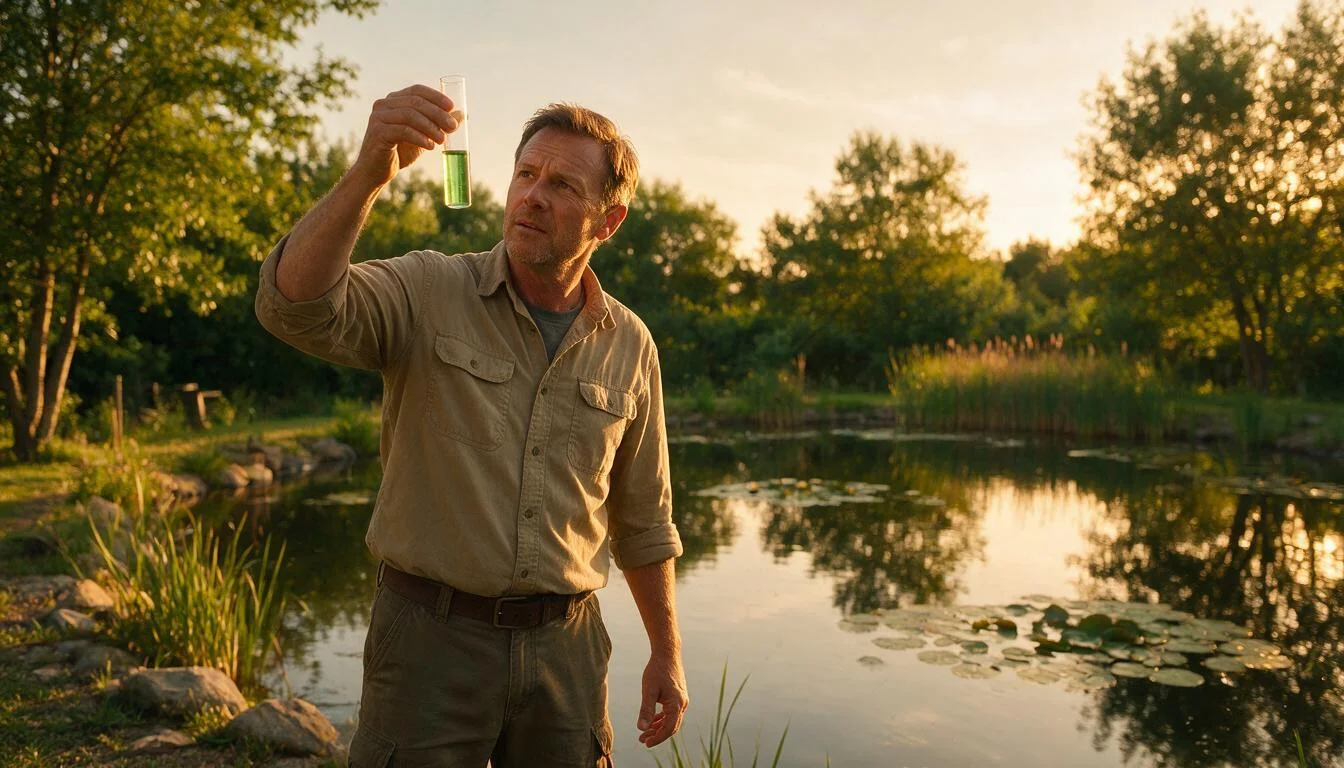
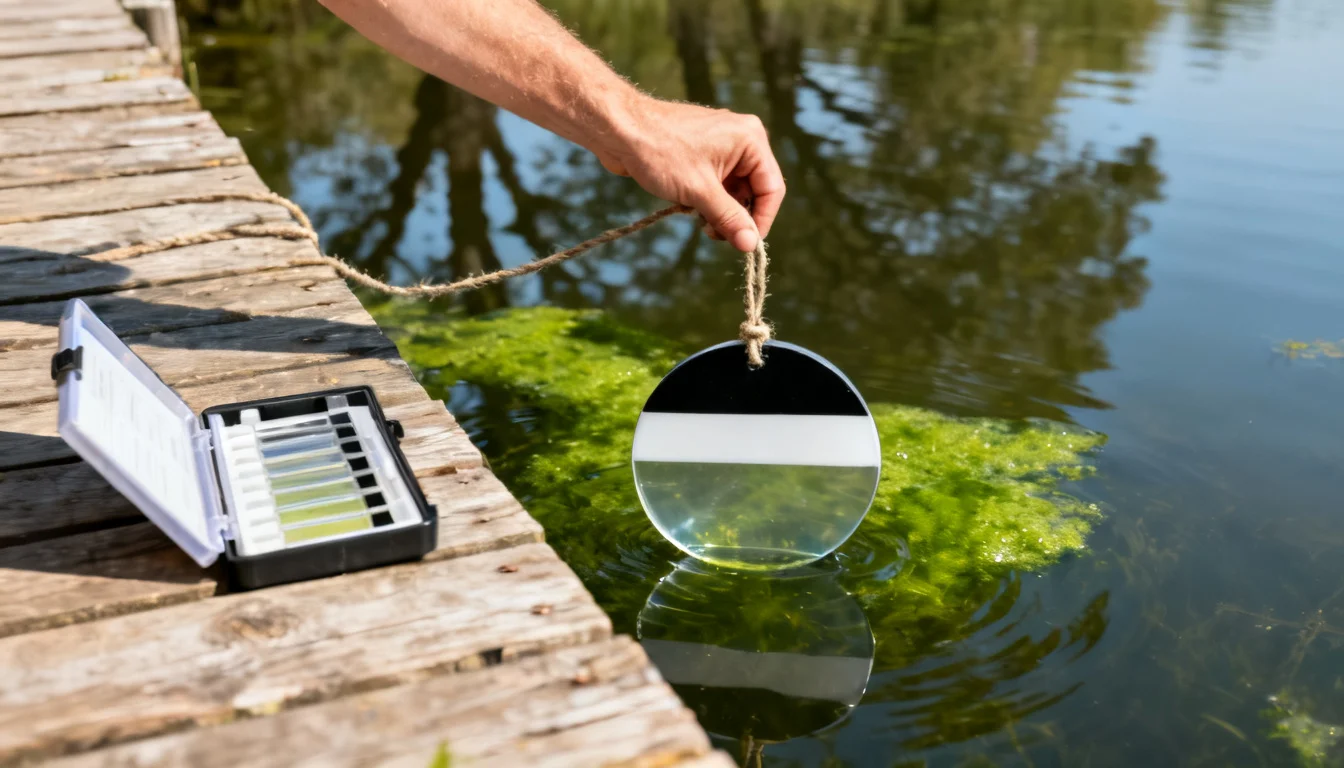
The water quality basics worth learning are dissolved oxygen, pH, alkalinity, and clarity. You do not need a laboratory. A basic pond test kit from a farm supply store or extension office covers pH and alkalinity, and a simple Secchi disk (a painted disk on a rope) measures clarity.
Test a few times through the season and write the numbers down. You will see patterns: oxygen lowest at dawn, pH drifting higher on sunny summer afternoons, water clearing after a dry spell.
| Parameter | Healthy range for a fishing pond |
|---|---|
| Dissolved oxygen | Above 6 mg/L preferred; below about 2–3 mg/L for extended periods kills warmwater fish |
| pH | 6.5 to 9.0; fishing suffers below 6.0 |
| Total alkalinity | Above 20 mg/L; below that the pond stays unproductive |
| Water clarity (Secchi) | 18 to 24 inches for a productive bass-bluegill pond |
Dissolved Oxygen: The Number That Kills
Dissolved oxygen is the single most important water quality factor in a pond. Fish literally live on it, and low oxygen is the leading cause of fish kills in private waters. Warmwater fish prefer levels above 6 mg/L and become stressed as levels fall.
Kills come when levels hold below roughly 2 to 3 mg/L for extended periods — overnight, say. Coldwater species like trout need even more.
Most of a pond's oxygen is not breathed in from the air. It is produced by algae and green plants through photosynthesis during daylight. That is why oxygen peaks in late afternoon and bottoms out just before dawn, after a full night of consumption.
It is also why a week of cloudy weather in August can push a heavily stocked pond toward a kill. Aeration is the main tool for raising oxygen: a surface aerator (the fountain or paddle-wheel type) mixes air into the top layer, while a bottom diffuser pumps air up from the deep end and also fights summer stratification.
If you see fish hanging at the surface gulping air, especially in the morning, oxygen is the first thing to suspect.
pH and Alkalinity: The Liming Question
A fishing pond should stay near neutral. The optimum pH range for pond fish is roughly 6.5 to 9.0, and fishing is usually poor below 6.0. Just as important is alkalinity — the water's ability to resist pH swings.
Ponds with total alkalinity below 20 mg/L are chronically unproductive: they stay too clear, grow little plankton, and can swing wildly in pH, which stresses fish.
The fix for low alkalinity is agricultural limestone (calcium carbonate; dolomitic lime adds magnesium). Spread it evenly over the pond, ideally in late fall or early winter, and it buffers the water for years.
A common starting point is roughly 1 to 2 tons of agricultural limestone per surface acre for ponds with very low alkalinity. The pH response varies with water chemistry, so follow your extension soil or water test for the real dose.
A soil or water test from your extension office tells you the real amount. Use only agricultural limestone — never quicklime or slaked lime, which change pH so fast they can kill fish. And lime before you fertilize: a low-alkalinity pond will not respond to fertilizer until it is limed first.
Water Clarity: The Secchi Disk Test
Clear water looks clean, but in a fishing pond it usually means the food chain is empty. The plankton bloom that gives pond water its healthy green tint is the base of the entire ecosystem: algae feed tiny animals, tiny animals feed baitfish and insects, and everything feeds your bass and bluegill.
A pond with a good bloom produces several times more fish per acre than a sterile, crystal-clear pond.
The standard measure is a Secchi disk — an 8-inch disk painted black and white, lowered until it disappears. For a bass-bluegill pond, the sweet spot is about 18 to 24 inches of visibility.
If you can see the disk deeper than that, the pond is too clear and unproductive; if it disappears at a foot, you may have a heavy bloom or muddy water.
Fertilization is optional but can jump-start a sterile pond: begin in spring once water temperatures reach about 60°F, apply in two or three rounds a couple of weeks apart, then add more whenever clarity climbs back past about 24 inches.
Well-managed fertile ponds can hold 300 to 400 pounds of fish per acre, while infertile ponds often struggle to reach 100.
There is one color you never want: a thick, soupy blue-green scum on the surface is a blue-green algae bloom, a sign of heavy nutrient loading and low oxygen at night. It can kill fish in hot weather. Aeration, less fertilization, and cutting nutrient runoff into the pond are the real fixes.
Aquatic Vegetation Management: Balance, Not Eradication
Aquatic plants get a bad name, but they are the backbone of a healthy pond. They oxygenate the water, feed insects and baitfish, shelter juvenile fish, and stabilize the banks.
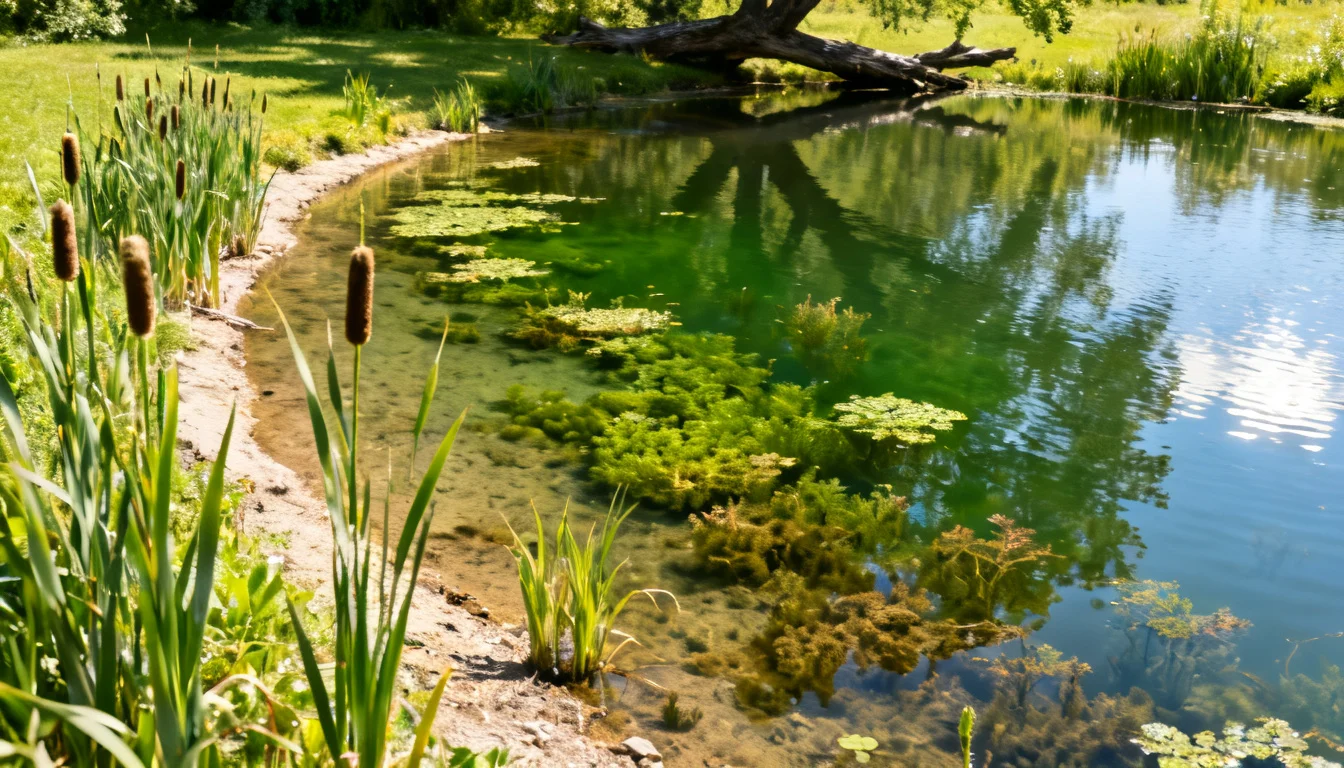
The goal of aquatic vegetation management is balance, not a bare pond. Most state agencies suggest keeping rooted plants covering roughly 10 to 25 percent of a fishing pond — enough to support the food web, not enough to choke the water.
Problems start when weeds spread past that range or block your fishing spots. Control options, from least to most aggressive:
- Manual and mechanical removal — raking, cutting, or pulling weeds; cheap and selective, but a recurring chore.
- Grass carp — sterile triploid grass carp are the classic biological control. They need a permit in most states, must be at least 8 inches long to avoid predators, and work slowly: expect visible results 18 to 24 months after stocking. Roughly 5 to 9 fish per acre gives partial control; 10 to 12 per acre can strip nearly all submersed plants, so start low and add later — you cannot easily take them back out. They also need barriers on spillways, because they escape in surprisingly shallow flow.
- Pond dyes — blue or black dye shades the water and slows plant growth without harming fish.
- Herbicides — effective but species-specific; apply the right product at the right time or you waste money and may kill desirable plants. A local aquatic weed specialist or extension agent is worth the call.
A caution: in a bass-bluegill pond, plants are cover for both prey and predator. Bluegill, in particular, depend on weed beds to spawn and hide — the bluegill species guide explains how vegetation shapes their whole life cycle. Eradicating every weed can collapse the pond's balance as surely as letting it all grow.
Pond Habitat: Structure and Cover
Fish need places to hide, rest, and hunt, and most ponds do not have enough natural structure. Pond habitat work means adding cover in the right places: brush piles, Christmas trees, stake beds, and rock piles. These attractors collect aquatic insects, shelter baitfish, and turn ordinary water into ambush points for bass.
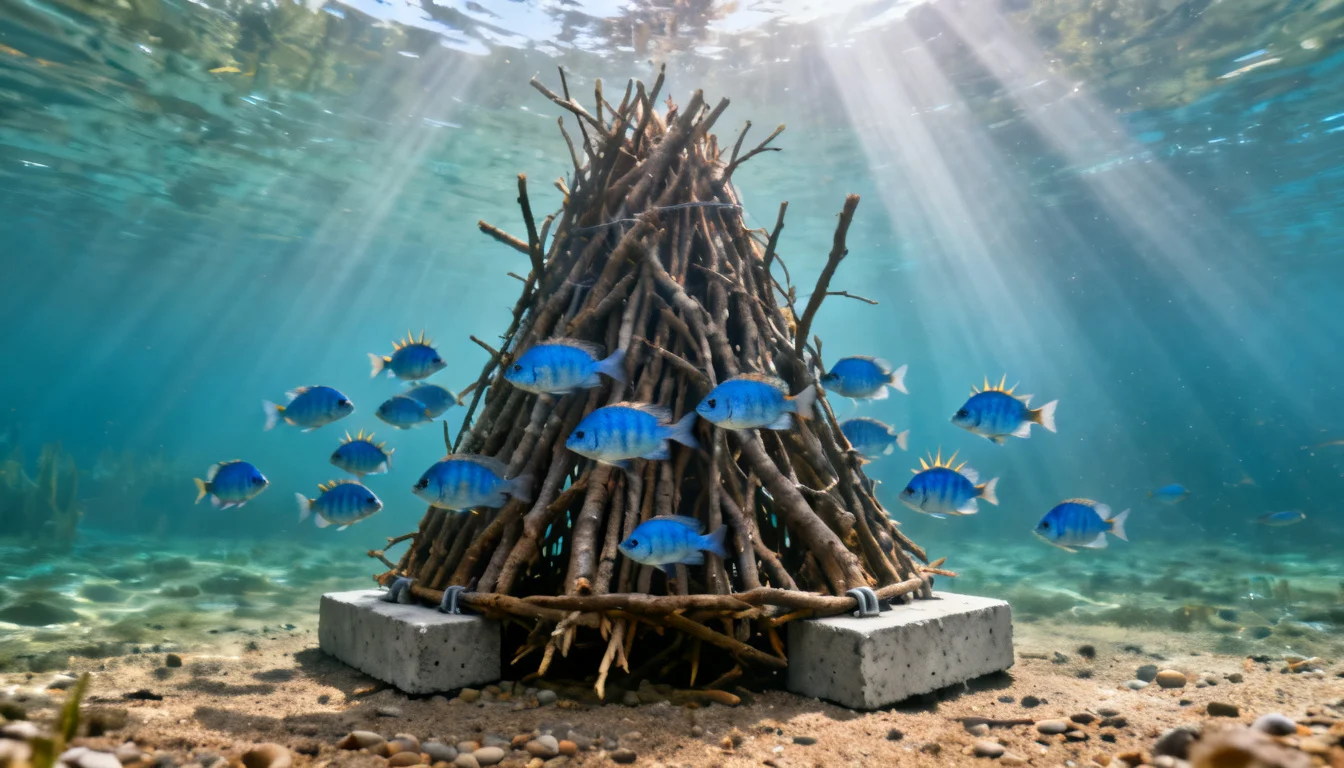
Placement matters more than volume. Put structure in 5 to 10 feet of water — shallow enough to hold oxygen all summer, deep enough to be useful. Anything sunk much deeper than 12 feet sits in dead water during summer stratification, when oxygen runs out at depth.
Keep attractors within casting distance of the bank where you actually fish, and at least 100 feet away from spillways and overflow pipes, where loose brush can clog screens and outlets. One good brush pile is plenty for a small pond; larger water takes one pile per 2 to 3 acres.
Build piles big — a cluster about 10 by 15 feet holds more fish than a dozen single trees scattered around. Pine and Christmas trees break down in a few years; cedar and hardwood last much longer but snag more lures.
Never sink treated or painted lumber, and if you use concrete for anchors, make sure there is no rebar in it.
Seasonal Pond Cycles: Turnover, Winterkill & Fish Kills
Pond management is seasonal because the water itself changes all year. In summer, warm water forms layers: a warm, oxygen-rich top layer over a cooler, oxygen-poor deep layer.
In early fall, the surface cools, the layers mix, and the pond "turns over" — a sudden mix that can temporarily drop oxygen pond-wide and stress fish. A fall turnover is not always deadly, but combined with heavy weed decay or an algae bloom, it can produce a kill.
Winter brings the other big killer: ice and snow. Even under ice, fish need oxygen, and the only source is photosynthesis in the water column. A pond sealed under ice and thick snow can run out of oxygen entirely — a classic winterkill that shows up as dead fish at the ice-out.
If your pond gets long, snowy winters, keeping a patch of ice open or running a small aerator through the winter is the standard prevention.
The signs of trouble are usually visible before fish die: fish gasping at the surface, a sudden cloudy or foul-smelling water, or a heavy algae scum. When you see them, act: aerate, cut nutrient inputs, and consider whether the pond is simply overstocked.
Feeding fish intensively can push a pond past its natural carrying capacity. If you do feed, do it at the same time and place daily — and understand that a pond cannot hold that extra weight if you quit.
FAQ
How often should I test my pond water?
Test pH, alkalinity, and clarity at least once a month through the growing season, and more often when you are liming, fertilizing, or after a fish kill. If you aerate or feed fish heavily, weekly checks of oxygen and ammonia are worth it. The key is consistency: a written record of trends is far more useful than a single number.
Why did my fish die overnight?
The most common cause is dissolved oxygen depletion. Warm water holds less oxygen, and on hot, still nights an algae-heavy or weed-choked pond can drop below survival levels before dawn. Cloudy stretches, a fall turnover, and overstocking all make it worse. Check for fish gulping at the surface in early morning — that is the warning sign.
Do I need a pond aerator?
Not every pond needs one, but aeration is the cheapest insurance if you have deep water, heavy weed growth, or feed fish. A surface aerator or bottom diffuser adds oxygen all summer and prevents the stratification that leads to turnover kills. In cold climates, running an aerator through winter also prevents winterkill under ice.
How do I clear muddy pond water?
First fix the source: runoff erosion, wading livestock, or bottom-rooting fish like bullheads keep mud stirred up. For clay turbidity, gypsum is the standard treatment — roughly 1,300 to 3,000 pounds per surface acre, spread and stirred in.
Alum clears water faster but lowers pH and alkalinity, so it must be paired with hydrated lime and is riskier in soft-water ponds. Test before treating and let the water settle for a few weeks.
How deep should a fishing pond be?
Plan for a depth of 8 to 12 feet over a good part of the pond. That deep water gives fish a summer refuge and keeps the pond from freezing solid or overheating.
A shallow pond averaging less than 6 feet will struggle with weeds and temperature swings, while a very deep pond stratifies hard in summer and wastes water below the oxygen line.
Is clear pond water good or bad for fishing?
For bass and bluegill, too clear is usually bad. Crystal-clear water means little plankton, which means a thin food chain and slow fish growth. The healthy look is a light green tint with a Secchi reading of 18 to 24 inches.
Exception: if your goal is trout or you simply prefer swimming water, clearer is fine — just match your expectations to the water.
The Bottom Line
Pond management comes down to a few numbers and a little seasonal awareness. Keep dissolved oxygen up, pH and alkalinity in range, clarity at 18 to 24 inches, plants around 10 to 25 percent, and structure in the oxygenated shallows — and your pond will grow fish instead of problems.
Start with a simple test kit and a Secchi disk, keep notes through a full season, and address one issue at a time. The species in your pond set the stage for everything else, so if you are managing around bass, the largemouth bass species guide is the place to learn what your pond's top predator actually needs.