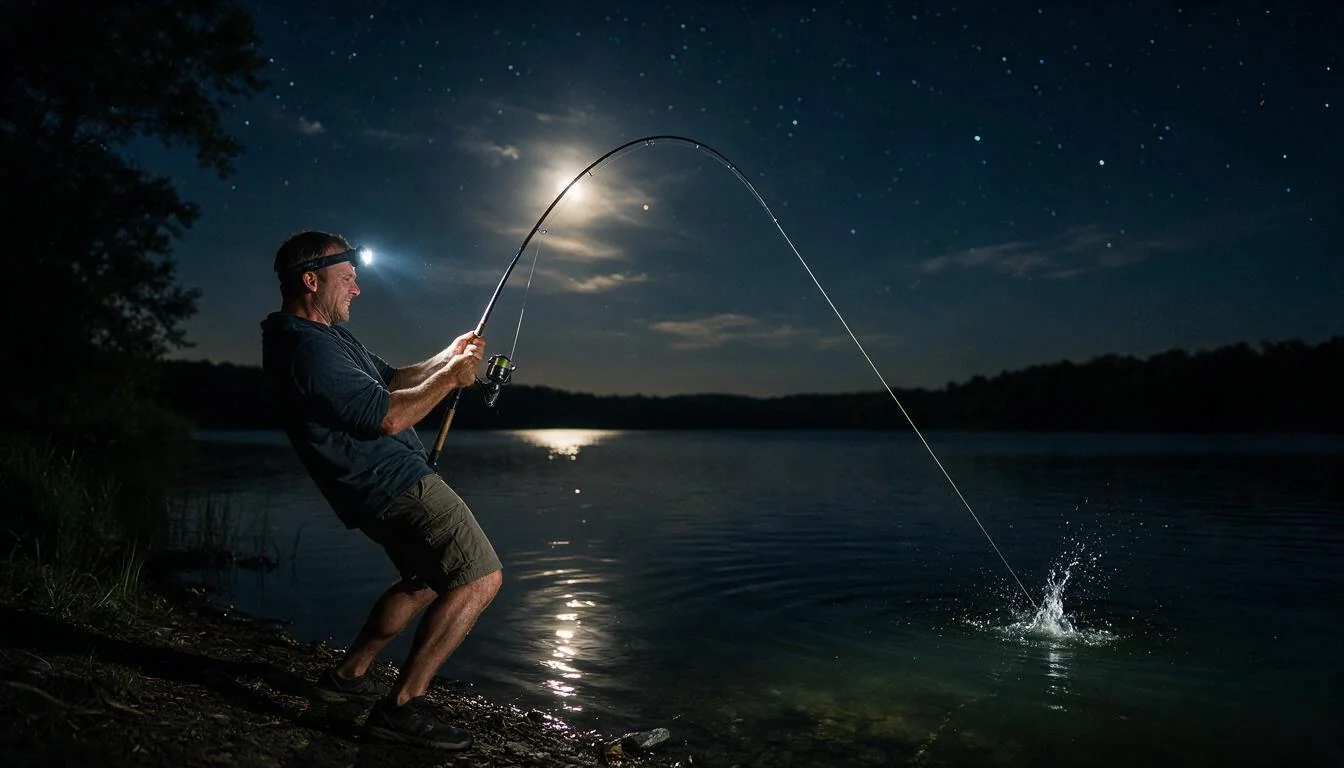
Night Fishing for Bass: How to Catch Big Bass After Dark
Some of the biggest bass in any lake are caught in the darkest hours. That isn't luck: night fishing for bass works because big fish change their whole routine once the sun goes down — leaving deep daytime haunts for the shallows, where they feed with a confidence they rarely show in daylight.
The anglers who fish those hours catch bass most people never see. This guide covers when the night bite fires, where bass hold after dark, and the best night fishing baits and lures.
You'll also get the gear you need and the simple tactics that turn a dark lake into your best fishing of the summer. For the full year-round species breakdown, start with our how to catch largemouth bass guide.
Why Bass Bite at Night
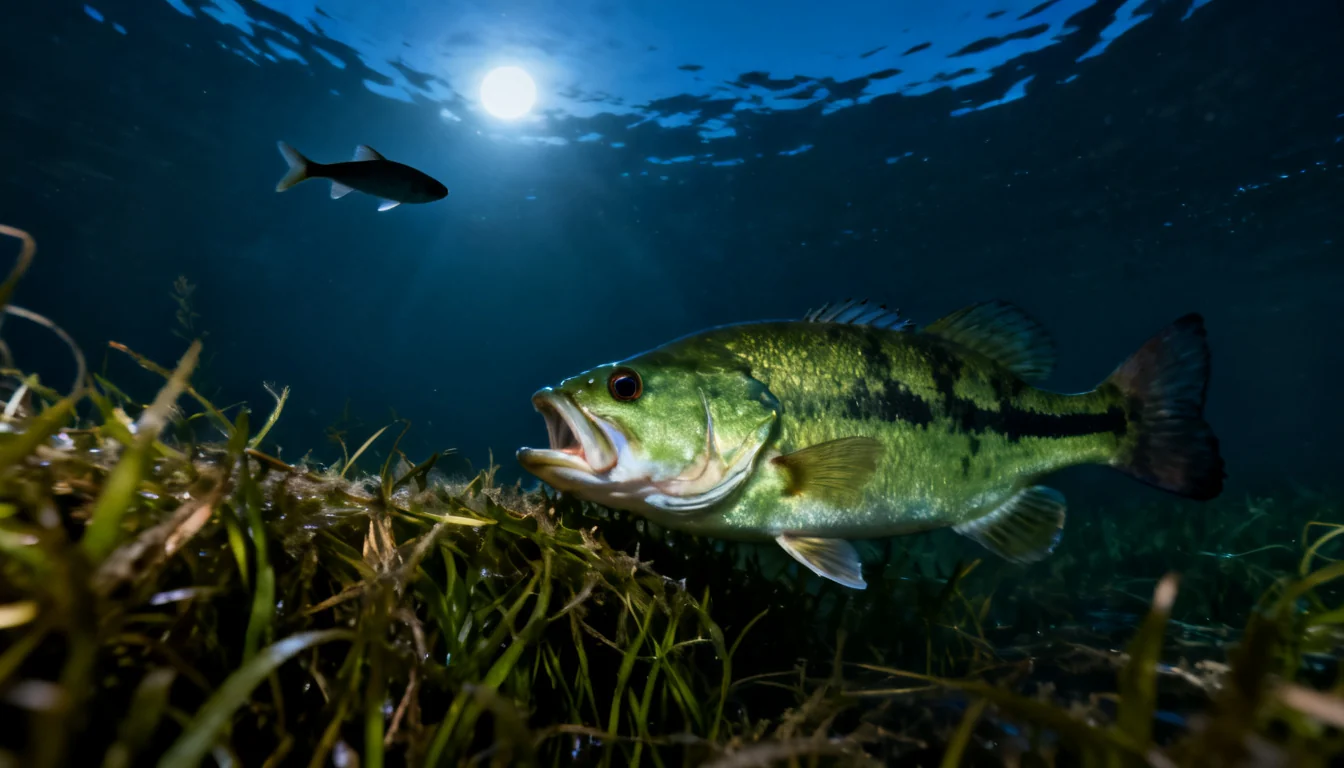
Bass are ambush predators built for low light. Their eyes gather light far better than a human's, and their lateral line — the pressure-sensing strip along each side — lets them feel a bait's vibration from several feet away in total darkness. At night, both advantages work for the bass, and its usual caution drops.
Three things come together after dark:
- Big fish move shallow. During summer days, bass hold 10-25 feet deep on ledges and drop-offs. After sunset they slide up into 2-8 feet of water where the baitfish live — and where a trophy feels safe from the sky.
- The forage is active. Shiners, bluegill, and frogs are all moving in the shallows at night, and bass follow the food.
- Less pressure. Fewer boats, fewer lures, and a confident big fish that has let its guard down. This is why so many double-digit bass come off a black buzzbait at midnight.
The takeaway: night changes the playing field in the bass's favor, and in yours too — if you fish where they're feeding.
When to Go: Prime Hours & Moon Phases
Night bass fishing isn't an all-night marathon. The bite comes in waves, and knowing the windows is half the game. In fact, bass fishing at night follows the same feeding logic as dawn fishing — the fish just run the schedule in the dark.
The prime windows. From late June through August, the classic schedule runs from about an hour after dark until midnight, then again in the last two hours before dawn. The first window is the crowd favorite — warm, comfortable, and reliably active. The pre-dawn window often produces the biggest fish of the night, especially as the water cools.
The moon changes everything. Chinese anglers have a saying for moonlit nights: bright moon, few stars — wasted trip. It matches what modern bass anglers find on the water:
| Moon phase | What the bass do | Best play |
|---|---|---|
| New moon / moonless | Dark water, bass bold, feeding shallow all night | Best topwater nights of the year |
| Quarter moons | Moderate light, decent bite | Normal night game: shallow cover, dark lures |
| Full moon | Bass see well and get cautious; many feed in the brighter first hours instead | Fish the early evening and pre-dawn edges, or deeper cover |
A calm, moonless night is the single best forecast for night fishing for bass — the same conditions that make topwater so productive at dawn carry straight through the dark. Light wind is fine; heavy wind and storms are not, and lightning means go home.
For the broader summer picture — thermoclines, deep structure, and the daytime end of this same pattern — see our summer fishing tips guide.
Where to Find Bass at Night
Find the shallow food, and you find the bass. After dark, the productive water is much shallower than most anglers fish during the day — think 2-8 feet, not 20.
The night spots that produce:
- Weed lines and lily pads — the edges where baitfish gather and bass ambush them. A mat edge in 3-6 feet of water is a classic night bass location.
- Docks and boat lifts — shade, structure, and baitfish in one package. Bass sit under the dark water between the posts.
- Points and shallow flats — bass cruise these at night the way they do at dawn, often roaming instead of holding tight.
- Riprap and rock banks — crayfish come out at night, and the bass follow.
- The drop-off edge — the shallow/deep transition: bass feed up in 2-8 feet but can duck back to 10-15 feet instantly if something spooks them.
The rule of thumb: take your daytime structure map and move every spot one step shallower. For the full breakdown of the cover and structure bass use around the clock, see our where do bass hide guide.
The Best Night Fishing Baits & Lures
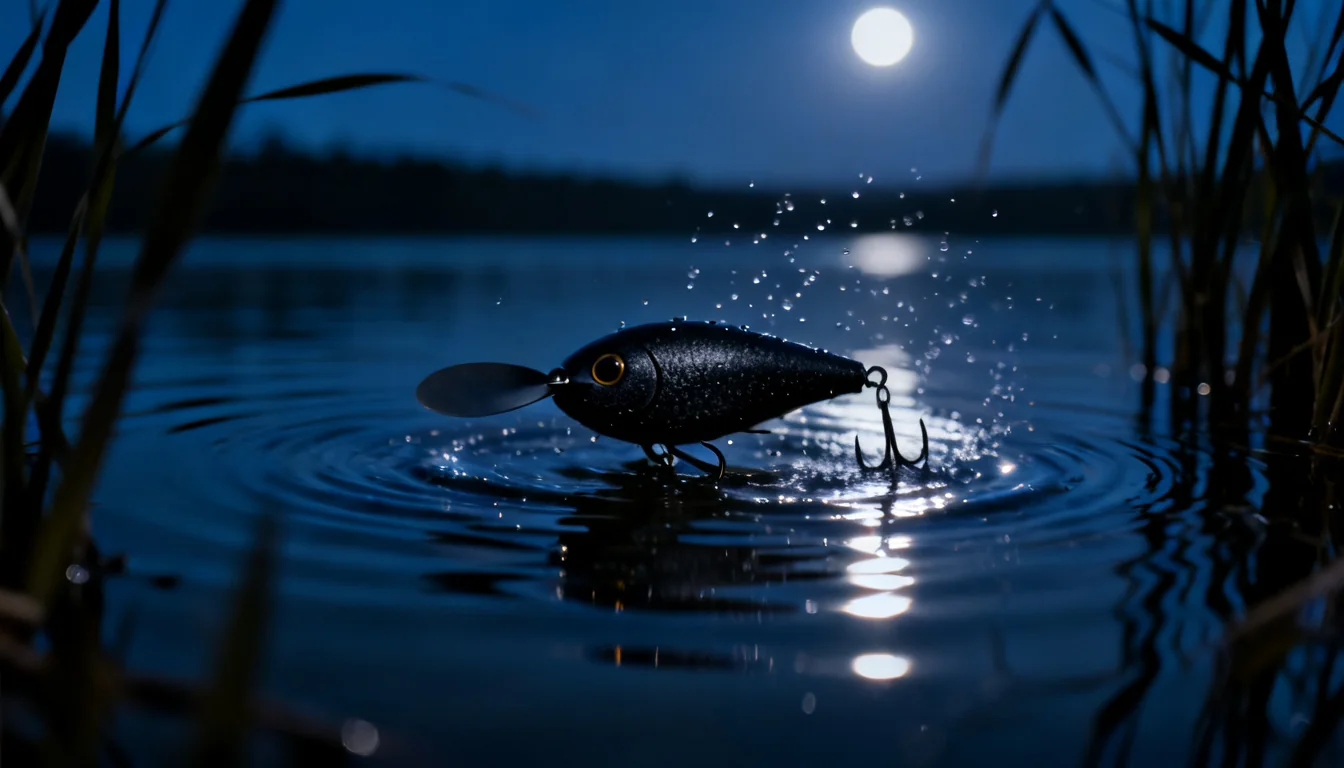
Night bass are not picky about action — they're picky about silhouette. In the dark, a lure reads as a shape against the sky or a vibration through the water, which is why dark colors dominate every serious night box.
The proven night lineup:
- Black topwater — buzzbaits, poppers, and walking baits in solid black. A black buzzbait chugging across the surface is the classic night bass killer; the silhouette is perfect and the commotion mimics a fleeing shad.
- Big spinnerbaits — a large single or double blade thrown into shallow cover. The vibration carries, and a dark skirt (black, blue, or purple) keeps the profile right.
- Jigs — black/blue jigs with a bulky trailer, worked slow along weed edges and docks. Reliable when the topwater bite dies down.
- Dark soft plastics — black or junebug worms and creature baits, Texas-rigged and dragged through shallow cover. When in doubt, this catches.
- Live bait — a live shiner under a slip bobber or a nightcrawler on the bottom is the most reliable night option of all, especially on pressured lakes.
A note on glow baits: glowing lures work best in clear water and on brighter nights. On a pitch-black new moon, a solid black silhouette usually outscores a glow stick.
Because the menu is the same one bass eat in daylight — shad, bluegill, frogs — matching the local forage still matters. Our what do bass eat guide breaks down the full diet and the lures that imitate it.
Night Bass Fishing Gear & Setup
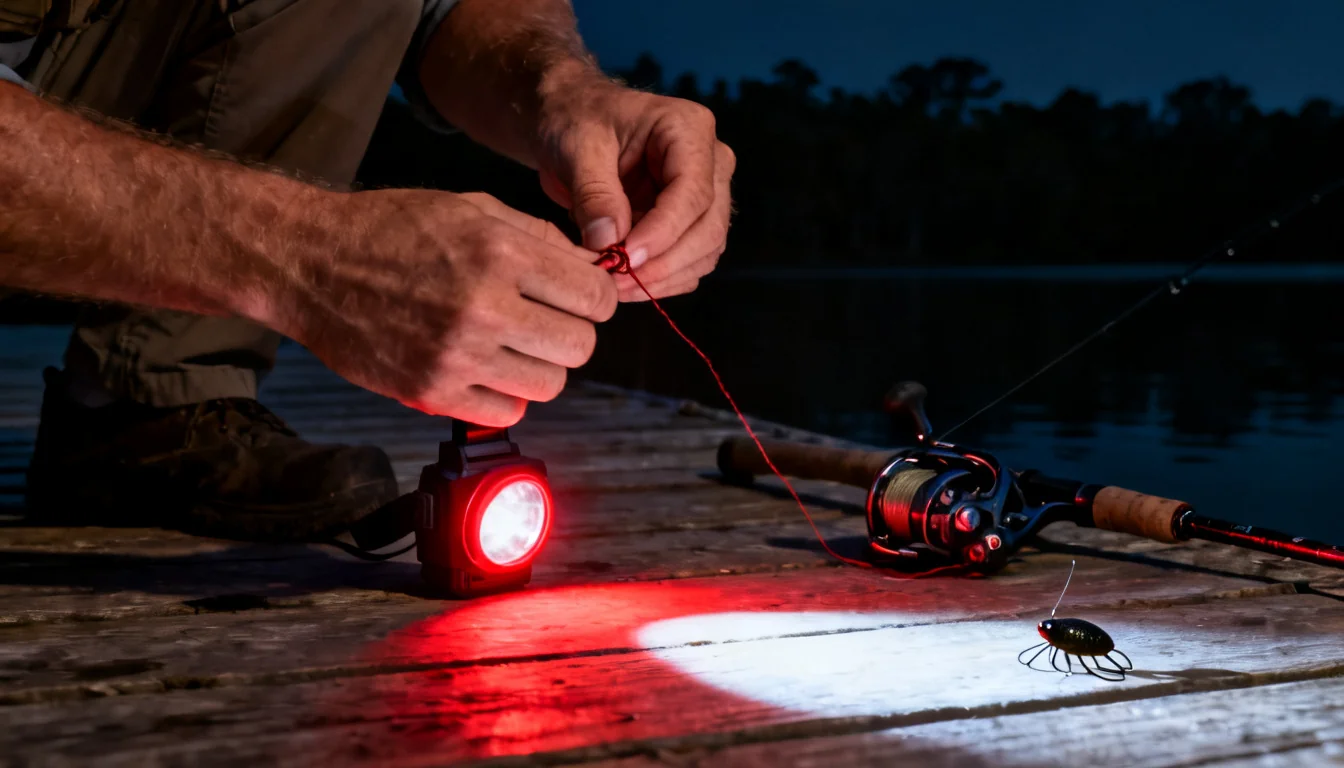
You don't need a special rod for the dark, and most night fishing gear is the same tackle you already own — but a few adjustments make the trip dramatically better:
- Rod: a 7-foot medium-heavy rod — the extra length helps you control the fish around docks and weed edges you can't see.
- Reel and line: a baitcaster or spinning reel with 12-17 lb monofilament, or 20-30 lb braid if you're fishing thick cover. Braid also gives you better feel for the subtle takes that happen in the dark.
- Headlamp with a red mode. Red light preserves your night vision — the single most useful night-fishing piece of gear you can own. Use it to tie knots and handle fish; keep it off the water while you're fishing.
- Extra batteries and a backup light. One dead headlamp ends the trip.
- Polarized or clear glasses are optional; a comfortable life jacket, if you're in a boat, is not.
Gear for the whole night: a landing net with a wide hoop (you'll be netting fish you can barely see), a rod holder or two if you're fishing live bait, and a dark-colored towel to grip fish. Keep your gear minimal — the fewer things you fumble with in the dark, the safer and quieter you are.
Night Bass Fishing Tactics: The Retrieve & The Strike
The fish are the same bass you catch all year; only your senses change. Adapt the retrieve and the hookset to what you can't see:
1. Fish slower than you think. Night bass rarely chase a fast bait. Slow down every retrieve — pause a topwater for several seconds, drag a jig in short hops, crawl a worm.
2. Keep the bait near cover. Cast parallel to weed lines and docks, not into open water. The bass are holding tight to the edges.
3. Let the pause do the work. With topwater, the strike often comes right after the bait stops. Count to three before the next twitch.
4. Set the hook on feel, not sight. A night topwater strike is a heavy thump through the rod, not a visible blow-up. Reel down and sweep the rod when you feel the weight — don't wait to see anything.
5. Fight the fish, then light it. Point the light away from the water while you fight; a bright beam on the fish makes it tear off on a final run. Lead the fish into the net, and only then shine your light to unhook it.
The same retrieve principles — the pauses, the slow cadence, the dead-stick moments — are covered in depth in our fishing lure action guide; the night version just doubles the pause times.
Common Night Fishing Mistakes
Most failed night trips come down to a few fixable habits:
- Shining light on the water. A bright white beam can spook the fish you're casting to. Use red light, and point it down while you work.
- Fishing too deep. If you're fishing 15 feet at midnight, you're probably fishing empty water. The night bite is a shallow bite.
- Retrieving too fast. Fast is the daytime mistake carried into the dark. Slow beats speed every time at night.
- Fishing a bright, light-colored lure. A white crankbait disappears against the night sky; a black one reads as a clear silhouette.
- Fishing through the doldrums. Between midnight and 3 AM the bite often slows. Work the first hours and the pre-dawn window instead of grinding a dead stretch.
- Skipping safety. Fishing alone in the dark, on an unfamiliar bank, in waders, is how accidents happen. See the next section.
Night Fishing Safety
The dark adds real risks, and they're easy to manage:
1. Never fish alone if you can avoid it. A buddy doubles the fun and the safety.
2. Tell someone where you are and when you'll be back — a text before you launch, another when you're off the water.
3. Watch your footing. Banks that are fine in daylight turn slick and treacherous at night. Walk slowly, use your light on the path, and don't wade into unknown water.
4. Weather-check before you go. Thunderstorms and night fishing do not mix — lightning is the one forecast that cancels the trip.
5. Know the local wildlife. Snakes and raccoons are active at night; keep a light on your path and don't leave bait unattended.
Night Fishing FAQ
Is night fishing good for bass?
Yes — it's often the best time of the day for big bass, especially in summer. Bass move into the shallows after dark, feed more confidently, and the reduced fishing pressure means less-educated fish. Many trophy bass are caught at night on black lures.
What time of night do bass bite best?
The classic windows are roughly an hour after dark until midnight, then the last two hours before dawn. The early window is more consistent; the pre-dawn window tends to produce the largest fish. A moonless night extends both.
What color lures work best for night bass fishing?
Black and other dark colors — black buzzbaits, black/blue jigs, dark soft plastics. In the dark, lures are seen as silhouettes against the sky, and dark baits read clearly while light ones vanish.
Do bass bite on a full moon?
They bite, but differently. Bright moonlight makes bass more cautious and pushes much of the feeding into the brighter early evening and pre-dawn hours. Quarter and new moons give the classic all-night shallow bite.
Is it safe to fish for bass at night?
Yes, with basic precautions: fish with a buddy, tell someone your plan, carry a red headlamp and spare batteries, watch your footing, and cancel the trip if storms are forecast. Most night-fishing accidents come from slips and lightning, both avoidable.
The Bottom Line
Night fishing for bass is the shallow-water game run in the dark: fish 2-8 feet of water, throw black baits, slow everything down, and set the hook on feel.
Time it with a moonless night and the first and last windows, keep your light off the water, and you'll catch bass that daytime anglers never even know are there. It's the best kept secret in freshwater fishing — and it works.