Summer Night Fishing: Why the Best Summer Bites Happen After Dark
When summer heat drives daytime water temperatures past 80°F, most anglers assume the bite is dead. It isn't — it just moved to a different schedule. Summer night fishing turns the season's biggest problem into its biggest advantage.
The same fish that sulk in deep water all day move shallow after dark, and they feed with a confidence they never show in daylight.
The coolest, calmest hours of a July day are between sunset and midnight. This guide covers what bites, where fish go at night, the baits and night fishing gear that work, moon phases, and the safety rules that keep a night trip fun instead of dangerous. It pairs with our summer fishing tips guide, which covers the full daylight picture.
Why Fish Feed Harder at Night in Summer
Summer lakes stratify: a warm surface layer, a cold bottom layer, and a thermocline band between them. Fish hold deep near the thermocline during the day, where the water is cool and the oxygen levels are still usable. Then the sun goes down and everything shifts.
Shallow water cools fast after dark. The oxygen that daytime heat squeezed out of the shallows returns as the temperature drops. Baitfish — shad, minnows, young sunfish — move in to feed on the cooler, richer water.
The predators follow them. That's the whole night pattern in one sentence: the food moves shallow, and the fish move in behind it.
There's a second factor that matters just as much: light. Most game fish are wired to feed in low light. Their eyes are built for it, and the darkness makes them bold. A bass that spooks at your shadow at noon will swim right past your boots at midnight.
What Bites After Dark: The Summer Night Lineup
Every region has its night specialists. Here's the standard after-dark lineup for US fresh water:
| Fish | Night Behavior | Best Approach |
|---|---|---|
| Largemouth bass | Move from deep structure onto flats, points, and weed edges | Black buzzbaits, dark spinnerbaits, black/blue jigs, topwater |
| Channel & blue catfish | Peak feeding between sunset and midnight | Cut bait, chicken liver, stink bait on the bottom |
| Crappie | Gather around lights and brush piles | Minnows or glow jigs under a lantern |
| Walleye | Feed on shallow flats and gravel bars in low light | Night crawler harnesses, crankbaits, glow lures |
| Smallmouth bass | Work rocky shorelines and points after dark | Topwater, spinnerbaits, jigs along the rocks |
| Brown trout | Big fish feed at night, especially 18 inches and up | Streamers and mouse patterns fished on dark flats |
Catfish deserve special mention: they're the classic summer night fish. Channel cats are primarily night feeders that hug the bottom during the day, and their peak feeding window runs from sunset to midnight. Our how to catch channel catfish guide covers the rigs and bait in detail.
Bass are the other headline species. In summer, big bass move into shallow water under cover of darkness, and dark-colored lures absolutely produce. See our how to catch largemouth bass guide for the full system.
Night Fishing Tips: Where Fish Move After Sunset
The best night spots are usually the same places that fish well at dawn — because night fishing is basically a second dawn. Here's where to focus:
- Shallow flats — the classic night feeding ground. Bass and walleye roam flats in 2-8 feet of water that they'd never touch at midday.
- Weed edges and points — the outside edge of a weed bed, and points that drop into deeper water, funnel night-feeding fish past a narrow ambush zone.
- Docks and bridges with lights — light attracts baitfish, and baitfish attract predators. A green or white dock light is a crappie and bass magnet all night long.
- Rocky shorelines — smallmouth country after dark. Fish the rocks with topwater and spinnerbaits.
- Brush piles and stake beds — crappie hold tight to cover at night; a lantern hanging over a brush pile turns it into a honey hole.
If you're new to reading structure, our how to fish a lake guide walks through points, drop-offs, and weed lines step by step — the same features that hold fish at night.
One rule that saves a lot of blank nights: fish shallower than you think. Most anglers fish too deep at night out of habit. If the water is 20 feet deep where you're casting, you're probably in the wrong place. The night bite is a shallow-water bite.
Moon Phases and the Best Time for Night Fishing
The classic night window runs from sunset to about midnight, with a second, shorter burst in the last hour before dawn. The first hour of darkness is often the best — fish that have been holding deep all day are hungry and moving.

Moon phase changes where the fish are, not whether they bite:
- New moon (dark nights): the best shallow-water nights. Fish feel safe in total darkness and roam the flats and banks aggressively. This is the classic topwater night.
- Full moon: nights are bright enough to see by, and fish often stay deeper or hug cover more tightly. The bite can still be strong, but it often runs later, and the shallow-water topwater action tapers.
- Quarter moons: a middle ground — decent nights with a normal mix of shallow and deep activity.
Cloud cover and wind matter more than most anglers think. A warm, breezy, overcast night can fish like a new moon even when the calendar says otherwise. Conversely, a calm, glassy full-moon night with no cloud cover can be the toughest night of the month for shallow-water fishing.
Night Fishing Baits That Produce After Dark
Darkness favors dark lures and strong-smelling bait. The pattern: fish find your offering by silhouette against the surface glow, or by scent in the water.
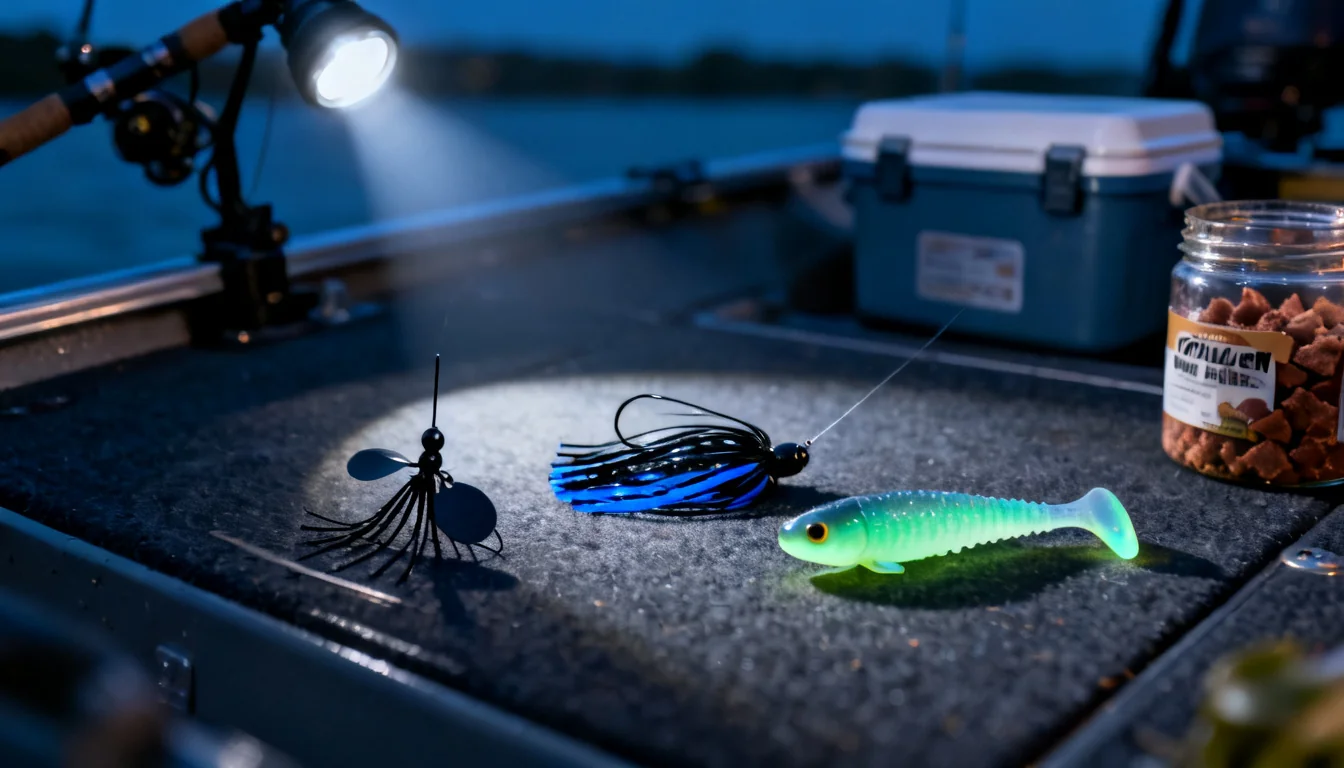
- Bass: black buzzbaits, black spinnerbaits, and black/blue jigs are the standard night arsenal. Big, dark, noisy, and slow. A buzzbait chugging across a flat on a dark night is one of the most reliable bass patterns in the country. Black worms and jigs worked slowly along weed edges also score.
- Catfish: the night bite is a scent game. Cut bait, chicken liver, shrimp, and stink bait all work; the stronger the smell, the better. Fish them on the bottom with a slip sinker rig.
- Crappie: minnows under a light, or glow-in-the-dark jigs worked slowly around brush and docks. For the full setup, see our how to catch crappie guide.
- Walleye: night crawler harnesses and crankbaits trolled or cast across shallow flats — the pattern our how to catch walleye guide covers in full. Glow-painted lures add a few extra feet of visibility in dark water.
- Trout: big streamers and mouse patterns fished on the surface at night for browns — the mouse bite is a real thing on many tailwaters and stillwaters.
Live bait shines at night. A lively night crawler or a big shiner out-fishes most artificials after dark, because scent and vibration do the work that sight would do during the day.
Night Fishing Gear: The After-Dark Setup
You don't need a second tackle box for night fishing — just a few targeted additions:
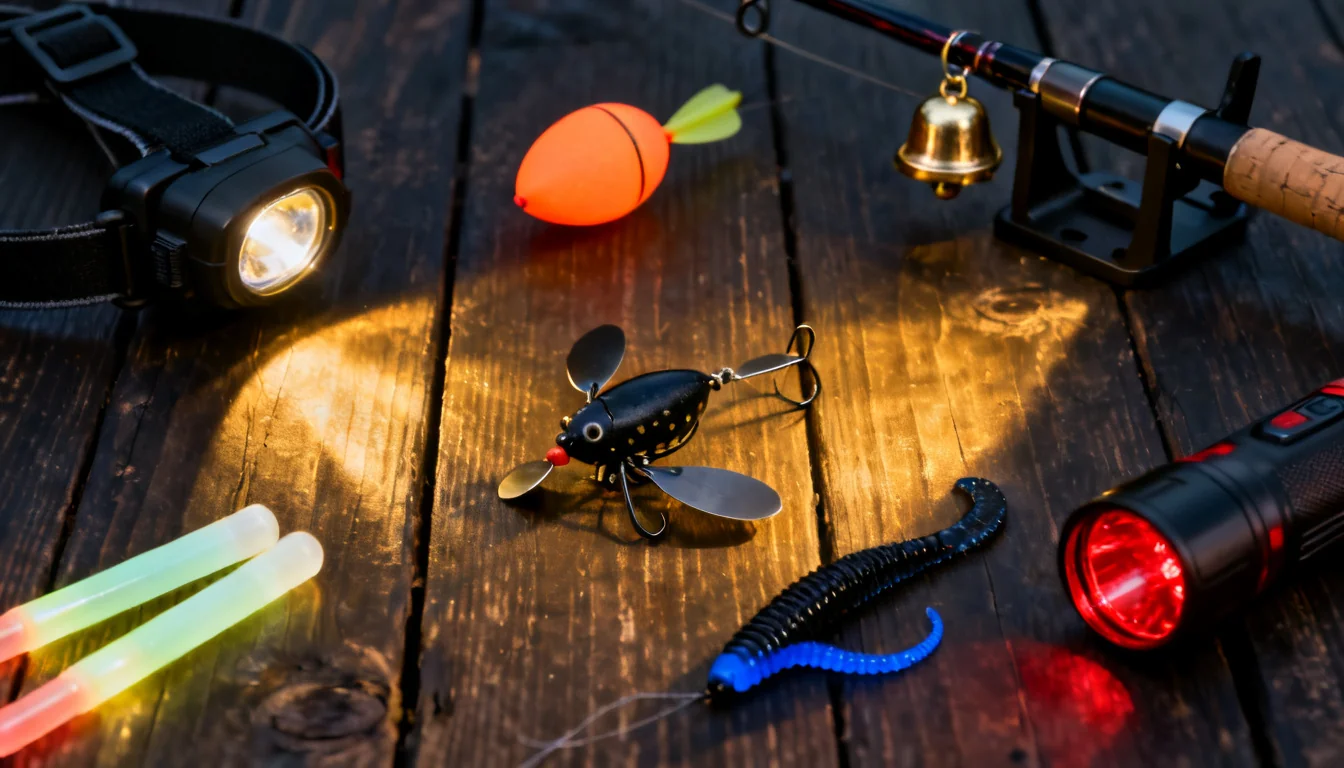
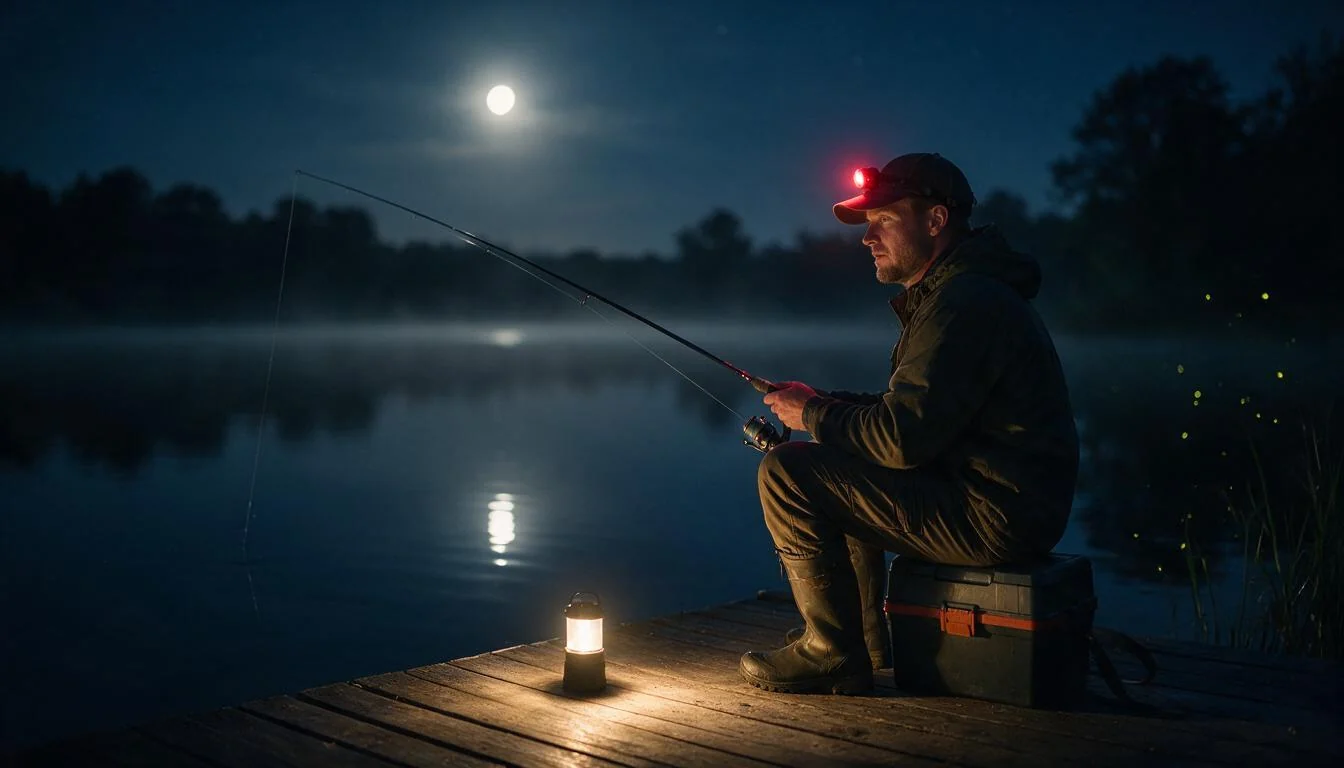
- Headlamp with a red mode. Red light preserves your night vision and spooks fewer fish. White light blinds you and lights up your whole fishing area.
- A lantern or submersible light. For crappie and bass around docks, a green or white light pulls baitfish in and creates the whole food chain under your rod tip.
- Glow sticks or luminous floats. A glow stick on your line tip, or a luminous bobber, turns a normal float setup into a night setup for a dollar.
- Rod holders and bells. For catfish, a rod holder with a bell lets you hear the bite instead of staring into the dark.
- Heavier line than you'd use by day. Fish are less line-shy at night, and the bigger fish that show up after dark will test your knots.
- A good landing net and long-handled pliers. Night hook-ups are harder to see; don't make yourself hand-land a big catfish in the dark.
Keep your rig simple. The more you have to fiddle with in the dark, the more likely you are to break something or drop a rod in the water. Set up before dark, organize your tackle, and fish.
Night Fishing Safety: Rules That Matter
Safety is the part of summer night fishing that nobody regrets taking seriously:
1. Thunder = leave. Fishing is the leading outdoor activity for lightning fatalities in the US, and summer storms build fast. If you hear thunder, pack up and go. Don't wait for rain.
2. Tell someone where you're going. A text with the lake name, launch spot, and expected return time takes ten seconds and can save your life.
3. Fish with a buddy when you can. Wading, launching a boat, or fishing unfamiliar water alone at night multiplies every risk.
4. Wear a life jacket near deep water. Especially in a boat. The water is dark, the shore is farther than it looks, and a snagged line can pull you off balance.
5. Watch for snakes. Summer nights are active snake time in the South and Midwest. Use your headlamp to check the bank before you step, and don't reach into brush or under docks blindly.
6. Bring bug spray and cover up. Mosquitoes and ticks are the true night-fishing tax. Long sleeves and DEET beat any repellent gimmick.
7. Don't wade unknown water. A spot that looked knee-deep in daylight is easy to misjudge after dark, and evening dam releases can raise tailwater levels fast. Scout new water in daylight first.
Regional Notes: Summer Nights Across the US
The night pattern holds everywhere, but the cast of characters changes:
- South and Southeast: catfish and crappie dominate. Heat makes night the only sane window, and crappie under lights is a year-round tradition.
- Midwest and Great Lakes: walleye nights are the headline — shallow flats and night crawler harnesses produce some of the season's biggest fish. Bass nights are strong too.
- Northeast: smallmouth bass and pike nights on rocky lakes; brown trout nights on tailwaters for the fly crowd.
- West: bass on reservoirs and trout in mountain lakes; high-elevation lakes stay cool enough that fish feed all day, but night still beats the crowds.
FAQ
What time is best for summer night fishing?
Sunset to about midnight is the classic window, with a second burst in the hour before dawn. The first hour of darkness is often the hottest — fish that held deep all day move shallow and feed aggressively as soon as the light drops.
What fish are most active at night in summer?
Catfish (especially channel and blue cats) are the most reliable night feeders, peaking between sunset and midnight. Largemouth and smallmouth bass, crappie, walleye, and big brown trout all feed actively after dark in summer.
Is it better to fish on a full moon or no moon?
For shallow-water fishing, dark nights (new moon) are usually better — fish feel safe roaming flats and banks in total darkness. Full-moon nights fish brighter, with fish often holding deeper or tighter to cover. Cloud cover and wind can make any night fish darker than the calendar says.
Do you need special gear to fish at night?
Not much. A headlamp with a red mode, a lantern or submersible light, glow sticks or luminous floats, rod holders with bells, and heavier line cover most night fishing. Keep the setup simple and organize it before dark.
Is night fishing dangerous?
It's as safe as you make it. The big rules: leave at the first sign of thunder, tell someone where you're going, wear a life jacket near deep water, watch for snakes, and scout unfamiliar water in daylight first. Follow those and night fishing is safer than most summer daytime activities.
The Bottom Line
Summer night fishing turns the hardest season into the most productive one. Fish move shallow after dark, the water cools, and the biggest fish of the year feed with a boldness they never show at noon.
Fish the flats and weed edges, go dark with your lures or strong with your bait, and respect the storm. Do that, and the hottest nights of the year become the most productive ones.