The Best Fishing Spots: A Roadmap for Finding Fish
Where are the fish? It's the question behind every cast — and the answer is more predictable than it looks. Veteran anglers will tell you that spot selection is 70 percent of the battle: the best fishing spots aren't random, and finding them is a skill you can learn.
This guide is a simple roadmap for how to find fish in any water you step up to: how to read the water, what structure to look for, and which spots hold fish in lakes, rivers, and ponds.
Old angler's rule: 七分钓位三分钓技 — "seven parts spot, three parts skill." Once you can find the fish, everything else gets easier.
Why Some Spots Hold Fish
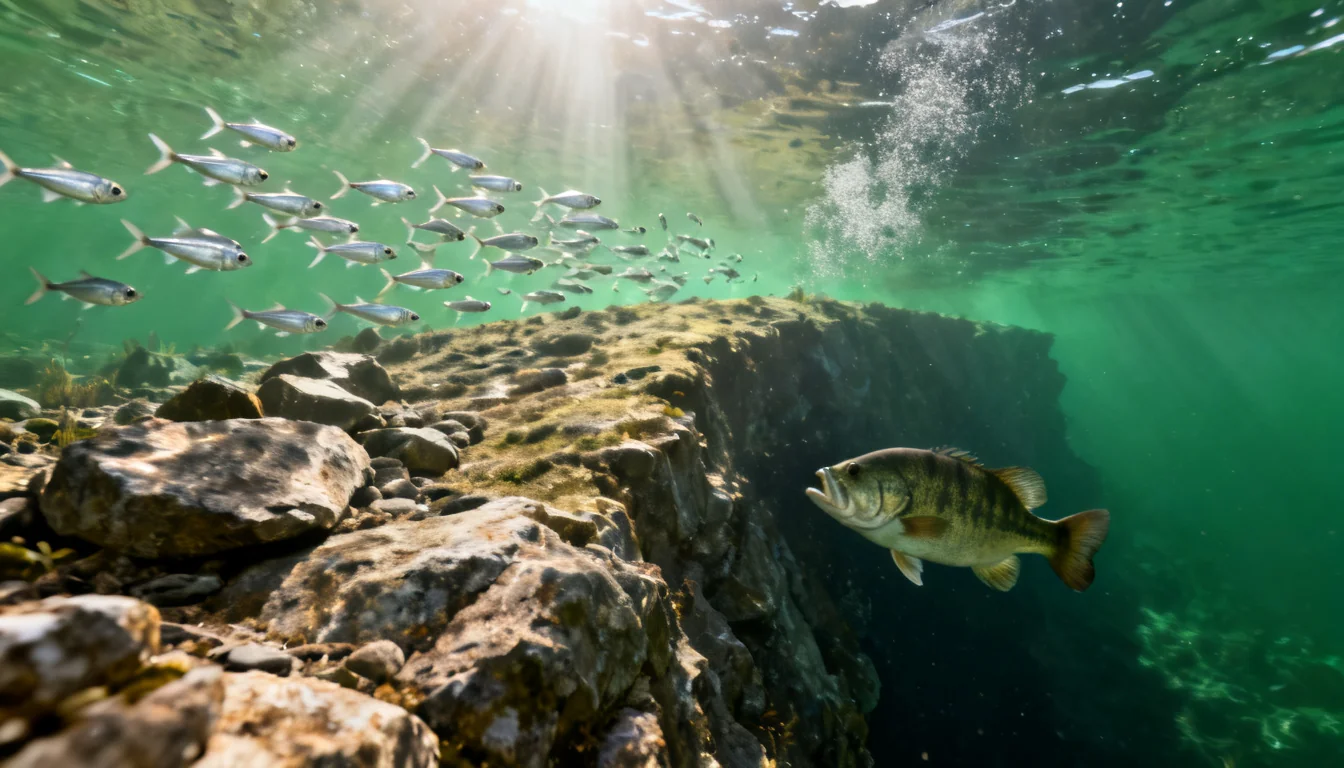
Fish are not scattered evenly through the water. They gather where four needs are met: food, oxygen, comfortable temperature, and cover from predators. A spot that provides all four will hold fish all day; open, featureless water holds almost nothing.
That's why structure matters so much. Structure is the underwater shape of the lakebed or riverbed — points, drop-offs, weed lines, channels, and holes. Structure concentrates food: baitfish use it as a highway, and predators use it as an ambush point.
When you see a fish on a depth chart hugging a drop-off, it's not being lazy — it's choosing the spot where food comes to it and it can see danger coming.
Cover is the second half of the equation. Weeds, timber, docks, and rock piles give fish a place to hide and rest. The universal pattern in every body of water: fish relate to the edge — the weed-line side facing open water, the deep lip of a drop-off, the seam where two currents meet.
How to Find Fish: The 5-Step Roadmap
How to find fish boils down to five questions, answered in order. Skip a step and you're guessing; follow the roadmap and you systematically narrow the water down to the spots most likely to hold fish.
Step 1 — Name the water type. Lakes, rivers, ponds, and streams all concentrate fish differently. A lake fish relates to points and drop-offs; a river fish relates to current breaks; a pond fish relates to cover and corners. Pick the pattern for the water you're on before you cast.
Step 2 — Find the structure. Look for the underwater shape: points that run out from shore, drop-offs that change depth fast, weed lines, channels, and holes. Use a lake map, a fish finder, or simply extend the shoreline in your mind — a point on shore keeps running underwater.
Step 3 — Match depth to season and time of day. The Chinese angler's seasonal rhyme translates perfectly to US waters: 春钓滩夏钓潭 — "spring fish the shallows, summer fish the deep." In spring, warming flats hold fish near shore. In summer, fish drop to deeper structure by day and return to the edges at dawn and dusk. Match your bait depth to where the fish are, not where you wish they were.
Step 4 — Add cover and food. Once you've found structure, look for the cover layer on top of it: a weed bed on a point, a laydown on a drop-off, a dock at the edge of a channel. Then look for food — baitfish dimples, working birds, jumping fish. Structure plus cover plus food is the golden combination.
Step 5 — Confirm with surface clues. Fish tell you where they are. Baitfish skipping on the surface, gulls or terns working one area, a bass blowing up on shad — all of it points to active fish. If you see one piece of surface activity, fish that area first and fish it thoroughly.
Where to Fish by Water Type
Every water type has its own list of reliable spots. This is where to fish depending on what's in front of you:
| Water Type | Top Spots | Why They Hold Fish |
|---|---|---|
| Lake | Points, drop-offs, weed lines, humps, inlets | Structure highways with ambush points and seasonal depth changes — see our how to fish a lake guide |
| River | Seams, eddies, deep holes, riffle tails, undercut banks | Current breaks where fish rest and ambush drifting food — see how to fish a river |
| Pond | Weed edges, dock shadows, inlet corners, the deepest bend | Small water concentrates fish; cover and the deep end hold the biggest — see pond and reservoir fishing |
| Stream | Pockets behind rocks, plunge pools, overhanging brush | Shade, oxygen, and food delivery in small packages |
The bank-to-deep route. Work any new water from the shore outward: first the shallow edge and visible cover, then the first drop-off, then the deeper structure. Most fish — and almost all active feeders — live in the first two zones.
The Best Places to Fish for Each Species
Different fish want different things. Here are the best places to fish for the most common US targets:
| Fish | Where to Find It | Notes |
|---|---|---|
| Largemouth bass | Weed lines, laydowns, docks, shallow points | Cover-first fish; the thickest nearby cover wins — see the largemouth bass species guide |
| Smallmouth bass | Rock points, boulder fields, current breaks | Structure-first fish; rocks over weeds every time |
| Trout | Pools, riffle tails, undercut banks, cool inlets | Oxygen and temperature drive everything; the deepest pool in the stretch holds the biggest |
| Crappie | Brush piles, docks, creek channels in 4-10 ft | Suspended schools around vertical cover |
| Bluegill | Weed edges, dock shadows, shallow beds | Sun-warmed water near any cover |
| Catfish | Deep holes, channels, below dams | Bottom-huggers that roam at night |
| Walleye | Points, drop-offs, main-lake humps | Low-light specialists on rock and gravel |
Finding Fish Without Electronics
You don't need a fish finder to find fish. Bank anglers and kayak anglers find consistent spots every day using the same signs:
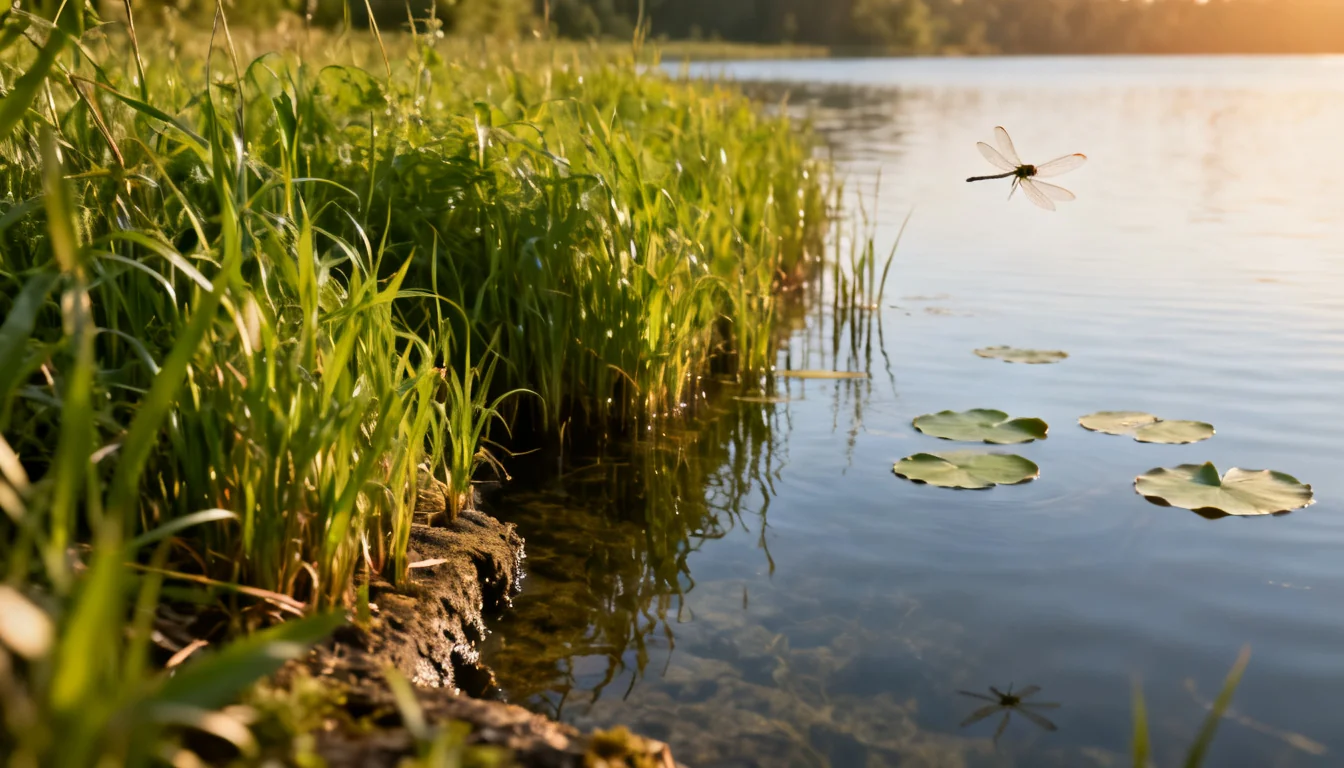
Read the shoreline like a map. A point jutting into the water keeps running underwater. A creek entering the lake cuts a channel. A weed bed visible near shore likely runs deeper than you can see. The shoreline shows you the skeleton of the underwater world.
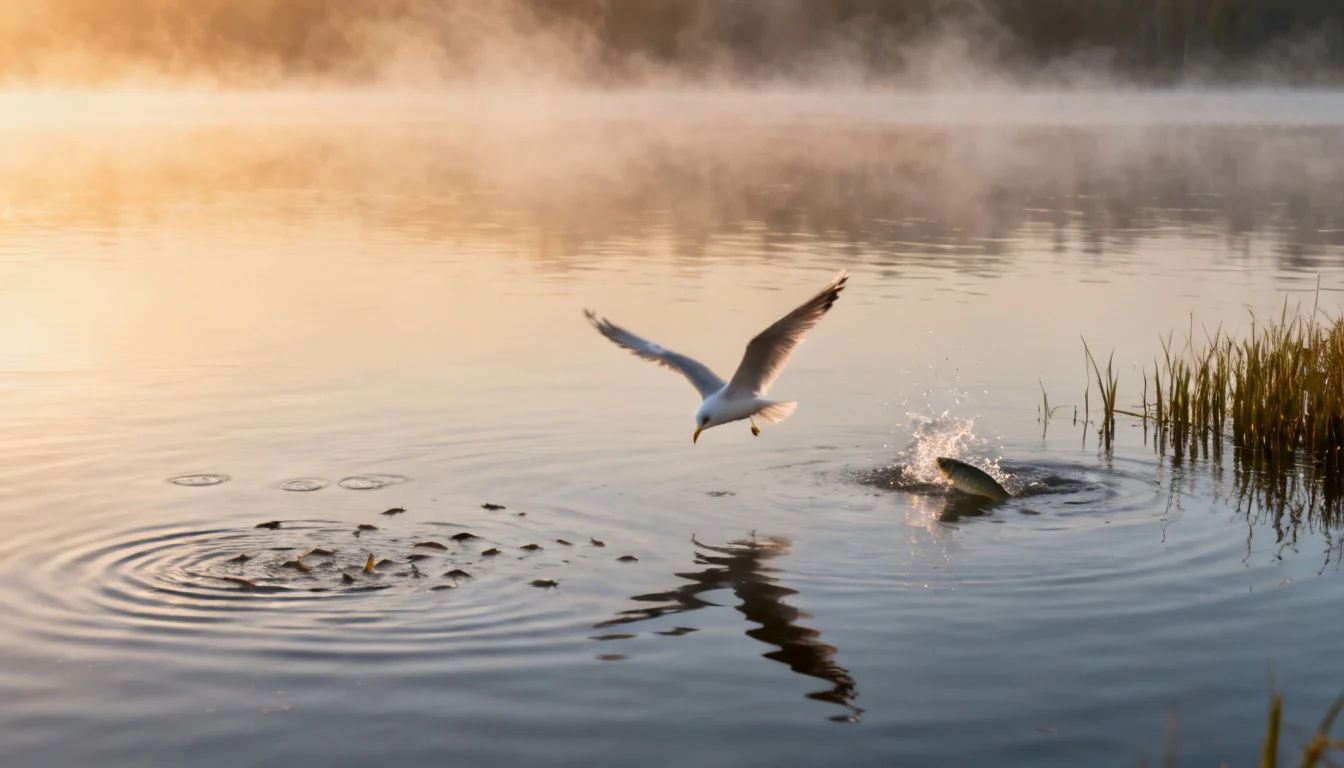
Watch the water's surface. Baitfish dimples, gulls or terns working one area, a boil where a bass turned on shad — surface activity is a live map of feeding fish. A Chinese angling saying captures the timing: 早晚钓边中午钓远, "dawn and dusk fish the edges, midday fish farther out." In summer, the low-light edges hold the active feeders; by midday, the same fish sit deeper.
Match water color to fish behavior. Clear water makes fish spooky and pushes them to deeper cover; slightly stained water (a foot or two of visibility) lets fish roam shallower and feed more aggressively. When a pond or reservoir turns over or a river rises, fish reposition — the old saying 涨水钓口落水钓潭 means "rising water, fish the inlets; falling water, fish the deep holes."
Fish the weed edges, not the weed mats. The edge where weeds meet open water is a food corridor. The Chinese rule 草密钓稀草稀钓密 captures it: in thick weed beds, fish the sparse gaps; in sparse weeds, fish the thickest clumps.
Common Spot-Finding Mistakes
1. Fishing open water. No structure, no cover, no food — no fish. Move until you find the edge of something.
2. Skipping the edges. Most anglers cast past the fish. The strike zone is usually within a few feet of cover, not in the middle of the water.
3. Fishing the same depth all day. Fish move with light and temperature. If the morning bite was shallow and the midday bite dies, the fish went deep — follow them.
4. Ignoring surface clues. Baitfish activity and working birds are free fish finders. Fish that area first.
5. Moving too often — or never. Give a good-looking spot 15-20 minutes and a few presentation changes before leaving; but if the water is featureless, don't waste an hour on it.
6. Fishing crowded bank spots. The pressured spot everyone fishes usually holds the fewest and wariest fish. Walk 100 yards past the crowd and fish the same structure type.
Best Fishing Spots FAQ
What are the best fishing spots in a lake?
Points, weed lines, and drop-offs are the big three. Points are underwater highways fish travel constantly; weed lines concentrate food and oxygen; drop-offs give fish quick access to both deep sanctuary and shallow feeding. Fish the edges of all three rather than the open middle.
Do fish stay in the same spot all day?
No. Fish move with light, temperature, and food. They may hold on a deep drop-off at midday, move to a shallow weed edge at dawn and dusk, and roam flats at night. The structure stays the same, but the fish's position on it changes through the day — relocate along the same structure instead of abandoning it.
How long should I fish one spot before moving?
Give a promising spot roughly 20 minutes of honest effort: a fast retrieve, then a slow one, then a different depth. If the water looks fishy (structure, cover, and food signs) but produces nothing, try one more position on the same structure before moving on — the fish may be holding 10 feet farther along the same weed line.
What's the best time of day for finding fish?
Low light always wins: dawn, dusk, and overcast days push fish shallower and more aggressive. In summer, add the night bite — bass and catfish feed actively after dark. Midday in clear, calm conditions is the hardest window; fish it deep and slow or save it for errands.
How deep should I fish?
Match the season. Spring: shallow flats (2-10 ft) as water warms. Summer: deep structure by day (10-25 ft in most lakes), edges at dawn and dusk. Fall: mid-depths where baitfish school. Winter: the deepest holes and basins, fished slowly. When in doubt, fish just off the bottom — most bottom-huggers eat within a foot of it.
The Bottom Line
Finding fish is a system, not a secret. Name the water type, find the structure, match the depth, add cover and food, and confirm with surface clues — and the best fishing spots stop being a mystery. Start on the edges, work outward, and trust the signs the water gives you.
The same roadmap applies everywhere, from a farm pond to a Great Lake; the choice between them is a separate question — see our freshwater vs saltwater fishing comparison before you pick.