Summer Fishing Tips: Beating the Heat & the Midday Lull
The hardest part of summer fishing isn't finding fish — it's timing. Once surface water temperatures climb past 70°F, bass and most other game fish stop doing what they did in spring: they leave the shoreline, drop into deep water, and feed on a tight dawn-and-dusk schedule. That shift frustrates anglers who keep fishing noon like it's April.
This guide explains the summer patterns that matter, where the fish actually hold, when the topwater bite fires, and how to stay safe when the heat index is climbing.
What Happens to the Water in Summer
Summer changes the water itself, and fish respond to those changes before anything else.
Lakes stratify. Warm weather sorts a lake into layers: a warm surface layer (epilimnion), a cold bottom layer (hypolimnion), and a thin band between them where temperature drops fast — the thermocline. In many northern lakes the thermocline settles around 15-25 feet by midsummer.
Oxygen concentrates where the temperature is comfortable. Here's the part most anglers miss: the deepest water is coldest but often nearly dead, because decomposing matter consumes oxygen below the thermocline. Fish rarely sit on the bottom in summer — they hold just above the thermocline, where oxygen and temperature both work. That's why the deep-water game in July is about finding the band, not the bottom.
Rivers and ponds behave differently. Flowing water stays mixed and oxygenated, so river fish use current breaks instead of depth. Small ponds may not stratify much at all, but they heat up faster and can stress fish by late July.
The takeaway: summer patterns start with temperature and oxygen, not with any single bait. Match the water column, and everything else follows.
Where Fish Go in Summer Heat
Fish are cold-blooded — as water warms, their metabolism races, they need more oxygen, and they avoid bright, hot, low-oxygen shallows. The classic summer routine for bass, walleye, and panfish:
- Night to dawn: fish move shallow, feeding in dark or low light near cover
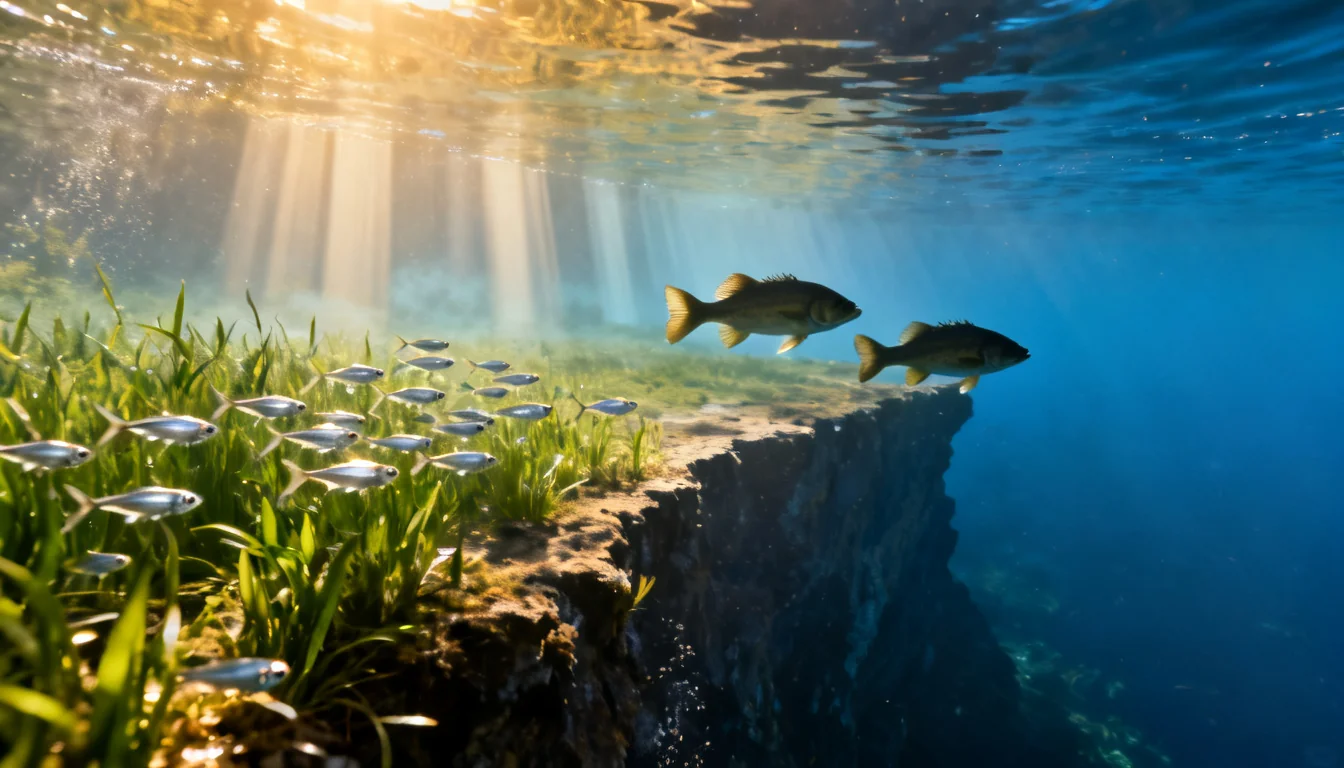
- Midday: they retreat to deep structure — ledges, drop-offs, deep weed lines, humps
- Evening: another shallow feeding window as light fades
Think of it as a daily commute between a deep daytime home and a shallow nighttime diner. The biggest fish of the summer are often caught in the shallows at night, or on the first and last hour of daylight — not in the middle of the day in open water.
Summer bass fishing follows this exact script: topwater at sunrise, deep jigs and worms by ten, topwater again at dusk, and sometimes a full night bite under the moon. For the full breakdown of where bass hold and what they eat through the season, see our how to catch largemouth bass guide.
What's Biting in Summer (By Region)
No single fish rules the whole country in July. Here's the summer lineup by region:
| Region | Best Summer Targets | Notes |
|---|---|---|
| Northeast / Midwest | Largemouth & smallmouth bass, walleye, pike, bluegill | Classic thermocline pattern — thermocline fishing paysion is strongest; thermocline fishing pays |
| South | Bass, crappie (deep brush piles), catfish | Heat is brutal — plan trips around dark |
| West | Bass on reservoirs, trout in high mountain lakes | High-elevation lakes stay cold; fish them like spring |
| Coastal | Redfish, flounder, speckled trout (saltwater) | Tide matters more than temperature |
Catfish are the summer night specialists. While bass and panfish tighten their schedule, channel and blue catfish feed aggressively after dark all summer long — they're the one fish that turns the heat into an advantage.
A rod soaking cut bait on a deep hole after sunset is one of the most reliable summer patterns in the country. See our how to catch channel catfish guide for rigs and bait.
Summer Fishing Depths & Structure
When the sun is high, depth is the whole game. The productive summer water column, top to bottom:
- 0-5 ft: only worth fishing at dawn, dusk, and night (or under heavy shade)
- 5-15 ft: good for bass on weed edges and shallow points early and late
- 15-30 ft: the summer sweet spot — the thermocline band, deep weed lines, creek channels
- 25-40 ft+: usually too low in oxygen unless current or springs are present
The best summer structures:
- Drop-offs and ledges — bass slide down the face of a drop-off during the day; cast parallel to the break line, not into open water
- Deep weed lines — the outside edge of a weed bed where it meets open water holds baitfish and the bass that chase them
- Points and humps — underwater points extend feeding lanes into deep water; humps act like structure islands
- Creek channels — the old riverbed winding through a reservoir concentrates fish and bait
- Docks and shade — shade holds fish even in midday; don't skip it
Deep presentations: Texas-rigged soft plastics, football jigs, drop-shot rigs, and deep-diving crankbaits. The common thread is fishing slow — in summer, bass often want the bait barely creeping along the structure. If you're new to reading lake structure, our how to fish a lake guide covers points, drop-offs, weed lines, and thermoclines in depth.
The Topwater Window: Best Times of Day
Topwater is the most exciting fishing of the year — and also the most time-sensitive. Summer surface lures work on a narrow schedule:
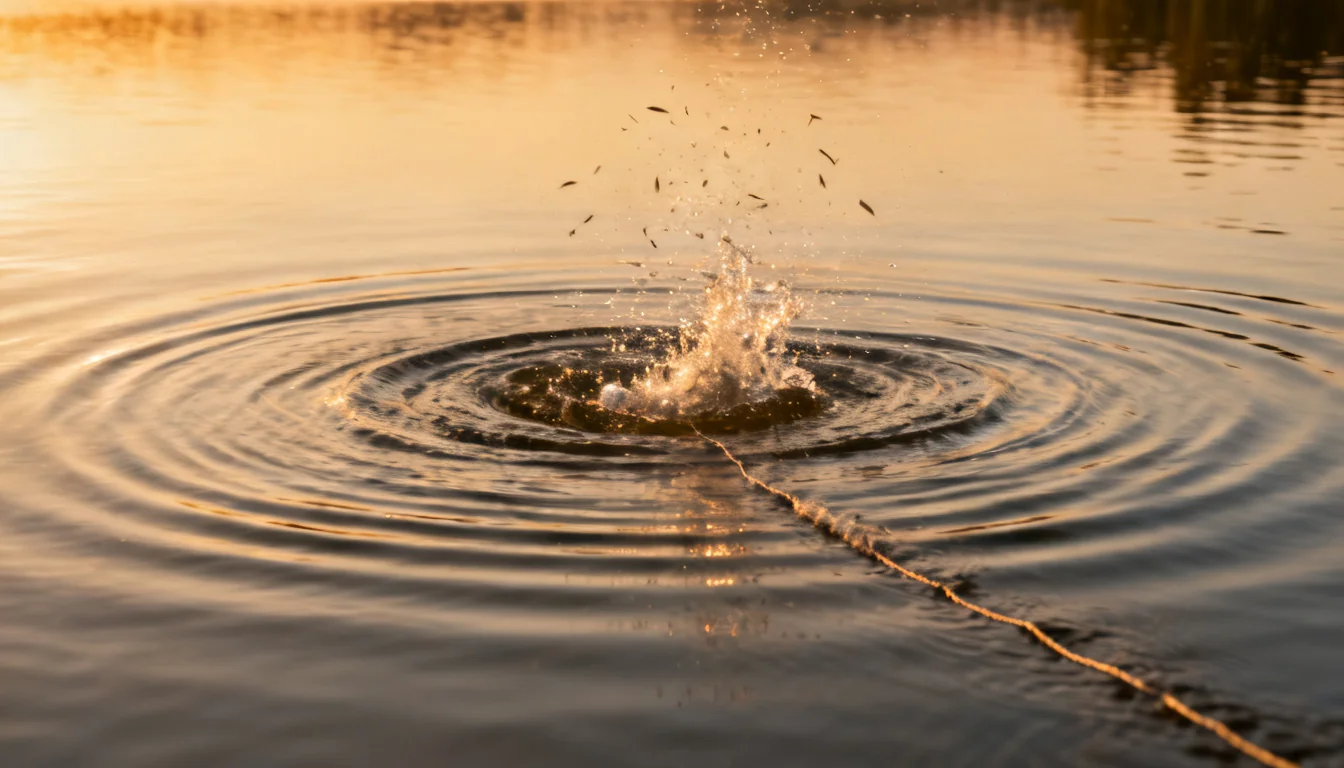
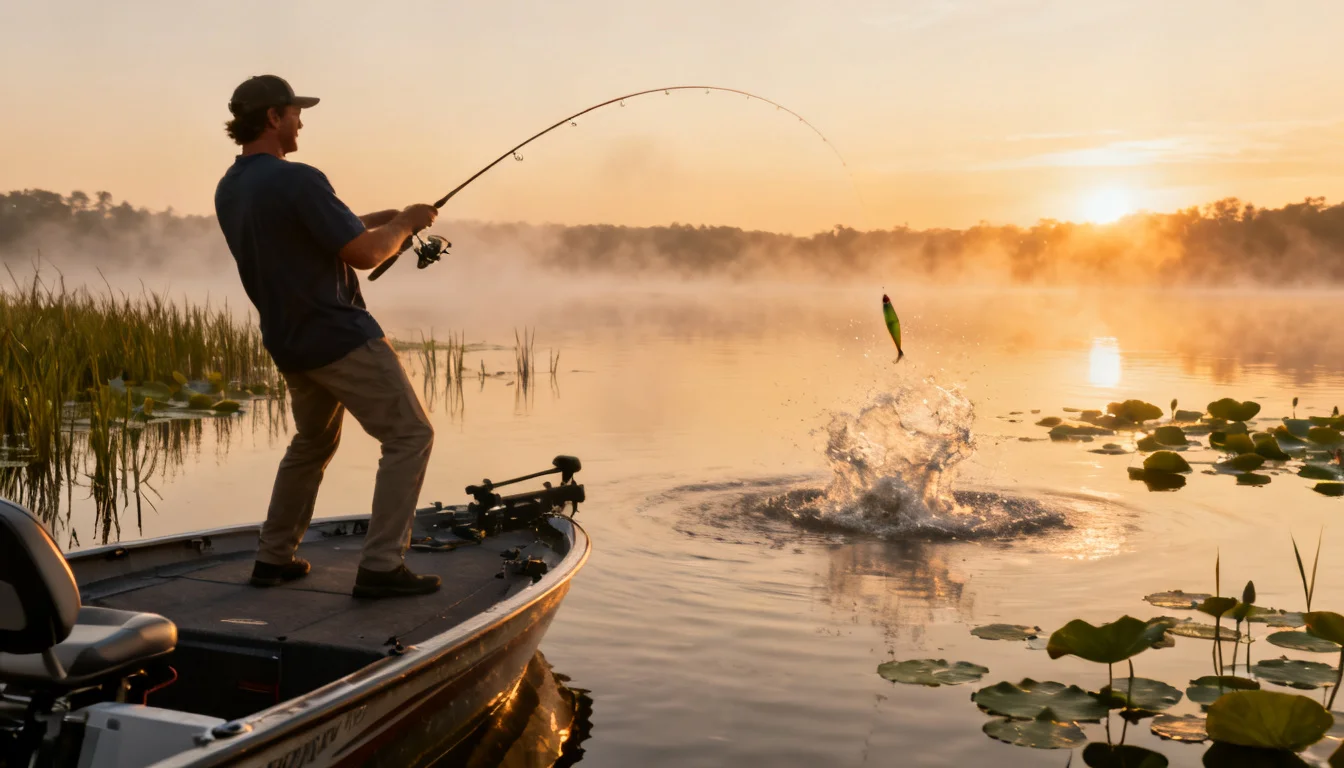
The sunrise window (about first light to 8-9 AM). This is the classic summer bass fishing bite — the topwater window when the biggest fish of the day are in range. Bass and other predators push baitfish against the surface in low light, and a popper, buzzbait, or walking bait triggers explosive strikes.
In many lakes this window runs 60-90 minutes; when it's over, it's over.
The evening window (last hour before dark). The bite repeats in reverse as light fails — often even more aggressive than the morning, especially on cloudy evenings.
The night bite. From late June through August, shallow-water bass and catfish feed hard after dark. Black or dark-colored topwaters, big spinnerbaits, and noisy surface lures work when nothing else will. A calm, moonless night can be the best trip of the year.
Midday topwater exceptions: low-light cover like thick lily pads, shaded docks, or overcast, rainy days can keep the topwater bite alive all day. When in doubt, drag a frog or buzzbait over matted vegetation — even at noon.
Gear & Bait Adjustments for Summer
Summer doesn't demand a tackle overhaul — it demands a few targeted adjustments:
- Line: go heavier around heavy cover (thick weeds, pads, wood) — 20-40 lb braid or heavy mono beats fish out of the jungle. In open deep water, lighter line gets more bites.
- Bait size: summer is a big-bait season. Bigger profile baits (larger swimbaits, big worms, wide-action crankbaits) match the size of summer forage and draw reaction strikes from bigger fish.
- Speed: topwater = fast and noisy; deep = slow and subtle. The two halves of the day need opposite retrieves.
- Depth control: carry a few deep divers and heavy jigs so you can reach 15-25 ft — most summer bites are won or lost on getting the bait to the right depth.
- Forage match: by midsummer, shad and other baitfish have grown; match your lure size to the local forage.
Hot Weather Fishing Safety
The summer bite is worth chasing, but heat kills more anglers than any fish. The rules are simple:
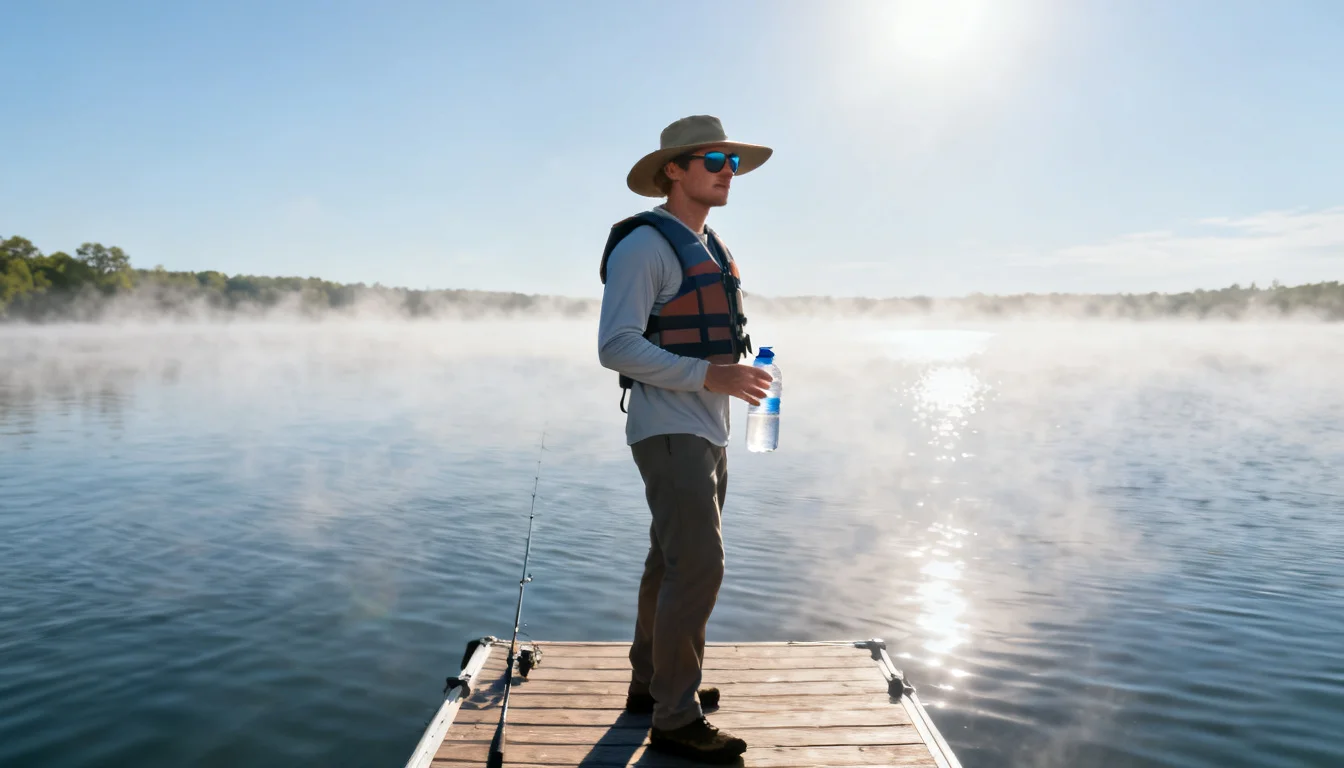
1. Hydrate before you're thirsty. Start drinking water the night before a long trip. On the water, plan on a bottle an hour — and make it water. Beer and sugary drinks work against you: alcohol dehydrates, and sugar slows absorption.
2. Cover up. Long-sleeve sun shirt, wide-brim hat, sunglasses, and SPF 30+ on every exposed patch of skin. Reapply after an hour of sweating.
3. Fish the edges of the day. Morning and evening trips dodge the worst heat and line up with the bite anyway. If you must fish midday, keep it short.
4. Know heat exhaustion signs. Headache, dizziness, nausea, heavy sweating, cramps — get into shade, drink water, and cool down immediately. Heat stroke (confusion, hot dry skin, stopped sweating) is a 911 emergency.
5. Boat safety gets harder in summer. More boat traffic, more swimmers, and warmer water all raise the stakes — life jackets, especially for kids, are non-negotiable.
Regional Summer Differences
Beyond the table above, three regional notes pay off:
- Tailwaters below dams (everywhere) stay cooler and more oxygenated all summer — some of the most consistent fishing of the season.
- Mountain reservoirs in the West hold classic spring patterns into early summer — trout stay deep by day but hit dry flies at dusk (see our spring fishing tips for the cool-water patterns that carry over).
- Desert and valley waters demand real discipline: fish early, fish deep, or fish at night — no exceptions.
Summer FAQ
What is the best time of day for summer fishing?
From first light to about 8-9 AM, and the last hour before dark — that's when fish move shallow to feed. For summer bass fishing specifically, the sunrise topwater window is the money hour. Night fishing for bass and catfish is the third big window from late June through August.
Why do fish stop biting in summer?
They don't stop biting — they move. When surface water passes 70°F, fish retreat to deep structure or shade during the day and feed at dawn, dusk, and night. Most "slow summer days" are really anglers fishing the wrong depth at the wrong hour.
Is night fishing better in summer?
Often yes. Cooler water, low light, and active feeding make summer nights one of the most productive — and most comfortable — windows, especially for bass, catfish, and crappie.
How do I fish topwater in summer?
Work poppers, buzzbaits, and walking baits at sunrise and dusk near weed edges, docks, and points. Cast past the target, retrieve with pauses, and keep the rod tip up. Stop when the sun gets high — the topwater bite ends with the low light.
What should I bring for hot-weather fishing?
Water (a lot of it), sunscreen, a wide-brim hat, sun-protective clothing, polarized sunglasses, and a plan to be off the water before the worst heat — plus a cooler for your catch.
The Bottom Line
The anglers who catch fish in summer work the schedule: topwater at dawn and dusk, deep and slow through the middle of the day, and a night bite when the sun gets serious. Find the thermocline band, fish the structure edges, and take the heat seriously — do that, and summer stops being the slow season.