
Fishing Reel Maintenance: Clean, Lube & Care
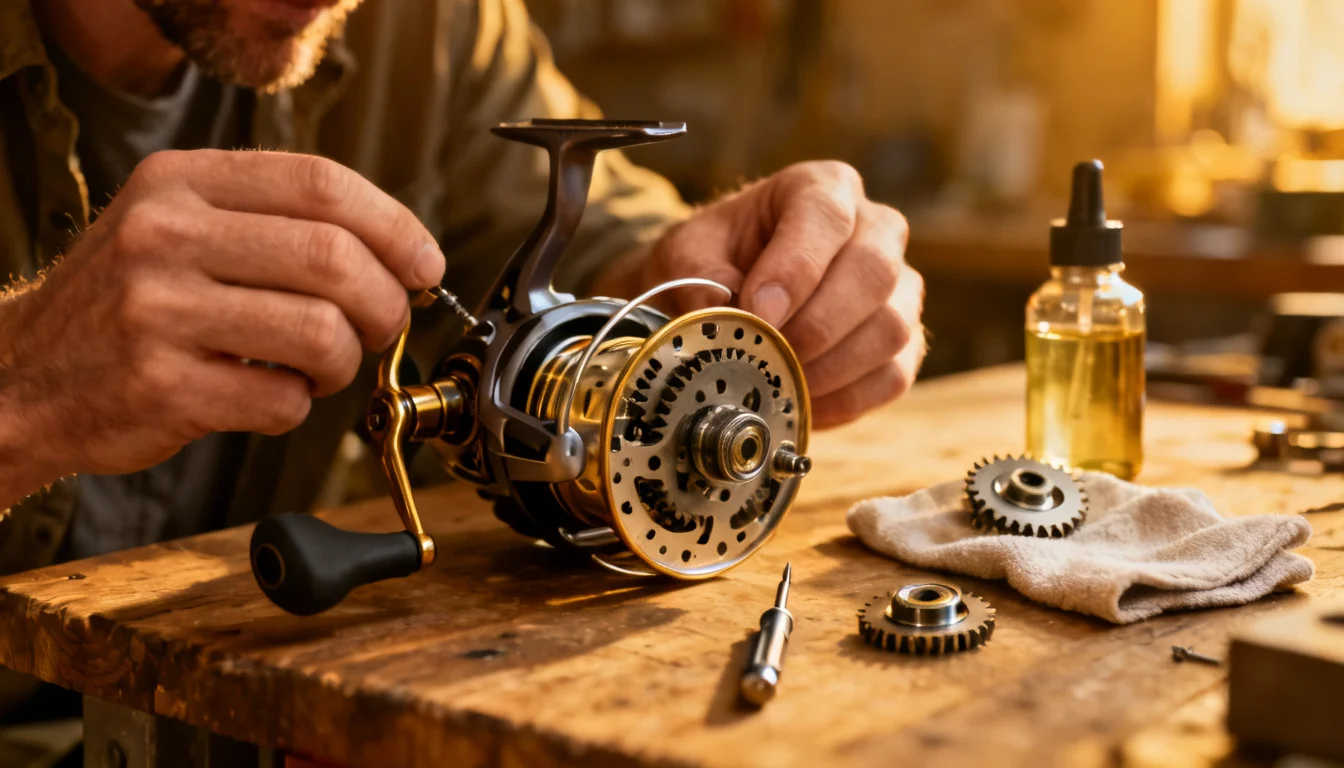
A fishing reel is a precision machine packed with gears, bearings, and drag washers — and it lives in dirt, sand, water, and sun. A little regular fishing reel maintenance turns a $50 reel into a tool that lasts a decade. Neglect it, and even a premium reel will grind, seize, and fail in a season or two.
The good news: basic fishing reel maintenance takes 15 minutes and costs a few dollars. This guide covers everything you need — tools, cleaning, lubrication, and a simple schedule — in plain steps, and pairs with our how to cast a spinning reel guide for getting the gear used right.
Why Maintenance Matters
- Sand and grit are the #1 reel killers — they grind gears and bearings like sandpaper
- Old grease hardens — the reel feels rough and casts short
- Saltwater corrodes — even “saltwater-rated” reels need rinsing after every salt trip
- A smooth reel catches more fish — you feel bites, cast farther, and fight fish without hesitation, and it’s the difference in largemouth bass fights that win or lose on drag
If you’ve never opened your reel, don’t worry — this guide covers the safe 15-minute clean that anyone can do. If you already know the basics, check the maintenance schedule below for the deeper service.
What You Need (Tools & Supplies)
| Item | Purpose |
|---|---|
| Screwdriver set (Phillips + flathead) | Opening side plates |
| Soft cloths / microfiber | Wiping surfaces |
| Old toothbrush or soft brush | Removing grit from gears |
| Reel oil (light, for bearings) | Bearings, roller clutch, line roller |
| Reel grease (thicker, for gears) | Main gear, worm gear, drag washers |
| Cotton swabs | Detail cleaning |
| Small parts tray or cup | Keeping screws organized |
| Warm soapy water (freshwater trips only) | Washing the body |
Don’t use: WD-40 as a lubricant (it’s a solvent — it will wash out real lubricant), harsh degreasers on bearings, or excessive oil anywhere (oil attracts grit).
How to Clean a Fishing Reel: The 15-Minute Routine
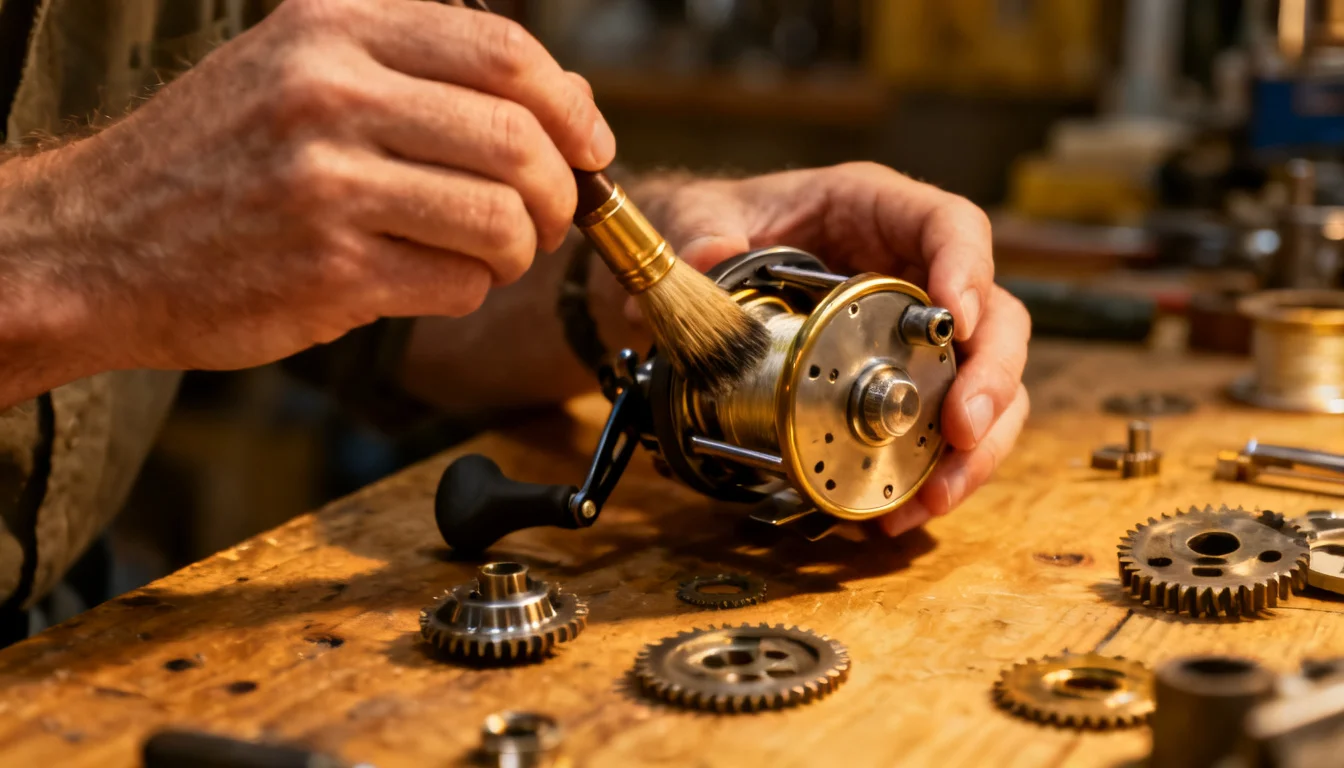
This is the routine maintenance that keeps a reel alive. Do it every 2–3 months with normal freshwater use, or after any dunking or sand exposure.
Step 1: Remove the Spool
- Open the reel per your model’s manual (usually a drag cap or side screw)
- Remove the spool — set it aside on a clean cloth
- Wipe the spool’s brake surface and the inside of the frame
Step 2: Flush the Bearings (If Accessible)
- On most spinning reels, the handle-side bearings are accessible with the side plate off
- Dip each bearing in a small cup of solvent (rubbing alcohol works) and spin it to flush grit
- Dry completely before oiling — solvent left behind washes out the fresh oil. If a bearing still feels gritty after cleaning, replace it instead of forcing it
- Never soak sealed bearings — just wipe and oil the outside
Step 3: Clean the Gears
- Use the toothbrush to brush out old grease and grit from the main gear and worm gear
- Wipe clean with a cloth
- Apply a thin layer of fresh reel grease to the gear teeth (a pea-sized amount total)
Step 4: Fishing Reel Lubrication — Oil vs Grease
- Line roller (spinning reels): one drop of oil — this part gets overlooked and seizes
- Roller clutch / anti-reverse: a drop of oil
- Handle shaft: a dab of grease
- Drag washers: only if your manual calls for it — use drag-specific grease sparingly
Step 5: Reassemble & Test
- Reinstall everything in reverse order, snug but not over-tightened
- Turn the handle — it should spin freely and smoothly
- Test the drag by pulling line — smooth, consistent tension
The Deep Service (Once a Year, or After a Bad Trip)

Once a year — or after a dunking in sand, mud, or salt — do a full service:
1. Full disassembly per the manual (take photos as you go)
2. Wash all parts (except bearings) in warm soapy water, then rinse and dry completely
3. Soak and re-oil bearings as above
4. Re-grease all gear surfaces and drag washers
5. Reassemble and test
6. Not confident? A professional service costs $20–40 and is worth it for reels you rely on — or compare it to the cost of a ruined $150 reel
Saltwater Care (Non-Negotiable)
Salt is the most corrosive thing a reel meets. After every saltwater trip:
1. Rinse the reel with fresh water (hose or faucet — don’t disassemble on the boat)
2. Reel it a few times while rinsing to flush the internals
3. Wipe dry with a cloth
4. Add one drop of oil to the line roller and handle
5. Never store it wet — dry it before it goes in the bag
Reel Maintenance Schedule
Plan trips around your reel care — our how to fish a lake guide pairs with the schedule below. A simple fishing reel maintenance schedule keeps your reel smooth and dependable:
| When | What to Do |
|---|---|
| After every salt trip | Freshwater rinse + wipe + line roller oil |
| After any dunking / sand | Full 15-minute clean |
| Every 2–3 months (normal use) | 15-minute clean + lube |
| Once a year | Deep service (or pro service) |
| Off-season (winter) | Clean, lightly lube, loosen drag, store in a dry place |
Common Reel-Killing Mistakes
1. Too much oil — oil attracts grit; one drop per point is plenty
2. Using WD-40 as lube — it’s a solvent; it strips real lubricant and leaves parts dry
3. Ignoring the line roller — it seizes silently and ruins casts; oil it every clean
4. Storing wet — moisture is the gateway to corrosion; dry everything
5. Over-tightening screws — stripped threads are permanent damage; snug is enough
6. Forgetting the drag — a neglected drag sticks at the worst moment; test it before every trip
FAQ
How often should I clean my fishing reel?
Every 2–3 months with normal freshwater use, immediately after any salt trip, dunking, or sand exposure, and a deep service once a year. If it starts feeling rough, clean it sooner.
Can I use WD-40 on my reel?
No — WD-40 is a solvent/water displacer, not a lubricant. It will wash out the factory lubricant and leave gears dry. Use proper reel oil for bearings and reel grease for gears.
How do I know my reel needs maintenance?
Signs: the handle feels gritty or notchy, casting distance drops, the reel makes grinding sounds, the drag is jerky, or the line roller doesn’t spin freely. Any of these = time for a clean.
Do baitcasting reels need different maintenance?
Same basics — clean, oil bearings, grease gears. The baitcaster’s centrifugal brakes and spool bearings deserve extra care (oil the spool bearings lightly). The 15-minute routine applies to both types.
What should I do if my reel gets dunked in saltwater?
Rinse immediately with fresh water (reel it while rinsing), dry it, add oil to the line roller, and do a full 15-minute clean within a day or two. Salt left inside a reel will corrode it within weeks.
Is it worth servicing an old reel?
Yes — if the gears aren’t worn or corroded. A clean and re-lube often restores a rough-feeling reel to like-new smoothness for the cost of a few dollars in supplies.
Final Checklist
1. Every salt trip: rinse, dry, oil the line roller
2. Every 2–3 months: 15-minute clean — spool out, bearings oiled, gears greased
3. Once a year: deep service or pro service
4. Never: over-oil, use WD-40, store wet, over-tighten
5. Test before every trip: drag smooth, handle free
A maintained reel makes every cast better. Choose a reel worth maintaining with our reel selection guide, and spool it with quality line from our fishing line selection guide.