Common Carp: Complete Guide to America's Smartest Fish
Few fish divide American anglers like the common carp. Once dismissed as a "trash fish," carp are now recognized as one of the hardest-fighting, smartest, and most accessible game fish in freshwater — and carp fishing on the fly has become one of the fastest-growing segments of the sport.
This guide covers carp identification, habitat, feeding behavior, and the techniques that fool a fish that's been outsmarting anglers for centuries.
What Is a Common Carp?
The common carp (Cyprinus carpio) is a large member of the minnow family (Cyprinidae) — a bottom-feeding, highly adaptable fish found across most of the United States.
Key facts:
- Scientific name: Cyprinus carpio
- Common names: carp, common carp, European carp, mirror carp (scaled variant), leather carp
- Size: commonly 5–20 pounds; 30+ pound fish are trophies; the US record exceeds 50 pounds
- Lifespan: 20+ years (some fish reach 40+)
- Habitat: lakes, rivers, ponds, reservoirs, and slow-moving water nationwide
- Diet: aquatic insects, crustaceans, mollusks, seeds, plant matter, and detritus
Carp Varieties
- Common (fully scaled) carp: uniform scales covering the body
- Mirror carp: large, irregular scales with bare patches
- Leather carp: nearly scaleless, smooth skin
- Koi: the ornamental, colorful form; wild koi interbreed with carp
All are the same species and all can be caught with the same techniques.
Common Carp Identification
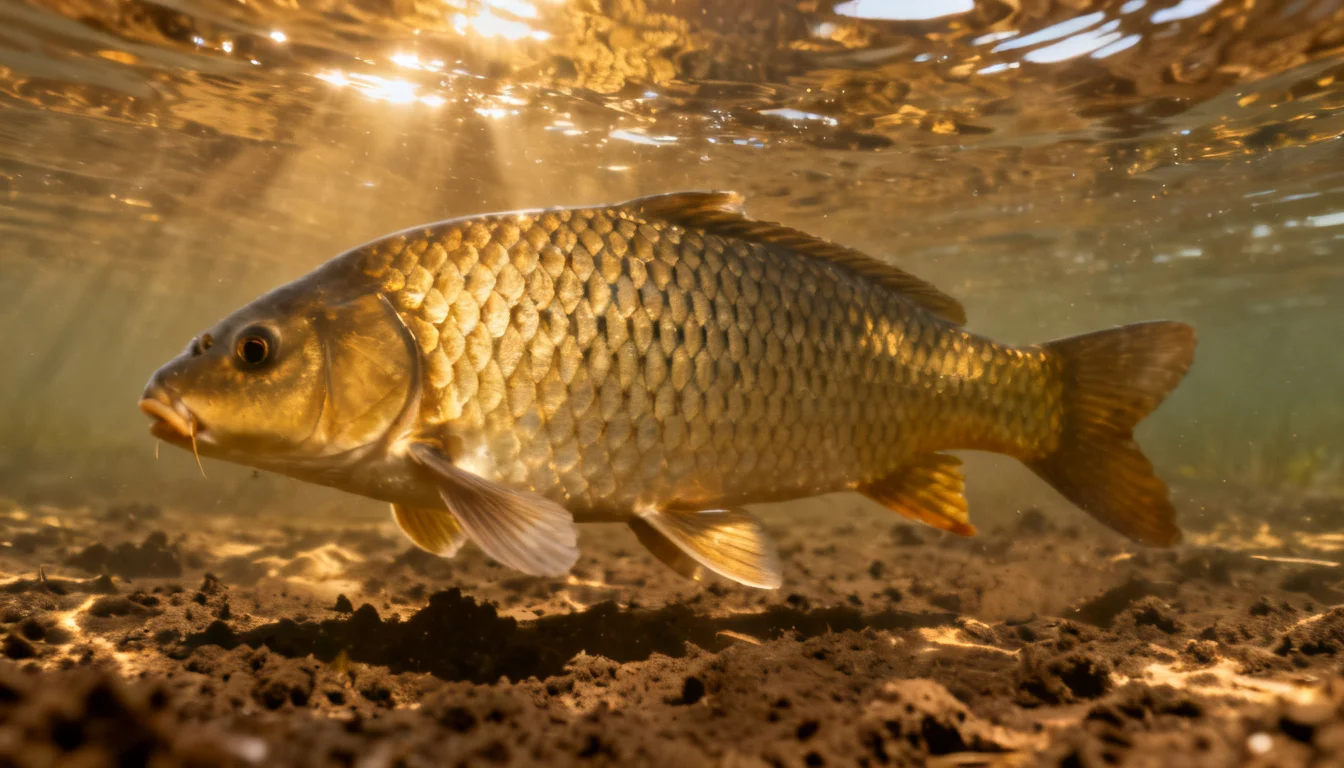
- Body: deep, thick, and heavy with a distinctive arched back
- Color: golden-brown to olive, with a brassy sheen
- Scales: large and prominent (on common carp)
- Mouth: downturned and sucker-like (inferior mouth), with two small barbels (whiskers) at the corners
- Fins: dorsal fin is long with a serrated first ray
- Size: a mature carp looks like a football with fins
Carp vs. Buffalo Fish vs. Suckers
- Carp: barbels at the mouth corners, long dorsal fin, large scales
- Buffalo: no barbels, deeper body, and a smaller mouth
- Suckers: different body shape, no barbels, and a different mouth structure
Where Common Carp Live
Carp are found in most US states (all but the coldest northern extremes and Alaska) — they thrive in water that many native fish can't tolerate:
- Lakes and ponds — especially shallow, warm, weedy ones
- Rivers — slow backwaters, eddies, and warm-water sections
- Reservoirs — shallow coves and flats
- Urban waters — canals, city parks, and stormwater ponds often hold big carp
Habitat preferences:
- Soft bottom — mud and silt for rooting out food
- Warm water — carp are most active in 65–85°F
- Cover: weed beds, sunken timber, and overhanging trees
- Shallow flats: carp often cruise and feed in water only a foot or two deep
Carp Behavior: Why They're Hard to Catch
Understanding carp behavior is the whole game:
- Cautious: carp have excellent senses and spook easily — especially in clear, shallow water
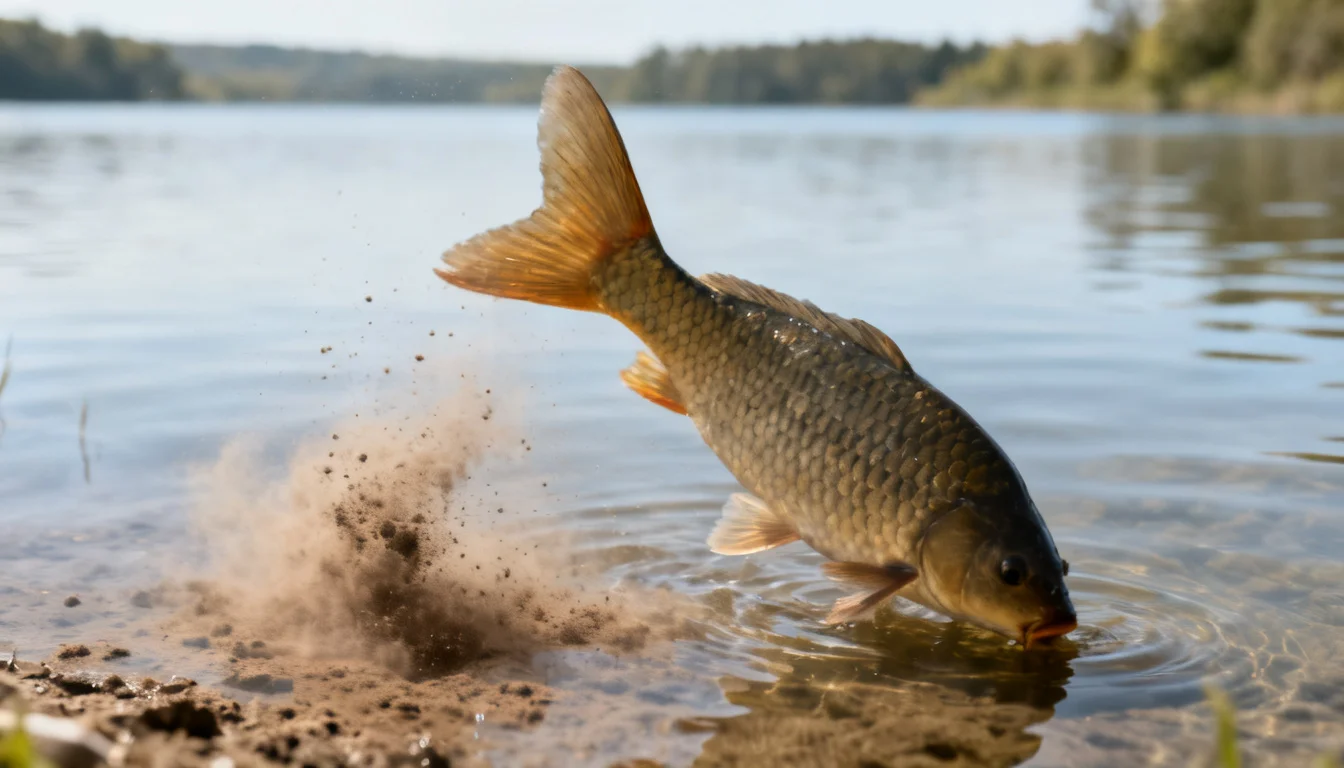
- Bottom feeders: they root through mud and silt for food, creating "mud clouds" that give away their location
- Cruisers: on warm days, carp cruise shallow flats and tails up while feeding (the classic "tailing carp")
- Surface feeders: occasionally they take floating food (mulberries, dog food, bread) off the surface
- Pressure-sensitive: pressured carp learn fast; heavy line, noise, and unnatural presentations get refused
The key insight: carp fishing is a stealth game. Light line, natural presentations, and quiet approach catch far more fish than heavy tackle and noise.
How to Catch Common Carp
1. Bottom Rigs (The Classic)
- Setup: a sliding sinker (weight) above a hook with hair rig or plain bait
- Baits: sweet corn, boilies, dough balls, chickpeas, and flavored pellets
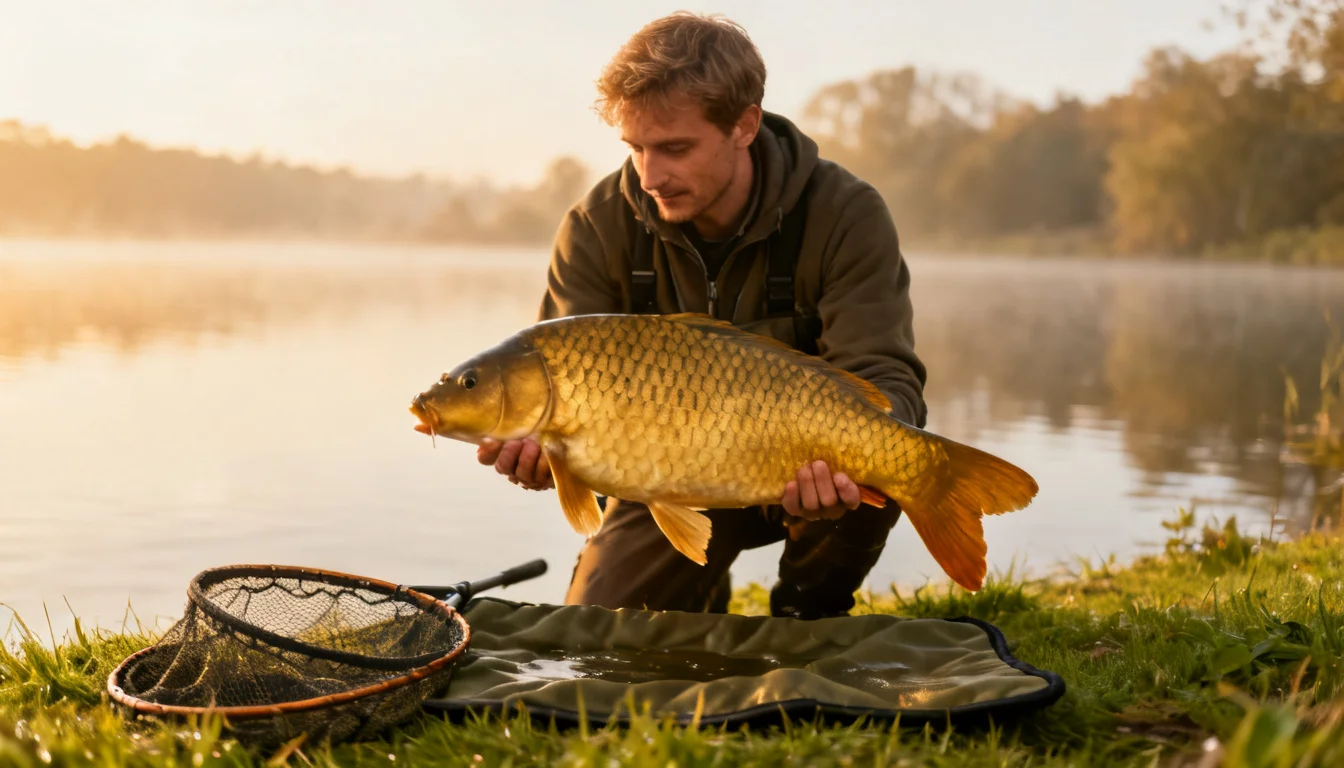
- Technique: fish on the bottom with a slack line, watch for line movement or alarm/rod tip signals
- Euro-style: a bite alarm and rod pod are common
2. Float Fishing
- A float suspends bait just off the bottom or on it
- Ideal in shallow water and where you can watch the float for subtle takes
3. Carp on the Fly
The fastest-growing approach — and highly visual:
- Target cruising carp on shallow flats in clear water
- Flies: nymphs, crayfish patterns, and egg or corn imitations; small, subtle flies
- Technique: lead the fish — cast ahead of a cruising carp and let the fly sit or sink slowly; strip when the fish approaches
- Gear: 6–8 weight fly rod, floating or intermediate line, 8–12 lb tippet
- Bonus: fly-caught carp often count for "grand slam" challenges in fly fishing clubs
4. Surface Fishing
- Chum carp to the surface with floating bread, dog food, or corn
- Use a floating bait (bread crust, floating pellet, or dry fly)
- Best on warm evenings and in pressured urban waters
5. Method Feeder and Pack Bait
- A feeder (mesh cage) loaded with ground bait and a hook bait on top
- The feeder releases scent and particles, pulling carp in
Bait and Chum
Top baits:
- Sweet corn — the universal carp bait in America; cheap and effective
- Boilies — flavored, boiled dough balls (a European staple)
- Dough balls — made from bread, flour, and flavoring
- Chickpeas and beans
- Pellets — commercial carp pellets
Chumming: pre-baiting a spot with corn or particles for a few days concentrates carp and improves your odds dramatically. On pressured waters, a stealthy approach matters as much as bait — the same care you'd use when fishing for spooky fish anywhere.
Carp Regulations
Regulations vary widely — and carp are treated differently depending on the state:
- License: standard fishing license required — see our fishing license guide
- Some states: carp are invasive and have no limits, no seasons — even encouraged to harvest
- Other states: bag limits exist, and a few protect large carp
- Bow fishing: legal for carp in many states during certain periods
- Important: never move live carp between waters — they're invasive in many systems and illegal to transport
Common Carp Mistakes
1. Using tackle that's too heavy — heavy line and big hooks spook carp, especially in clear water
2. Making noise — carp feel vibration; stomping on the bank kills your chances
3. Not pre-baiting — chummed spots produce dramatically better
4. Fishing where carp aren't — look for mud clouds, tails, and bubbles; locate fish first
5. Breaking the surface with casts — soft, gentle presentations matter
6. Fighting them on too-light gear — carp are extremely powerful; balance light line with a smooth drag
FAQ
Are carp good to eat?
Carp are eaten in many cultures and are popular in some communities in the US. However, most American anglers release them. Carp are often considered invasive, so check your state's rules — harvesting is encouraged in some waters.
How do you catch carp?
The most reliable methods are bottom rigs baited with sweet corn or boilies, float fishing, and fly fishing for cruising fish on shallow flats. Locating feeding carp (mud clouds, tails up) and fishing quietly are the keys.
What's the best bait for carp?
Sweet corn is the classic American bait — cheap, effective, and easy. Boilies, dough balls, chickpeas, and commercial pellets also work well. Pre-baiting a spot with corn concentrates fish.
Why are carp so hard to catch?
Carp have excellent senses, learn quickly, and spook easily. They're sensitive to heavy line, noise, and unnatural presentations. Light tackle, natural baits, and a stealthy approach are essential.
Can you catch carp on a fly rod?
Absolutely — carp on the fly is one of the fastest-growing segments of fly fishing. Target cruising fish on shallow flats with small nymphs or crayfish patterns, and lead the fish with your cast.
Do carp fight hard?
Yes — carp are among the strongest freshwater fish pound for pound. A 15-pound carp will strip line, run for cover, and test your drag. That's a big part of their appeal.
Final Checklist
1. Locate fish first — look for mud clouds, tailing fish, and bubbles
2. Be quiet and stealthy — carp spook at vibration and shadow
3. Go light — 8–12 lb line and small hooks
4. Bait right — sweet corn, boilies, or pellets; pre-bait when you can
5. Match method to water — bottom rigs deep, fly or float in shallows
6. Check the rules — carp regulations vary widely by state
Carp may be the most underrated fish in America — and the most fun to fool. For more lake and bottom tactics, see our how to fish a lake guide, and if you're new to the sport, start with our fishing for beginners overview.