How to Catch Shrimp: Cast Nets, Traps & Technique
Shrimp are the most valuable fishery in the Gulf of Mexico — and the good news is you don't need a commercial boat to catch them. How to catch shrimp is a Gulf Coast tradition anyone can learn from a pier, a kayak, or a shoreline with a cast net, and it delivers both dinner and the best live bait in saltwater.
This guide covers exactly how to catch shrimp with every recreational method — cast nets, traps, and dip nets — plus the timing, tides, and regulations that make the difference. New to shrimp entirely? Start with our shrimp species guide.
When to Go Shrimping
Season
Shrimp runs happen when mature shrimp migrate from the estuaries back offshore:
- Gulf of Mexico: main recreational season May–December
- White shrimp run: late summer through fall (August–November) — the biggest, most reliable recreational window
- Brown shrimp run: late spring into summer (May–July)
- South Atlantic: summer–fall
Time, Tide & Darkness
- Night is best: shrimp feed and migrate at night; they're also attracted to light, which is why commercial boats run bright lights
- Bridge and pier lights concentrate shrimp — fishing the lighted areas at night is a classic technique
- Tides: shrimp move with the tide; the strongest action is usually around moving water (incoming or outgoing), especially within two hours of high or low
The takeaway: summer and fall nights, around bridge lights or along estuary channels, on a moving tide — that's the recipe.
Method 1: Cast Netting (The Classic)
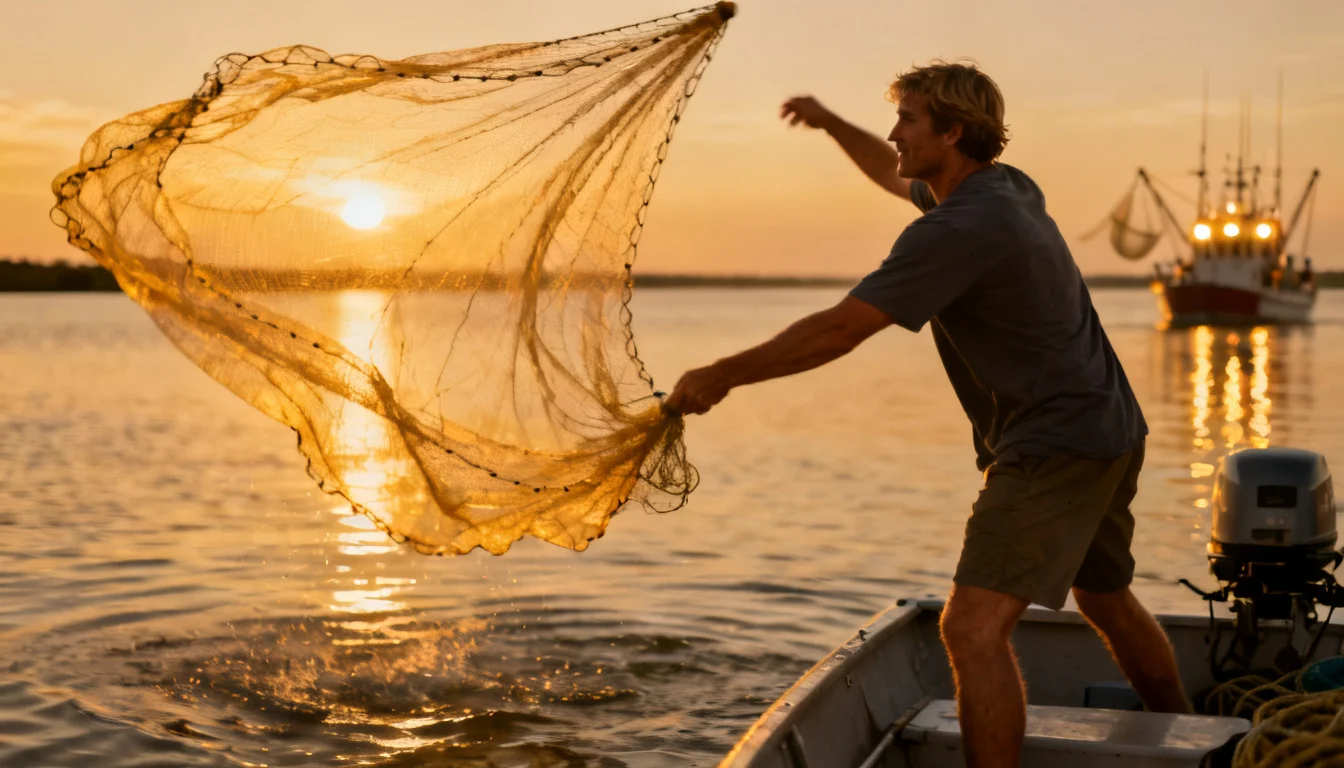
The cast net is the signature tool of the recreational shrimper.
Choosing a Cast Net
- Size: 6–10 foot radius is the sweet spot for recreational use (10+ gets heavy)
- Mesh: 3/8 inch mesh keeps legal shrimp and lets small ones escape
- Weight: heavier lead line sinks faster and traps shrimp better, but is harder to throw
The Cast
1. Gather the net properly (coil the line, hold the horn and the weights)
2. Stand at the edge of a dock, pier, or shallow flat
3. Throw with a smooth underhand-to-overhead motion, spreading the net as it flies
4. Let the net sink fully — count to five or wait for the lead line to settle
5. Pull the hand line to close the net, then haul it in
Where to Cast
- Around bridge and dock lights at night — shrimp swarm the light
- Grass edges and drop-offs in bays and estuaries
- Running water at channel mouths and tidal creeks
- Cast along the bank and work out, covering water systematically
Practice Note
Cast netting takes practice — expect a few tangled throws at first. Practice on dry land (or in the yard) with the net folded, then graduate to the water. Once you can throw a consistent circle, you'll start landing shrimp.
Method 2: Shrimp Traps (Set and Forget)
Where traps are legal, they're the easiest hands-off method.
Shrimp Trap Basics
- Design: a mesh trap with a funnel entrance, often baited with fish scraps or commercial shrimp bait
- Set: place in 4–15 feet of water along channels, grass edges, or near structure
- Check: every 1–2 hours; pull and rebait as needed
⚠️ Trap Rules
Shrimp traps are illegal in many states (including much of the Gulf Coast) or heavily restricted — some areas allow them only in specific seasons or with permits. Always check local regulations before setting any trap. Where they're banned, cast netting is the standard legal method.
Method 3: Dip Netting (Simple & Shore-Friendly)
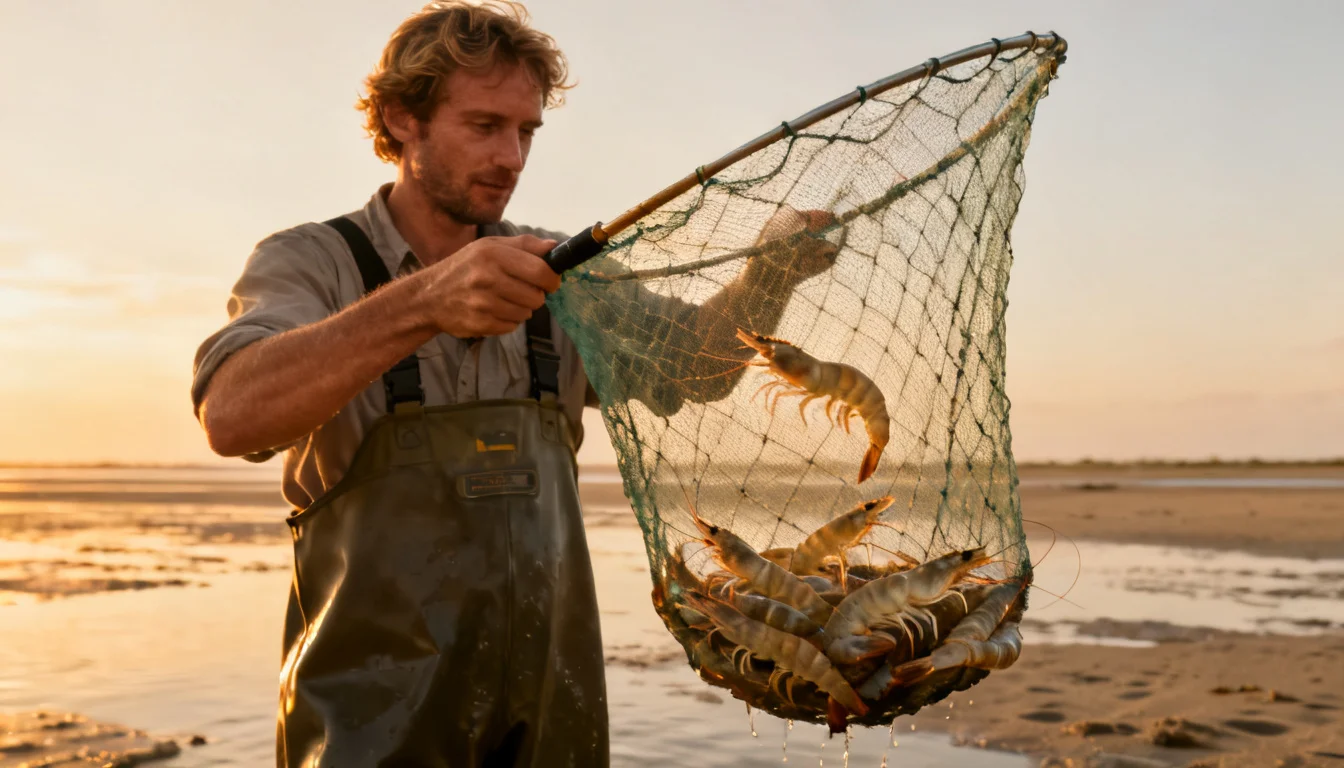
In shallow water, a long-handled dip net can be surprisingly effective:
1. Work shallow flats and grass edges, especially at night with a headlamp
2. Scoop under shrimp you spot or that scatter from your steps
3. Best in clear, calm, shallow water where shrimp are visible
This method shines for small shrimp in tidal creeks and around dock pilings — great for kids and beginners.
Method 4: The Light-Scoop Technique (Night Specialty)
A variation used around lighted piers:
1. Set up on a dock or pier with a bright light shining into the water (or fish an existing light)
2. Shrimp and baitfish gather in the light
3. Use a long-handled dip net or a small cast net to scoop the concentrated shrimp
4. Best on dark nights when the light contrast is strongest
This is how many Gulf Coast families fill a cooler in a couple of hours during the white shrimp run.
What You Need (Complete Gear List)
| Item | Purpose |
|---|---|
| Cast net (6–10 ft, 3/8" mesh) | Primary catching tool |
| Dip net (long handle) | Light scooping, pier work |
| Headlamp / work light | Night shrimping |
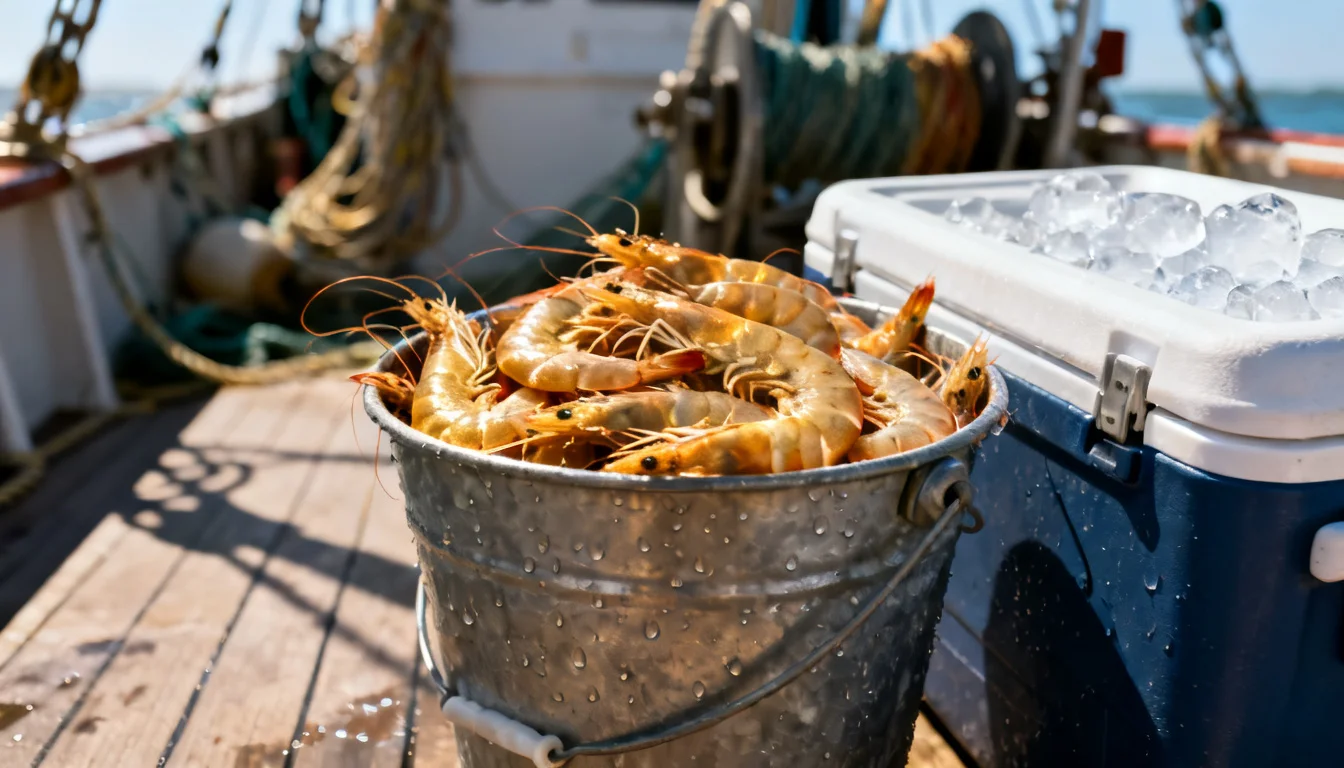
| 5-gallon bucket with aerator | Keeping shrimp alive |
| Cooler with ice | For keepers |
| Gloves | Handling net and shrimp |
| Measuring gauge | Check legal size |
Keeping shrimp alive: if you're using them as live bait, an aerated bucket is essential. For eating, ice them immediately — shrimp spoil fast.
Regulations You Must Check
- License: most Gulf and South Atlantic states require a recreational saltwater fishing license for shrimping — see our fishing license guide
- Cast net rules: mesh size and net size limits are common (e.g., 3/8" mesh minimum in some states)
- Trap restrictions: often banned or restricted — verify before buying a trap
- Size and possession limits: vary by state
- Season closures: some areas close during specific windows to protect spawning
Rule of thumb: when you see shrimp boats working a certain area or season, check your state's wildlife agency site before joining in.
Common Shrimping Mistakes
1. Throwing into the dark, empty water — work lights, structure, and moving water where shrimp actually gather
2. Pulling the net too fast — the net needs time to sink and the lead line to close; rush it and shrimp escape
3. Illegal traps — getting fined over a trap that's banned in your state is a costly mistake
4. No aeration for live bait — dead shrimp are far less effective bait
5. Ignoring size limits — throw back small shrimp so the run sustains itself
6. Shrimping on the wrong moon/tide — moving tides and dark nights consistently outproduce slack water and full moonlight
FAQ
What's the easiest way to catch shrimp?
Cast netting around lighted docks and bridges at night during the summer-fall run is the classic and most productive method. For total beginners, dip netting in shallow creeks is the simplest entry point.
Do I need a cast net to catch shrimp?
No — dip nets work in shallow water, and traps are legal in some states. But the cast net is by far the most effective recreational method and worth learning if you plan to shrimp regularly.
When is the best time to go shrimping?
Summer and fall nights on a moving tide — the white shrimp run (August–November) is the biggest recreational window in the Gulf. Bridge and pier lights concentrate shrimp after dark.
Is night shrimping better than day?
Yes, generally. Shrimp are more active and more concentrated at night, and artificial light attracts them strongly. That's why commercial shrimp boats are famous for their light rigs.
How many shrimp can I keep?
Possession limits vary by state — commonly measured in gallons or pounds per person per day. Check your state's wildlife agency for the current recreational limit before you go.
Can you catch shrimp from shore?
Yes — cast netting from piers, docks, and shorelines works well, especially near lights and channel edges at night. You don't need a boat for recreational shrimping.
Final Checklist
1. Regulations: license, net size, season, possession limits for your state
2. Timing: summer/fall nights, moving tide, dark moon
3. Location: bridge and dock lights, estuary channels, grass edges
4. Gear: cast net (6–10 ft, 3/8" mesh), headlamp, bucket, gloves
5. Technique: let the net sink fully, work the light, move if empty
6. Ethics: release undersized shrimp, respect closures
Know your catch with the shrimp species guide, and if you're new to the license system, start with our fishing license overview.