How to Choose a Fishing Reel: Spinning vs Baitcaster
The reel is the part of your setup you touch the most — and the part beginners get wrong most often. How to choose a fishing reel isn’t about picking the most expensive one on the shelf. It’s about picking the right *type*, the right *size*, and a gear ratio that matches how you fish — and the specs below are exactly what how to choose a fishing reel comes down to.
This guide explains spinning vs baitcasting reels in plain English, what the numbers mean, and exactly what to look for at every price level. We’ll leave brand names out of it — the specs are what matter.
Spinning Reel vs Baitcaster: Which One Is Right?
Before you look at any other spec, deciding how to choose a fishing reel starts with which type fits you. They’re built for different anglers and different jobs.
| Spinning Reel | Baitcasting Reel | |
|---|---|---|
| How it works | Fixed spool; line peels off | Rotating spool; line follows the spool’s spin |
| Learning curve | Easy — cast and go | Steep — thumb control to prevent backlash (bird’s nests) |
| Best for | Beginners, light lures, light line, panfish/trout/bass finesse | Accuracy, heavy lures, heavy line, pike/musky/bass power fishing |
| Casting light lures | Excellent | Poor below ~1/4 oz |
| Backlash risk | None | High until you learn thumb control |
| Price for decent quality | $30–80 | $80–200 |
The honest advice: if you’re new, buy a spinning reel. You’ll catch more fish with less frustration, and you can always add a baitcaster later for specific techniques. Our how to cast a spinning reel guide will have you casting cleanly in an afternoon.
Fishing Reel Size: What the Numbers Mean
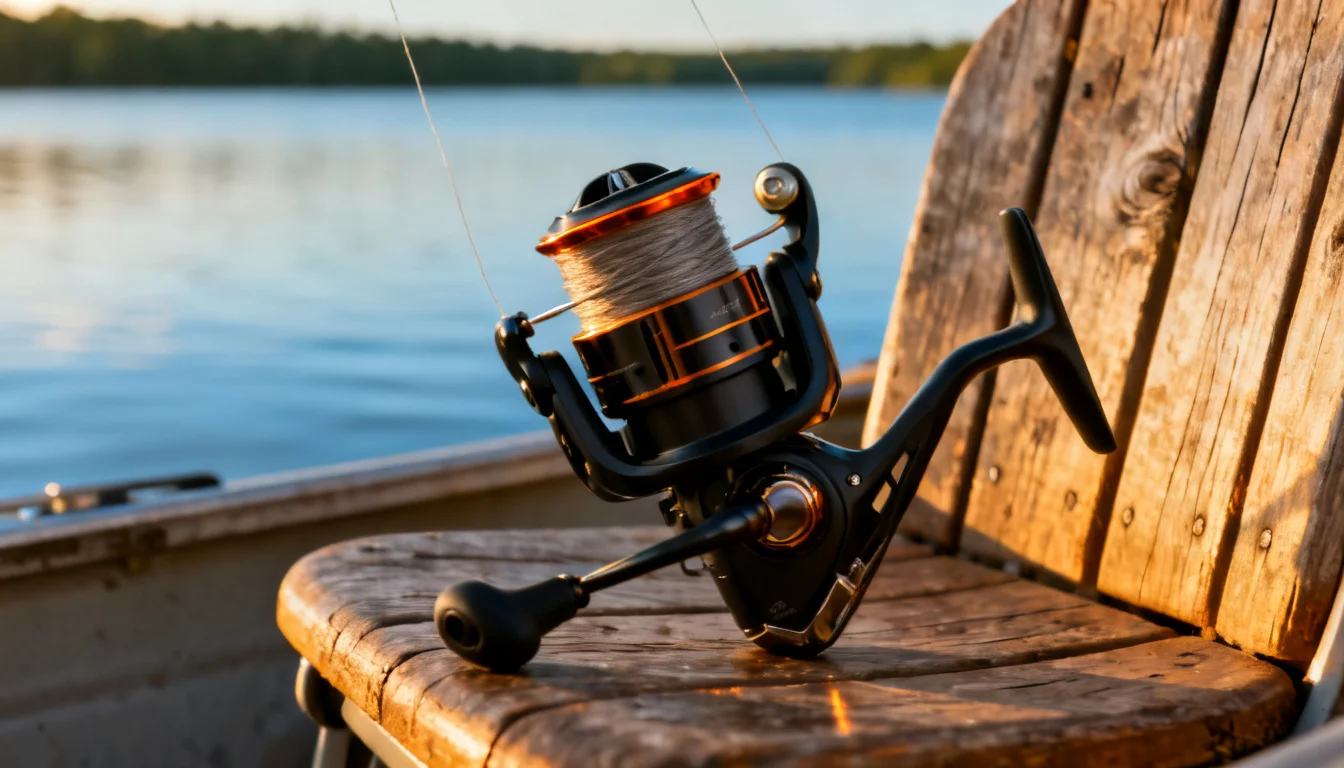
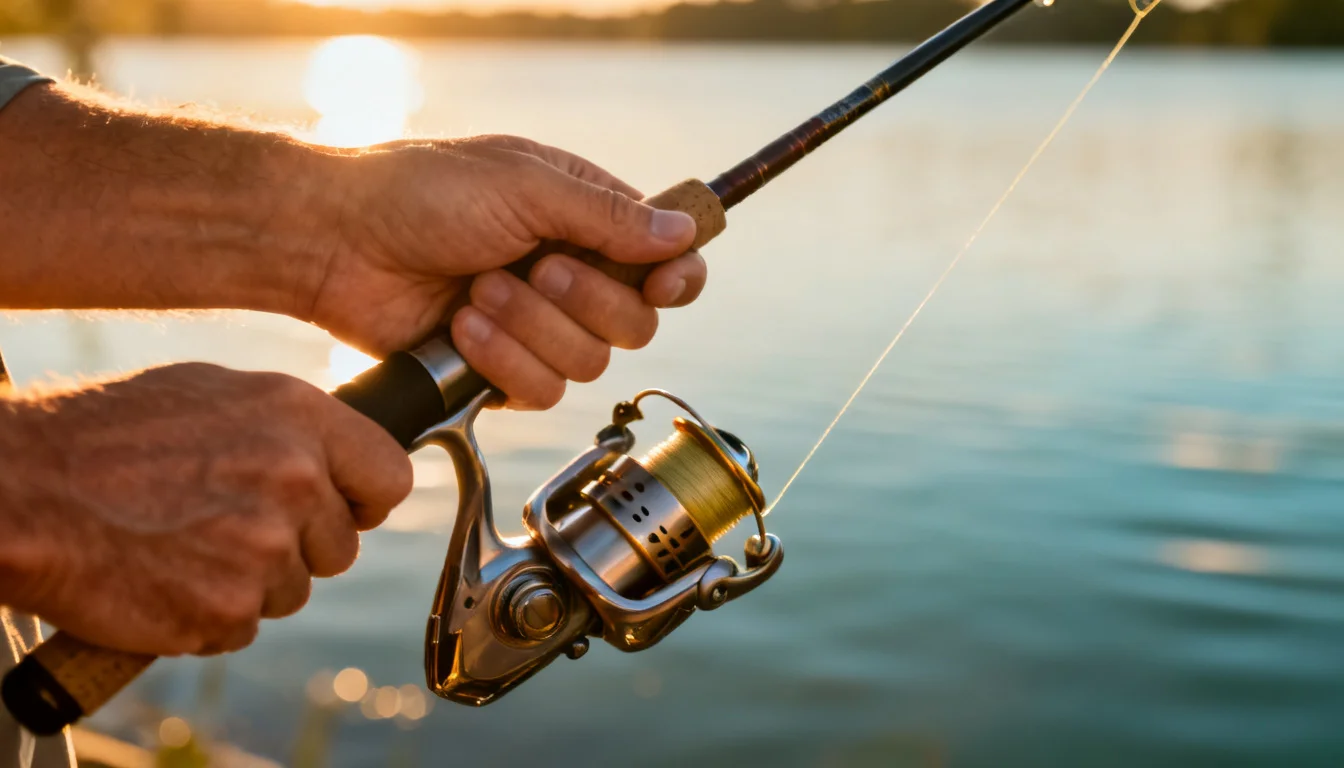
Spinning reels are sized by numbers — 1000, 2500, 3000, 4000, 5000. The number roughly tracks the spool size and line capacity.
| Size | Line Capacity (typical) | Best For |
|---|---|---|
| 1000–2000 | 4–6 lb mono | Panfish, trout, small streams, ultra-light |
| 2500 | 6–10 lb mono | All-around freshwater — the beginner sweet spot |
| 3000–4000 | 8–14 lb mono | Bass, walleye, catfish, heavier cover |
| 5000+ | 12–20 lb mono | Big catfish, musky, surf, saltwater |
In practice: a 2500 spinning reel handles nearly all freshwater fishing. Baitcasters use line capacity ratings instead (e.g., 12 lb / 110 yd) — check it matches the line you plan to use.
Fishing Reel Gear Ratio: Fast or Slow?
Gear ratio tells you how many times the spool turns per handle crank (e.g., 6.2:1 = 6.2 turns per crank). It controls retrieve speed — how fast you bring the lure back.
| Ratio | Speed | Best For |
|---|---|---|
| 5.0–5.5:1 | Low | Crankbaits, spinnerbaits, big swimbaits, slow rolling |
| 6.0–6.5:1 | Medium | All-around — the do-everything ratio |
| 7.0–8.0:1 | High | Jigs, plastics, frogs, punching — topwater often works best at 6.x–7.x |
The safe default: 6.x:1 is the most versatile all-around choice. High-speed reels are trendy but not necessary; low-speed reels shine for deep-diving crankbaits.
Drag: The System That Saves You
Drag is the clutch that lets line out under pressure — it’s what keeps a big fish from snapping your line. Check two things:
- Smoothness — a jerky drag breaks light line and loses fish. Test it in the store by pulling line with steady pressure.
- Maximum drag rating — listed in pounds (e.g., “13 lb max drag”). Rule of thumb: pick a reel whose max drag rating reaches about 1/3 of your line’s breaking strength; when fishing, start the drag at roughly 1/4 of line strength and tighten as needed.
Other Specs That Actually Matter
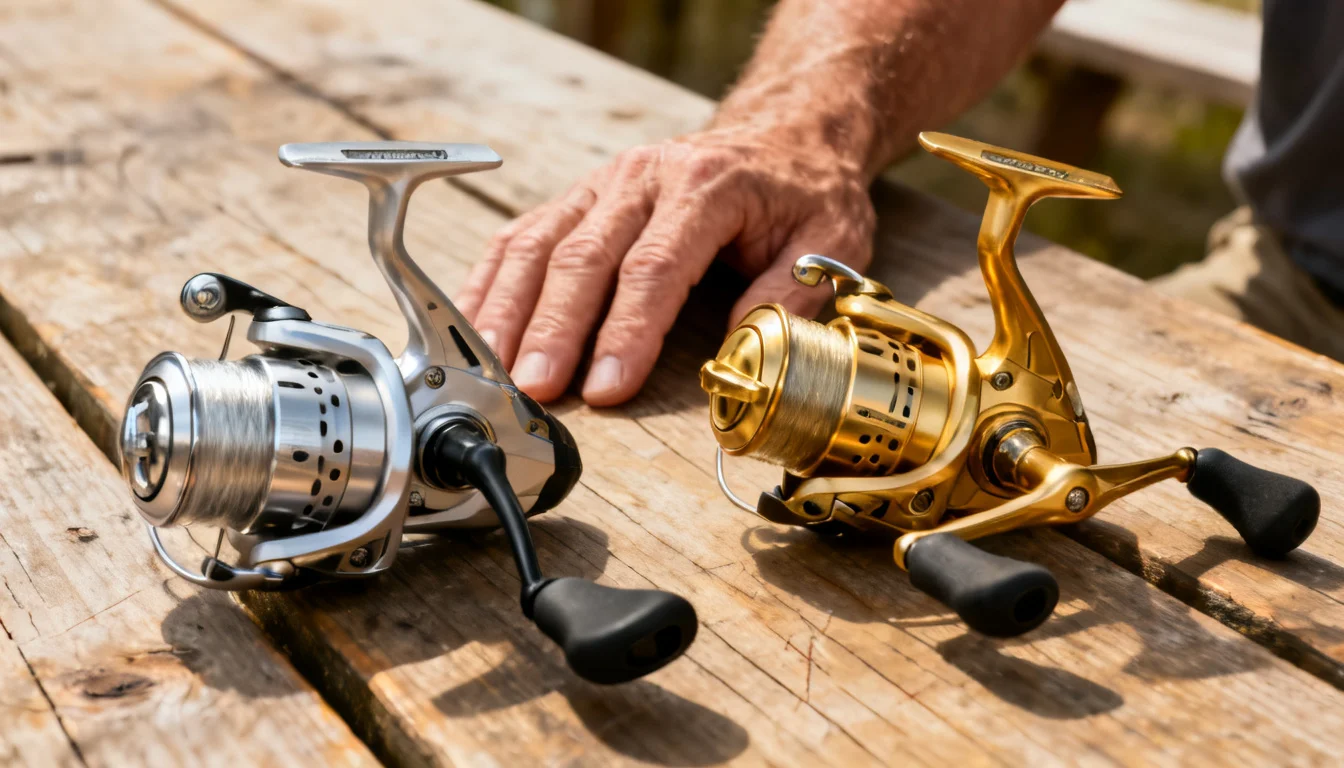
- Ball bearings — more quality bearings generally means smoother operation, but don’t buy on bearing count alone; a few good bearings beat a stack of cheap ones.
- Braking system (baitcasters) — magnetic and centrifugal brakes are what make modern baitcasters learnable. Look for adjustable brakes if you’re new to baitcasting.
- Anti-reverse — one-way clutch that prevents the handle from spinning backward during a hookset. Non-negotiable on any decent reel.
- Spool material — aluminum spools are lighter and start faster than plastic; matters for long casts with light lures.
- Retrieve direction — reels come in right-hand and left-hand retrieve. Buy what’s comfortable — there’s no “correct” side.
What to Buy by Budget
- $25–60 (entry spinning): Plenty good enough to start. The drag may be a bit rough; the gears won’t be as smooth. Perfect for kids and casual fishing.
- $60–150 (mid spinning/baitcaster): The sweet spot. Smoother drag, better bearings, and baitcasters here become actually usable with good brakes.
- $150+ (premium): Featherweight builds, silky drags, precision gears. Worth it for serious anglers who fish weekly, overkill for everyone else.
Beginners: spend $40–80 on a quality spinning reel — the easiest way to learn how to choose a fishing reel is to start with the type that fits you — it’ll outfish a $200 reel in the wrong type, and it’ll last for years with basic reel maintenance.
Matching Reel to Fish
| Target | Reel Type | Size/Ratio |
|---|---|---|
| Panfish, trout, crappie | Spinning | 1000–2000, 5–6:1 |
| Bass (all-around) | Spinning or baitcaster | 2500–3000 / 6.5:1 |
| Bass (frogs, heavy cover) | Baitcaster | 7:1+ high speed |
| Walleye (jigging) | Spinning | 2500, 6:1 |
| Catfish | Spinning or baitcaster | 4000, 5–6:1 |
| Pike, musky | Baitcaster | 300–400 series (baitcaster numbering), 6–7:1 |
Common Reel Mistakes
1. Buying a baitcaster as your first reel — you’ll spend your first trips picking bird’s nests instead of fishing
2. Ignoring size — a 5000-size reel on a 6 ft ultralight rod is comically unbalanced
3. Chasing the highest gear ratio — speed doesn’t catch fish; presentation does
4. Skipping the drag check — a sticky drag is the #1 reason “it got away”
5. Matching reel to rod poorly — a heavy reel on a light rod kills casting feel. Match reel size to rod power.
FAQ
Should a beginner buy a spinning reel or baitcaster?
Spinning, no question. It’s easier to learn, casts light lures better, and has no backlash risk. Add a baitcaster later if you get into heavy-cover bass or pike fishing.
What size spinning reel do I need for bass?
A 2500–3000 size handles most bass fishing with 8–14 lb line — see our largemouth bass guide for the matching reel setups. Go 3000+ if you fish heavy cover or trophy-size fish.
Is a higher gear ratio better?
Not automatically. High ratios (7:1+) suit fast reaction techniques like jigs and topwater; low ratios (5:1) suit crankbaits. 6.x:1 is the versatile middle ground.
How much should I spend on a first reel?
$40–80 gets a genuinely good spinning reel. Spend the saved money on quality line — it matters more.
Can I use the same reel for bass and trout?
Yes — a 2500 spinning reel with 8 lb line covers both. Swap spools (or re-spool) when switching between light-line trout fishing and heavier bass fishing.
What does “gear ratio 6.2:1” mean?
The spool makes 6.2 rotations for every full turn of the handle. Higher = faster retrieve.
Final Checklist
1. Type: Spinning for beginners and light tackle; baitcaster for accuracy and power fishing
2. Size: 2500 spinning for all-around freshwater
3. Ratio: 6.x:1 as the safe all-around choice
4. Drag: smooth, with max drag ~1/3 your line strength
5. Budget: $40–80 to start, quality over features
Pair your reel with the right rod using our how to choose a fishing rod guide, and spool it with the right line from our fishing line selection guide.