Fishing Lures Guide: Hard Baits, Soft Plastics & Topwater
Walk into any tackle shop and you’ll see thousands of lures in every color and shape — and most of them catch fish. The secret isn’t having the most lures; it’s understanding fishing lures by category so you know what to throw, when.
Where you fish changes what you throw — our how to fish a lake guide covers water reading, while every lure on the shelf does one of a few jobs: it imitates a baitfish, a crawfish, an insect, or it triggers a reaction strike. Learn the main families of types of fishing lures — the heart of any fishing lures guide — and you can pick the right one for any situation without owning a hundred boxes.
The Lure Families: What They Do
1. Crankbaits (Hard-Bodied Minnow Imitators)
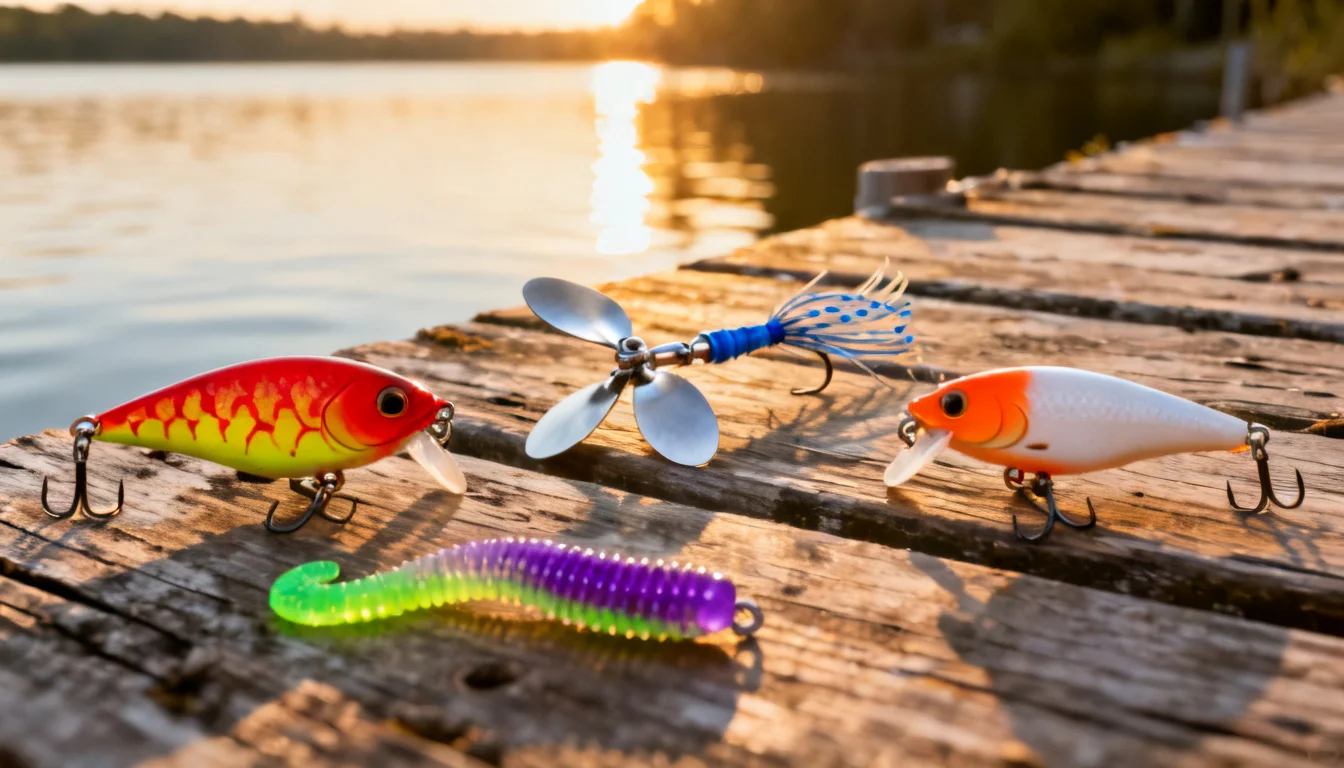
Hard plastic or wood baits with a lip that makes them dive when retrieved. They wiggle and wobble — imitating a fleeing baitfish.
- Diving depths: shallow (1–3 ft), medium (4–8 ft), deep (10–20 ft)
- Best for: bass, walleye, pike — covering water and finding active fish
- Key tip: with deep-diving crankbaits, let the lure hit bottom and pause — that’s when fish strike
- Hooks: treble hooks (check them often)
2. Spinnerbaits & Inline Spinners (Flash & Vibration)
A spinning blade creates flash and vibration that triggers reaction strikes, even in murky water.
- Spinnerbait: a J-shaped wire with a blade — skips over weeds, great for bass in cover
- Inline spinner (Mepps-style): a blade spinning on a wire shaft — classic trout and panfish bait, easy to cast, works in moving water
- Best for: bass, trout, pike, walleye — especially stained or windy conditions
3. Soft Plastic Baits (The Big Family)
Worms, creatures, craws, swimbaits — soft, lifelike baits you rig on a worm hook, jig head, or drop shot. This is the most versatile lure family and the one serious bass anglers lean on most.
- Worms — the all-time classic; rigged Texas-style (weedless) or on a drop shot
- Creature baits — crawfish imitations with wiggling appendages; great for slow, bottom contact
- Swimbaits — paddle-tail baits that swim like a baitfish; cover water fast
- Best for: bass (the core family), walleye, and any finesse situation
4. Topwater Lures (The Explosion Bait)
Baits that stay on the surface, making commotion that triggers explosive strikes — poppers, weedless frogs, and propeller buzzbaits. Best for bass at dawn and dusk, pike, and any fish chasing surface bait. We cover the full technique in our topwater fishing guide.
5. Jigs (The Bottom-Dweller)
A lead head with a skirt or body — the ultimate bottom-contact lure that imitates crawfish and baitfish. Slow, methodical, deadly in the right hands.
- Best for: bass, walleye, and pike in cold water or pressured fish
- Key tip: fish it slow with short hops — most strikes come on the fall
6. Spoons (The Flashy Metal)
A concave metal blade that flutters and flashes like a wounded baitfish as it falls.
- Best for: trout, pike, walleye, panfish — cast and retrieve, or jig vertically
- Key tip: the flutter on the fall triggers strikes; let it sink before reeling
Crankbait vs Spinnerbait — and When to Throw What: A Decision Chart
| Situation | Lure to Throw |
|---|---|
| Clear water, pressured fish | Soft plastics, finesse |
| Stained water, windy | Spinnerbait, crankbait |
| Low light (dawn/dusk) | Topwater, spinnerbait |
| Weeds and lily pads | Frog (topwater), weedless worm |
| Cold water, slow fish | Jig, slow-rolled spinnerbait |
| Covering water fast | Crankbait, spinnerbait, swimbait |
| River/current | Inline spinner, crankbait, jig |
Lure Color: Simpler Than It Looks
- Match the hatch: if the fish are eating shad, throw silver/white shad colors. If they’re eating crawfish, throw brown/green.
- Bright days, clear water: natural colors — silver, shad, craw patterns
- Dark days, stained water: high-visibility — chartreuse, fire tiger, black
- Rule of thumb: start natural, and when fish stop biting, change color and size before changing lure type
Building a First Lure Box (5 Lures, Every Situation Covered)
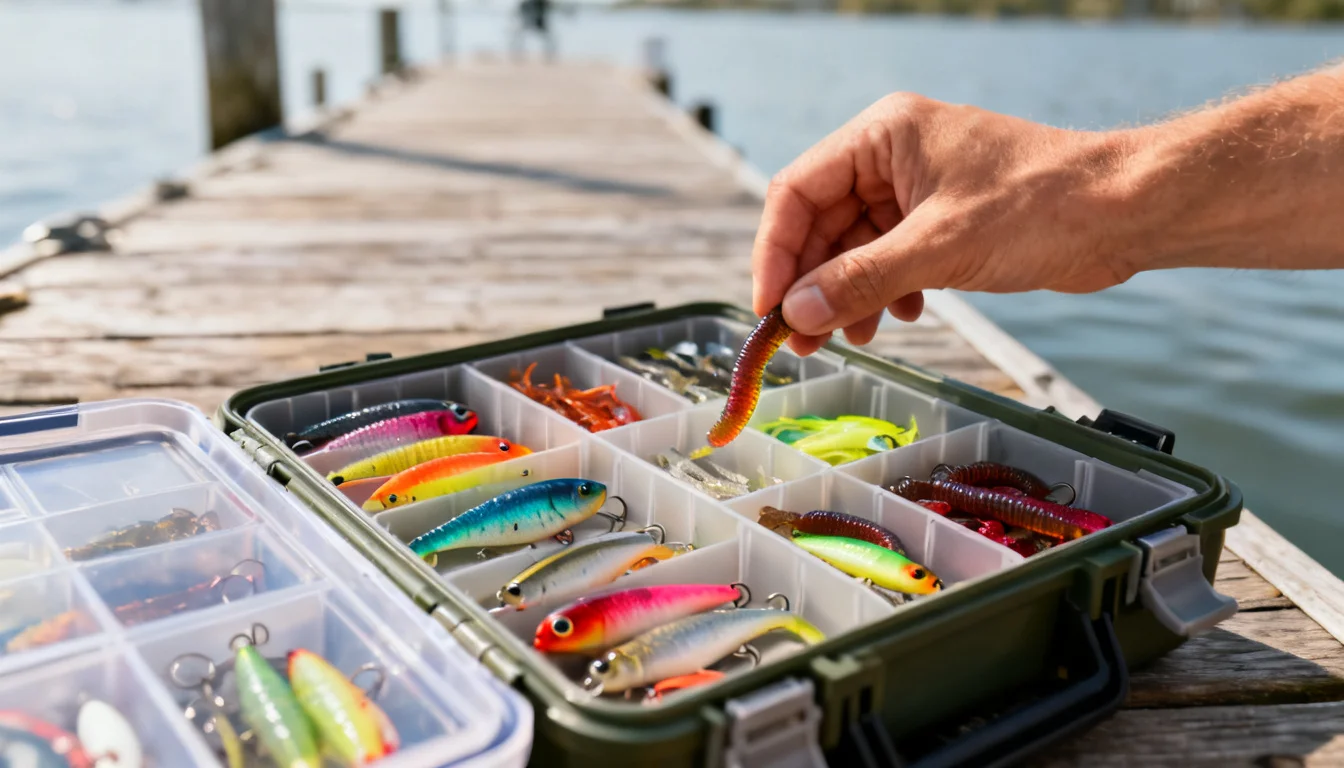
You don’t need 50 lures. Five well-chosen ones handle most freshwater fishing situations:
1. One shallow crankbait (1–3 ft, shad or craw color) — covers moving water and active fish
2. One inline spinner (size 2–3, silver or gold) — trout, panfish, pike; the most versatile cheap lure
3. One pack of soft plastic worms (5-inch, Texas-rig ready) — bass when nothing else works
4. One popper or frog — topwater action at dawn and dusk
5. One jig with a trailer — bottom contact for cold water and pressured fish
That’s a box that catches bass, trout, panfish, walleye, and pike. Add species-specific lures as you go — the bass and pike guides cover what each species responds to.
Common Lure Mistakes
Even anglers with years of experience make these fishing lures guide basics wrong:
1. Reeling too fast — most lures work best slow; fish are lazy, make it easy
2. Changing lures too often — give a lure 20–30 casts before switching
3. Ignoring the pause — strikes often happen when the lure stops; let it pause
4. Using the same lure in every situation — match depth, speed, and water clarity
5. Treble hooks on bare lures — check and replace dull trebles
FAQ
What’s the best fishing lure for beginners?
An inline spinner or a shallow crankbait — both are easy to cast, hard to fish wrong, and catch a wide variety of species. Add soft plastics once you’re comfortable.
How do I know which lure to use?
Match the lure to the situation: water clarity (natural vs bright colors), depth (shallow vs diving), and fish activity (active fish = moving lures, pressured fish = slow soft plastics). Our chart above is the quick version.
Are expensive lures better?
Not automatically — action and confidence matter more than price. A $5 crankbait with the right wobble catches as many fish as a $15 one. Spend on quality hooks and consistent action, not labels.
What’s the difference between a crankbait and a spinnerbait?
A crankbait is a hard minnow-imitator that dives and wobbles. A spinnerbait has a flashing blade on a wire arm — it creates vibration and flash, skips over weeds, and works well in stained water.
Do lure colors really matter?
Yes, but less than you think — depth, action, and speed matter more. Follow match-the-hatch in clear water and go bright in stained water. When fish stop biting, change color and size before changing the lure type.
Can I use the same lures for bass and trout?
Some overlap — inline spinners and small crankbaits work for both. But bass eat bigger, heavier lures; trout prefer smaller, lighter presentations. Scale lure size to the fish.
Final Checklist
This fishing lures guide boils down to how to choose fishing lures by situation:
1. Learn the six families: crankbait, spinnerbait, soft plastics, topwater, jig, spoon
2. Match the situation: water clarity, depth, fish activity
3. Start with five lures — a crankbait, spinner, worm, topwater, jig
4. Fish slow, pause often, change deliberately
5. Pair with the right rod: see our rod selection guide for lure-weight matching
When to Check Your Lures
Before every trip: check treble hooks for rust and dull points, check split rings, and make sure hook hangers aren’t bent. A 60-second check saves you from losing the fish of the day on a $5 lure with a $0.10 hook.