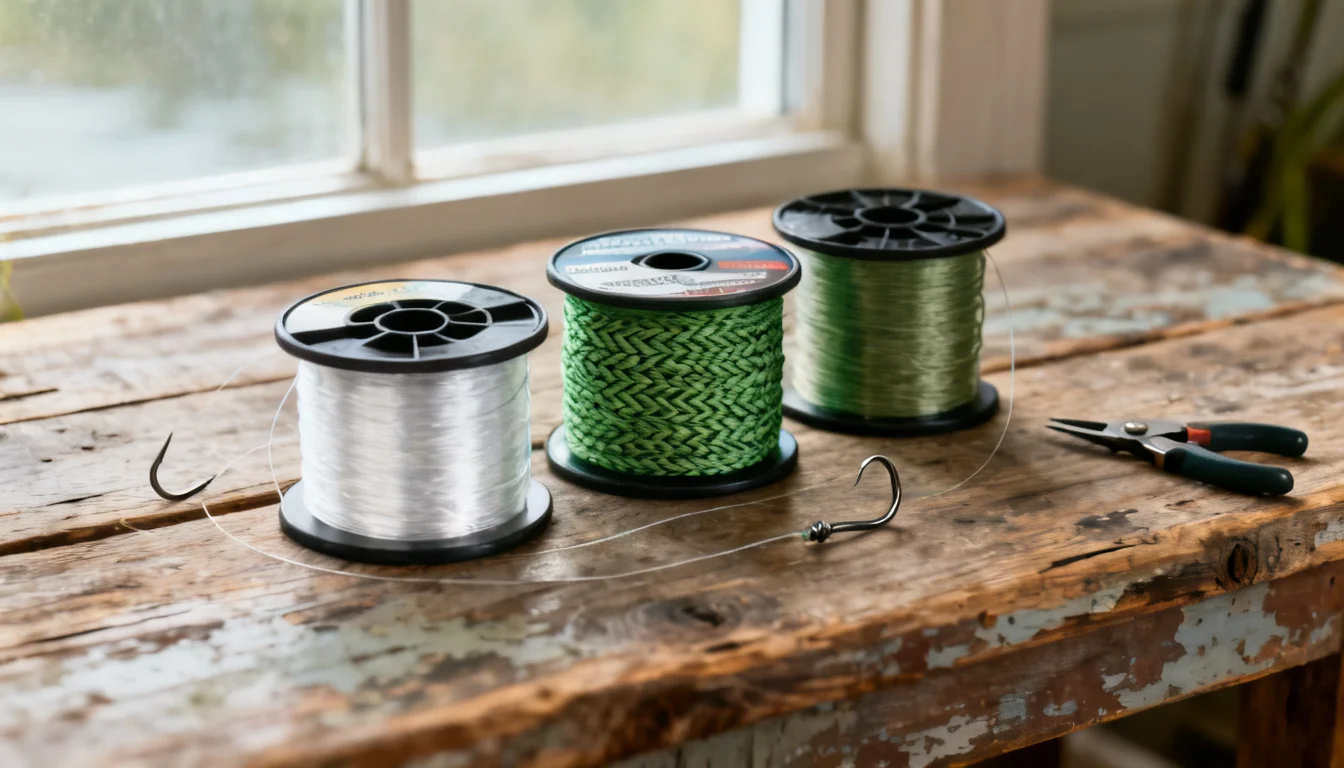
Line is the cheapest, most important piece of your setup — and the most confusing. Mono, fluorocarbon, braid… what’s the difference, and which fishing line should you actually use?
The short version: mono for beginners and all-around use, fluorocarbon when you need invisibility, braid when you need strength and sensitivity. If you’re brand new to fishing, our fishing for beginners guide covers the basics first — then this guide explains the full trade-offs so you can make a confident fishing line selection for any species.
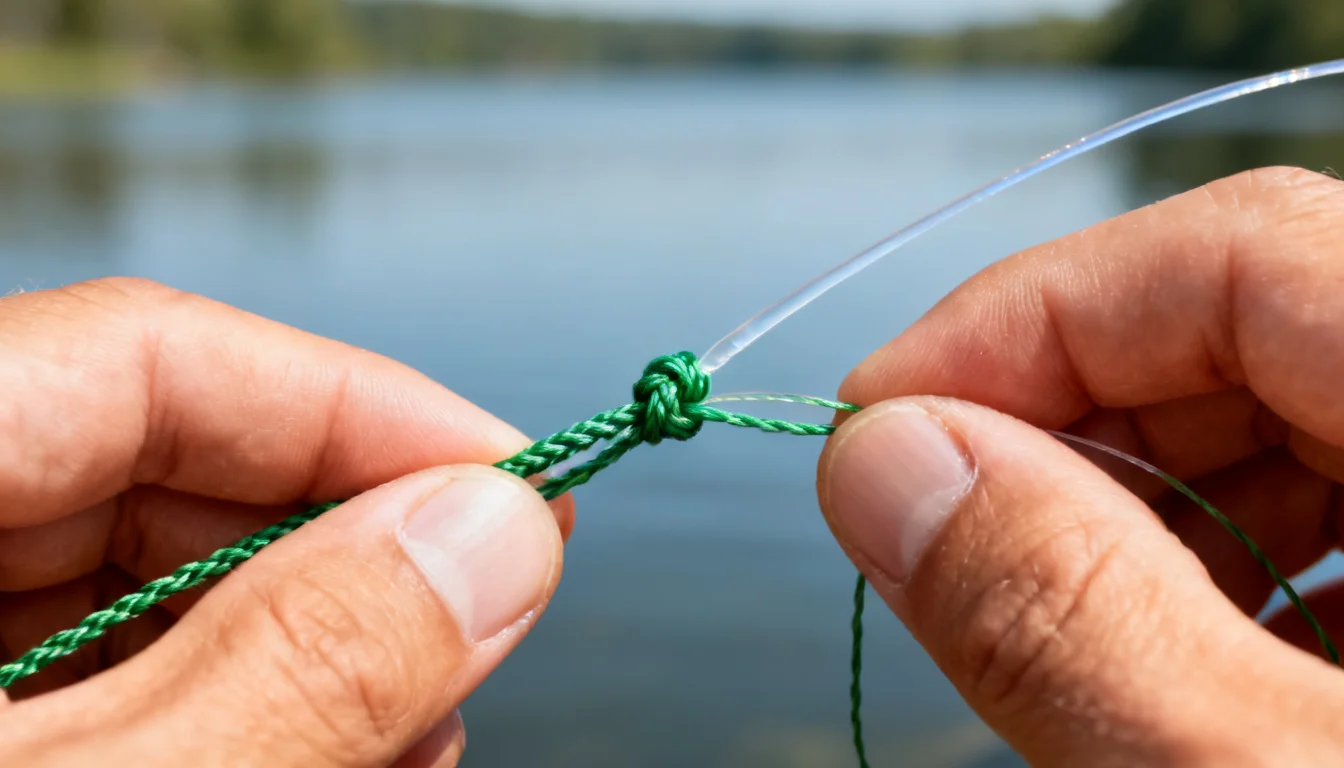
Joining braid to a fluorocarbon leader gives you strength where it matters.
Monofilament vs Fluorocarbon vs Braid: The Three Line Types
Best for: beginners, topwater, crankbaits, kids, all-around freshwater
Fluorocarbon — The Invisible Option
Stretches: some (~10–20%)
Invisibility: almost invisible underwater — light bends at the same angle as water
Sinks: yes — it’s denser than water
Cost: pricier than mono
Best for: leaders, finesse fishing, clear water, bottom contact presentations
Braided Line — The Strength & Sensitivity King
Stretches: almost none — instant hooksets, incredible feel
Strength: 2–3× the strength of mono at the same diameter
Invisibility: highly visible (comes in bright colors)
Abrasion resistance: poor — the line’s weak spot is rocks and cover
Best for: heavy cover, weeds, deep jigging, long casts, fishing where you need max strength on a thin diameter
Fishing Line lb Test: What the Numbers Mean (And How to Choose)
Good fishing line selection starts with understanding lb test — the breaking strength of the line, and the single number most anglers get wrong.
Line strength is rated in pounds test — the breaking strength of the line. The rule: match your line to the fish, not to your rod.
Target
Line Strength (typical)
Panfish, crappie
2–6 lb
Trout (streams)
4–8 lb
Bass (all-around)
8–14 lb
Bass (heavy cover)
15–30 lb braid
Walleye
8–12 lb
Catfish
15–30 lb
Pike, musky
20–40 lb braid or wire leader
Key insight: thinner line casts farther and gets more bites, but breaks easier. You’ll lose more big fish on 6 lb line than you think — but you’ll also *hook* more fish. Find the balance for your target species.
When to Use Each Line: A Cheat Sheet
Choose Mono When (Monofilament):
You’re a beginner — it’s the most forgiving line to cast and tie
Fishing topwater — its float and stretch help keep treble hooks pinned
Fishing crankbaits and moving baits — stretch absorbs headshakes
Budget matters — mono is a fraction of the cost
Choose Fluorocarbon When:
Water is clear and fish are spooky — you need invisibility
Fishing finesse presentations (drop shot, shakey head, ned rig)
You need line that sinks fast (bottom contact baits)
As a leader tied to braid — best of both worlds
Choose Braid When:
Fishing heavy weeds, lily pads, or timber — you need to pull fish out
Deep water or long casts — zero stretch transmits every bump
You want thin diameter with huge strength
Fishing with heavy lures and strong hooksets
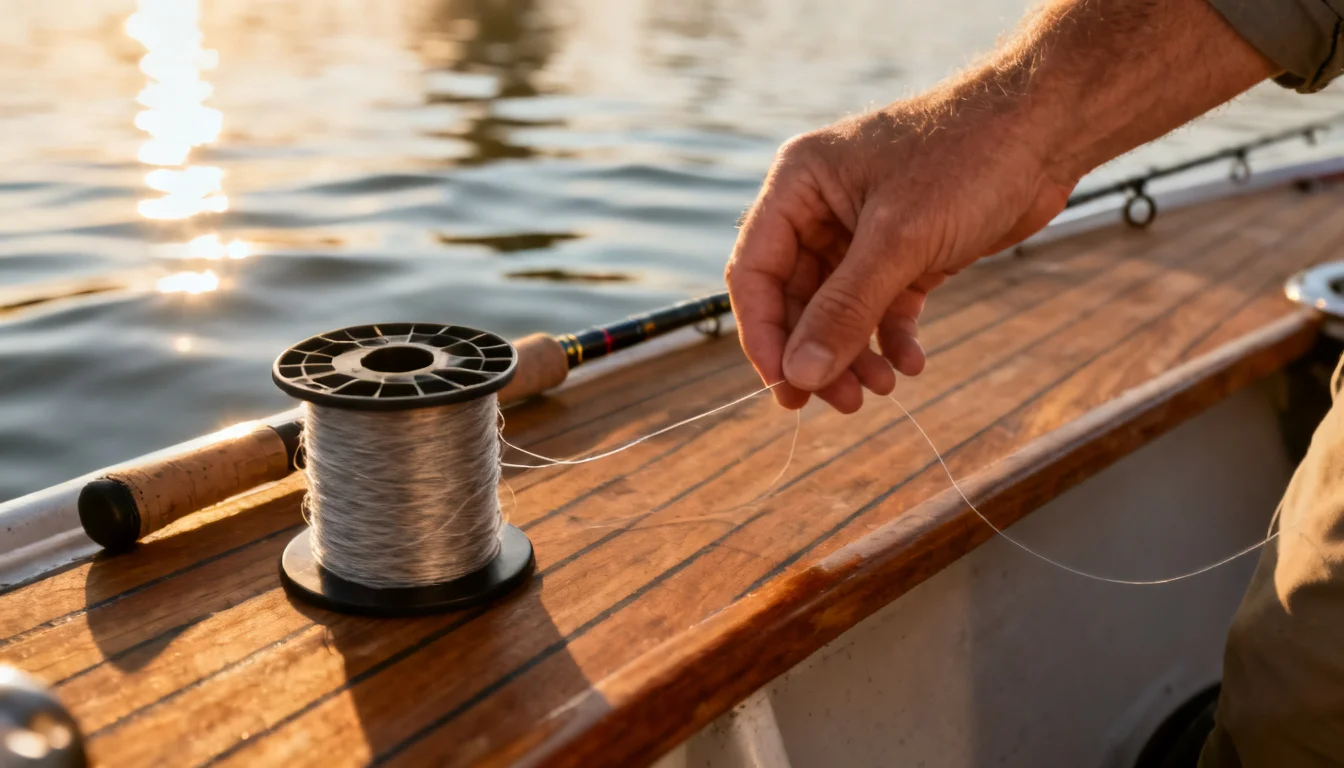
Monofilament remains the most forgiving line for new anglers.
Braided Line vs Mono — and the Leader Trick: You Don’t Have to Pick One
The pro move is combining lines: braid as your main line for strength and feel, with a fluorocarbon leader (2–4 ft) tied on for invisibility and abrasion resistance. You get braid’s power where the fish can’t see it, and fluoro’s invisibility where it matters — at the bait.
If you’re new to tying line, our fishing knots guide shows the best knots for joining line to line and line to hook.
Line Color: Does It Matter?
Clear — best all-around for visibility-conscious fish
Low-visibility green — blends in most freshwater
High-visibility yellow/white — you see it, fish see it — use for braid where feel matters more than stealth
Hi-vis braid + clear leader — the standard combo for serious anglers
Rule: fish can’t read color labels — match visibility to water clarity. Clear water, use clear or low-vis. Stained water, anything works.
Line Diameter: The Hidden Spec
Line is also rated by diameter (e.g., 0.010 inches for 8 lb mono). Two lines with the same lb test can have very different diameters: braid at 30 lb can be thinner than 8 lb mono. Thinner line casts farther, cuts through wind better, and spools more line on your reel — but it’s easier to break on rocks and harder to handle. That’s why braid’s thin diameter is a huge advantage for long casts and deep water, and why a fluorocarbon leader adds back the abrasion resistance braid gives up.
Common Line Mistakes
1. Line too heavy — 20 lb mono on a panfish rod kills casting distance and bites
2. Line too light — 6 lb mono against a 5 lb bass in weeds = heartbreak
3. Old line — UV and time weaken line; re-spool every season or after heavy use
4. Skipping the leader — braid straight to a bass in clear water loses bites; tie a fluoro leader
5. Not wetting knots — dry knots overheat and slip; always wet before tightening
FAQ
What’s the best fishing line for a beginner?
Monofilament, 6–10 lb test. It’s the cheapest, most forgiving to cast, and easiest to tie knots with. Upgrade to braid or fluoro as you get specific about technique.
Is braided line better than monofilament?
It depends. Braid is stronger, thinner, and more sensitive with zero stretch, but it’s visible, has poor abrasion resistance, and needs a leader in clear water. Mono is cheaper, more forgiving, and floats.
What lb test should I use for bass?
8–14 lb mono or fluoro for all-around bass fishing; 15–30 lb braid for heavy cover — see our largemouth bass guide for the full line setups. Match line to the cover you’re fishing — open water needs lighter line, weeds need heavy braid.
Do I need fluorocarbon?
Not to start. It earns its keep in clear water and for finesse fishing. If you fish stained or murky water, mono works fine. When you do want it, run it as a leader on braid for the best setup.
Why does braid need a leader?
Braid is highly visible underwater and fish see it clearly. A fluorocarbon leader adds invisibility and abrasion resistance where fish look — at the hook and bait.
How often should I change fishing line?
Re-spool mono and fluoro at least once a season, or sooner if you fish often. Braid lasts years but check the first few feet — that’s the section that takes the abrasion and UV damage.
Final Checklist
Your fishing line selection comes down to four rules:
1. Beginners: 6–10 lb mono — learn with the forgiving stuff
2. Clear water: fluorocarbon leader or main line
3. Weeds & heavy cover: 15–30 lb braid
4. Max strength + stealth: braid main line + fluoro leader